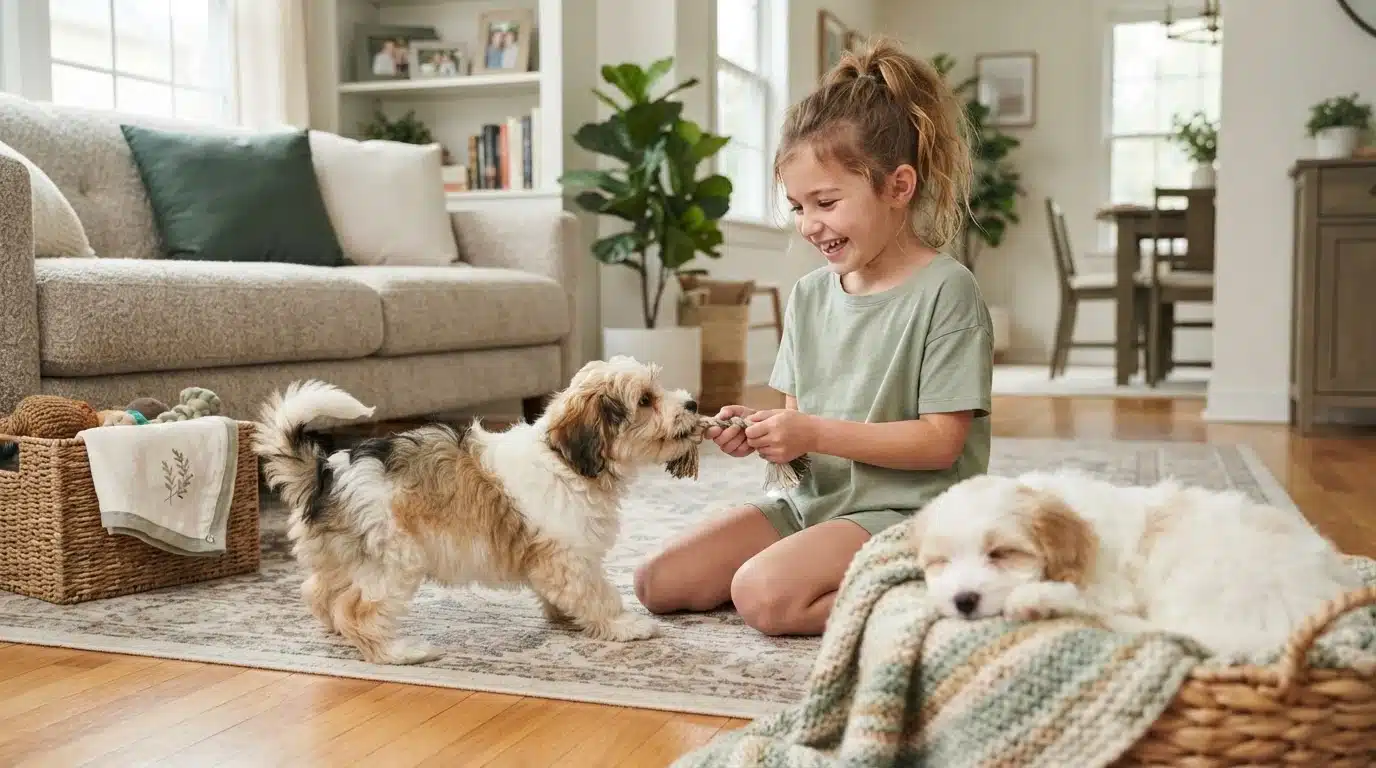
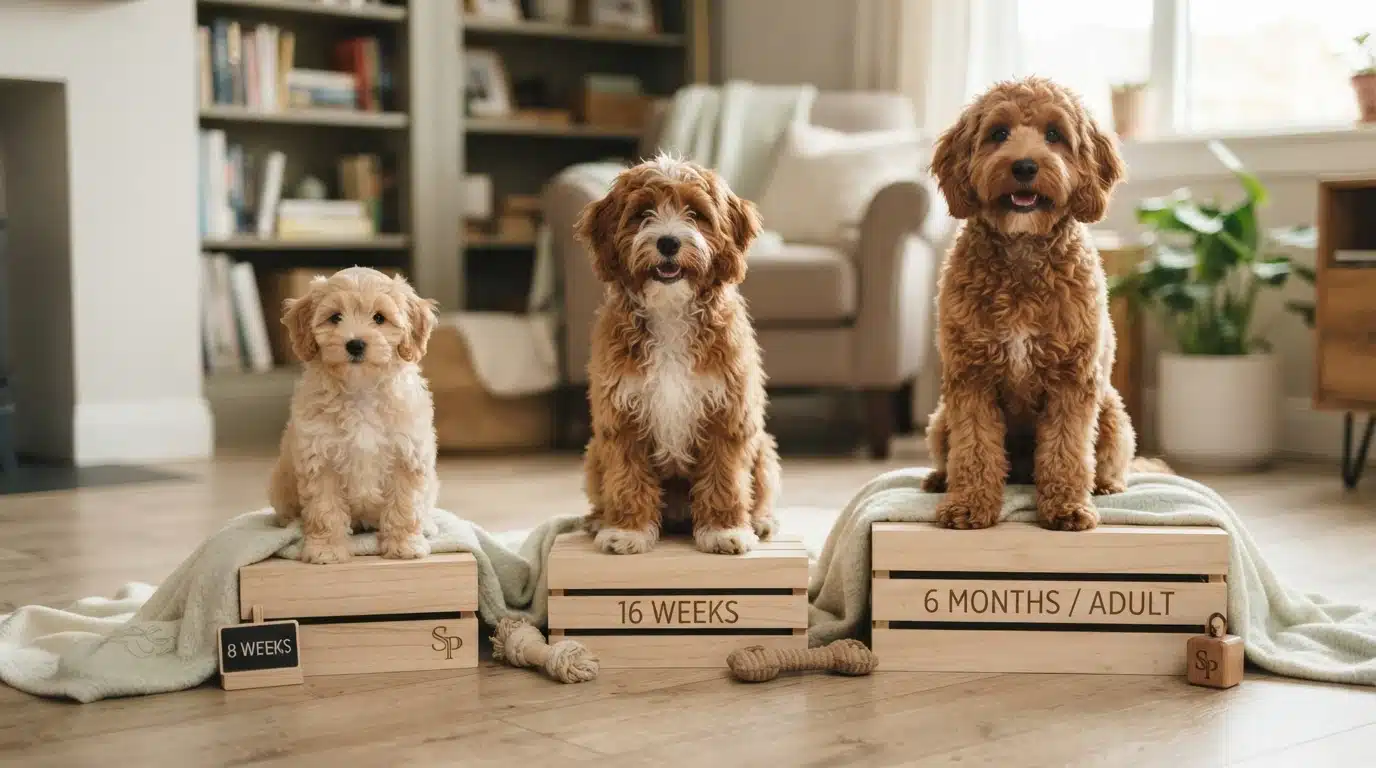
Quick Summary: A small breed puppy can thrive in an apartment when its temperament matches the building. Havanese, Havapoos, and Cavapoos top the list because they stay small, bark less than most breeds, and need only 30 to 45 minutes of daily activity. Success comes down to setup: check your lease for weight limits and pet rent, crate-train near the family, puppy-proof at knee height, and build a steady potty rhythm using pads or turf until vaccines are complete. Budget beyond the $3,500 to $4,500 purchase price for first-year care, and choose a breeder like Sage Puppies who documents health testing and raises puppies in a home so city sounds feel normal from day one.
You measure your living room in hallways and your closet in square feet, and you’re wondering whether a small breed puppy can really thrive there without driving your downstairs neighbor to leave a note. The honest answer: it depends far more on the breed’s temperament, your daily routine, and a few smart setup choices than on raw square footage. The best small breed puppies for apartments share traits like lower barking drives and modest exercise needs, but even those need puppy-proofing, potty plans, and neighbor etiquette to work. This guide walks through the picks, the logistics, and the real costs, drawing on experience raising Havanese, Havapoo, and Cavapoo puppies for apartment-dwelling and first-time owners.
What Apartment Living Actually Changes About Owning a Puppy
Any dog can live in an apartment, but apartments change the logistics. Space, sound, and potty access all shape which small breed puppies for apartments thrive and which struggle.
Leases, Pet Policies, and Weight Limits
Read your lease before you fall for a puppy. Around 80% of U.S. rentals now allow animals, but the fine print varies. Many buildings cap dogs at 25 to 50 pounds and charge pet rent or deposits, as Zillow’s renting guide notes. Small breeds clear nearly every limit, so get approval in writing first.
Shared Walls, Noise, and Neighbor Reality
Thin walls turn one barking puppy into a building-wide issue. Puppies whine in crates, protest at door sounds, and greet elevators loudly. Plan for sound: training, white noise, and not leaving a young pup alone through the workday. Introduce yourself to close neighbors early so a rough first week doesn’t become a complaint.
Limited Outdoor Access and Potty Logistics
No yard means every potty break is a trip. Until vaccines are complete, use a balcony turf patch or indoor pad, then build a routine around elevators and lobby exits. For a full plan, our guide to small breed puppy potty training in an apartment covers timing, pad placement, and accidents.
How to Spot a Truly Apartment-Friendly Small Breed
Size is only the start. The best small breed puppies for apartments share three traits: modest adult energy, a calm voice, and a coat you can manage in a bathroom-sized grooming zone.
Energy and Exercise Needs at Maturity
Ask what the breed is like grown up, not as a bouncing eight-week-old. Some toy breeds nap most of the day with two short walks. Others, like terriers and dachshunds, were bred to dig and chase, so they need real play even at ten pounds. If your schedule allows 30 to 45 minutes of activity daily, nearly any small breed fits. If it does not, pick a calmer line.
Bark Tendency, Trainability, and Sound Tolerance
Noise travels through shared walls, so a breed’s voice matters as much as its size. Some breeds rarely bark unless trained to; others alert to every hallway sound. The Spruce Pets’ quiet breed roundup notes that low-barking breeds suit apartment dwellers best. Just as important: a puppy that startles at elevators, doors, and street noise may vocalize from stress. Meet the parents if you can, because temperament runs in families.
Coat Type and Grooming in Tight Quarters
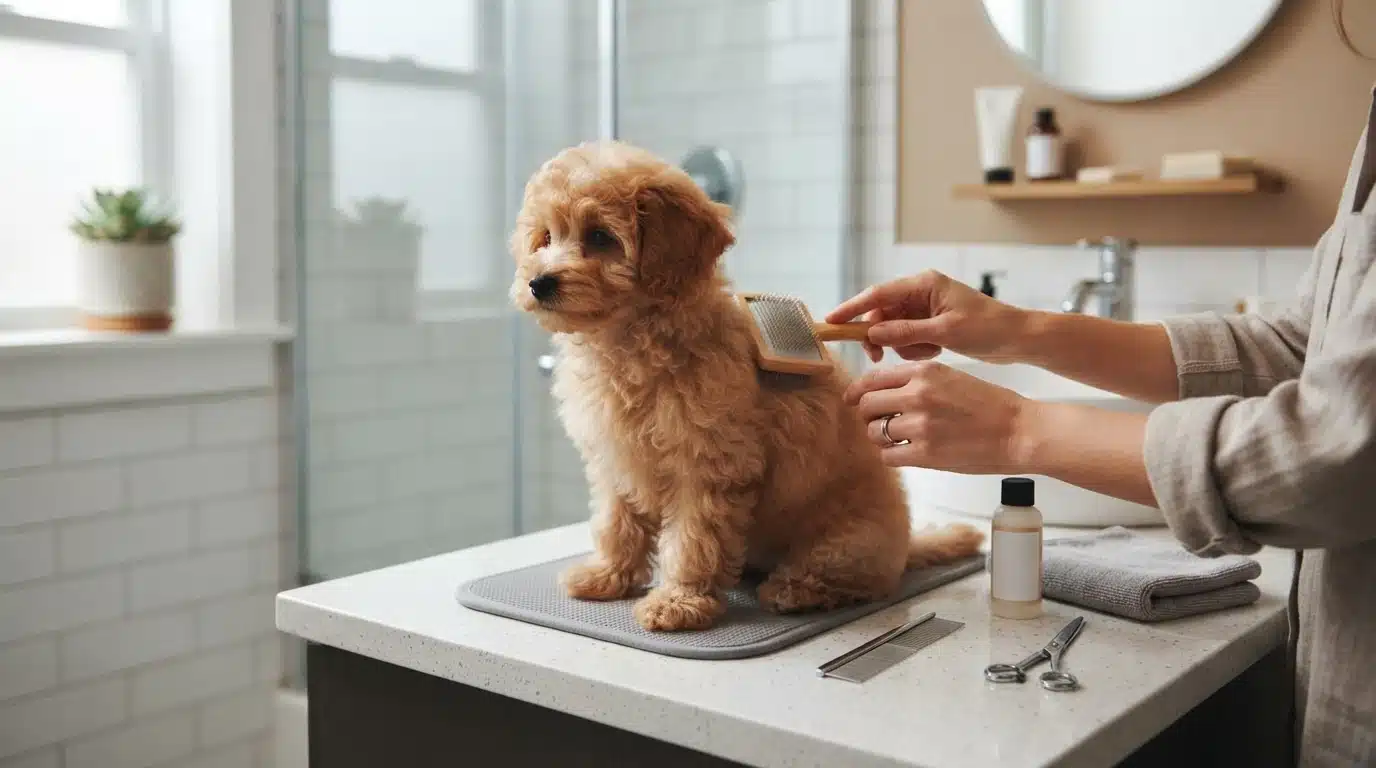
Short coats shed more but dry fast. Curly or silky coats shed less, which helps with carpets and HVAC filters, yet they mat quickly and need brushing several times a week. Plan where baths and drying will actually happen, since a wet wiggly puppy takes over a small bathroom fast. Breeders like Sage Puppies match families by coat commitment, not just looks.
The Small Breed Apartment Workbook: Havanese, Havapoo, and Cavapoo
Three small breeds cover most apartment needs, and each suits a slightly different home. Here is how they compare on temperament, energy, and daily routine.
Quiet, Social, and Closely Attached
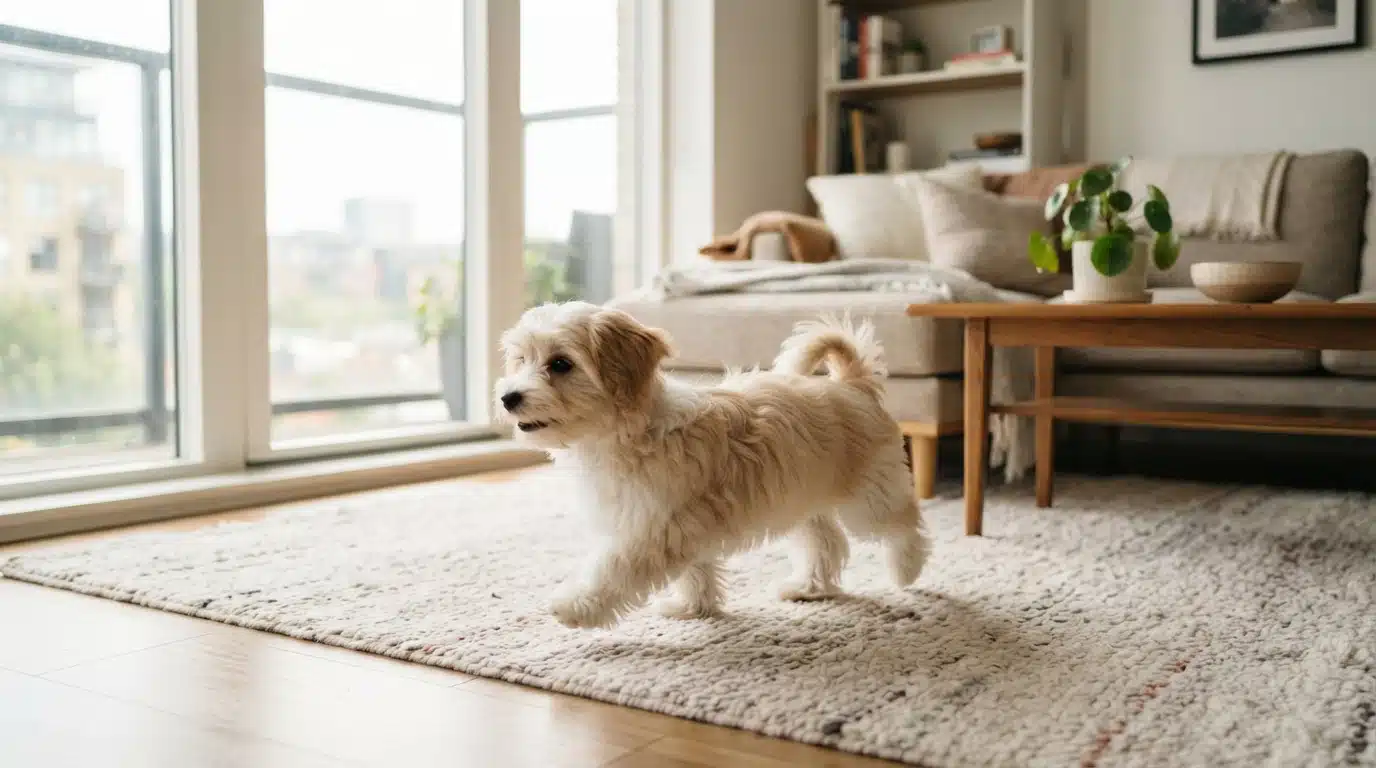
The Havanese is a natural apartment dog. The breed is small, sturdy, and adaptable, and its social nature makes it an easy fit for city life, as the AKC breed profile notes. These dogs rarely bark without a reason and train well with positive methods.
The trade-off is company. A Havanese bonds closely and does not enjoy long, empty hours. If you work from home or can arrange a midday visit, this breed fits beautifully. If you are gone ten hours a day, plan for a dog walker first.
Moderate Energy, Playful, and Trainable
A Havapoo blends the Havanese with a Poodle, and the mix usually lands at a moderate energy level. Expect a playful pup that loves short training sessions, quick games of fetch down the hallway, and a solid nap afterward. Both parent breeds are known for being eager to please, so house training and basic manners tend to move along quickly.
Barking stays manageable with early socialization and a consistent routine. For a deeper look at how the two doodle mixes differ in behavior, the team’s Havapoo and Cavapoo temperament comparison walks through the details.
Gentle, Affectionate, and Slightly More Active
Cavapoos combine the Cavalier King Charles Spaniel with the Poodle. They are gentle, sweet, and people-focused, with a bit more get-up-and-go than a Havanese. A 30 to 45 minute daily activity slot covers their needs.
That affection is a double edge. Cavapoos can develop separation anxiety without practice at short, calm absences from day one. Build alone time in slowly.
Other Small Breeds Worth a Look
The Havanese, Havapoo, and Cavapoo are not the only options. French Bulldogs, Cavalier King Charles Spaniels, and Miniature Schnauzers also do well in apartments. Weigh grooming needs and health screening carefully before choosing.
Apartment Prep Before Puppy Comes Home
A puppy settles faster when the setup already exists. Build the crate zone and potty spot first, then walk your halls and rooms at knee height to see what a curious nose will find.
Picking a Crate and Potty Zone in a Small Space
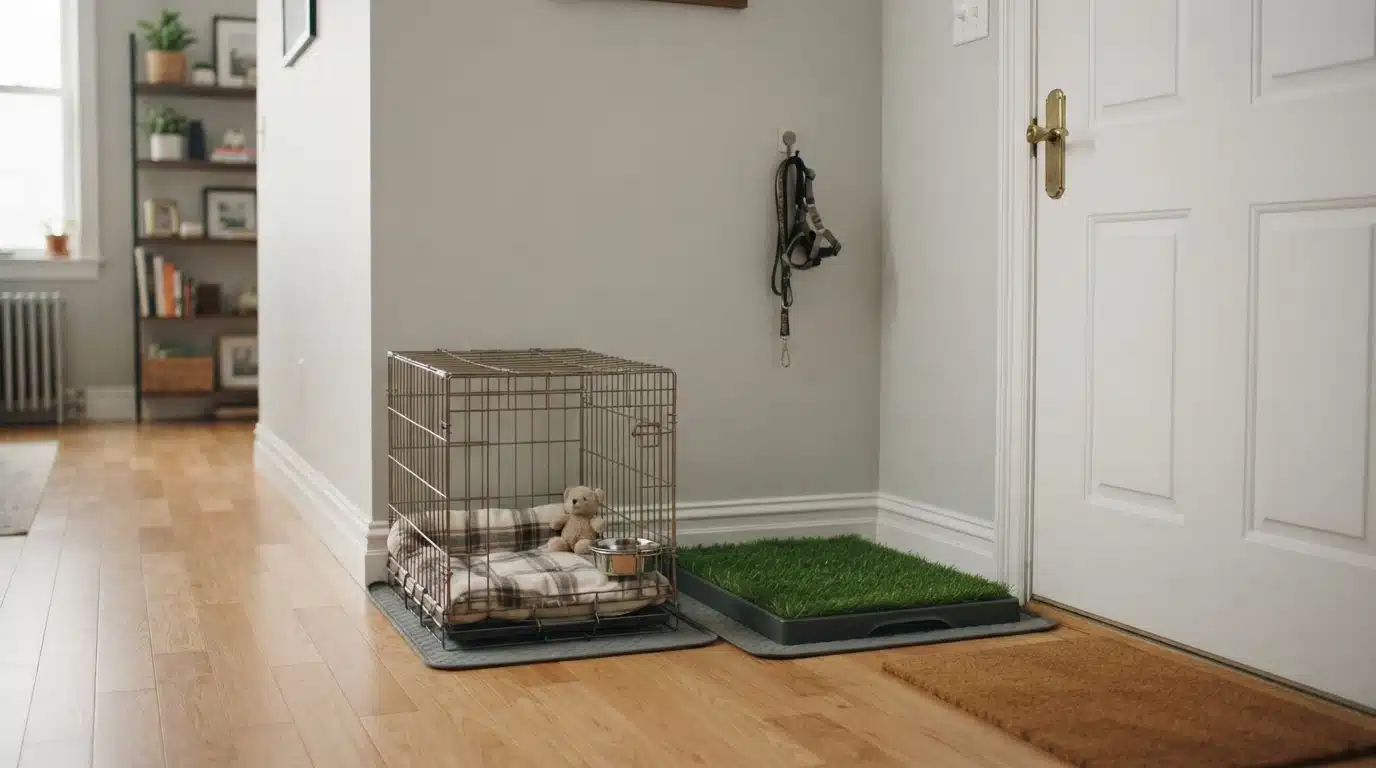
Choose a crate where your puppy can stand, turn, and lie down, but little more. Extra room invites accidents. Place it in a corner near the family, not in a draft or beside a heater, and keep the door open while you’re home so it becomes a den, as Humane World’s crate guide advises. Set the potty pad or grass patch by the exit you’ll use most, and keep the two spots apart. For the routine that follows, our guide to apartment potty training builds on this setup.
Puppy-Proofing Halls, Kitchen, and Bath
Crawl through your hallway at puppy level. Look for loose cords, dangling charger cables, small toys, and socks, since puppies explore with their teeth. Block gaps behind the washer and dryer with a rolled towel. In the kitchen, secure trash cans with latching lids, sweep crumbs nightly, and move cleaning sprays and dishwasher pods into a high cabinet. The bathroom needs the same pass: close the toilet lid, pick up hair ties and razors, and add a latch to lower cabinets. Open windows should have tight screens.
Balcony, Stair, and Elevator Safety
Never leave a puppy alone on a balcony. Railings wider than a paw invite trouble, so add mesh guard panels, and skip balcony potty trips until your puppy is fully vaccinated, when parvo risk fades. On stairs, carry your puppy down and supervise short climbs until hips and joints strengthen. In the elevator, hold the leash short, wait for empty cars, and let people enter first.
Daily Life With a Small Puppy in an Apartment
Apartment life with a small puppy works when three things run on rhythm: potty trips, quiet training, and indoor play.
Build a Potty Rhythm That Matches Your Floor Plan
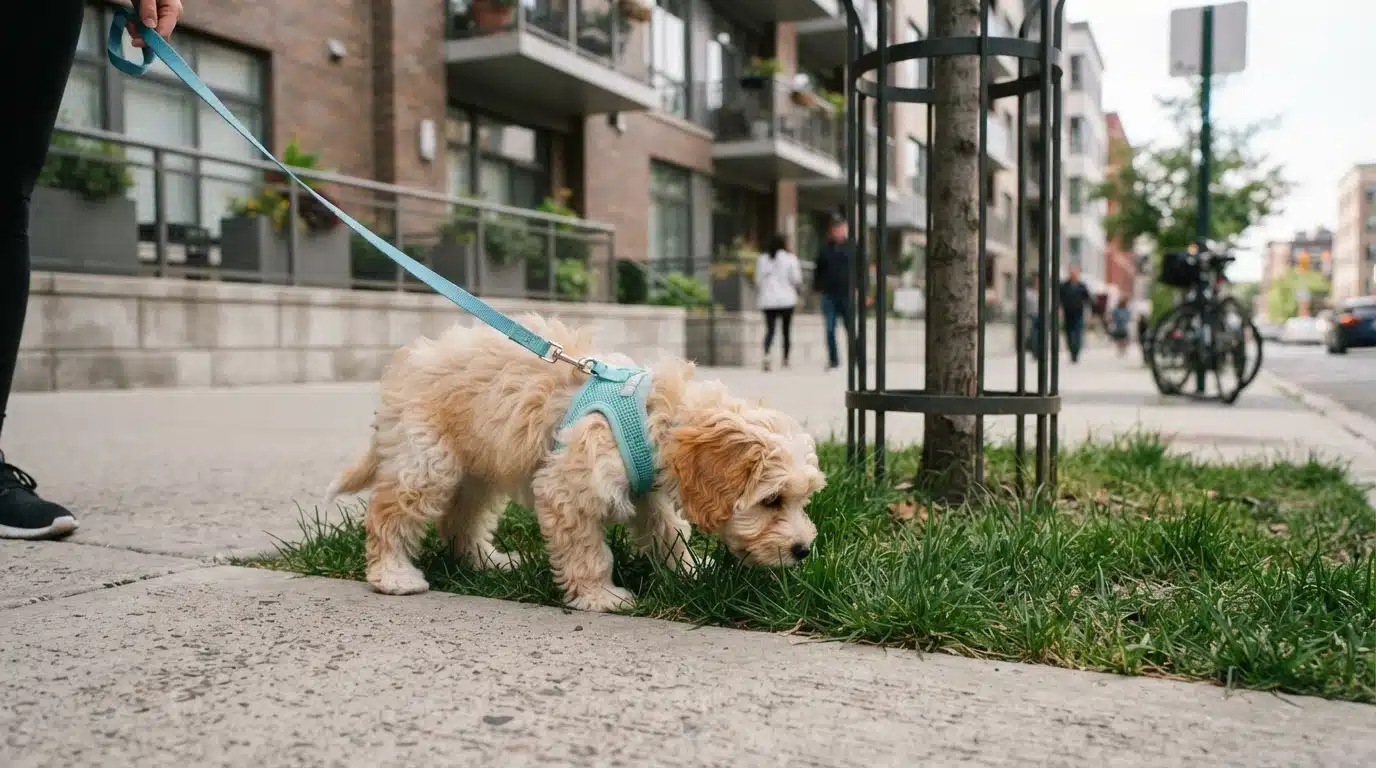
A puppy can hold it roughly one hour per month of age, so plan trips around naps, meals, and play. The AKC’s potty training timeline recommends going out first thing in the morning, after eating, and after every wake-up. Pick one door and one spot, then use the same cue word each time. A pad by the door is a fair backup for long workdays, but treat it as a bridge, not the goal. Our guide to the first-week routine in a Havapoo puppy checklist maps this schedule hour by hour.
Quiet-Cue Training and Handling Neighbor Nerves
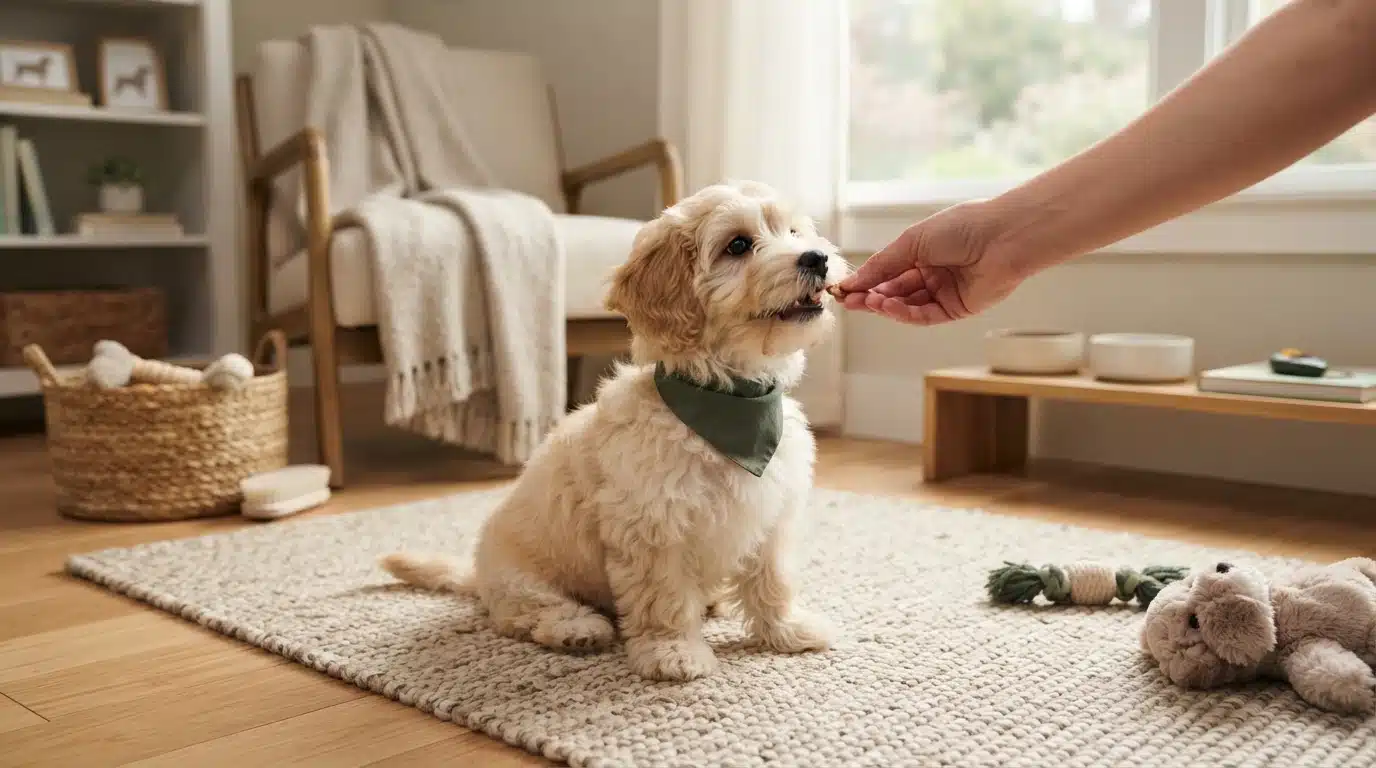
Barking carries in hallways and through thin walls. Teach a quiet cue early: let your puppy bark once, say “quiet” calmly, then reward silence for a few seconds. Give a stuffed chew before you leave so departures feel routine. A quick note to neighbors with your contact info buys goodwill while training is still messy.
Indoor Enrichment When Walks Are Short
Mental work tires puppies as much as miles do. Rotate sniff mats, puzzle feeders, and two-minute training games through the day. Ten minutes of hide-and-seek with a favorite toy beats a rushed walk.
Costs, Vet Care, and Travel Logistics in an Apartment Setting
Upfront and Monthly Costs to Plan For
The puppy price is only the start. Well-bred small breeds often cost $3,500 to $4,500, and first-year care adds more: Rover’s 2025 report puts annual puppy costs between $1,460 and $6,745. Add supplies, food, and any building pet rent or deposit from earlier in this guide. Breeders lay out pricing and what it covers in different ways, so ask what your fee includes before you commit. (Rover’s cost breakdown)
Grooming, Vet Access, and Ongoing Health
Havanese, Havapoos, and Cavapoos need brushing several times a week plus trims every six to eight weeks. Budget for a groomer or learn basic clipping yourself. In an apartment, pick a vet clinic within a short walk or drive, and confirm they take new puppies before pickup day.
Pickup, Delivery, and Travel Day
Plan the trip home in advance. A small crate, a towel, and a quiet car ride work well, and ground transport is often easiest for a first puppy. For long distances, review the pricing and delivery FAQ early so travel arrangements match your reservation timeline.
Finding a Small Breed Puppy the Apartment-Ready Way
The right apartment puppy comes from a breeder whose paperwork, raising methods, and contract all hold up under questions. Here is what to look for.
Health Testing and What It Actually Means
Health testing means a vet-verified screening of the parents, not just “healthy puppies.” Ask for OFA records for both parents, covering eyes, hearts, and patellas, which matter in small breeds. Check the breed’s recommended tests, then ask how the breeder uses results in breeding choices. A clearance list alone is a start; a breeder who explains their decisions is better.
Early Socialization and the First Eight Weeks
The first eight weeks shape how a puppy handles apartment life. Puppies raised in a home meet daily sounds like doorbells, elevators in hallways, and traffic. Ask how the breeder exposes littermates to handling, different surfaces, and gentle noise before they leave. Puppies raised in quiet kennels often startle at city sounds later.
Reading Contracts, Guarantees, and Real References
Read the contract before you fall in love with a puppy. A good one covers a health clause, a return option, and spay or neuter terms. Talk to past puppy owners, not just reviews the breeder picked. Beware of vague “health guarantees” that expire in days.
Common Apartment Puppy Mistakes Worth Skipping
Mistakes New Apartment Puppy Owners Make
Most apartment puppy trouble comes from three habits: waiting too long between potty trips, skipping exercise until barking starts, and giving a puppy free run of the home before it’s ready. Humane World’s house-training guide notes that teaching a signal, like ringing a bell at the door, helps a puppy tell you it needs out before an accident happens. Give too much freedom too fast and mistakes follow, so use a crate or pen between outings and reward potty outside right away.
What to Do Before You Bring the Puppy Upstairs
Pick one potty spot and take the same route every time, since consistency speeds learning. Keep a pad or patch near the door for young puppies who can’t hold it during the elevator ride. A Humane World potty-training resource recommends praising the exact moment your puppy goes in the right place. Then set the first-week schedule before pickup day.

Ready to meet a small breed that actually fits apartment life? Sage Puppies matches families with well-bred Havanese, Havapoo and Cavapoo puppies. Browse available puppies, check pricing, and start your application today.
Frequently Asked Questions
Q1: Best small breed puppies for apartment living
Havanese, Havapoos, and Cavapoos top the list. They stay small, bark less than most breeds, and need 30 to 45 minutes of daily activity. Pick based on your schedule: Havanese if you’re home often, the doodle mixes if you want slightly more energy.
Q2: Which small breed barks the least?
Havanese rarely bark without a cause. Havapoos and Cavapoos stay quiet with early socialization and a steady routine.
Q3: Can a puppy be potty trained without a yard?
Yes. Use a pad or turf patch until vaccines finish, then build trips around naps, meals, and wake-ups.
Q4: How much does an apartment puppy cost yearly?
Well-bred small breeds run $3,500 to $4,500, plus first-year care between roughly $1,460 and $6,745, per Rover’s 2025 report.
Q5: How long can a puppy hold its bladder?
About one hour per month of age, so a three-month-old needs a break every three hours or so.
Q6: Are doodle mixes good for first-time owners?
Usually. Both parent breeds are eager to please, so house training and basic manners tend to move quickly.
Conclusion
A small breed puppy can thrive in an apartment when three things line up: the right temperament, a routine that fits your floor plan, and a setup built before pickup day. Havanese, Havapoos, and Cavapoos check the size, bark, and energy boxes, but each needs the same basics: potty rhythm, quiet-cue training, and gradual alone time. Read the lease, puppy-proof the halls, and budget beyond the $3,500 to $4,500 price tag. Most of all, choose a breeder who documents health testing and raises puppies in a home, so city sounds feel normal from the start.