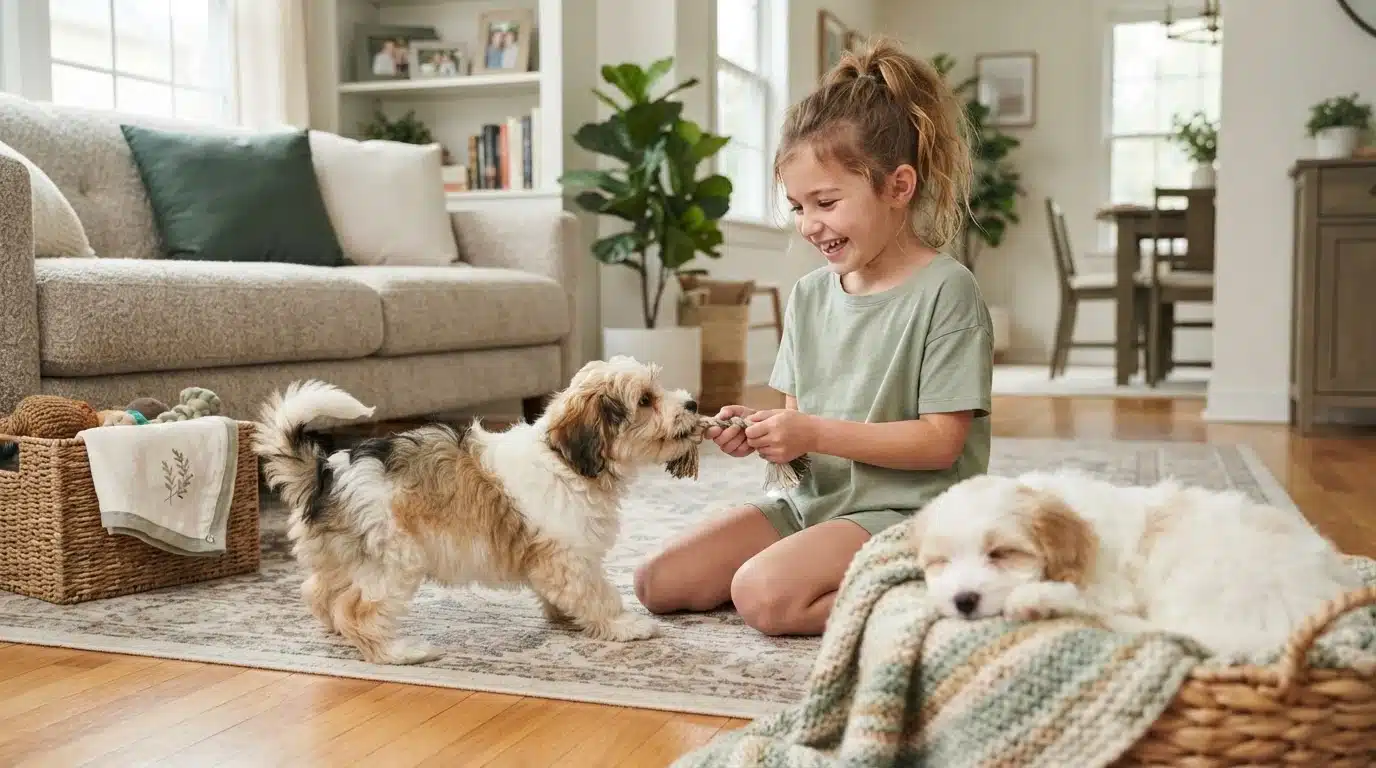
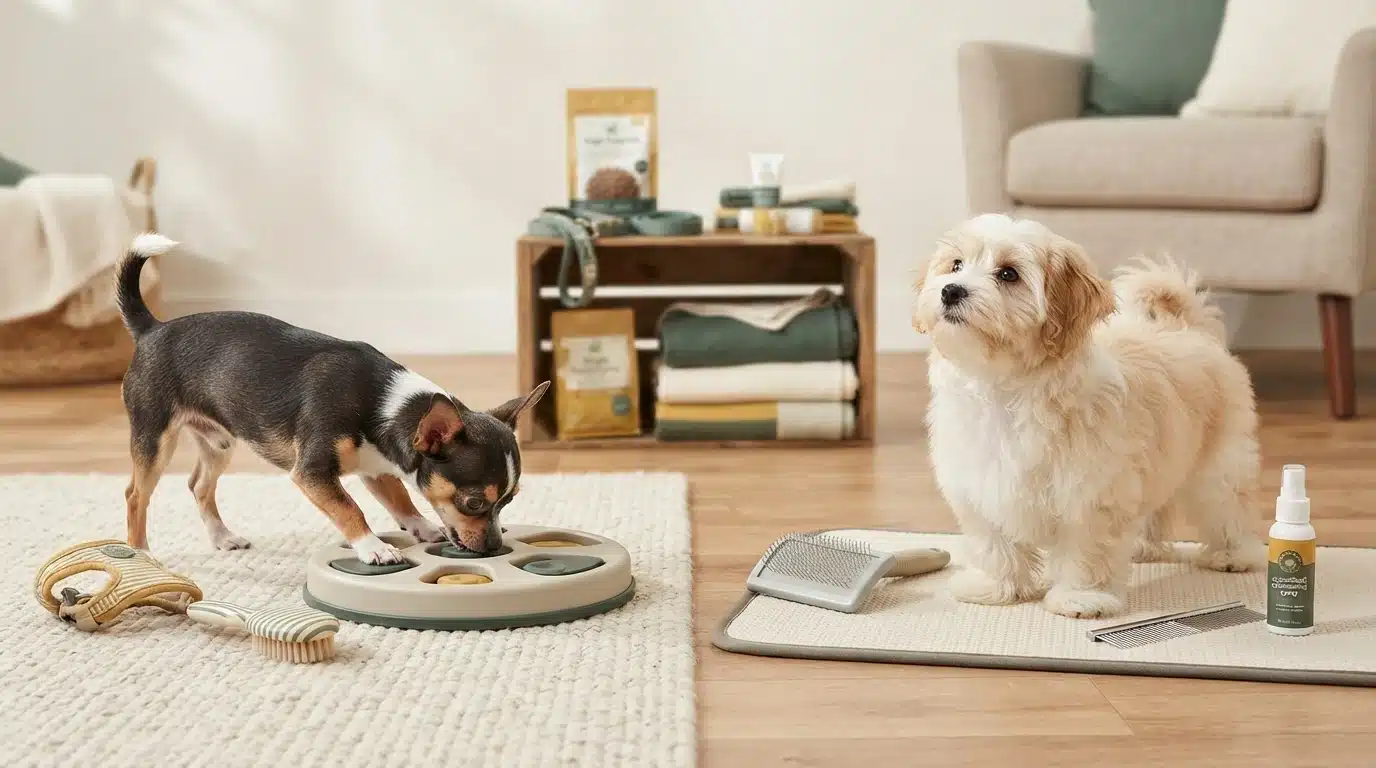
Quick Summary: The Havanese fits busy families and first-time owners with its playful, trainable nature and a double coat that only needs brushing a few times per week. The Maltese suits quieter homes ready for daily brushing of its silky white coat and a sharper watchdog bark, with the trade-off being a more independent streak and fragility around small children. Grooming time, alone-time tolerance, noise level, and household energy are the four factors that really separate the two breeds in daily life. The authors, who raise Havanese at Sage Puppies in South Jordan, Utah, point readers toward the Havanese when family life is loud and active.
If you want a small, silky-coated companion who wants to share your lap and your kitchen, the Havanese is usually the friendlier pick for busy American families. The Maltese suits quieter homes that prize a tidy white coat and don’t mind a sharper watchdog streak. That single distinction shapes everything else.
The problem is that Havanese vs Maltese photos look nearly identical. Both are small, fluffy, and endlessly cute in a breeder’s snapshot. So many families and first-time owners choose on looks alone, then find out after bring-home day that one breed needs a different grooming schedule, a different training approach, and honestly, a different daily rhythm than the other.
This guide breaks down the Havanese vs Maltese choice the way you’ll actually live it: what each breed feels like day to day, how their care routines differ week to week, how their personalities shape training and family life, and which home each one fits best. You’ll pick with your lifestyle in mind, not the photo.
A note on where this comes from: we raise Havanese, Havapoo, and Cavapoo puppies at our boutique program in South Jordan, Utah, so everything here on the Havanese side reflects the dogs we live with, health test, and place with families. Where we describe the Maltese, we lean on breed standards and owner reports rather than personal experience, and we’ll flag that difference as it comes up.
Havanese vs Maltese at a Glance
| Havanese | Maltese | |
|---|---|---|
| Size and weight | 8.5-11.5 inches tall; 7-13 pounds | 7-9 inches tall; 5-9 pounds (often under 7) |
| Coat type and grooming load | Double coat, long and silky in many colors; brushing several times a week, trims every 4-6 weeks | Single, straight, silky white coat; daily brushing and frequent professional grooming to prevent matting |
| Temperament with family | Affectionate, social, slightly clownish; bonds closely with family and dislikes long periods alone | Affectionate with their person, alert and watchful with strangers; more independent streak |
| Trainability | Intelligent and eager to please; learns quickly with positive, consistent handling | Smart and attentive; can be stubborn if routines are inconsistent |
| Exercise needs | About 30 minutes of daily walking and play, plus mental games | Short daily walks and indoor play, easier to meet in apartments |
| Best home fit | Active families, first-time owners, households where someone is usually home | Quieter households, allergy-aware owners who want a low-shed dog, attentive retirees |
How Havanese and Maltese Compare
Havanese
Cuba’s national dog is a sturdy small companion, standing 8.5-11.5 inches tall and weighing 7-13 pounds. Its long, silky double coat suits active families, first-time owners, and households where someone is usually home.

Key strengths
- Affectionate, social, and slightly clownish with family
- Quick to learn with positive, consistent training
- Comfortable with about 30 minutes of daily activity and mental games
Maltese
The Maltese is an ancient Mediterranean lap dog with a single, silky white coat and a sharper watchdog bark. It fits quieter homes, attentive retirees, and allergy-aware owners who want a low-shed companion.
Key strengths
- Compact at 7-9 inches and often under 7 pounds
- Alert and watchful, affectionate with their person
- Short walks and indoor play cover its exercise needs

If you have read this far, you probably know which dog fits your home. The Havanese suits busy families who want a playful, trainable companion with a manageable double coat. The Maltese fits quieter homes ready for daily coat care. If the Havanese has your heart, Sage Puppies raises health-tested Havanese, Havapoo and Cavapoo puppies in South Jordan, Utah, with local pickup and nationwide delivery. Visit the site to see currently available puppies, then complete the short application so Cassie can match you with the right pup. Every placement is owner-managed from first question to homecoming, so you get honest guidance, not a sales pitch. Start your application today and bring home a puppy that was wisely bred and beautifully loved.
Frequently Asked Questions
Q1: Havanese vs Maltese care and personality comparison
The core difference comes down to social energy versus polish. The Havanese is a social, slightly clownish double-coated companion who thrives in busy families and wants people around most of the day. The Maltese is a more independent single-coated lap dog with a sharper watchdog bark, better suited to quieter homes. Care loads differ too: the Havanese needs brushing several times a week and a trim every 4-6 weeks, while the Maltese’s silky white coat needs daily brushing to prevent mats. Both breeds train well with positive methods, but the Havanese tends to be more eager to please, while the Maltese can stall when routines slip. Pick the Havanese for family energy and trainability. Pick the Maltese for a tidy, low-shed companion in a calmer household.
Q2: Which breed is better for a first-time dog owner?
Most first-time owners do better with a Havanese. The breed forgives uneven training sessions and stays motivated by praise and play, so early mistakes don’t derail progress as easily. Its coat is also more forgiving: brushing a few times a week keeps the double coat in decent shape, which gives you time to build a grooming habit without fighting mats. The Maltese can still work for a motivated beginner, but you’re signing up for daily brushing and consistent routines from day one, since gaps show up fast in both coat condition and behavior. If you’re honest about your schedule and want a partner that keeps cheering while you learn, the Havanese is the safer starting point.
Q3: Do Havanese or Maltese shed a lot?
Neither breed is a heavy shedder, and both are reasonable choices for allergy-aware homes, but the coat mechanics differ. The Maltese has a single silky coat with a hair-like growth cycle, so loose hairs mostly stay in the coat until you brush them out. That’s exactly why daily brushing matters; what doesn’t shed out mats instead. The Havanese has a double coat that sheds lightly, and regular brushing several times a week catches most of it before it reaches your sofa. No small breed is truly hypoallergen-free, so spend time around the breed before committing if allergies are a concern. Between the two, the Maltese edges out slightly on shedding, while the Havanese wins on brushing time saved each week.
Q4: Can either breed be left alone during a workday?
The Havanese handles alone time less well. It bonds tightly with its family and genuinely dislikes long stretches by itself, so a household where someone is usually home, or a plan for a dog walker or midday visit, is part of responsible ownership. The Maltese is somewhat more independent and often tolerates a quiet house better, though no toy breed should regularly face a full eight-hour day without a break, especially as a puppy. Before bring-home day, decide who covers the midday hours for the first several months. Puppies of both breeds need frequent potty breaks, short crate sessions, and gradual alone-time practice. If nobody can come home at lunch, budget for a walker or daycare in your monthly costs.
Q5: How much grooming do these breeds actually need each week?
Here’s a realistic side-by-side for a pet trim (not a show coat):
| Task | Havanese | Maltese |
|---|---|---|
| Brushing | 3-4 sessions per week | Daily, 5-10 minutes |
| Professional grooming | Every 4-6 weeks | Every 4-6 weeks, often with more detailed coat work |
| Face and eye care | Light, regular wiping | Frequent tear-stain care to keep the white coat clean |
| At-home time | Roughly 1-2 hours weekly | Roughly 1.5-2.5 hours weekly |
The Maltese demands more consistency, because a skipped day or two shows up as matting behind the ears and in the armpits. The Havanese double coat gives you a little slack. Budget for professional grooming year-round with either breed; it’s not optional once the coat passes a few inches.
Q6: Are Havanese or Maltese good with kids?
Both can be wonderful with respectful children, but the Havanese has the edge for most families. It’s sturdier for its size at 7-13 pounds, more playful, and more willing to forgive a clumsy toddler petting session. Its social, slightly goofy nature makes it a genuine playmate rather than a lap ornament. The Maltese, often under 7 pounds, is more fragile and can be reserved or snappish when handled roughly, so it fits homes with older, gentle kids best. With either breed, supervision is non-negotiable: teach children to sit on the floor for interactions, never carry the puppy unsupervised, and give the dog a retreat space. A small dog’s patience is real but finite, and it’s your job to protect it.
Q7: Which breed barks more?
The Maltese barks more, and more sharply. It was bred to be alert and watchful, so it treats every delivery driver, squirrel, and hallway sound as reportable news. That watchdog streak is a feature in some homes and a headache in apartments with thin walls. The Havanese is no mute; it will announce guests and join in household excitement. But it’s generally easier to redirect with training because it wants to please you more than it wants to guard you. Either way, start early: teach a “quiet” cue, don’t reward barking with attention, and manage window access. A bored, under-exercised toy breed of either type barks far more than a tired one.
Q8: How do I choose between a Havanese and a Maltese puppy from a breeder?
Match the breed to your actual week, not the photo. Ask yourself these questions:
- Who’s home? Someone around most of the day points to a Havanese. Long quiet stretches point to a Maltese.
- Who’s in the house? Young kids and active households favor the Havanese. Adults, retirees, and older children suit the Maltese.
- Can you brush daily, forever? If not, the Havanese’s lighter schedule is the honest answer.
- Noise tolerance? Sensitive neighbors or remote-work calls make the Maltese’s watchdog bark a real factor.
- Training appetite? The eager-to-please Havanese rewards first-time trainers; the Maltese needs firmer consistency.
Then vet the breeder, not just the breed. Look for health testing on the parents, honest answers about temperament, and a process that matches you with the right puppy rather than selling whoever’s available. A good program will talk you out of a mismatch, and that conversation tells you more than any website ever will.
Conclusion
The Havanese vs Maltese decision comes down to how you actually live, not how the puppy looks in a photo. The Havanese is a social, sturdy companion that thrives with busy families, first-time owners, and training built on praise. Its double coat needs brushing a few times a week rather than daily attention. The Maltese rewards a calmer household with a tidy, low-shed white coat, but it asks for daily brushing, closer supervision around small children, and more tolerance for a sharp watchdog bark.
Grooming, alone time, noise, and kid compatibility are the four questions that separate these breeds in practice. Answer them honestly about your week and the right dog is usually obvious.
If the Havanese fits your home, the detailed Havanese care guide for first-time owners walks through home setup, grooming, and daily routines before bring-home day. And whichever breed you choose, start with a breeder who health tests the parents and will tell you when a puppy is the wrong match. That conversation matters more than any comparison chart.