Quick Summary: Most adult Havapoos weigh 10 to 20 pounds and stand 9 to 12 inches tall, but the parents’ weights are the best size predictor. Puppies grow fastest in the first six months, reaching about 7 to 12 pounds by eight months, then fill out through their first year. Track weight weekly on the same scale and watch for steady gains, as a stalled or declining curve calls for a vet visit.
By the time an eight-week-old Havapoo sits calmly at your feet, the bones, teeth, and senses that will carry them through the year ahead are already forming. That’s why families ask the same two questions: how big will my puppy get, and how do I know he’s on track?
This guide answers both with a Havapoo puppy growth chart built on weight ranges from published sources, plus the Havapoo puppy milestones that mark each stage. Instead of one rigid formula, you’ll see a Havapoo growth timeline broken into stages, with a family decision point at each one.
At Sage Puppies in South Jordan, Utah, we raise Havanese and Havapoo puppies and walk new owners through exactly these questions. Consider this your stage-by-stage reference for the first year.
How Big Do Havapoo Puppies Get Full Grown
Most full-grown Havapoos weigh between 10 and 20 pounds and stand 9 to 12 inches tall, though a larger poodle parent can push the range higher. PetMD puts typical adults under 15 pounds, while wider estimates run from 7 to 30 pounds depending on the parents.
Where the Typical Adult Range Comes From
A Havapoo’s adult size is mostly a blend of two breeds. The Havanese contributes 7 to 13 pounds and roughly 8.5 to 11.5 inches at the shoulder, so it anchors the small end. The poodle parent varies more. A toy poodle keeps pups tiny; a mini poodle nudges them toward 15 to 20 pounds. That is why published guides disagree: there is no official Havapoo standard, only parent-based estimates. When a breeder tells you the parents’ weights, treat that pair of numbers as your best predictor, more useful than any chart.

Why Littermates End Up at Different Sizes
Even within one litter, puppies rarely finish at the same weight. Each puppy gets a different mix of genes from the same two parents, so one may favor the smaller Havanese side while a sibling takes after the poodle. Sex matters too, since females often run a pound or two lighter. Birth order, nursing success and early appetite also play a role, so the runt of the litter can catch up by a year old.
A responsible breeder narrows the guess by weighing the dam and sire and sharing growth records. Ask for both parents’ weights and you will be within a few pounds of the answer. For deeper numbers, our Havapoo size guide breaks down toy, mini and full-grown weights.
Havapoo Puppy Growth Chart by Stage
Havapoo puppies grow fastest in the first six months, then slow to a crawl. The chart below follows eight stages, pairing typical weight ranges with the milestones that matter for family planning. Ranges are wide because a toy poodle parent and a mini poodle parent produce very different puppies.
Stages 1 to 4: From Breeder Scales to Coming Home
The first four stages run from birth to roughly eight weeks. A Havapoo puppy weighs about 1.5 to 3 pounds at four weeks and 2 to 6 pounds by eight weeks, according to Hepper’s growth chart. Milestones come fast here: eyes open around two weeks, wobbly walking by four, and solid food by week six.
For families, stage four is the big one. Eight weeks is when puppies legally and developmentally leave the litter, and when you will likely first step on a scale with your pup. At this age, weight is roughly a quarter of the eventual adult size, a rule of thumb breeders of small breeds use often.
Stages 5 to 6: Teething and the Half-Year Pivot
Stages five and six cover three to six months, the steepest part of the curve. Expect roughly 3 to 6 pounds at twelve weeks and 5 to 8 pounds at four months, per the Sage Puppies size chart by age. Teething peaks, so chew toys stop being optional furniture and become survival gear.
This is also the training sweet spot. Puppies at this age absorb house rules, crate routines and basic cues quickly. If you want to plan the first week well, our first-night and puppy prep guide walks through what to have ready before pickup day.
Stages 7 to 8: Adolescence and the Slow Tail-End of Growth
Stages seven and eight run from six months to a year and beyond. Most Havapoos reach close to adult weight by six to eight months, then fill out slowly in chest and coat. An eight-month puppy might weigh 7 to 12 pounds, landing near the 10-to-20-pound adult range noted earlier.
Adolescence brings its own milestones: adult teeth finish, hormones kick in, and some trained behaviors wobble for a few weeks. This is normal, not regression. Keep routines steady and expect the bouncy phase to pass.
Using the Chart Without Overfitting to It
Treat these ranges as guardrails, not grades. A healthy puppy can sit above or below the numbers because parent size, sex and individual pace all matter. What counts is the trend: steady weekly gain, good appetite and normal energy. If weight stalls or drops across two weigh-ins, call your veterinarian rather than the chart.
Weight tells you only part of the story. Milestones, the skills and physical changes that arrive on a fairly predictable schedule, tell you whether your puppy is developing on track. Here is what to watch for and when.
Sensory and Social Windows in the First Twelve Weeks
Puppies open their eyes around two weeks and hear by three weeks. Between three and twelve weeks, they pass through a social window where the brain absorbs new people, sounds and handling with little fear. Positive exposure during this period shapes a calmer adult dog than any later training can. Puppies usually leave for new homes around eight weeks, so the last month of this window happens with you.

Brief, happy introductions to kids, car rides and household noises pay off for years. Ask your breeder what socialization each puppy already received.
Teething, Coat, and Growth-Plate Milestones
Adult teeth start pushing through at about twelve weeks, and most Havapoos finish teething by six months, so frozen chew toys save your furniture. The soft puppy coat gives way to the wavy or curly adult coat between six and twelve months, which is also when regular brushing becomes routine. Growth plates, the soft areas at the ends of leg bones, close somewhere between eight and fourteen months in small breeds. Vets time spay or neuter decisions around that closure, so it is worth a conversation.
Adolescent Behavior and Plate-Loading Cues
Once the plates close, bones stop lengthening and your dog shifts from growing to filling out. You will see muscle replace puppy roundness between nine and fourteen months. Adolescence often brings testing behavior, selective hearing and a brief spike in energy, usually peaking between six and twelve months. Keep training sessions short, stay consistent, and expect a steadier dog as the second year begins. Walking with a loose leash and settling calmly on cue are the two skills most worth protecting through this phase.
Health and Vet Visits Through the First Year
A Havapoo’s first year follows a predictable vet rhythm: a series of puppy visits in the first four months, then spay or neuter and yearly boosters. Your breeder starts some of this work, and your vet finishes it. Sage Puppies puppies go home with a documented vet check already on file, so the next steps are yours to schedule.

Wellness Visits, Vaccines, and Parasite Prevention
Plan on three or four vet visits before your puppy turns five months old. The first covers a full exam, a stool check, and the start of vaccines. Core shots protect against distemper, adenovirus, parvovirus, and rabies, and the AAHA guidelines call for combination vaccine doses every 2 to 4 weeks until at least 16 weeks of age.
Book each visit two to four weeks apart so the series finishes on time. Ask about heartworm and flea prevention at the first appointment; many vets start a monthly product by eight weeks.
Call your vet right away if your puppy skips a meal, has repeated diarrhea, or seems unusually tired. Small breeds lose body fat fast.
Spay or Neuter Timing and Growth Plates
Small dogs like Havapoos usually mature faster than large breeds, so vets often recommend spaying or neutering between six and twelve months. Growth plates, the soft zones at the ends of bones, close earlier in small dogs, which is why the timing differs. Your vet can X-ray if you want proof before scheduling. Fixing too early may slightly affect bone growth, while waiting too long in females can raise the risk of a first heat. Discuss timing at the six-month visit and pick a date together.
Sizing Gear and Home Setup as They Grow
A Havapoo that starts at 2 to 6 pounds at eight weeks will finish near 10 to 20 pounds, so gear bought on day one rarely lasts the year. Plan for two size jumps: one around four to five months, and a final one as adult weight settles.
Crates, Carriers, and Playpens for a Growing Havapoo
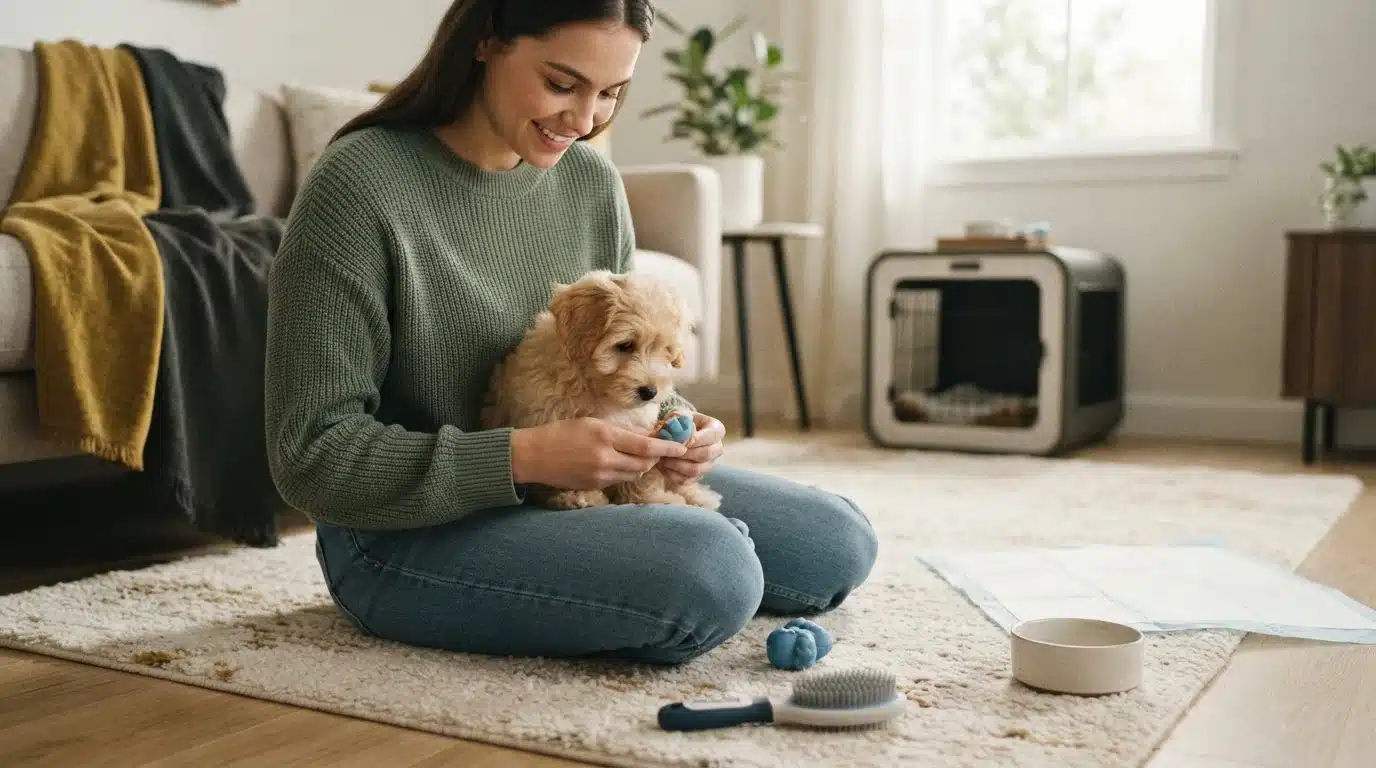
Buy a crate for the adult dog, not the puppy. PetMD’s crate sizing guide matches a 24-inch crate to dogs up to about 25 pounds, which covers most Havapoos. Use a divider panel so the puppy’s space stays snug early on; that helps with house training because pups avoid soiling where they sleep. For travel, a soft carrier rated for 15 to 20 pounds works from the start. A folding playpen with adjustable panels grows with the puppy, and you can shrink the footprint to match her weight at each stage.
Harnesses, Collars, and ID That Still Fit in Six Months
Harnesses are the safer pick for this breed. A Havanese mix has a small, delicate throat, and a collar that catches during a pull puts pressure right where you don’t want it. Look for a step-in or Y-front harness with padding and multiple adjustment points.
Plan on three sizes. A tiny 8-week-old wears an extra-small, and a four-month pup weighing 5 to 8 pounds usually needs a small. Check the fit every few weeks: you should slide two fingers under any strap, no more.
Keep the collar light and flat, with an ID tag attached from day one, even before the microchip registration is finalized.
Tracking Growth Without Becoming a Helicopter
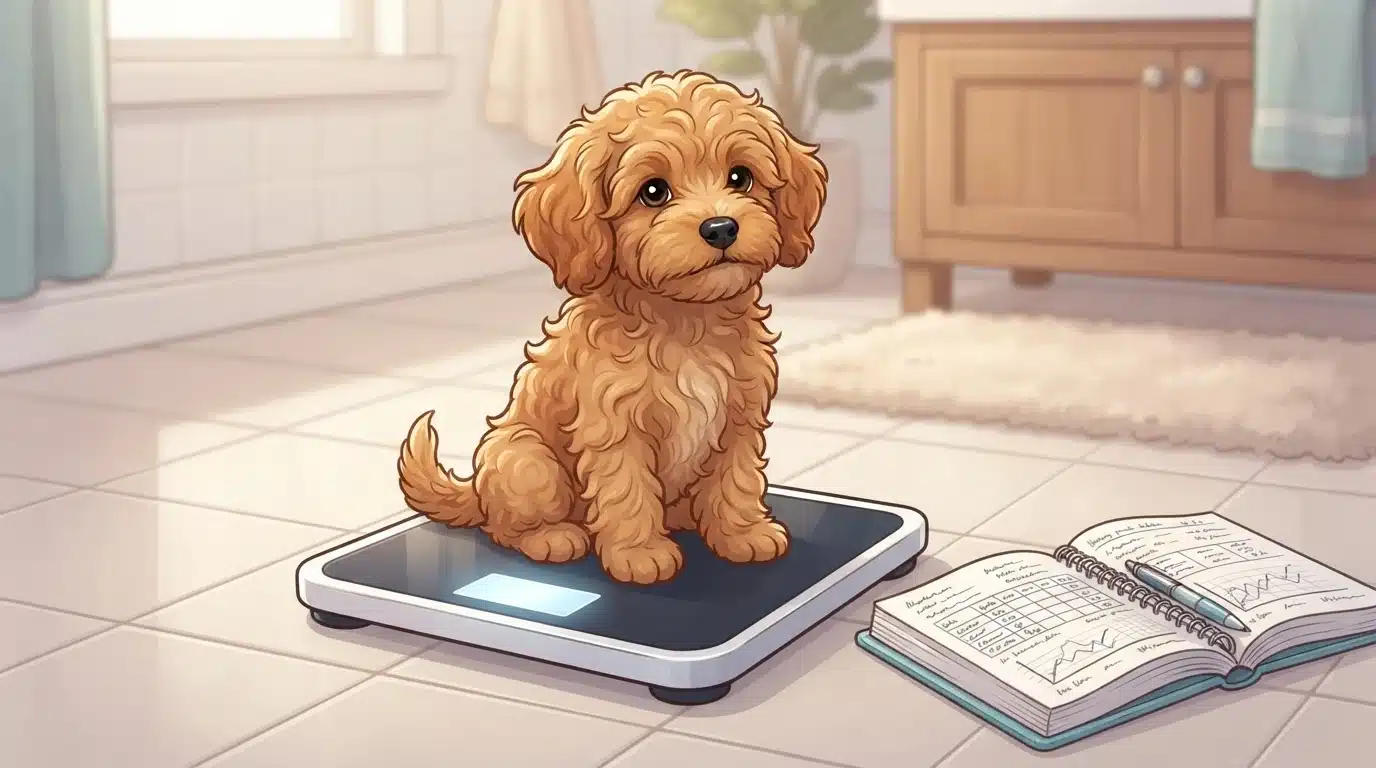
A Havapoo’s weight tells you plenty, but only if you log it in a way you can actually keep up. Weigh weekly, same day, same scale, and write the number down. That’s it.
A Simple Weekly Rhythm That Actually Holds Up
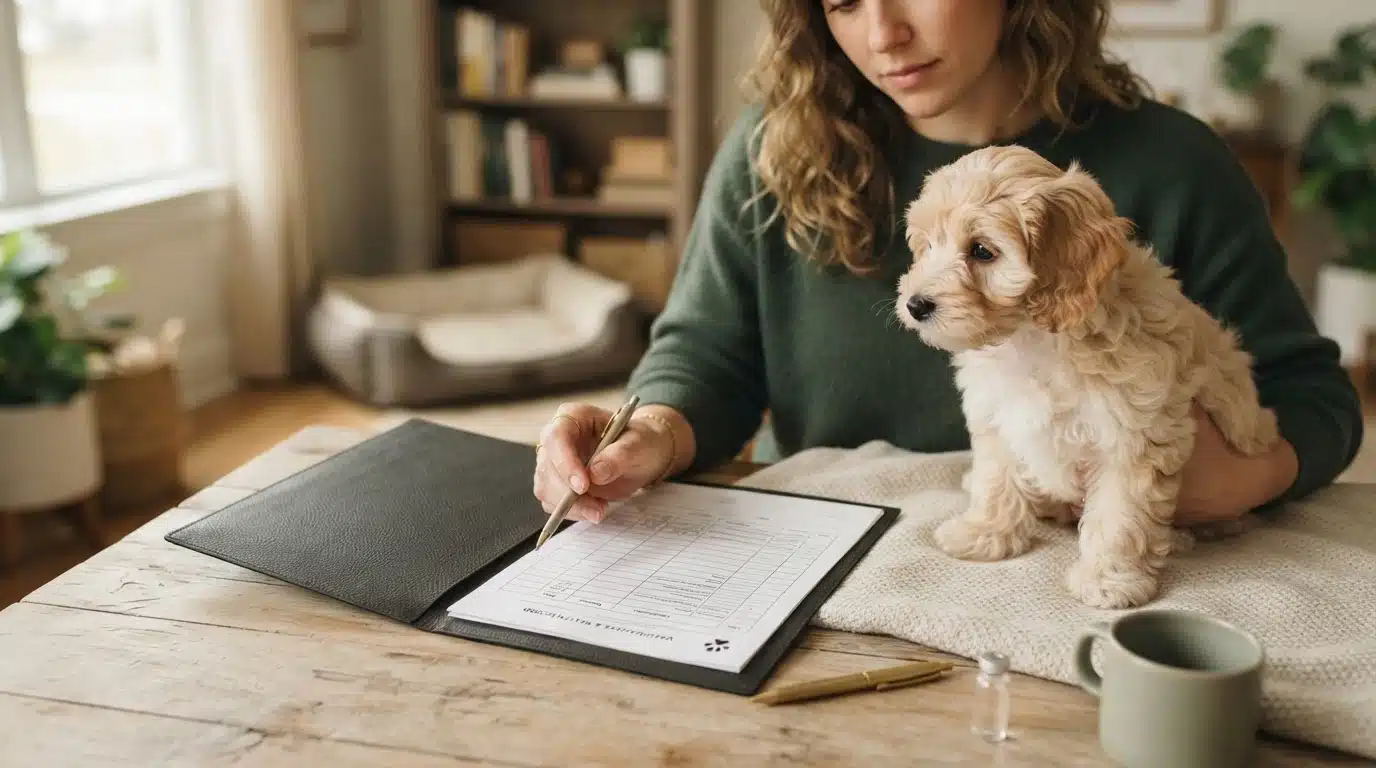
Pick one morning, maybe before breakfast, and use the same bathroom scale each time. Hold your puppy, weigh yourself, then weigh the pair and subtract. Royal Canin’s veterinary guidance recommends weighing puppies weekly, or at minimum every two weeks, with each reading recorded, so a paper note or phone memo works fine.
Compare against the ranges in this article, not against a neighbor’s doodle. A pup tracking toward 10 to 15 pounds grows differently than one headed past 20. Watch the direction of the curve rather than chasing exact numbers. Steady gain matters more than any single weigh-in, and skipping a week won’t hurt anything.
When to Pause the Tracker and Call the Vet
Some numbers deserve a phone call, not another week of waiting. Contact your vet if your puppy stops gaining for more than a week, loses weight, or eats far less than usual. Pair those signs with vomiting, diarrhea, low energy, or restless crying and you have an urgent situation. In young puppies, fading puppy syndrome shows up as poor appetite, constant crying, and failure to gain weight, which is why quick action beats watchful waiting.
A curve is a tool, not a diagnosis. When something looks off, trust the puppy in front of you over the chart.
Common Mistakes to Avoid in the First Year
Overfitting Predictions to a Single Number
A growth chart gives a range, not a promise. A puppy that weighs 6 pounds at four months might finish at 12 pounds, or closer to 18 if the poodle parent was a mini. Weigh monthly, plot the trend, and compare against the whole adult range of 10 to 20 pounds. One reading tells you very little on its own.
Overfeeding, Free-Choicing, and Skipping Body-Condition Checks
Leaving food down all day feels kind, but it makes weight creep hard to spot. Small breeds gain quickly, and extra pounds stress young joints. Many owners also misjudge condition: one study found only 48% of owners could correctly estimate their dog’s weight (PMC). Instead, run a quick body-condition check by feeling for ribs under a thin fat layer, as Texas A&M’s veterinary fund suggests. Measured meals win.

Watching your Havapoo’s weight and milestones is easier with a well-matched puppy. The application process at Sage Puppies pairs families with Havanese, Havapoo, and Cavapoo pups, so you start year one with a healthy, predictable grower.
Frequently Asked Questions
Q1: How big do Havapoo puppies get full grown?
Most adult Havapoos weigh 10 to 20 pounds and stand 9 to 12 inches tall. Parent size drives the final number: a toy poodle parent keeps pups small, while a mini poodle can push them toward the top of the range.
Q2: When is a Havapoo puppy fully grown?
Most reach close to adult weight by six to eight months, then fill out in chest and coat. Growth plates close between eight and fourteen months, so full physical maturity usually lands near the first birthday.
Q3: How much should a Havapoo weigh at each month?
Expect roughly 2 to 6 pounds at eight weeks, 3 to 6 pounds at twelve weeks, 5 to 8 pounds at four months, and 7 to 12 pounds at eight months, landing in the 10-to-20-pound adult range.
Q4: Is my Havapoo puppy too skinny?
Feel for ribs under a thin fat layer and watch the weekly trend. A steady gain and good appetite matter more than one reading. If weight stalls across two weigh-ins, call your vet.
Q5: How big will my Havapoo puppy get from current weight?
At eight weeks, weight is roughly a quarter of adult size. Ask for both parents’ weights, too. That pair of numbers predicts adult size better than any chart or formula.
Q6: Do male or female Havapoos grow bigger?
Females often run a pound or two lighter than males, but parent genetics matter more than sex. Littermates commonly finish at different weights, so plan gear around trends, not averages.
Conclusion
A Havapoo growth chart works best as a range, not a promise. Most pups land between 10 and 20 pounds, with parent weights as your best predictor and steady weekly gain as the real signal of health. Each stage brings its own milestone, from teething around twelve weeks to growth-plate closure near the first birthday, so plan vet visits, gear and training around those checkpoints. Track weight weekly on the same scale, watch the trend, and call your vet if the curve stalls. Do that, and the numbers become a simple way to enjoy a well-growing puppy.