Quick Summary: Havapoo adult size depends mainly on the Poodle parent: Toy Havapoos typically weigh 8 to 14 pounds, while Minis reach 12 to 20 pounds. Ask the breeder for both parents’ actual weights, since “Teacup” is only a marketing term for dogs that may stay under 8 pounds. Weigh the puppy weekly on the same scale, judge steady trends alongside body condition, and multiply its 8-week weight by four for a rough adult estimate.
A 7-pound Havapoo and a 12-pound littermate can both be perfectly normal adults. That surprises first-time buyers, but it makes sense once you look at the pedigree. “Full-grown” for this cross is not one number. It is a band, and the Poodle variety on the parent side plus each parent’s actual weight sets where your puppy lands inside it.
This guide shows you how to read a Havapoo weight chart by category: Toy, Mini, and the full-grown baseline. You will see how parent weights predict adult size, what the Havapoo growth stages look from eight weeks to a year, and how Mini Havanese weight compares for families weighing both breeds. We raise Havanese and Havapoo puppies in South Jordan, Utah, so every range here ties back to real parents and real litters.
Why a Havapoo Weight Chart Has Rows, Not One Number
A Havapoo weight chart gives you a range, not a promise. The Havapoo is a cross between a Havanese and a Poodle, and each parent breed carries its own size band. That is why any honest chart has separate rows for Mini, Toy, and Teacup puppies instead of a single full-grown number.
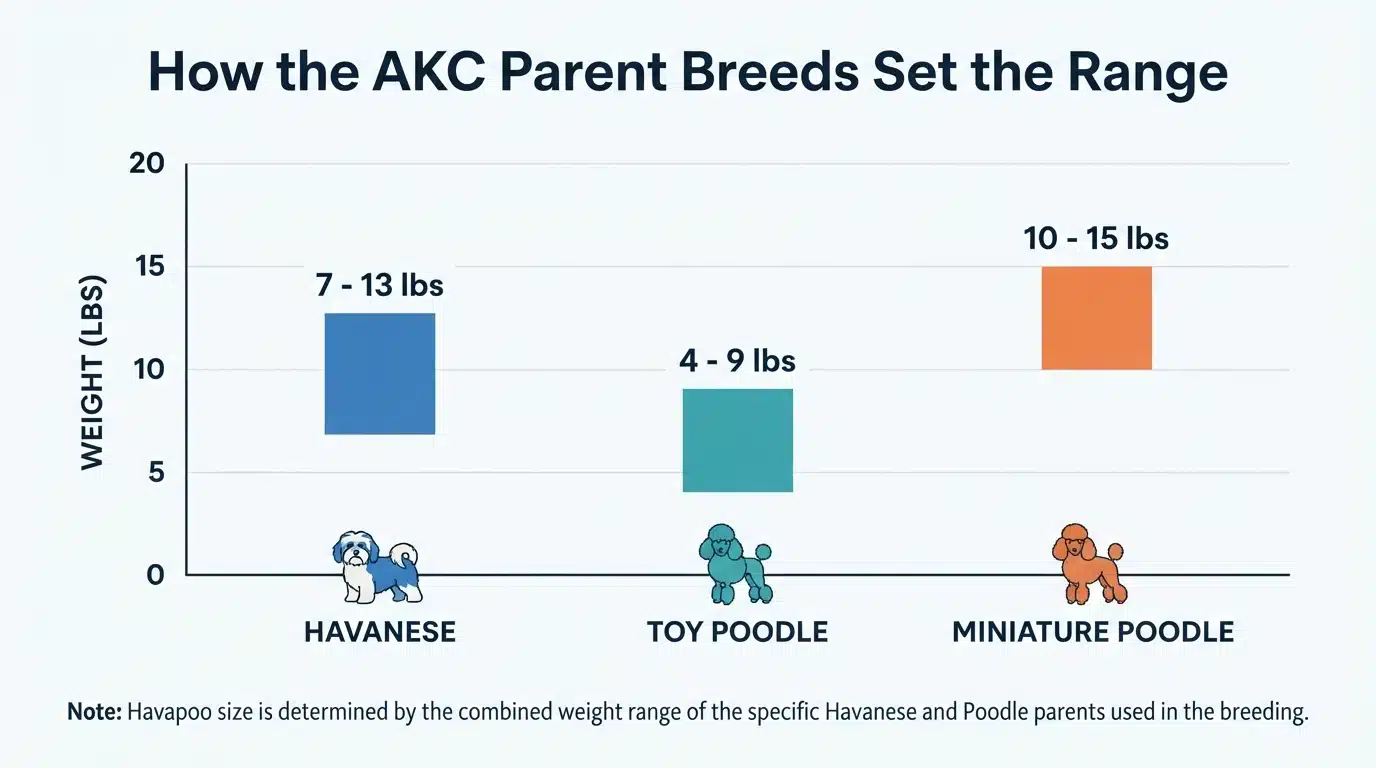
How the AKC Parent Breeds Set the Range
Start with the parents. The AKC breed standard puts the Havanese at roughly 7 to 13 pounds, with an ideal height between 9 and 10.5 inches according to the official standard. That six-pound spread alone guarantees variety in a litter.
The Poodle side adds more. A Toy Poodle and a Miniature Poodle differ noticeably in height and weight, so the Poodle parent chosen decides which chart row applies. A Mini bred from a larger Poodle line will not land where a Toy bred from a small one does.
This is why the useful question is never “how big is a Havapoo?” It is “how big are this puppy’s parents?” A weight chart simply organizes those parent-based outcomes into rows. Every row, from Teacup to Mini, assumes a different Poodle variety on the other side.
What the Chart Cannot Tell You
A chart predicts the center of the range. It cannot predict your specific puppy. Two full-grown littermates can differ by several pounds, and both stay perfectly healthy. A 7-pound Havapoo and a 12-pound littermate can both be normal adults, even when the parents looked similar in size.
Charts also say nothing about build. Some Havapoos inherit the Havanese’s sturdier frame, so a heavier dog may just carry more bone, not extra fat. Others stay fine-boned and light.
Finally, no row tells you about temperament, coat type, or how your puppy handles your family’s routine. Those come from upbringing and the individual dog. For the day-to-day side of raising one, this Havapoo puppy care guide covers what a weight row never will.
Read the chart as a map, then measure the actual puppy. Weekly weigh-ins during the first year tell you more than any projection table.
Mini, Toy, and Teacup Havapoo Size Bands at a Glance
A Havapoo’s adult size follows the Poodle parent. The Havanese side stays roughly the same in every pairing, around 7 to 13 pounds, so the Poodle variety is what separates a Mini from a Toy or Teacup puppy. Read the bands below as typical ranges, not promises, because individual puppies vary.
Mini Havapoo Size (Miniature Poodle Parent)
A Miniature Poodle stands 10 to 15 inches tall and weighs 10 to 15 pounds, per the AKC breed profile. Pair that with a Havanese and most puppies land somewhere in the middle. A typical Mini Havapoo adult falls roughly between 12 and 20 pounds, which makes it the sturdiest of the three bands and a good match for families with young kids.
Toy Havapoo Size (Toy Poodle Parent)
Toy Poodles weigh just 4 to 6 pounds and stay under 10 inches tall, so their Havapoo puppies stay small. Most Toy-band adults settle between about 8 and 14 pounds, with the Havanese parent pulling the average up from the Toy Poodle’s low end. If you want a portable, apartment-sized dog but find the Havanese weight range appealing, this band usually hits the sweet spot.
Teacup Havapoo Size and What the Label Actually Means
“Teacup” is a marketing term, not a breed standard. Sellers usually apply it to the smallest Toy-cross puppies, adults who might stay under 8 pounds, often from pairing extra-small parents. Because no registry defines it, ask which Poodle variety the breeder used and what the parents weigh. Our Havapoo size chart by age shows how puppy weight tracks toward each band. Very small dogs need extra care with drops, rough play, and stairs, so weigh the trade-off honestly before choosing this band.
Mini Havanese weight follows a steady curve, and reading it month by month tells you far more than any single weigh-in. An adult Havanese lands between 7 and 13 pounds, so a healthy puppy tracks a predictable fraction of that band as it grows. Here is how the chart lines up across the three stages that matter most.
8 to 12 Weeks: The Hand-Off Window
Most Havanese puppies go home between 8 and 12 weeks, and weight at this stage is roughly a quarter of the adult total. A puppy bound for 9 pounds as an adult often weighs 2 to 3 pounds at hand-off, while a pup headed toward 13 pounds may sit closer to 3.5 or 4. Breeders of Havanese note that a healthy puppy at 8 weeks weighs about one quarter of its adult weight, which makes this the most useful single data point on the chart. Weekly gains of a few ounces are normal here. Do not panic over small differences between littermates at this age; two pups weeks apart in size often converge by their first birthday.
4 to 6 Months: The Fast-Growth Phase
Between 4 and 6 months, growth speeds up and the chart spreads out. A typical Havanese puppy reaches 6 to 10 pounds by 6 months, which is most of the way to the adult band. Small-breed growth charts show most Havanese finishing their frame growth by 6 to 8 months. Track weight every two weeks during this window. A steady climb matters more than the exact number, because a sudden stall or a sharp jump deserves a vet’s attention.
9 to 12 Months: Slowing and Filling Out
From 9 to 12 months, the scale barely moves, but the puppy keeps changing. Height stops first, then the chest deepens and muscle fills in. By 12 months most Havanese sit within the 7 to 13 pound adult range, though some add a little coat and body condition up to 18 months. Judge your dog by body shape, not the scale alone: you should feel ribs easily under a light layer.
Toy Havanese Weight by Age: How the Same Chart Shifts Down
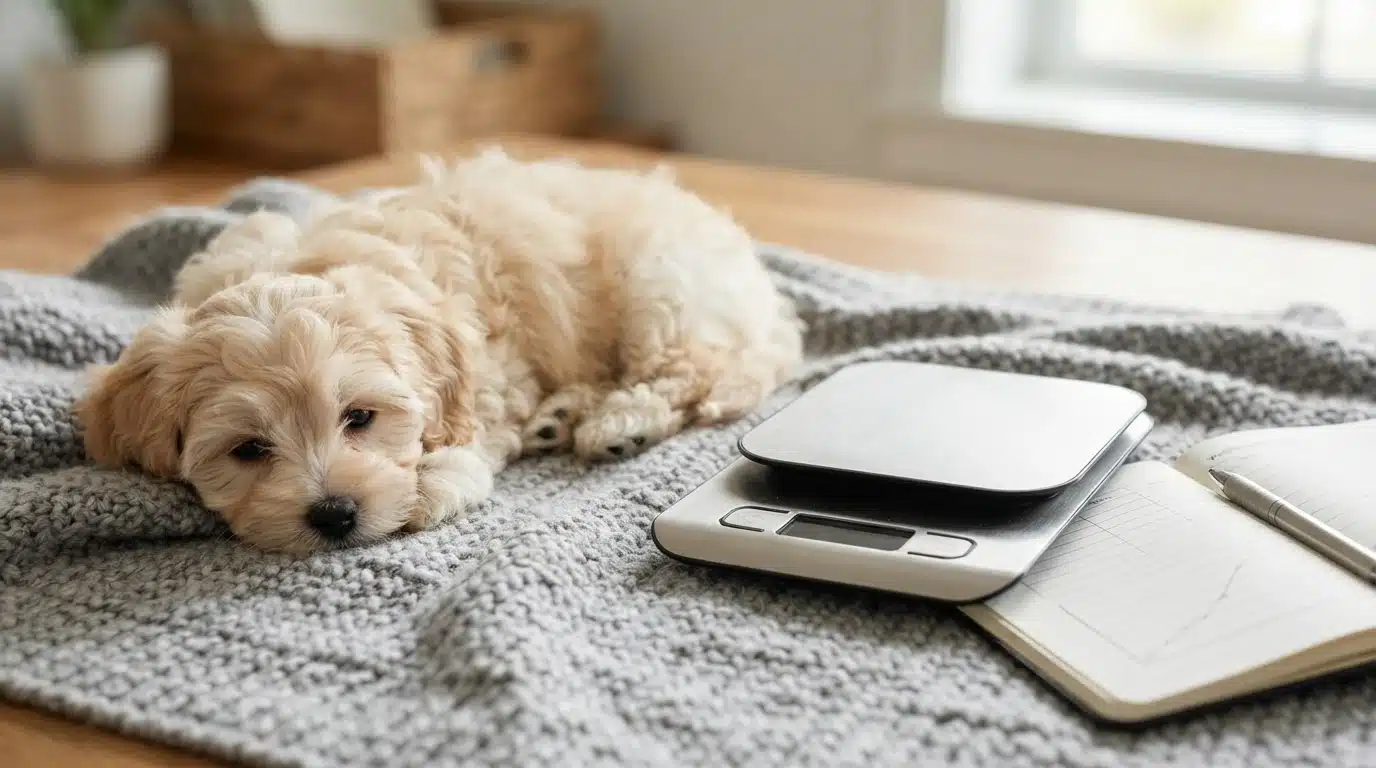
Toy-band Havapoos follow the same growth curve as Minis, just compressed. The quarter-at-8-weeks rule still holds, but every checkpoint lands lower on the scale. A Toy puppy bound for 9 pounds as an adult weighs about 2 to 2.5 pounds at 8 weeks, while a full-grown Havanese puppy headed for the same weight often weighs a little more at hand-off. That gap narrows fast. By 6 months, a Toy-band puppy usually sits between 5 and 8 pounds, and by 9 to 12 months it has essentially stopped growing, matching the small-breed pattern where the frame finishes early. Growth-chart tools built from the AKC standard and typical weight bands show the same shape at every size: rapid early gains, then a long flat finish. If you want the full age-by-age picture in one place, the Havapoo size and growth chart breaks each stage down by breed type.
Why Toy Rows Are Not Just Mini Rows Minus a Pound
Subtracting a pound from every Mini row sounds tidy, but it misreads the chart. Mini and Toy Havapoos differ because of the Poodle parent, not the Havanese. The Havanese side stays near 7 to 13 pounds in either pairing, so the Toy Poodle’s 4-to-6-pound frame is what pulls the whole curve down.
That changes the shape of the growth, not only the endpoint. A Toy puppy’s weekly gains are smaller from week one, so an 8-week weight of 2 pounds points to a much lower adult number than the same weight would suggest in a Mini. Percentages matter more than pound differences.
Tracking Toy Weight Without Over-Tracking
Small puppies invite daily weighing, and that gets noisy. Food, water, and a recent potty break can swing a 3-pound puppy by several ounces, which looks alarming on paper but means nothing.
Weigh weekly at the same time of day, use the same scale, and log it. Judge your puppy against its own trend line, not a neighbor’s dog or a single chart cell. What matters is steady gain: consistent weekly growth through 6 months, then a slow plateau. A puppy who skips a week but keeps eating and playing normally is usually fine. Sudden loss or no gain for two-plus weeks earns a vet call.
How to Read a Havapoo Weight Chart Without Misreading It
A weight chart shows you a range, not a verdict. To use it well, you need two things: consistent numbers from the scale and a sense of how your puppy actually looks and feels. Skip either one and the chart can mislead you.
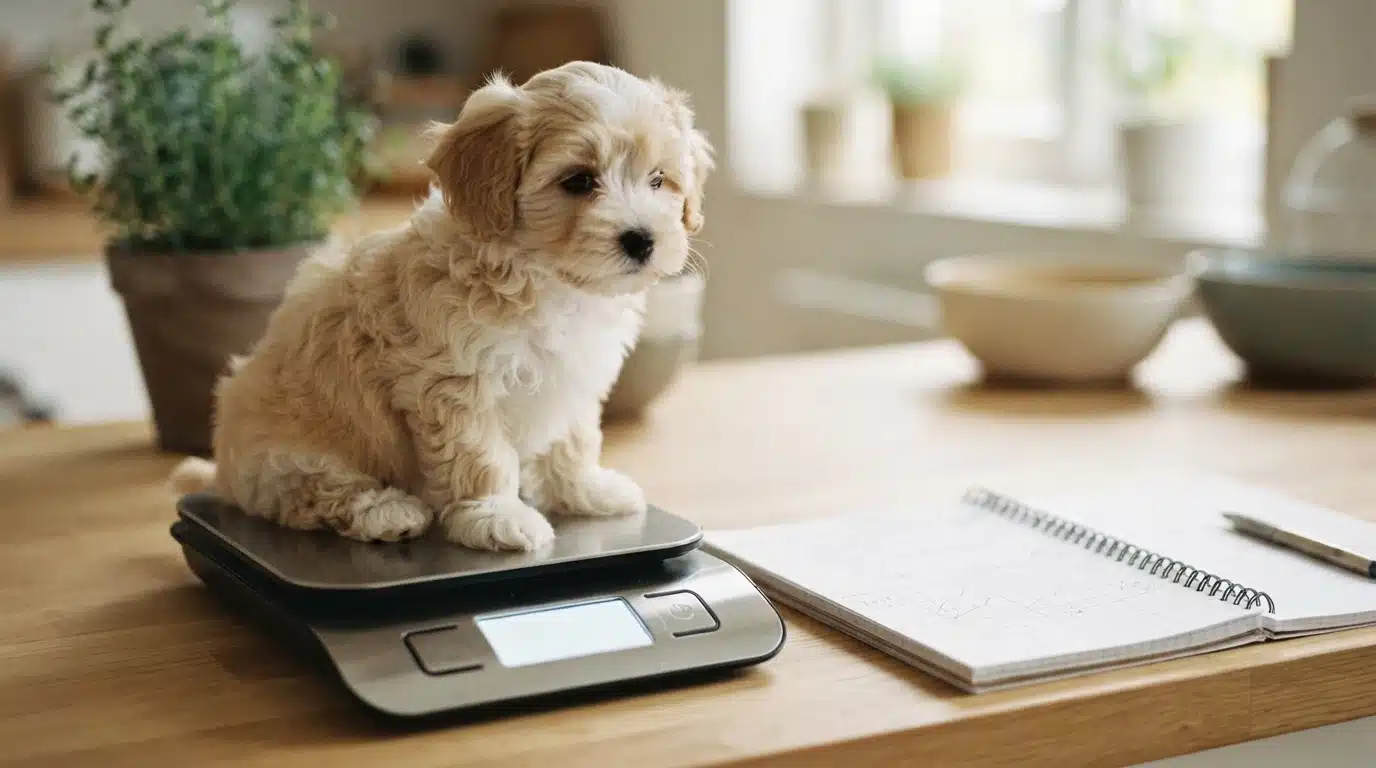
Set Up a Simple Weigh-In Routine
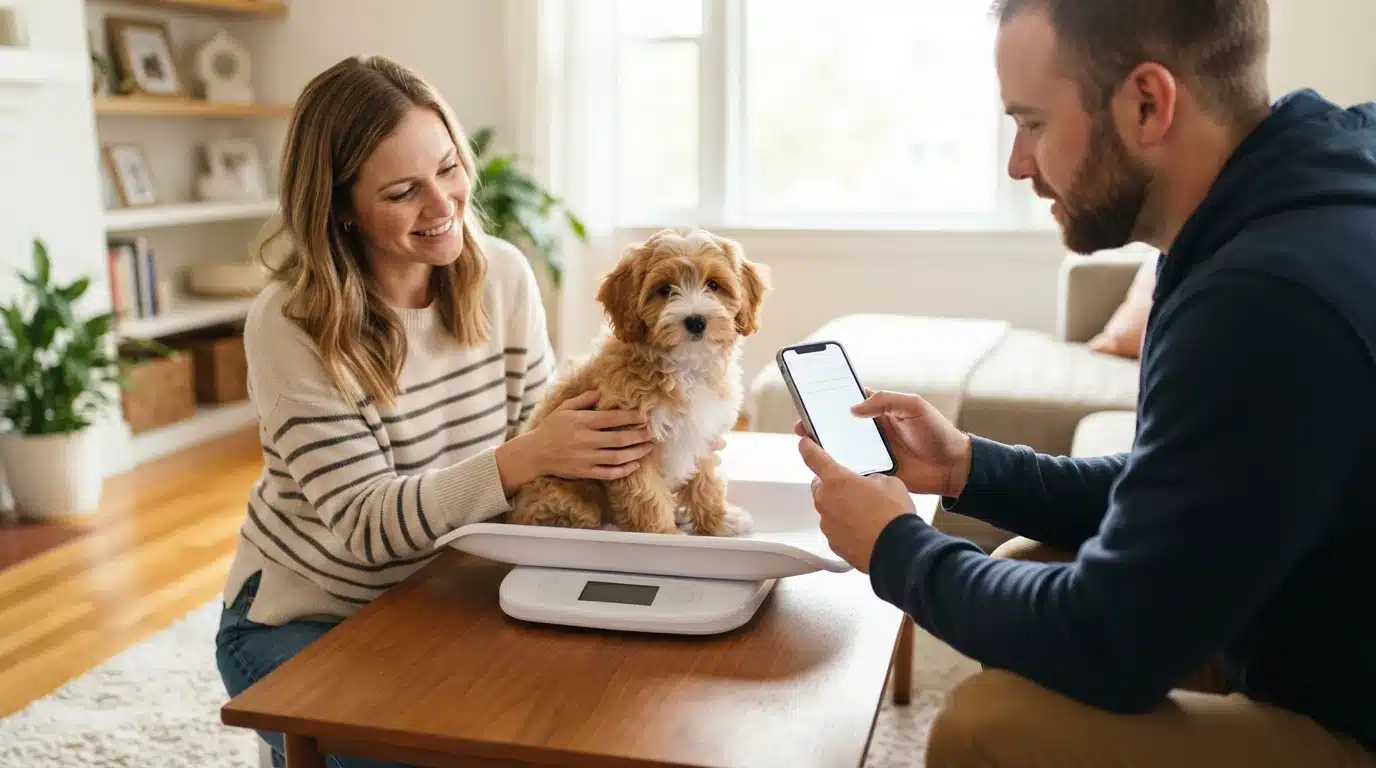
Pick one scale and one time of day, then weigh your puppy on the same schedule each week. Bathroom scales are too coarse for a 3-pound puppy, so use a kitchen or baby scale and record every entry in a notebook or phone note. Consistency matters more than precision, because day-to-day meals and potty breaks can swing the number by several ounces. What you are watching for is the trend line, not any single reading. A Havapoo that gains steadily across its band is doing its job, even if it sits below the chart’s midpoint. The size and growth chart by age gives you the checkpoints, and your weekly log fills in the curve between them.
Pair Scale Weight With Body Condition
Numbers only tell half the story, because two dogs at the same weight can carry it very differently. Vets use a 9-point body condition score, and a score of 4 to 5 counts as ideal: ribs you can feel under a thin fat layer, a visible waist from above, and a tuck behind the ribs, as VCA Hospitals explains. Run your hands along your puppy’s sides once a week. If ribs disappear under coat and padding, ease back on food. If bones press sharply through, ask your vet before adding portions.
Choosing the Right Size Band for Your Household
Weight charts tell you what a puppy will become. The right question is what your household needs. A Mini, Toy, or Teacup Havapoo can each fit a family well, but the size band changes daily life in ways first-time owners often miss.
Handling, Kids, and Other Pets
The smallest dogs are the most fragile. A Teacup or small Toy adult under 8 pounds can be hurt by a fall from a toddler’s arms or a rough step from a larger dog. Families with children under about six usually do better with a Mini, whose 12-to-20-pound frame handles pickup play and hallway chaos. Toy and Teacup dogs suit quieter homes: adults, retirees, or families with gentle older kids. With other pets, size matters on both sides. A tiny Havapoo can live with a big, calm dog, but supervise early introductions and give the small dog an exit route.
Travel, Carrier Fit, and Airline Rules
Size bands also decide how easily the dog travels. Most US airlines that accept pets in the cabin require a soft carrier that fits under the seat, and many cap the combined weight of pet and carrier around 20 pounds. A Toy or Teacup Havapoo meets that comfortably; a full-grown Mini may not. Check your airline’s current pet policy before you commit to a band. For car trips, any size works with a crash-tested harness or carrier. Smaller dogs also cost less to feed, board, and equip over a lifetime, which adds up across 12 or more years.
Using the Chart When You Talk to a Breeder
Questions That Turn the Chart Into a Match
A weight chart only helps if the numbers behind it are honest. Before you reserve a puppy, ask the breeder for the actual parent weights, not just the size category. A “Toy Havapoo” from a 12-pound dam tells a very different story than one from a 5-pound Toy Poodle.
Ask these five questions and write down the answers:
- How much does each parent weigh, and is the sire or dam the Poodle? The Poodle variety drives the adult band.
- What did this puppy weigh at 8 weeks? Multiply by four for a realistic adult estimate.
- Where did previous littermates land as adults? Litter history beats any formula.
- Are any puppies tracking under 8 pounds? If so, ask what “Teacup” means to that program and what extra health screening the smallest pups get.
- When does the puppy go home? A 10-week-old should weigh a quarter to a third of the adult target.
Good breeders answer without hesitating and show you both parents when possible. At Sage Puppies, each puppy’s profile lists current weight and parent size so you can compare it against the chart before you apply. If a breeder dodges the weight question, treat that as a red flag and keep looking.

Still weighing Mini against Toy? Each Sage Puppies puppy has a live profile with current weight and parent sizes, so you can match the adult size to your home. Browse available Havapoo puppies or start an application, and Cassie will help you find the right fit.
Frequently Asked Questions
Q1: How big does a full-grown Havapoo get?
Most full-grown Havapoos land between 8 and 20 pounds, depending on the Poodle parent. Toy-band adults settle around 8 to 14 pounds, while Minis reach 12 to 20 pounds.
Q2: What’s the difference between a Mini and Toy Havapoo?
The Poodle parent. A Miniature Poodle produces a sturdier 12-to-20-pound adult; a 4-to-6-pound Toy Poodle pulls the whole litter down to the 8-to-14-pound band.
Q3: When is a Havapoo full grown?
Height stops around 6 to 8 months, and most dogs finish filling out by 12 months, sometimes up to 18.
Q4: How much should a Havapoo puppy weigh at 8 weeks?
Roughly a quarter of the adult target. Multiply the 8-week weight by four for a realistic estimate.
Q5: Is a Teacup Havapoo a real size category?
No. It’s a marketing label for the smallest Toy crosses, usually under 8 pounds as adults, with no registry definition.
Conclusion
A Havapoo weight chart works best as a three-category tool. The Havanese side stays near 7 to 13 pounds in every pairing, so the Poodle parent, Toy or Miniature, decides whether your puppy lands in the 8-to-14-pound Toy band or the 12-to-20-pound Mini band. “Teacup” is a marketing label with no registry definition, so always ask for actual parent weights. Track growth yourself: weigh weekly on one scale, watch the trend line, and pair the numbers with body condition. At 8 weeks, multiply the puppy’s weight by four for a realistic adult estimate. Read the rows as a map, then measure the real puppy in front of you.