Quick Summary: A Havapoo puppy’s first month shapes the next 12 to 15 years, and success comes down to four steady habits tied to the breed’s small size and mixed Havanese-Poodle coat. New owners should feed small-breed puppy food on an age-based schedule (four meals at 8-12 weeks, down to two by adulthood), brush the wavy or curly coat three to four times a week with a slicker brush and metal comb, run potty breaks and crate naps on the same daily rhythm, and stay current with the first-year vaccine and wellness schedule. Because small breeds hide problems well and mature quickly, skipping preventive vet care or guessing at portions creates habits that are hard to undo. The guide draws on Sage Puppies’ daily experience breeding Havanese, Havapoo, and Cavapoo puppies in South Jordan, Utah, translating that hands-on knowledge into a practical first-month roadmap.
The first brush stroke, the first kibble, the first night in the crate, and the first puddle on the floor: those four moments decide a lot. This Havapoo care guide walks you through all of them, because the first month shapes the next twelve to fifteen years.
Most new Havapoo owners mean well but guess at feeding amounts, crate routines, and coat care. Guesswork creates habits that take months to undo, especially with a small breed that matures quickly.
This Havapoo care guide gives you a clear first-month roadmap. You will learn age-based feeding, house training milestones, coat-aware grooming, and the vet checks that matter, so caring for Havapoo puppies feels planned instead of panicked. The advice comes from Cassie Milar’s Sage Puppies program in South Jordan, Utah, where Havanese, Havapoo, and Cavapoo puppies are bred and raised with documented daily experience.
What a Havapoo Is, and Why That Shapes Every Care Decision
A Havapoo is a cross between a Havanese and a Poodle, usually a Miniature or Toy Poodle. That mix explains most of what a new Havapoo owner needs to plan for: small size, a low-shedding coat that needs regular brushing, and a people-focused temperament that dislikes long stretches alone.
Size, Coat, and Temperament at a Glance
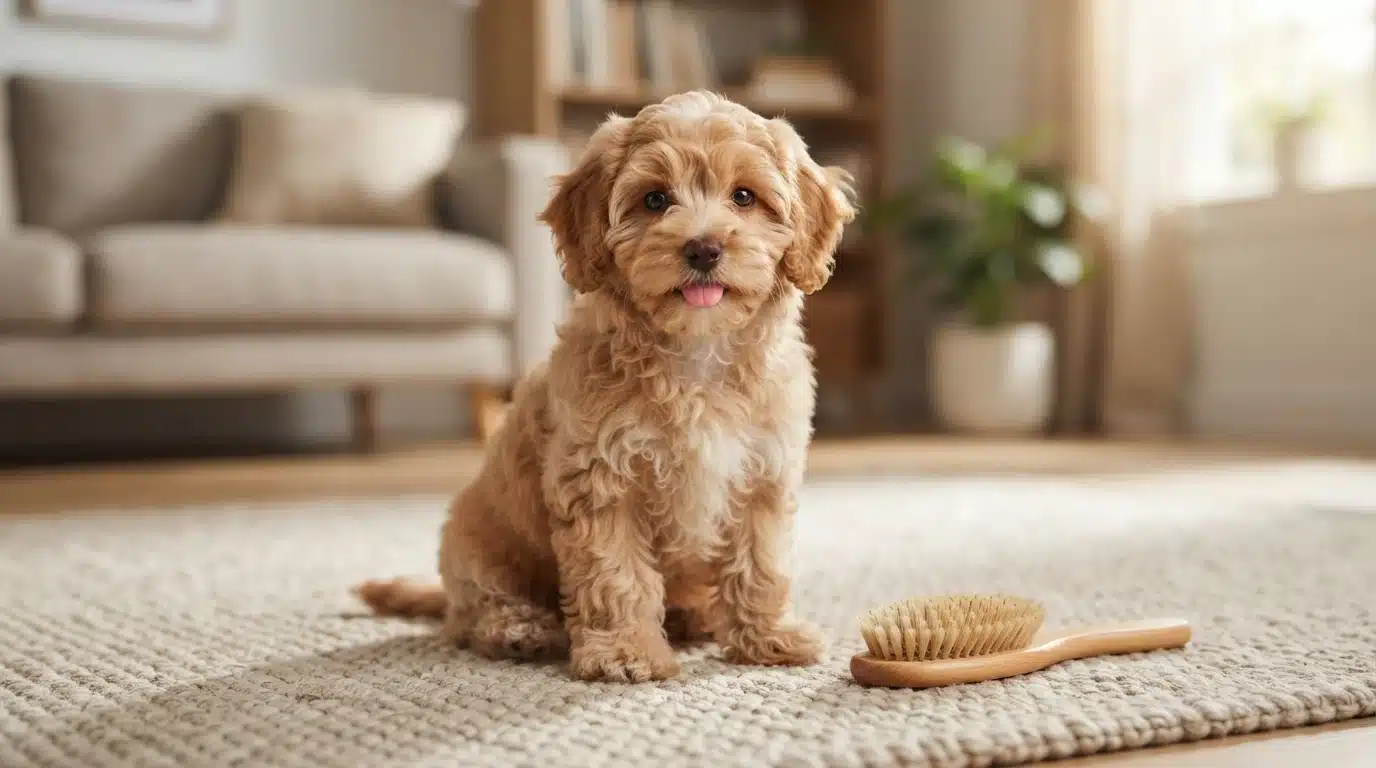
Adult Havapoos usually weigh 7 to 20 pounds, depending on which Poodle parent was used, and often stand well under a foot tall at the shoulder. Coats range from soft waves to loose curls, and most shed very little, though no coat is truly allergy-free. Temperament is the big draw: these are social, gentle, quick-to-learn companion dogs. Their small size means they need less space and food than bigger breeds, but their coat and social nature mean more grooming time and more togetherness than some families expect.
Why Mixed Heritage Matters for New Owners
Mixed heritage means the Poodle side affects size, coat texture, and even how your Havapoo’s adult fur comes in. PetMD notes the Havanese parent weighs 7 to 13 pounds, while the Poodle parent ranges from 4 to 15, so siblings in one litter can mature at noticeably different sizes. Heritage also shapes health: both parent breeds share a few risks, so preventive vet care matters early. Any honest Havapoo care guide starts here, because size and coat determine the crate, food portions, and brushing tools you buy before pickup day.
Puppy-Proofing Your Home and Choosing the Right Supplies
A Havapoo puppy will find every cord, sock, and houseplant you forgot about, so get down on the floor and look at each room from nose height before pickup day. Tuck away chargers, secure loose rugs, and block stairs with a gate.
Crate, Playpen, and Safe-Room Setup
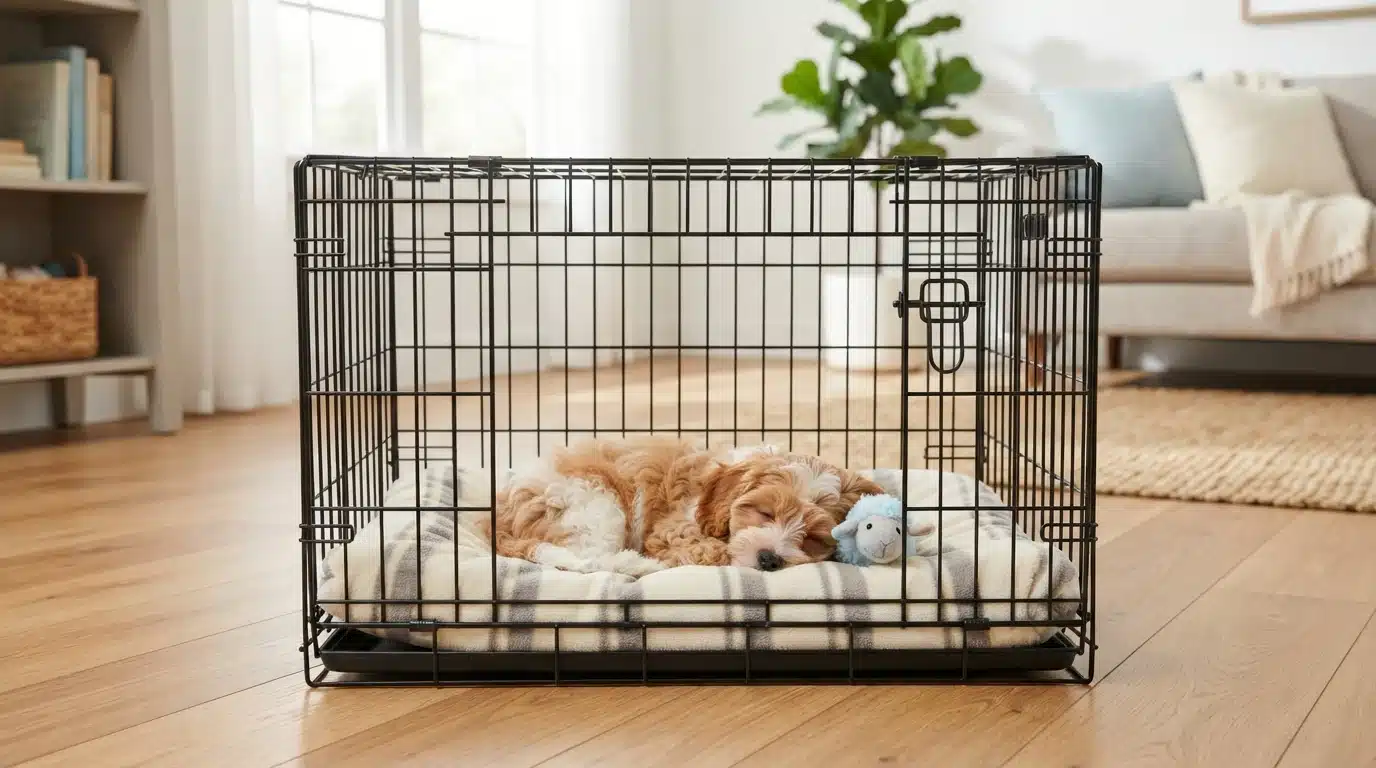
One crate, one playpen, one quiet corner. That is the simple formula. A crate sized for an adult dog of 7 to 20 pounds works if it has a divider panel, so the space grows as your puppy does. Add a soft playpen around the crate for longer stretches when you cannot watch closely. Keep the setup away from drafts and loud hallways, since a safe room should feel boring, not scary. Crate training also speeds up house training because dogs avoid soiling where they sleep. Our Havapoo puppy checklist covers the first-week routine in more detail.
Grooming Tools and Travel Gear to Buy Upfront
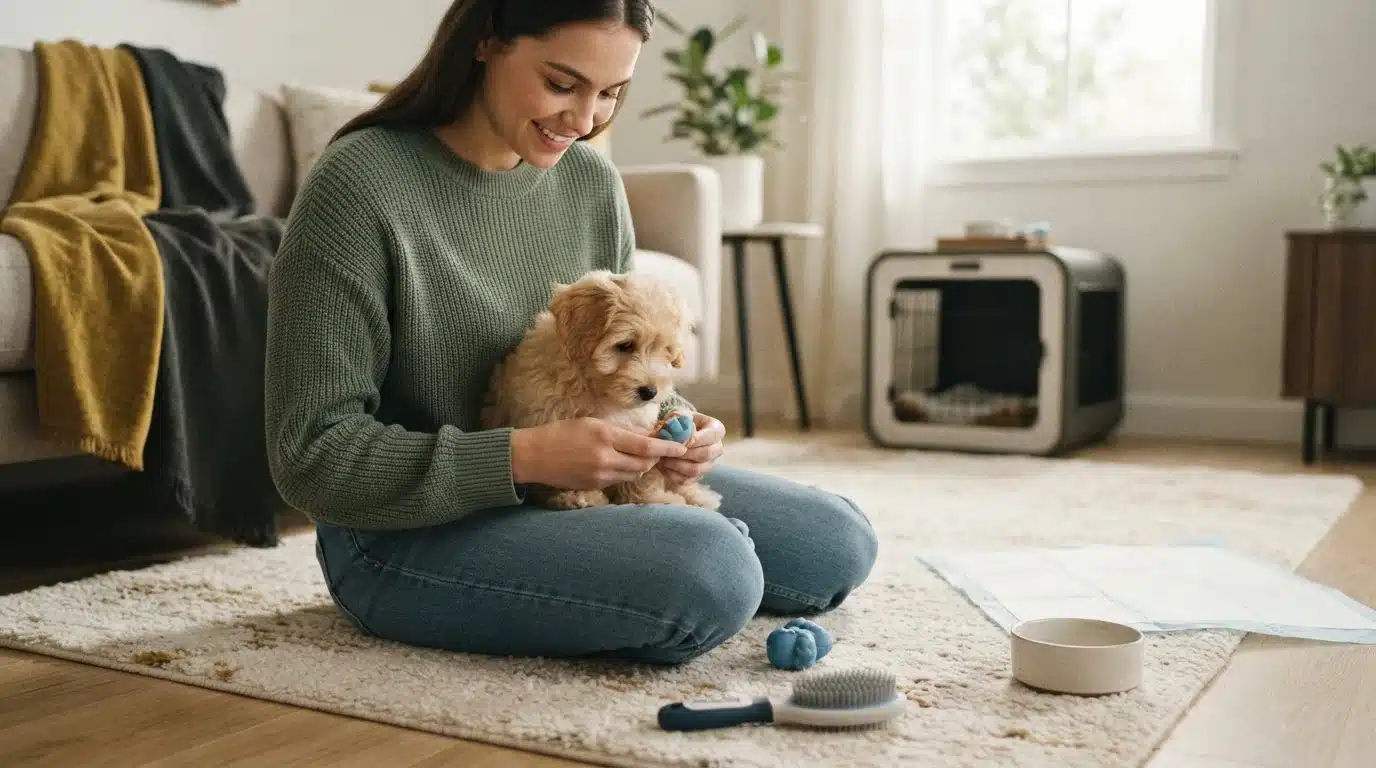
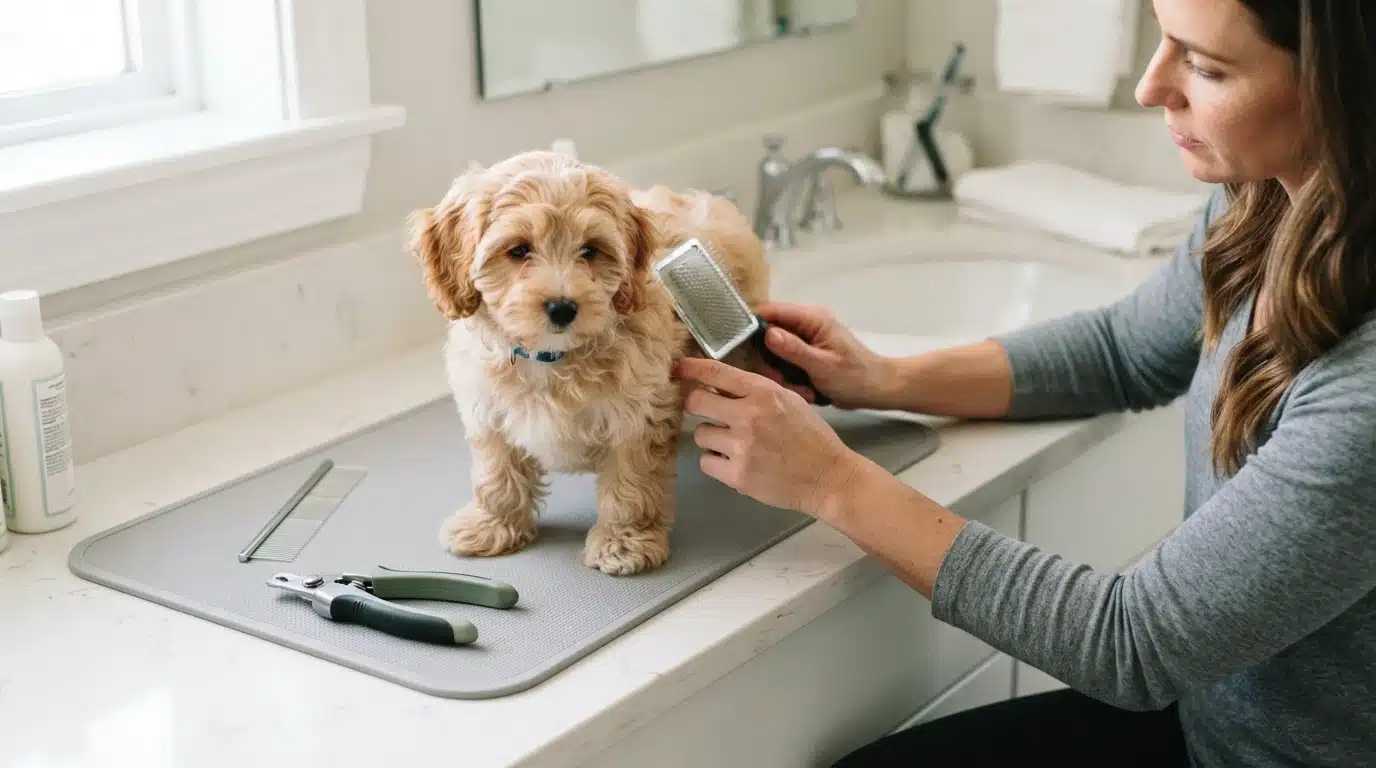
Havapoo coats mat fast, so buy a slicker brush and a steel comb before your puppy comes home, not after the first tangle. Brush a few minutes daily, working down to the skin. A blunt-nose scissor, puppy shampoo, and a small nail clipper round out the kit. For travel, you need a crash-tested or airline-approved carrier, a collapsible bowl, and a harness with a short leash. Havapoos’ soft, low-shedding coats need steady attention, and our beginner grooming guide walks through coat types and brushing steps. Buy these items early so the first week stays calm.
A Coat-Type-Aware Brushing and Bathing Plan
Havapoo coats range from wavy Havanese silk to curlier Poodle fleece, and each type mats in its own way. The plan below works for either, as long as you match the brush to the coat and stay consistent.
How Often to Brush a Havapoo Puppy’s Coat
Brush a Havapoo puppy three to four times a week, and daily once the adult coat comes in around 8 to 12 months. The Havanese Club of America recommends brushing and combing puppies about three times a week, and full adult coats need more. Focus on friction zones: behind the ears, under the legs, and the belly. Use a slicker brush first, then run a metal comb through to catch mats the brush missed. Light sprays of water or detangling spray help the comb glide. Keep sessions short and treat-heavy now, because you are teaching a puppy to tolerate grooming for life. Our beginner Havapoo grooming guide breaks down brush choices by coat type.
Bathing, Nails, Ears, and First Professional Groom
Bathe your puppy every three to four weeks with a gentle dog shampoo, and brush out tangles before the bath, since water tightens mats. Trim nails every three to four weeks, or when you hear clicking on hard floors. Check ears weekly for redness or odor, especially after swimming, and wipe with a vet-approved cleaner. Book the first professional groom around 12 to 16 weeks, after core vaccines. Ask for a simple puppy trim so the visit stays short and positive.
Feeding Your Havapoo: What to Feed and How Much by Age
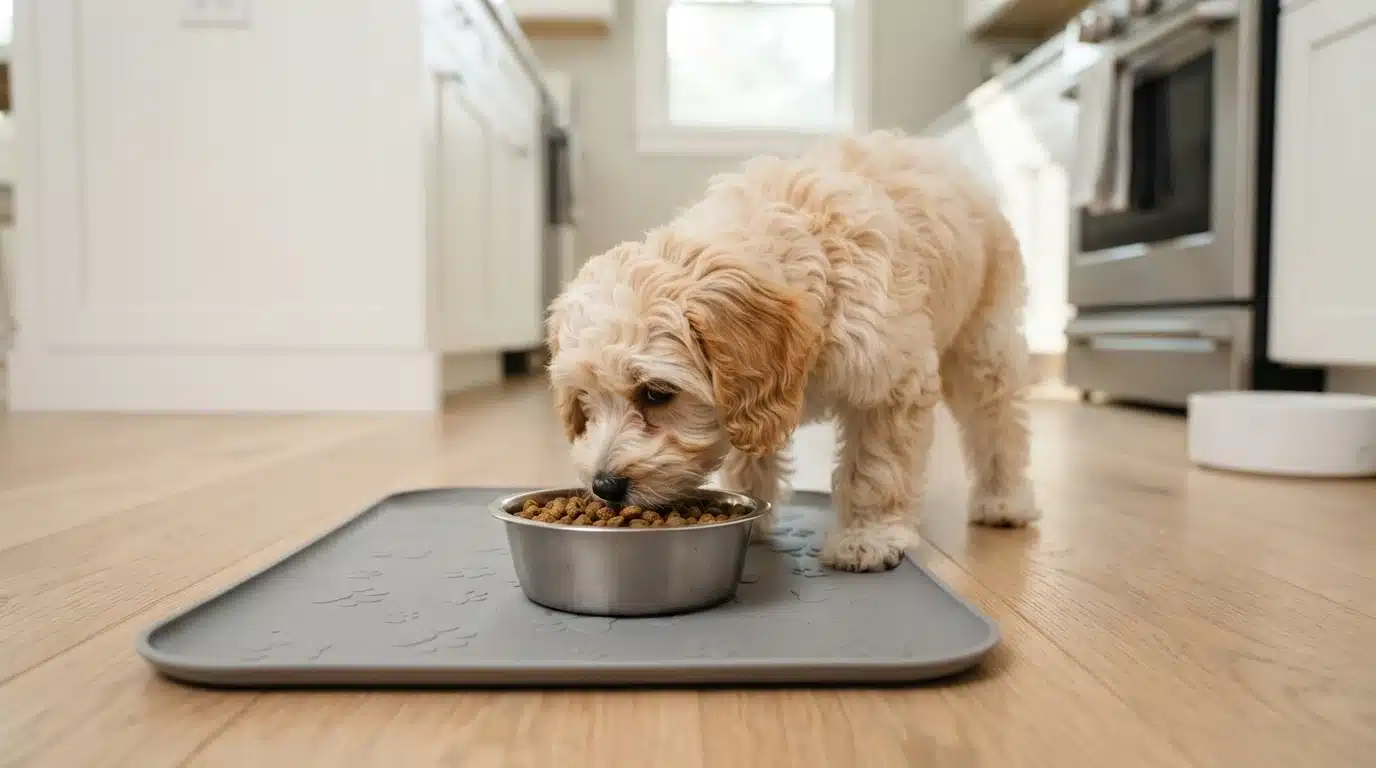
Havapoo puppies do best on a small-breed puppy food fed on a schedule that changes with age. Because adults weigh only 7 to 20 pounds, small-breed formulas with smaller kibble fit their mouths and faster metabolism better than large-breed food.
From Four Meals a Day to Two: An Age-Based Plan
| Age | Meals Per Day | Notes |
|---|---|---|
| 8 to 12 weeks | 4 | Spread meals evenly; keep the breeder’s food |
| 3 to 6 months | 3 | Watch body condition, not just the bag’s chart |
| 6 to 12 months | 2 to 3 | Shift toward two meals as growth slows |
| Adult (10 to 12 months) | 2 | Switch to small-breed adult formula |
Small-breed puppies often stay on four meals until around six months, then move to three, per Chewy’s puppy feeding guide. Start with the portions printed on your food’s bag, then adjust weekly by feel: you should feel ribs easily but not see them. At Sage Puppies we send each puppy home on the food it already knows, so keep that brand for the first weeks.
Treats, Transition Windows, and When to Call the Vet
Treats should stay under about 10 percent of daily calories, or training loses its balance. When you change foods, blend old and new over 7 to 10 days to avoid stomach upset. Small breeds like the Havapoo can usually move to adult food around 10 to 12 months, a timing PetMD ties to reaching most of their adult size. Call your vet if diarrhea lasts more than a day, your puppy refuses two meals in a row, or ribs and hips grow sharply visible.
House Training, Crate Training, and the First Month Routine
Your puppy learns fastest when the same things happen at the same times each day. Havapoos are smart and eager to please, so a steady rhythm does most of the training work for you.
A Daily Routine That Sets Your Puppy Up to Succeed
Build the day around potty breaks, meals, play, and rest. A young puppy needs to go outside right after waking, after eating, after a play session, and before bed. In between, supervise closely. If you cannot watch your puppy, use the crate or a gated pen.
A simple shape for the day: wake up and potty, breakfast, potty again, short play, nap in the crate, then repeat. Keep naps frequent. An overtired puppy chews, nips, and has more accidents. Most 8 to 12 week old puppies can hold their bladder only a few hours, so expect nighttime breaks at first.
For a crate setup that makes this routine easier, Sage Puppies walks new owners through sizing and the first nights in its crate guide.
Milestones, Setbacks, and How to Stay Consistent
Expect steady progress, not perfection. Many puppies get the hang of house training by 4 to 6 months, though small breeds sometimes need a bit longer because their bladders are tiny. Celebrate every outdoor potty with calm praise and a small treat right away.
Setbacks are normal. An accident after a good week usually means you missed a cue, so return to more frequent trips rather than scolding. Clean accidents with an enzymatic cleaner so no scent lingers. If accidents suddenly increase, call your vet, since a urinary infection can look like a training problem. Consistency, patience, and the same routine every day will get you there.
Exercise, Play, and Socialization for a Small but Curious Dog
A Havapoo needs less distance and more variety than most puppies. Two or three short play sessions and a couple of brief walks a day usually meet the needs of a dog that tops out at 20 pounds. The rest of the work is mental, and it starts the week you bring your puppy home.
Walks, Fetch, and Brain Games That Fit Their Size
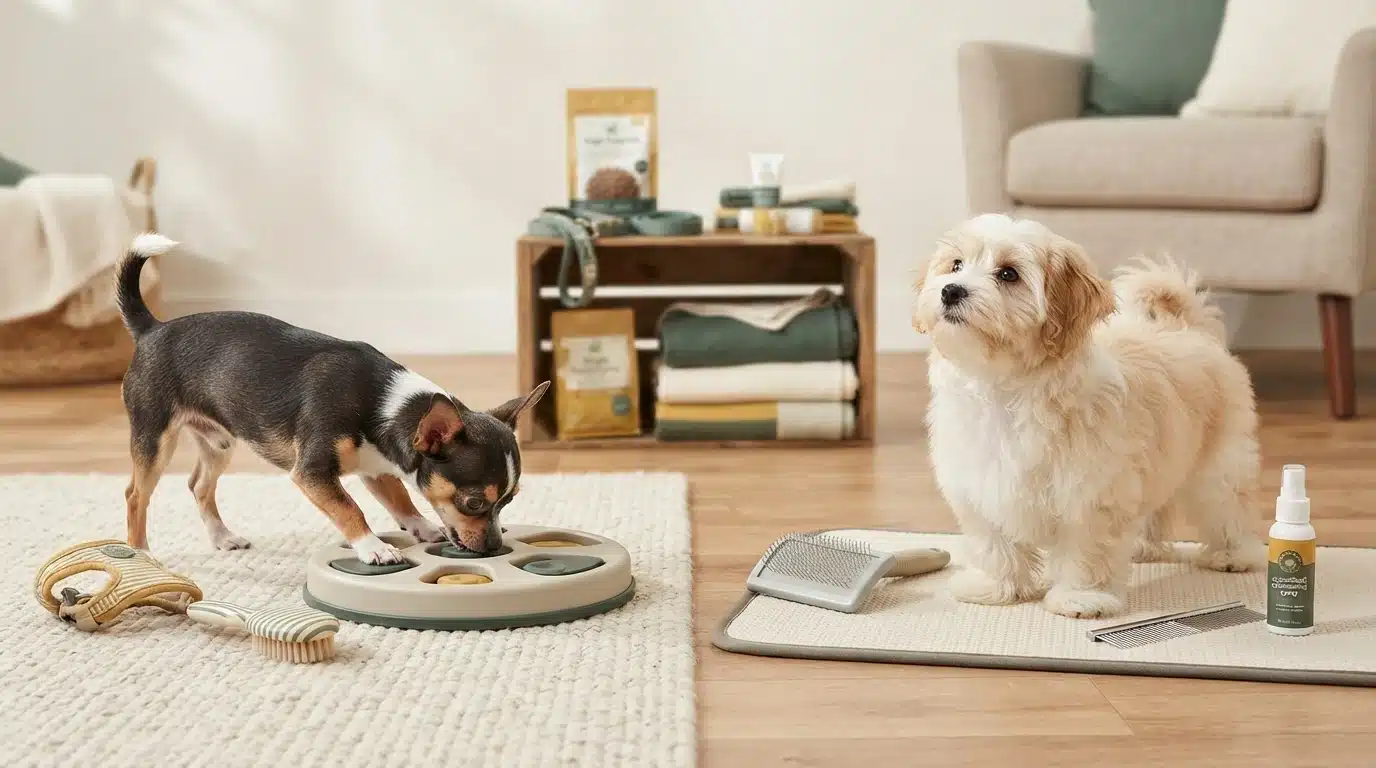
Follow the five-minute rule while your puppy grows: about five minutes of structured walk per month of age, once or twice a day. The AKC advises keeping formal exercise light until growth plates close, so let play in the yard or hallway be the main event. Indoor fetch down a carpeted hallway, a snuffle mat, and a rolled treat ball burn energy without stressing tiny joints. Puzzle feeders work well at mealtime, since many Havapoos are quick problem solvers. Watch for sitting down mid-walk or lagging. That is your puppy saying the outing is long enough.
A Short, Realistic Socialization Plan (8-16 Weeks)
The critical window runs from about 3 to 14 weeks, so every calm experience counts. According to the AVSAB, socialization should start before vaccines finish, using safe settings. Aim for one new thing per day: a different floor texture, a vacuum at low volume, a friendly adult dog, a short car ride. Keep each meeting positive and brief, and let your puppy choose to approach or retreat. Carry a small treat pouch on every outing. If your puppy freezes or hides, step back and retry another day at lower intensity.
Health, Vet Visits, and Preventive Care for the First Year
A healthy Havapoo puppy still needs steady preventive care, because small breeds hide problems well. Plan your first vet visit within a few days of bringing your puppy home, and keep regular exams on the calendar all year.
Conditions to Watch For and Early Warning Signs
Watch for loose stools, vomiting, coughing, or a puppy that stops eating, since these often point to parasites or infection. Small breeds like the Havapoo can also develop a luxating patella, a kneecap that slips out of place, so mention any skipping steps or favoring a leg. Check for itchy skin, red ears, or watery eyes, which allergies and ear infections cause often in this cross.
Call your vet right away for these signs:
- Refusing food for more than a day
- Diarrhea or vomiting that lasts past 24 hours
- Limping, yelping, or a bunny-hop gait
- Pale gums, weakness, or labored breathing
- A swollen belly in a young puppy
Your Puppy’s First-Year Vet and Preventive Checklist
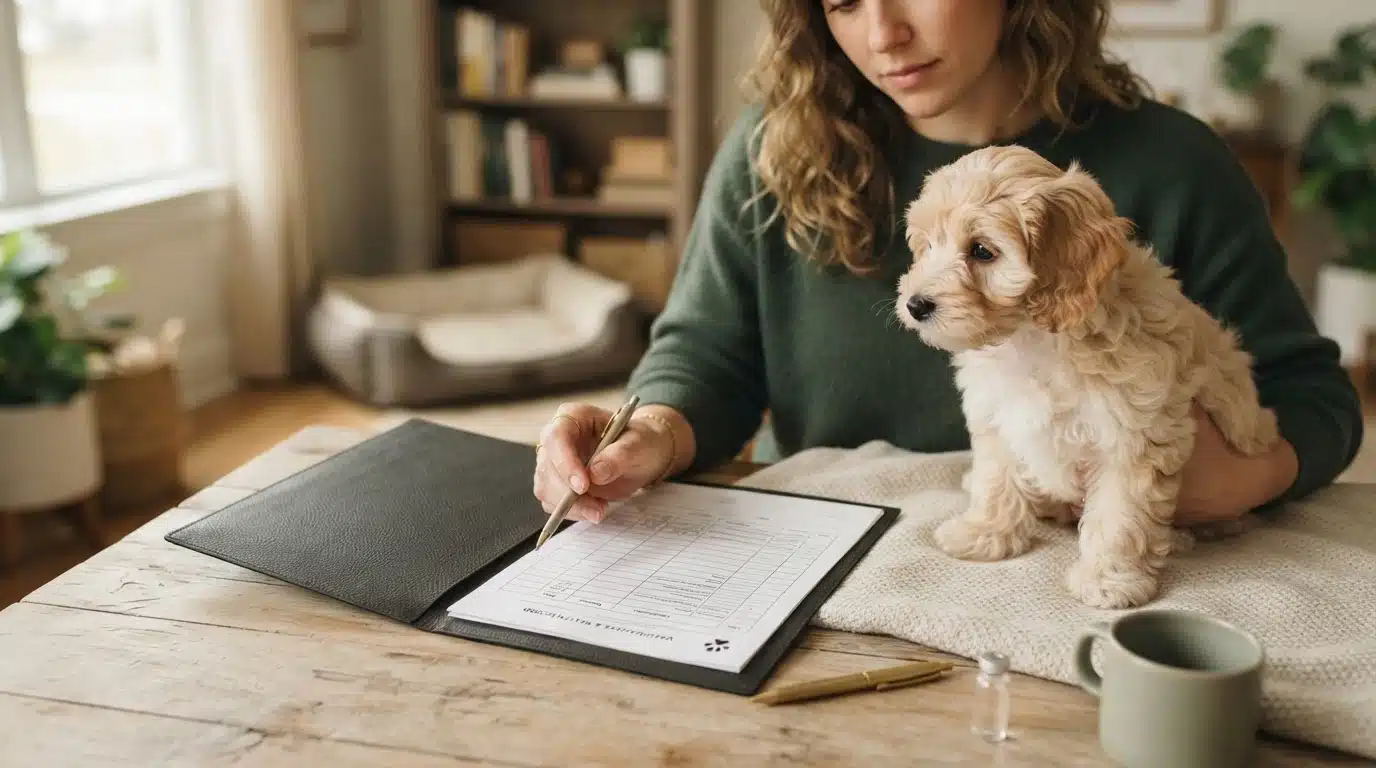
Expect a series of visits, not one appointment. Most puppies see the vet at six to eight weeks for a health exam, first vaccines, and parasite preventives, then return every few weeks until about 16 weeks, when the vaccine series finishes, according to VCA Animal Hospitals.
| Age | Visit | What Happens |
|---|---|---|
| 8 weeks | First wellness exam | Exam, deworming, vaccine series starts |
| 12 weeks | Booster visit | Next core vaccines, rabies discussion |
| 16 weeks | Final boosters | Series ends; ask about spay or neuter timing |
| 6 to 12 months | Follow-up | Adult teeth check, weight review, flea and heartworm prevention continues |
The AVMA recommends year-round parasite prevention and regular exams as the base of lifelong health. Bring a stool sample to each visit, and ask your vet to review the records your breeder sent home.
Common Mistakes First-Time Havapoo Owners Make (and How to Avoid Them)
Most early mistakes with a Havapoo come from treating a 7 to 20 pound puppy like either a tiny toy or a big dog. Both extremes cause problems. Here’s what to skip from day one.
Grooming, Feeding, and Training Pitfalls to Skip
Don’t wait for mats. A wavy or curly coat tangles fast, so brushing three to four times a week now beats shaving a painful mat later. Skipping the early professional groom is another common slip; book it around 12 to 16 weeks so grooming feels normal, not scary. On food, free-feeding and too many treats cause the most trouble. Keep treats under 10 percent of daily calories, and shift foods slowly over 7 to 10 days.
Health and Lifestyle Misreads New Owners Make
New owners often misread small bodies. A skipped vaccine visit or late parasite preventive hits a tiny puppy harder, so keep the early vet schedule intact. Vomiting or diarrhea past 24 hours is urgent in a small breed, not a wait-and-see. Exercise mistakes run both ways: too much jumping stresses young joints, while too little activity breeds mischief. Two or three short play sessions plus brief walks fit this size. Because Sage Puppies breeds only small companion dogs, matching expectations to that scale is built into every placement.

Your puppy’s first month shapes the next twelve years, and you do not have to figure it out alone. Keep this guide handy, and if you are still choosing your Havapoo, Sage Puppies can help you match with the right one. Wisely Bred. Beautifully Loved.
Frequently Asked Questions
Q1: How often should you brush a Havapoo puppy’s coat?
Three to four times weekly as a puppy, then daily once the adult coat arrives around 8 to 12 months. Focus on friction zones like behind the ears and under the legs, and follow the slicker brush with a metal comb.
Q2: What should a Havapoo puppy eat and how often should it be fed?
Feed a small-breed puppy food: four meals daily at 8 to 12 weeks, three meals from 3 to 6 months, then two to three as growth slows. Keep the breeder’s food for the first weeks.
Q3: How do you house train a Havapoo puppy?
Take your puppy outside after waking, eating, playing, and before bed. Supervise closely, use the crate between times, and praise every outdoor potty. Most puppies get consistent by 4 to 6 months.
Q4: When should a Havapoo puppy get its first professional groom?
Book it around 12 to 16 weeks, after core vaccines, and ask for a short puppy trim so the first visit stays positive.
Q5: When do Havapoo puppies switch to adult food?
Most small breeds, including Havapoos, move to adult formula around 10 to 12 months. Transition over 7 to 10 days by blending old and new food.
Bringing It All Together
Caring for a Havapoo puppy comes down to four steady habits. Feed a small-breed puppy food on an age-based schedule, brush that wavy or curly coat three to four times a week, keep potty breaks and crate time on the same daily rhythm, and stay on top of the first-year vet visits.
Small breeds reward consistency quickly, so early routines pay off for years. Watch body condition instead of the food bag, book the first groom at 12 to 16 weeks, and treat any skipped meal or day-long stomach upset as a call-your-vet moment.
Do those things, and the first month feels calm instead of chaotic, which is exactly what sets up a healthy, well-groomed, well-trained adult dog.