Quick Summary: Grooming a Havapoo puppy takes a steady six-week plan, starting with reading the coat type and building a five-minute daily touch habit before any brushing. By weeks two and three, line brushing with a slicker brush and a metal comb test catches the hidden tangles that form behind ears and in armpits. Week four brings a calm bath with a full low-heat blow dry, followed by nail, ear, eye, and sanitary care in week five, and a puppy intro groom around 12 to 14 weeks. Sage Puppies in South Jordan, Utah shapes this routine around the early handling their litters already know, which is why first-timers following the plan usually avoid the topcoat-only brushing and rushed nail sessions that lead to mats and stress.
Pickup day is the easy part. The hard part starts the first time a Havapoo puppy sees a slicker brush and decides, calmly and completely, that the brush has betrayed them. The curls that make this breed so charming also mat fast, so a first-time owner needs a routine, not a shelf full of tools. This Havapoo grooming guide for beginners gives you one: a simple week-by-week plan for your puppy’s first six weeks at home, from the first calm brush session to a bath, a trim around the eyes, and nail care that ends without drama. It draws on how Sage Puppies in South Jordan, Utah, prepares its Havapoo litters, including the handling puppies already know before they come home. If you need tool recommendations or haircut styles, start with our Havapoo Grooming Essentials for Beginners, then follow this plan. The weeks ahead are shorter than they look.
Step 1: Read Your Havapoo’s Coat in the First 72 Hours
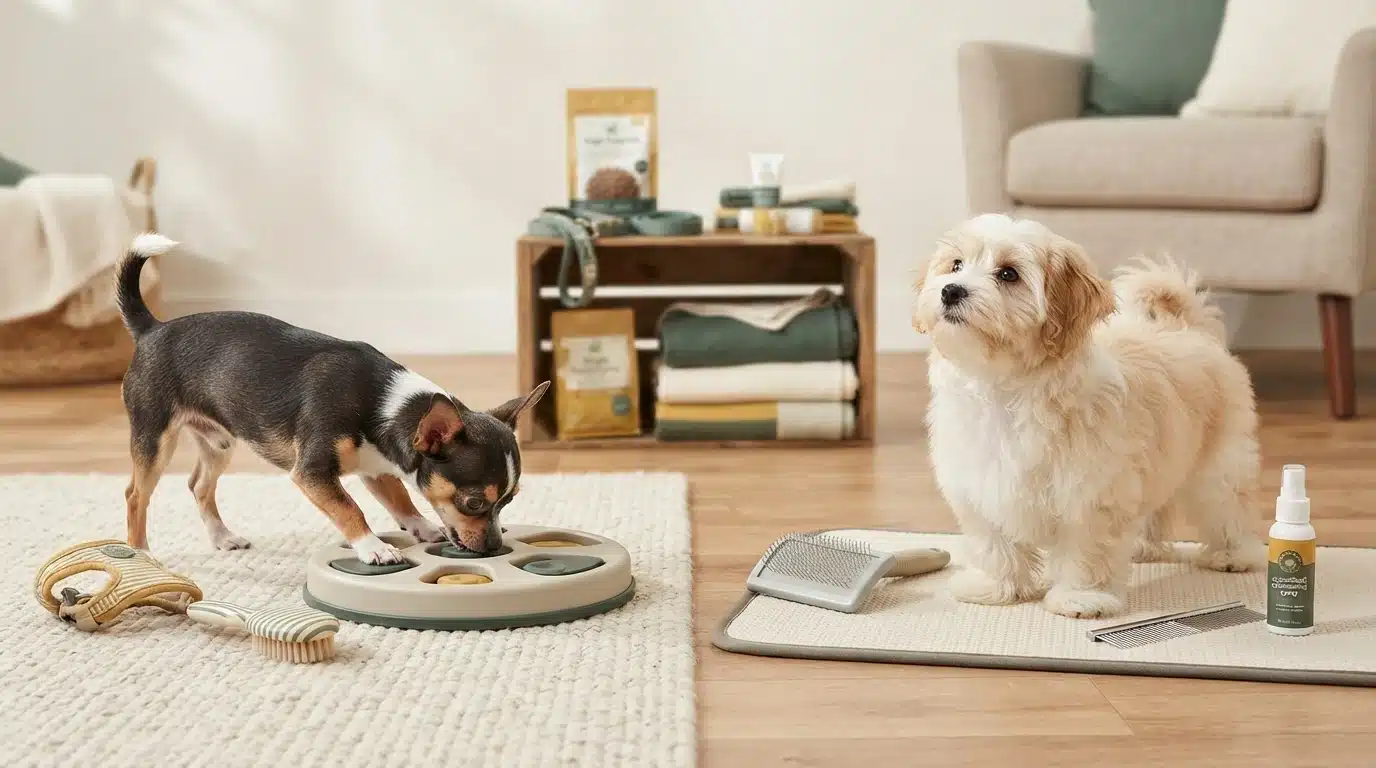
Before you buy a single brush, figure out which coat your puppy actually has. Any solid havapoo grooming guide for beginners starts here, because the coat type decides your brush, your schedule, and how often you will see a groomer. Spend the first three days just watching and touching. Run your hands through the coat, look at the hair around the face and legs, and notice what happens after a nap. Here is how to tell the three types apart.
The Three Havapoo Coat Types You Will Actually See
Most Havapoos land in one of three coat groups, and each one needs a slightly different plan.
- Wavy or wavy-fleece coat. This is the most common Havapoo look. The hair lies in soft, loose waves and sheds very little. It mats at the collar, behind the ears, and in the armpits first, so check those spots daily.
- Curly coat. Closer to the Poodle parent. Curls hold water and tangle fast, especially after playtime or a meal. This coat needs the most brushing of the three.
- Straight or silky coat. More like the Havanese side. It is usually the easiest to keep, but it can look stringy without weekly brushing.
If a breeder describes the parents’ coats, that is your best clue. A responsible program, like the one Sage Puppies runs, can usually tell you which coat type a litter tends toward before you even take your puppy home.

What the Puppy-to-Adult Coat Transition Does to Your Plan
Around four to six months, your puppy’s soft puppy coat starts giving way to the adult coat. The new hair is often thicker or curlier, and mats form much faster during the switch. Many first-time owners brush fine for months, then suddenly find tight mats behind the ears at five months.
So adjust now: keep brushing short and happy in week one, but plan to increase sessions as the transition approaches. If your puppy is still with the litter for a few more weeks, ask the breeder about coat type and early handling so you know what is coming.
Step 2: Build a Five-Minute Daily Touch Habit (Week 1)
The Calm Five-Minute Touch Session
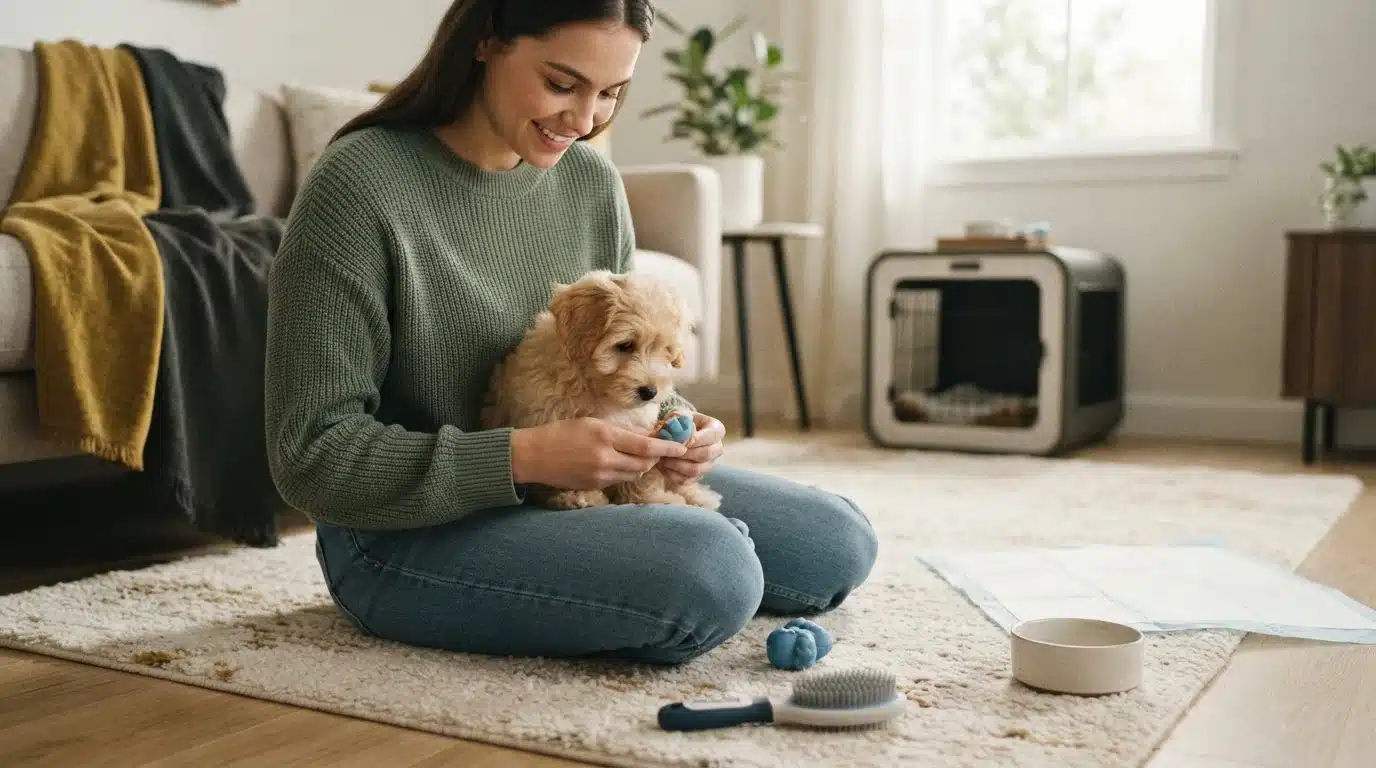
Before you ever pick up a brush, spend week one teaching your puppy that being touched is a good thing. Pick a quiet time after a potty break, when your Havapoo is settled but not asleep. Sit on the floor and gently handle one body part at a time: ears, paws, belly, tail, muzzle. Two or three seconds per spot is plenty.
Pair each touch with a small treat and a calm voice. Keep sessions to about five minutes, once or twice a day, and stop while your puppy still wants more. That ending matters. It leaves your puppy eager for the next session instead of dreading it.
This habit pays off fast. Within a few weeks, nail trims and ear cleaning become routine instead of a wrestling match. Every future part of your grooming plan builds on these quiet minutes. For a full list of what to have on hand before week one, the Havapoo puppy checklist covers supplies and first-week scheduling.
Reading Body Language So You Stop Before the Flinch
Puppies tell you when a touch is too much. The early signs are subtle: a quick lip lick with no food around, a yawn when your puppy is not tired, or a head turn away from your hand. Trainers call these calming signals, and they show up well before growling or squirming.
When you spot one, pause and let your puppy reset. Then touch a spot your puppy enjoys, like the chest, and finish on a win. Ignoring these signs teaches your puppy that wiggling or snapping is the only way to be heard. Watching closely now keeps grooming trust intact for life.
Watch for: yawning, nose licking, turning away, or shaking off. These are your cue to slow down, not to push through.
Step 3: Add the Slicker Brush and Line Brushing (Weeks 2 and 3)
By week two, your Havapoo’s adult texture is starting to show, and surface brushing stops being enough. Tangles form deep, right against the skin, where a quick pass can’t reach them. This is when the slicker brush earns its keep, and when you switch to line brushing, the method groomers use on coats like this one.
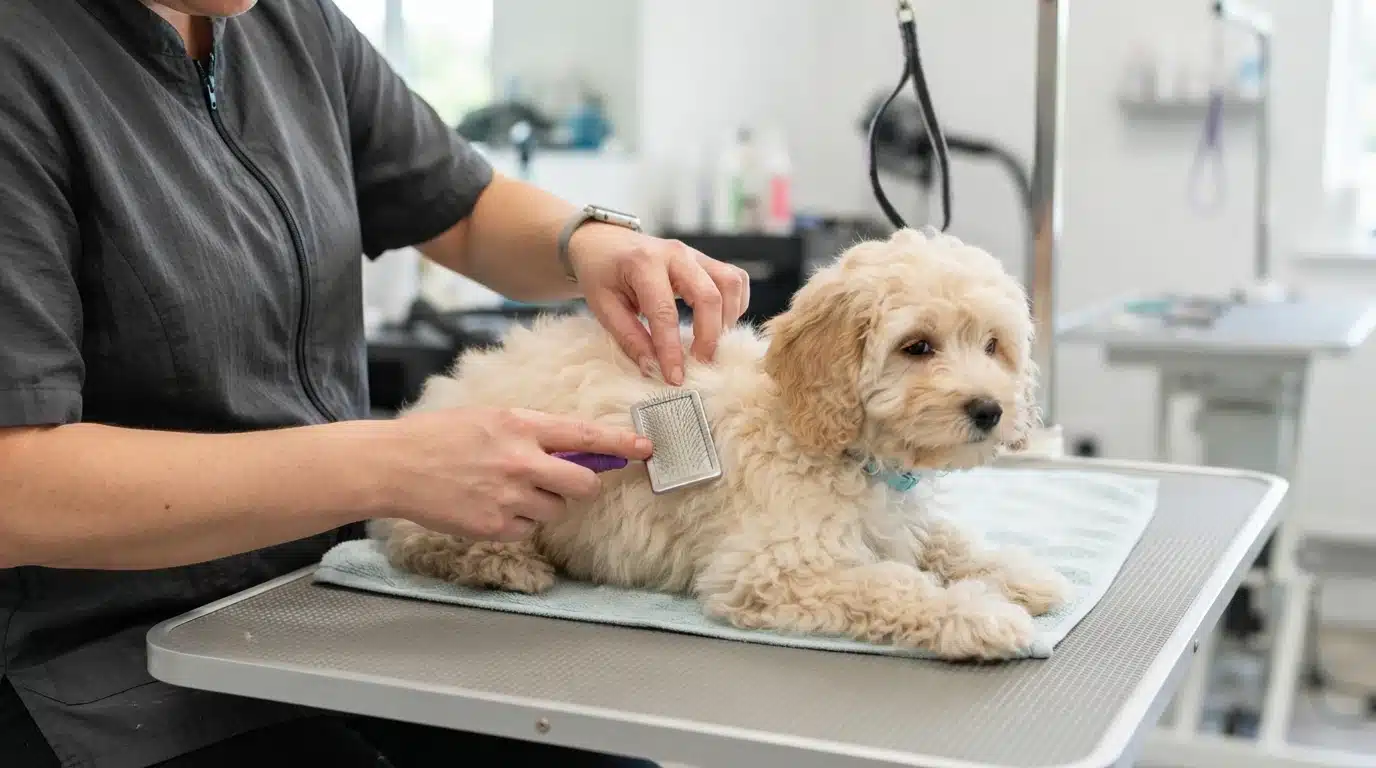
Line brushing sounds fancy, but the idea is simple: you part the coat into narrow rows and brush each row from the skin outward. Because you work in layers, no hidden mat survives. Professional groomers teach this exact technique because a coat can look brushed on top and be matted underneath.
Line Brushing From Feet to Ruff, Row by Row
Start low. Lift one back leg and part the hair just above the paw with your fingers, making a line about a finger’s width wide. Mist the row lightly with a brushing spray so the hair slides instead of snapping.
Brush that narrow row with your slicker, short strokes, from skin to tip. Then part a new line about an inch above the first, push the brushed hair down out of the way, and repeat. Work up the leg, then the belly, the sides, the chest, and finish at the ruff and neck. Groomers call this “rowing” for a reason: neat bands of brushed coat climbing the body. Keep sessions under ten minutes at this age, and pair them with treats so your puppy learns that the brush means good things.
The Metal Comb Test That Catches What the Brush Missed
The slicker gets the bulk of the work, but the comb is your inspector. After a full line-brushing session, run a metal greyhound comb through the same areas, feet, armpits, behind the ears, and the collar line. If the comb glides through from skin to tip, you’re done. If it snags, a tangle is hiding there, and you missed it.
Hold the coat at the base near the skin when you work out a snag. Pulling from the tip alone yanks and hurts, and a hurt puppy starts dreading the brush. Go slow, pick the tangle apart with your fingers if needed, and comb again.
Do this test at least twice a week from now on. Mats behind ears and in armpits form fastest, and those are the spots owners regret skipping.
Step 4: Run a Calm First Bath and Full Blow Dry (Week 4)
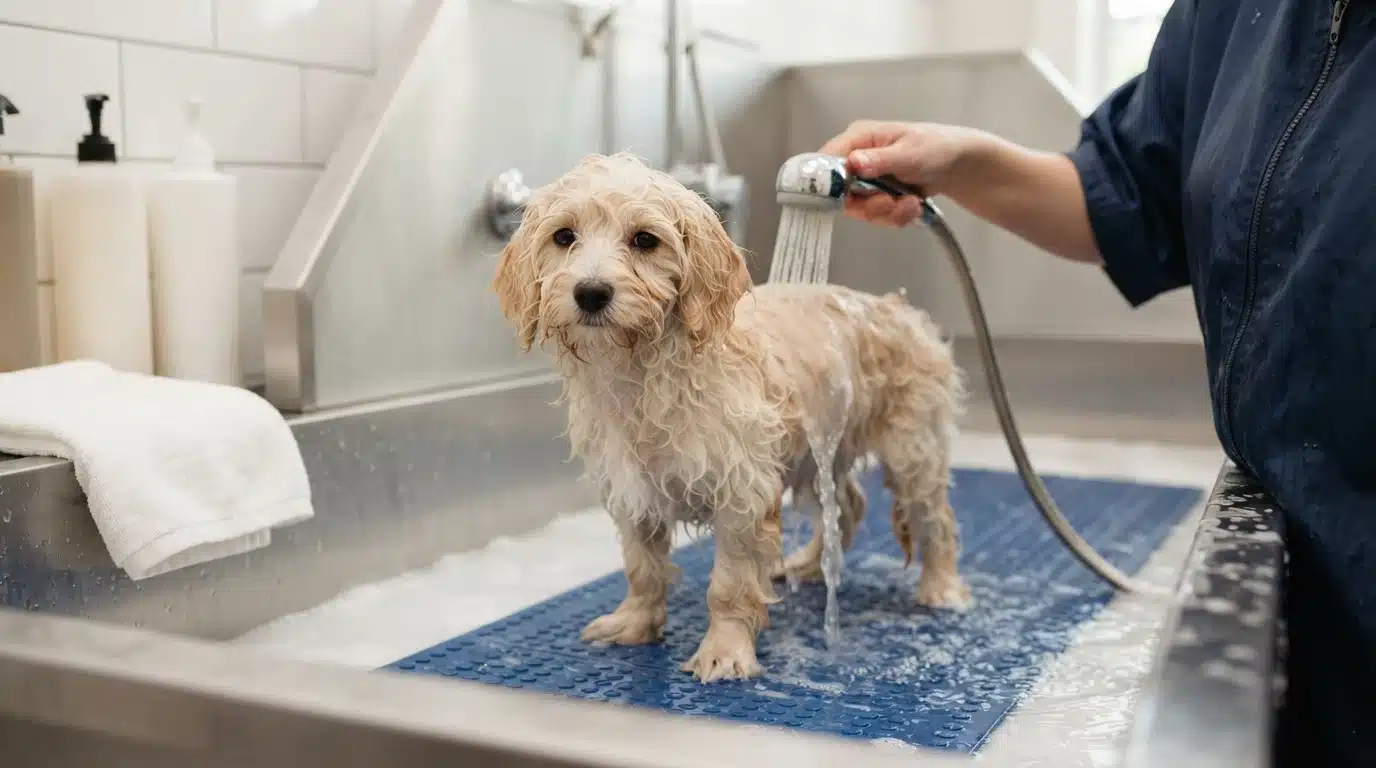
By week four, your Havapoo puppy is settled enough for a real bath, and the coat is long enough that water plus towel-drying alone starts hiding tangles. Keep this first bath short, warm, and boring. Boring is the goal.
Bath Setup So the Puppy Stays Calm and Warm
Use a sink or tub with a non-slip mat, and test the water on your inner wrist first. It should feel lukewarm, around body temperature, never hot. Puppies under eight weeks struggle to regulate body heat, so a chilled puppy is a real risk; at twelve weeks yours is stronger, but warmth still matters. Purina’s step-by-step first bath guide recommends warm, not hot, water and gentle scrubbing.
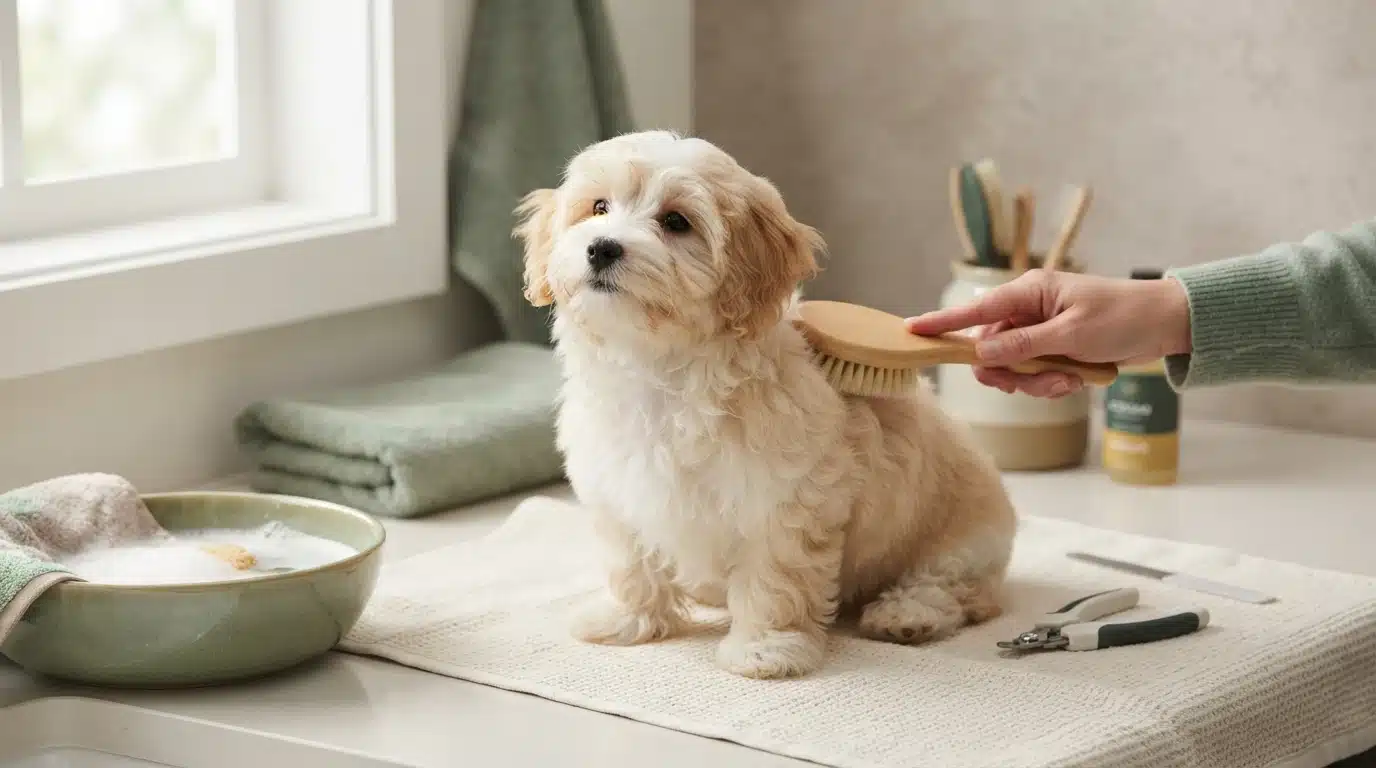
Wet the coat fully, because shampoo left on a half-wet coat is hard to rinse and irritates skin. Use a puppy-formulated shampoo, lather twice over any soiled areas, and rinse until the water runs clear. Work in the order you brushed: legs, belly, tail, then head last.
Keep the whole bath under ten minutes. Talk in a normal voice, and skip restraint beyond a steady hand. A treat the moment the last rinse ends builds a better memory than any training session would.
The Full Blow Dry That Actually Prevents Mats
Here is the part most first-timers rush. Air-drying lets the undercoat curl and knot against itself, so you get mats two days later. Towel-blot first to soak up drips, then use a dryer on low heat with steady airflow. Human dryers run too hot, so a pet dryer or your hair dryer on its coolest setting works.
Dry in the direction the hair grows while brushing slowly with your slicker brush. Lift sections, aim the airflow at the roots, and brush until each section feels dry, not cool and damp. This straightens the coat and shows you every hidden tangle while it is still easy to fix.
Keep the dryer moving. Heat parked on one spot can burn puppy skin fast.
If your puppy panics at the noise, run the dryer nearby during dinner for a few days first. The tools, dryer types, and clip styles this routine depends on are all covered in the Havapoo grooming essentials guide, so start there before buying anything.
Step 5: Tackle Nails, Ears, Eyes, and the Sanitary Trim (Week 5)
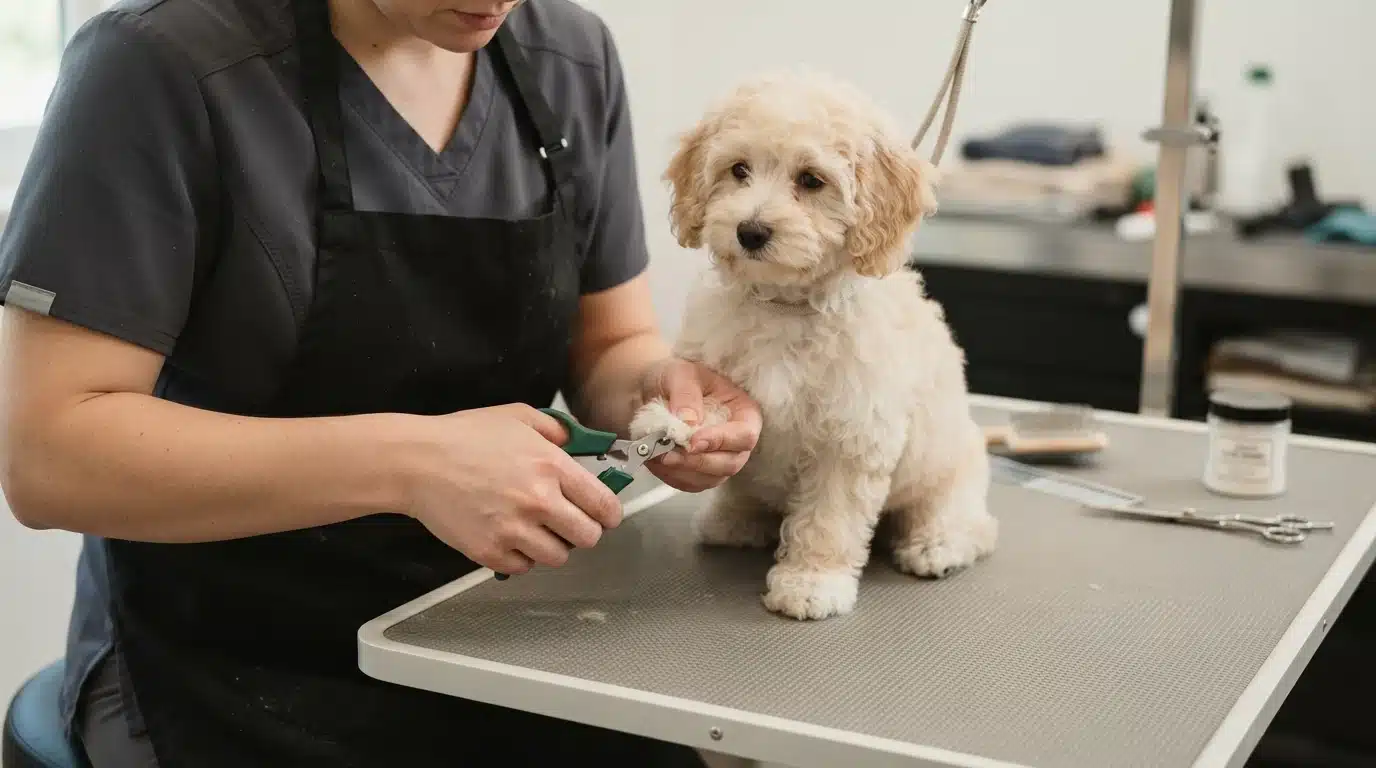
Week 5 is when the “fiddly” jobs enter your routine. Your puppy now knows the grooming table, so use that trust to work on the spots most owners dread: nails, ears, eyes, and the area under the tail. Short, calm sessions matter more than perfect results.
A Nail Trim That Stays Drama-Free for Life
Trim your Havapoo’s nails every three to four weeks, and start now while the paws are small. According to VCA Animal Hospitals, dogs learn to fear nail trims when the experience is rushed or forced, so keep sessions short and pair each clip with a treat.
Work in small steps. Handle each paw for a few seconds, then reward. Touch the clippers to a nail without cutting, reward again, then snip just the tip. If you nick the quick, the pink blood vessel inside the nail, press styptic powder on it and stop for the day. White nails show the quick easily; dark nails mean tiny cuts and frequent checks.
Tip: If your puppy pulls away, go back a step instead of holding tighter. Pushing through fear now costs you months of trust later.
Ear, Eye, and Sanitary Trim Care Without Over-Trimming
Floppy ears trap moisture, so check them weekly and clean only when you see wax or a mild smell. Skip cotton swabs deep in the canal; a vet-approved ear cleaner on a cotton pad works fine. Never pluck ear hair unless your veterinarian recommends it.
For eyes, wipe tear staining daily with a damp cloth and keep face hair trimmed short. For the sanitary trim, use blunt-nosed scissors and remove just enough hair to keep the area clean. A simple comb guides your scissors and protects thin puppy skin.
For clipper work and face styles, the parent guide’s tool list has what you need.
Step 6: Schedule and Survive the First Two Professional Grooms (Week 6 and Beyond)
Home grooming only carries a Havapoo so far. By week six, most pups are due for their first professional trim, and PetMD’s puppy grooming guide suggests booking it around 12 to 14 weeks once boosters are current, which lines up neatly with a week-six start for most Sage families.
Choosing and Preparing for the First Groomer Visit
Interview before you book. Ask whether the salon offers a puppy intro groom: a short session with a bath, blow-dry, nail trim and a light face-and-feet tidy, no full haircut. These first visits teach your puppy that the table, dryer and clippers are safe.
Before the appointment:
- Ask which vaccines the salon requires, and bring proof.
- Tell the groomer this is a first groom and that you want a puppy cut, not a styled trim.
- Run the dryer at home during week five so the sound is familiar.
- Ask to stay for the first few minutes if the salon allows it.
Expect 45 to 60 minutes, and expect your puppy to come home tired. That is normal.
Setting a Realistic Six-to-Eight Week Schedule After the Tour
A Havapoo coat needs a professional groom every six to eight weeks. Book the second appointment before you leave the salon, then hold the slot. In between, keep up your daily brushing so mats never force a shave-down. Pair each visit with a paw and ear check the night before, and the second groom usually goes smoother than the first. For clipper sizes and cut styles, the parent Havapoo Grooming Essentials guide covers both in detail.
Step 7: Avoid the Common First-Six-Weeks Mistakes
Most grooming problems in the first six weeks are not dramatic. They come from small habits repeated daily.
Mistakes That Quietly Build Mats and Stress
The biggest culprit is brushing only the top coat. Mats form where friction lives: behind the ears, under the collar, in the armpits and along the harness line. Part the fur and check the skin side, or you will miss the tangles forming underneath.
Skipping rest days causes trouble too. Running a brush over a wiggly, tired puppy teaches him that grooming means struggle. Three calm two-minute sessions beat one ten-minute wrestle.
Bathing a matted coat is another quiet mistake. Water tightens mats instead of loosening them, so brush fully before the bath, never after. And avoid clipping nails as a two-person chase. Handle paws during cuddle time early, so the routine feels normal by week six.
Mistakes That Quietly Cost More at the Groomer and Vet
Waiting too long for the first professional trim is expensive. A groomer who must shave out heavy mats may charge extra, and a shaved coat changes the look you chose a Havapoo for. Book around 12 to 14 weeks once boosters are current, as PetMD recommends.
Skipping ear checks invites infections, which cost far more than a weekly glance. Plucking or cleaning ears wrongly causes harm, so ask your vet to show you the safe method first.

Your Havapoo’s coat will not stay puppy-soft on its own, but the six-week plan above turns grooming from a struggle into a habit you both enjoy. Keep this guide bookmarked for the days your pup squirms, and visit Sage Puppies for more honest, first-timer advice from Cassie’s team. Wisely Bred. Beautifully Loved.
Frequently Asked Questions
Q1: havapoo grooming guide for beginners
Start with your puppy’s coat type, then follow a six-week plan: touch habit in week one, line brushing in weeks two and three, a first bath in week four, nails and ears in week five, and a puppy intro groom by week six.
Q2: How often should I brush a Havapoo puppy?
Daily, but keep sessions under ten minutes. Focus on friction spots: behind the ears, armpits, collar line, and harness area.
Q3: When should a Havapoo get its first professional groom?
Around 12 to 14 weeks, once boosters are current. Ask for a puppy intro groom, not a full haircut.
Q4: Should I brush my Havapoo before or after a bath?
Always before. Water tightens mats, so brushing afterward can set tangles you cannot fix at home.
Q5: Why does my Havapoo mat so fast?
The curly, low-shedding coat traps loose hair against the undercoat. Surface brushing misses these tangles, which is why line brushing matters.
Q6: How often do Havapoos need grooming as adults?
Every six to eight weeks professionally, with daily brushing at home between visits to avoid a shave-down.
Conclusion
A Havapoo puppy does not need a full grooming studio, just a steady six-week plan. Start by reading the coat type, build a five-minute touch habit, add line brushing with a slicker and metal comb, run a calm first bath with a full blow dry, then work on nails, ears, and the sanitary trim. Finish by booking a puppy intro groom around 12 to 14 weeks and holding a six-to-eight week schedule after that.
Most early problems come from small habits: brushing only the top coat, bathing a matted dog, or rushing a nervous puppy. Keep sessions short, reward often, and check the friction spots daily. For brush picks, dryer types, and clip styles, the Havapoo Grooming Essentials for Beginners guide has the full list.