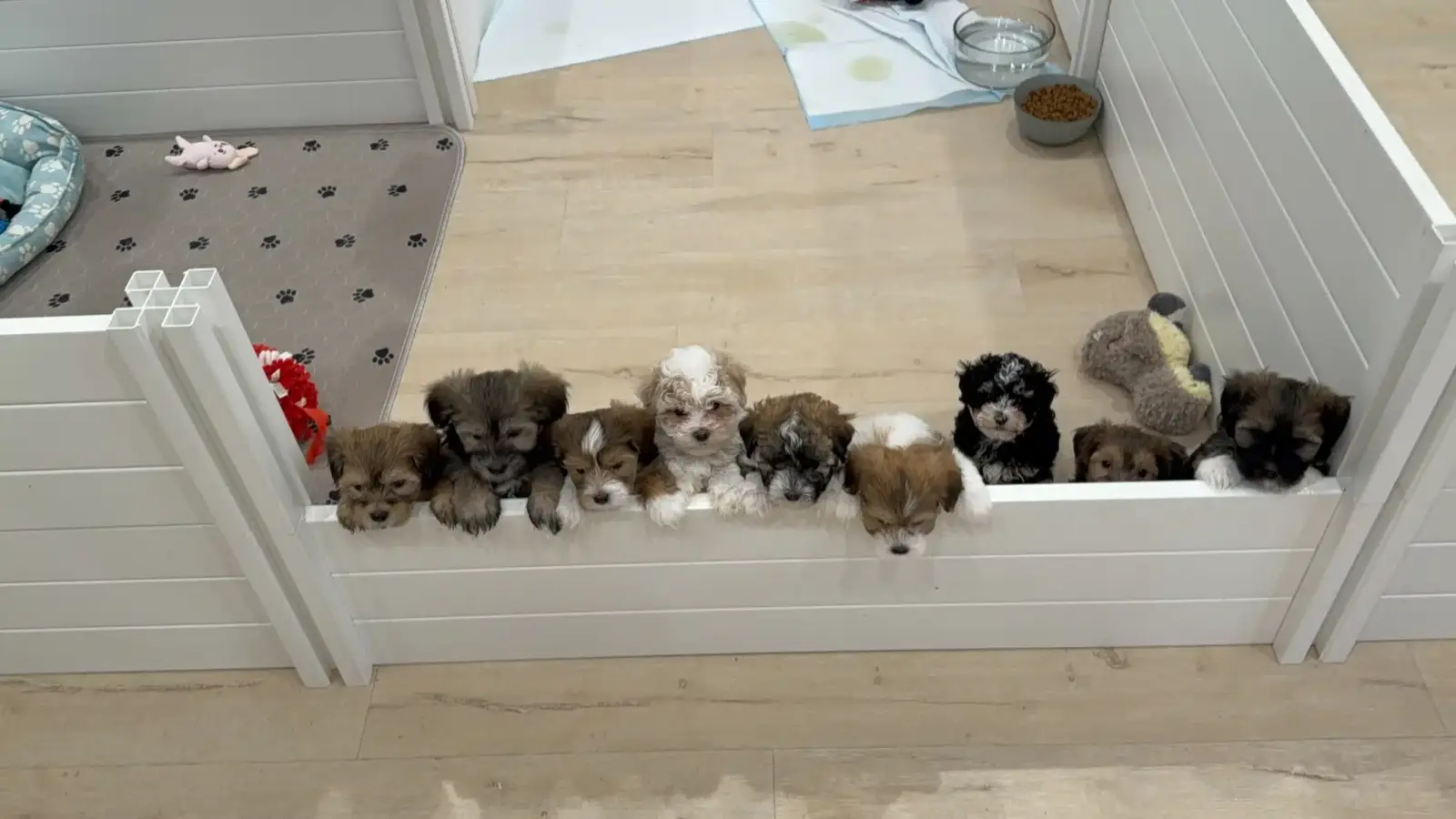
Quick Summary: A beginner-friendly Havapoo grooming routine starts with learning your puppy’s coat type (wavy, curly, or straight), then building a short daily brush habit plus a weekly line brushing session confirmed by a metal comb test. Bathes should follow thorough brushing, use gentle puppy shampoo, and finish with full blow drying to prevent mats, while small weekly tasks like tear stain wiping, nail trims, and ear checks prevent bigger problems. The first professional groomer visit is best scheduled around 12 to 16 weeks as a short, low-stress introduction, with regular touch-ups every six to eight weeks. Sage Puppies in South Jordan, Utah raises Havapoos with early coat handling so they arrive home ready for this routine.
The first brush stroke on a Havapoo puppy’s coat either builds calm trust or starts a lifelong flinch. Which one you get depends less on the puppy and more on the routine you set up in those early weeks. That’s the real challenge of havapoo grooming for beginners: the coat is soft, mat-prone and attached to a very small, very opinionated dog.
This guide gives you a rhythm that fits. You’ll learn a simple daily five-minute habit, a weekly session with line brushing and the comb test, and how to introduce clippers, nails and the tub without fear. We keep the focus on puppy basics here, then hand you off to the full Havapoo Grooming Guide when it’s time to choose a haircut style.
The approach comes from raising Havanese and Havapoo puppies at Sage Puppies in South Jordan, Utah, where every pup starts coat handling before it leaves for your home. If you’re still choosing your puppy, see our available puppies page, then read on. Havapoo grooming is very learnable, and it starts today.
Step 1: Get to Know Your Havapoo’s Coat Before You Brush
A Havapoo coat is a mix of its Havanese and Poodle parents, so no two puppies feel quite the same. Before you buy brushes or set a schedule, spend a few minutes learning what grew on your own dog. The coat type decides how often you brush, which tools work, and where mats form first.
Read the Three Common Havapoo Coat Types
Most Havapoos fall into one of three categories:
- Wavy (fleece) coat. The most common type. Soft, loose waves that shed very little and mat at a moderate pace. This is the easiest coat for beginners.
- Curly (wool) coat. Tighter Poodle-style curls that shed the least but trap loose hair and tangles close to the skin. Curly coats need the most brushing and mat fastest after baths.
- Straight (silk) coat. Closer to the Havanese side. Silky and smooth, but fine hair tangles along the ears, armpits, and trouser areas.
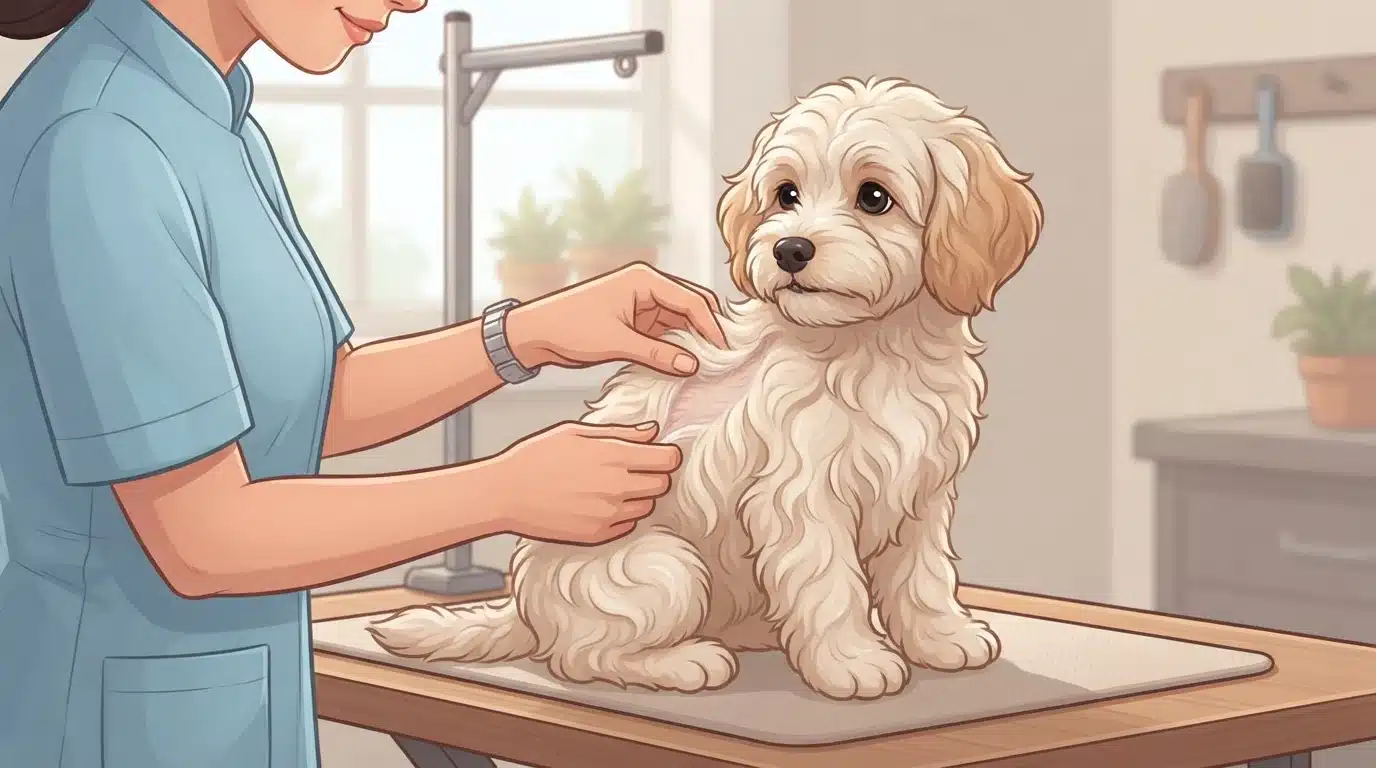
Part the fur down to the skin and look at it under good light. You should see waves, curls, or a sleek drape. Feel it too. Curly coats bounce back when you press them; straight coats lie flat.
Watch for the First Year Coat Transition
Here’s what surprises most new owners: your puppy’s coat changes. Around 6 to 12 months, the soft puppy coat gives way to the adult coat, and the texture can shift from wavy to curlier or thicker.
During this transition, shedding increases and loose puppy hair tangles into the new growth. Mats seem to appear almost overnight, especially behind the ears and in the armpits. This is the phase where daily brushing matters most, even for coats that stayed easy earlier. Keep your routine steady through the transition and your adult coat will be far easier to manage. If you’re still choosing between breeds, our Havapoo vs Cavapoo comparison covers coat differences in more depth.
Step 2: Set Up the Brushing and Combing Routine
A Havapoo coat mats fast, and brushing the top layer alone will not stop it. You need two tools: a slicker brush for loosening the coat and a metal greyhound comb for checking your work. Set them in the same spot so the routine feels automatic for you and calm for your puppy.
The 10 to 15 Minute Line Brushing Method
Line brushing means you work in small rows, from the skin outward, instead of stroking the surface. Start at the feet and work up one leg. Hold the hair above the row you are brushing so the coat parts in a clean line. Brush a thin band of hair from the skin up, then move up an inch and repeat.
Keep going across the legs, belly, chest, and sides. Save the tail and ruff for last since most puppies find them ticklish. Mist lightly with a detangler spray first if the coat feels dry, because brushing dry hair breaks it. Ten minutes on a young puppy is plenty; build to fifteen as the coat thickens.
Run the Comb Test to Catch Hidden Tangles
The comb test tells you the truth. After brushing, run the metal comb through the same areas, all the way down to the skin. If it glides through, the coat is done. If it snags, you found a mat the brush missed.
Go back with the slicker and work that spot in small strokes, holding the hair at the base so you do not pull the skin. Check armpits, behind the ears, and the collar line every time. Those three spots hide most tangles.
Handle Ears, Paws, and Sanitary Areas First
Give the tricky areas attention at the start, while your puppy is still settled. Comb ear fringes gently and check inside the flap for stuck debris. Trim or brush paw fur between pads so it cannot knot around toes. Keep sanitary areas short with blunt-tip scissors or ask a groomer to handle them.
A steady rhythm like this pairs well with the coat basics covered in our Havapoo grooming guide.
Step 3: Run a Calm Bath and Dry at Home
Bath day goes smoothly when you keep it short, warm, and predictable. A Havapoo coat dries slowly, so plan for the full routine: brush, bathe, rinse, and dry in one calm session.
Brush First, Bathe Second
Never bathe a matted coat. Water tightens knots, so tangles you could loosen by hand become felted patches after a bath. Spend ten minutes line brushing before the water runs, then run a metal comb through to the skin. If the comb sticks, keep brushing. Pay extra attention to the armpits, behind the ears, the chest, and the base of the tail, since those spots mat first. Remove collars so the fur underneath stays dry and clean. This one habit protects the coat more than any shampoo you can buy.
Shampoo, Rinse Twice, and Condition Lightly
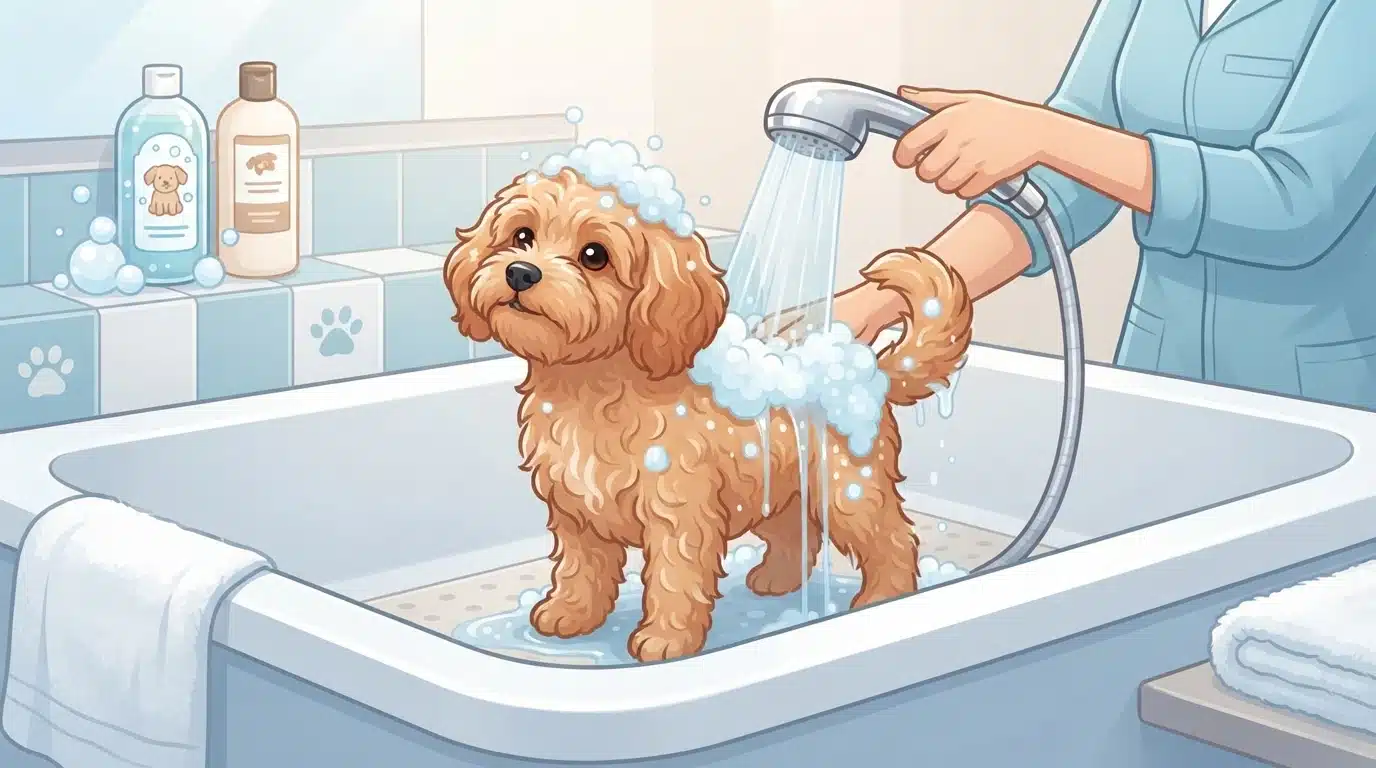
Use lukewarm water and a gentle puppy or oatmeal shampoo. Wet the coat down to the skin, then lather with your fingertips in the direction the hair grows. Keep suds away from the eyes, and place a small cotton ball loosely at each ear opening to block water. Rinse once, then rinse again. Leftover soap is the most common cause of post-bath itching, so keep going until the water runs clear. Follow with a light conditioner made for dogs, work it through the ends, and rinse thoroughly. Skip human products entirely, because a dog’s skin sits at a different pH.
Towel Blot and Low-Heat Blow Dry While Brushing
Press a soft towel against the coat to soak up water. Do not rub, since friction starts new tangles. Then use a blow dryer on low or cool heat while you brush in the direction of growth. Work section by section so the coat dries straight and smooth. Air drying alone invites matting and that damp “dog smell.” Finish with the comb test: the comb should glide from skin to tip.
Handle ears, paws, and the tail gently, and keep treats handy. Calm handling now makes every future bath easier.
Step 4: Cover the Small Weekly Chores Beginners Often Skip
Daily brushing gets all the attention, but the small jobs are where beginners slip. Tear stains, long nails, and itchy ears rarely cause a crisis in week one. They build up quietly, then suddenly your puppy needs a vet visit or a shave-down you did not plan for. Add these three habits to your weekly rhythm and you will avoid most of them.
Wipe Tear Stains and Eye Area Daily
Havapoos often get reddish streaks under their eyes because their facial hair holds moisture. Wipe the area every day with a damp, soft cloth or a pet-safe eye wipe. Work from the inner corner outward, and use a clean section of cloth for each eye so you never move bacteria across the face.
Keep the hair around the eyes trimmed short, or have your groomer do it. Hair that brushes the eyeball causes watering, and watering causes stains. If the discharge turns thick, yellow, or green, or one eye suddenly looks swollen, call your vet. Daily wiping prevents most staining, but it is not a treatment for infection.
Tip: Pat the area dry after wiping. Damp hair left against the skin invites irritation.
Trim or Grind Nails Every Two to Three Weeks
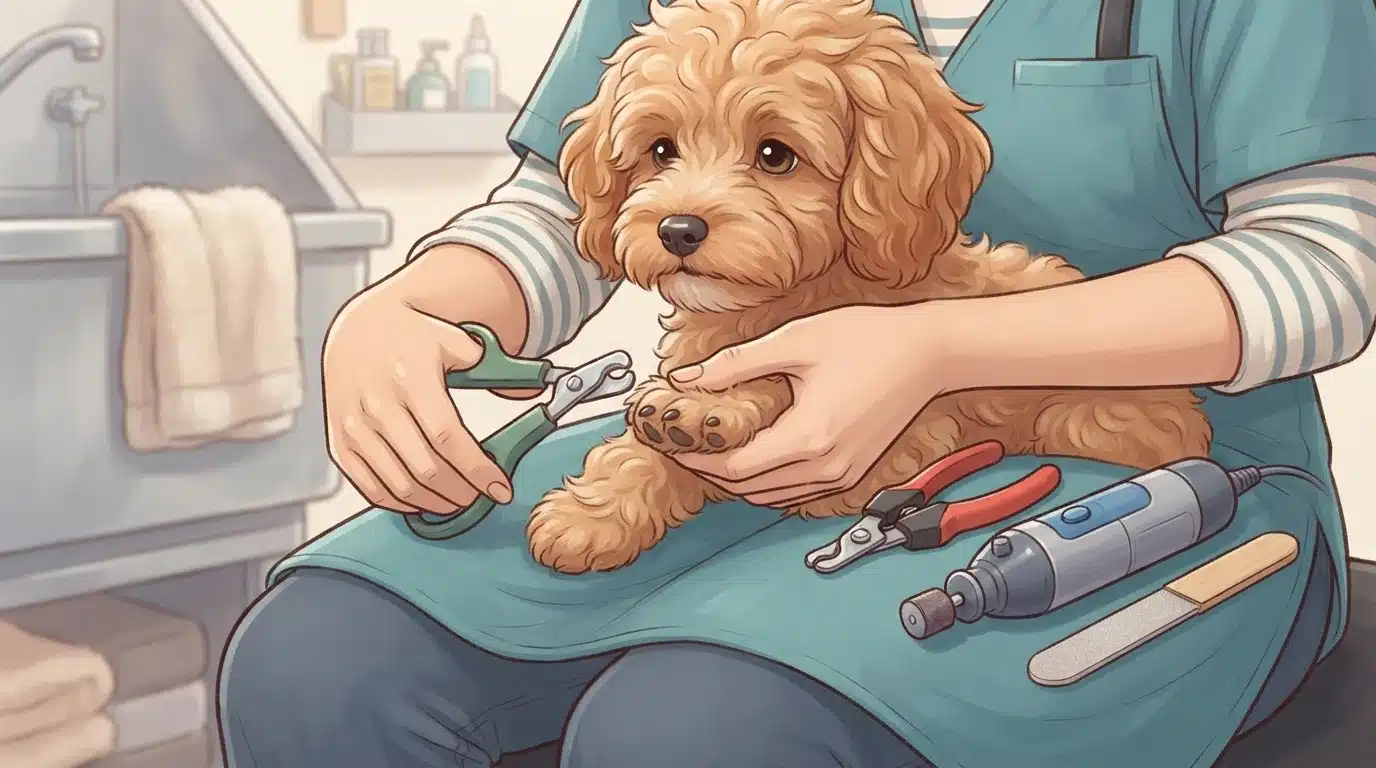
You should not hear clicking on hard floors. If you do, the nails are past due. Most Havapoos need a trim every two to three weeks.
Start early and keep sessions short. Handle each paw, trim one or two nails, and reward with a treat. When in doubt, trim less. The quick, the pink blood vessel inside light nails, sits close to the tip. A groomer or vet tech can show you the safe angle once, and a grinder tool lets you smooth edges in tiny steps with less risk.
Brush Teeth, Check Ears, and Watch the Paw Pads
Three small checks round out the week. Brush your puppy’s teeth three to four times with a dog toothbrush and dog toothpaste, never the human kind, which contains xylitol. The AVMA recommends regular home brushing to slow gum disease, which shows up in small breeds early.
Flip each ear once a week. Havapoos grow hair inside the ear canal, and floppy ears trap warmth, so wax and moisture build fast. Healthy ears look pink and smell mild. Redness, dark debris, or a yeasty smell means it is time for a cleaner or a vet visit.
Last, check the paw pads. Long hair between the toes collects burrs and makes tile floors slippery, so trim it level with the pads. Look for cracks, redness, or a limp after outdoor play.
Step 5: Time the First Groomer Visit and Hand Off Clean Habits
Your Havapoo’s first salon trip sets the tone for every visit after it. Plan it around 16 weeks, once vaccinations are on track, and treat it as training rather than a makeover.
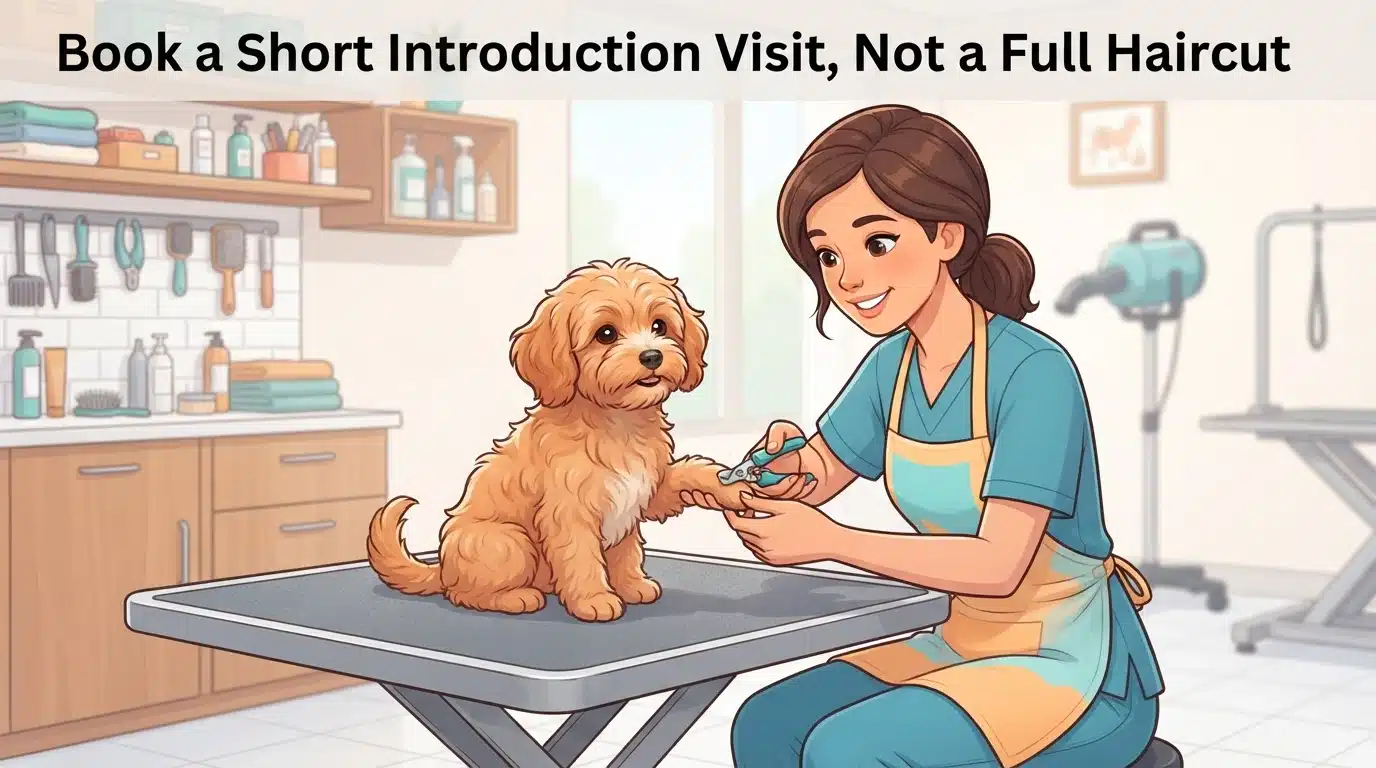
Book a Short Introduction Visit, Not a Full Haircut
Ask for a puppy intro: a bath, trim, nail clip and plenty of handling, all kept to about an hour. Many groomers offer these sessions free or at a reduced rate. The goal is simple. Your puppy learns the table, the dryer and a stranger’s hands while nothing scary happens. A calm first visit now prevents a wiggly, worried dog later.
Set the Rhythm at Every Six to Eight Weeks
Havapoo coats mat fast, so book the next visit before you leave the salon. Most puppies settle into a six to eight week schedule. In between, keep up your daily brushing and comb test so the groomer has less to fight through. A matted coat means a shorter clip than you wanted, and more stress for your dog.
Pick the Right First Length and Face Shape With Your Groomer
Bring photos of looks you like and say how much brushing you will honestly do. A puppy cut or teddy bear trim keeps coat short and easy, which suits most first-time families. Longer styles need daily line brushing. Talk through the face too, since a rounded head needs trims more often than a longer, shaggy look. For deeper style details, see the parent Havapoo grooming guide.
Step 6: Build a Simple One-Page Home Care Plan
A care plan works best when it fits on one page and lives where you groom. Tape it inside a cabinet door or save it on your phone. Write down what you did and what you noticed, so small changes get caught early instead of becoming matted or sore spots later.
Daily Two-Minute Check
Each day, run your hands over the coat for two minutes. Check behind the ears, under the armpits, around the eyes and between the paw pads, since mats start in these hidden spots. Wipe the eye corners with a damp cloth, look at the teeth and ears, and feel for burrs or sticky debris. Note anything unusual, even if it seems small.
Weekly Brushing and Bath Calendar
Pick two fixed days each week: one for a full line brush and comb test, one for a bath every two to three weeks. Track it simply:
| Task | How Often | Quick Check |
|---|---|---|
| Line brush with comb test | Twice weekly | Comb glides to the skin |
| Bath and full dry | Every 2-3 weeks | Coat fully dry after |
| Nail trim | Every 3-4 weeks | No clicking on floors |
| Ear check | Weekly | Clean, no odor |
When to Pause the Routine and Call a Groomer or Vet
Stop brushing and call for help if you find a mat you cannot see through, red or flaky skin, a sore spot your puppy guards, ear odor, or eye discharge that returns within hours. Bathing over an irritated patch makes it worse, so wait first. For a fuller picture of the breed’s everyday needs, this Havapoo care overview pairs well with your plan.

A few minutes of brushing each week keeps your Havapoo’s coat soft and mat-free, so grooming stays calm instead of a battle. If you’re still choosing your puppy, Sage Puppies raises well-socialized Havapoos with guidance from day one. Ready to bring one home? Start your application today.
Frequently Asked Questions
Q1: What does simple maintenance for Havapoo coats look like day to day?
Keep it short. A two-minute brush with a slicker brush each evening prevents mats behind the ears, under the collar, and in the armpits. Wipe paws after outdoor play, check for debris, and comb weekly to catch tangles early.
Q2: How often should I bathe my Havapoo puppy?
Every three to four weeks is plenty. Use a gentle puppy shampoo, rinse thoroughly, and towel dry before blow drying on low heat so the coat stays soft and easy to brush.
Q3: Do Havapoo puppies need haircuts, or just brushing?
They need regular trims, usually every six to eight weeks. Many families learn a simple face-and-feet tidy at home and leave full haircuts to a groomer. The parent Havapoo Grooming Guide covers style choices in detail.
Q4: When should a Havapoo puppy have its first professional groom?
Between twelve and sixteen weeks, after the second round of puppy vaccines. Book a short, gentle session so the first visit builds confidence rather than fear.
Q5: What is the comb test?
After brushing, run a metal comb through the coat down to the skin. If it glides through, you are done. If it snags, brush that spot again before mats form close to the skin.
Q6: Which brushes do I actually need?
A slicker brush for everyday work and a metal greyhound comb for checking. Skip furminators and shedding blades; Havapoos have hair, not fur, so mats matter more than shedding.
Q7: How do I get my puppy comfortable with grooming?
Start in short sessions on the floor. Touch paws, ears, and tail daily, reward calm behavior, and pair the brush with treats so grooming feels normal from the first week home.
Conclusion
Havapoo grooming comes down to rhythm, not talent. Brush your puppy a few minutes every day, run a line brush session weekly, and confirm your work with the comb test. If the comb glides through, you are done. If it catches, you found the mat before it tightened.
Bathe only when your puppy actually needs it, dry fully, and trim nails on the same schedule each week so it becomes routine. Keep a small toolkit within reach and reward calm handling, because a puppy who enjoys grooming stays easy to groom for life.
For haircuts and style decisions, hand this guide off to the fuller Havapoo grooming guide and build from there. Consistency now saves you shaved coats and stressed vet visits later.