01
Loose wave
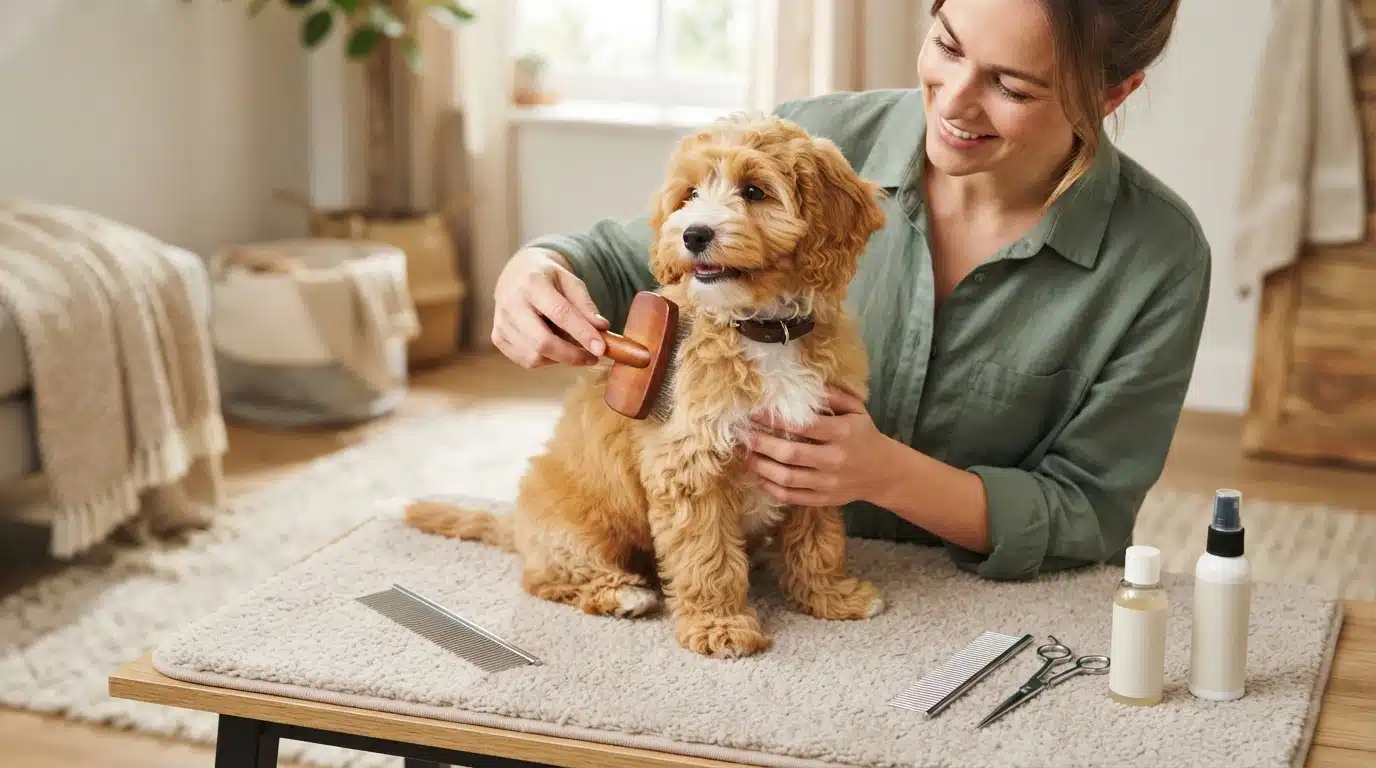
A silkier, looser wave may separate easily, but friction behind the ears, beneath the collar, under the legs, and around the tail can still create hidden tangles.
Havapoo puppy care
A Havapoo puppy’s soft coat can look effortless while small tangles quietly form close to the skin. This practical guide shows you how to brush, comb, bathe, dry, and introduce grooming in a calm way that protects both the coat and your puppy’s confidence.

The simple answer
Most Havapoo puppy coats do best with short, consistent grooming sessions rather than an occasional long struggle. The brush separates and smooths the coat. The comb confirms that you reached the hair near the skin, where mats usually begin.
Because a Havapoo is a Havanese and Poodle mix, coat texture can vary significantly. One puppy may have a loose wave that is relatively easy to maintain. Another may develop a dense, plush, or curlier coat that tangles quickly. Your puppy’s schedule should follow the coat you actually have—not a promise attached to the breed name.
Whether your Havapoo joins your family through local pickup in Utah or travels home through a carefully planned delivery, begin with calm, predictable sessions. A puppy who learns that brushes, towels, dryers, paw handling, and grooming tables are safe will usually be easier to care for throughout life.
Know the coat in front of you
Havapoo coats are not identical. Texture, density, curl, shedding, and matting tendency can change as a puppy grows. No coat is guaranteed to be non-shedding, allergy-free, or maintenance-free.
A silkier, looser wave may separate easily, but friction behind the ears, beneath the collar, under the legs, and around the tail can still create hidden tangles.
A fuller fleece-like coat can look exceptionally soft and fluffy. Its density often requires careful sectioning so the brush reaches more than the top layer.
A tighter curl may hold shed hair and debris within the coat. Shorter haircuts and more frequent comb checks can make maintenance easier for busy families.
A simple home kit
You do not need a cabinet full of grooming equipment. A few correctly sized tools, used gently and consistently, are more valuable than a large collection of products.
Choose a puppy-appropriate brush that separates the coat without scraping the skin.
Use both wider and finer teeth to verify that each section is tangle-free from skin to ends.
A light mist can reduce static and friction. Avoid soaking the coat before brushing.
Use products formulated for dogs and appropriate for your puppy’s skin and coat.
Blot rather than rub, then use comfortable airflow and low heat while brushing.
Use a small clipper or grinder you can control, plus toothpaste made specifically for dogs.
The core routine
Keep the first sessions very short. A complete coat session can come later. Early success means your puppy stays relaxed, accepts handling, and finishes before becoming frustrated.
Use a stable surface with good footing. Keep the brush, comb, mist, and small treats within reach so you do not leave your puppy unattended.
Use your fingers to feel behind the ears, under the collar or harness, beneath the front legs, through the chest, around the groin, and near the base of the tail. These friction points often mat first.
Separate a thin layer of hair with your free hand. A small amount of dog-safe detangling mist can help reduce pulling. Avoid brushing a soaking-wet coat.
Hold the hair near the skin to reduce tension. Brush a narrow line at a time, using light strokes. Work methodically instead of sweeping across the fluffy surface.
If the brush catches, stop. Support the hair close to the skin and gently loosen the ends first. Do not repeatedly pull through resistance.
Run the metal comb from the skin to the ends. When it catches, return to that small area with your fingers and brush. The comb—not the fluffy appearance—is your final check.
Give a small reward after calm handling, not only at the end. For a young puppy, completing one leg, the chest, or the ears without stress may be enough for that session.
Bath day
Bathing can make existing tangles tighten. Always inspect and brush the coat before the bath, then dry it thoroughly with comfortable airflow.
Persistent itching, odor, redness, discharge, sores, or pain deserves veterinary guidance rather than another grooming product.
Professional grooming
Longer hair is beautiful, but it is not automatically better. The kindest haircut is one that can stay clean, comfortable, and mat-free between appointments.
A short early visit may include gentle handling, face and paw tidying, nail care, sanitary cleanup, and exposure to the sounds and surfaces of a salon. Confirm safe timing with your groomer and veterinarian.
A soft, rounded face with a moderate body length preserves the plush Havapoo look while making brushing more manageable. Ask the groomer to keep the eyes and mouth area practical.
A shorter body can be a smart choice during coat transition, wet weather, active outdoor seasons, or periods when a family cannot maintain a longer coat every few days.
| Hair length | Home maintenance | Typical fit | What to discuss with the groomer |
|---|---|---|---|
| Long and fluffy | Frequent line brushing and careful comb checks | Families who enjoy regular coat care | Friction zones, face visibility, sanitary areas, and a realistic appointment interval |
| Medium companion trim | Consistent brushing several times each week | Families wanting a plush look with moderate upkeep | Body length, rounded face, ear shape, paw style, and how the coat behaves between visits |
| Short practical trim | Still requires brushing, but tangles are easier to prevent and find | Active homes, coat transition, travel, or simpler maintenance | Comfortable length, sun and weather exposure, and areas that tend to mat fastest |
Small areas, big difference
Good grooming is more than keeping the body coat fluffy. Quick checks of the smaller areas help you notice discomfort early and make professional appointments easier.
Use a soft, damp cloth to wipe ordinary debris from the hair around the eyes and mouth. Keep hair from poking the eyes. Ask your veterinarian about persistent tearing, redness, odor, or discharge.
Check the outer ear and opening regularly for odor, redness, moisture, or sensitivity. Do not insert cotton swabs into the ear canal. Use only cleaning products and techniques your veterinarian recommends.
Separate the toes, remove debris, and check pads after outdoor play. Keep excess hair around the pads tidy so your puppy has traction and you can see the skin clearly.
Frequent, tiny trims are often easier than waiting for long nails. Introduce the tool with rewards before using it. A groomer or veterinary professional can demonstrate safe handling.
Build toward regular tooth brushing with a dog-specific toothbrush and toothpaste. Never use human toothpaste. Your veterinarian can recommend an age-appropriate dental routine.
As you part the coat, look for redness, flakes, bumps, sores, parasites, unusual odor, or tender areas. Grooming is a useful observation time, but it is not a substitute for veterinary care.
Build cooperation early
The goal is not simply to finish the coat. The goal is to teach your puppy that gentle restraint, touch, tools, sound, and standing still are predictable and safe.
Briefly touch an ear, paw, tail, chin, or collar area. Mark calm behavior with praise or a small reward, then release.
Let your puppy see and sniff the brush, comb, towel, toothbrush, dryer, and nail tool while they are quiet and still.
Use one brush stroke, one comb pass, one paw hold, or a few seconds of distant dryer sound. Stop before stress rises.
Combine several calm actions into a two- to five-minute session, then slowly increase the duration as your puppy succeeds.
Reduce the difficulty, check for a tangle or sore spot, and resume later with a shorter session.
Increase only one variable at a time: duration, body area, tool movement, sound, or restraint.
Know when to stop
Avoidable problems
Most coat problems do not come from a lack of love. They come from a routine that looks complete but misses the hair closest to the skin.
Frequently asked questions
Four to six short sessions each week is a useful starting point for many puppies, with daily checks behind the ears, under the collar or harness, beneath the legs, and around the tail. A denser or curlier coat may need daily line brushing. Always finish with a metal comb.
Introduce professional grooming early enough that the first visit can be calm and simple rather than an emergency mat removal. Because salon policies, vaccine requirements, and local disease risks vary, confirm timing with both your veterinarian and chosen groomer.
A dense, wavy coat can dry slowly and develop tangles while damp. Blot the coat, then use comfortable airflow and low heat while brushing in sections. Make sure the skin and coat are fully dry without overheating your puppy.
The coat may be becoming denser or changing texture as the adult coat develops. Longer hair, moisture, collars, harnesses, active play, and missed undercoat tangles can also increase matting. Increase comb checks and consider a shorter trim while the coat is changing.
Either can work when it is correctly sized and used gently. A small slicker often helps separate a plush or curly coat, while some looser coats respond well to a pin brush. The essential second tool is a metal comb that verifies the hair is clear from skin to ends.
Choose a length your family can maintain without mats. A moderate companion trim preserves a plush appearance, while a shorter practical trim may be kinder during coat transition, travel, wet seasons, or periods when frequent brushing is difficult. Ask the groomer to recommend a length for your puppy’s actual coat.
Continue your research
Wisely bred. Beautifully loved.
Explore current availability, learn how the Sage Puppies process works, and submit an application when you are ready to be considered for the right puppy match.
Sage Puppies is based in South Jordan, Utah and works with both local pickup families and families who need carefully coordinated puppy delivery. Availability, timing, and delivery options vary.