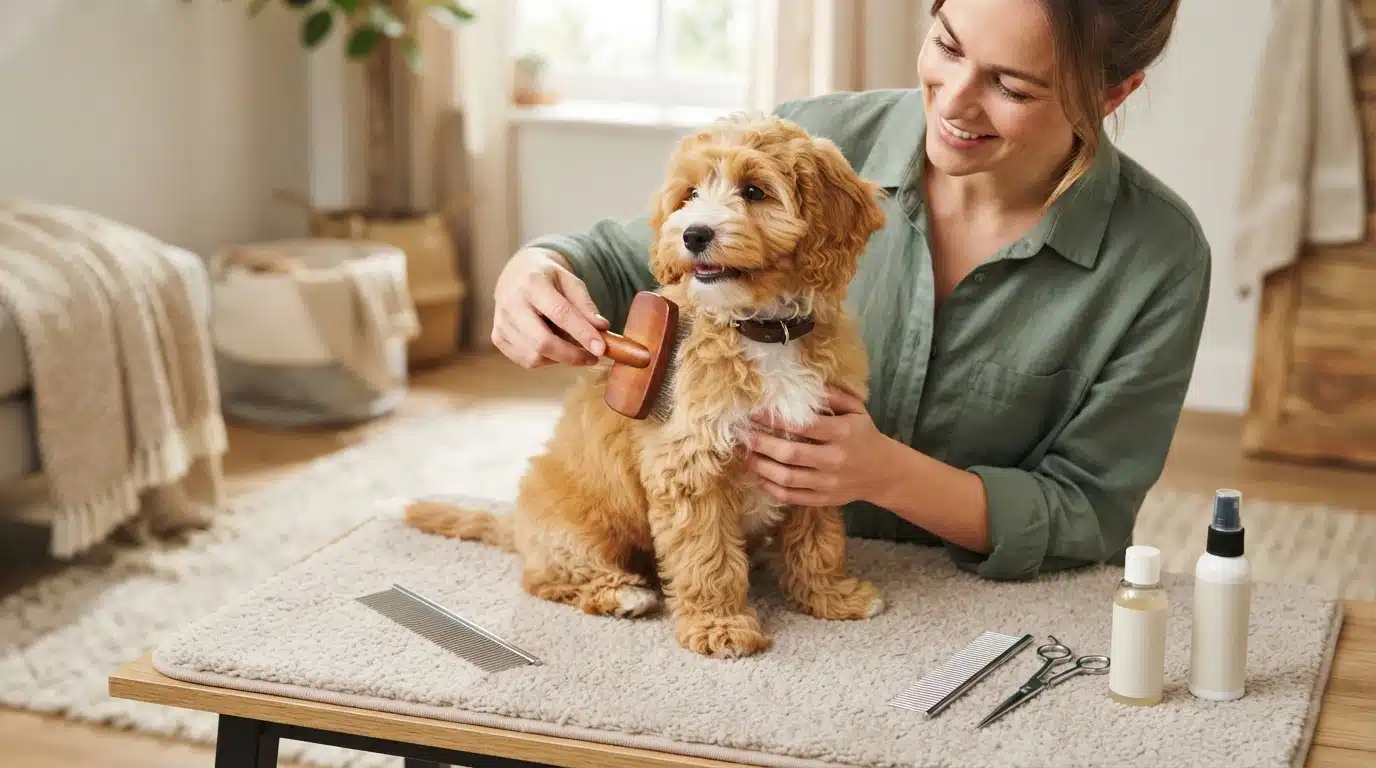
Quick Summary: Reliable Havapoo breeders prioritize health testing for both parents and raise puppies in a home environment rather than a kennel. Always ask for written cardiac and eye clearances, and look for breeders who interview you to ensure a good match. Sage Puppies exemplifies this by raising litters in their home and providing transparent health documentation for every parent dog.
Bringing a Havapoo home is a decision that lasts a lifetime. Yet the search often feels rushed, with pushy sellers and vague answers about health testing. Many families end up guessing, and the puppy pays the price.
This guide fixes that. It walks you through reliable Havapoo breeders step by step, from the first phone call to pickup day. You will learn which health records to ask for, how Havapoo breeder screening really works, and what a well-run home program looks like in person. We also cover the quiet signals of ethical Havapoo breeders, including how they raise litters and when they let puppies leave.
We write from years of hands-on work with Havanese and Havapoo lines at our South Jordan, Utah home program, so the advice here comes from daily practice, not theory. Read it with a notebook nearby. The breeder you choose shapes your puppy’s health and temperament for the next dozen years or more, and you deserve clear answers before you commit.
Understanding the Foundation of Ethical Breeding
Ethical breeding starts long before a litter arrives. It begins with the health of the parents, the plan behind each pairing, and the environment where puppies spend their first eight weeks. When you evaluate reliable Havapoo breeders, these foundations matter more than photos or price. A breeder who health tests, socializes early, and raises puppies in the home is building temperament and resilience into the dog you will live with for years.
The Importance of Home-Raised Socialization
Puppies learn fastest between three and eight weeks of age. During this window, they absorb sounds, surfaces, handling, and human interaction at a pace they never repeat. A puppy raised in a quiet kennel run often starts life wary of vacuum cleaners, staircases, and children. A puppy raised in a busy kitchen learns those things are normal.
Home-raised programs do this work daily. Puppies hear dishes, doorbells, and conversation. They walk on tile, carpet, and grass. They are handled by different people, including gentle children, which builds the confident, people-focused temperament Havapoos are known for.
| Early Experience | Kennel-Raised Puppy | Home-Raised Puppy |
|---|---|---|
| Household noises | Startles easily | Recovers quickly |
| Handling by strangers | Shy or wary | Welcomes new people |
| Surface variety | Hesitant on stairs | Explores with confidence |
| Crate and potty routine | Little exposure | Early head start |
This is why we raise every litter inside our South Jordan, Utah home rather than in separate facilities. Our Havapoo puppies grow up surrounded by family life, which means your first week together feels familiar to them instead of frightening.

Ask any breeder you consider where puppies sleep, who handles them, and what a typical day sounds like. Honest answers come easily from programs that truly raise puppies at home. Vague ones are worth a second look. Ethical reliable Havapoo breeders welcome these questions, because the answers are their best proof. You can see how our litters are raised on our available Havapoo puppies page.
Mandatory Health Testing for Parent Dogs
A puppy inherits most of its health risks from its parents. That is why responsible Havapoo breeders test the parent dogs before breeding, not after a problem shows up. For a mix like the Havapoo, both sides matter: the Havanese side and the Poodle side each carry their own list of inherited conditions. Ask any breeder for proof, and expect paperwork from a board-certified specialist, not just a verbal “the vet said they’re healthy.”
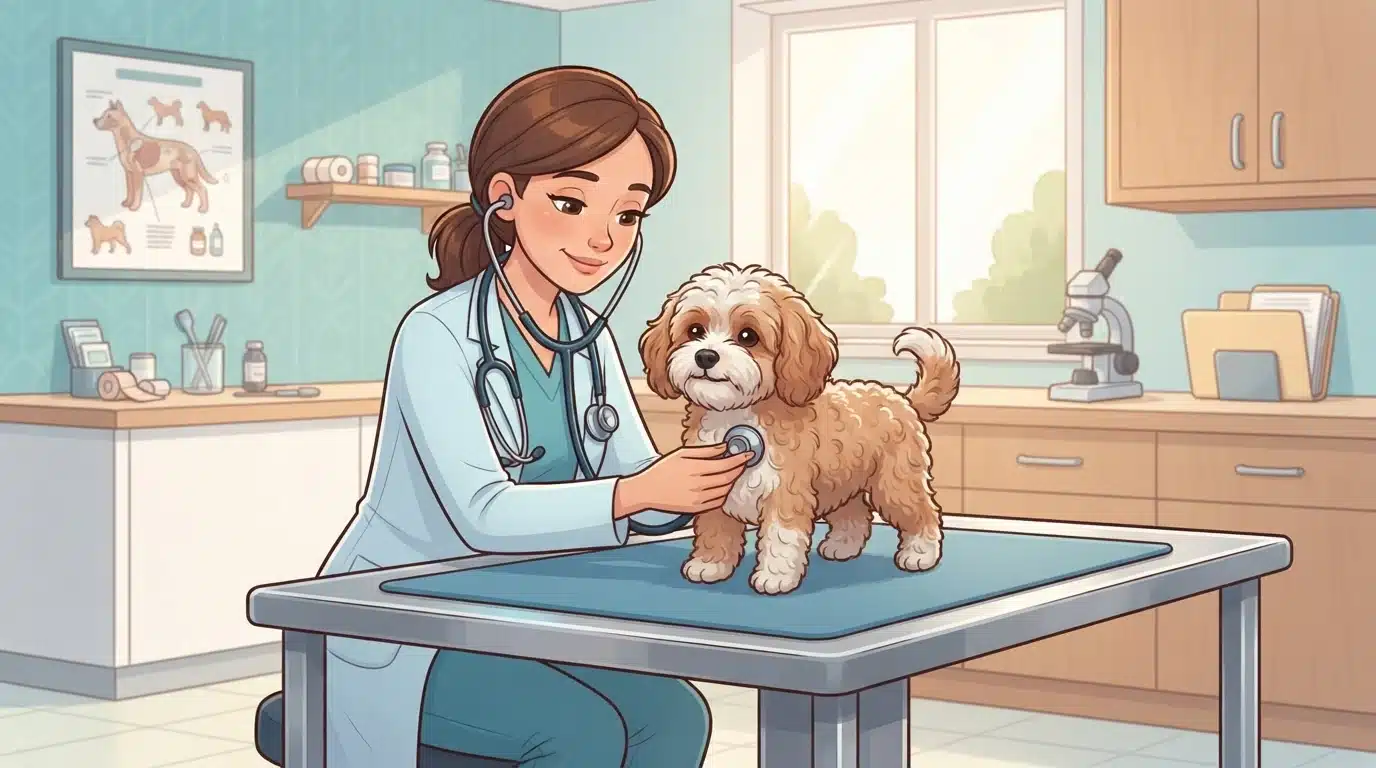
Cardiac and Ophthalmologist Screenings
Two checks belong at the top of your list. The first is the heart. A veterinary cardiologist listens for murmurs and performs an echocardiogram or similar imaging to rule out congenital heart defects and early mitral valve disease, a condition that small breeds like the Havanese can develop over time. The exam ends with a written clearance, and that document is what you want to see.
The second is the eyes. An ophthalmologist certified through OFA’s eye exam registry checks both parents for inherited eye disease, including cataracts and progressive retinal atrophy, which can lead to blindness. Because these conditions may not appear until years after a dog is bred, a current eye clearance from both parents is one of the strongest signals a breeding program takes its work seriously.
If a breeder cannot produce cardiac or eye clearances dated within the past 12 months, treat that as a red flag and keep looking.
Genetic Screening Panels
Beyond the physical exams, a simple cheek swab unlocks each parent’s DNA. Genetic panels screen for dozens of inherited conditions at once, and for Havanese and Poodle lines the key ones include progressive retinal atrophy and other tested markers tracked by university labs.
At Sage Puppies, every parent dog completes both cardiac and ophthalmologist exams plus full genetic screening before joining the breeding program. We share results openly during your application conversation, because families deserve to see the health behind their puppy’s pedigree, not just take it on faith.
When you interview breeders, ask three things: which panel was used, whether both parents are cleared, and whether you can see the actual certificates. An ethical program answers all three without hesitation.
How to Verify Breeder Credibility
A trustworthy breeder proves things. A careless one tells you to trust them. The fastest way to tell the difference is to look at what they show you before you ever ask: health records, parent photos, videos of the puppies at home, and clear answers about where the litter lives. If a breeder resists sharing any of this, that hesitation is your answer.
Assessing Transparency and Communication
Start with health testing, because it is the easiest thing to fake in conversation and the hardest thing to fake on paper. Ask for proof that both parents were screened for conditions common to their breeds, such as patella issues, eye problems, and heart concerns in Havanese lines. A credible program shares test results or registry listings without being pushed twice. If you want a ready-made checklist, the five questions about health-tested puppy parents cover exactly what to request and why each answer matters.
Next, watch how the breeder communicates. Strong programs answer questions directly, even the uncomfortable ones, and they often ask you questions too. A breeder who wants to know about your home, your schedule, and your experience with puppies is screening you. That is a good sign. It means the puppies matter more than the sale.
Then look at where the puppies actually live. Ask for a video call or recent photos showing the litter in a real home setting. Puppies raised in a house, around everyday noise and handling, tend to settle into family life faster than puppies kept apart from people. Ask who handles the puppies, how often, and at what ages new sounds and surfaces are introduced.
Finally, read the paper trail. A clear contract, vaccination records, a deworming schedule, and a defined go-home date all point to an organized program. Vague answers about timing or missing documents do not.
You can see what this looks like in practice through the step-by-step adoption process we follow at Sage Puppies, from application to go-home day, with health records shared along the way. Use any breeder’s process against that standard. Clear answers, shown proof, and a breeder who interviews you back: that is credibility you can count on.
Questions to Ask Before You Commit
The Adoption and Deposit Process
A good breeder will welcome your questions. In fact, how they answer tells you as much as what they say. Before you place a deposit, walk through the whole process so nothing surprises you later.
Start with the basics. Ask which parent dogs you will meet, whether you can see their health testing results, and how the litter is raised during the first eight weeks. A reputable home-raised program keeps puppies in the family space, not a kennel, and handles them daily from birth.
Next, ask about timing and placement. How are puppies matched with families? Some programs choose for you based on your lifestyle, which often works better than picking from a photo. Ask when you can visit or meet your puppy by video, and what updates you will receive before go-home day.
Then get clear on money. What does the deposit cover, is it refundable or transferable, and when is the balance due? Ask what the price includes, such as first vaccinations, a vet exam, microchipping, and a starter kit.

Finally, confirm the logistics. Ask about local pickup in Utah and how nationwide delivery works, including who travels with the puppy and how stress is kept low. Ask what health records and support you will receive after your puppy comes home.
A simple checklist for the call:
| Question | What a Strong Answer Sounds Like |
|---|---|
| Can I see the parents? | Yes, in person or by video, along with health test results. |
| Where do puppies live? | Inside our home, handled daily by the whole family. |
| How does the deposit work? | Clear written terms, refund or transfer policy explained upfront. |
| What comes with my puppy? | Vet records, vaccination schedule, food, and written care guidance. |
| What support do you offer after? | Ongoing contact, feeding advice, and a breeder who answers calls. |
At Sage Puppies, every step is laid out plainly, from application to go-home day, so you always know what happens next. If a breeder dodges these questions or pressures you to decide quickly, treat that as your answer and keep looking. You can also review how our adoption process works before you reach out.
Delivery and Pickup Clarity
A good breeder tells you exactly how your puppy will get to you before you pay a deposit. Vague answers here are a red flag. Responsible programs offer two clear paths: local pickup at the breeder’s home, or a planned delivery with details you agree on in writing.
Pickup is usually the best option when you can manage it. You meet the breeder, see where your puppy was raised, and ask questions face to face. At Sage Puppies in South Jordan, Utah, families who pick up get to meet the mother, tour the home environment, and watch how their puppy responds to new people. That visit tells you more than any photo ever could.
If you live out of state, delivery makes sense, but the details matter. Ask who travels with the puppy, how long the trip takes, and what happens during rest stops. A confident breeder will walk you through the whole plan and confirm pickup times, costs, and what to bring.
Safety During Transport
Young puppies handle travel differently than adult dogs, so transport should be short, calm, and well planned. Before you commit, ask these questions:
- Who is with the puppy? A trusted courier or a family member should travel with the puppy, never a crowded cargo hold.
- What does the puppy ride in? A secure, ventilated carrier with soft bedding keeps stress low.
- How is food and water handled? Puppies under 12 weeks need scheduled breaks, not an all-day stretch without care.
- What paperwork travels along? Health records and feeding notes should arrive with your puppy.
A breeder who answers these without hesitation has done this before, and it shows.

If you are weighing both options, our guide to puppy pickup vs delivery breaks down travel time and cost so you can plan your trip with confidence.

A health-tested parent, a calm home, and a puppy that already trusts people: that is what careful breeding looks like. At Sage Puppies, every Havapoo is raised in our South Jordan, Utah family, with pickup or nationwide delivery. Visit our Available Puppies page or start your application today, and welcome a well-started companion you helped choose from the start.
Frequently Asked Questions
Q1: What specific health tests should reliable Havapoo breeders perform on parent dogs?
Look for OFA or PennHIP evaluations for hips and patellas, CERF/OFA eye exams, and cardiac clearances. Because Havapoos mix Havanese and Poodle lines, parents should also be tested for genetic conditions common to both breeds.
Q2: How do I verify if a Havapoo breeder is truly reputable and ethical?
Ask to see the parents’ health testing records, request references from past families, and insist on a video call or visit. Ethical programs, like home-raised breeders in South Jordan, Utah, are transparent about where puppies live.
Q3: What questions should I ask before placing a deposit for a Havapoo puppy?
Ask about health guarantees, vaccination and deworming schedules, socialization practices, when the puppy can go home, and what happens if the pairing doesn’t suit your family. Get every policy in writing.
Q4: How much should a well-bred Havapoo puppy cost?
Expect roughly $1,500 to $3,500. Prices reflect health testing, quality care, and early training. Suspiciously low prices usually signal skipped testing or puppy-mill sourcing.
Q5: Are Havapoos good for first-time dog owners?
Yes. They’re gentle, trainable, and low-shedding. Just plan for regular grooming and daily interaction, since they bond closely with their people.
Conclusion: Choosing Your New Family Member
Finding a trustworthy Havapoo breeder comes down to a few plain checks. Look for health testing on both parents, visit or video-call the home, and notice how the puppies are raised. Well-socialized pups grow up in kitchens and living rooms, not kennels. Ask about the parents’ temperament, and expect the breeder to ask questions right back.
A good breeder will share vet records openly, keep litters small, and stay in touch after you bring your puppy home. If a program rushes you or dodges questions about health markers, walk away.
Programs like Sage Puppies’ home-raised Havapoo litters in South Jordan, Utah show what this looks like in practice: health-tested parents, family-raised care, and clear pickup or delivery options. Take your time, ask freely, and the right match will feel obvious.