
Quick Summary: Raising a small puppy in North Dakota requires proactive cold-weather management, including short potty breaks and indoor exercise to protect against freezing temperatures. Sage Puppies specializes in Havanese, Havapoo, and Cavapoo breeds that are well-suited for cozy indoor life, provided owners maintain consistent routines and paw care. Proper preparation, such as draft-free zones and regular grooming, ensures these companion breeds stay healthy and comfortable throughout the winter.
When the mercury drops in North Dakota and the yard turns into a crisp, snowy expanse, the wish for a warm companion curled on your lap grows stronger. Many families searching puppies North Dakota near me run into the same problem: most advice online ignores how brutal a prairie winter is for a small puppy. Potty breaks, paws, and house training all change at twenty below.
This guide fixes that. You will find practical cold-weather routines for tiny breeds, plus what to expect when you bring home Havanese, Havapoo, or Cavapoo puppies. As the founder of Sage Puppies, a boutique program raising these three breeds only, I help families nationwide prepare well before pickup day. Browse current available puppies or review pricing and reservation details, then keep reading for winter-ready care.
Understanding Your Small Breed Puppy in Northern Climates
North Dakota winters are no small thing. Temperatures often drop well below freezing, and wind chills can make a quick potty break feel harsh even to a healthy adult dog. A puppy feels it more. Small breeds lose body heat faster because of their size, so your job as an owner starts with knowing what your puppy can and cannot handle. Families searching for puppies North Dakota near me should ask breeders how their dogs manage cold climates before they commit.
The Importance of Quality Breeding for Temperament
Temperament is bred, not trained into a puppy after the fact. A well-bred Havanese, Havapoo, or Cavapoo comes from parents with calm, people-focused temperaments, and that matters even more in a northern winter. Why? Because your puppy will spend months mostly indoors, close to family. A confident, biddable puppy settles into that routine easily. A nervous one may struggle.
Good breeders also handle puppies early. Early handling builds resilience, which helps a young dog cope with snow, ice, bulky coats, and booties without fear. Ask any breeder you consider how they socialize their litters and what the parent dogs are like in the home. Honest answers tell you more than a website ever will.
If you are weighing which small breed fits your household, our Havanese, Havapoo, and Cavapoo comparison breaks down the differences in temperament, coat, and care.
Breed Characteristics and Cold Sensitivity
All three of these breeds carry a single coat with hair rather than fur, similar to humans. That means minimal shedding but also limited insulation against deep cold. A Havanese or a Havapoo left outside in a North Dakota January is at real risk of hypothermia within minutes.
Plan for short outdoor breaks, a warm coat or sweater below about 20 degrees, and paw checks for ice balls and road salt after every trip out. Indoors, these breeds thrive. They were bred for companionship, so a cozy spot near the family is exactly where they want to be. When families search for puppies North Dakota near me and land on these breeds, the cold is manageable only with the right plan, and that plan starts at home before the puppy ever arrives.
Preparing Your North Dakota Home for a New Puppy
North Dakota winters test even the coziest homes, so set things up before your puppy arrives. A Havanese, Havapoo, or Cavapoo is small, social, and happiest indoors, which makes winter preparation simple: control drafts, build safe play spaces, and keep routines steady.
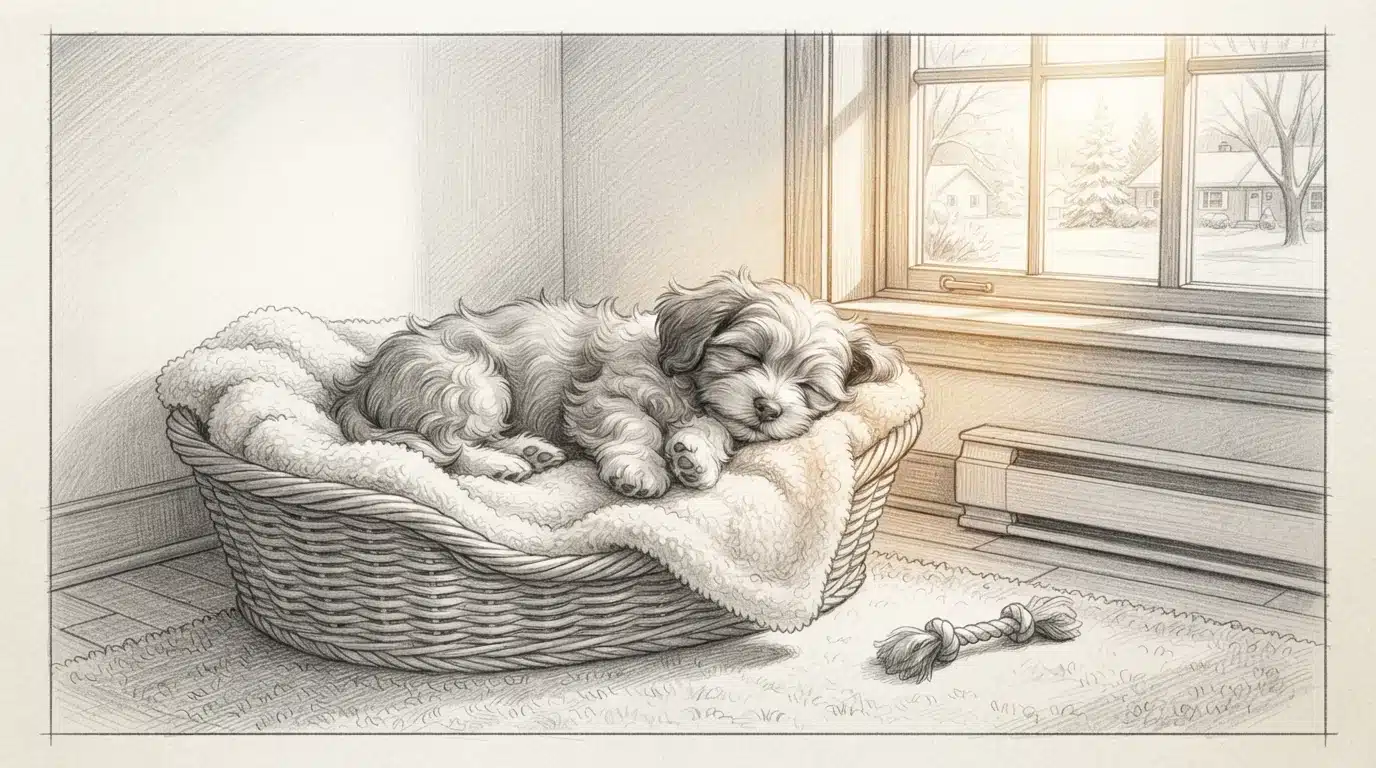
Draft-Free Zones and Indoor Comfort
Puppies under six months chill fast, and floor-level drafts are the sneaky culprit. Walk each room on your knees. If you feel cold air near baseboards, windows, or exterior doors, your puppy will feel it too.
Pick one main area for the puppy’s bed, crate, and water bowl. An interior room works best, or a corner away from doorways. A raised bed keeps your puppy off cold floors, and a washable blanket adds warmth without overheating.
Block drafts with a rolled towel or a door draft stopper. Keep the thermostat steady between 68 and 72 degrees. If you use a space heater, choose one with a tip-over shutoff and keep it well out of reach.
Tip: Set up the sleeping zone a week early, so the first-night smells and sounds already feel familiar.
If your puppy arrives by delivery or pickup during a cold snap, plan a warm handoff, a short trip, and a calm first hour indoors.
Safe Indoor Exercise During Deep Freeze
When wind chills drop below zero, outdoor potty trips get short and walks get canceled. Small breeds still need daily activity, so build indoor options now.
A hallway game of fetch, a snuffle mat, or short training bursts of five minutes work well. Toys that dispense treats keep a clever Havapoo busy. Rotate toys every few days so nothing gets boring.
Watch for slipping on hard floors. A rug runner gives your puppy traction for zoomies and protects growing joints.
You can find more puppy prep steps in our new puppy checklist, then bring your questions to your breeder before homecoming day.
Mastering House Training During Winter Months
House training a puppy through a North Dakota winter takes patience, but the cold does not have to derail progress. Small breeds like the Havanese, Havapoo, and Cavapoo feel the chill quickly, so the goal is short, consistent trips and a routine your puppy can count on.
Establishing a Predictable Routine
Puppies learn fastest when the schedule never wavers. Take your puppy out first thing in the morning, after every meal, after naps, and right before bed. In deep cold, keep trips brief but frequent, since a rushed puppy may not finish the job.
Pick one potty spot close to the door and clear a small path to it. A shoveled patch means less snow wading and a clearer cue for your puppy. Praise calmly the moment your puppy goes, then head back inside before paws get too cold.
Watch for sniffing, circling, or wandering off. Catching those signals saves you a cleanup and builds the habit faster. Accidents will happen, especially when a puppy refuses to step onto icy ground. Never punish after the fact. Just clean the spot with an enzymatic cleaner so the scent does not invite a repeat visit.
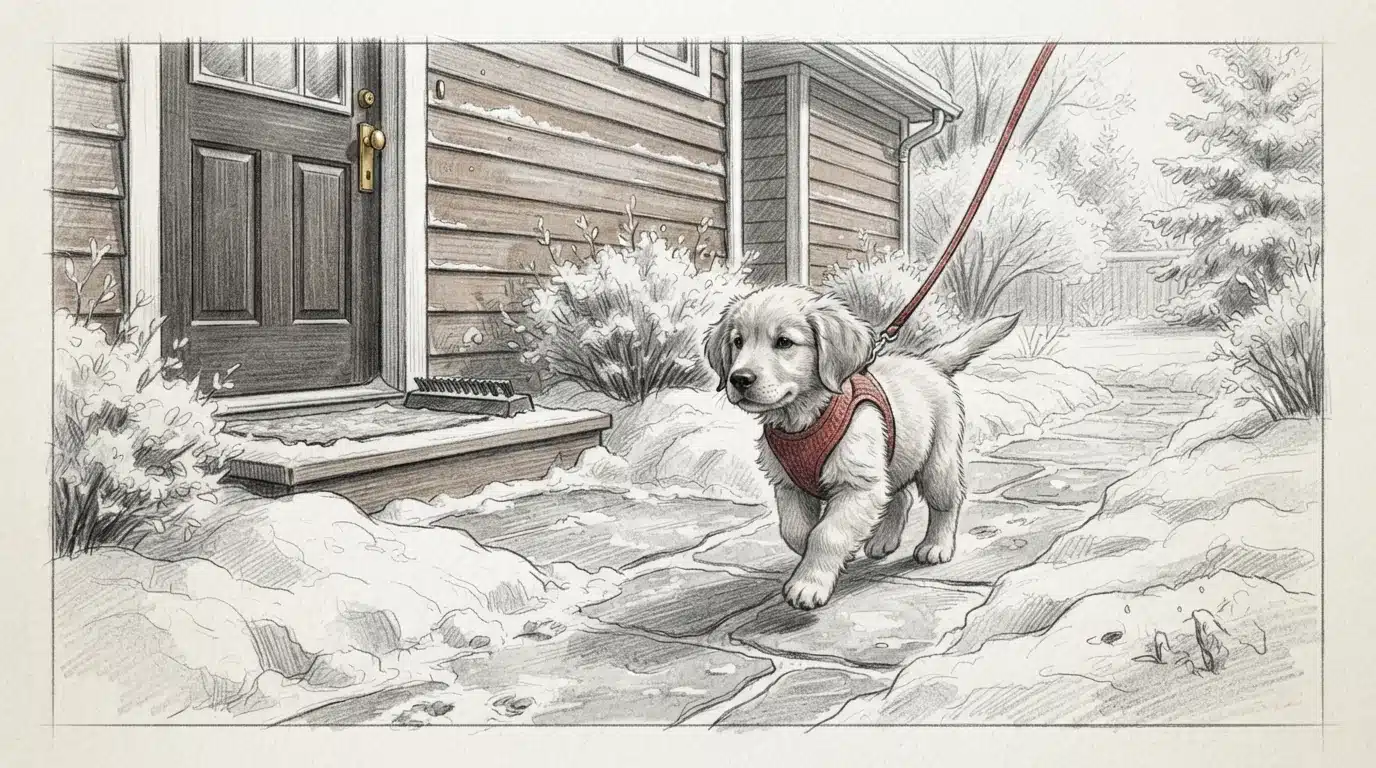
Winter-Ready Potty Tools
A few inexpensive items make winter potty trips far easier for both of you.
- Paw balm protects small pads from ice melt salt and drying cracks.
- A dog coat or sweater helps short-coated pups tolerate a full minute outside.
- A long-handled scoop and flashlight handle dark, early evenings.
- Indoor backup pads give you a safe option when wind chills turn dangerous.
Keep the gear by the door so trips stay quick. Towel off paws as soon as you come in, checking between toes for packed ice.
Tip: If the thermometer drops below zero or wind chill turns harsh, a puppy pad or turf patch indoors is safer than pushing a shivering puppy outside.
Consistency, warmth, and a clear routine carry you through until spring.
Start your application when you are ready to bring home a winter-ready companion.
Grooming and Winter Skin Care
Cold air outside and dry heat inside pull moisture from a small dog’s coat fast. Havanese, Havapoos, and Cavapoos all carry soft, low-shedding coats, which is wonderful for your floors but means their skin needs a little extra care once the furnace kicks on. Here is how to keep that coat healthy through a North Dakota winter.
Dealing with Dry Skin and Static
Dry skin usually shows up as flaking, extra scratching, or a coat that feels brittle instead of silky. Static is the louder clue: if your puppy’s fur crackles when you pet her, the air in your home is too dry.
Start with a humidifier in the rooms where your puppy sleeps and plays. Aim for roughly 40 to 50 percent humidity. Your skin will thank you too.
Brushing does more work than any product. A few minutes daily spreads natural oils through the coat and lifts out dead undercoat. Use a slicker brush for the body and a metal comb near the ears and armpits, where mats hide.
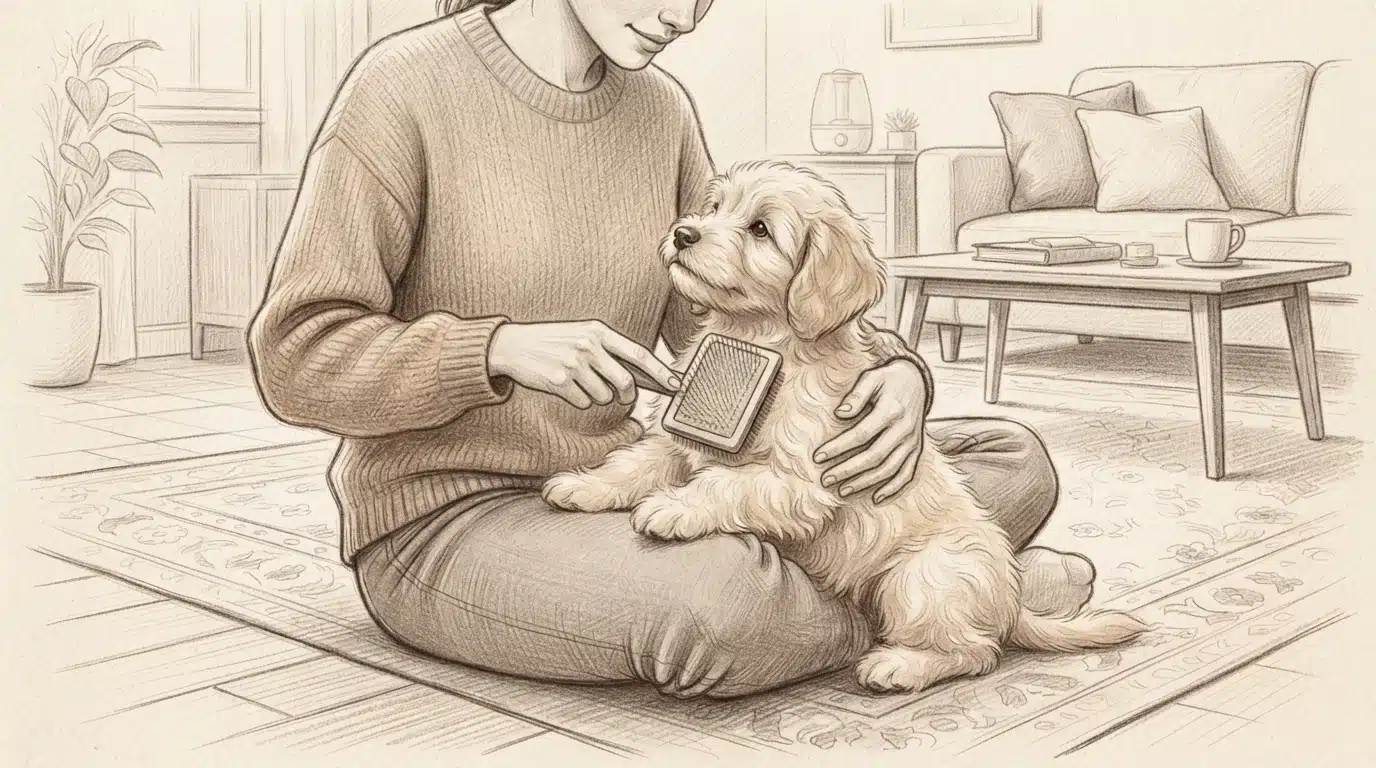
Baths need trimming, not more of them. Once every three to four weeks is plenty, and always use a gentle, moisturizing dog shampoo followed by a conditioner. Blow the coat fully dry on a low, warm setting; a damp puppy in a cold house chills quickly and mats faster.
Tip: If flakes persist despite good humidity and brushing, ask your vet before adding supplements. Sometimes dry skin points to a diet gap or an allergy rather than the weather.
Wipe paws and bellies after every snowy walk. Road salt and ice-melt chemicals irritate skin between the toes, so a quick damp cloth and a towel dry takes ten seconds and prevents a week of licking.
For breed-specific coat details, our Havanese grooming guide breaks down the routine step by step.
Nutrition and Health in the Cold
Feeding for Growth and Vitality
Cold air makes a puppy’s body work harder to stay warm, so winter puppies often burn more calories than they would in milder months. Havanese, Havapoos, and Cavapoos are small dogs, though, so their extra needs show up in small amounts: a slightly larger scoop, not a second meal. Stick with the food your breeder or veterinarian recommends and adjust portions based on body condition, not guesswork. You should be able to feel ribs easily under the coat without pressing hard.
The bred-in-small-batch difference matters here. When you pick up a puppy from a careful program, ask what food it has been eating and keep that brand for at least two weeks before switching. Sudden diet changes plus cold stress often cause loose stools, and a small puppy dehydrates fast. If you change foods, blend the old and new over seven to ten days.
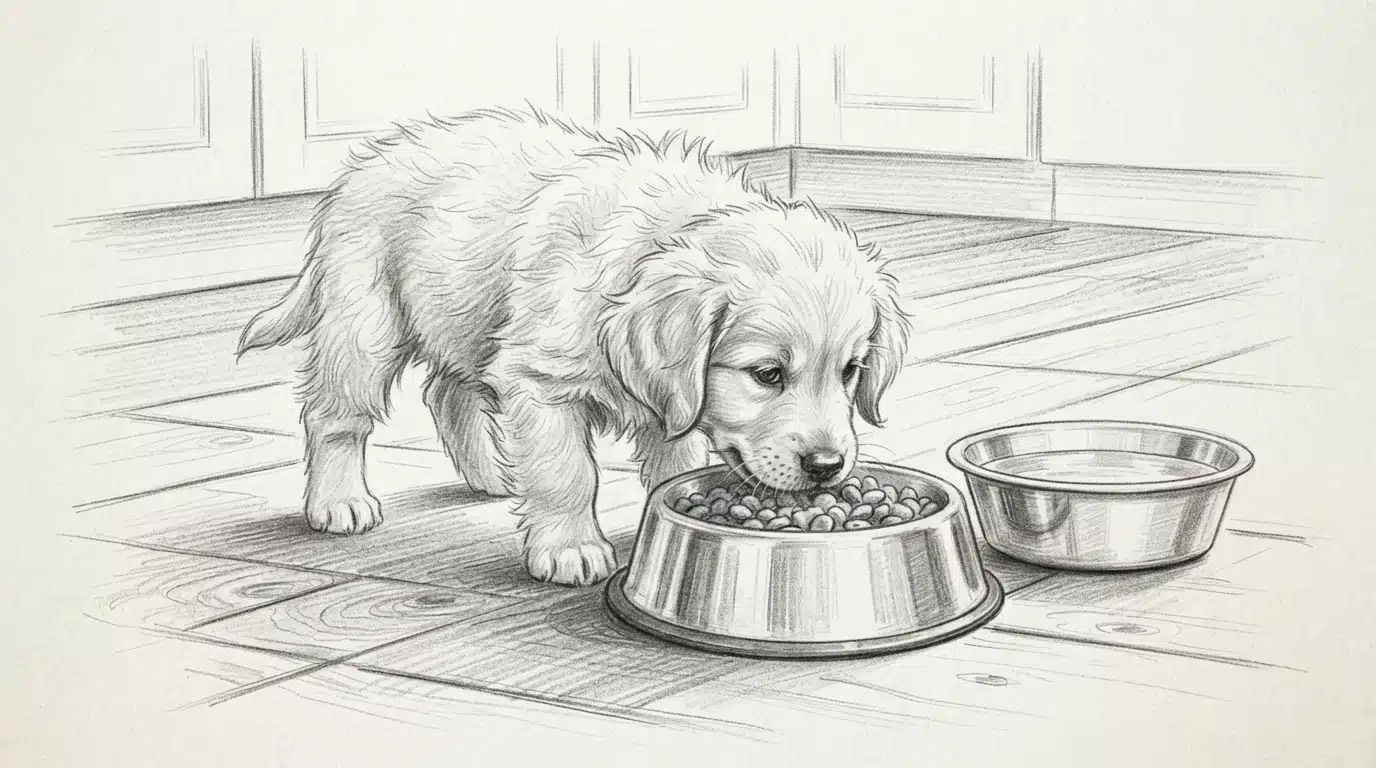
Keep water fresh and unfrozen. Heated bowls help for porch or garage breaks, and indoor water should be refilled often because winter air dries everything out, including your puppy.
Watch for winter health signals: cracked paw pads, flaky skin, low energy after outdoor play, or shivering that lasts more than a few minutes inside. These usually point to dryness or chill rather than illness, but call your vet if they persist. Puppies also need their vaccine series on schedule despite the cold, so plan trips to the clinic with warm car rides and a towel-lined carrier.
Quick tip: Feed on a consistent schedule and weigh your puppy weekly through its first winter. Steady gain is the clearest sign the plan is working.
For a deeper look at meal timing, see puppy feeding schedules and the questions worth asking before your puppy comes home.
The Sage Puppies Difference
Cold-weather puppy care starts long before the first snowfall. It starts with how a puppy was bred, raised, and matched to your family. At Sage Puppies, that foundation is the whole point.
Commitment to Health and Well-Being
Sage Puppies is a boutique program, not a volume operation. Cassie Milar founded it in 2025 in South Jordan, Utah, and she breeds only three breeds: the Havanese, the Havapoo, and the Cavapoo. That focus matters. Each breed has a known temperament, coat type, and size range, so guidance comes from experience rather than guesswork.
Small companion breeds fit North Dakota winters better than many families expect. Havanese and doodle coats insulate well, and their size makes indoor exercise practical when the thermometer drops. But a warm coat does not replace careful breeding. Puppies raised in a home environment, handled daily, and matched thoughtfully to their new families tend to settle faster and handle new routines, including house training in cold weather, with less stress.
You will not find out-of-state facilities here. Every puppy is raised under Cassie’s direct care, and families receive honest guidance about each puppy’s temperament before they commit. That includes candid answers about energy level, trainability, and how a particular puppy might fit a household with children.
The program’s tagline says it plainly: Wisely Bred. Beautifully Loved. Wise breeding shows up in daily life, in a puppy that recovers quickly from new sights, sounds, and yes, snow.
How to Begin Your Journey
Starting is simple and happens in three steps:
- Browse current availability on the available puppies page to see which Havanese, Havapoo, or Cavapoo puppies are ready or coming soon.
- Review costs and terms on the pricing and reservation page so there are no surprises later.
- Submit your application at https://sagepuppies.com/application/. Cassie reviews each one personally and follows up with a conversation about your home, your schedule, and your winter plans.
If you want a head start, the new puppy preparation guide walks you through supplies and first-week routines before your puppy arrives.

North Dakota winters are hard on tiny puppies, but the right breed and a few smart habits make cold-weather care simple. Sage Puppies raises Havanese, Havapoo and Cavapoo puppies suited to cozy indoor family life. Ready to meet your match? Start your application at Sage Puppies today.
Frequently Asked Questions
Q1: where to buy puppies in North Dakota
North Dakota has limited boutique breeders, so many families work with out-of-state programs that deliver or arrange pickup. Look for health testing, references, and small litters raised in homes rather than large kennel operations.
Q2: Are Havanese good dogs for cold climates?
Yes. Their double coat insulates well, but they’re indoor companions. Limit exposure in subzero wind chills and use a coat for short walks.
Q3: How cold is too cold for a small puppy?
Below 20°F, keep outings under ten minutes. Watch for shivering or lifted paws.
Q4: Do puppies need potty training changes in winter?
Yes. Pick a cleared patch close to the door and keep sessions brief.
Q5: What paw care does snow require?
Rinse paws after walks to remove salt and ice melt, then dry thoroughly.
Ready to start? Submit an application with Sage Puppies.
Conclusion
Cold-weather puppy care in North Dakota comes down to preparation. A Havanese, Havapoo, or Cavapoo needs a warm indoor space, short potty breaks, paw protection from ice and salt, and a coat that stays dry. Watch for shivering and lifted paws, and keep grooming routines gentle through winter.
These small companion breeds thrive in cold climates as long as they live mostly indoors with you. Their affectionate, adaptable temperaments make the season easier than it looks on the thermometer.
If you’re still choosing a puppy, our guide to bringing home a new puppy covers the first days in detail. With a warm bed, a solid routine, and a little patience, your puppy will settle in beautifully, no matter the snow outside.





