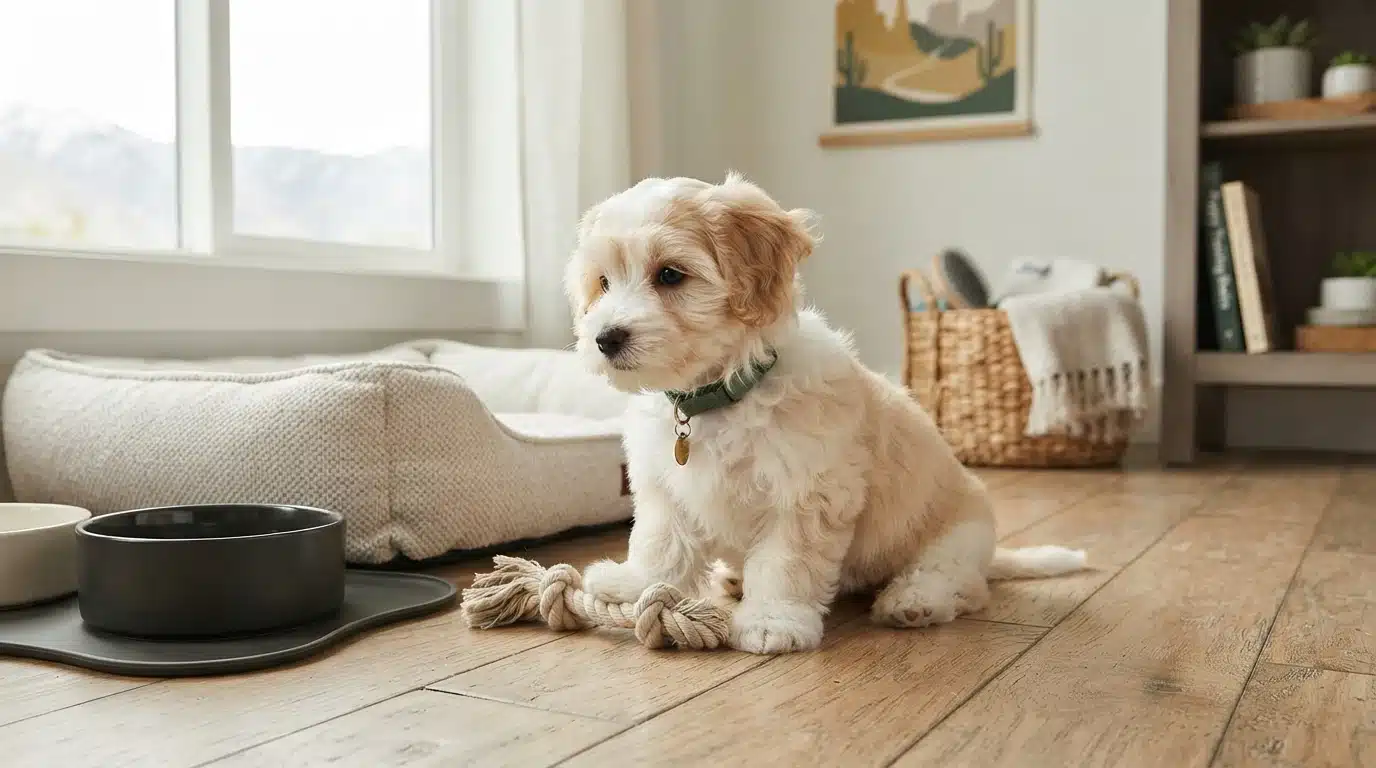
Quick Summary: Havanese puppies need short walks, brief play bursts, daily mental work, and plenty of rest, all scaled to their age and growth stage. Walks alone leave the breed under-tired because the real energy burn comes from problem-solving games, sniffing work, and short interactive play with people. Watch for frantic zoomies and hard nipping, which signal a puppy that is overtired rather than under-exercised, and protect soft growth plates by skipping stairs, jumps, and hot pavement. Matching activity to your puppy’s signals, not just the five-minutes-per-month rule, is what raises a calm, confident companion.
Bring home a 9-week-old Havanese puppy, and the question lands that same afternoon: is this little dog getting enough to do, or are we about to raise a tiny tornado? Havanese are small, social, and quick to learn, so the answer is almost never “walk for an hour.” Understanding Havanese puppy exercise needs means matching the right kind of movement, mental work, and rest to the puppy in front of you, then adjusting as the weeks pass.
This guide walks through how much activity a growing Havanese actually needs, what counts as play versus real exercise, and how to read the signals that say “enough.” You’ll find indoor game ideas, rest routines, and simple checks for overdone or underdone days. It draws on the day-to-day experience of raising these exact puppies, so first-time owners can build a routine that fits real life.
A Havanese puppy exercise needs more than one leash walk a day. Exercise for this breed breaks into four parts, and once you see them, planning each day gets simple.
The Four Parts of a Havanese Puppy’s Day
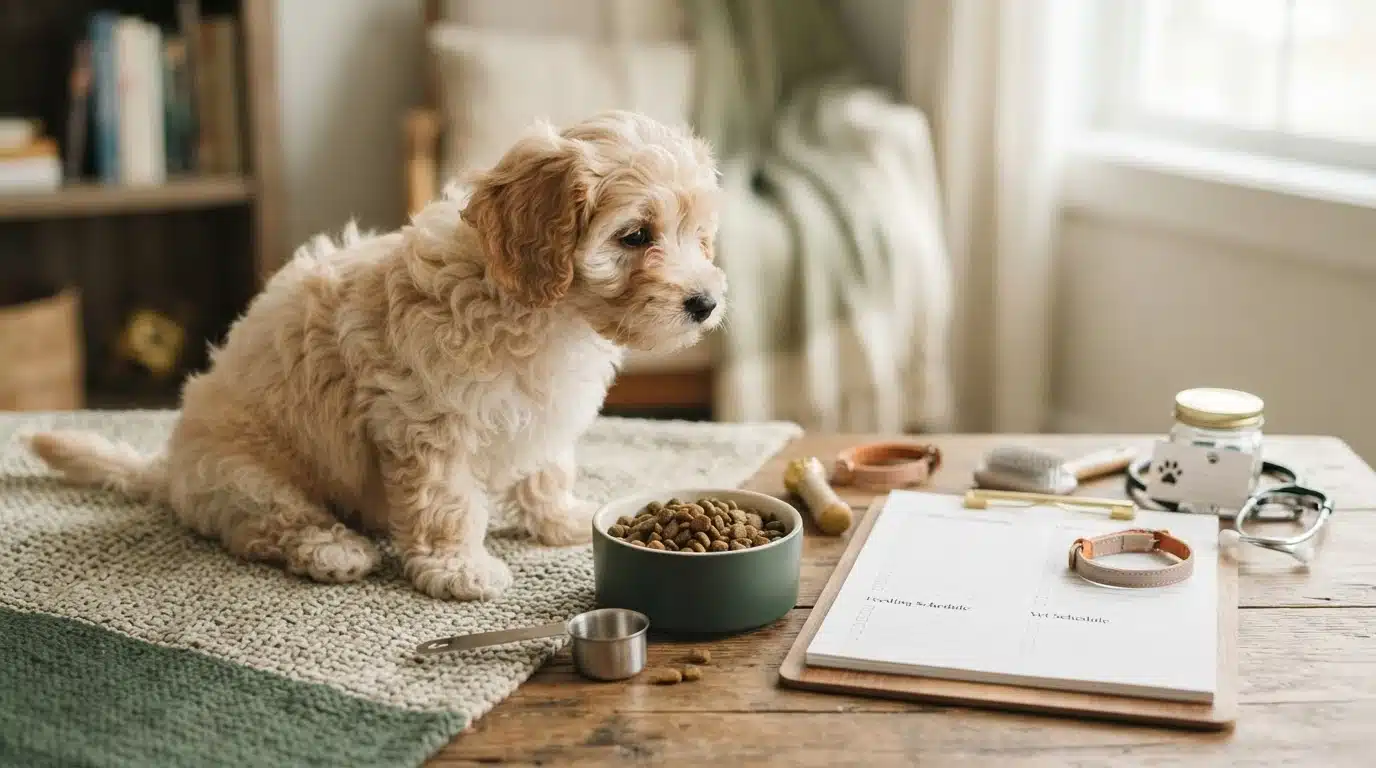
Think of your puppy’s activity as four buckets. Structured walks build leash skills and show your puppy the world. Play sessions are short bursts of fetch, tug, or chasing a toy down the hall; they burn energy fast. Mental work includes training reps, snuffle mats, and puzzle feeders, and it often tires a puppy more than walking does. Free play is unstructured time to sniff, wander, and choose what to do, usually in a safe room or pen.
Most Havanese puppies do best when all four buckets appear daily, even in small amounts. A short walk, two play bursts, a few minutes of training, and loose sniffing time covers it. Our Havanese puppy buyer guide walks through how this fits into a full daily routine.
Why Walks Alone Aren’t Enough
A walk is exercise for the legs, but a Havanese is a companion breed bred to work closely with people. That history shapes today’s Havanese puppy exercise needs: this dog wants problem-solving and interaction, not just distance covered. A puppy can walk 20 minutes and still bounce off the walls because its brain got nothing to do.
Swap in five minutes of trick training or a hide-and-seek game with treats and watch the difference. Mental work plus short physical play settles a Havanese far better than a long march around the block.
How Much Exercise a Havanese Puppy Needs by Age
A Havanese puppy’s exercise needs change fast. The five-minutes-per-month rule is a decent starting point for walks, but it misses the bigger picture: young puppies live in short bursts of play followed by long naps, and their soft growth plates stay injury-prone for months. Growth plates are the cartilage zones at the ends of a puppy’s bones, and strenuous activity such as jumping or long jogging can injure them, as VCA Hospitals explains. Here is what each stage actually looks like.
8 to 10 Weeks: Short Bursts, Lots of Rest
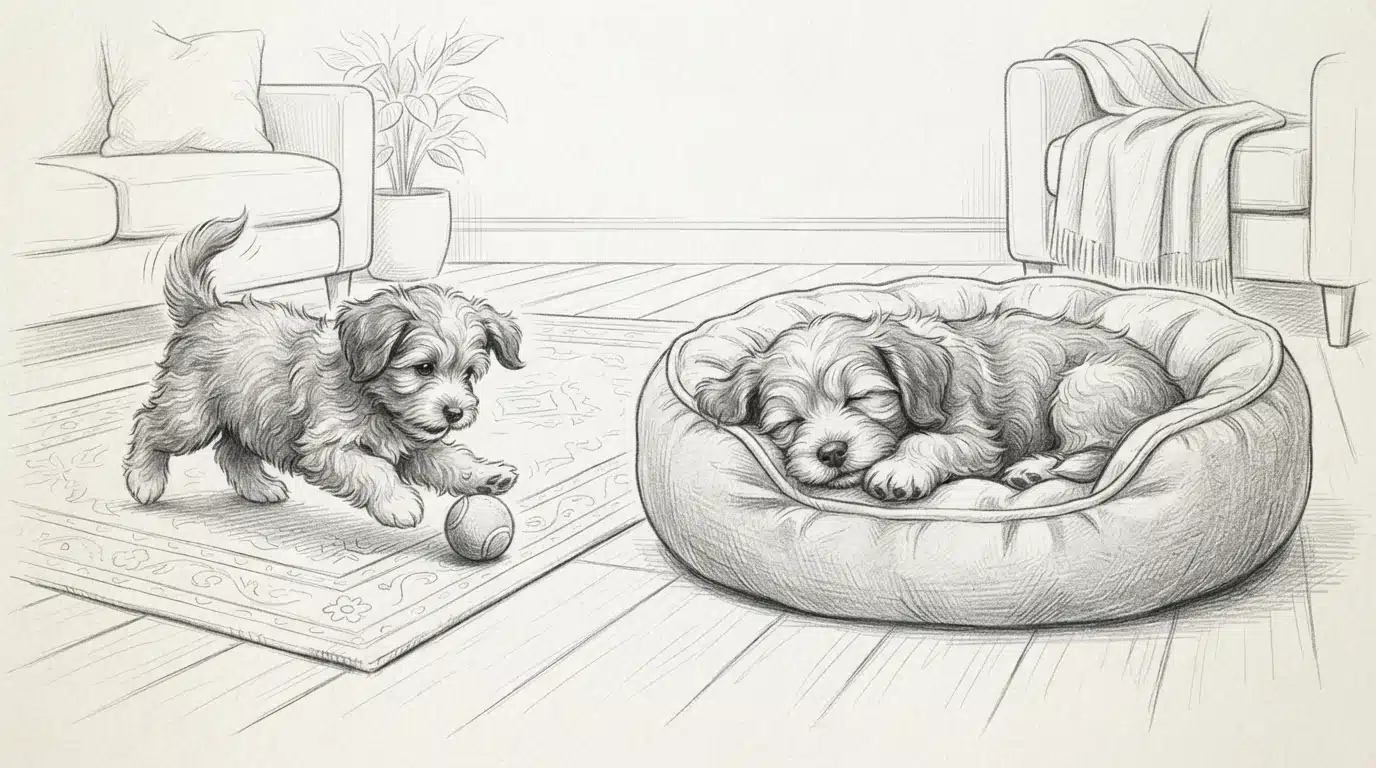
At this age, “exercise” means two or three minutes of romping, then a nap. Puppies this young sleep 18 to 20 hours a day, and that sleep is doing real developmental work, so never wake one up to play. Let the puppy set the pace: it will zoom around the living room, flop mid-stride, and sleep where it lands. Free play on a non-slip floor beats structured walks, which most vets suggest waiting on until vaccinations are further along.
10 to 16 Weeks: Building a Routine
Now the pattern gets predictable: active hour, nap, repeat. Aim for several short play sessions a day, mixing indoor games with gentle backyard exploring. A common guideline is five minutes of structured walking per month of age, twice daily, so a three-month-old gets about 15 minutes per walk. Keep sessions short and let curiosity count as exercise; sniffing a new patch of grass tires a puppy as much as chasing a ball.
4 to 6 Months: Adding Walks and New Outings
By six months, the math suggests roughly 30 minutes of walking a day, split into two sessions. This is the sweet spot for short car rides, pet-store visits, and walks on quiet sidewalks, where new sights and smells do half the work. Skip stairs sprints, jumping off furniture, and forced jogging. Soft surfaces and free play still matter more than distance covered.
6 to 12 Months: Growing Stamina, Slower Joints
An adolescent Havanese can handle 30 to 45 minutes of daily activity, but stamina grows faster than joints. In toy breeds, growth plates may close around 6 to 8 months, yet vets still advise against repetitive impact like jogging or agility until a year or later. Watch for lagging behind, lying down mid-walk, or next-day stiffness. Those signals mean cut back, not push through.
The Best Kinds of Play for a Havanese Puppy
Havanese puppies thrive on three kinds of play, and each one does a different job. Movement burns energy, mental work settles a busy brain, and social play shapes a confident adult dog. Mix all three into the day instead of leaning on walks alone.
Movement Play That Builds a Calm Puppy
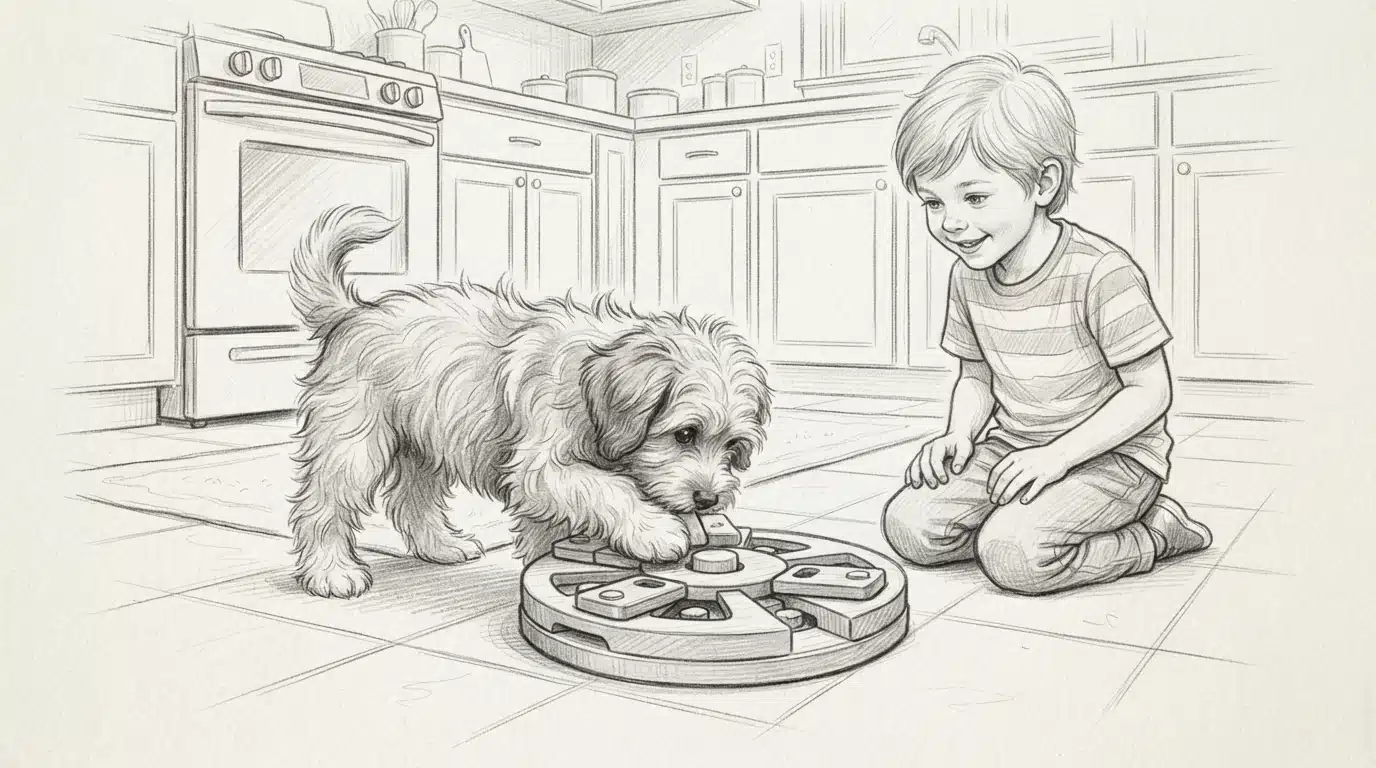
Short bursts of movement beat long workouts for a toy breed. Try two or three rounds of gentle fetch down a hallway, a soft tug game, or a few minutes of follow-me walking where the puppy trails you around the house. Keep sessions brief, five to ten minutes, and stop while the puppy still wants more. Growing joints handle low-impact play far better than repetition, so skip stairs sprints and jumping off furniture. If your puppy starts to bite wildly, zoom in circles, or ignore cues, that is overtiredness, not a need for more. End the game and settle instead. A puppy socialization checklist can help you fold short play sessions into new situations safely.
Mental Play That Tires a Clever Toy Breed
Brain work settles a Havanese faster than a walk. Simple games go a long way: hide treats under a towel for sniffing, roll kibble into a puzzle feeder, or scatter food on a mat and let the puppy hunt. Ten minutes of sniffing can tire a puppy as much as a walk, and it works well on rainy days. Keep the games easy at first, and swap them out weekly so the challenge stays fresh.
Social Play That Builds Confidence
Havanese are companion dogs, and play with people matters as much as toys. Hand-feeding games, name-recognition play, and gentle roughhousing with rules all teach your puppy that you are fun. Once your vet clears it, playdates with calm, vaccinated dogs build manners. Watch for stress signals, and step in early so every session ends well.
Reading Your Havanese Puppy’s Signals
Exercise numbers are a starting point, but your puppy’s body language tells you more than any chart. Learn to read it, and daily play stops being guesswork.
Tired Signs vs Overstimulated Signs
A truly tired Havanese slows down, yawns, flops somewhere soft, and settles. That’s the easy one. An overtired puppy looks the opposite: frantic zoomies, hard nipping at hands and clothes, barking, and ignoring cues it knew an hour ago. Trainers describe this as a puppy that needs help regulating its energy, not more play, because overstimulation spikes stress hormones. Other clues are heavy panting without heat, chasing its tail, or grabbing your sleeve during a calm moment. When you see that pattern, end the session and start the wind-down. It’s the overtired-puppy trap most new families walk straight into.
A Simple Wind-Down Routine That Works
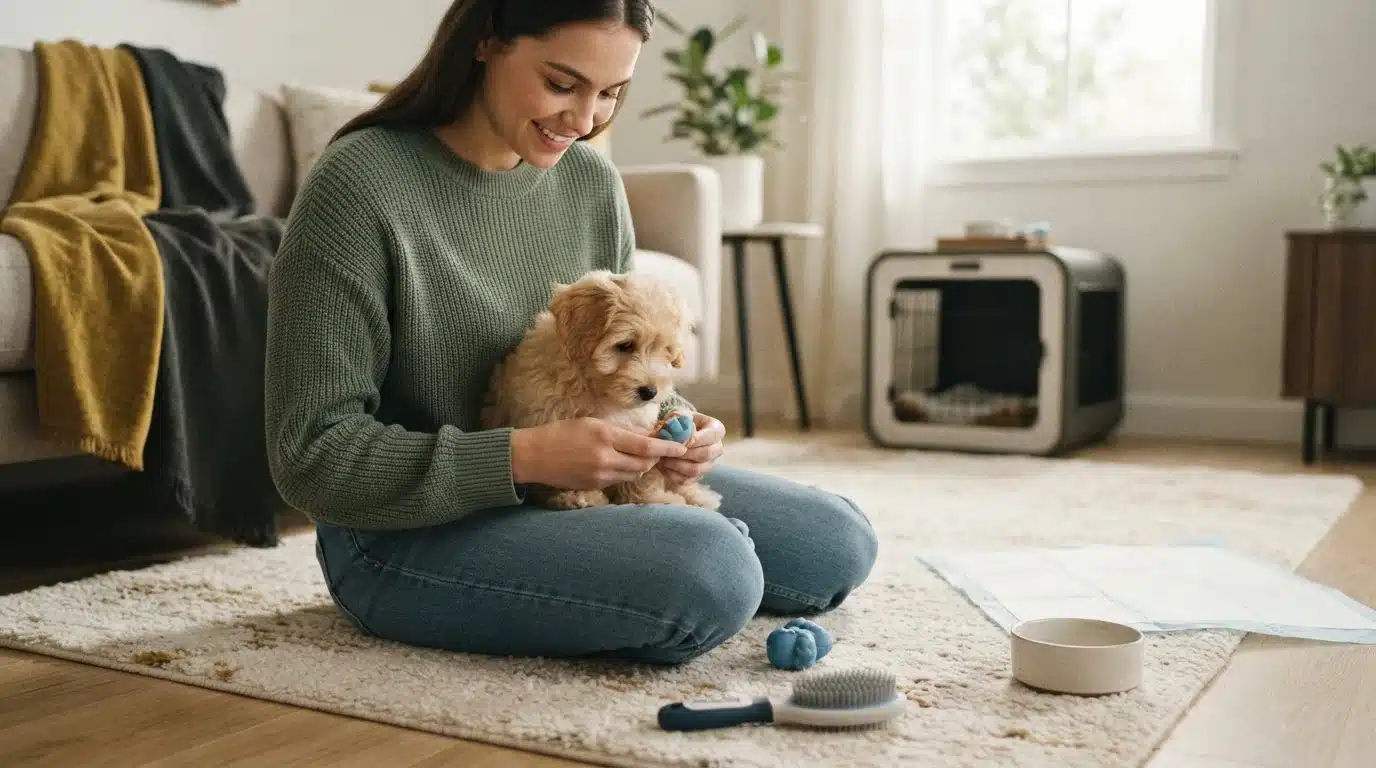
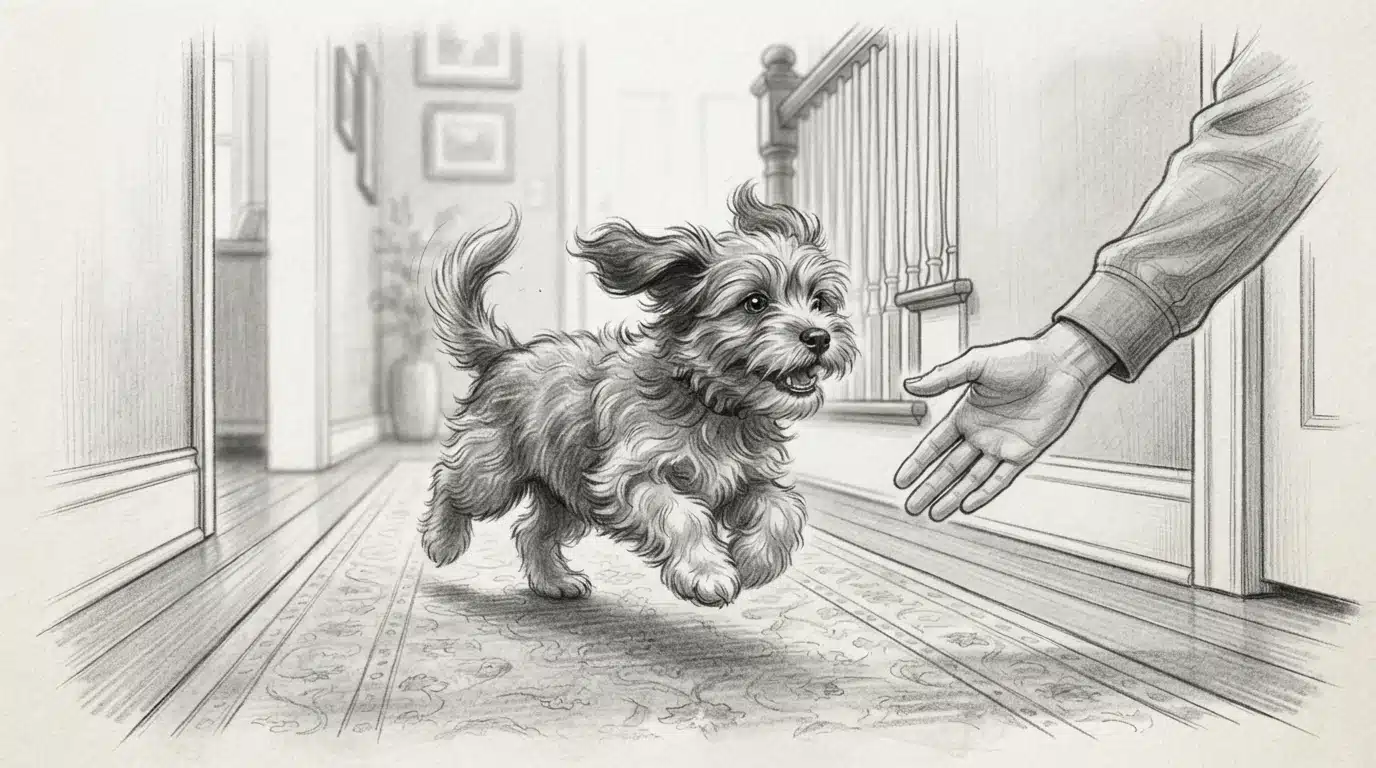
You can’t explain bedtime to a nine-week-old, so build a routine instead. First, take the puppy outside for a quick potty break. Then move to a quiet spot and offer a slow chew or a lick mat, which lowers arousal naturally. Next, dim the lights and put the puppy in its crate or pen. Repeat this order every single day and most Havanese learn the pattern within two weeks. Enforced naps in the crate also keep play sessions from tipping into that wild, overtired state in the first place. Consistency matters more than the exact steps, so pick a version your whole household can follow every time, including weekends.
When to Call the Veterinarian
Some “overtired” behavior is actually illness, and toy breed puppies go downhill fast. Call your vet if low energy comes with vomiting, diarrhea, refusal to eat, pale gums, coughing, or a puppy that won’t rise. Because a young puppy’s blood sugar can drop quickly, sudden limpness or wobbliness needs same-day care. Trust your gut; if your Havanese seems off for more than a day, describe what you’re seeing rather than waiting for worse signs.
Safe Play, Joints, and Heat for a Small Puppy
Jumping, Stairs, and Slippery Floors
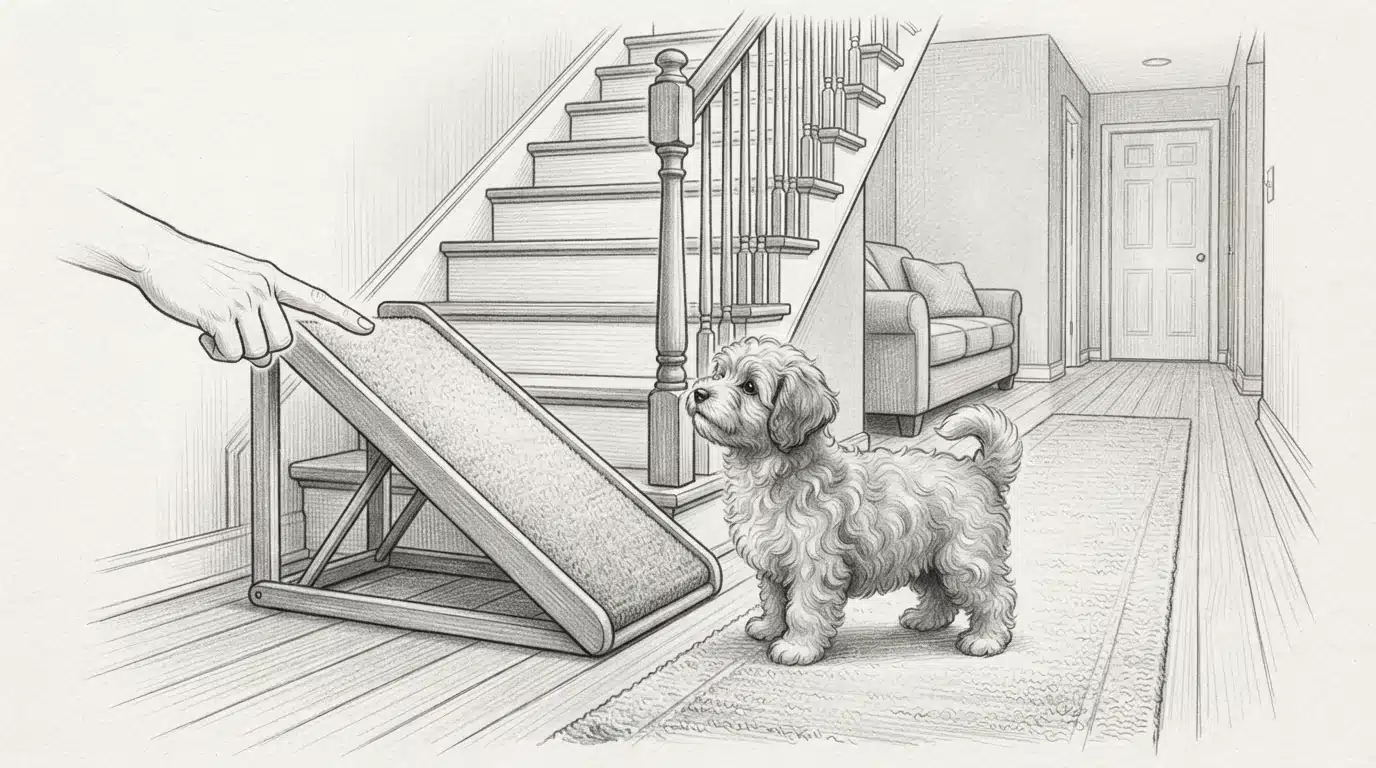
A Havanese puppy weighs only a few pounds, but its joints are still forming. Growth plates, the soft areas at the ends of growing bones, stay sensitive to hard impacts, and strenuous exercise can injure them, as VCA Hospitals explains. So block repeated leaps off the couch, limit stairs to supervised trips, and add rugs on hardwood or tile so little legs stop splaying mid-zoom. Ramp access to the sofa helps too.
Heat, Cold, and Pavement Temperature
Small dogs sit close to the ground, so hot pavement cooks paws fast. Use the back-of-hand test: press your hand to the asphalt for seven seconds. If you cannot hold it, the walk waits until evening. In summer, play indoors or early morning. In real cold, a Havanese coat helps but does not make the puppy heat-proof, so keep outings short and watch for shivering or paw lifting.
Watch for heavy panting, slowing down, or a floppy tongue. Small puppies overheat quickly. Stop, shade, and cool water.
Big Dogs, Rough Play, and the Family Cat
The biggest play risk is size mismatch. A friendly Labrador can injure a toy-breed puppy just by being enthusiastic. Keep meetings short, ground-level, and supervised, and separate them the moment play turns one-sided. Supervised gentle contact with a calm cat is fine, but give your puppy an escape route and its own safe space. Small dogs get hurt in one careless second, so early structure in these meetings keeps every interaction safer, and it fits the socialization groundwork covered in a good Havanese puppy preparation guide.
Fitting Exercise Into a Real Family Day
A Havanese needs far less space and time than most puppies, but it does need consistency. The trick is hooking short play bursts onto moments your household already has: wake-ups, meals, and bedtime.
A Weekday Schedule for Working Adults
Before work, give a 15-minute walk, then a short sniff and potty break. When you get home, aim for 15 to 20 more minutes of fetch or hallway play, split into two rounds so you don’t push joints. Add five minutes of training after dinner, and one last calm potty trip before bed. Tether toys and a food puzzle cover the midday gap. If your days run long, a midday dog walker or a neighbor kid on a leash mission works well.
A Family Schedule With Young Kids
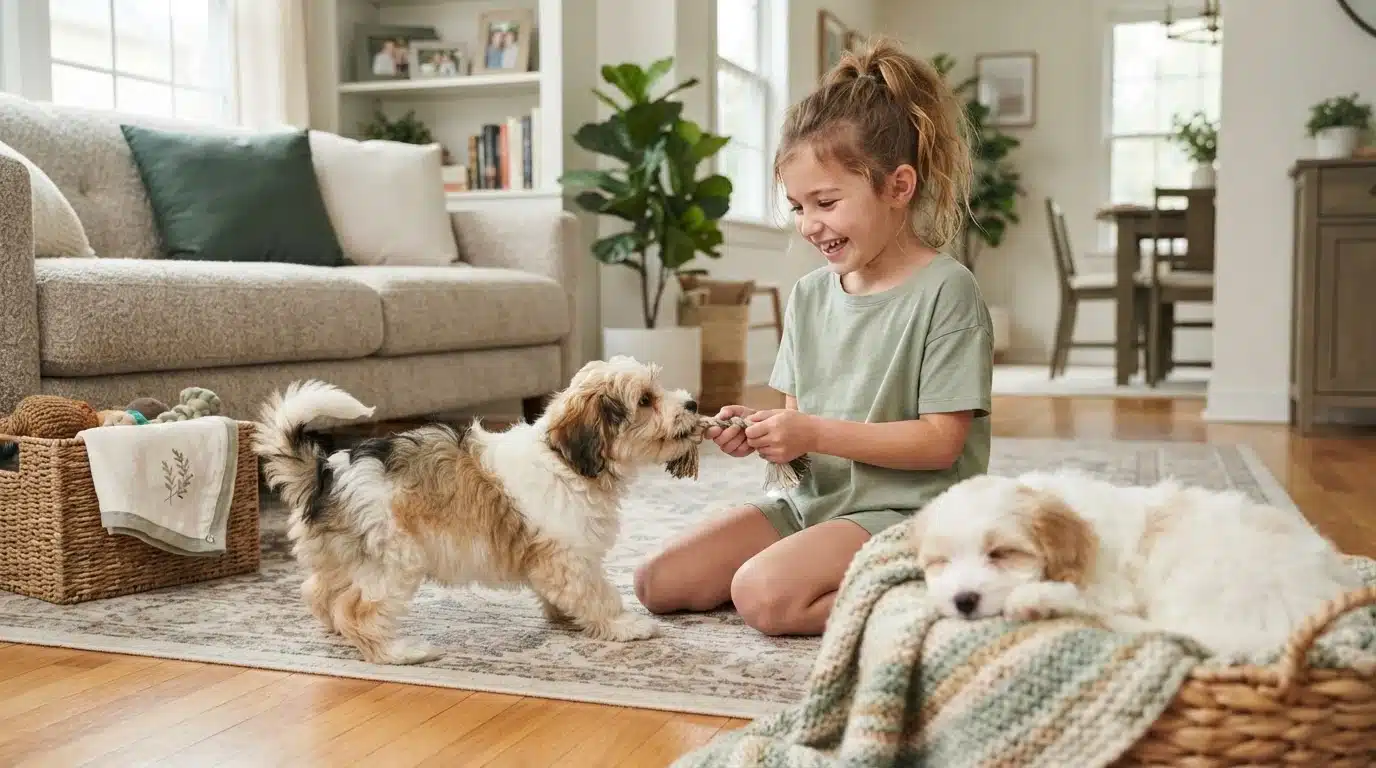
Kids make natural play partners. Set a rule that play happens on the floor, not with the puppy chased or carried around. After school works well for the longer session; keep it to 15 minutes of toy-based games plus a short walk. Younger children can hand out treats during easy training, which tires a puppy faster than running does. Building play into the family routine, much like a potty schedule by age, keeps everyone honest about consistency.
Apartment Living and Quiet Indoor Days
No yard? Fine. Two short sidewalk loops, a stair-free hallway game of fetch, and a sniffing game under couch cushions cover physical and mental needs. On rainy days, trade walks for hide-and-seek with treats and a brief tug session. Watch for the pause: a puppy that flops down mid-game is done, so let the nap happen.
Common Mistakes to Avoid With Havanese Puppy Exercise
Mistakes That Tire the Puppy the Wrong Way
The biggest error is long, forced walks on a hard surface. A tiny Havanese will keep up because it wants to please you, but its joints pay for it. Strenuous exercise can injure a puppy’s growth plates, the soft zones at the ends of growing bones, causing pain and lasting problems, as VCA Hospitals explains. Skip repetitive jumping off furniture and stairs too. Short sniffy walks and play sessions tire this breed far better than mileage.
Mistakes That Build Anxiety Instead of Calm
Exercise never works as a fix for worry.Owners often use it to tire out a puppy or keep it calm, but if the puppy is worried, exercise won’t fix the underlying emotion. The real work is calm settle training, puzzle toys, and a predictable routine. Stacking big outings on top of a nervous puppy creates a dog that needs more and more activity just to cope. Watch for a puppy that gets zoomies, nips harder, or can’t settle after play. That’s overtired, not under-exercised. Shorten the session and offer a nap.

A Havanese that fits your family’s rhythm starts with matching, not luck. At Sage Puppies, Cassie’s application-based process pairs you with a puppy whose energy fits your daily life, from couch cuddles to backyard play. Apply today and bring home a well-bred companion you can keep up with, starting day one.
Frequently Asked Questions
Q1: How much exercise and daily play do Havanese puppies need?
Most Havanese puppies need several short play sessions, a few minutes of training, and gentle sniffing time daily. Follow the five-minutes-per-month rule for walks, then watch your puppy’s signals and adjust.
Q2: How do I exercise my Havanese puppy in a small apartment?
Hallway fetch, hide-and-seek with treats, and two short sidewalk loops cover it. Sniffing games tire a puppy as much as walking, so rainy days and small spaces work fine.
Q3: When can my Havanese puppy start going for walks?
Wait until your veterinarian clears vaccinations, usually well after 12 weeks. Until then, use free play indoors, non-slip floors, and gentle backyard exploring.
Q4: What are signs my puppy is overtired instead of under-exercised?
Wild zoomies, hard nipping, barking, and ignoring known cues mean overtired. End play, run your wind-down routine, and offer an enforced nap in the crate.
Q5: Are stairs and jumping really unsafe for Havanese puppies?
Yes, while growing. Repeated leaps off furniture and stair sprints stress soft growth plates. Use rugs, ramps, and supervised stair trips until joints mature.
Q6: How much play does a 3-month-old Havanese need each day?
Aim for an active-hour-and-nap rhythm: several 10-minute play bursts, about 15-minute walks twice daily, plus short training. Let naps happen freely between rounds.
Bringing It Home for Your Havanese Puppy
A Havanese puppy’s exercise needs are simple once you see the whole picture: short walks that grow with age, brief play bursts, daily mental work, and plenty of real rest. Start with the five-minutes-per-month rule, then let your puppy’s signals guide you. A settling puppy is getting enough; frantic zoomies and hard nipping mean it’s overtired, not under-exercised. Protect growing joints by skipping repeated jumping, stair sprints, and hot pavement, and build a wind-down routine the whole family follows. Consistency beats intensity every day of the week. Meet those needs, and you’ll raise a calm, confident companion who fits right into your life.