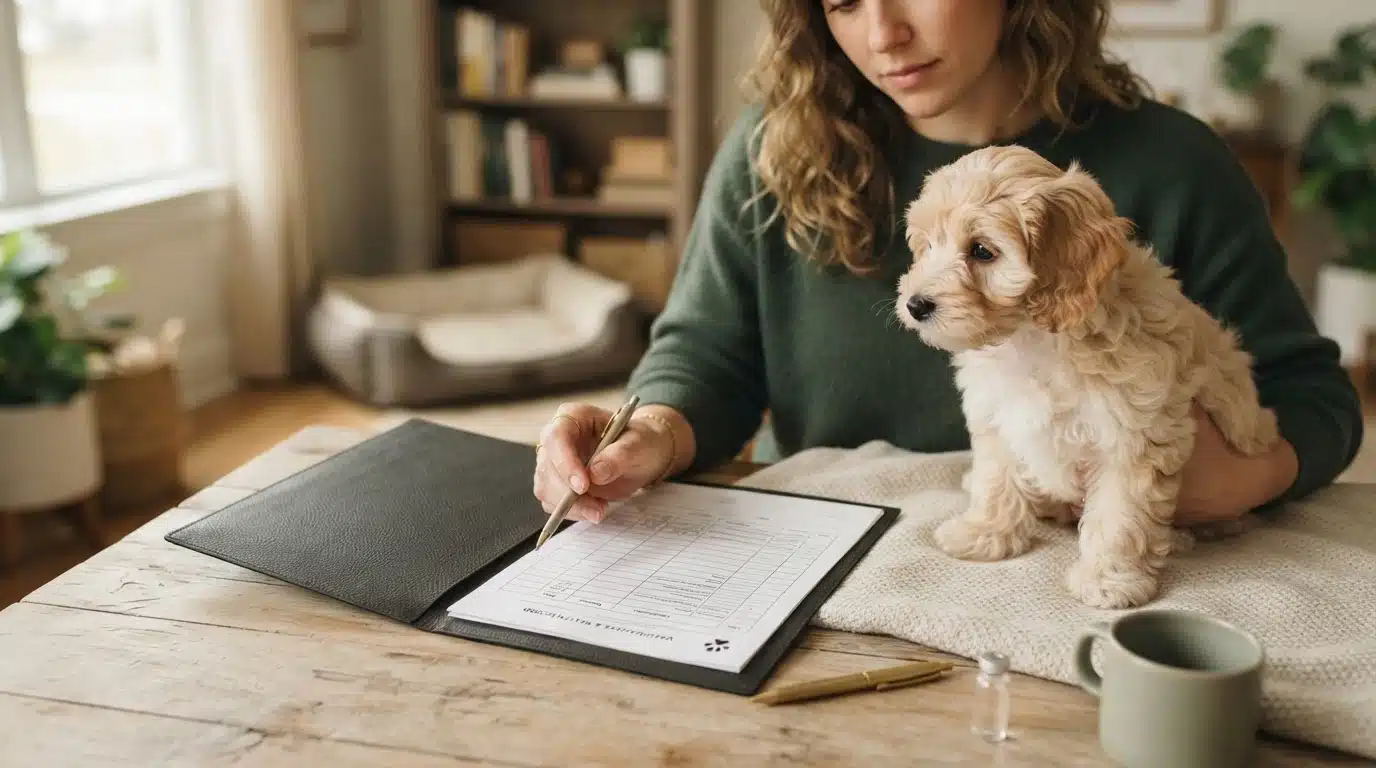
Quick Summary: Buying a puppy in Utah comes down to five non-negotiables: a named breeder with a real Utah address, the correct city or county license, three layers of health testing on parents, DNA, and the individual puppy, an actual visit or live video of the dam and litter, and a written contract with clear refund terms. PACFA does not apply to Utah breeders, so local permits and open paperwork are the real accountability signals, and prices far below the $3,500 to $4,500 range for small breeds usually mean skipped health testing. Sage Puppies in South Jordan meets every one of these checks, from PACFA-aware licensing to in-home dam visits and transparent pricing, making it a strong benchmark for what a responsible Utah program looks like.
Two Havapoo listings in South Jordan. One costs $2,000, the other $4,000, and both claim health-tested parents. Without a solid best Utah puppy breeders checklist, you are guessing which one gets the next 12 to 16 years with your family.
The gap between those prices usually comes down to things you can verify in an afternoon: licensing, health records, and how the breeder answers direct questions.
This guide gives you a Utah-specific checklist, built on responsible-breeder fundamentals and state rules like PACFA licensing. Use it to compare any breeder side by side, including the best Utah puppy breeders checklist items that matter most for small breeds like Havanese, Havapoos, and Cavapoos. You will know what to ask, what to walk away from, and what evidence to request before you pay a deposit.
1. Confirm Who You Are Actually Buying From
Before you compare prices or coats, confirm that the person selling the puppy exists and is who the listing claims. Scam listings and puppy-flipping operations both start with a vague seller, so this first step protects everything that follows. It is also the shortest item on the best Utah puppy breeders checklist, and often the most revealing.
1.1 Match the Name on the Listing to a Real Utah Address
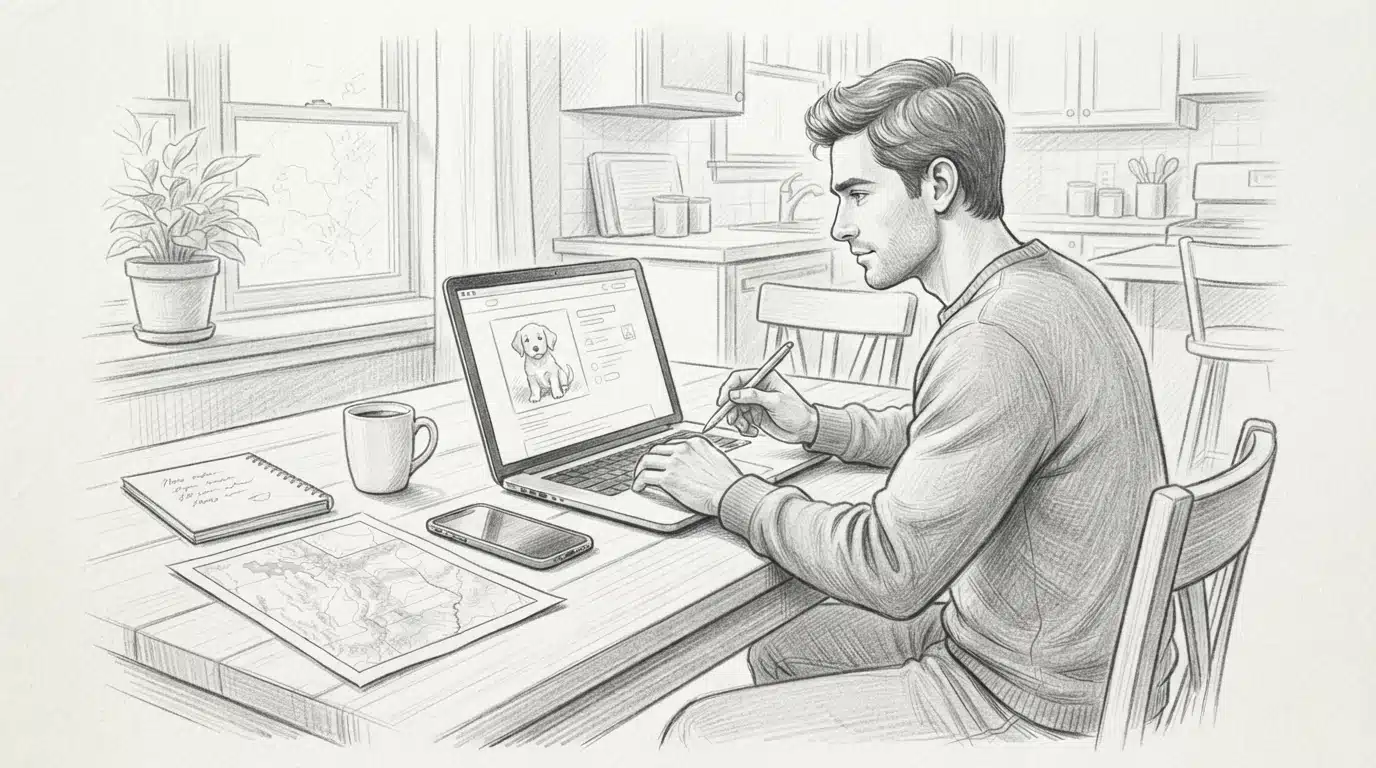
A real breeder can give you a street-level location without hesitation. If the listing says “Utah,” ask which city, and then check the details line up. Some sellers run litters in one county and advertise in another, which matters for pickup plans and any local rules.
Look for a business name attached to a person. A program like Sage Puppies names its founder and operates out of South Jordan, so you can see exactly who stands behind the puppies. A listing with only a first name and a Venmo handle deserves more questions.
Cross-check the phone number on the listing against any website or social profile. If nothing matches, treat the listing as unverified until proven otherwise.
1.2 Ask Who Handles Calls, Visits, and the Actual Litter
Ask one direct question: “Who will I actually meet?” A responsible breeder handles calls personally, invites you to see the mother and litter, and answers questions about the parents from memory. Brokers and resellers often stall here, because the person texting you has never seen the puppy.
If visits are refused or the seller proposes a parking-lot handoff, that is a signal to pause, not negotiate. Ask where the puppy was born and raised, and whether you can see those spaces on a video call if an in-person visit is not practical. Honest breeders expect the question and answer it easily.
2. Read the Utah Licensing and Animal-Welfare Signals
Licensing tells you who follows the rules, but only if you know which rules apply where. Utah is where a lot of buyers get confused, so start here before you compare prices or pedigree.
2.1 What PACFA Covers and What It Does Not
PACFA, the Pet Animal Care Facilities Act, is a Colorado law. It requires pet facilities that breed, sell, or board animals to be licensed and inspected by the state. Utah has no PACFA-style program, so a Utah breeder cannot hold a PACFA license, and one should not advertise as if the law covers them. That is not a strike against anyone; it just means you weigh other signals. Federal USDA licensing kicks in for larger breeders who sell wholesale or sight unseen, which describes few small programs. For a small in-home breeder, focus on local rules and health documentation instead.

2.2 Salt Lake City and Local License Signals
Inside Salt Lake City, ordinance 8.06.015 requires dog breeders to hold a license, renewed each year through animal services. If the breeder operates in city limits, ask for that license number and check it. Outside the city, rules vary by county, so ask directly which permits apply. A breeder who knows their local requirements and answers without hedging is showing you real accountability. The pillar guide to buying puppies in Utah walks through these checks in more detail.
3. Verify Health Screening Before the Word ‘Tested’ Impresses You
“Health tested” shows up on almost every breeder page, but it can mean a DNA swab, a vet exam, or both. The difference matters. Ask for proof in three separate layers, and treat any breeder who blurs them together as a flag.
3.1 Separate Three Layers: Parents, DNA, and the Puppy Exam
Layer one is parent health testing. Adult dogs should have breed-specific screenings on file, often through the OFA’s public databases, which anyone can search by registered name.
Layer two is DNA testing. This checks for inherited conditions the parents carry even when they look healthy. Two clear parents can still produce affected puppies if the tests were never run, so ask which panel was used.
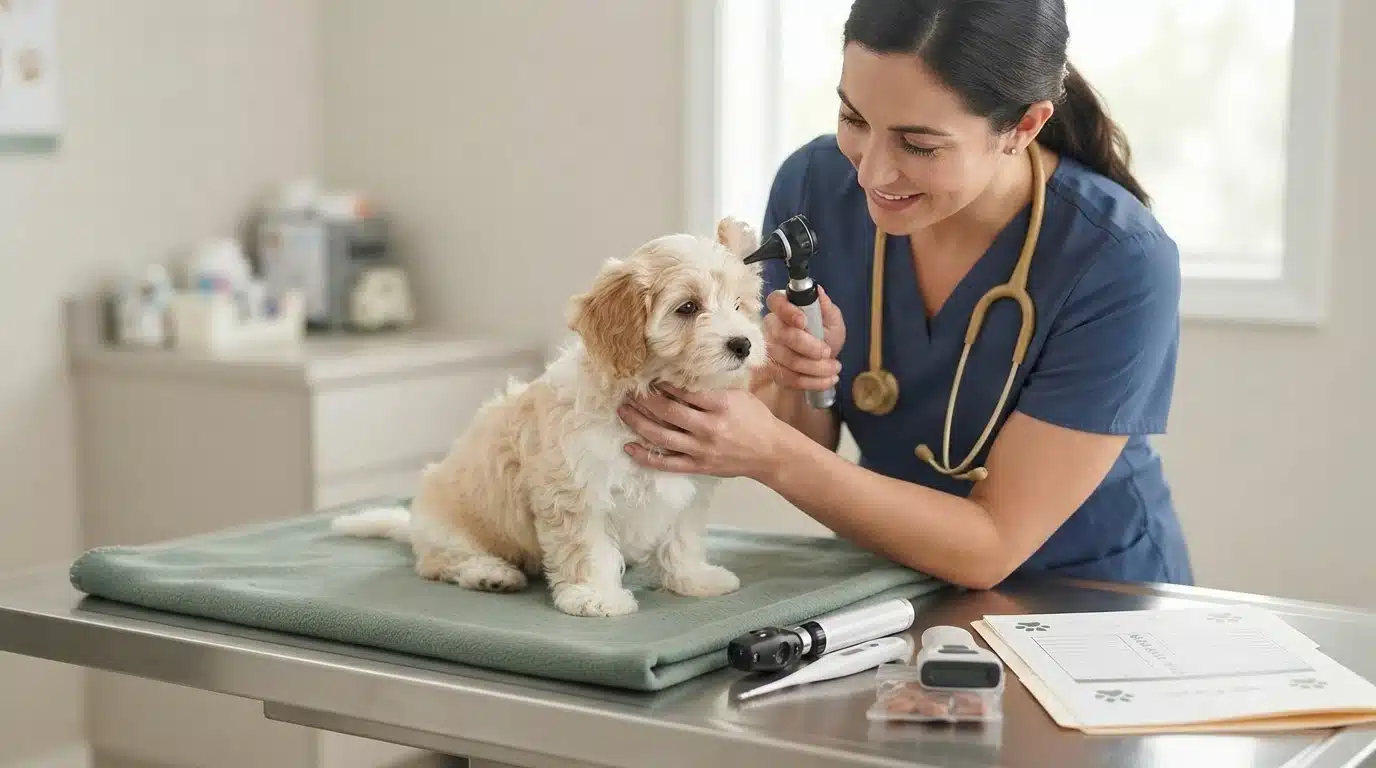
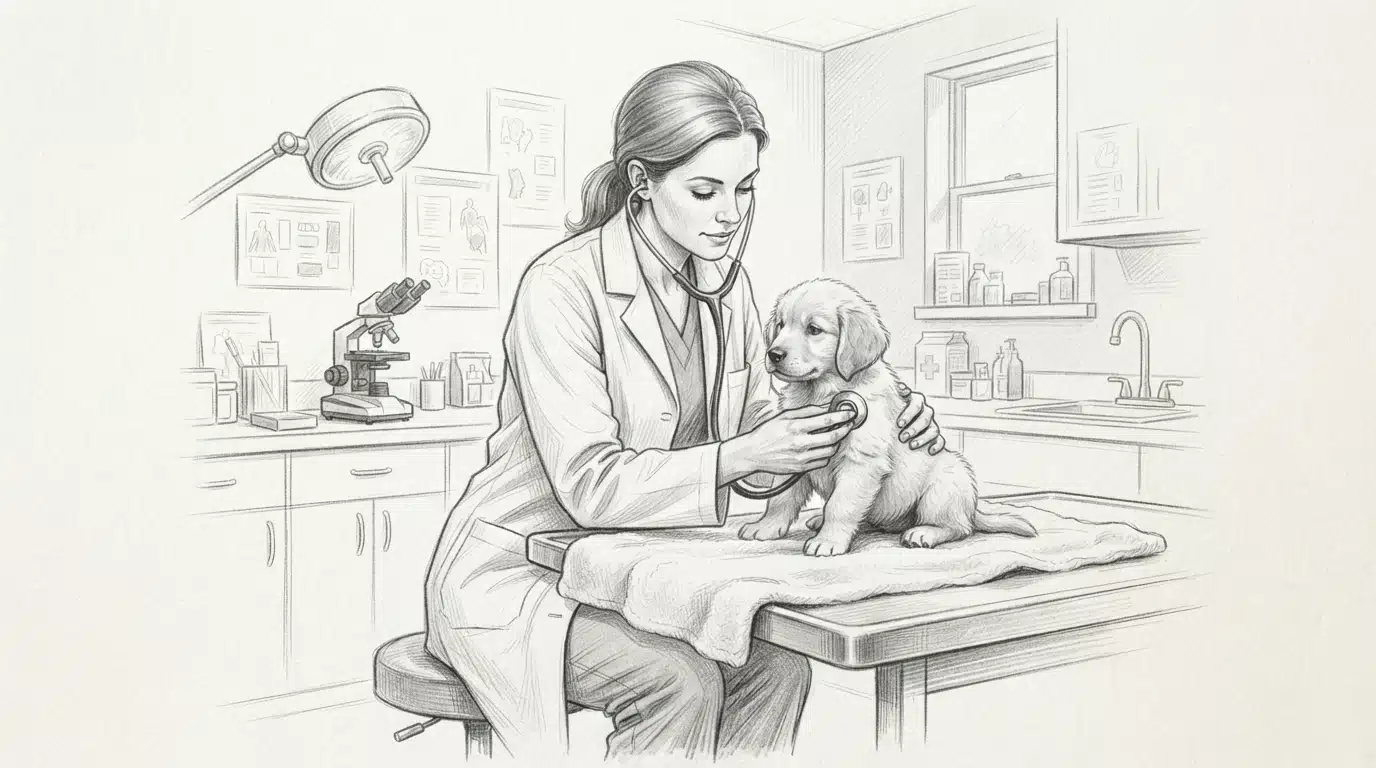
Layer three is the puppy exam itself. A licensed vet checks the pup’s heart, eyes, knees, and overall condition before it goes home. That exam covers that puppy only, not its future. All three layers together give you a real picture. One alone does not.
3.2 What to Ask for Each Breed in the Litter
Each breed in these crosses carries its own risks, so the paperwork should match the mix.
- Havanese: patella (kneecap) evaluation, a cardiac exam, and an annual eye check by a vet ophthalmologist.
- Cavalier parent (Cavapoo): a heart exam for mitral valve disease and yearly eye screens, per the breed club’s health testing guidelines.
- Poodle parent (Havapoo, Cavapoo): hip scores, patellas, eyes, and a DNA panel for Poodle-typed conditions.
Ask which parent carries which result. A short call or an emailed PDF of clearances should answer within a day. If a breeder sends only the puppy’s vet sheet and no parent records, the “tested” claim is incomplete.
4. Walk Through the Visit, the Litter, and the Daily Routine
Photos and reviews can be staged. A visit cannot, so treat it as the strongest item on your checklist. If you cannot go in person, Section 4.2 covers what to ask for instead.
4.1 What a Healthy Litter Setup Looks Like
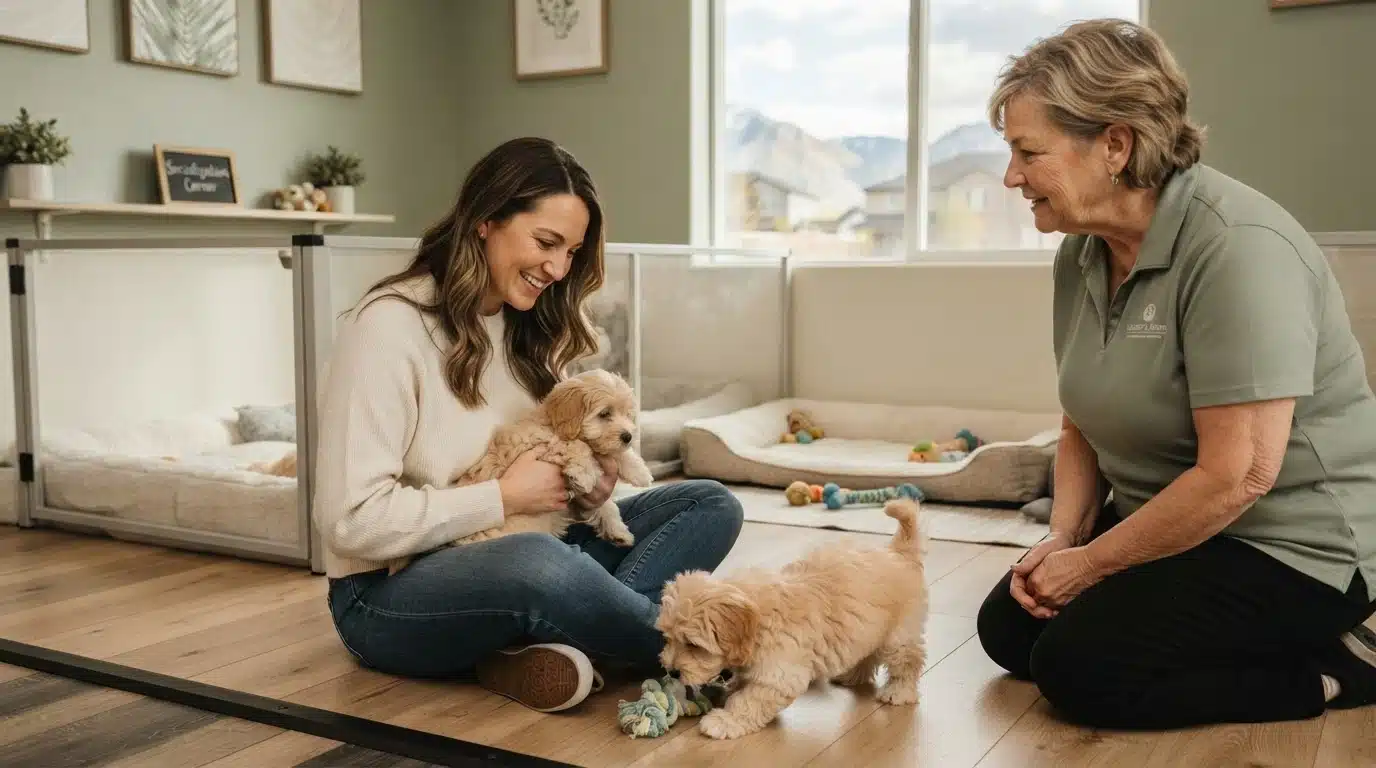
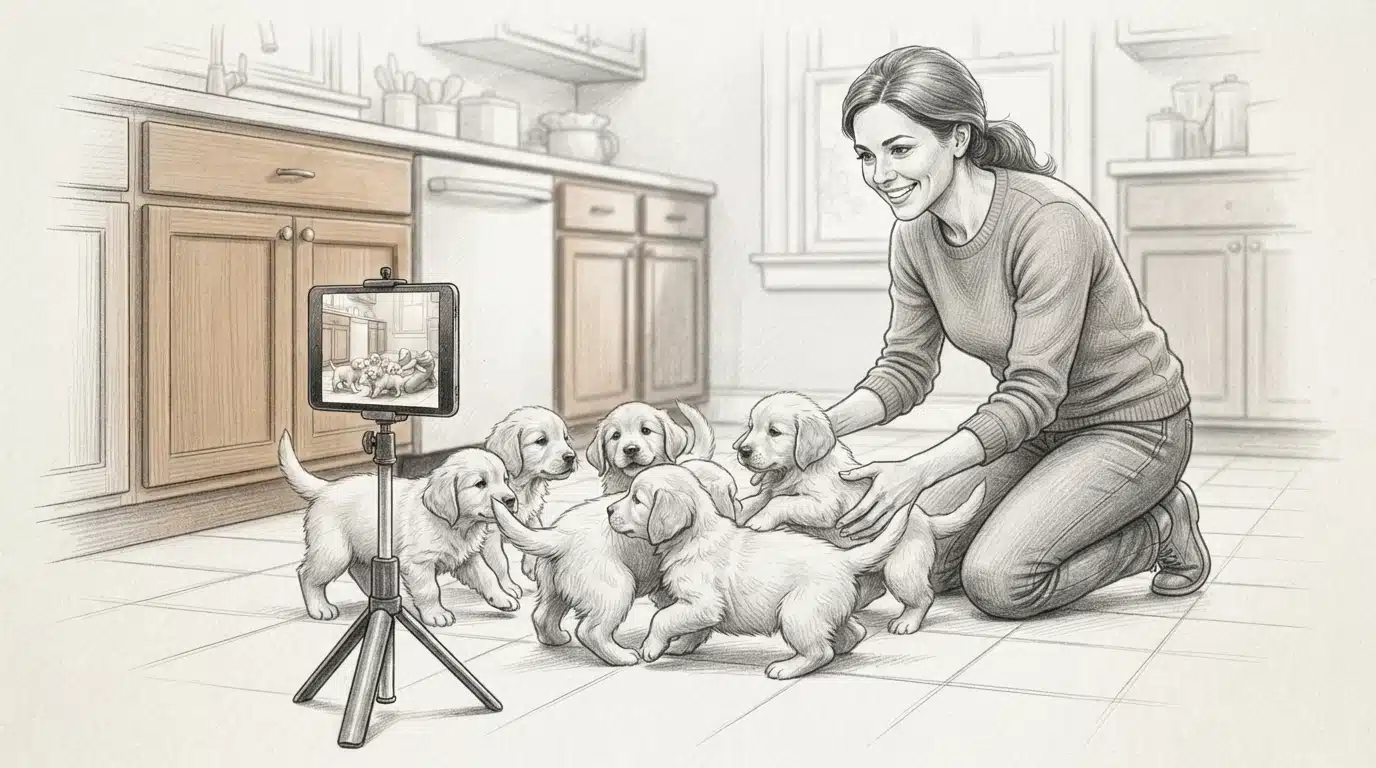
Plan the visit around the puppies’ routine, not yours. A good litter lives in a clean, warm space with room to play, soft bedding, and fresh water down all day. Puppies should be round, bright-eyed, and curious about you, not cowering or listless. Ask to see the mother interact with the litter: a calm, engaged dam tells you more than any paperwork. Check that puppies have been handled daily, started on basic grooming touch, and are used to normal household sounds. Droppings should be firm and the area picked up often. One breeder we work with, Sage Puppies in South Jordan, invites families to meet both dam and litter in her home, which is the standard worth holding others to.
4.2 When Access Is Limited: Live Calls and Reasonable Substitutes
Some programs limit visits because of disease risk, and that can be legitimate. But distance is no excuse for opacity. Ask for a live video call at feeding time so you can watch the litter move, eat, and respond to handling. Request unscripted clips, not edited reels, and ask the breeder to walk the camera through the whelping area. Reference calls with recent families fill the rest of the gap. A thoughtful application process is a good sign a breeder screens buyers as carefully as you screen them.
5. Read the Contract, Price, and Reservation Terms Before You Pay
Contracts do the heavy lifting once you are past the meet-and-greet. A breeder’s promises only matter if they appear in writing, so slow down here. Weigh a fair contract against the price itself, since small-breed puppies in Utah often run several thousand dollars.
5.1 Contract Clauses Worth Reading Twice
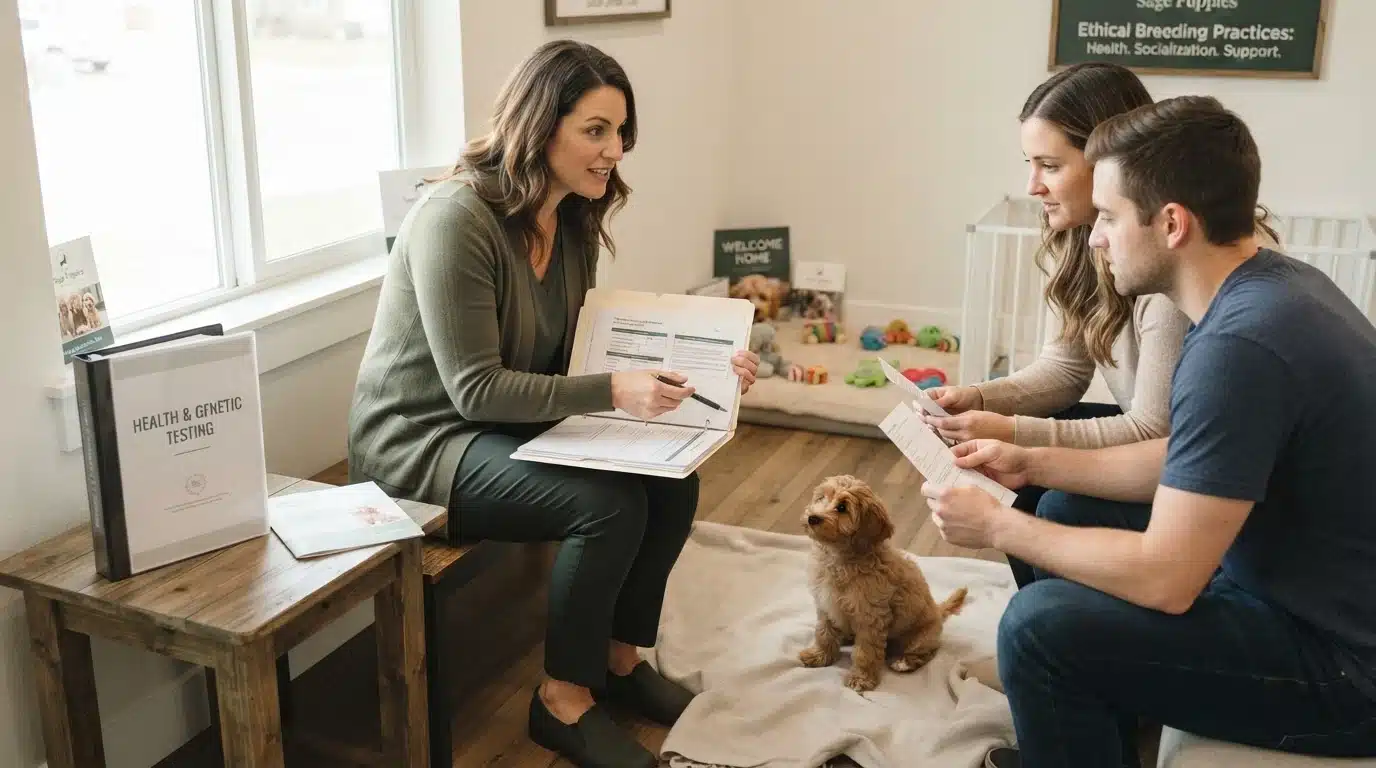
Ask for the full contract before you pay anything. Ethical breeders send it without complaint. As the AKC’s breeder contract guide explains, most contracts cover a few predictable areas, and each deserves a close read:
- Health guarantee window and scope. What is covered, for how long, and what vet exam does it require?
- Spay/neuter terms. Many pet-quality dogs come with this requirement, so know the deadline.
- Return clause. A responsible breeder will take the dog back at any age. If that sentence is missing, walk away.
- Buyer duties. Some contracts list care requirements you must follow to keep the guarantee valid.
Watch how each term works in a real agreement before you sign one.
5.2 Deposits, Refunds, and What Is Actually in Writing
Deposits vary widely, so pin down three things in writing: the amount, what it holds, and when it is refundable. A deposit that only moves you up a list is different from one that reserves a specific puppy. Get pickup or delivery dates, total price, and refund terms in the contract, not a text message. Our pricing and reservation page shows one way to lay these terms out clearly for buyers. If a breeder resists putting refund rules on paper, treat that as your answer.
6. Plan Pickup or Delivery With Utah Roads and Airports in Mind
Once you have chosen a breeder, decide how your puppy will actually get home. Utah families have three real options, and the right one depends on distance, season and your puppy’s age.
6.1 Local South Jordan or Salt Lake City Pickup
If you live along the Wasatch Front, pickup is the simplest path. You meet the breeder, see where the puppy was raised, and skip travel stress entirely.
Plan the drive home with your puppy in mind. Bring a second person to hold the puppy or secure a small crate, since a loose puppy under your pedals is a real hazard. Stop for potty breaks every hour or so, and go straight home rather than running errands. Avoid scheduling pickup on a heavy ski-traffic or holiday weekend on I-15, when a 30-minute drive can stretch into hours.
6.2 Ground Transport and Flight Nanny Delivery
For out-of-state families, ground transport and flight nannies are common. A flight nanny carries your puppy in the cabin, not cargo. Federal rules require dogs to be at least eight weeks old and fully weaned before transport, so confirm your puppy meets that age minimum (USDA).
Ask any transporter for proof of insurance and recent references, and confirm how the puppy will be kept warm in a Utah winter or cool in July heat. Small breeds like Havanese and Cavapoos handle cabin travel well, but ask your breeder what they recommend based on your puppy’s temperament.
7. Spot Red Flags Unique to Utah Puppy Listings
Utah listings carry the usual warning signs plus a few local twists. Watch for both.
7.1 Pressure Tactics and Pricing That Looks Too Good
A Havanese or Cavapoo priced far below your $3,500 to $4,500 range deserves suspicion. Honest breeders pay for health testing, and it shows in the price. The BBB warns that a large share of online pet ads are fake, often built to tug at emotions so you send a deposit fast (WGME). Other signs: demands to pay by gift card or wire, extra surprise shipping fees, or a seller who pushes you to decide today (Animal Legal & Historical Center). Also check the address. A “Salt Lake City” listing that will only ever ship, never invite you over, is not a local breeder.
7.2 What to Do When Something Feels Off
Slow down and verify. Ask for the breeder’s Salt Lake City license number if they claim to be in the city, and look up licensed Utah breeders on the PACFA database before sending money. Refuse any payment method without buyer protection; never wire funds. Request a live video call with the puppy and the mother, not just stock photos. A breeder who answers your questions without flinching is worth the wait. If pressure continues, walk away; another litter is always coming.
8. Turn the Checklist Into a Final Scorecard
A checklist gets long by the end. A scorecard makes it comparable, so two breeders sit side by side on one page.
8.1 A Two-Column Scorecard You Can Reuse
List your checklist items down the left side and give each one a simple pass, partial, or fail. Make two columns, one per breeder, and score as you learn. Weight the items that matter most: health testing, licensing, and how the puppy is raised count double. A breeder who misses on a minor item but aces the big three is usually safer than one with a lovely website and thin records.
8.2 When to Walk Away and Start the Checklist Again
Walk away when any weighted item fails: no proof of health testing, no license where one is required, or pressure to pay before you see records. The same goes for vague answers about the parents or a price that sits far below the $3,500 to $4,500 range. It stings, but starting over with a new breeder beats fixing a bad match later. Run the scorecard again, and take the deeper questions from our must-ask questions guide with you.

You now know what to ask, verify, and walk away from. If you want a program that already answers those questions, Sage Puppies raises Havanese, Havapoo, and Cavapoo puppies in South Jordan with an owner-managed application and matching process. Start there, or keep the checklist handy and compare.
Frequently Asked Questions
Q1: best utah puppy breeders buyer checklist
Start with five checks: a real, named breeder with a Utah address; correct local licensing; three layers of health testing; a visit or live video of the dam and litter; and a written contract with refund terms.
Q2: How much should a Havanese or Cavapoo puppy cost in Utah?
Small breeds here often run $3,500 to $4,500. A much lower price usually means skipped health testing.
Q3: Can a Utah breeder be PACFA licensed?
No. PACFA is a Colorado law. Utah buyers should check city or county licenses instead.
Q4: What payment methods are safe for a deposit?
Use methods with buyer protection. Never wire money or pay by gift card.
Q5: What age must a puppy be before delivery?
Federal rules require at least eight weeks old and fully weaned before transport.
Conclusion
The best Utah puppy breeders all pass the same five checks: a named, verifiable breeder; the right local license; three layers of health testing; a real look at the dam and litter; and a written contract with clear refund terms. Price helps you spot trouble, since small breeds in Utah often run $3,500 to $4,500 and lowball listings usually skip health testing. Remember that PACFA is a Colorado law, so a Utah breeder’s accountability shows up in city or county permits and open paperwork instead. Score each breeder on the same card, weight health testing and licensing heaviest, and walk away from any weighted fail. A patient buyer with this checklist rarely ends up with the wrong puppy.