Quick summary: Apartment potty training needs a consistent, accessible toilet area, frequent opportunities based on the individual puppy, immediate rewards and calm cleanup. Plan outdoor access with your veterinarian around the puppy’s health, vaccinations and local infection risk; there is no universal sixteen-week transition date. Keep fresh drinking water available and ask your veterinarian about any individual overnight plan. Ask the breeder what your particular puppy has actually practiced, then adapt the routine to your apartment.
An elevator delay can turn a well-planned potty break into an accident. Apartment puppy care means allowing time to reach an appropriate toilet area and having a suitable backup when an outdoor trip is not practical.
This guide explains how to arrange an indoor option when needed, notice your puppy’s signals and build comfortable outdoor habits through rewards. The plan is general guidance: individual health, development, building rules and access change what works.
Sage Puppies is Cassie Milar’s program in South Jordan, Utah, offering Havanese, Havapoo and Cavapoo puppies. This article does not document a litter-wide Sage training method or promise a puppy arrives trained on a particular surface. Confirm your puppy’s current feeding, toileting and veterinary-care notes before go-home day.
Step 1: Design Your Apartment’s Potty Zones
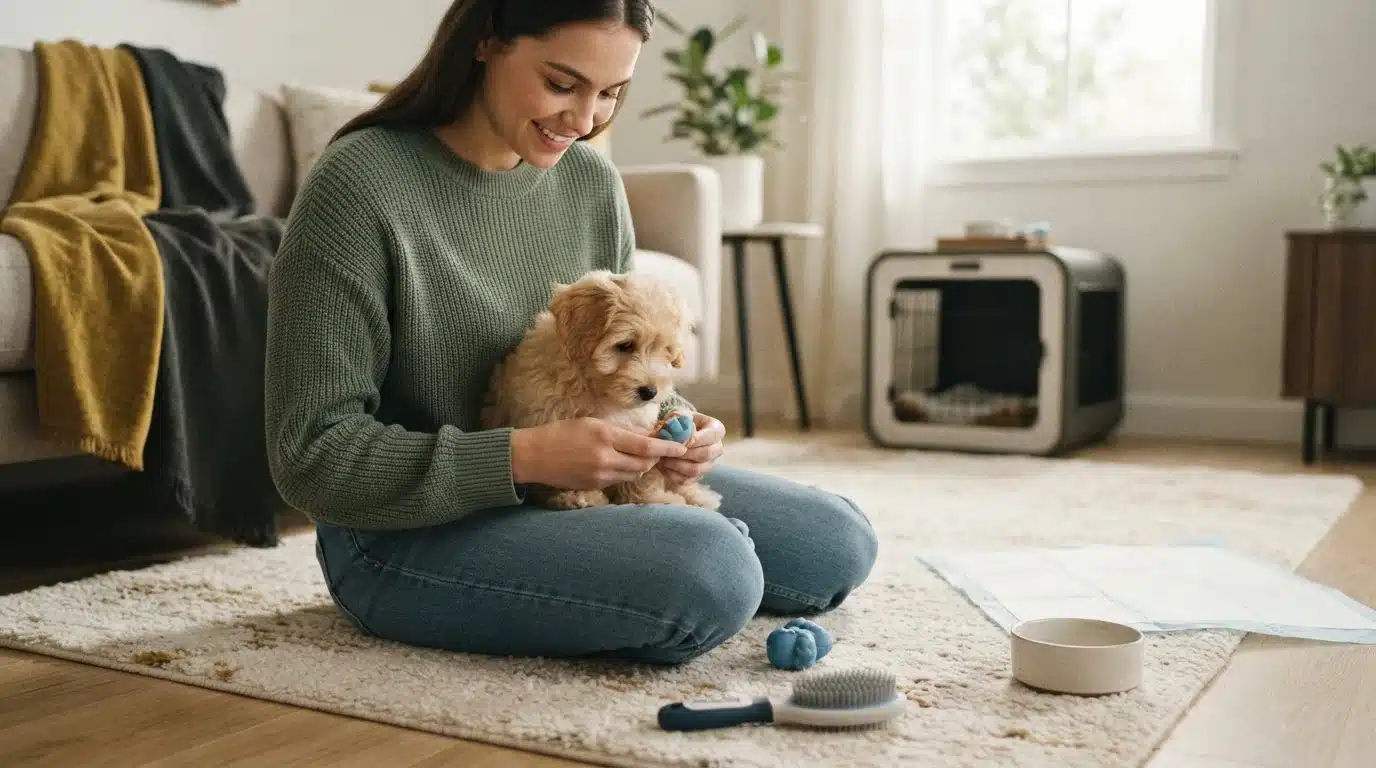
Small breed puppy potty training in an apartment starts with one decision: where your puppy goes when the elevator is too far. Havanese, Havapoo, and Cavapoo puppies have small bladders and short notice, so a planned indoor station keeps accidents from becoming habits. Set the zone up before your puppy comes home, and you remove most of the guesswork from the first week.
Pick the Right Indoor Station for Your Building
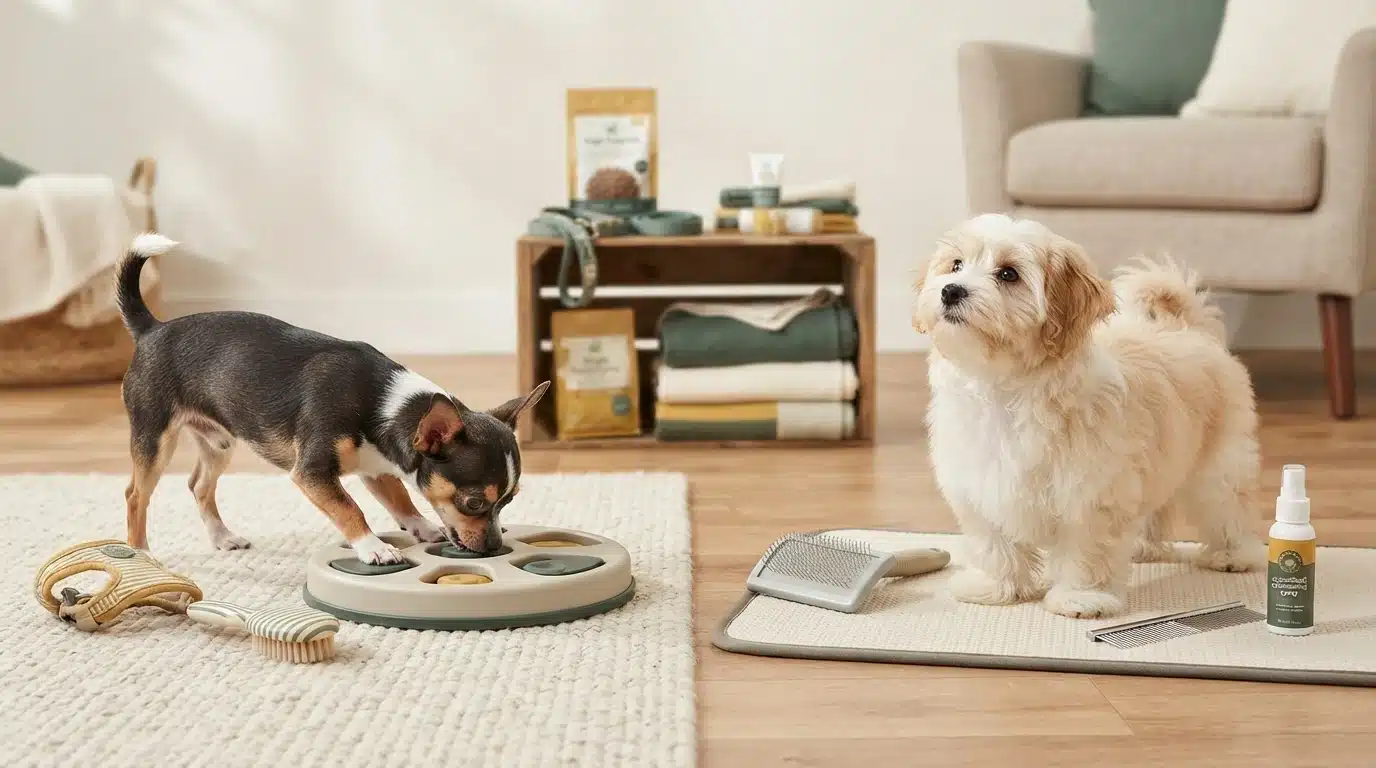
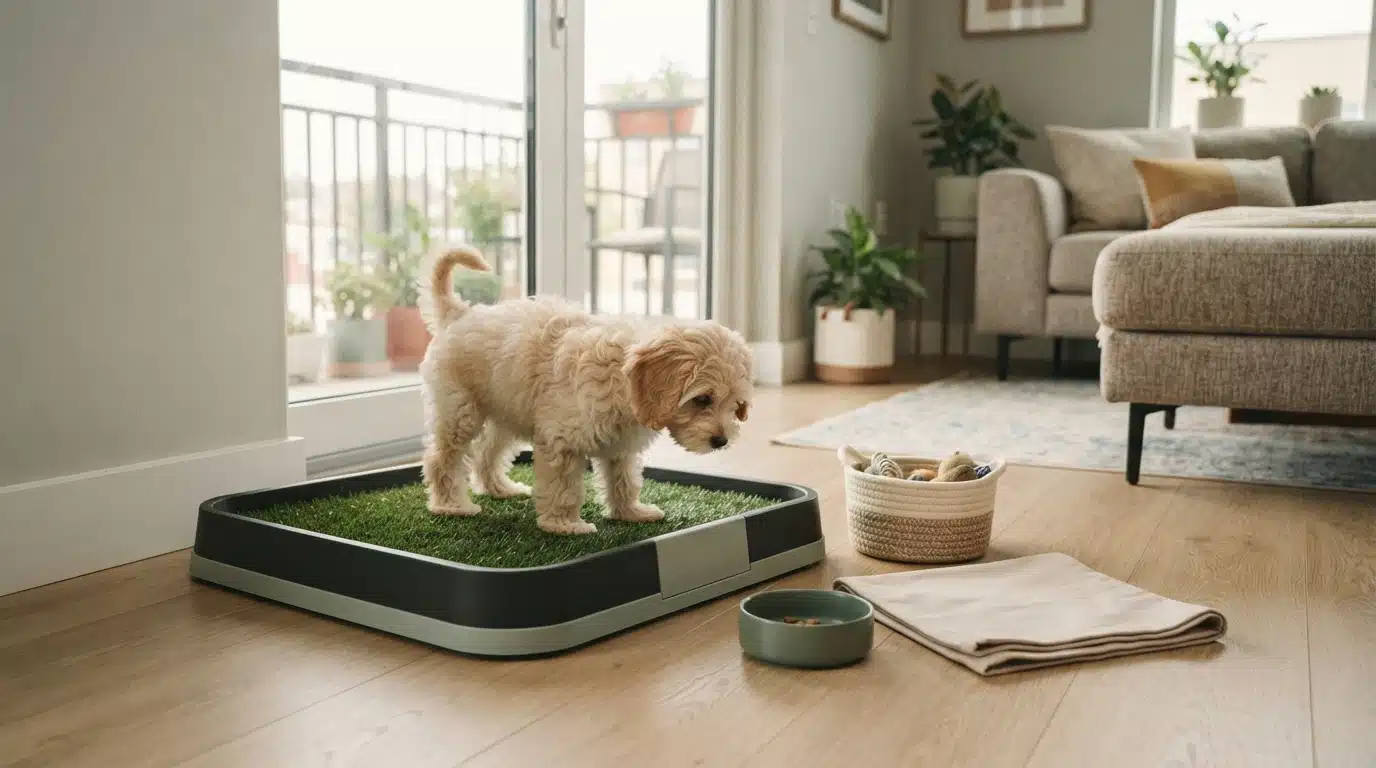
An indoor grass tray or washable pad can provide a planned option when outdoor access is difficult. Choose a stable, easy-to-clean setup that your puppy can use comfortably, and ask the caregiver what surface is familiar. Check access, balcony safety and building rules before selecting a location; no particular surface guarantees faster learning.
| Station | Best For | Trade-Off |
|---|---|---|
| Synthetic grass patch | Balconies, repeat cleanups | Holds odor without washing |
| Washable pad | Bathrooms, no balcony | Weaker scent cue |
| Fresh grass box | Young puppies, fast training | Monthly cost |
Keep the toilet area easy to find and introduce changes gradually. Ask the breeder what this puppy has used rather than assuming every Sage litter follows the same routine. Ask for the puppy’s current care notes and discuss any uncertainty before homecoming.
Position the Station for Quiet Success
Choose a quiet, accessible spot apart from food, drinking water and the sleeping area. If the location needs to change, introduce the new arrangement carefully instead of expecting instant recognition.
Keep three rules in mind:
- Distance from sleep and food. At least a few feet, in a separate zone.
- Easy floor cleanup. Tile or vinyl beats carpet; if you only have carpet, use a tray under the station.
- Low traffic. A puppy interrupted mid-potty learns to hide and go elsewhere.
Check building rules and plan an appropriate private toilet location rather than using shared halls or stairs. A quiet, accessible station can make cleanup and consistent access more manageable; its location does not guarantee faster learning.
Line the area with a short runner or mat, since small breeds sometimes overshoot the pad edge. Clean misses with an enzymatic cleaner, not vinegar or bleach. Scent residue you cannot smell tells your puppy that corner is still a bathroom, so neutralizing it protects your progress.
Tip: Have the setup ready before homecoming. If accidents cluster in one place or the puppy avoids the station, review access, cleanliness and timing rather than assuming learning has restarted from zero.
Step 2: Build a Predictable Apartment Potty Schedule
Use your puppy’s actual pattern rather than a bladder-holding formula. Offer frequent toilet opportunities while awake, including after waking, meals, drinking and active play. Keep a simple record and shorten the gap after misses. AKC’s housetraining guide describes observation, a routine and rewards; it is not a guarantee that a puppy can wait a calculated number of hours.
Daytime Routine That Fits Around Work and Errands
Anchor the day around five moments, and your puppy will do most of the work for you:
- First thing in the morning, before any food or play
- After every meal, usually within 10 to 15 minutes
- After every nap and play session
- After drinking water, especially for young puppies
- Right before you leave and right when you return
These events are useful reminders to offer a break, not deadlines the puppy must meet. Young puppies may need opportunities much sooner during active periods. Adjust the plan to what you observe and ask your veterinarian about unusual frequency or other health concerns.
Arrange enough reliable daytime help for the puppy’s actual care needs. One midday visit may be insufficient. If you use an indoor backup, provide a safe, comfortable puppy area with distinct rest, water and toilet zones; do not expect a young puppy to manage a full workday alone or confine the puppy beyond its comfort and needs.
Nighttime Toileting and Water
Nighttime needs vary. Offer an appropriate final toilet opportunity, watch the puppy’s pattern and arrange additional calm breaks when needed. Feeding, drinking and any medical needs take priority over trying to meet a sleeping-through-the-night target.
Keep fresh drinking water available; do not apply a blanket ninety-minute pre-bed water-removal rule. Ask your veterinarian for a puppy-specific feeding, water and overnight toileting plan, especially for a very young or small puppy or one with health concerns. The AKC sample routine also stresses adaptation to the individual puppy.
There is no fixed age at which every puppy can sleep through the night. Record changes and adjust support without restricting water or ignoring distress to force a milestone.
Step 3: Teach the Potty Cue Without Yelling
A puppy cannot learn from fear. It learns from a calm voice, a consistent word, and a reward at the right moment. Here is how to build both parts of the habit.
Choosing and Locking In a Cue Word
Pick one short phrase and never change it. “Go potty” works well because it sounds nothing like the rest of your daily talk, but “busy” or “hurry up” is fine too. The exact words matter far less than your consistency.
Say a short cue quietly as the puppy toilets, then reward promptly after finishing. Consistency can help the puppy learn the association, but no phrase or timetable guarantees a result.
Keep your voice soft. A loud or excited tone mid-potty can startle a small breed puppy and cut the trip short, which is the last thing you want at 2 a.m. on a balcony. Pair the word with gentle praise and a tiny treat the moment it is done, and the cue will carry itself.
What to Do in the First 30 Seconds of an Accident
Scolding teaches one thing: to hide the next accident. So skip the yelling entirely, even when you are frustrated or running late.
If you notice an accident starting, calmly guide the puppy to the appropriate area if that is practical and comfortable. Do not clap, startle, scold or punish. Reward any toileting completed in the right place, then clean the accident according to the cleaner’s instructions and keep the puppy away until the area is safe.
If you discover an accident later, clean it calmly. Review access, supervision and timing, and consider health changes when misses recur. Do not punish the puppy or assume every accident has the same cause.
Step 4: Handle Hallways, Elevators, and Balconies
Setting Up a Calm Hallway and Elevator Routine
Plan the route before the puppy urgently needs to toilet. Carrying may help with a long hallway, lift delay or veterinary risk plan, but there is no universal sixteen-week carrying rule. Carrying also does not eliminate exposure to infection. Ask your veterinarian which outdoor locations and surfaces are appropriate for this puppy now; avoid unrestricted communal dog areas until that individual risk plan permits them.
Once she can hold it more reliably, switch to a leash routine. Keep her leashed in every hallway and elevator, walk at a brisk pace, and skip greetings with neighbors until you reach the door. If she pauses and circles inside the building, pick her up right away and finish the trip outside.
Practice a quiet hallway or elevator experience separately from an urgent potty trip, at a pace the puppy finds comfortable. Pair an easy experience with a reward; reduce difficulty or stop if the puppy shows concern. No fixed daily exposure quota is required.
Balconies, Shared Patios, and Stairwells
A balcony station is an option only when the building allows it and the area is safe for a small puppy. Check gaps, falls, escape routes, weather, hygiene and drainage; supervise access. It need not be a required stage for every apartment, and changing an established toilet location takes patient practice.
Shared stairwells are not toilet areas. Choose a route that is safe for the puppy’s size, mobility and comfort, and ask the veterinarian about any physical restrictions. Carry when appropriate rather than forcing stairs to teach independence.
For the full picture of what to teach next, our small breed puppy care guide covers routines beyond potty training.
Step 5: Move From Indoor Station to Outdoor Breaks
Start or expand outdoor toileting when there is an appropriate accessible location and the puppy’s veterinary risk plan supports it. Health and local exposure risk matter more than a single birthday. Some puppies can begin a suitable outdoor routine earlier; others need an indoor option longer. Keep safe early learning separate from access to busy communal dog-toileting areas.
Introduce the Intended Surface Gradually
Introduce the intended toilet surface gradually and reward successful use. Do not cut a pad in half on a weekly timetable or remove access just to force a transition. Keep the backup usable while you learn which outdoor opportunities the puppy can manage comfortably.
Keep the indoor station clear and usable while adding planned trips to the intended outdoor spot. Use the familiar cue and reward completion there. Move or retire the indoor option only when the puppy’s actual success and your access make that practical; no two-day sequence or scent trick guarantees the change.
Weather Failsafes and Slow Days
Weather and lift delays can make access harder. Keep an appropriate backup when needed and never ask the puppy to wait beyond its comfort or individual needs simply to maintain an outdoor-only rule.
After a setback, restore a manageable arrangement, shorten gaps and check health and access. Progress at the puppy’s pace rather than waiting a set number of days before trying again.
Common Mistakes to Avoid in an Apartment
Apartment potty training fails for predictable reasons. Most of them come down to timing, cleanup, or subtle mixed signals. Here are the mistakes worth avoiding from day one.
Mistakes That Cost You Your Security Deposit
Skipping cleanup steps is the big one. Urine soaked into carpet padding keeps drawing your puppy back to the same spot, and lingering odor costs you money at move-out. Blot fresh accidents fast, then treat the area with an enzymatic cleaner that breaks down the odor instead of masking it. Never use ammonia-based products, because they smell like urine to a dog. Keep pads away from carpet edges.
Mistakes That Quietly Slow Learning
Punishing accidents after the fact is the most common error. Your puppy cannot connect your scolding to something she did minutes ago; she only learns to fear you. Also watch for praise that arrives too late, potty trips rushed by a bored owner, and inconsistency between household members about the pad location. Pick one spot and one routine everyone follows.
When to Call Your Veterinarian or a Trainer
Health Red Flags That Look Like Training Issues
Changes in toileting can have medical causes. Contact your veterinarian promptly about straining, blood, repeated small attempts, new dribbling, unusual thirst, diarrhea or a sudden change from the puppy’s normal pattern. Repeated attempts with little or no urine, marked distress or a puppy becoming unwell need urgent veterinary advice; do not diagnose a training problem or wait for a fixed duration.
Finding the Right Trainer in an Apartment City
Ask for a trainer who uses positive reinforcement only, and ask to watch a session before you commit. Raising a Havanese or Cavapoo in a high-rise means you need someone comfortable working indoors on lobby manners, elevator encounters, and hallway distractions, not just backyard basics. Group puppy classes also help, because they build calm focus around other dogs, which makes every shared-elevator moment easier later.
A Flexible Apartment Training Checklist
Use the first days to learn the puppy’s needs and establish a workable care plan. The sequence below is a flexible checklist, not a two-week forecast or proof that Havanese, Havapoo or Cavapoo puppies learn on a fixed timetable.
| Focus | What to observe | How to adjust |
|---|---|---|
| Accessible toilet area | Can the puppy reach and use it comfortably? | Improve access and keep food, water and rest separate. |
| Frequent opportunities | When do successes and accidents happen? | Offer earlier breaks after waking, meals, drinking and play. |
| Comfortable practice | Is the puppy relaxed in the route and location? | Reduce difficulty, reward success and follow the veterinary risk plan. |
| Care support | Are daytime and overnight needs being met? | Arrange enough human help and review health changes promptly. |
Slower progress is normal, not failure. Small bladders and busy lobbies simply take time.
For a future puppy, start with current availability, read pricing and reservation information, and use the puppy application when the care plan and household fit are right. Ask for the particular puppy’s records; this guide does not promise a trained puppy.
Frequently Asked Questions
small breed apartment potty training?
Choose an accessible toilet area, offer frequent opportunities around the puppy’s actual needs, reward promptly and clean misses calmly. Use an indoor backup when helpful, and plan outdoor access with veterinary guidance about the puppy and local risk.
How long until my puppy is fully potty trained?
Progress varies with the puppy, health, access and consistency of care. Track successful opportunities and accidents instead of promising reliability by a particular month. Ask for qualified help if progress stalls or health signs appear.
Should I use pee pads or take my puppy outside only?
An indoor option may help when suitable outdoor access is difficult, but it is not compulsory for every apartment. Ask your veterinarian about appropriate outdoor locations now and introduce changes gradually; there is no universal sixteen-week transition date.
What if my puppy pees in the elevator or hallway?
Interrupt softly, carry her to the potty spot, and clean with an enzymatic cleaner. Until she’s reliable, carry her through shared spaces instead of walking.
How do I potty train while working full time?
Arrange enough dependable care for this puppy’s daytime feeding, water, toilet breaks, rest and companionship. One midday visit may not meet those needs. A safe indoor setup can be part of the plan, but it does not replace suitable human care.
When should I worry my puppy’s accidents are medical?
Ask your veterinarian about straining, blood, unusual frequency or thirst, dribbling, diarrhea or a sudden change. These signs can have different causes. Difficulty passing urine or an unwell puppy needs urgent advice; do not assume it is simply a training setback.
Wrapping Up: A Calm Apartment Routine That Lasts
Apartment potty training works through accessible arrangements, close observation, prompt rewards and realistic care support. Adapt outdoor access to the puppy’s veterinary risk plan and your building, keep fresh water available, and make changes gradually. No birthday, pad-halving schedule or overnight target replaces the puppy’s actual needs.
Clean accidents calmly and review timing, access and health when they recur. Learning is uneven; an accident is useful information for the care plan, not a reason for punishment or a promised turning point.
A consistent, humane routine gives the puppy opportunities to learn. Keep the plan flexible, ask for appropriate help and judge progress from the individual puppy rather than a breed-wide promise.