Quick Summary: Havapoo and Maltipoo coats vary, and both can need substantial grooming. Neither a breed label, a curly coat nor an F1b or multigenerational label establishes allergy safety. Visible shedding and coat maintenance are different from medical allergy risk. Ask an allergist about your household’s concerns before considering exposure; a visit or home trial cannot guarantee future tolerance.
If allergies are driving your choice, separate the coat-care question from the medical decision. Havapoos and Maltipoos have Poodle ancestry, but individual coats and shedding vary. No cross or generation can be ranked allergy-safe from its label.
This guide compares coat-care questions, explains ancestry labels and helps you prepare for conversations with a breeder, groomer and qualified clinician. It does not provide an allergy diagnosis or a puppy exposure test. Care needs and household fit should be assessed separately from medical allergy advice.
Havapoo vs Maltipoo: Shedding and Allergies at a Glance
| Havapoo (Havanese x Poodle) | Maltipoo (Maltese x Poodle) | |
|---|---|---|
| Visible shedding | Varies with the individual coat; ask about the puppy and adult relatives | Varies with the individual coat; a fine or curly coat does not establish allergy safety |
| Dog allergens | All dogs produce allergens, including proteins associated with hair, dander, saliva and urine | The same caution applies; low visible shedding does not establish lower medical risk |
| Generation labels | Describe ancestry; they do not establish allergen production or clinical tolerance | Confirm the actual parentage; a backcross or multigenerational label is not an allergy test |
| Coat-care planning | Ask a groomer about brushing, combing, bathing and trims for the individual coat | Ask about mat prevention and a routine suited to the individual dog |
| Household fit | Assess companionship, activity, training and grooming needs separately from allergy risk | Assess the individual dog and your care capacity; no generation is an allergy-safe recommendation |
| Medical guidance | An allergist can assess symptoms and appropriate testing; a breed comparison cannot clear a puppy for your household | Discuss medical concerns and any exposure decision with a qualified clinician before commitment |
How Havapoo (Havanese x Poodle) and Maltipoo (Maltese x Poodle) Compare
Havapoo (Havanese x Poodle)
A Havapoo has Havanese and Poodle ancestry. Its coat texture, shedding, adult size and care needs can vary. Ask about the actual parents and the individual puppy without treating ancestry or grooming needs as evidence of allergy tolerance.

Key strengths
- Individual variation in coat texture and visible shedding
- Parentage information can help frame care questions
- Regular coat care remains a practical commitment
Maltipoo (Maltese x Poodle)
A Maltipoo has Maltese and Poodle ancestry. Fine, wavy or curly coats can need regular combing and grooming to prevent mats. These observations help with care planning; they do not establish how an allergic person will respond.

Key strengths
- Individual coat and shedding patterns need assessment
- A generation label describes ancestry, not allergy safety
- Soft, fine coat that stays tidy with routine care
Why ‘Low Shedding’ Does Not Mean ‘Hypoallergenic’
Dogs Produce More Than One Allergen
Dog allergens are proteins associated with sources including hair, dander, saliva and urine. Can f 1 is one of several dog allergens. Visible loose hair is not a measure of the full exposure an allergic person experiences.
A low-shedding or curly coat does not establish lower allergen production or lower risk of symptoms. Grooming helps maintain the dog’s coat and comfort, but it cannot make a dog allergen-free or establish that a household will tolerate that dog.
What ACAAI Actually Says
The American College of Allergy, Asthma and Immunology explains that all dogs produce allergens and a truly allergy-free breed does not exist. Its pet-allergy guidance also describes a study finding no difference in home dog-allergen levels between breeds labeled hypoallergenic and other breeds.
This article does not establish that Sage Puppies selects particular generations to manage a family’s allergy symptoms. The owner can discuss the current program and individual puppies. Medical allergy evaluation and decisions about exposure belong with a qualified clinician.
Read the ACAAI pet-allergy guidance and discuss your symptoms and history with an allergist. An experience with one dog, or another family’s report, cannot guarantee future tolerance.
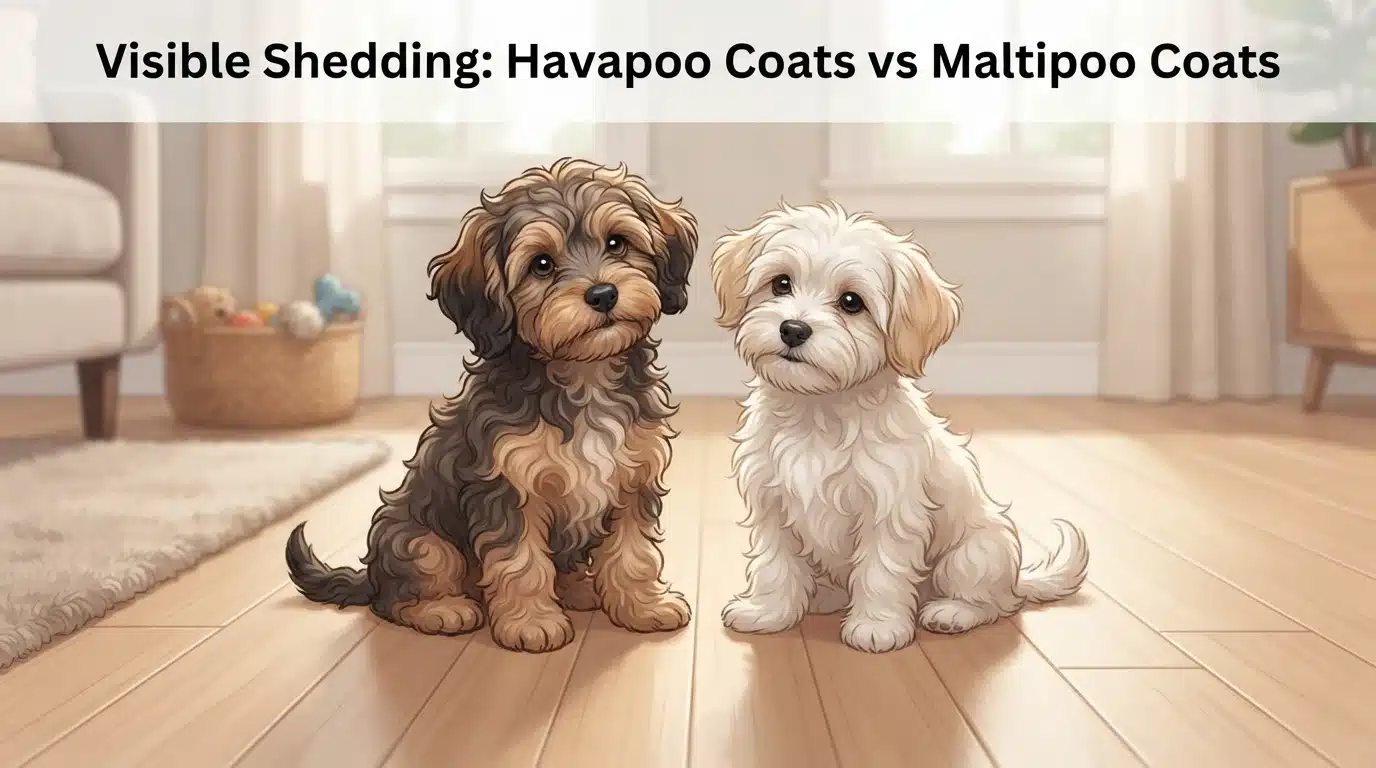
Visible Shedding: Havapoo Coats vs Maltipoo Coats
Shedding and coat maintenance are practical care questions. Ask about the individual puppy and adult relatives rather than assuming either cross always sheds less. Neither the amount of hair on furniture nor the coat’s appearance establishes allergy safety.
Havanese-Side Coats vs Maltese-Side Coats
Parent-breed coat information can help you prepare grooming questions, but a mixed-breed puppy’s coat needs individual assessment. The Havanese coat-care overview is background reading, not a medical allergy recommendation.
Havapoos have Havanese and Poodle ancestry; Maltipoos have Maltese and Poodle ancestry. Confirm the actual pairing and ask about adult-family coat examples. Our Havanese shedding guide offers coat-care context, not evidence that a cross or generation is safer for allergies.
Where the Loose Hair Goes
Look at the individual dog’s shedding and ask a groomer how to remove loose hair and prevent mats. A comparison of hair in a brush or on a floor does not measure the allergens a person will encounter.
Allergens can reach the home through more than shed hair. Do not assume curls keep allergens contained or that a particular coat makes household exposure predictable.
Brushing, Bathing and Coat Comfort
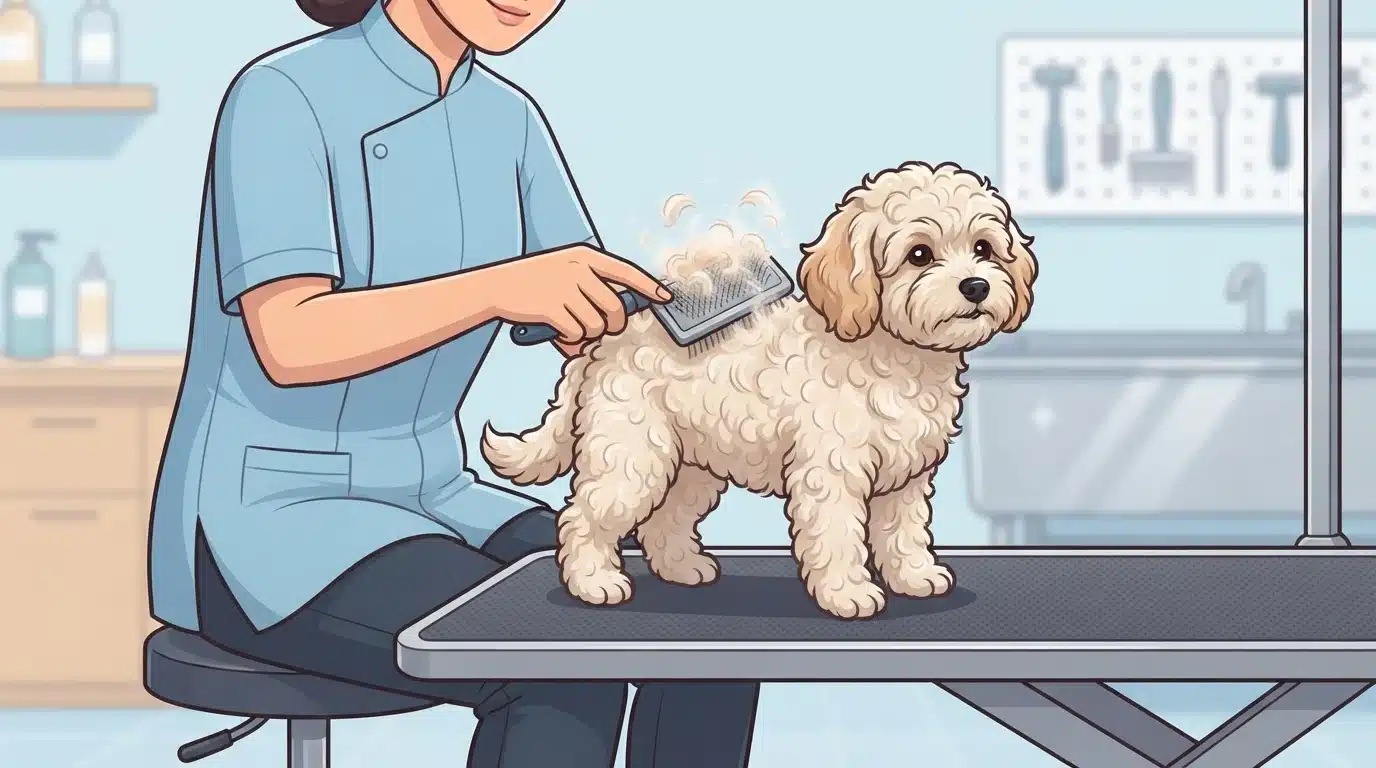
Ask a groomer and veterinarian about an appropriate brushing, bathing and trimming routine for the individual dog. Avoid mats and skin irritation, but do not treat a grooming timetable as an allergy treatment or a guarantee of fewer symptoms.
Saliva, Licking, and Household Habits
Dog saliva can contain allergens, and licking or other close contact can cause symptoms in some people. Do not use licking, cuddling or contact with exposed clothing as an allergy experiment. Ask a clinician about your risks before arranging contact or taking on grooming.
Puppies from the same cross can have different coats. Parentage and adult-family examples can inform care planning, but no single label establishes the puppy’s shedding level or an allergic person’s response.
What Parentage Labels Can and Cannot Tell You
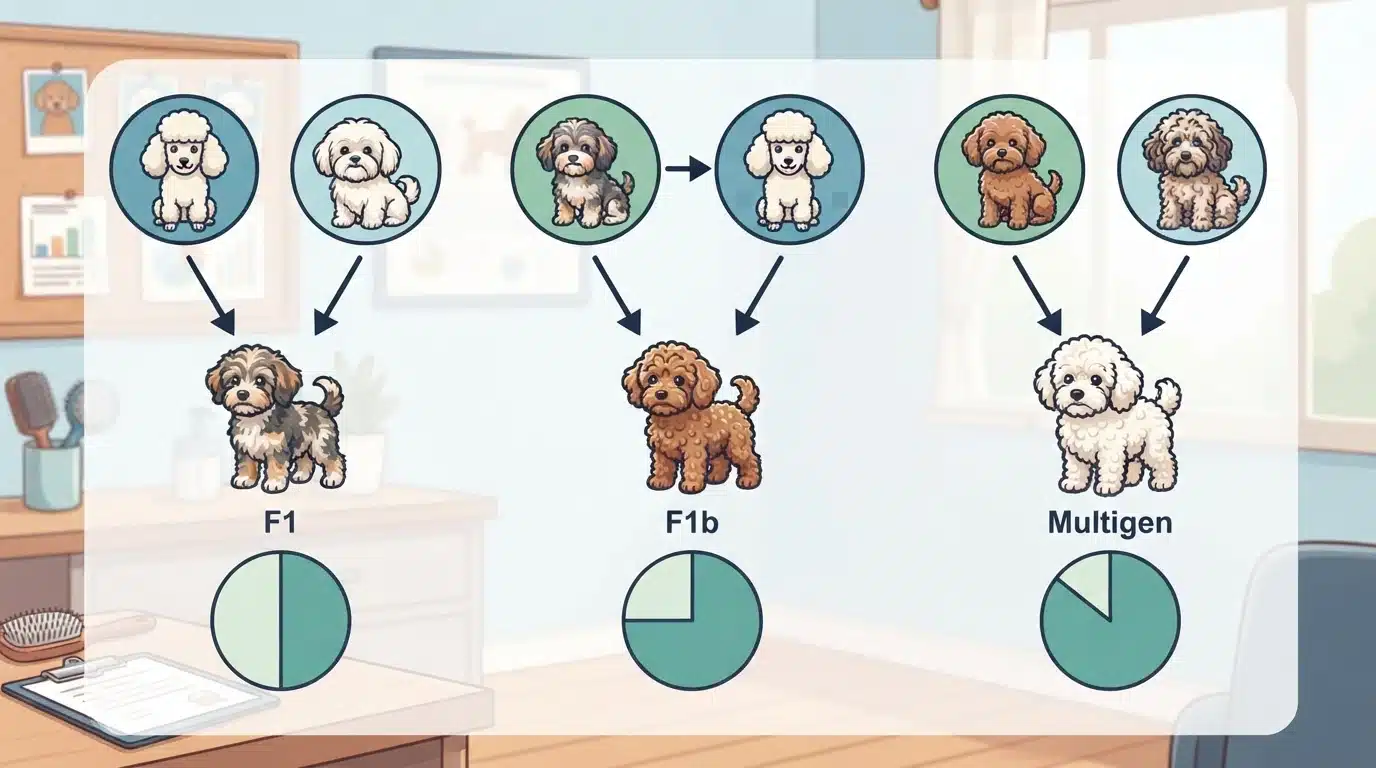
What F1, F1b, and Multigen Actually Mean
F1 commonly describes a first cross between the two parent breeds. F1b commonly describes a backcross; confirm which parent breed was used. Multigenerational describes a later-generation pairing and does not identify one fixed ancestry percentage. Ask for the actual parentage rather than relying on the label alone.
These terms describe ancestry, not medical tolerance. An F1b or multigenerational puppy is not automatically lower in allergens or a safer choice for an allergy-conscious household. Discuss individual coat care with a breeder and groomer, and medical concerns with an allergist.
Toy vs Miniature Poodle Parent and Why It Matters
Ask about the actual Poodle parent’s size and the adult relatives when considering likely size and care needs. Parent size alone does not establish coat density, shedding, allergen production or medical tolerance.
Request information about the actual parents and individual puppy without assuming Sage uses a documented-parent allergy-matching protocol. For related care questions, our Havapoo vs Cavapoo size and coat guide provides another comparison. Neither article can establish allergy safety.
Realistic Home Management for Each Mix
If pet allergy is a concern, discuss whether living with a dog is appropriate and what precautions or treatment fit your circumstances. Household cleaning and coat care do not replace that assessment.
Discuss Exposure Precautions With Your Clinician
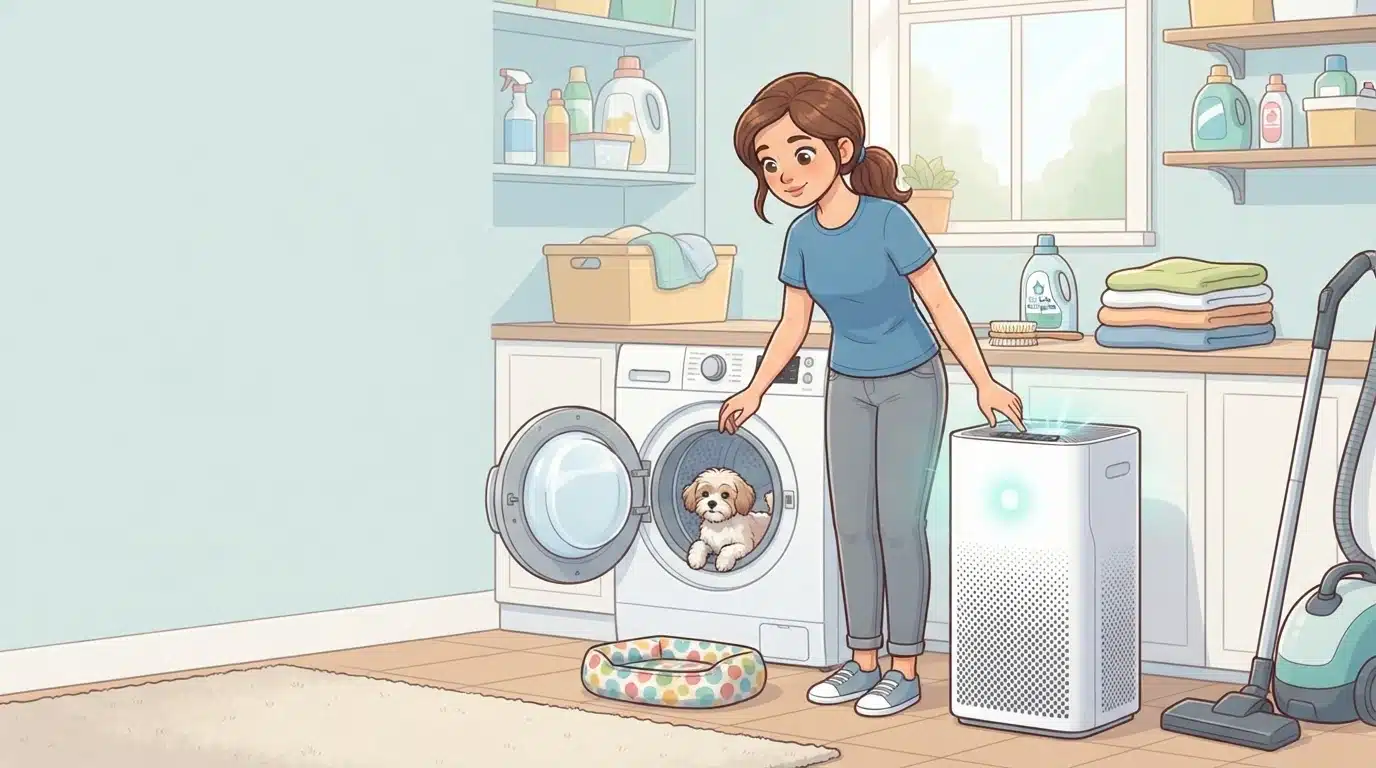
ACAAI discusses reducing exposure, keeping dogs out of an allergic person’s bedroom, suitable air filtration and regular cleaning. These measures may be part of an individual management plan, but they cannot make a dog allergen-free or guarantee a symptom-free home. Ask your clinician what is appropriate for your situation.
Plan Grooming for the Individual Coat
Both crosses can require regular brushing, combing and professional grooming. Ask for an individual care plan and local cost estimate before committing. Coat condition, matting, skin health and the dog’s comfort should guide care; a grooming schedule is not proof of an allergy benefit.
Allergy Decisions Before You Commit
Start With an Allergist, Not a Home Exposure Test
An allergist can assess your symptoms, medical history and whether testing or treatment is appropriate. A breeder visit or video call serves a different purpose: learning about the program and puppy. Neither can provide medical clearance for living with a dog.
Discuss these questions with your clinician:
- Could living with a dog worsen my allergy or asthma symptoms?
- What assessment or treatment is appropriate for my history?
- Should I avoid visits or other exposure while we assess the risks?
- What should I do if symptoms occur?
A short visit, delayed reaction or apparently mild symptoms cannot establish future tolerance. Do not arrange your own exposure experiment to decide whether a puppy is safe for your household.
Questions About Puppy Care and Written Terms
Ask the breeder about the individual puppy, care needs and written program terms while keeping medical questions with your clinician:
- What is known about this puppy’s coat care and adult relatives?
- What do the ancestry labels mean for this actual pairing?
- Can we discuss care and the program by video while I seek medical advice?
- What written purchase, return and rehoming terms apply?
The Mayo Clinic pet-allergy overview discusses professional diagnosis, treatment and limiting exposure. Review these issues with a qualified clinician. This comparison does not establish a Sage trial, return or reservation policy.
Which Should You Choose: A Havapoo or a Maltipoo?
Choose household fit using the individual dog’s care, activity, companionship and training needs. Allergy risk is a separate medical consideration; neither cross earns a safer ranking in this guide.
Choose a Havapoo When…
Consider a Havapoo if the individual puppy’s expected size, temperament and care needs fit your household. Ask about adult relatives, daily companionship and grooming. An F1b or multigenerational label does not establish that the puppy will be tolerated by an allergic person.
Choose a Maltipoo When…
Consider a Maltipoo using the same individual assessment of adult-size expectations, behavior, companionship and coat care. A smaller or finer-coated dog is not an allergy-safe recommendation. Confirm your care plan and discuss medical concerns before commitment.

Sage Puppies offers Havanese, Havapoo and Cavapoo puppies, not Maltipoos. Ask the owner about current puppies, their care and the program’s actual terms. The owner can answer program questions; medical allergy decisions belong with a qualified clinician.
Frequently Asked Questions
Q1: havapoo vs maltipoo allergies?
Neither cross can be ranked allergy-safe from its name, curls or generation. All dogs produce allergens. Discuss your medical concerns with an allergist separately from the puppy’s coat-care needs.
Q2: Which mix sheds less, a Havapoo or a Maltipoo?
Shedding varies with the individual coat and ancestry. Ask about the puppy and adult relatives, and plan grooming for that dog. Lower visible shedding does not establish lower risk of allergy symptoms.
Q3: Should I choose an F1b puppy if I have allergies?
An F1b label describes ancestry; it does not establish allergen production or medical tolerance. Do not choose a supposedly safer puppy from generation alone. An allergist can advise on your household’s concerns.
Q4: Can a short visit show whether I will tolerate a puppy?
No visit or home trial can guarantee future tolerance. Discuss symptoms, your history and any exposure decision with a qualified clinician before considering contact or commitment.
Q5: Is grooming an allergy treatment?
Grooming maintains coat condition and comfort. It cannot make a dog allergen-free or replace an individual allergy assessment and treatment plan.
Key Takeaways on Havapoo vs Maltipoo Shedding and Allergies
Separate coat care, household fit and medical allergy risk. Havapoos and Maltipoos vary as individuals, and neither a breed name nor an ancestry label establishes allergy safety. Ask about the actual puppy’s care needs and written terms, and seek qualified medical advice before considering exposure. A brief visit, an apparently mild reaction or a grooming routine cannot guarantee future tolerance.