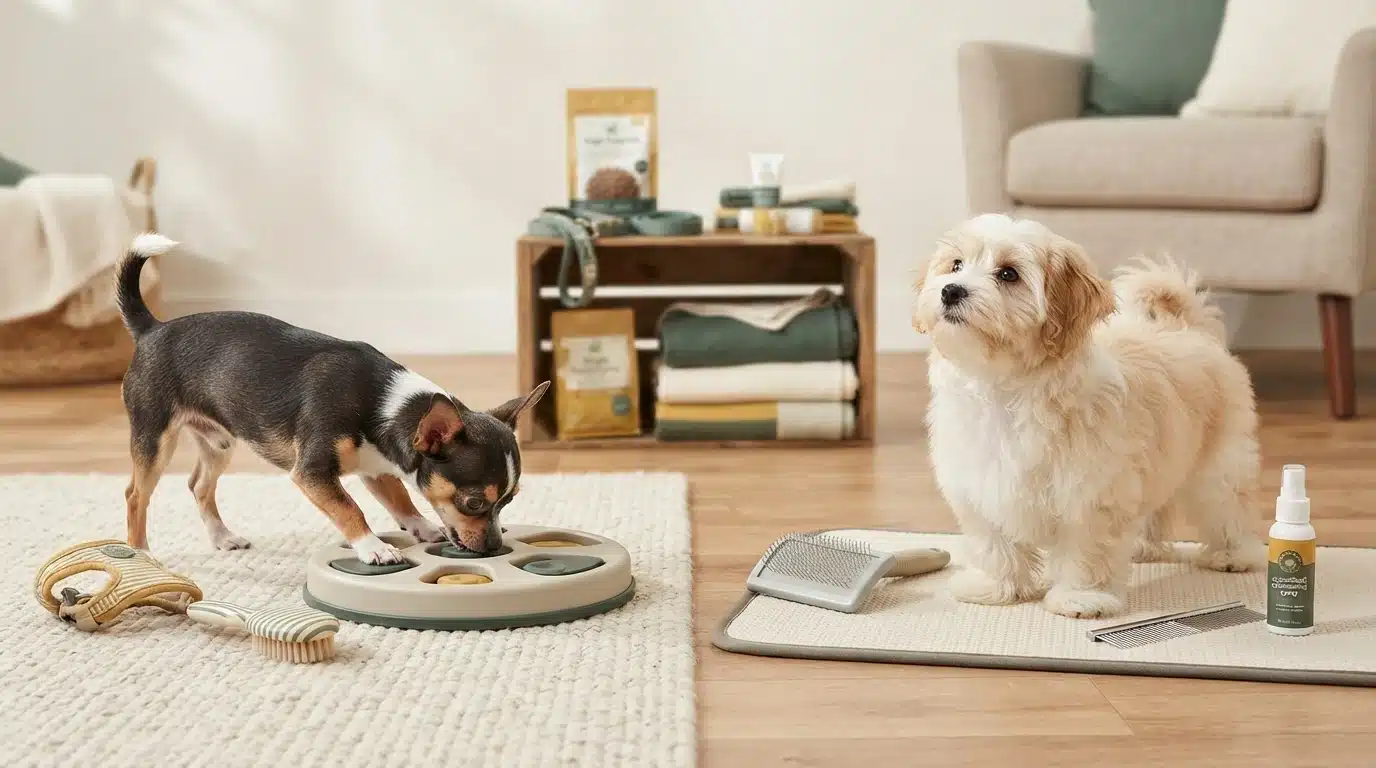
Quick Summary: A Havapoo and a Cavapoo look similar but split sharply on temperament and size once you look at the non-poodle parent. Havapoos (Havanese x Poodle) usually land between 7 and 20 pounds with a playful, social streak that fits lively households, while Cavapoos (Cavalier King Charles Spaniel x Poodle) run 9 to 25 pounds and lean calmer and more cuddle-focused, suiting quieter homes and apartments. Both need brushing three to four times a week and a professional groom every 6 to 8 weeks, and neither is truly hypoallergenic, so meeting the actual puppy matters more than any size chart. Sage Puppies offers both mixes from health-tested parents, with prices around $3,500 to $4,500 and an owner-managed matching process to pair you with the right litter.
When your small-doodle search comes down to a Havapoo vs a Cavapoo, you are really choosing between two parent pairs. The Toy or Miniature Poodle parent shifts the adult height, weight, and the coat you will brush every week, so any Havapoo size guide has to start with the parents, not the puppy photo.
That matters, because first-time families often pick the cuter listing and later learn their pup grew two inches taller than expected, or that Havapoo coat types and Cavapoo grooming need different rhythms. This guide compares size charts, coats, and daily care side by side, then matches each breed to your space, brushing tolerance, and lap-time wishes.
Havapoo vs Cavapoo: Size, Coat, and Care at a Glance
| Havapoo | Cavapoo | |
|---|---|---|
| Parent breeds | Havanese x Toy or Miniature Poodle | Cavalier King Charles Spaniel x Toy or Miniature Poodle |
| Adult weight range | 7 to 20 pounds | 9 to 25 pounds |
| Adult height range | 8 to 15 inches | 9 to 14 inches |
| Coat types and texture | Soft wavy fleece to curly, low-shed | Silky loose waves to soft curls, low-shed |
| Grooming frequency | Brush 3 to 4 times weekly, professional groom every 6 to 8 weeks | Brush 3 to 4 times weekly, professional groom every 6 to 8 weeks |
| Best fit for | Active families and first-time owners who want a small, social companion and can keep a steady brushing routine | Calm households, apartments, and families wanting a gentle cuddle-focused companion |
How Havapoo and Cavapoo Compare
Havapoo
A Havapoo mixes the Havanese with a Toy or Miniature Poodle, giving you a small, social companion that fits most homes. Any honest Havapoo size guide starts with the parents, because weights usually land between 7 and 20 pounds depending on the poodle side. It suits active families and first-time owners who can keep up with steady brushing.

Key strengths
- Soft wavy or curly, low-shed coat
- Adaptable and eager to be part of the family
Cavapoo
A Cavapoo crosses the Cavalier King Charles Spaniel with a Toy or Miniature Poodle, and it reads as the softer, more cuddle-focused of the two. A Cavapoo size chart typically shows 9 to 25 pounds, so adults stay apartment-friendly. Calm households and families wanting a gentle, emotionally tuned-in companion tend to click with this mix.
Key strengths
- Silky, low-shed coat that stays manageable
- Gentle, people-focused temperament
What a Havapoo and a Cavapoo Actually Are
Both dogs are small poodle mixes, but the non-poodle parent changes everything. A Havapoo pairs a Havanese with a poodle. A Cavapoo pairs a Cavalier King Charles Spaniel with a poodle. Those two parents explain most of the differences in size, coat, and daily care you will read below.
Where the Havapoo Comes From
The Havapoo is a cross between the Havanese, Cuba’s national dog, and a poodle, usually a miniature or toy. The mix appeared in the United States during the 1990s designer dog wave, and breeders wanted a low-shedding companion with the Havanese’s cheerful nature. Any honest Havapoo size guide starts with the parents, because the poodle side sets most of the adult weight. Read more in our Havapoo breed overview.
Where the Cavapoo Comes From
The Cavapoo combines a Cavalier King Charles Spaniel with a toy or miniature poodle. Cavaliers bring a soft, gentle, people-first temperament, while the poodle adds intelligence and a curlier, lower-shedding coat. Like the Havapoo, the mix grew popular in the United States as families looked for small, friendly companion dogs.
Why the Poodle Parent Matters in Both
The poodle is the engine behind both mixes. Its size, toy or miniature, decides how big the puppy grows, and its coat genes push fur toward wavy or curly and low-shedding. Because neither mix is standardized, two puppies from the same litter can differ. Ask a breeder about each parent’s size and coat before you choose.
Havapoo vs Cavapoo Size: What Realistic Adult Weight Looks Like
Size is one of the few ways these two mixes clearly differ, so it pays to look at real numbers instead of guesses.
Where Each Breed Lands on the Scale
Havapoos usually stay smaller. Most adults weigh between 7 and 20 pounds, depending on whether the poodle parent was a toy or a miniature. Cavapoos run a bit heavier, typically 9 to 25 pounds. Both fit happily in an apartment, but a Cavapoo with a mini poodle parent can feel like a noticeably bigger dog on your lap.
Predicting Your Specific Puppy’s Adult Size
The poodle parent’s size is your best clue. A toy poodle parent usually means a smaller adult, often closer to the low end of the range, while a miniature pushes the weight up. Ask the breeder for both parents’ weights, then look at your puppy at 8 weeks. Many pups land near four times their 8-week weight as adults.
Why Size Numbers Should Not Be a Guarantee
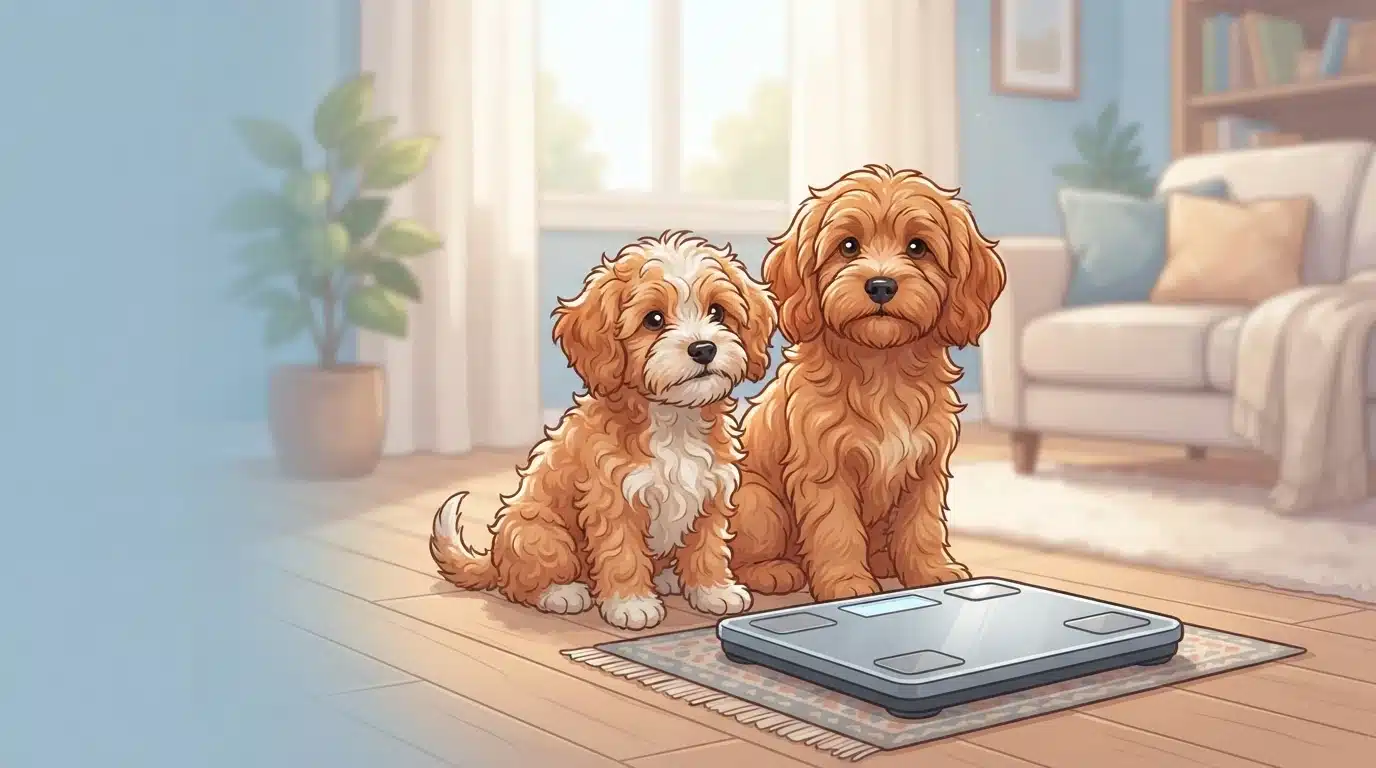
Even a careful pairing produces litters where one puppy takes after one parent and a littermate takes after the other. Charts describe averages, not promises, so treat any single number as a range with wiggle room. A breeder who knows the parents will always give you a more honest estimate than a chart alone.
Havapoo vs Cavapoo Coats: What You Will Actually Brush
Both breeds usually carry soft, low-shedding coats, but texture varies a lot within a single litter. Coat depends on which parent genes show up, so ask what each puppy’s parents look like before you picture your adult dog.
Havapoo Coat Types You May See in One Litter
Havapoo coats range from straight and silky to wavy to tightly curly, because they blend the Havanese’s long, soft hair with denser poodle curls. Straighter coats brush out faster and mats show up less often. Curlier coats shed less but tangle near the collar, ears, and armpits, so those spots need daily attention.
Cavapoo Coat Types You May See in One Litter
Cavapoos typically have wavy or curly coats often called fleece or wool. Fleece feels soft with loose waves and stays fairly easy to manage. Wool is denser and closer to a poodle’s curl, which means less shedding but more brushing. Straighter, Cavalier-like coats can appear too and tend to shed the most in the litter.
Shedding and Allergy Reality for Both Breeds
Neither breed is truly hypoallergenic, and no breeder can promise allergy-free puppies. Havanese are considered very low shedders because loose hair stays trapped in the coat, but allergens still ride on dander and saliva. The safest test is spending time with the actual puppy, or with adult dogs of the same mix, before you commit.
Coat Color and Pattern Differences to Expect
Havapoos often show Havanese shades like white, cream, gold, chocolate, and black, sometimes in parti patterns. Cavapoos commonly come in red, apricot, cream, black and tan, and tricolor. Color can also lighten as the coat grows out.
Brushing routines matter as much as coat type, so it helps to read a beginner’s guide to Havapoo grooming before pickup day.
Daily Care Differences: Grooming, Exercise, and Health
Both mixes need similar upkeep, but the details differ because one parent is a Havanese and the other is a Cavalier. Here is how daily care actually splits between them.
Brushing, Bathing, and Pro Grooming for Each
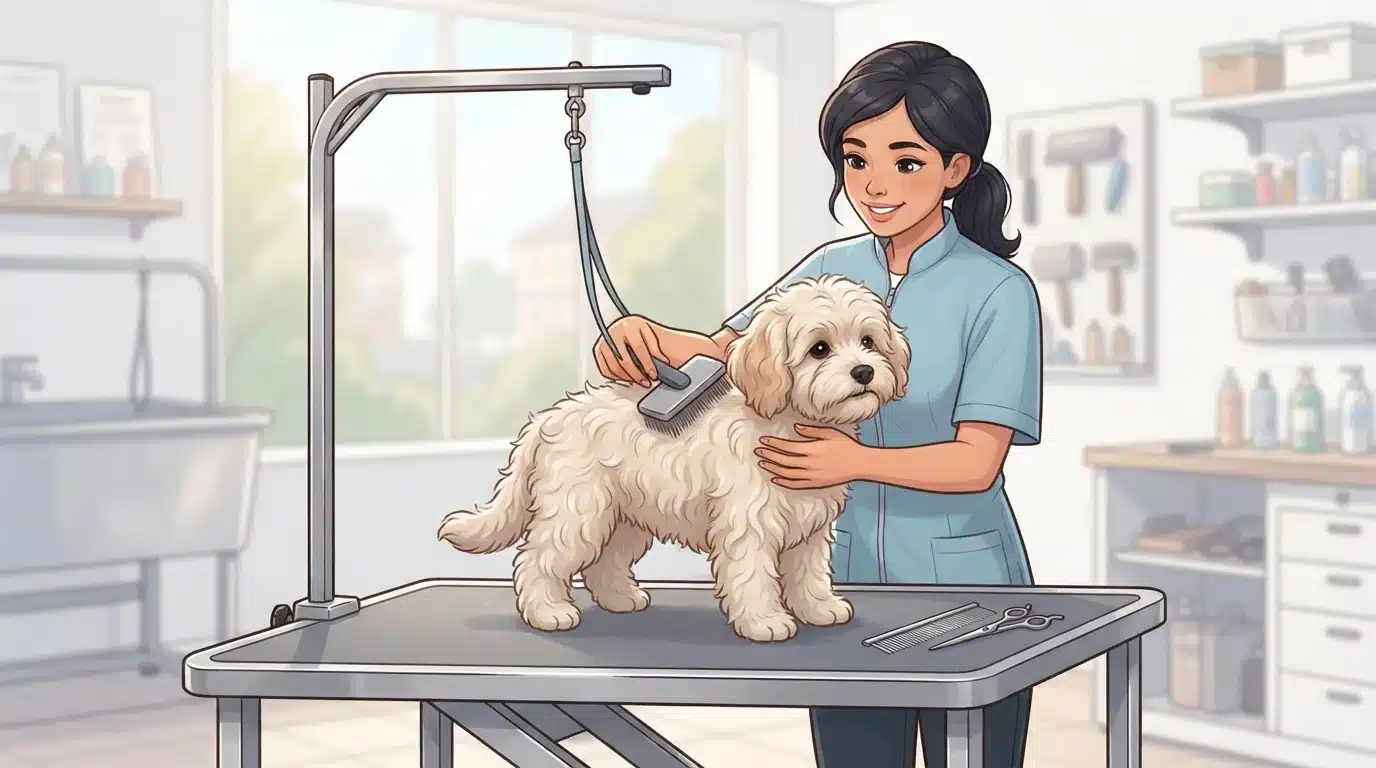
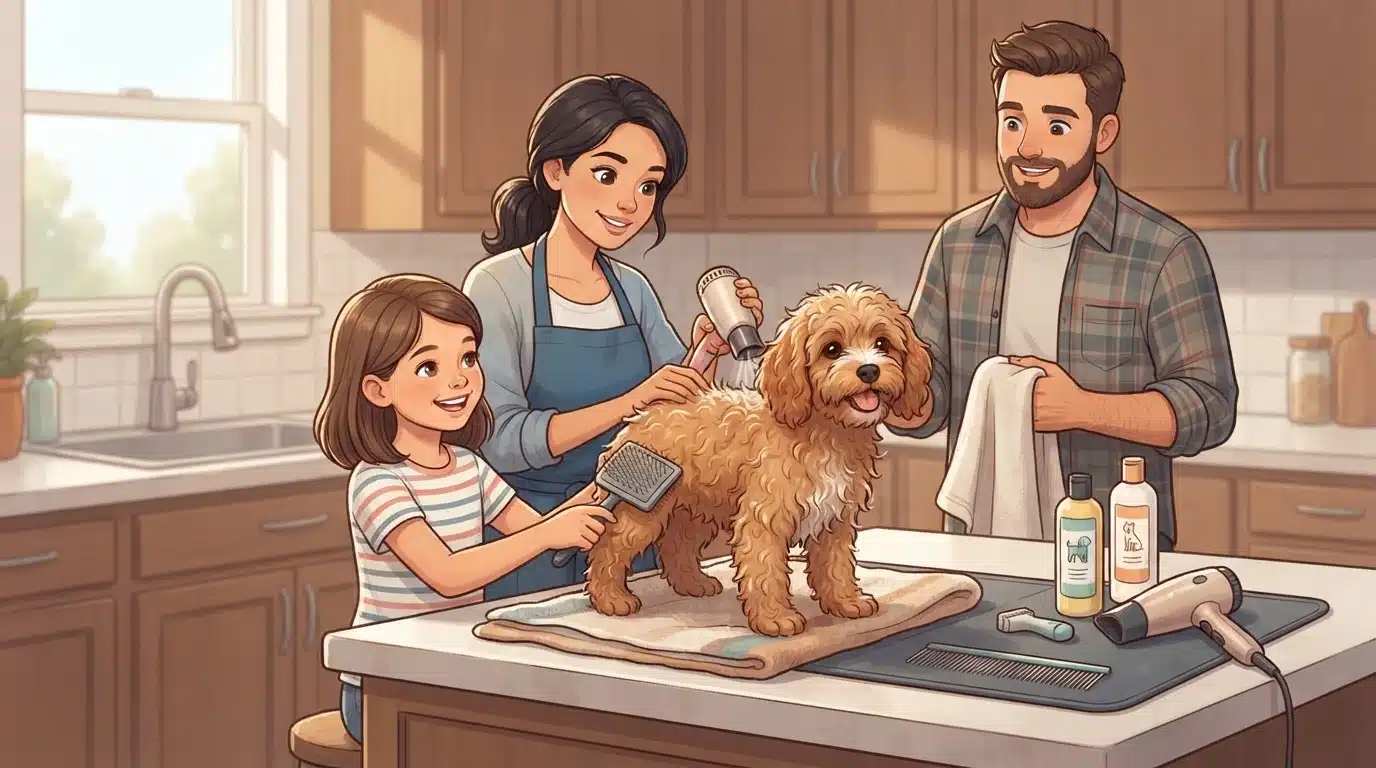
Brush both coats three to four times weekly to prevent mats in that soft, low-shedding hair. Schedule professional grooming every 6 to 8 weeks for either mix. Havapoos often grow a silkier, Havanese-style coat that tangles faster behind the ears, while many Cavapoos carry a denser, curlier poodle coat that holds debris. Bathe every three to four weeks, then dry and brush fully.
Eye Staining, Ear Care, and Tear Stains
Cavaliers bring longer ears and a flatter face shape into some Cavapoo litters, so ears need a weekly check and cleaner, and tears stain more easily. Wipe the eye area daily with a damp cloth. Havapoos usually need less eye work, but their drop ears still trap moisture after swims or baths. Dry ears thoroughly and trim hair around the canal.
Exercise, Training, and Mental Work
Both need 30 to 45 minutes of daily activity plus short training sessions. Havapoos tend toward playful, people-focused energy that thrives on tricks and fetch indoors. Cavapoos, with the Cavalier’s sporting background, often enjoy slightly longer walks and sniffing games. Both are smart and food-motivated, so five-minute training bursts work better than long drills. For setup basics, our new puppy guide covers prep and first-week routines.
Health Testing Priorities for Each Parent Pair
Ask for proof, not promises. Cavalier parents should have heart clearance from a cardiologist, plus patella, hip, and eye exams, per the Cavalier club’s testing guide. Havanese and poodle parents need eye, patella, and hip screening through OFA. Good breeders share certificates; the OFA health registry lets you verify results yourself.
Puppy Prices, Breeder Fit, and First-Year Costs
Both mixes cost similar amounts, and the price you pay upfront matters less than what comes with it. Plan for the purchase, then budget a first year of vet visits, gear, and grooming on top.

Sage Puppies Purchase Range and What It Includes
Havapoo and Cavapoo puppies at Sage Puppies run $3,500 to $4,500, which sits in line with well-run boutique programs. The range reflects parent pairings, coat type, and size, and it includes the owner-managed matching process, early socialization, and health screening of the parents. Compare that carefully with cheaper listings that skip health testing. For current details, see pricing and reservation.
Year-One Cost Planning for a Small Doodle
The purchase is only the start. AKC Pet Insurance estimates a small dog’s first year at $740 to $1,325, and that excludes grooming. Add puppy shots, spay or neuter surgery, a crate, food, and six to eight professional grooms, and a realistic year-one budget often lands between $2,000 and $3,000. Pet insurance, around $70 monthly, softens surprise vet bills.
What to Ask Any Breeder Before You Reserve
Ask for both parents’ health clearances, the guarantee terms, and how puppies are socialized. Then ask who you actually talk to. A small program where the breeder raises every litter answers questions faster than a large operation with staff. Trust the breeder who asks you questions back.
Which Home Setup Fits Each Breed Best
Apartments, Suburbs, and Multi-Pet Homes
Both mixes fit small spaces, but temperament tips the scale. A Havapoo often bonds tightly with one or two people, which suits a quieter apartment. A Cavapoo’s gentle, people-focused nature handles a busier suburban house and other pets well. Both stay apartment-friendly in size, but neither likes long days alone.
Families With Kids, Seniors, and First-Time Owners
Cavapoos are known for being gentle and eager to please, so they suit families with kids and seniors who want an easy, forgiving companion. Havapoos bring more Havanese playfulness and do best with owners who enjoy daily training games. If you want a deeper first-time-owner comparison, our guide covers both mixes in detail.
Utah Local Pickup, Nationwide Delivery, and Timing
Where you live shapes logistics more than breed choice. Utah families can meet the puppy and pick up locally, while out-of-state families usually arrange delivery around 8 to 10 weeks. Either way, apply early: small boutique programs often place upcoming litters months ahead, so timing matters as much as the breed you pick.
Which Should You Choose: Havapoo or Cavapoo?
Both mixes are affectionate, low-shedding companions that fit apartment life. The honest answer comes down to your household’s energy, your grooming routine, and how the individual puppy’s parents stack up. Match the dog to your daily rhythm, not just the cuter face.
Pick the Havapoo When Your Home Runs Lively
Choose a Havapoo if your week includes kids, frequent visitors, or short bursts of play every day. The Havanese side brings a bright, playful streak, and the AKC describes the Havanese as highly intelligent and eager to please. Their smaller adult range, 7 to 20 pounds, also suits tight spaces. Expect a dog that wants to be part of everything.
Pick the Cavapoo When Your Home Runs Calm
Choose a Cavapoo if your household is quieter or you work from home. The Cavalier side softens the energy into steady companionship, so these dogs settle easily after a walk. They run a bit heavier, 9 to 25 pounds, but stay apartment-friendly. Retirees and relaxed families often click with them fastest.
When a Third Option Is Worth Considering
If you cannot decide, consider a purebred Havanese. You get the cheerful, people-focused temperament without guessing how the poodle genes will sort out, since the breed standard is fixed. Cassie’s program includes Havanese alongside both doodle mixes, so the same parent-health questions and matching process apply.
Your Next Step With Sage Puppies
Review the current available puppies and pricing and reservation details, then submit an application so Cassie can match you with the right litter.

Still weighing a Havapoo against a Cavapoo? Tell Sage Puppies about your home, schedule, and space, and Cassie will help match you with the puppy whose parents point to the adult size and coat you actually want. Start your application at Sage Puppies, or browse available puppies.
Frequently Asked Questions
Q1: What is the difference between a Havapoo and a Cavapoo?
The non-poodle parent. Havapoos mix a Havanese with a Toy or Miniature Poodle, giving a playful, social companion. Cavapoos mix a Cavalier King Charles Spaniel with a poodle, giving a gentler, cuddle-focused dog.
Q2: How big do Havapoo and Cavapoo dogs get?
Havapoos usually weigh 7 to 20 pounds; Cavapoos run 9 to 25 pounds. The poodle parent’s size, toy or miniature, predicts where your puppy lands.
Q3: Which is calmer, a Havapoo or a Cavapoo?
Cavapoos are usually calmer, thanks to the Cavalier’s steady, people-first nature. Havapoos carry more Havanese playfulness and want daily games.
Q4: Do either of these mixes shed much?
Both are low-shedding, but not allergy-free. Curlier coats shed least and mat fastest.
Q5: How much grooming do they need?
Brush three to four times weekly, bathe every three to four weeks, and book professional grooming every 6 to 8 weeks.
Q6: Are they good for apartments?
Yes. Both fit small spaces, as long as someone is home most of the day.
Conclusion
A Havapoo vs Cavapoo choice really comes down to the parents. Havapoos stay smaller, 7 to 20 pounds, with a playful Havanese streak. Cavapoos run 9 to 25 pounds and bring a calmer, cuddle-focused Cavalier nature. Both need the same care: brushing three to four times weekly and professional grooming every 6 to 8 weeks. Ask any breeder for both parents’ weights, coat types, and health clearances, since those details predict your adult dog better than any chart. Match the mix to your household’s energy and space, then choose the puppy whose parents point to the size and coat you actually want.