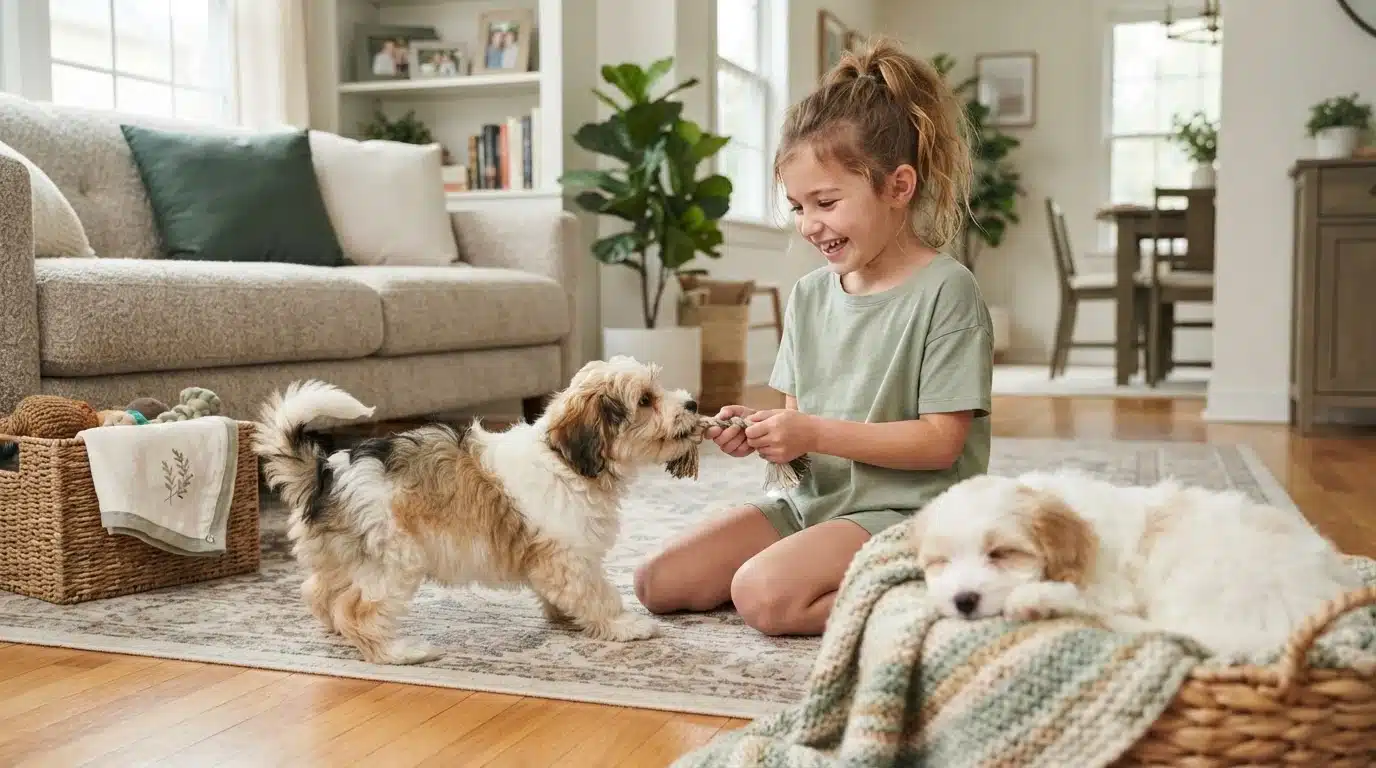
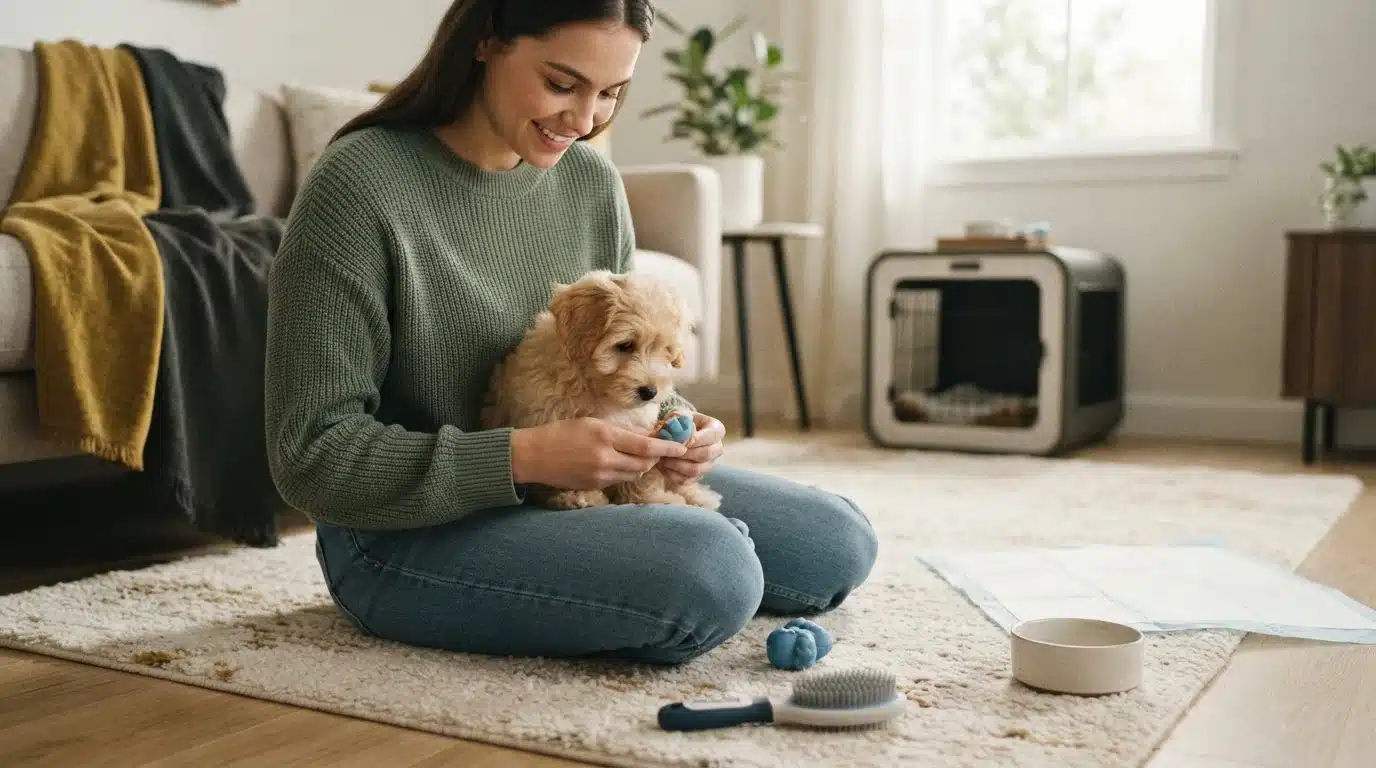
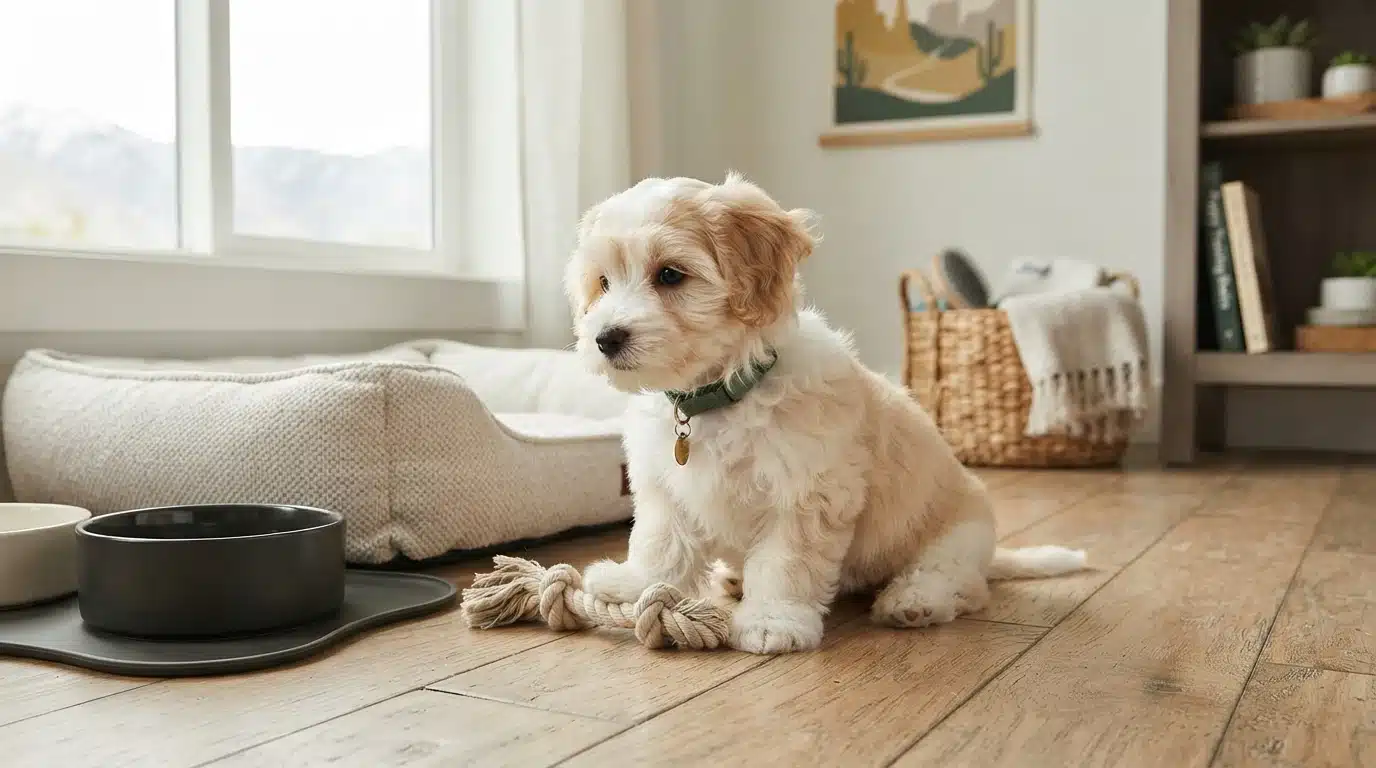
Quick Summary: Raising a Havanese puppy works best when you build steady routines before pickup day. Keep meals and potty breaks predictable, brush and handle the puppy in short daily sessions, and use treats and praise for training and housebreaking. Protect the puppy’s 18 to 20 hours of sleep, build alone time gradually, and arrange an early vet visit, while tracking progress against last week rather than rigid milestones.
The first 48 hours with a new Havanese puppy feel oddly manageable. That calm is exactly when owners make choices they will live with at month eight, like where the food bowls sit and whether the puppy sleeps on the bed. The real challenge is not the first weekend. It is setting up routines on day one that still work when the novelty fades.
This guide walks through raising a Havanese puppy at home, from your new puppy home setup and feeding plan to house training, grooming, and early training. Flexible rhythms matter more than rigid deadlines, so every section gives you options instead of a single strict schedule.
Everything here comes from documented experience with Havanese, Havapoo, and Cavapoo puppies at Sage Puppies, plus current guidance from veterinary nutrition and humane training sources. Raising a Havanese puppy at home goes smoothly when the groundwork starts before your puppy walks through the door, and Havanese puppy house training succeeds fastest once the first-week routines are already in place.
What to Prepare Before Your Havanese Comes Home
Raising a Havanese puppy at home goes smoother when everything is ready before pickup day. Set up one small, safe space and gather the basics so your puppy’s first hours feel calm instead of chaotic.
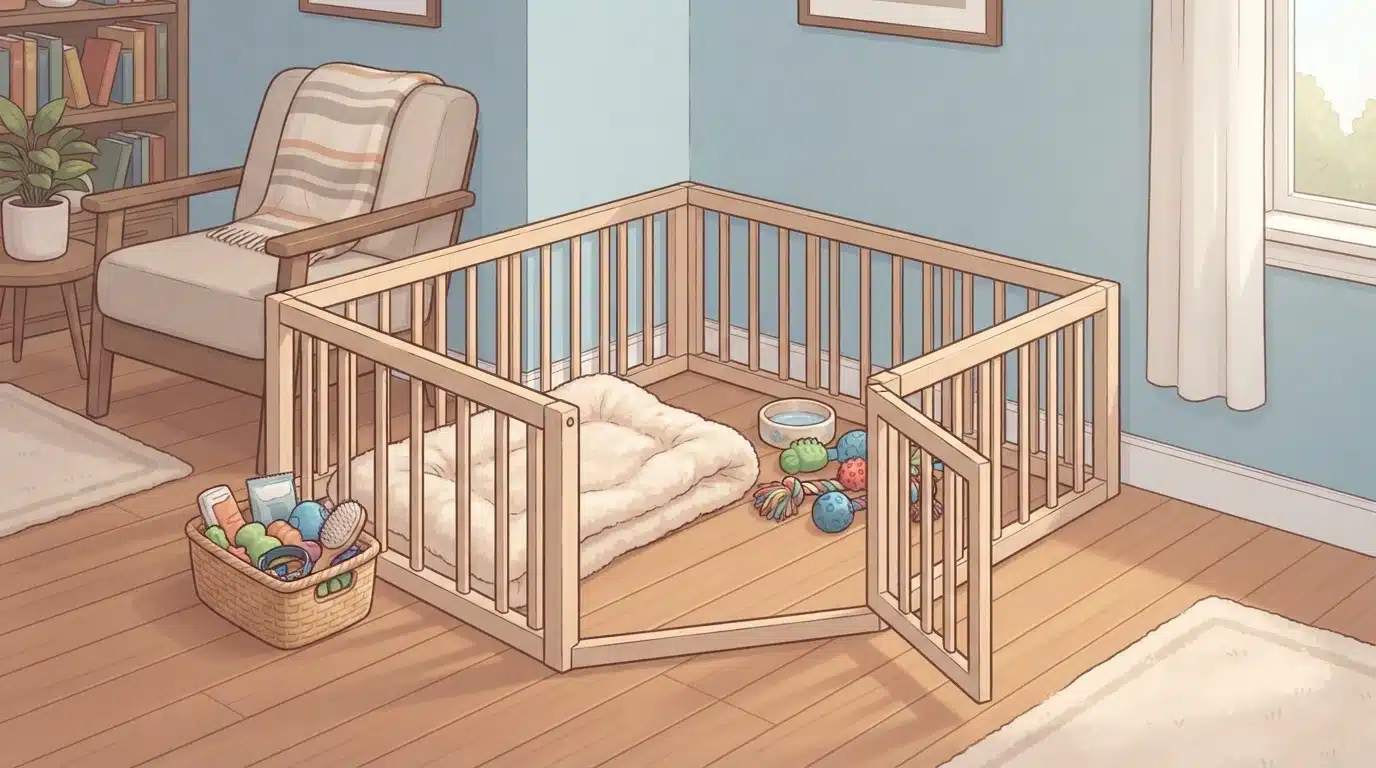
Pick One Safe Base Area and Set It Up First
Choose a quiet, easy-to-clean spot such as a kitchen corner or a section of the living room. Set up a crate or playpen, a soft bed, water, and a few toys. This base area becomes your puppy’s comfort zone and the starting point for potty training. Keep it in a room where your family spends time, since Havanese are companion dogs and do best near people.
Supplies Worth Buying Day One Versus Ones You Can Skip
| Buy Day One | Wait or Skip |
|---|---|
| Crate, playpen, and washable bed | Expensive designer beds |
| Puppy food matching the breeder’s feeding plan | Treats and chews for adult dogs |
| Flat collar, light leash, ID tag | Harness before you know her size |
| Food and water bowls, puppy pads | A big toy collection, three or four toys is plenty |
Buy the boring items well, and skip anything sized for an adult dog.
Records and Questions to Ask Your Breeder Before Pickup
A responsible breeder sends you home with vaccination records, deworming dates, and a feeding schedule. Ask what food the puppy eats now, because switching brands too fast upsets small stomachs. Also ask about the parents’ health testing and what the puppy’s daily routine looks like. Good programs, including ours, walk you through these details during the matching process so pickup day is a handoff, not a quiz.
Quick takeaway
One safe base area, a short supply list, and a breeder conversation cover most of what a new Havanese needs in the first week.
Feeding Your Havanese Puppy: Schedule, Portions and Transitions
Feeding a Havanese puppy well comes down to three things: the right number of meals for their age, portions matched to their small body, and slow food changes. Raising a Havanese puppy at home gets easier once meals follow a steady rhythm, because predictable food times support potty training and calm behavior too.
How Many Meals Per Day at Your Puppy’s Age
Young puppies need frequent meals because their small stomachs hold little food. Most puppies eat three to four meals a day until around four months old, then drop to three meals, and settle into two meals a day by about six months, according to Chewy’s puppy feeding guide. Small breeds like the Havanese often keep four meals a bit longer. Space meals roughly four to five hours apart, and pick times you can hold steady every day. A week-one small breed feeding schedule helps you plan those first days before habits form.
Portions Without the Guesswork
Start with the feeding chart printed on your puppy food bag. It lists daily amounts by weight, so divide the total across your puppy’s meals rather than eyeballing each bowl. Purina recommends measuring with an actual cup or kitchen scale, since free-pouring often overshoots by a surprising amount. Weigh your puppy every week or two. You should feel ribs under a thin fat layer but see a clear waist. If weight climbs fast, trim portions slightly and mention it at your next vet visit.
Switching Foods Without Upsetting Their Stomach
Change food gradually over seven to ten days. Mix 25 percent new food with 75 percent old for a few days, then shift to half and half, then 75 percent new, watching for loose stools the whole way. Sudden swaps commonly cause diarrhea, so patience pays off. Keep treats and chews similar during the switch so you can tell what caused any reaction.
Potty Training and Housebreaking Your Havanese Puppy
Housebreaking a Havanese is less about talent and more about rhythm. Puppies this size have tiny bladders, so the family raising a Havanese puppy at home wins by keeping trips frequent, timing predictable and praise instant.
Set Up a Routine You Can Repeat
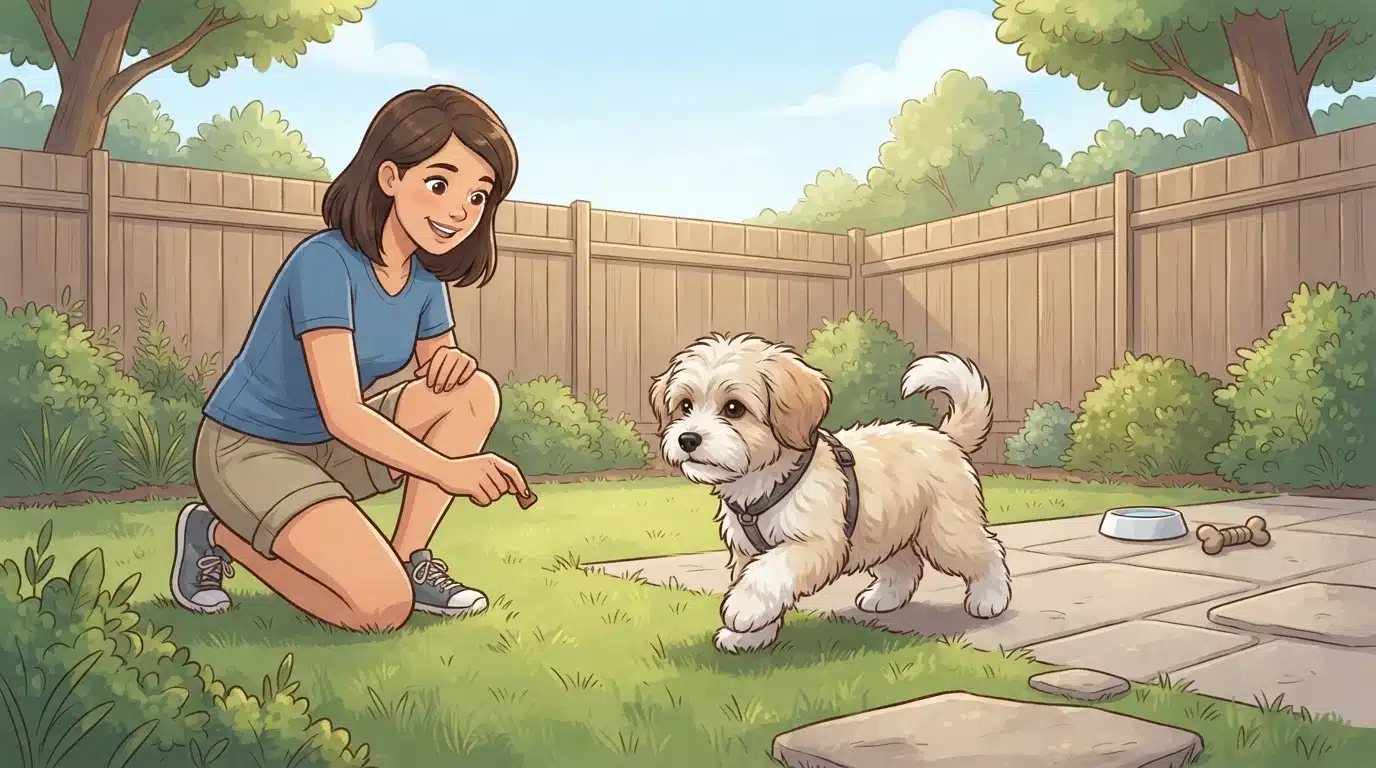
Take your puppy out the moment he wakes, after every meal, after play, and right before bed. Young puppies often need a trip every one to two hours during the day. Use the same door and the same patch of grass so the message lands. A regular schedule plus close supervision prevents most accidents before they happen. If you want times laid out by age, our Havanese potty training schedule by age gives a simple starting point.
Rewarding the Right Thing the Right Way
Reward success within a few seconds, while your puppy is still outside. A small treat and a happy voice teach him that going in the right spot pays off. Trainers built on positive reinforcement agree that praise works better than scolding ever will. Stay quiet during the act, then celebrate. Interrupt a mid-accident puppy gently, carry him out, and reward there. Never rub his nose in a mess; it only teaches him to hide.
Accidents, Regression and Small-Breed Reality
Expect accidents for weeks, not days. Small breeds mature a little more slowly, and Havanese are famously good at out-waiting rain. Clean messes with an enzymatic cleaner so the scent never invites a repeat. If a trained puppy suddenly regresses, look for causes: a routine change, a urinary infection, or too much freedom too soon. Shrink the space, tighten the schedule, and progress returns.
Grooming, Coats, Tear Stains and Everyday Handling
Havanese coats grow long and silky, so grooming is part of raising Havanese puppy at home life, not an occasional chore. Start small, stay gentle, and your puppy learns that brushing is just another part of the day. Most owners brush a full coat every day or two and book a professional trim every 4 to 6 weeks, a rhythm echoed in most Havanese grooming guides.
Building a Brushing Habit Early
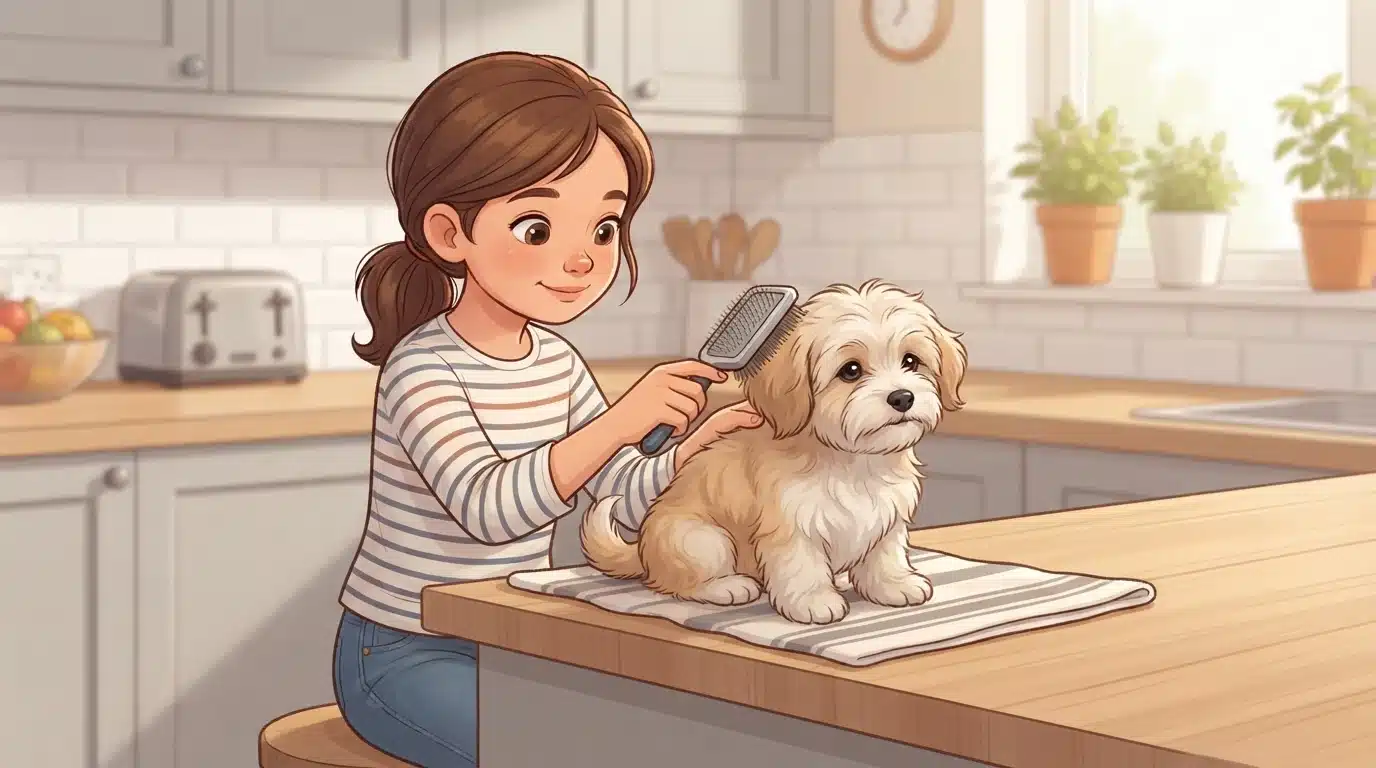
A puppy coat mats more slowly than an adult coat, which gives you a grace period. Use it. Brush for two or three minutes each day with a slicker brush, then reward. Focus on the armpits, behind the ears and the belly, where mats form first. Short, calm sessions build a dog who sits still for life. Families who want a deeper walkthrough can follow our puppy grooming guide for first-time owners.
Tear Stains, Eyes and Face Care
Light-colored Havanese often show reddish tear stains under the eyes. Wipe the area daily with a damp, soft cloth, and keep the face hair trimmed short so tears drain instead of soaking in. Persistent staining can signal blocked tear ducts or irritation, so mention it at your vet visit rather than only scrubbing the symptom.
Baths, Nails and Weekly Handling
Bathe your puppy every 3 to 4 weeks, rinse thoroughly, and blow dry on low heat while brushing to prevent mats. Trim nails every couple of weeks, and handle paws, ears, teeth and the tail daily in tiny doses. This quiet handling practice matters more than any single groom; a puppy used to touch accepts vet exams, nail trims and brushing without a fight.
Training, Socialization and Being Alone Comfortably
A big part of raising a Havanese puppy at home is teaching three things early: that training is fun, that new things are safe, and that short stretches alone are nothing to worry about.
Reward-Based Basics in the First Month
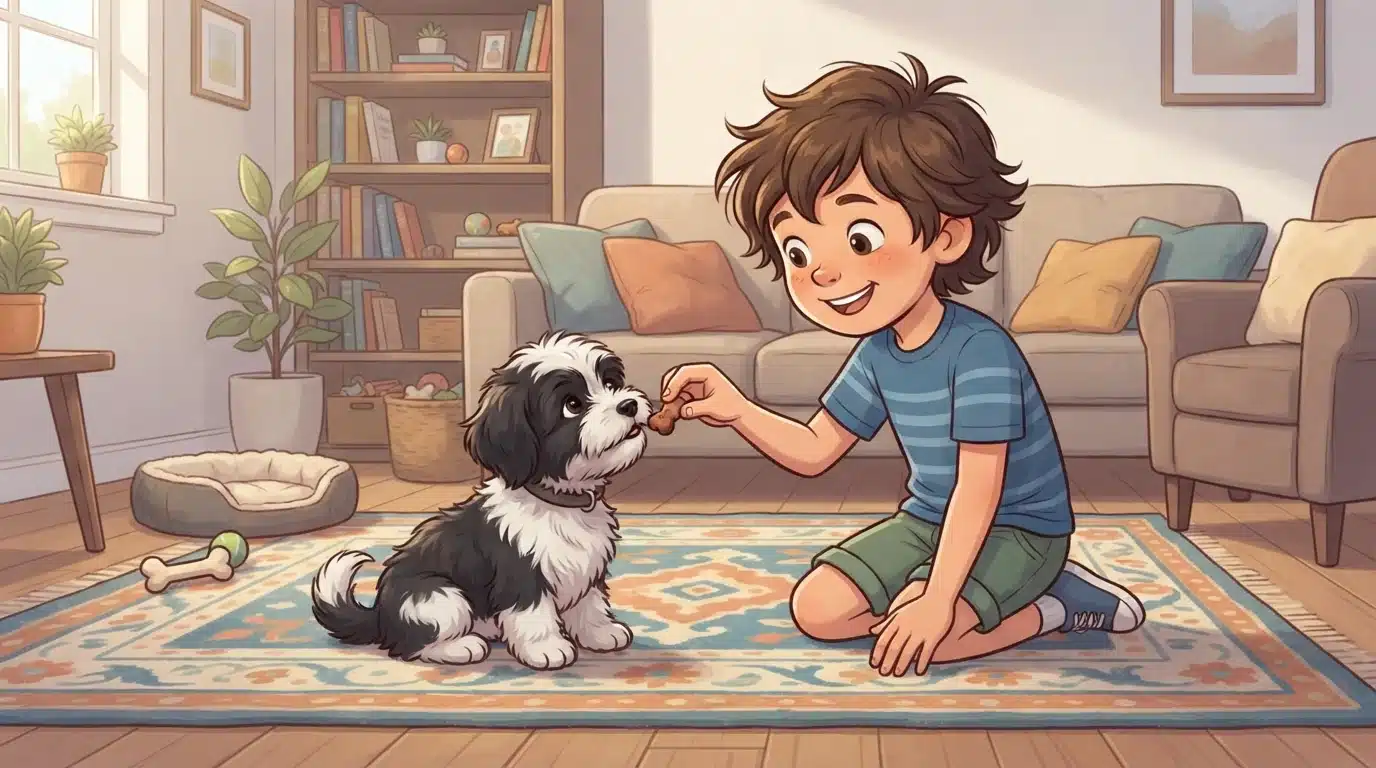
Use treats and praise, not corrections. The American Veterinary Society of Animal Behaviorists recommends reward-based training for all dogs because it works and avoids fear according to its humane training position statement. Keep sessions to two or three minutes, several times a day, and end on a win.
Start with name recognition, a hand-target touch, sit, and recall. Havanese are bright and eager to please, so they pick these up fast when the payoff is good. Mark the exact moment your puppy does the right thing, then reward. If something goes wrong, simply set the puppy up to succeed next time instead of scolding.
Socialization That Is Calm, Not Overwhelming
Socialization means positive exposure to people, sounds, surfaces, and handling, not meeting everything at once. The first three months matter most, and the AVSAB encourages taking every safe opportunity to socialize before classes and outings are fully safe.
Let your puppy watch traffic from your arms, walk on different floor textures, and hear the vacuum from a distance. Watch body language: a loose, wiggly puppy is learning; a tucked tail means back up and go slower. Keep every first encounter short and pleasant.
Building Up Alone Time Gently
Start with one to two minutes in a pen or crate while you stay in the room. Gradually stretch it, varying the length so it feels predictable but not fixed. Give a stuffed chew before you leave and stay matter-of-fact. If your puppy cries, return before panic sets in and try a shorter step.
Sleep, Chewing and Safe Exploration
Sleep Needs and Nap Roughliness
A Havanese puppy sleeps 18 to 20 hours a day, so part of raising a Havanese puppy at home is protecting naps. Puppies get cranky and bite more when they’re overtired. Set up a crate or quiet corner in a lived-in room, and follow a simple loop: potty, play, potty, nap. Wake a sleeping puppy for a potty break before bedtime only if needed.
Chewing, Teething and Safe Toys
Teething peaks between 12 and 20 weeks, when adult teeth push out the baby teeth. Give frozen washcloths, rubber toys and soft rope toys to ease sore gums, and swap items before they shred. If your puppy chews a shoe, redirect to a toy instead of scolding. Rotate a few toys weekly so old ones feel new again.
Everyday Household Hazards
Puppy-proof one room at a time. Tuck cords, lift plants like pothos, and secure trash and toilet lids. Keep grapes, chocolate, xylitol gum and human medications in closed cabinets, since even small breeds can reach a low shelf. Watch floor level first, then work upward as your puppy grows.
Health, Vet Visits and What To Watch For
A big part of raising a Havanese puppy at home is knowing when something is normal and when it is not. Most issues are minor, but small breeds hide illness well, so quick action matters.
The First Vet Visit and Records to Bring
Book a checkup within a few days of bringing your puppy home. Bring the health record your breeder gave you, including vaccination dates, deworming history and any vet notes. Puppies usually start core vaccines at 6 to 8 weeks, with the final round at 16 weeks or older, according to the AVMA. Your vet will plan the rest of the series, check the heart, knees and eyes, and set a weight baseline.
Signs That Deserve a Prompt Vet Call
Call your vet the same day for vomiting that lasts more than a few hours, diarrhea with blood, refusal to eat for a full day, or a puppy that seems listless. Toy breeds can have low blood sugar, so wobbliness or collapse is urgent. Also report a persistent cough, straining to potty, or limping, since small breed knees can slip out of place.
Ongoing Care: Teeth, Weight and Parasites
Brush your puppy’s teeth several times a week, keep treats under 10 percent of daily calories, and weigh her monthly. Ask your vet about year-round heartworm and flea prevention, plus fecal checks.
Your First Month at Home, Day by Day
How a Typical Day Fits Together
Raising a Havanese puppy at home works best on a steady loop: potty on waking, then food, then another potty trip, then a short play or training session, then a crate nap. Her 18 to 20 hours of daily sleep are the anchor, so plan each awake stretch around a potty break, a small activity, and rest. Keep meals and naps at roughly the same times every day, and evenings calm. Follow the same loop on weekends, even when the routine feels repetitive. Predictability is what settles a puppy.
Tracking Progress Without Numbers and Promises
Skip rigid milestones. Instead, jot a quick note each week: fewer accidents, longer naps, softer mouthing, a sit offered without a lure. If a week goes sideways, it usually means a nap got skipped or a visitor overwhelmed her, not that training failed. Raising a Havanese puppy at home rewards patience over deadlines, so compare her to last week, never to another puppy.

Raising a Havanese puppy at home goes smoother when the right puppy is matched to your family from the start. Sage Puppies pairs careful breeding with honest guidance before and after you bring her home. Visit Sage Puppies to start the application and meet your Havanese, Havapoo, or Cavapoo.
Frequently Asked Questions
Q1: What should I prepare before bringing a Havanese puppy home?
Set up one safe base area with a crate, washable bed, water, and a few toys. Buy puppy food matching your breeder’s feeding plan, plus a flat collar, ID tag, and bowls.
Q2: How do you potty train a Havanese puppy?
Take her out after waking, eating, and playing, using the same door and spot. Reward success within seconds. Raising a Havanese puppy at home means expecting accidents for weeks, so stay patient.
Q3: How often should you feed a Havanese puppy?
Three to four meals daily until four months, then three, dropping to two by six months. Follow the bag’s portion chart and weigh her every week or two.
Q4: How long can a Havanese puppy be left alone?
Start with one to two minutes in a crate or pen and stretch slowly. Adult Havanese should not wait a full workday without a potty break.
Q5: When should I start grooming my Havanese puppy?
Immediately, in tiny doses. Brush two or three minutes daily, trim nails every couple of weeks, and handle paws, ears, and teeth each day so grooming feels normal.
Q6: How much sleep does a Havanese puppy need?
About 18 to 20 hours a day. Protect naps in a quiet corner, since overtired puppies bite more and settle worse.
Conclusion
Raising a Havanese puppy at home comes down to routines, not deadlines. Set up one safe base area before pickup, keep meals and potty trips on a steady rhythm, and start grooming and handling in tiny daily doses. Train with treats and praise, build alone time slowly, and protect those 18 to 20 hours of sleep. Watch for real warning signs, skip rigid milestones, and compare your puppy to last week instead of other dogs. Do the groundwork early and raising a Havanese puppy at home becomes less about fixing problems and more about watching a calm, happy little dog settle into your family for good.