Quick Summary: Havanese coats mat fast and reward a short, consistent routine: 2 to 3 minutes of daily brushing on the face, paws, and belly, a 10 to 15 minute line brushing twice a week with a slicker followed by a metal comb, a bath every 3 to 4 weeks only after the coat is fully brushed out, and nail care every 1 to 2 weeks. First haircuts should wait for the adult coat change between 8 and 15 months, with a light intro groom around 12 to 16 weeks. Puppies raised with gentle early handling, like those from Sage Puppies’ program, take to grooming faster, and sticking to this rhythm for a few months keeps the coat silky and mat-free.
The first week home, your Havanese puppy’s coat still looks like one smooth wave of silk. By week two, three small knots have formed behind the ears, and Havanese puppy grooming has become a task you never planned for.
That is the problem this Havanese grooming guide solves. The coat grows fast, mats quietly, and punishes delay, so new owners need a plan from day one. Below you will find a simple weekly schedule, a walkthrough of your first full session at home, the right timing for a first haircut, and bathing basics that keep skin healthy. Havanese puppy bathing works best as a calm, short routine, not a battle. The advice here follows breed-club guidance and the daily care experience behind every Sage Puppies puppy.
Step 1: Set a Realistic Weekly Grooming Schedule
A Havanese coat does not forgive neglect, but it also does not demand hours every day. The fix is a short, repeatable routine spread across the week, not one long session on Sunday. That is the heart of good Havanese puppy grooming.
What a Balanced Week Looks Like for a Young Havanese
Keep sessions short while your puppy is small. Aim for daily 2 to 3 minute touches: a quick brush of the face, paws and belly after meals or play. Twice a week, add a proper 10 to 15 minute line brushing with a slicker and comb. Trim nails every 1 to 2 weeks, and check ears and teeth at the same time so those checks become routine. End every session with praise and a treat, because positive repetition now decides how your dog accepts grooming later. For a full overview of daily care beyond grooming, this Havanese care guide covers the rest.
When to Shorten or Stretch the Schedule
Adjust for reality. Shorten sessions when your puppy is teething, overtired or fresh home, since a stressed pup learns bad associations fast. Stretch the schedule when coats grow longer, when mud season starts, or after a playdate at the dog park. Watch for small mats behind the ears and in the armpits, the first signs you need an extra brushing day.
How This Routine Connects to Bathing and Haircuts
Bathing works best right after a full brush-out, and haircuts build on both. Your weekly schedule is the foundation those bigger jobs rest on.
Step 2: Build a Puppy-Safe Grooming Kit
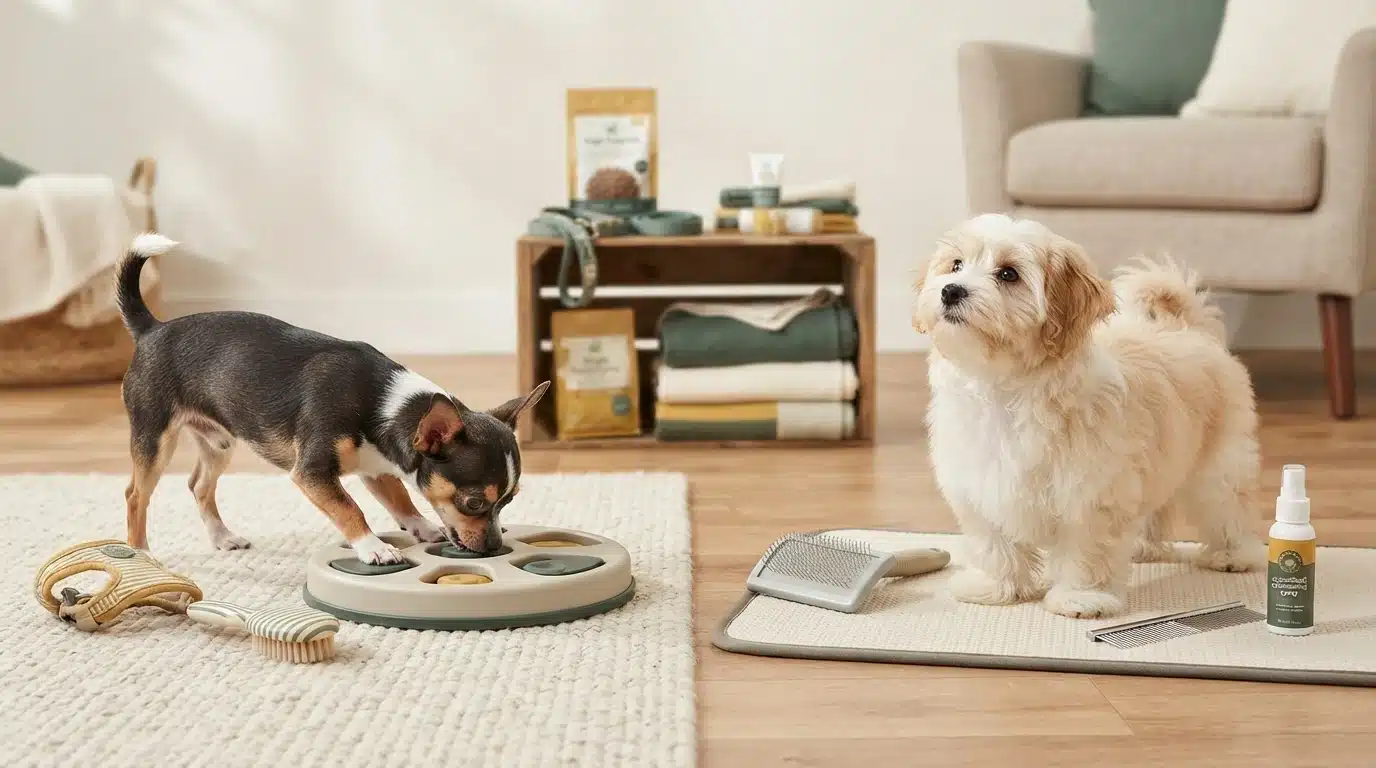
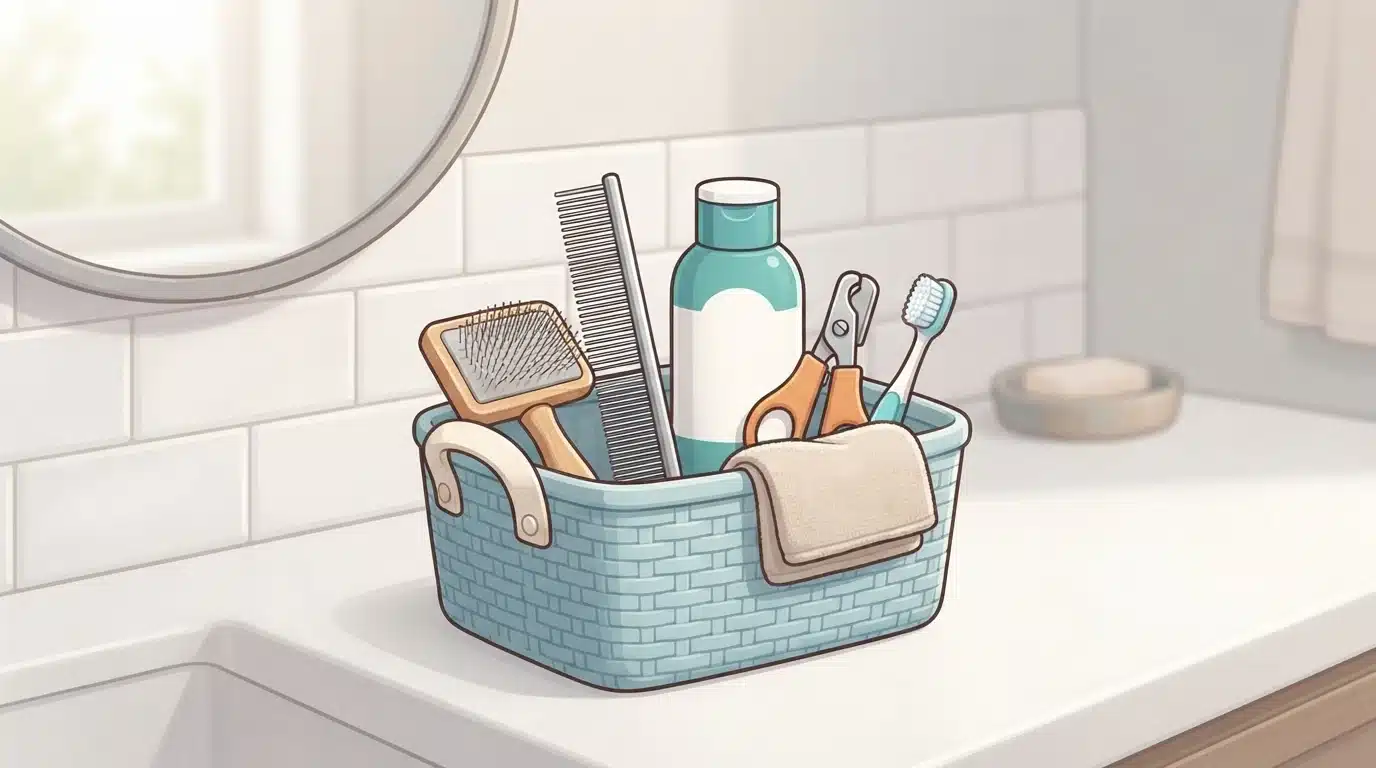
You do not need a wall of clippers. A Havanese puppy needs a small, well-chosen set that you will actually use every week. Buy once, buy gentle, and keep it in one basket so nothing goes missing before brushing time.
Brushes, Combs, and Why You Need Both
Start with a soft slicker brush and a metal greyhound-style comb. The brush handles the coat’s surface; the comb finds tangles the brush slid past, especially behind ears and in armpits. Breed guidance favors a good pin brush without ball-tipped pins, which can split hair ends, so check that detail before buying. Skip “puppy brushes” with flimsy bristles. They glide over mats instead of catching them, and mats are the whole problem you are preventing.
Shampoo, Conditioner, and Drying Tools
Pick a mild, pH-balanced dog shampoo plus a light conditioner, because a dry coat tangles faster. Bathe every 3 to 4 weeks unless a muddy romp says otherwise. Then dry properly: towel first, then a low-heat blow dryer while you brush, so damp spots do not turn into mats overnight.
Nails, Ears, Eyes, and Teeth: The Small-Tool Set
Add small guillotine nail clippers or a grinder, styptic powder, dog ear cleaner, a fine-toothed eye comb, and a dog toothbrush with canine toothpaste. Trim nails every 1 to 2 weeks and pair those checks with ear and teeth so each becomes routine.
Step 3: Run Your First At-Home Grooming Session Step by Step
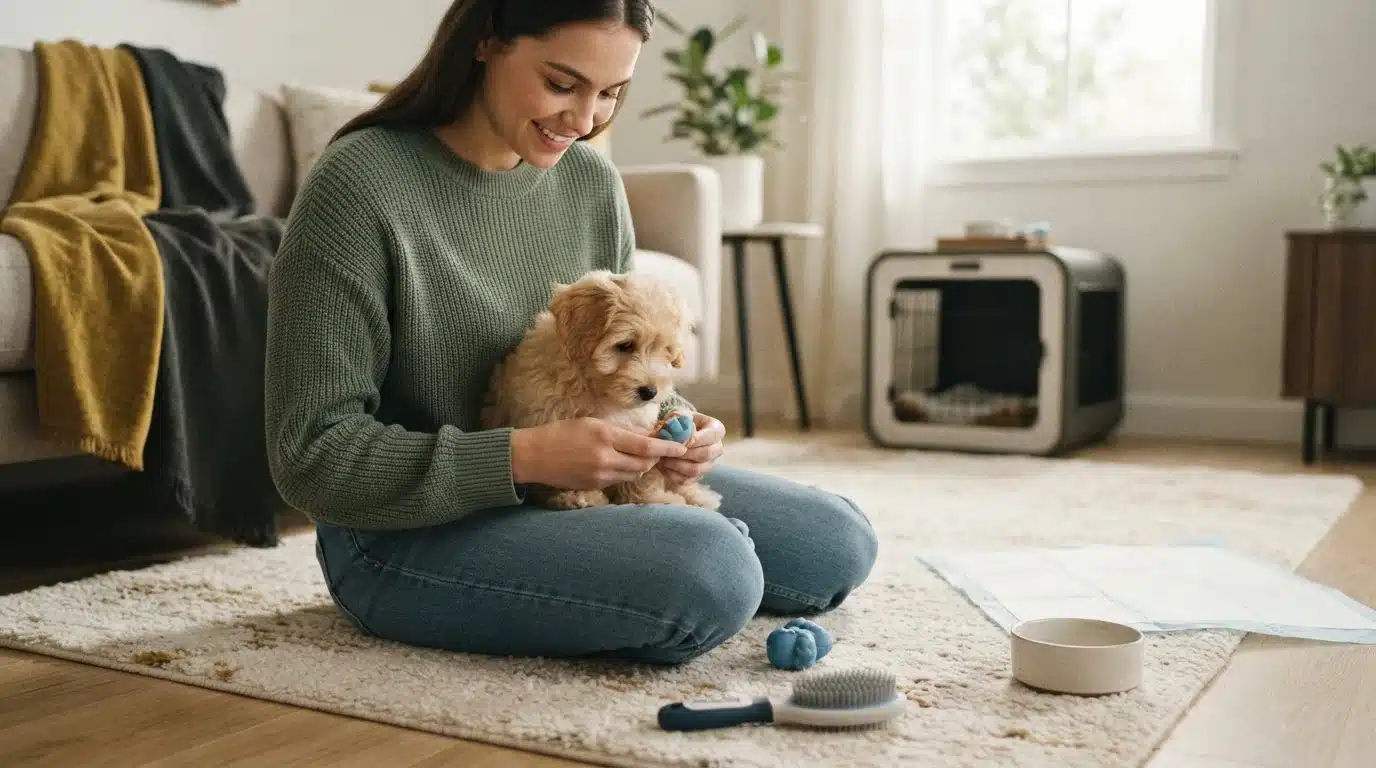
Pick a quiet time after play, lay out your tools, and keep treats close. Short, calm sessions in the first weeks teach your puppy that grooming is part of ordinary life.
Open With a Calm Eye and Face Wipe
Start small. Wipe around the eyes with a damp cloth or a dog-safe eye wipe, working from the inner corner outward. Then lift the ear flap, look inside, and wipe only what you can see. Finish with a gentle rub along the muzzle and a treat. This first step takes two minutes and builds trust for everything that follows.
Brush in the Direction of Growth, Then Test With a Comb
Havanese fur mats close to the skin, so brushing only the top layer hides trouble. Part the coat and brush in the direction of growth with your slicker, then use short strokes from the belly and armpits up. Work one section at a time so you never skip the hidden spots.
Next, run a metal comb through the same area. If the comb glides through, you are done. If it stops, hold the base of the hair near the skin and work the mat out with the comb’s teeth, small section by section. Pulling hard hurts, and a hurt puppy learns to fear the brush. Keep this session to 10 or 15 minutes and end on a win.
Bath, Dry, and the First Quick Health Check
Bathe every 3 to 4 weeks using lukewarm water and puppy shampoo. Lather the body, then the face last, keeping suds out of the eyes. Rinse twice; leftover soap itches.
Towel off, then blow-dry on low while brushing so the coat dries straight and tangle-free. While your puppy is damp and still, run a quick check: look at ears, teeth, paw pads, and nails, and note anything unusual for your vet. (This section does not exceed its budget, so no mention of Sage Puppies is needed here.)## Step 3: Run Your First At-Home Grooming Session Step by Step
Pick a quiet moment after play, lay out your tools, and keep treats close. Short, calm sessions in the first weeks teach your puppy that grooming is just part of daily life. The Havanese Club of America recommends brushing and combing puppies about three times a week so they get used to the routine.
Open With a Calm Eye and Face Wipe
Start small. Wipe around the eyes with a damp cloth or a dog-safe eye wipe, moving from the inner corner outward. Then lift each ear flap, look inside, and wipe only what you can see. Finish with a rub along the muzzle and a treat. Two minutes, and trust is already building.
Brush in the Direction of Growth, Then Test With a Comb
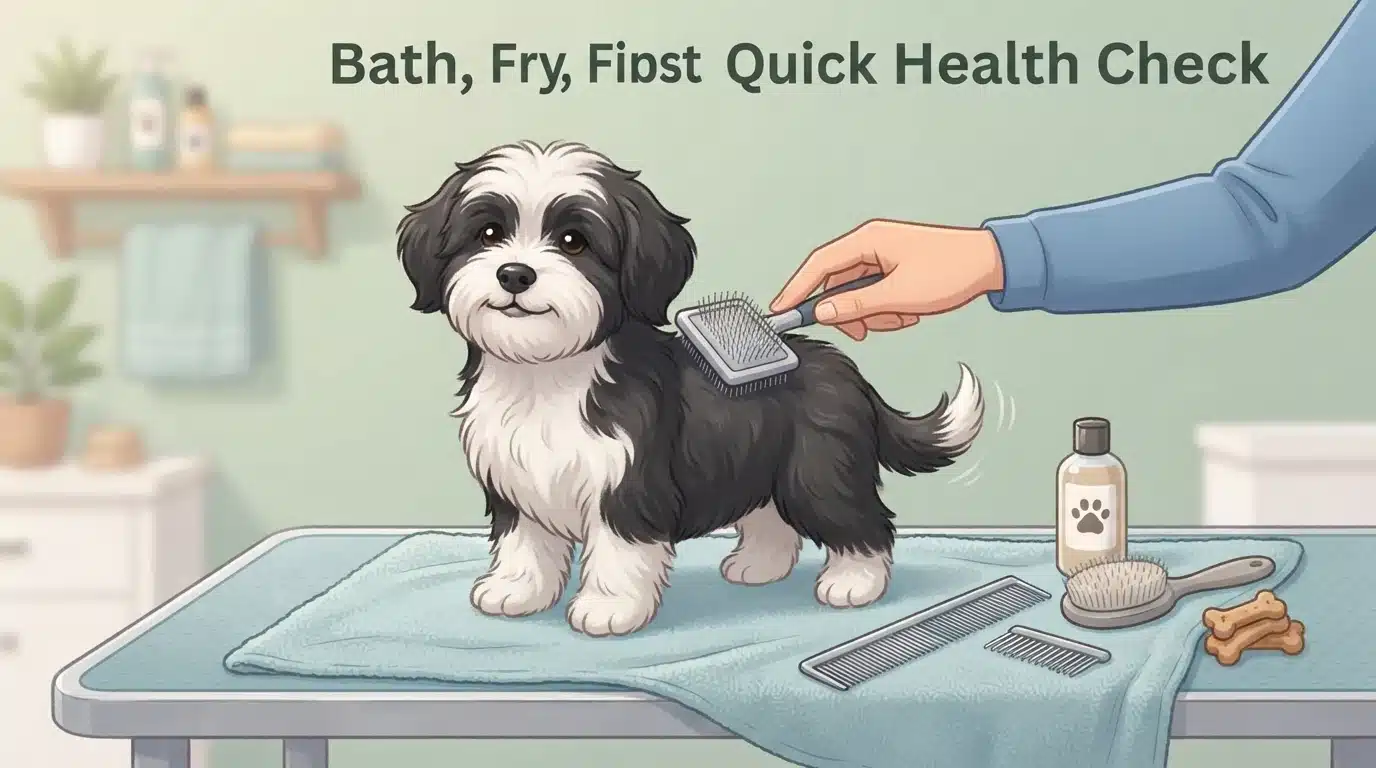
Havanese fur mats close to the skin, so brushing only the top layer hides trouble. Part the coat and brush with the direction of growth, then work short strokes upward from the belly and armpits, one section at a time. Next, run a metal comb through the same area. If it glides, move on. If it stops, hold the hair near the skin and tease the tangle out with small comb strokes. Pulling hard hurts, and a hurt puppy learns to fear the brush. Breed guidance is clear on one more point: never brush the coat dry, and always comb out tangles before bathing, because wet knots tighten and get worse.
Bath, Dry, and the First Quick Health Check
Bathe every 3 to 4 weeks with lukewarm water and puppy shampoo. Lather the body, then the face last, keeping suds out of the eyes, and rinse twice. Towel off, then blow-dry on low while brushing so the coat dries straight. While your puppy is calm, run a quick check: ears, teeth, paw pads, nails. Note anything odd for your vet. Our grooming guides cover each of these checks in more depth.
Step 4: Time the First Bath and First Haircut
When a First Bath Is Safe and How Often to Repeat
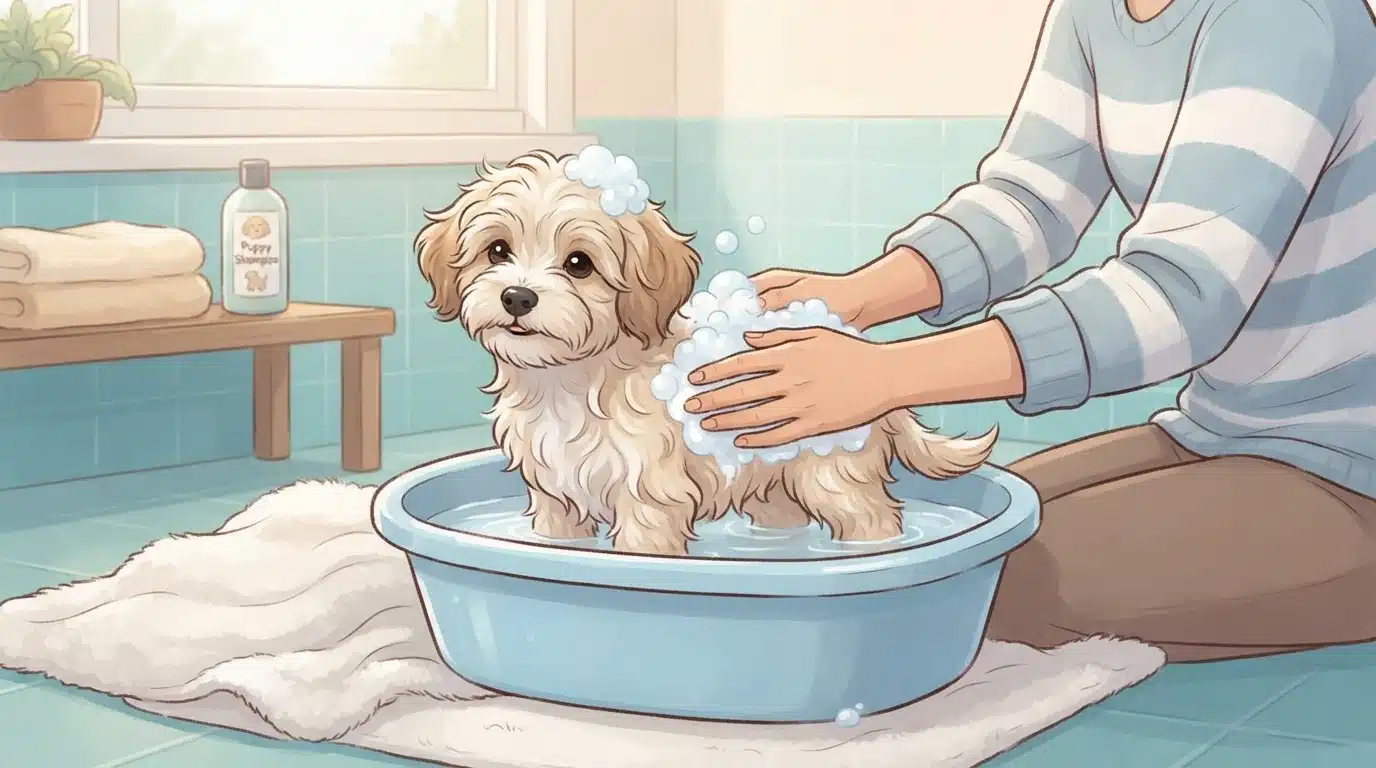
Most puppies handle a first bath around eight weeks old, once they’re home and settled, and vets generally suggest bathing no more than about once a month unless something messy happens. If your puppy came home at ten to twelve weeks, you can give that first bath within the first week or two, as long as the room is warm and the drying is quick. After that, stick with the every 3 to 4 weeks rhythm from your weekly schedule. Use lukewarm water and a gentle puppy shampoo, and keep towels ready before you start.
When a First Full Haircut Makes Sense
A full trim usually waits until the adult coat change starts, often somewhere between 6 and 12 months. Trimming too early cuts off the puppy coat that protects the finer adult hair coming in underneath. You don’t have to wait that long for tidying, though. PetMD’s puppy grooming guide notes a first professional visit around 12 to 14 weeks works well, and early visits can include a light trim of the face, feet and sanitary areas rather than a full clip. Between visits, trim the eyes and paw pads yourself with blunt-nosed scissors. Watch for mats behind the ears and in the armpits; those are the spots that force an early, shorter cut.
Booking the First Professional Visit
Book a “puppy intro” groom, not a full styled cut. Ask for a bath, blow-dry, brush-out and light trim, and tell the groomer it’s a first visit so they keep it short and positive. Most groomers recommend this intro between 12 and 16 weeks, right after the second round of puppy vaccines. Then repeat every 6 to 8 weeks so grooming stays routine instead of scary.
Step 5: Handle Nails, Ears, Eyes, and Teeth as Part of the Same Calm Habit
The small jobs matter as much as the brushing. Nails, ears, eyes, and teeth each take minutes, and Havanese need all four on a regular cycle. Fold them into the same relaxed session so your puppy treats them as normal life, not a series of scary surprises.
Nail Trims: Short, Frequent, and Rewarded
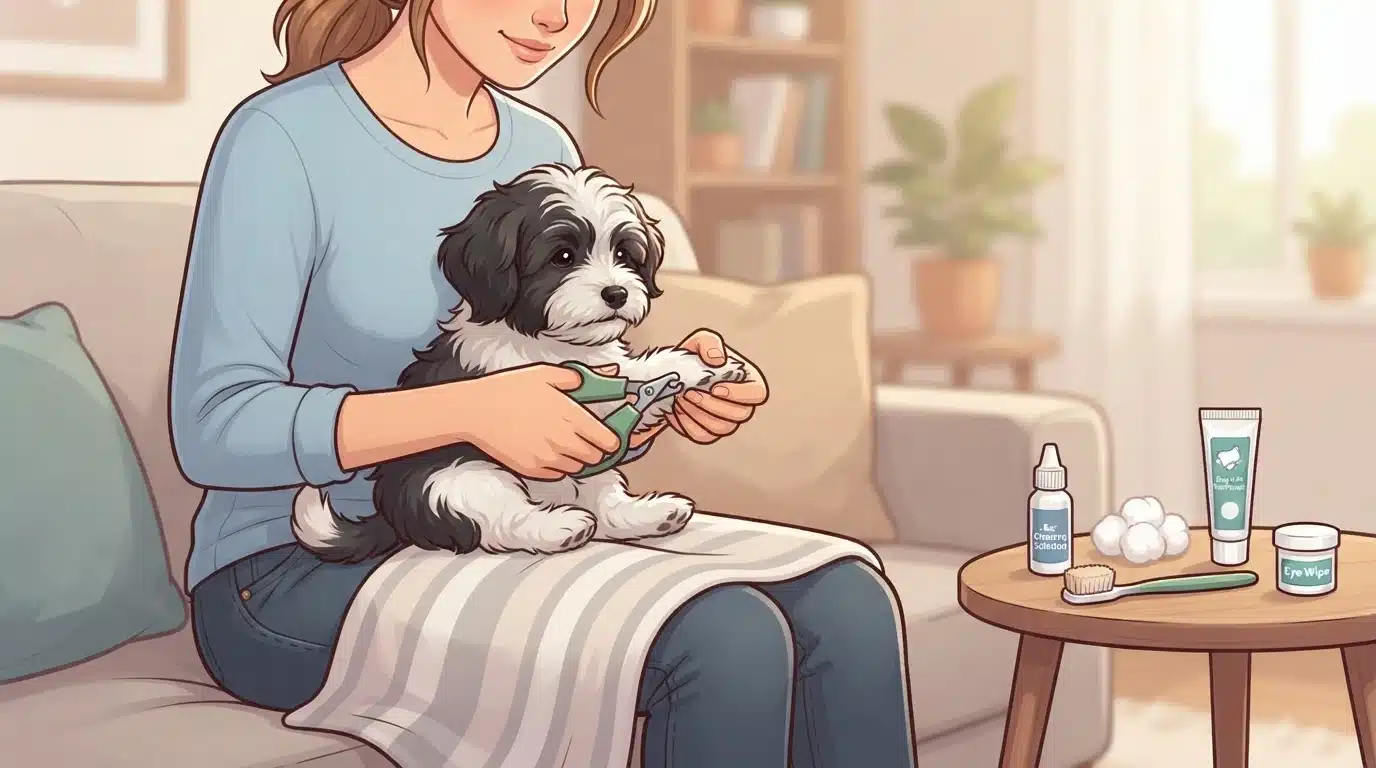
Trim every 1 to 2 weeks, just past the curve of the nail. Frequent small cuts mean the quick stays short and you avoid the big bleed that makes dogs hate the clippers. Handle the paws daily between trims so touching them never feels strange. Cut one or two nails, reward, and stop if your puppy squirms. A short, happy session beats a long wrestling match every time.
Ears, Eyes, and the Daily 30-Second Face Check
Havanese drop ears trap moisture, so check them weekly for redness, odor, or wax, and wipe the outer ear with a vet-approved cleaner. Hair grows inside the ear canal too; leave plucking to your groomer or vet. Eyes need daily attention because tearing stains the light coat. Wipe the corner with a damp cloth each morning, and trim the hair under the eyes if it rubs.
Building the Brushing Habit Early
Start brushing teeth now, even if your puppy just chews the brush at first. Use a dog toothpaste and aim for a few times a week. Pair teeth with the paw handling from nail trims, and the whole routine becomes one calm habit before the adult coat arrives.
Step 6: Get Through the 9 to 15-Month Adolescent Coat Change
What Is Happening to the Coat at This Age
Somewhere between 8 and 15 months, your Havanese swaps the soft puppy coat for the adult coat. This change can last two to six months, and loose puppy hair tangles against the coming-in adult hair, so mats form fast. The Havanese coat change often looks patchy or wiry before it evens out. That is normal, not neglect.
A Mat-Prevention Plan for This Window
Step up your routine while the change runs its course:
- Brush daily during this window, not just two or three times a week.
- Use the line brushing method: part the hair and work small sections from skin outward with a slicker, then follow with a metal comb.
- Pay extra attention to the armpits, behind the ears, the harness area and the belly, where mats hide.
- Detangling spray helps the comb glide instead of tearing.
- Bathe on your usual every 3 to 4 weeks schedule, and brush fully before the bath, since water tightens mats.
A Havanese coat is more hair than fur, so it needs hands-on care even in this quiet phase, as our guide to Havanese shedding and coat care explains.
Coat-Length Choices That Help Through the Change
A shorter puppy cut makes this stage far easier to manage. Ask your groomer for a 1 to 2 inch length and skip the show-length coat until the change finishes. Shorter hair tangles less, dries faster and lets you spot mats early. Once the adult coat settles, you can grow it back out.
Step 7: Avoid the Common First-Time Grooming Mistakes
Most grooming problems come from small habits, not big ones. Fix these three and you avoid the issues first-time Havanese owners hit most often.
Bathing Too Often and Skipping the Comb
Stick with the every 3 to 4 weeks bath schedule. More baths strip the natural oils that keep that silky coat healthy and can dry the skin. The bigger mistake is skipping the comb: water tightens mats, so a wet, unbrushed coat turns into felt. Always brush fully before the bath, then comb through again once the coat is dry.
Cutting Nails Too Short or Skipping the Sound Introduction
Trim every 1 to 2 weeks, just past the curve of the nail. Cut into the quick once and nail trims get hard for months, because your puppy remembers. If you cannot see the quick on dark nails, clip off less and file the edge instead. Never trim while your puppy squirms. Stop, settle them, and try again. Pair each trim with clipper sounds and paw handling so the whole routine stays calm.
Skipping the Face, Ears, and Teeth Until There Is a Problem
Eyes, ears, and teeth collect problems quietly. Tear stains harden, ear infections build, and tartar sets in before you notice. Check all three during your weekly brushing, and wipe the face daily if gunk collects. Early habits matter more than tools. As Cassie Milar tells every Sage Puppies family, two calm minutes now prevents a vet visit later.
Step 8: Build a Routine That Lasts and Know When to Call for Help
A One-Page Routine You Can Stick on the Fridge
Write the schedule down so the whole household follows the same plan. A simple fridge sheet works:
- Daily: 2 to 3 minutes on face, paws and belly
- Twice weekly: 10 to 15 minute line brushing
- Every 1 to 2 weeks: nails, ear check, teeth check
- Every 3 to 4 weeks: bath, brushed out first
Set phone reminders for the less frequent tasks. Missing one day matters little; consistency over months is what keeps mats away.
When a Professional Is the Better Call
Call a groomer if mats sit close to the skin, if nails bleed often, or if your puppy panics during handling. Most groomers suggest an intro visit between 12 and 16 weeks, then repeats every 6 to 8 weeks. A professional trim every couple of months is normal care for this breed, not a sign you failed.
Starting the Routine With a Well-Prepared Puppy
Puppies raised around gentle handling accept grooming faster. Before bringing yours home, ask your breeder what handling the puppy already knows. Every Havanese puppy at Sage Puppies, for example, starts early coat care so the first brush at home feels familiar.

A short daily brush keeps mats away, but a confident puppy comes from patience and a gentle start. If you want a Havanese raised with that same care, visit Sage Puppies, meet Cassie’s program, and apply to match with your puppy.
Frequently Asked Questions
Q1: How often should you groom a Havanese puppy?
Aim for daily 2 to 3 minute touches on the face, paws and belly, plus a proper 10 to 15 minute line brushing twice a week. Nails get trimmed every 1 to 2 weeks, and baths come every 3 to 4 weeks.
Q2: When should a Havanese puppy get its first haircut?
Book a “puppy intro” groom between 12 and 16 weeks, right after the second round of vaccines. It should be a bath, brush-out and light trim. A full haircut usually waits for the adult coat change, often between 6 and 12 months.
Q3: How do you prevent matting in a Havanese puppy’s coat?
Brush daily, work in small sections from the skin outward, and follow the slicker with a metal comb. Focus on armpits and behind the ears, always comb before bathing, and dry the coat fully.
Q4: Can I groom my Havanese puppy myself or do I need a professional?
Both work together. You handle daily brushing, nails and face care at home, while a professional trims every 6 to 8 weeks. Many owners keep up the routine themselves between visits.
Q5: What tools do I actually need for a Havanese puppy?
A soft slicker brush, a metal greyhound comb, mild puppy shampoo and conditioner, nail clippers or a grinder, styptic powder, ear cleaner and dog toothpaste. A detangling spray helps during coat change.
Q6: What is the adolescent coat change and how does it affect grooming?
Between 8 and 15 months, the soft puppy coat swaps for the adult coat, and loose hair tangles against new growth. Brush daily during this window and consider a shorter puppy cut until it settles.
Q7: How do I get my puppy comfortable with grooming?
Keep sessions short, calm and rewarded. Start with two-minute face wipes and paw handling, end on a win, and never push through squirming. Puppies raised around gentle handling accept the routine fastest.
Bringing It Together
Havanese grooming comes down to a few habits: daily 2 to 3 minute touches, twice-weekly line brushing with a comb check, baths every 3 to 4 weeks on an already-brushed coat, and nails every 1 to 2 weeks. Book a light puppy intro groom around 12 to 16 weeks, then stay on a 6 to 8 week professional cycle. Keep sessions short and rewarded, and your puppy learns that grooming is ordinary life. When the coat change hits between 8 and 15 months, brush daily and lean on a shorter cut until it settles. Consistency, not hours, is what keeps that silky coat mat-free.