Quick Summary: Finding an ethical breeder comes down to verification, not luck. Start by defining what your family actually needs, then screen out sellers who use urgency, cash-only payment demands, or refuse visits or video calls. Verify each parent’s health testing on the OFA database by registered name, ask questions that prompt them to interview you back, and read the contract carefully before sending any money. Programs like Sage Puppies in South Jordan, Utah, which raise Havanese, Havapoo, and Cavapoo litters in a home setting and welcome health record checks, fit the standard this checklist sets.
You spend ten minutes scrolling local listings and three hours wondering which breeder to trust. Every site claims to raise happy, healthy puppies, so the words stop meaning anything. The good news: the right questions, asked in the right order, help you find ethical breeder candidates and rule out the rest in under a week.
This Havanese breeder guide works for any small breed. It shows you how to verify health testing, read a contract before you sign, and avoid puppy mills that hide behind polished websites. The same checklist applies whether you are comparing programs in Utah or nationwide. Use it, and the decision stops feeling like a gamble.
Step 1: Set a Clear Picture of the Right Breeder for Your Family
Before you find ethical breeder options to contact, define what you are actually looking for. Vague hopes like “healthy and friendly” let clever marketing fill in the blanks. A clear picture makes every later step easier, because you will know instantly which programs match your family and which are just good at selling.
What ‘Ethical’ Actually Means in 2026
An ethical breeder puts health, temperament, and honest communication above speed and volume. In practice, that means health testing the parent dogs and sharing results, raising puppies inside a home rather than a kennel row, and matching puppies to buyers instead of selling to whoever pays first. The AKC lists health screenings, transparency, and lifelong breeder support as core signs of a responsible program. The ASPCA adds that good breeders invite visits and give a full history of every dog.
Watch for the opposite, too. A 2024 review in Veterinary Record warns that breeding for looks and trends, rather than health and behavior, drives real welfare problems in popular small breeds.

Write Your Three-Buyer-Requirements List
Grab a notepad and write three requirements before you browse a single puppy listing. Keep them specific: “Havanese raised indoors with daily handling,” “parents tested for eye and knee conditions,” or “local pickup in Utah.” Most ethical small-breed programs, including Sage Puppies, welcome questions like these because serious buyers make better owners. Your list becomes the filter that helps you find ethical breeder candidates worth a deeper look, and the ones who dodge clear answers take themselves off it. When you are ready to compare programs, our Havanese breeder verification guide walks through what to check next.
Step 2: Spot the Red Flags Before You Reach Out
Most problem breeders show their hand before you ever send a message. Scammers push for fast payment, and careless breeders hide how the puppies are raised. The AKC’s scam guide lists the classics: no phone calls, copycat photos, and sellers who always have a puppy ready to ship.
Pressure, Secrecy, and Cash-Only Tactics
Urgency is the loudest warning. A seller who demands a deposit today, refuses a video call, or claims another family is “about to pay” is rushing you past the questions that matter. Be equally wary of cash-only or gift-card payment requests, since those methods leave you no way to recover money if the puppy never arrives. Also watch for secrecy: excuses about why you cannot visit, meet the mother, or see where the dogs live. Legitimate breeders welcome questions and usually screen buyers too, so a seller who asks nothing about your home is a concern. For a deeper look at deposit fraud, the signs of upfront payment scams apply no matter which state you buy from.
Website and Marketplace Listings Worth a Second Look
Some listings look fine at a glance but fall apart under scrutiny. Reverse-image-search the puppy photos, because scammers lift them from other litters. Check that the site lists a real breeder name, a physical location, and a working phone number. Bare classifieds with stock-style shots, prices far below breed norms, and instant shipping offers deserve a hard pass. A thoughtful listing, by contrast, names the parents, describes health testing, and explains how puppies are raised in the home, which is the standard honest programs meet.
Step 3: Read Health Testing Like a Buyer, Not a Vet School Student
You do not need a veterinary degree to judge a breeder’s health testing. You need to know which tests apply to each parent breed, then check that the results exist and are public.
What Testing the Parents Should Actually Have
Testing depends on breed, so start with the parent breed’s own requirements. For Havanese, the breed club’s CHIC program currently calls for annual eye exams, hip x-rays and patella (kneecap) certification. Screening checks for luxating patellas, a common small-dog knee problem, plus inherited eye disease and hip dysplasia.
For mixes, test both sides. A Havapoo’s parents are Havanese and Poodle, so each named parent should have screening relevant to its own breed, not one generic panel applied to every dog. DNA results matter too, but a DNA panel alone is not full screening. Ethical breeders pair genetic tests with physical exams of eyes, knees and hips.
One caution: a CHIC number documents that required screening was done and results were posted. It does not promise every result was normal, so read the actual results, not just the badge. The OFA’s CHIC program explains how these listings work.

How to Verify the Records Yourself
Ask for each parent’s registered name, then search it yourself on the OFA’s public database. Normal and abnormal results both appear there, which is exactly why good breeders use it.
Check three things on each result: the body part tested, the dog’s age at testing, and the outcome. Eye exams should be recent because they must be repeated yearly. Patella and hip scores matter less if the dog was very young when evaluated.
For a mixed litter, verify the dam and sire separately and by breed. If a record is missing, ask why. The breeder should give a plain answer, since an absent public listing is not proof of a failed test, but a vague one deserves your skepticism. Our guide to questions about health-tested puppy parents walks through what to ask next.
(~280 words)
Step 4: Run the Conversation and Home Tour
A breeder interview goes both ways. Good breeders screen you as hard as you screen them, so treat the first call as a real conversation, not a price check. The OFA’s breeder interview guide frames it well: ask why they breed, how long they have bred this breed, and how the parents compare to the breed standard.
Questions Worth Asking on the First Call
Keep the call focused. The AKC’s recommended questions start with the basics, and yours should too.
- Have both parents been health tested, and can you see the results?
- How many litters do you raise each year, and how many dogs live with you?
- How are puppies socialized before they go home?
- What happens if I can’t keep the puppy at any point in its life?
- Which vaccines and deworming will the puppy have before pickup?
- Can I speak with families who bought a puppy from a previous litter?
Then let the breeder ask about you: your work schedule, other pets, and plans for training. A short, one-sided call is a warning sign. So is any breeder who has a puppy ready today for anyone who pays.
Ask about health testing before price. Breeders who dodge records rarely improve on a second ask.

What a Good Home Tour Actually Looks Like
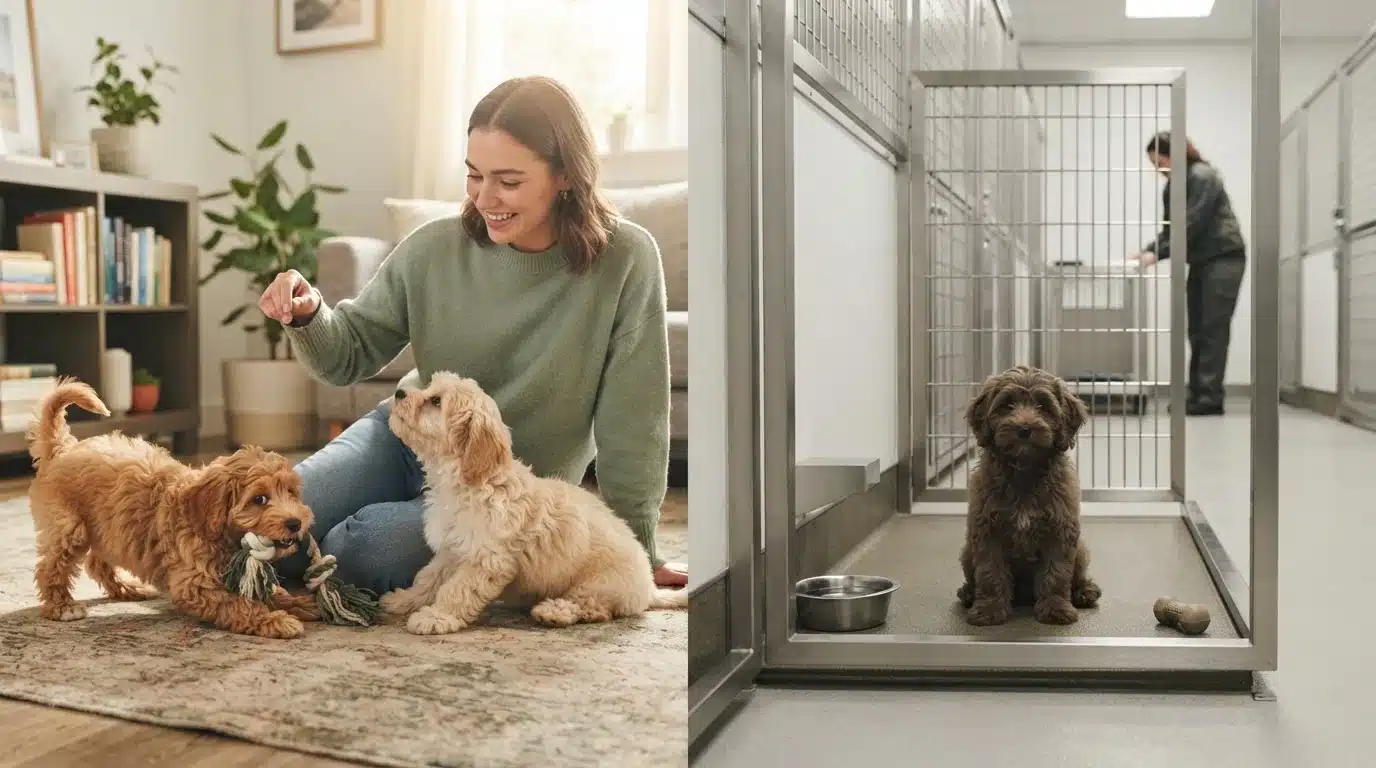
A home tour should show where puppies actually live, not a cleaned-up lobby. Expect to see the whelping and play areas, meet the mother dog, and watch how puppies react to people. The mother should be friendly and well kept, and the space should smell clean, with fresh water, bedding, and toys within reach.
Ask to see where puppies sleep, where they eat, and how they meet new sounds and surfaces. Good breeders explain their routine without hesitation because they live it daily. Many also offer video tours for out-of-state families, which work well when they walk the full space unedited. If visits are refused with no explanation, or you only ever see puppies in a parking lot, walk away. Breeders confident in their program, like Sage Puppies’ owner-managed setup in South Jordan, Utah, welcome the questions because the answers reflect the care they already give.
Step 5: Review the Contract, Guarantee, and Payment Terms
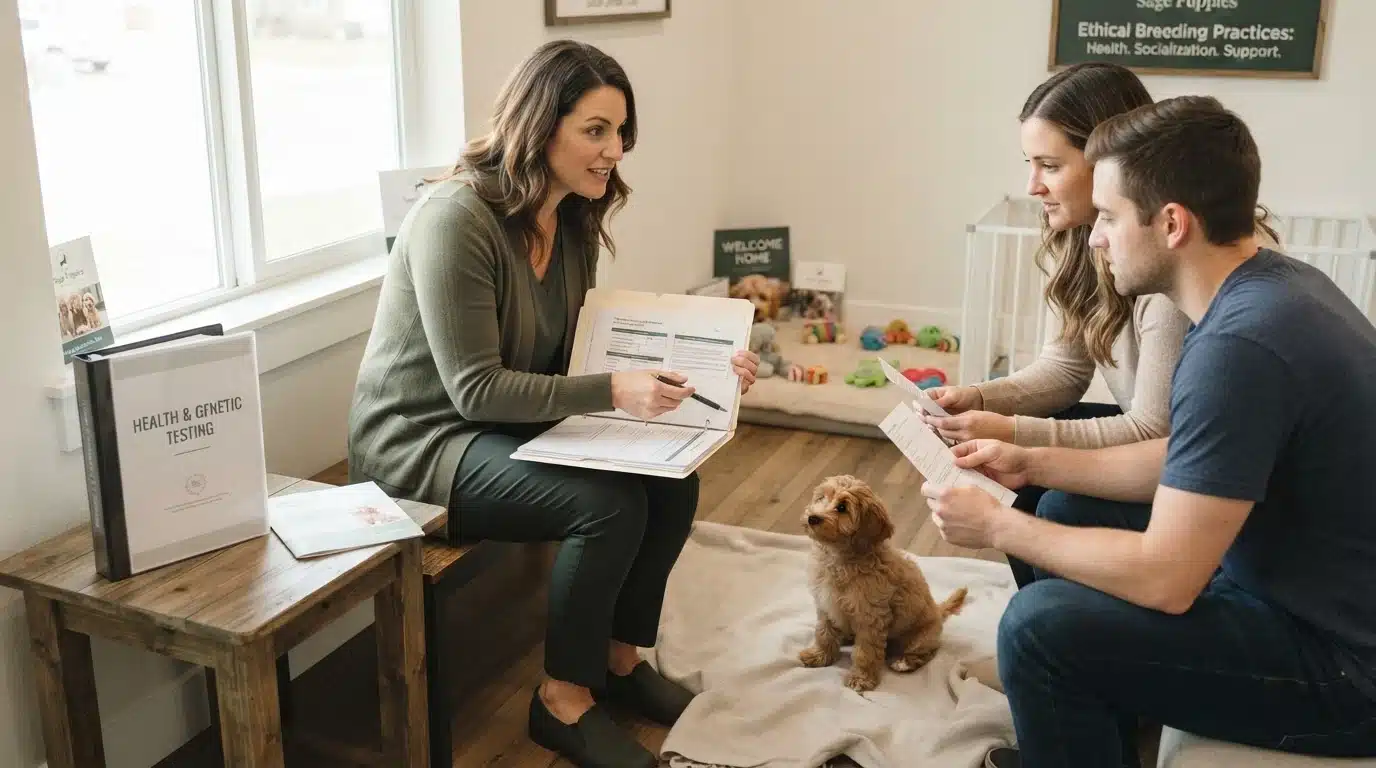
A good breeder puts the deal in writing. Before you send a deposit, ask for the full contract and read it slowly, ideally with a second pair of eyes.

Clauses Worth Reading Line by Line
Four clauses matter most. First, the health guarantee: look for a defined window, what it covers, and what proof it requires, such as a vet exam within a set number of days. Be wary of any breeder promising a “toddler-proof” or hypoallergenic dog, since no honest contract can promise that. Second, check the return clause. A responsible breeder will always take the dog back, at any age, rather than let it land in a shelter. Third, read the spay or neuter terms and any requirement to keep the breeder updated. Fourth, note what happens if a health issue appears before pickup. A clear, plain-language contract is itself a sign of an ethical program.
Pricing, Deposits, and Safe Payment
Ask what the deposit covers and whether it applies to the total price. At Sage Puppies, for example, puppies range from $3,500 to $4,500, and your contract should show the full amount up front with no surprise fees for delivery or paperwork. Pay by a traceable method such as a credit card, and avoid gift cards, wire transfers, or payment apps like Venmo, which scammers favor. The AKC warns that untraceable payments are a hallmark of puppy scams. Get every promise in the contract, because a verbal promise is worth nothing later.
Step 6: Vet Reviews, References, and the Wider Community
A breeder’s website tells you what they want you to believe. Other people tell you what actually happened. This step is about finding those people and weighing what they say.
Build Your Three-Source Verification
Ask any breeder for three types of contacts: past puppy families, their veterinarian, and a breed club or reference outside their own circle. A confident breeder hands these over quickly, because good news travels on its own. Then call at least two families and ask one question that matters most: “Would you buy from them again?” Also check whether the breeder is active with a breed club, since breed-specific organizations keep independent records of health testing you can confirm yourself. Small programs like Sage Puppies handle this naturally; a one-woman operation lives or dies by word of mouth.
Reading Reviews Without Getting Played
Reviews help, but treat them like any other claim. A wall of five-star ratings posted within a few weeks is a pattern, not proof. Look instead for reviews that name the puppy, the timeline, and the follow-up support, since vague praise is easy to fake. Guides on breeder red flags note that a refusal to share references is itself a warning sign. Search the breeder’s name plus “scam” or “complaint” before you send money.
Step 7: Prepare for Pickup, Delivery, and the First 30 Days
The last stretch starts before go-home day. A little planning makes the first weeks calmer for everyone.
Go-Home Day Checklist and Documents
Gather your documents first. You should leave with vaccination records, deworming dates, microchip information, a signed contract, and any feeding schedule the breeder sends along. If your puppy travels across state lines, federal rules can require a health certificate from a licensed veterinarian, so ask about this early; the AVMA explains pet travel paperwork in plain terms.
Pack a small travel kit too: a crate or carrier, water, and towels. At home, have food, bowls, a bed, a leash, collar with ID tag, and potty supplies ready before arrival, per PetMD’s new puppy checklist.
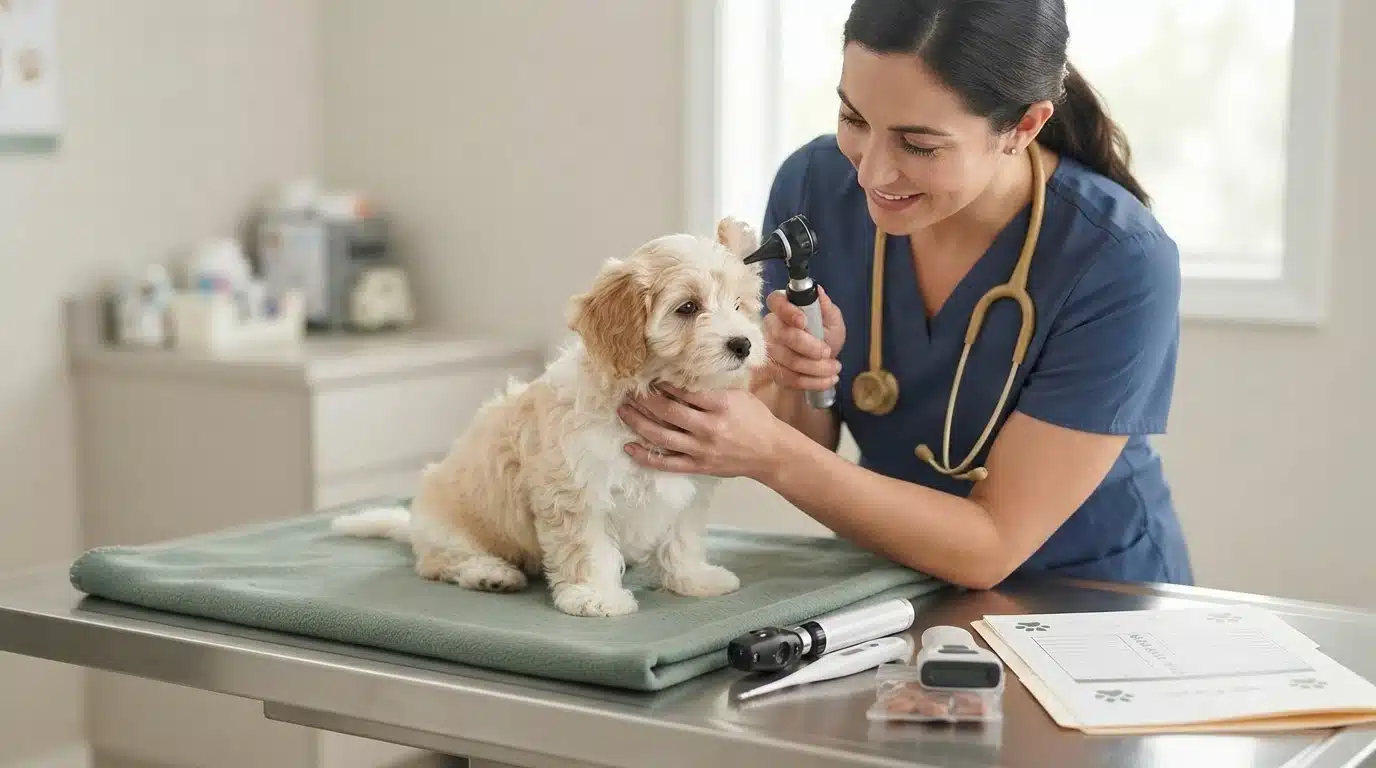
Book a vet visit within a few days of arrival. This confirms your puppy’s health and starts your own records.
Settling In Without Losing the Trail
The first 30 days are for routine, not adventure. Keep the same food the breeder used, feed on a schedule, and set up one quiet space with a crate or pen where your puppy can rest. Crate training works best when the crate feels safe, so keep it in a family spot with bedding and treats, as AAHA recommends.
Stay home the first few days. Start short potty breaks, gentle handling, and name practice. Hold off on dog parks until your vet confirms vaccines are complete. Small, steady habits now build trust faster than big outings.
Common Mistakes to Avoid When Choosing a Breeder
Buying on Price, Photos, or Speed
The cheapest puppy or the fastest reply often costs you later. Price alone tells you nothing about health testing or how a litter was raised, and glossy photos can hide crowded conditions. Walk away from anyone who pressures you to reserve same-day or claims the puppy “won’t last.” A good breeder asks you questions too. If they never interview you, they are selling a product, not placing a companion.
Skipping the Contract or the References
A handshake is not a health guarantee. Always get a written contract that spells out the price, the return policy, and any health terms before money changes hands. Then ask for references from past puppy families and actually call one or two. Ask what surprised them and whether the breeder stayed in touch. Breeders who welcome these checks, like the small programs running clear application processes, usually have nothing to hide.

You now know what ethical breeding looks like, so put that checklist to work. If a well-bred Havanese, Havapoo, or Cavapoo raised with care fits your family, visit Sage Puppies and start the application today.
Frequently Asked Questions
Q1: How do I find a reputable puppy breeder near me?
Start with breed clubs and the OFA database rather than classifieds. Ask each program for parent names so you can verify health results yourself, then request references and a tour or video call before paying anything.
Q2: What red flags should I watch for in a puppy breeder?
Watch for urgency, cash-only or gift-card payments, refused visits or video calls, reverse-image-search fails, and sellers who never ask about your home. Any one of these alone is reason enough to keep looking.
Q3: What health tests should a responsible puppy breeder provide?
For Havanese, expect annual eye exams, hip x-rays, and patella certification. For mixes like a Havapoo, each parent needs screening for its own breed. A DNA panel helps, but it does not replace physical exams.
Q4: How much should a well-bred Havanese or Cavapoo puppy cost?
Expect to pay roughly $3,500 to $4,500 at small Utah programs like Sage Puppies. Much lower prices usually mean skipped testing or crowded conditions, so treat a bargain as a question, not a win.
Q5: Can I verify a breeder’s health records myself?
Yes. Ask for each parent’s registered name and search it on the OFA’s public database. Check what was tested, the dog’s age, and the outcome for both the dam and sire.
Q6: Should I pay a deposit before seeing the puppy in person?
Only after you have seen the mother and living space, or a full unedited video tour for out-of-state buyers. Pay by credit card, get a written contract first, and never send money under time pressure.
Conclusion
Finding an ethical puppy breeder comes down to verification, not luck. Define what your family needs first, then screen out urgency tactics, cash-only demands, and sellers who hide how puppies live. Check each parent’s health testing on the OFA database yourself, ask questions that make breeders interview you back, and read every contract clause before money moves. References, reviews, and a real home tour or video call confirm what the website claims. Whether you are evaluating programs in Utah or across the country, the same checklist applies. Trust the breeder who welcomes every question, because programs built on care have nothing to hide.