
Quick Summary: A Havanese is a devoted, family-oriented companion that thrives when someone is home most of the day, but it demands daily brushing and a plan for alone time to avoid separation anxiety. The breed is playful, smart, and great with kids and other pets if raised together, yet its small size means young children must be supervised. Buyers should verify health tests like eye exams and hip evaluations through the public OFA database, and expect slow housebreaking. For busy households, a midday walker or short-alone training can work, but 10-hour absences make it a poor fit.
A Havanese will happily shadow a South Jordan family from school drop-off to the evening sofa. That closeness is a gift, but only if someone in the house can keep up with coat care and teach the dog to settle when everyone leaves. This Havanese dog review looks at the full picture: the breed’s warm temperament, the real grooming workload, how it handles time alone, and whether it fits homes with kids. You’ll also get straight answers on training, health, and the questions worth asking any breeder before you bring a puppy home. We raise Havanese puppies ourselves in Utah, so what follows comes from daily life with the breed, not just breed-standard summaries. If you want a candid fit check before you commit, start here.
What Living With a Havanese Is Like in a Family Home
Any honest Havanese dog review has to start with one truth: this is a dog built to live with people, not near them. Here’s what daily life actually looks like.
Affectionate, social, and happiest in the family routine
A Havanese follows you from room to room. Kitchen, hallway, couch. If your family is together, the dog wants to be in the middle of it. The breed’s job, going back centuries in Cuba, was companionship, and that instinct hasn’t faded. The AKC describes the Havanese as cheerful, bright, and social, happy with young children and older adults alike.
In practice that looks like this:
- They play hard with kids, then settle on a lap when the house calms down.
- They learn the household schedule fast, from school runs to bedtime.
- They bark to alert you when someone arrives, then greet the visitor once you do.
- They get along well with other easygoing pets.
These dogs are also famously playful. Expect zoomies around the living room and a silly streak that keeps kids laughing. The Vetstreet breed profile calls them funny, quick-witted, and easy to train, with a real love of children.
Adaptable size does not mean a no-effort companion
Small and adaptable, yes. Low maintenance, no. A Havanese needs company more than most breeds and struggles when left alone all day, every day. If everyone in your house is gone ten hours at a stretch, this is the wrong breed.
They also need real grooming. That silky coat mats without daily brushing, though many families keep a shorter “puppy cut” to cut the work down. Training is simple because Havanese want to please, but they respond best to gentle, positive methods.
The right home for a Havanese is one where someone is usually around, and where a few minutes of daily coat care becomes a normal habit.
Get those pieces right, and you get a devoted, funny companion who fits beautifully into family life.
Also Read: 7 Small Puppy Breeds That Fit Easily Into Compact Homes
How the Havanese Fits With Children and Other Pets
Most families asking about a Havanese dog review want one question answered first: will this dog work with my kids? The short answer is yes, with a few ground rules.
With children: friendly potential, careful handling
The breed was practically built for family life. For centuries, Havanese served as children’s playmates in Cuba, and the AKC’s breed overview describes them as highly adaptable and happy around people young and old. They’re playful, eager to please, and rarely snappy or quarrelsome.
But remember the size. An adult Havanese weighs seven to 13 pounds, and a toddler can hurt a small dog without meaning to. Set these rules from day one:
- Always supervise young children and the puppy together.
- Teach kids to sit on the floor for play, never to carry the dog around.
- Give the puppy a crate or bed where no one bothers him.
- Show children how to pet gently, avoiding ears, tail, and eyes.
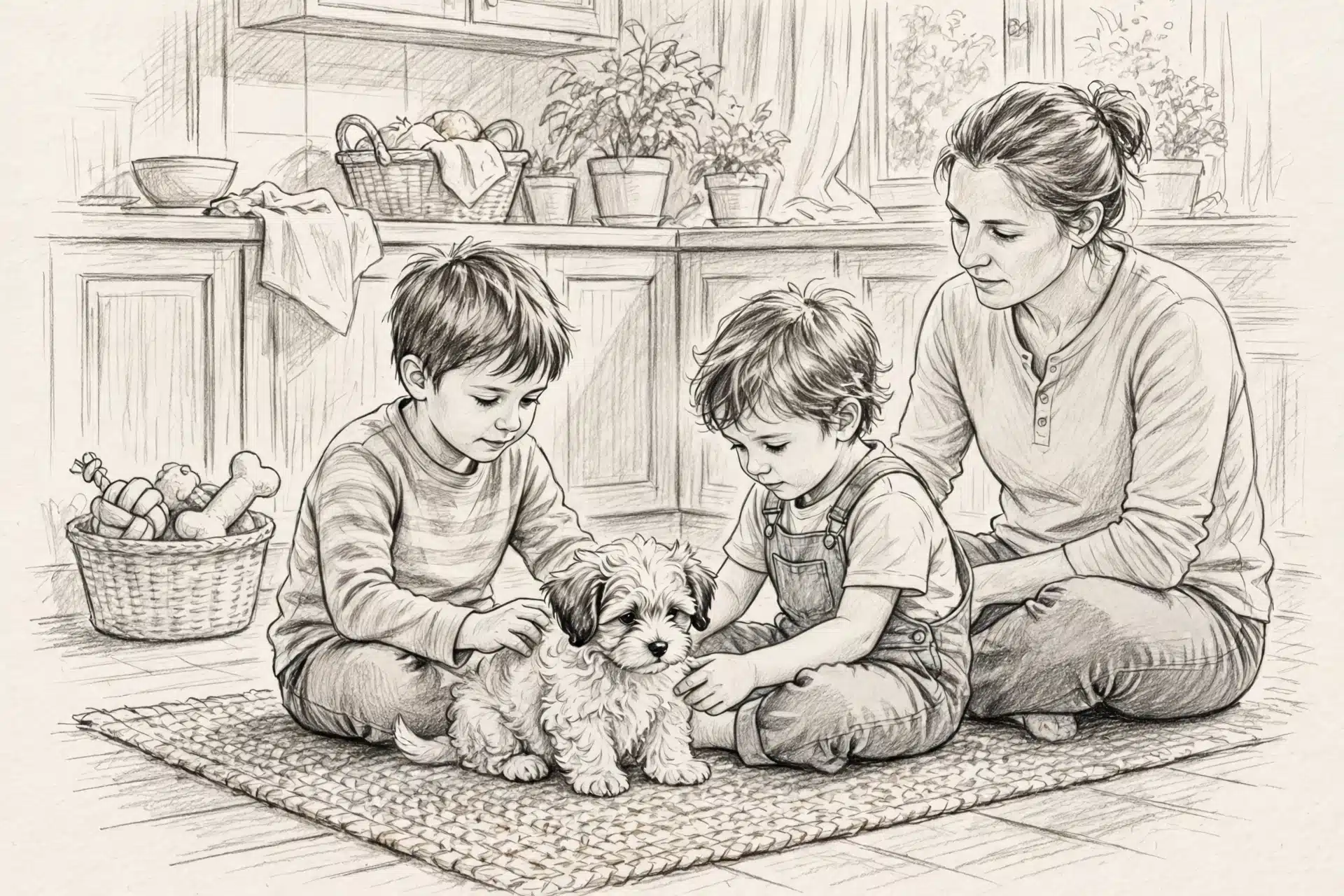
A well-bred Havanese puppy handles early handling well, which is why home-raised litters with daily family contact matter. Puppies raised in a quiet kennel building have to learn all of this after they arrive. Puppies raised in a kitchen, like ours in South Jordan, Utah, start knowing it already.
With visitors and household pets
Havanese are extroverts. They may bark once when someone new walks in, then shift into full greeter mode. The AKC notes they do best around other non-aggressive pets, and most get along fine with calm dogs and cats.
Introduce them slowly anyway. Keep first meetings on leash, reward calm behavior, and give your resident pet an escape route. With cats, supervise until you’re sure neither party is too pushy.
Tip: A Havanese who meets new people and pets often during puppyhood stays relaxed about them for life.
Also Read: Cavapoo vs Cockapoo vs Havapoo: Comparing the Top Doodle Breeds
The Household Trade-Offs: Company, Training, and Grooming
Every breed asks something of its owners. The Havanese asks for time: time with a brush, time away from the door, time in short training sessions. None of it is hard. All of it is regular.
Coat care is a recurring commitment
That silky coat is the breed’s signature. It is also the work. To prevent mats and tangles, coats need regular brushing with a pin brush or comb, and the AKC recommends daily brushing. Add ear checks and a quick wipe around the eyes to control tear stains, and you have a routine most owners handle in ten to fifteen minutes.
Many families shorten the job with a puppy cut. Clipped short, the coat needs far less upkeep, though it still needs attention every week. Budget either way: your time at home, or regular professional grooming every few weeks.
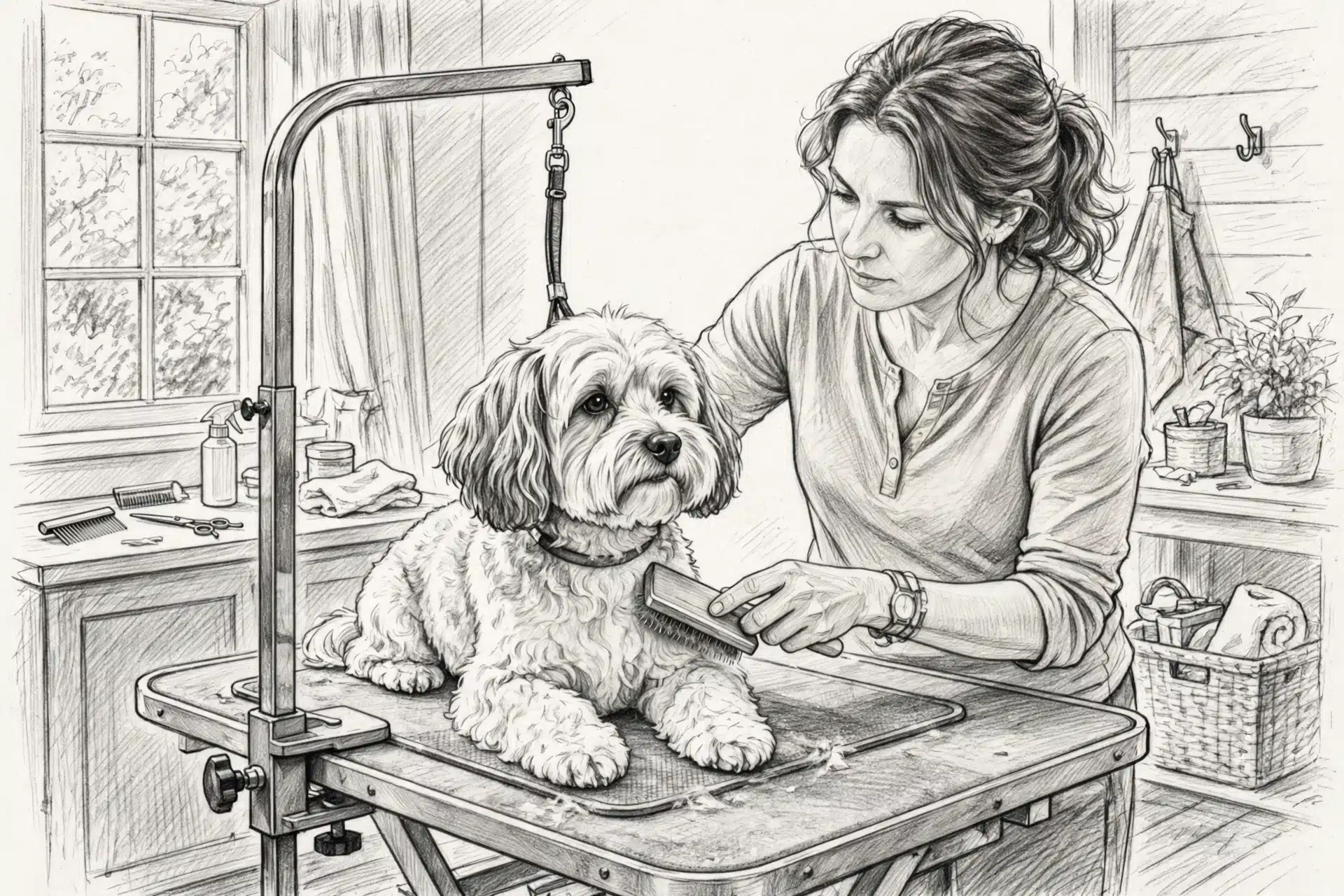
If nobody in the house enjoys grooming, plan for a groomer from day one. A matted coat is uncomfortable for the dog and expensive to fix.
A people-focused dog needs a plan for time apart
Havanese were bred to be companions, and it shows. These are true people dogs, and the AKC notes they don’t fare well when left alone for long periods. Left lonely for a full workday, day after day, some develop separation anxiety, barking, or chewing.
That doesn’t rule out busy families. It just means you need a plan:
- Build short absences early so alone time feels normal.
- Use a safe, comfy space rather than free run of the house.
- Arrange a midday visit, dog walker, or daycare for long days.
If someone is home most of the time, this breed fits easily. If not, plan before the puppy arrives, not after.
Trainability helps, but routine still matters
Here’s the good news: Havanese are smart, eager to please, and quick learners. They respond best to gentle, positive methods, since harsh corrections can shut a sensitive dog down. Start early with socialization, short sessions, and lots of praise.
Two things to expect. House training can take patience, so stay consistent with a schedule and praise successes fast. And routines matter more than talent – a few minutes of practice daily beats a long weekend session. Families who keep it light and steady end up with a well-mannered little dog who genuinely loves to work with them.
Health and Puppy Selection: What Families Should Verify
A Havanese is only as healthy as the plan behind it. Before you fall for a face, ask to see proof. Ethical breeders welcome the questions.
Ask for verifiable parent health information
The Havanese Club of America requires three core health tests for a CHIC number: an annual eye exam (CAER), an OFA hip evaluation, and patella (kneecap) certification. Some breeders add cardiac, BAER hearing, and thyroid screening.
Here’s the key part: you don’t have to take anyone’s word for it. Test results are reported to the public OFA database, so you can search each parent’s registered name and see the results yourself.
Before you pay a deposit:
- Get the registered names of both parents.
- Look each one up on the OFA site.
- Confirm current eye exams, since CAER testing must be repeated yearly.
- Ask for copies of all testing paperwork.
If a breeder hesitates here, walk away. A transparent program hands this over without being pushed.
Discuss puppy temperament and the transition home
Health is genetic. Confidence is built early. Ask how the puppies are raised: are they inside the home, handled daily, and exposed to normal household sounds? Puppies raised in busy family settings adjust faster to new homes.
Good breeders will also ask you questions. Expect conversation about your schedule, kids, and experience level, and a match based on each puppy’s personality.
Finally, get the details in writing: vaccination records, the food schedule, the contract, and pickup or delivery logistics. Breeders like Sage Puppies in South Jordan, Utah, walk families through all of it, with local pickup or nationwide delivery.
Also Read: Evaluating Health Risks of Havanese Puppies Versus Other Breeds
Pros and Cons of Choosing a Havanese for Family Life
Every breed has trade-offs. The Havanese is no exception, so it helps to see both sides clearly before you commit.
Where the Havanese can shine
This is a genuinely family-friendly little dog. The AKC describes the Havanese as cheerful, bright, and adaptable, happy around people of all ages. A few standout strengths:
- Great with kids and other pets when raised and socialized together
- Low-shedding coat, a help for allergy-sensitive households
- Moderate exercise needs – brisk walks and indoor play are usually enough
- Smart and eager to please, so training goes smoothly with positive methods
- Small and adaptable, comfortable in apartments or houses

What may be harder than families expect
The same devotion cuts both ways. Havanese are “true people dogs,” and the AKC notes they don’t do well left alone for long stretches. A study cited on 33rd Square found roughly 34% showed separation-related behaviors, well above the average dog. Other honest challenges:
- Daily grooming – that silky coat mats fast without regular brushing
- Slow housebreaking – some Havanese take longer than other breeds
- Watchdog barking – usually alert-style, but it needs training
- Delicate size – very young children must handle them gently
The right match matters more than the breed name. If your household has time, patience, and presence, the Havanese’s “flaws” shrink fast.
Also Read: Havanese, Havapoo & Cavapoo Puppy Care Blog
Is a Havanese the Right Companion for Your Household?
A strong fit, a possible fit, or a mismatch
Most households get a clear answer quickly. Havanese are friendly, playful, and easy to train, according to the AKC breed profile, and they adapt well to apartments, suburbs, and quiet country homes alike.
A strong fit looks like this: someone is home most of the day, kids are old enough to play gently, and the family enjoys daily brushing or keeps the coat clipped short. These dogs need only moderate exercise, so brisk walks and indoor play cover it. Seniors, first-time owners, and families with other calm pets usually thrive with this breed.
A possible fit means one gap you can fix. Full-time workers can still do well with a midday dog walker, a second pet for company, or short alone-time training started young. Add a few months of patience for housebreaking, and the match works.
A mismatch is honest to name. If everyone is gone ten hours a day and no one can stop by, this breed will struggle. Havanese are classic “velcro dogs” and can develop separation anxiety when left alone for long stretches, so the breed isn’t recommended for families with long absences.
The heart of it: this is a people dog. If your home has time, attention, and affection to spare, the Havanese fits beautifully.
Also Read: Guides – Sage Puppies

If a Havanese sounds like the right fit, Sage Puppies can help you take the next step. Our home-raised Havanese puppies come from health-tested parents and are socialized with family from day one. Browse available puppies, review pricing, or start an application today. Local pickup in South Jordan, Utah, or nationwide delivery.
Frequently Asked Questions
Q1: Is a Havanese a good companion for your household?
Yes, if someone is home often and you can commit to regular grooming. Havanese thrive on company, adapt well to apartments, and suit most first-time owners.
Q2: Can a Havanese stay home alone during work hours?
Not for long stretches. Four to five hours is the realistic limit. Puppies need shorter gaps plus a midday potty break.
Q3: How much grooming does a Havanese need?
Brush several times weekly and trim every six to eight weeks. Many owners choose a short puppy cut to cut down coat care.
Q4: Are Havanese good with children?
Yes. They’re gentle and playful, but teach kids to handle a small dog carefully. Always supervise young children with any puppy.
Q5: Do Havanese shed?
Very little. Their low-shedding coat makes them easier on allergy-sensitive households, though no dog is truly hypoallergenic.
Q6: How do I find a healthy Havanese puppy?
Ask breeders about health-tested parents and early socialization. At Sage Puppies in South Jordan, Utah, puppies are family-raised, with pickup or nationwide delivery.
A Thoughtful Next Step
The Havanese fits families who have time to give. The breed is cheerful, trainable, and famously good with children, but AKC guidance is clear that these are true people dogs, happiest with company and daily attention. Grooming is the other commitment. Expect regular brushing, or a short clip if you prefer less maintenance.
No breed is a perfect match for everyone, and honest breeders will say so. What matters is pairing a healthy, well-socialized puppy with a household that understands the tradeoffs. That’s the whole point of a careful review like this one: the right fit, thoughtfully made.

