Quick Summary: Heat waves are especially dangerous for puppies, who overheat faster than adult dogs, so owners should walk them early or late, test pavement with the back of their hand for 7-10 seconds, and keep them indoors with AC and water. Watch for heavy panting, drooling, or wobbliness as early heatstroke signs, and if suspected, cool the puppy with cool (not ice-cold) water and call a vet immediately, even if they seem to recover. Flat-faced breeds, puppies under 6 months, and small breeds like Havanese and Cavapoos need extra caution, and the article stresses that news coverage is a prompt to act, not a diagnosis, so trust your own observations.
ABC News has covered summer heat hazards for pets before, including a 2025 report on a police dog that died in a hot vehicle. Whatever this week’s headlines say, the advice stays the same. The ASPCA and AVMA warn that high heat threatens pets, and young puppies are among the most vulnerable. Dog safety during heat waves means limiting exposure, watching for early warning signs, and knowing when to call a vet. Puppies keep playing even as heat illness builds fast. This guide covers dog safety during heat waves: a cool indoor setup, short outdoor breaks, and clear emergency steps. Treat it as planning help, not veterinary advice.
What Puppy Owners Should Do When a Heat Wave Is Forecast
When a heat wave hits the forecast, good dog safety during heat waves starts before the first hot morning. Puppies feel the heat faster than adult dogs. They have small bodies, sensitive paws, and less experience pacing themselves. A little planning in the next 24 hours prevents most problems.
Move Play and Walks Out of the Heat
Shift every walk to early morning or evening. The sun is most direct around noon, but Cornell’s veterinary team notes the day actually peaks hot between 3 and 5 p.m. Plan around that window.
Use the pavement test every single time. Press the back of your hand on the sidewalk for ten seconds. If it burns you, it burns your puppy’s paws. At 86 degrees air temperature, asphalt can reach 135 degrees.
- Keep walks short and stay on grass or shaded paths
- Carry water and a collapsible bowl on every outing
- Skip fetch and rough play entirely on peak days
- Swap outdoor exercise for indoor games in a hallway
- Never leave your puppy outside longer than needed, even if they beg to stay in the sun
Set Up a Cool, Water-Ready Home
Your house should do the heavy lifting during a heat wave. Run the air conditioning, or set up fans in rooms your puppy uses most. The AVMA recommends creating different temperature zones in your home so your puppy can move where they’re most comfortable.
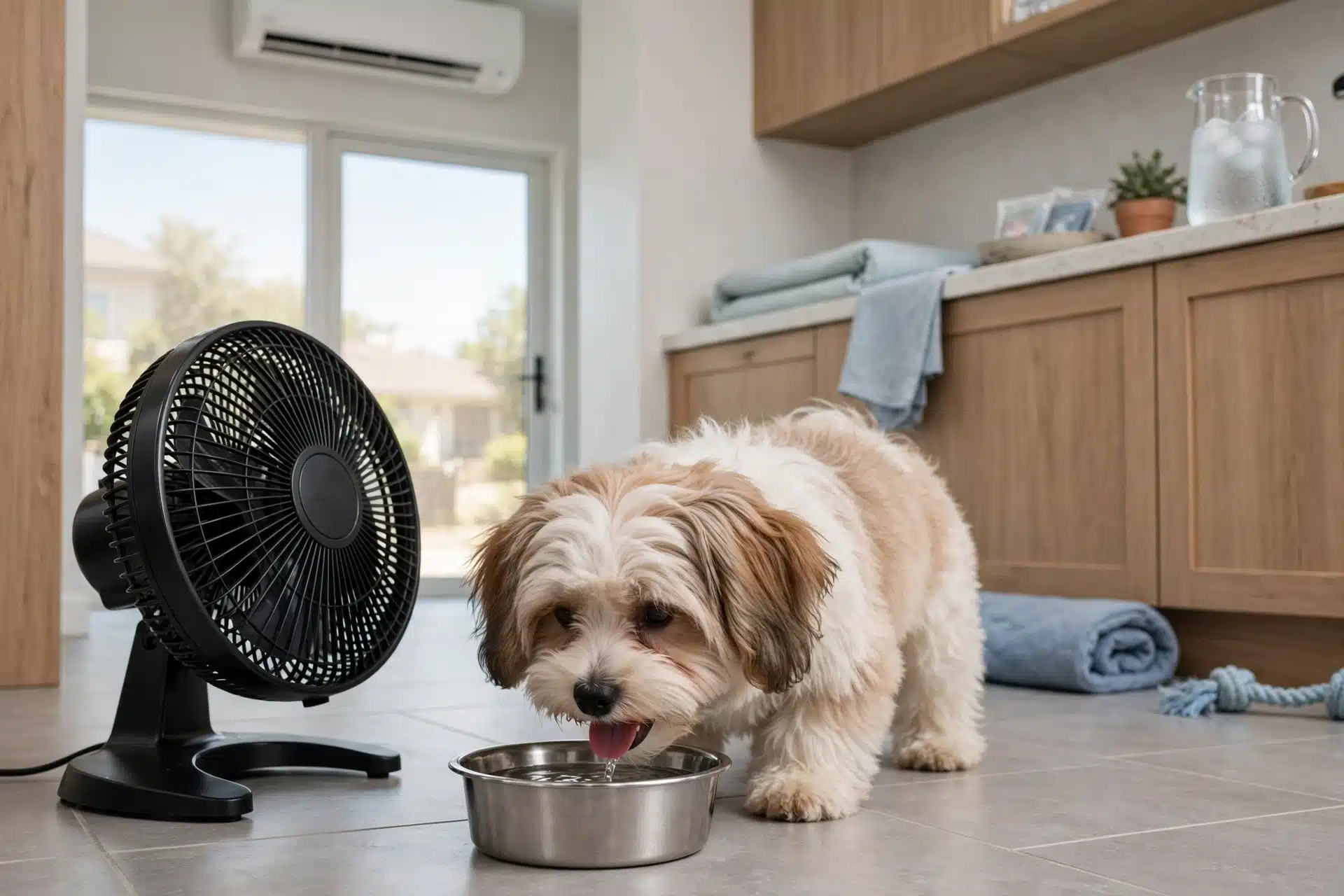
Fill multiple water bowls and place them around the house. Drop in ice cubes on the hottest days. A cooling mat gives your puppy a spot to lie down when tile isn’t enough.
Here’s a quick setup checklist:
| Item | Why It Matters |
|---|---|
| Multiple water bowls | Puppies dehydrate faster than adults |
| Cooling mat or damp towel | Gives a place to lower body temperature |
| Fans or AC running all day | Keeps indoor air moving and cool |
| Closed, screened windows | Prevents falls and escapes |
| Frozen treat or wet food with added water | Boosts hydration during meals |
If your puppy pants heavily, drools a lot, or seems weak or wobbly, move them to a cool room, offer water, and call your vet right away. Heat stress moves fast in young dogs.
Also Read: Havanese, Havapoo & Cavapoo Puppy Care Blog
Make Outdoor Breaks Safer, Not Longer
When a heat wave hits, your puppy still needs potty breaks and fresh air. The goal is not more time outside. It’s smarter time outside. Short, well-planned outings protect your puppy far better than one long walk in the sun.
Check the Surface and Choose a Cooler Route
Ground heat is the hidden danger. On an 87-degree day, asphalt can reach about 143 degrees, hot enough to burn paw pads in under a minute, according to guidance from the AKC. Puppies have especially soft, tender pads.
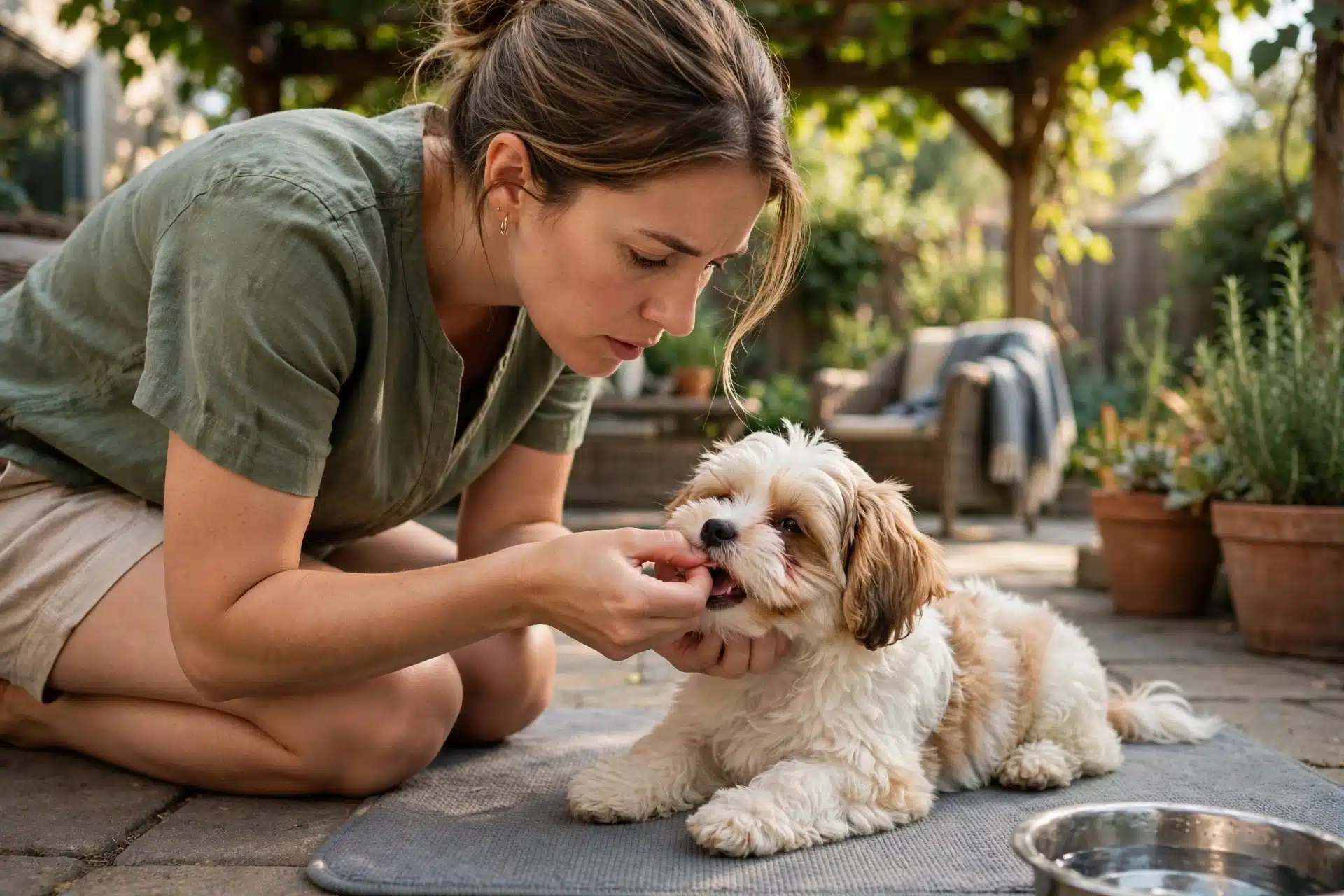
Before every outing, use the seven-second test:
- Press the back of your hand flat on the pavement.
- Hold it there for a full seven seconds.
- If you pull away early, the surface is too hot for your puppy.
Then plan the route itself:
- Walk early morning or after sunset, never mid-afternoon.
- Stick to grass, dirt, and shade instead of sidewalks.
- Pick a short loop near home so you can head in fast.
Tip: Pavement stays hot even after the sun drops. Test it every time, not just at noon.
Skip the Park, Hike, and Car Errand
Some outings should wait until the heat breaks. Dog parks mean running, and running raises body temperature fast. Hikes add sun exposure, hot rock, and no easy exit. Car errands are risky too, from hot parking lots to warm cabins.
| Outing | Safe in a heat wave? |
|---|---|
| Quick grassy potty break | Yes, short and shaded |
| Leisurely neighborhood walk | Only early or late |
| Dog park play | No |
| Hike or trail walk | No |
| Car errands with puppy along | No, leave puppy home |
Small breeds like Havanese, Havapoos, and Cavapoos sit close to the warm ground and tire quickly, so keep these breaks brief and calm. Bring water, watch for heavy panting, and go inside at the first sign of slowing down.
Also Read: Seasonal Puppy Safety Guide for Safe Summer Outdoor Adventures
Recognize the Early Signs of Overheating
Puppies can go from “warm” to “in danger” fast. The sooner you spot the signs, the better the outcome. According to the Royal Veterinary College, early recognition matters more than anything else you can do.
Watch for Changes in Breathing, Behavior, and Coordination
Early signs show up in three areas: breathing, behavior, and balance. Check all three whenever your puppy has been outside in the heat.
Breathing changes first. Look for:
- Heavy panting that seems louder or faster than normal
- Noisy or distressed breathing as things get worse
- Thick drool or excessive salivation
Behavior shifts next. A hot puppy may pace, seem restless, or hunt for shade and water. Bright red gums and tongue are a red flag. So is skin that feels hot to the touch.
Watch the wobble factor. Unsteady steps, confusion, or weakness mean the situation is escalating. The American Red Cross lists wobbliness, collapse, and a temperature of 104°F or higher as clear heatstroke signs. A normal dog temperature runs 99.5 to 102.5°F.
Small breeds and young puppies tire faster than adult dogs, so treat any of these signs seriously, even on a day that feels mild to you.
Treat Suspected Heatstroke as an Emergency
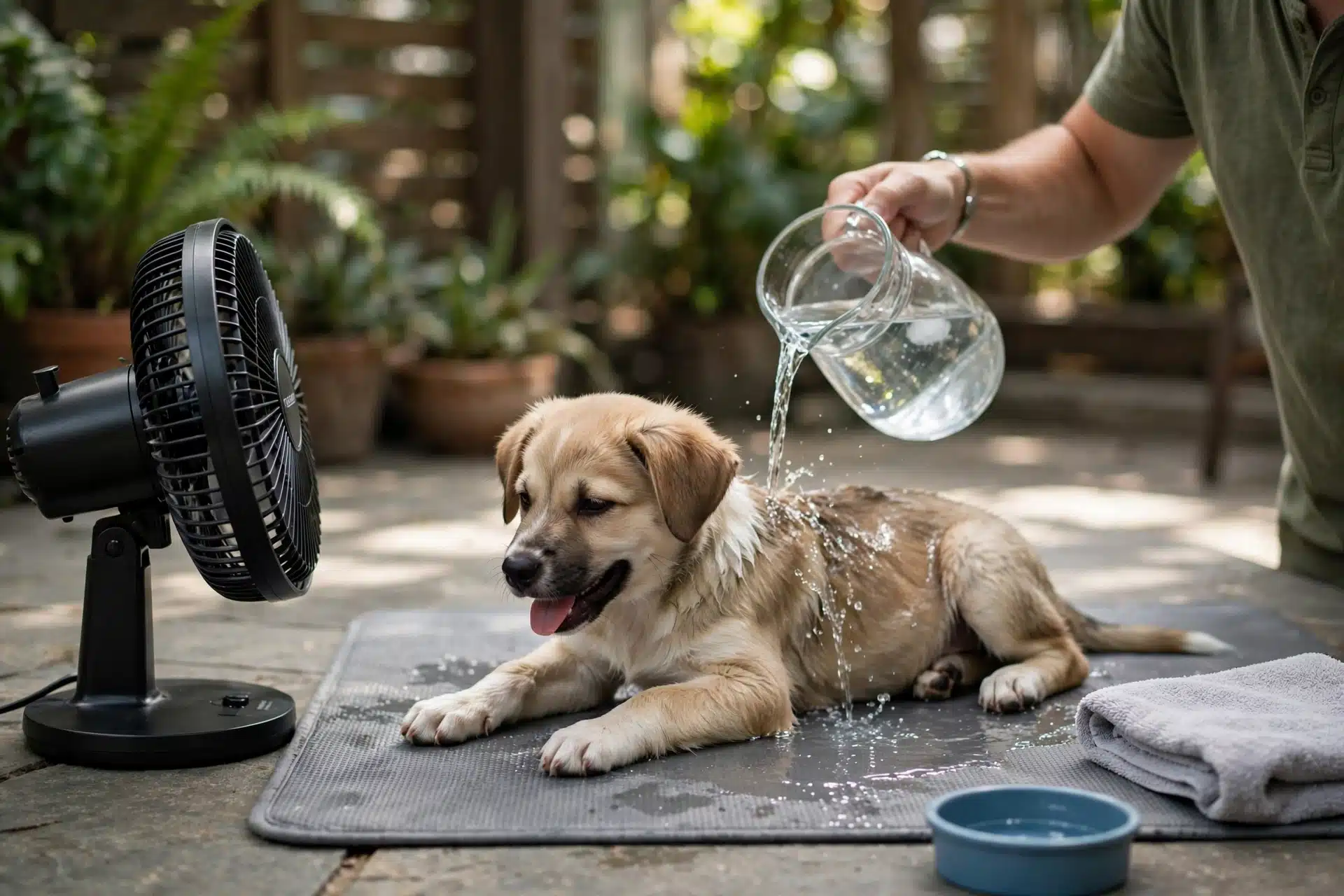
If you suspect heatstroke, act now. Move your puppy into shade or air conditioning. Wet them with cool, not ice-cold, water and run a fan nearby. Offer small sips of water, but never force it.
Then call your vet or an emergency clinic. Cooling first and driving second is the recommended order. Do not use ice baths, and do not cover your puppy with wet towels.
Even if your puppy perks up, get them checked. Organ damage can hide below the surface. When in doubt, call your veterinarian and describe what you saw.
If Your Puppy Seems Overheated, Act and Call
Puppies overheat faster than adult dogs. Their bodies are still learning to regulate temperature, and small breeds feel the heat sooner. If your puppy shows heavy panting, thick drool, wobbly steps, or bright red gums, treat it as an emergency. The advice veterinarians give is simple: cool first, transport second.
Move to a Cool Place and Begin Gentle Cooling
Act fast, but stay calm. Your puppy needs you steady.
- Carry your puppy out of the sun and into air conditioning or deep shade.
- Soak their body with cool tap water. Focus on the belly, armpits, groin, and paws. Keep water away from the nose and mouth.
- Turn a fan on them. Moving air over wet fur speeds up cooling.
- Offer small sips of water if they are alert. Never force it.
- Check the rectal temperature if you have a pet thermometer. Normal sits between 99.5 and 102.5°F. The American Red Cross advises cooling until the temperature drops to about 103°F, then heading to the vet.
Two things to avoid. Do not dunk your puppy in ice water. It can trigger shivering and slow real cooling. And never lay a wet towel over their body – it traps heat instead of releasing it.
Call the Veterinarian Without Delaying Care
Start cooling first. Call while you work, or have someone else dial.
- Tell the clinic your puppy’s breed, age, temperature if known, and symptoms.
- Follow their instructions exactly.
- Drive in a cooled car with the air conditioning on high.
- Call ahead so the clinic is ready when you arrive.
Even if your puppy perks up, go anyway. Heatstroke can damage organs in ways you cannot see, and a vet needs to run checks. Quick cooling plus fast care gives your puppy the best shot at a full recovery.
Also Read: Puppy Care Blog & Resources | Sage Puppies
Which Puppies Need Extra Caution
Any puppy can overheat. Some just get there faster. Puppies under six months can’t regulate body temperature well yet, so they hit danger zones sooner than adult dogs, according to AAHA’s heatstroke guide.
Flat-faced breeds carry the biggest risk. Bulldogs overheat at 14 times the rate of Labradors, and French Bulldogs at 6 times, based on a large UK study of more than 900,000 dogs covered by The Conversation.
| Puppy | Why the risk is higher |
|---|---|
| Flat-faced breeds (Pugs, Bulldogs, Frenchies) | Short airways make panting less effective |
| Puppies under 6 months | Immature temperature control |
| Overweight puppies | Extra fat traps body heat |
| Thick double-coated breeds | The coat insulates like a jacket |
| Puppies with heart or airway issues | Cooling systems already work harder |
| Risk factor | What to do differently |
|---|---|
| Flat face | Shorten walks, avoid midday heat entirely |
| Very young | Skip outdoor play above 80°F |
| Overweight | Talk to your vet about a feeding plan |
Havanese, Havapoos, and Cavapoos have normal-length muzzles, which helps. Still, every small puppy tires fast and dehydrates fast. Know your puppy’s risk profile before the heat wave arrives, not during it.
Also Read: 10 Red Flags to Avoid When Visiting a Local Puppy Breeder
What Earlier ABC News Coverage Can and Cannot Confirm
ABC’s heat coverage is consistent, but it has limits. News reports confirm the pattern: extreme heat is the deadliest weather hazard in the U.S., and outlets like ABC News repeat the same core pet advice every summer – fresh water, shade, no parked cars, no over-exercise.
What the coverage confirms:
- Warning signs are well established. Excessive panting, drooling, weakness, and collapse all point to overheating, per the ASPCA.
- Flat-faced, very young, and overweight dogs face the highest risk.
- Hot pavement burns paws, and coats should be trimmed, never shaved.
What coverage cannot confirm:
- Your dog’s individual risk. News reports speak in general terms; only your vet knows your puppy’s health history.
- Local conditions hour by hour. A regional alert may lag behind what your thermometer shows.
- Severity from a distance. A dog that “looks fine” can still crash fast, so vets advise a check whenever you suspect overheating.
Treat news coverage as a prompt to act, not a diagnosis. Watch your own puppy, and trust your gut over the forecast.
Prepare a Simple Heat-Wave Routine for Your Puppy
Puppies do best with rhythm, and a heat wave is no exception. Vets at Cornell’s canine health center recommend planning walks around the coolest hours, because late afternoon (roughly 3 to 5 p.m.) is usually the hottest part of the day.
Here’s a simple daily routine you can copy:
- Early morning walk. Head out before 9 a.m. Keep it short and let your puppy sniff and potty.
- Pavement check. Press the back of your hand on the sidewalk for 10 seconds. Too hot for you means too hot for little paws, a test the AKC recommends.
- Midday indoors. Play in the air conditioning. Puzzle toys and short training sessions work well.
- Water refills. Refresh the bowl every few hours and add ice on extra hot days.
- Evening potty break. Quick trip onto grass, not asphalt, once the ground cools.
Small breeds like Havanese, Havapoos, and Cavapoos sit close to the ground, so they feel heat from pavement faster than bigger dogs. Stick to grass, keep sessions short, and repeat the same schedule daily. Predictability helps your puppy stay calm while the heat lasts.
Also Read: Puppy Weather Safety Guide for Heat, Cold, and Severe Storms

Heat safety starts with a well-prepared home. At Sage Puppies, our home-raised Havanese, Havapoo, and Cavapoo puppies come socialized and family-ready. Browse available puppies or start your application today – pickup in South Jordan, Utah, or safe nationwide delivery.
Frequently Asked Questions
Q1: What should puppy owners do during dangerous heat waves?
Walk early or late, keep fresh water available, and keep puppies indoors with fans or air conditioning. Watch for heavy panting, drooling, or wobbliness, and call your vet if you see them.
Q2: How hot is too hot for a puppy’s paws?
If the pavement feels hot to your hand after seven seconds, it can burn your puppy’s paws. Test first, or use grassy paths and booties.
Q3: Which puppies struggle most in heat?
Flat-faced breeds and small companion breeds like Havanese, Havapoos, and Cavapoos overheat faster. Keep outings short and shaded during warm months.
Q4: Can puppies swim to cool off?
Yes, with supervision and shallow water first. Use a doggy life vest, rinse off chlorine afterward, and never force a nervous puppy in.
Q5: When is heatstroke an emergency?
Heavy panting, bright red gums, vomiting, or collapse need immediate action. Move your puppy to shade, cool with lukewarm water, and call your vet right away.
Q6: How does Sage Puppies prepare puppies for summer?
Puppies are raised indoors with family handling and early socialization, so they adapt calmly to routines like crate rest, cooling mats, and short training sessions during hot weather.
A Calm, Practical Plan for Hot Days
Heat waves put every dog at risk, and puppies especially. The good news: the basics work. Walk early or late, test the pavement with your hand, keep water and shade close, and never leave your dog in a parked car. Learn the warning signs of heatstroke, such as heavy panting, drooling, and weakness, because Cornell’s veterinary team calls it a life-threatening emergency that needs fast action and a vet visit. The American Red Cross recommends cool water, airflow, and quick transport if symptoms appear. Stay calm, stay watchful, and your pup stays safe all summer.