
Quick Summary: Small puppies in dry climates like New Mexico dehydrate rapidly because they lack significant fluid reserves. You should provide roughly one ounce of water per pound of body weight daily, using multiple accessible bowls and frequent refills to encourage drinking. Monitor your puppy for signs like sticky gums or sluggish behavior, and always limit outdoor play to the cooler morning and evening hours.
As the desert sun climbs, even ten minutes of backyard play can leave a Havanese or Cavapoo puppy panting hard. Small breeds dehydrate faster than big dogs, and New Mexico’s dry air makes it worse because moisture leaves their bodies with every breath. That’s the problem this guide solves: keeping your puppy safely hydrated through a hot, arid summer.
You’ll find practical puppy hydration tips for daily routines, signs of dehydration to watch for, and simple desert pet safety habits for walks, car rides and playtime. We’ll also cover how dog hydration heat stress works, so you know why water bowls alone aren’t enough.
This advice comes from Sage Puppies, a Utah-based program focused on Havanese, Havapoo and Cavapoo puppies. We help families prepare for life with small companion breeds, including the extra care dry climates demand. If you’re still choosing your puppy, browse our available puppies or review pricing and reservation details.
Step 1: Calculate Your Puppy’s Baseline Hydration Needs
Start with your puppy’s body weight. Water needs follow weight far more closely than age or breed, and small breeds like Havanese, Havapoos and Cavapoos need you to do this math precisely. A five-pound puppy has almost no fluid reserve, so small mistakes matter more than they would with a Labrador.
Weight-Based Formulas
The standard estimate is about 1 ounce of water per half pound of body weight each day. A 6-pound puppy needs roughly 12 ounces daily, while a 10-pound adult-size pup needs closer to 20 ounces. Growing puppies actually run a bit thirstier than adults, sometimes up to double, because their bodies are building tissue fast.
Here is a quick reference for the sizes you are most likely to see:
| Puppy Weight | Daily Water Baseline |
|---|---|
| 4 lbs | 8 oz (1 cup) |
| 6 lbs | 12 oz (1.5 cups) |
| 8 lbs | 16 oz (2 cups) |
| 10 lbs | 20 oz (2.5 cups) |
Measure with a marked bowl for one full day. Puppies sip constantly, so eyeballing often undercounts.
Accounting for Activity and Climate
That baseline assumes mild weather. New Mexico dry heat changes the picture. Low humidity pulls moisture out with every breath, and a puppy playing outside for 30 minutes can lose far more than the chart above covers.
A practical puppy hydration tip for arid climates: add about 25 to 50 percent more water on hot or active days, then let your puppy drink freely. Split the total across three or four refills so the bowl never sits empty. Check hydration by lifting the skin at the shoulder; it should settle back in under two seconds, and gums should feel slick. Dry or tacky gums mean offer water now and call your vet if the skin stays tented. These basics pair well with the feeding routine on your puppy’s first days home.
Step 2: Optimize Water Delivery Systems for Small Breeds
A Havanese or Cavapoo puppy may weigh 5 to 10 pounds, so small bowls hold small margins. Weaned puppies need roughly half an ounce to one ounce of water per pound of body weight each day, according to the AKC. In New Mexico’s dry heat, aim for the higher end. One of the simplest puppy hydration tips is to make fresh water effortless to reach, then keep it clean.
Placement Strategies
Put a bowl wherever your puppy spends time, not just in the kitchen. Puppies in a new home often forget to drink if water is out of sight. Set one bowl near the sleeping area, one by the play zone, and one outside in shade for yard time.
Choose low, wide, weighted bowls. Small breeds reach a shallow bowl more easily, and a heavy base stops a playful paw from flipping it. Ceramic or stainless steel work well; both clean up well and resist slimy film better than plastic.
Keep a travel bowl and a squeeze bottle in your car. Quick errands and park trips still count against the heat.
Refresh the bowls several times a day, especially after outdoor play. Many owners of small pups find that multiple stations plus frequent refills beat one big bowl every time.
Maintaining Water Quality
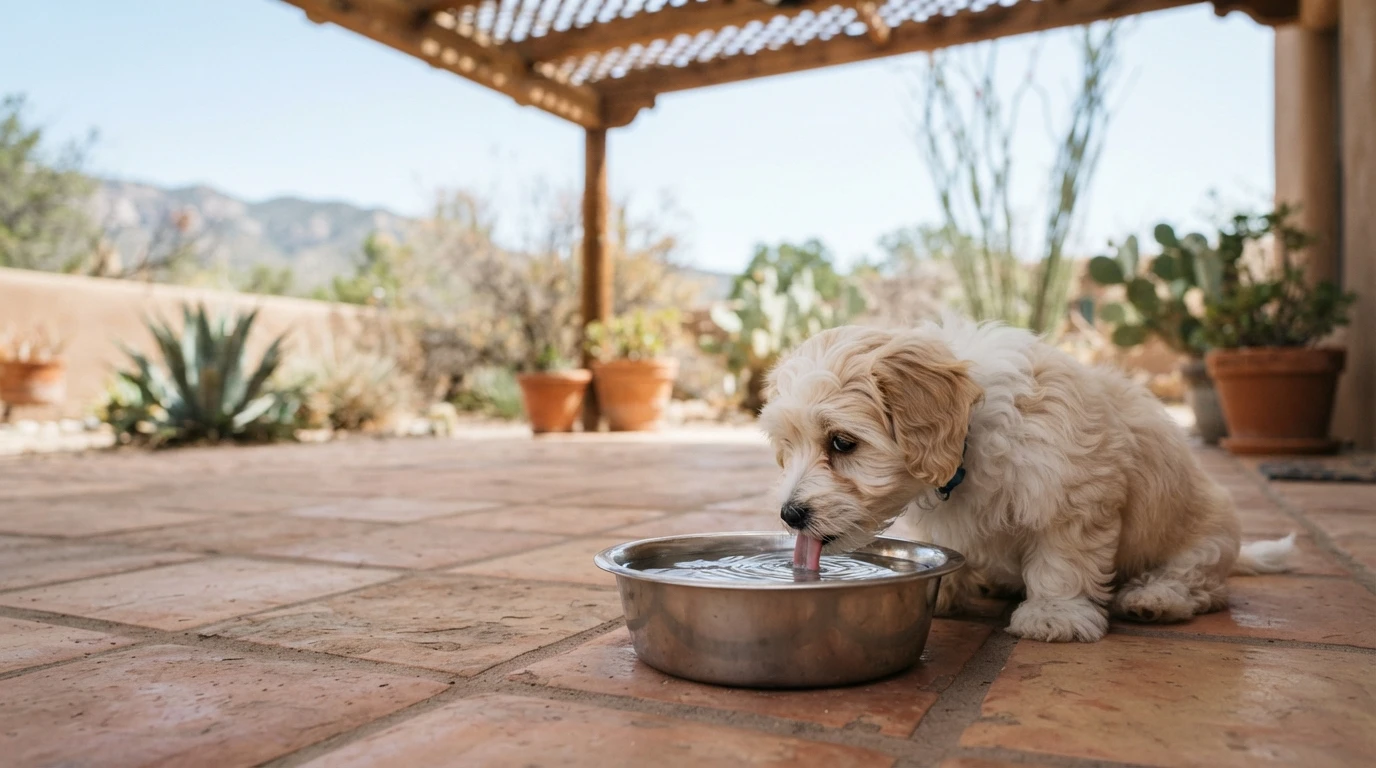
Dry, dusty climates turn a clean bowl dirty fast. Rinse and refill bowls at least twice daily, and wash them with soap every day or two. Slimy biofilm builds up quickly on plastic, so scrub or swap it out.
Cool water encourages drinking. Drop in an ice cube on hot afternoons, or set the outdoor bowl in shade. If your puppy ignores one station, move it; placement matters more than fancy gear.
Clean water is part of a healthy start covered in our new puppy preparation guide.
Step 3: Enhance Hydration Through Diet and Treats
Bowls matter, but food does too. A puppy eats several times a day, so every meal is a chance to add moisture. These puppy hydration tips are simple: shift some water onto the plate and use the snack drawer wisely.
The Benefits of Wet Food
Dry kibble holds only about 10 percent moisture, while canned food carries roughly 75 percent. That gap adds up fast. A small Havanese or Cavapoo who eats wet food at one or two meals gets a quiet, steady supply of water without drinking a drop more.
You don’t have to switch fully. Mixing a spoonful of wet food into kibble, or softening kibble with warm water, works well for picky eaters and tiny mouths. Warm water is especially nice on a cool desert morning because the meal smells inviting and goes down easily.
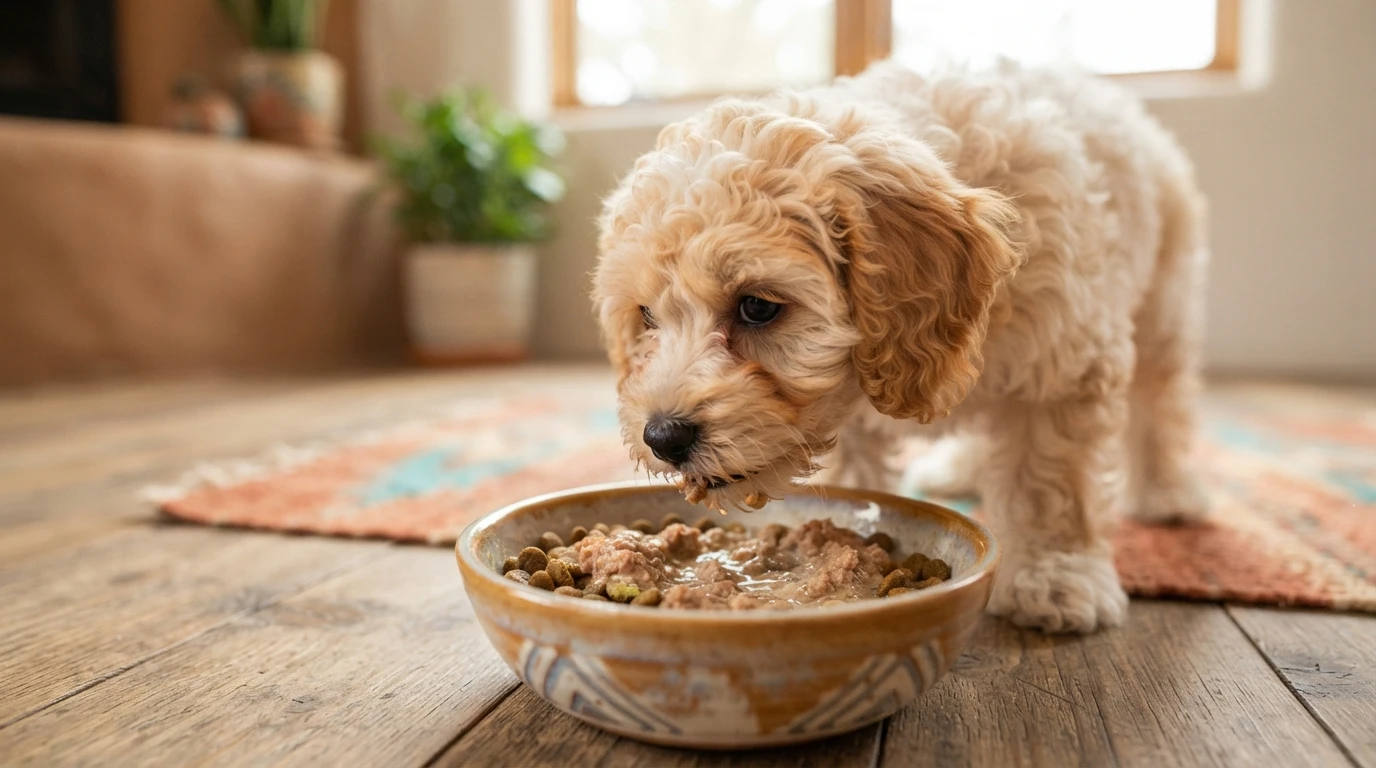
Tip: Add the water to kibble a few minutes before serving so it softens but doesn’t turn mushy.
If you change foods, do it over about a week. Blend a little more of the new food into each meal, and watch stools. Loose stools usually mean the switch went too fast.
Hydrating Treats
Snacks can carry water too. Safe options include:
- Cucumber slices and seedless watermelon chunks (no rind or seeds)
- Blueberries, a favorite tiny treat for small breeds
- Plain ice cubes in small pieces, offered on hot afternoons
Frozen treats made from plain yogurt or blended banana are easy to prepare at home. Freeze them in small silicone molds sized for little jaws.
Avoid grapes, raisins, and anything sweetened with xylitol, which is toxic to dogs. Skip salty treats too, since sodium increases thirst and taxes small kidneys.
Keep portions modest. Treats should stay under 10 percent of daily calories, and hydrated extras count toward that total. A cool snack after outdoor play becomes part of your routine, and your puppy will learn to love it.
Step 4: Recognize the Signs of Dehydration Early
Puppies hide thirst well, and small breeds like the Havanese, Havapoo, and Cavapoo have less body reserve than big dogs. In New Mexico’s dry heat, mild dehydration can turn serious in a few hours. Check your puppy twice a day during summer, and learn the signs below so you can act before a vet visit becomes an emergency.
Physical Indicators
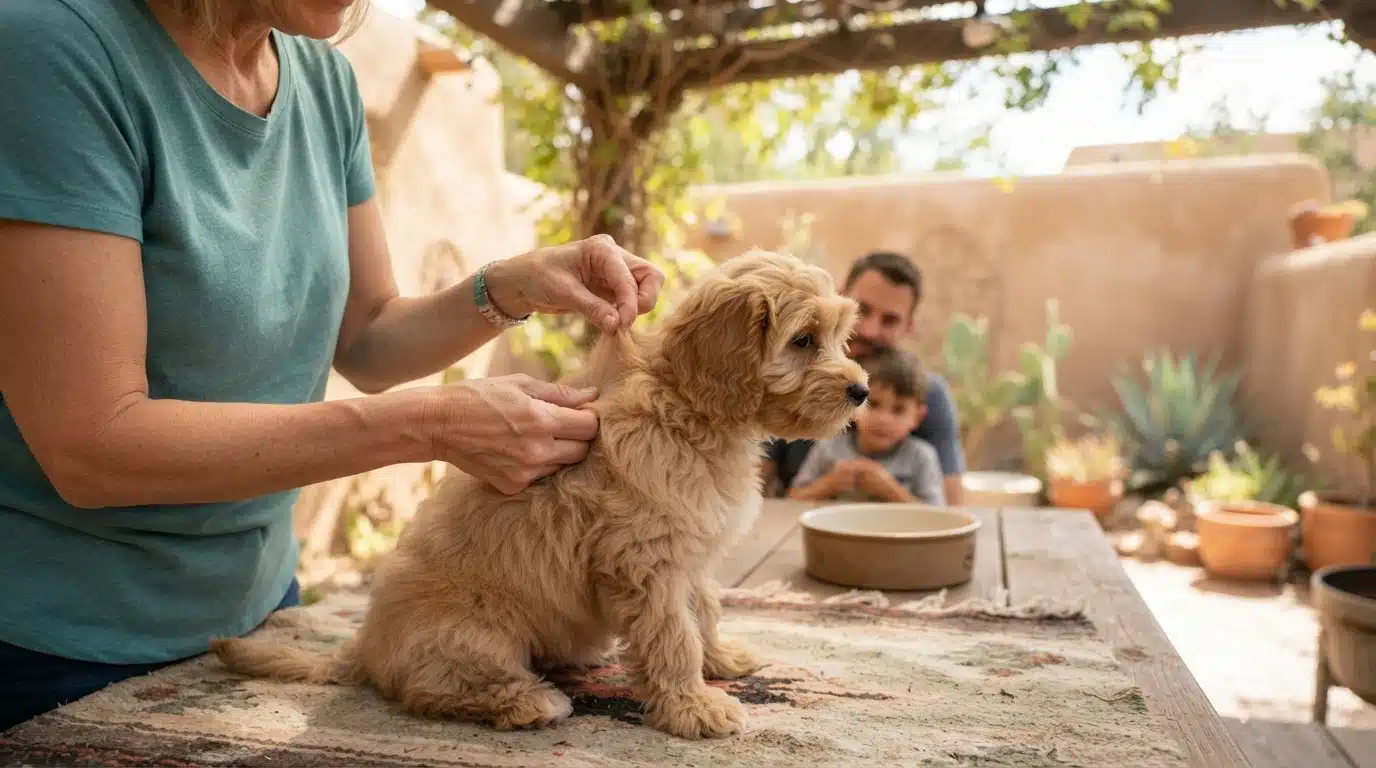
The fastest check is the skin pinch test. Gently lift the skin between your puppy’s shoulder blades, then let go. It should snap back right away. If it settles slowly or stays tented, your puppy is likely dehydrated, according to PetMD’s guide.
Next, look at the gums. Healthy gums are pink and slick. Tacky, dry, or pale gums are an early warning sign. You can also check the nose and eyes. A dry nose on its own is normal, but paired with thick, stringy saliva or sunken, dull eyes, it points to real fluid loss.
Run the pinch test and a gum check at the same time each day, such as after the afternoon potty break. A routine makes changes easy to spot.
Behavioral Red Flags
Behavior usually shifts before the physical signs get obvious. A hydrated puppy is bouncy, curious, and eager at mealtime. A dehydrated one slows down, pants more than the heat explains, or lies flat on a cool floor and stays there.
Watch appetite and bathroom habits closely. Skipping meals or refusing a favorite treat is worth noticing. So is a puppy who urinates rarely, or produces dark yellow urine instead of pale straw color. Some puppies also stumble or seem mildly confused when fluids run low, a sign Zoetis lists alongside loss of appetite.
Treat any two of these together as urgent. Offer water, move your puppy indoors, and call your vet the same day.
Step 5: Managing Outdoor Exposure and Heat Stress
Safe Play Hours
Small puppies handle dry heat poorly. They pant, but it cools them slowly, and tiny bodies overheat fast. So timing matters more than anything else you do outdoors.
Plan outdoor play before 9 a.m. and after 6 p.m. from May through September. Those windows give your puppy shade, cooler air, and grass that has not baked all day. Midday outings should be short potty breaks only, ideally on grass rather than concrete.
Pavement is the hidden danger. Asphalt can reach 130°F when the air is only 85°F, and a puppy’s young paw pads burn quickly on it. Use the seven-second test: press the back of your hand on the pavement. If you cannot hold it there for seven seconds, the surface is too hot, and your puppy should walk on grass or dirt instead.
Watch for early heat stress signs: heavy panting, drooling, wobbling, bright red gums, or a puppy that lies down and refuses to move. Stop play immediately, move indoors or to deep shade, offer cool (not ice-cold) water, and call your vet if symptoms persist. Puppies cannot tell you they are in trouble, so you have to notice for them.
Keep sessions short, too. Ten to fifteen minutes of gentle play is plenty on a warm day. Let your puppy rest between rounds, and bring water out with you every single time.
For a fuller seasonal checklist, our guide to safe summer outdoor adventures walks through each month in a New Mexico-style climate.
Step 6: When to Contact Your Veterinarian
Small breeds dehydrate faster than large dogs, so a Havanese or Cavapoo puppy can go from “a little off” to urgent in a few hours. Know the line between watch-and-wait and call-now.
Call your vet the same day if your puppy:
- Has dry or sticky gums, or thick saliva
- Drinks far less than usual for more than a day
- Seems tired, wobbly, or uninterested in food
- Shows a slow skin tent (gently pinched skin that settles slowly)
Go immediately, or to an emergency clinic, if you see:
- Repeated vomiting or diarrhea
- Refusing water entirely
- Sunken or dull eyes
- Pale gums, weakness, confusion, or collapse
- Heavy panting with no clear cause
These can signal heatstroke or severe dehydration, and both need treatment you cannot give at home. Veterinary guidance on dehydration first aid recommends calling whenever a pet seems lethargic, and clinics that handle emergency dehydration cases treat collapse, heatstroke, or shock symptoms as immediate emergencies.
When in doubt, call. Describe what you see and let the clinic decide. A quick phone call costs nothing, and New Mexico clinics are used to heat-related questions in summer.
Keep your regular vet’s number and the nearest 24-hour emergency clinic saved in your phone before you need them. If you brought your puppy home from us at Sage Puppies, reach out too. We would rather answer a small worry early than hear about it later.
Trust your gut. You know your puppy’s normal better than anyone. If something feels wrong, that instinct deserves a phone call.

A dry climate makes puppy care different, so the puppy you bring home matters as much as the bowl you fill. Sage Puppies matches families with well-bred Havanese, Havapoo, and Cavapoo puppies raised to thrive in active homes. Ready to take the next step? Start your application today and meet the puppy that fits your family.
Frequently Asked Questions
Q1: How much water should a puppy drink in New Mexico dry heat?
Plan on roughly one ounce of water per pound of body weight daily, plus extra during outdoor play. Small breeds like Havanese and Cavapoos need frequent, shallow refills rather than one big bowl.
Q2: What are the signs of dehydration in puppies in hot weather?
Check for sticky gums, sunken eyes, lethargy, and a skin tent that stays folded when you gently pull the scruff. Dry noses and thick drool are early warning signs too.
Q3: When should I contact a vet if my puppy shows signs of dehydration?
Call your vet the same day if the skin tent persists, your puppy refuses water, or vomiting appears. Puppies dehydrate fast, so treat multiple symptoms as urgent, not optional.
Q4: Should I add ice to my puppy’s water bowl?
A few cubes are fine and encourage lapping. Avoid icy water right after hard exercise, since it can cause stomach upset in small breeds.
Q5: Are water fountains worth it for puppies?
Many puppies drink more from moving water, so fountains help picky drinkers. Choose stainless steel models and clean them weekly in dusty desert conditions.
Conclusion
New Mexico’s dry heat makes hydration a daily task, not an afterthought. Keep fresh water in several spots, watch for sticky gums and low energy, and plan walks for early morning or evening. Cool mats, shaded potty areas, and ice cubes in a bowl all help a small breed like a Havanese, Havapoo, or Cavapoo stay comfortable.
Puppies dehydrate faster than adult dogs, so check water intake often and call your vet if anything seems off. A steady routine does most of the work: water after naps, meals, and play.
These habits take minutes a day, and they protect your puppy’s health for years. For more on raising a small breed puppy well, see our small breed puppy care guide.





