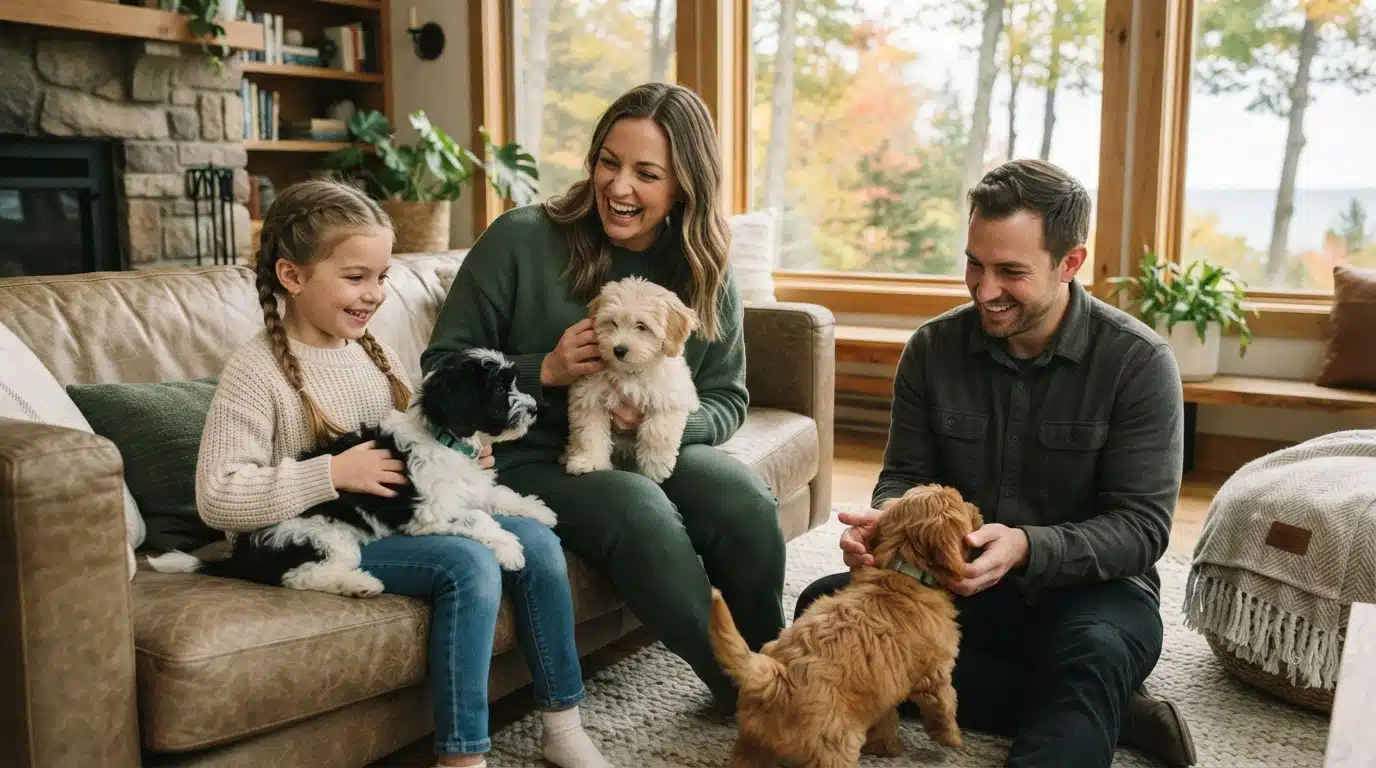
Quick Summary: Successful city living with a puppy requires choosing a small, adaptable breed like a Havanese, Havapoo, or Cavapoo that thrives in limited space. These breeds excel in apartments when provided with a predictable routine, consistent potty training, and gradual exposure to urban noise. Sage Puppies specializes in matching these specific breeds to family lifestyles to ensure a smooth transition into high-rise life.
Stepping out of a high-rise lobby onto a busy Manhattan sidewalk with a young puppy takes as much heart as it does preparation. NYC puppy living rewards the right breed and punishes a rushed choice. Space is tight, elevators are shared, and every potty break means a trip downstairs.
This guide helps you match a breed to real city conditions. We cover choosing apartment dogs, the quirks of apartment puppy care, and how Havanese, Havapoo, and Cavapoo puppies fit into a building-dwelling routine.
As the founder of Sage Puppies, a boutique program in South Jordan, Utah, I’ve spent years raising these three breeds and placing puppies with families nationwide. That experience shapes every recommendation here. When you’re ready to meet well-bred candidates, browse our available puppies.
Understanding the Needs of an NYC Apartment Puppy
NYC puppy living works when you meet two needs your puppy cannot skip: daily mental stimulation and calm indoor habits. A small dog does not need a yard, but it does need your time, a predictable routine, and a space where it feels safe. Get those right, and even a studio becomes a happy home for a Havanese, Havapoo, or Cavapoo.
Space vs. Stimulation Requirements
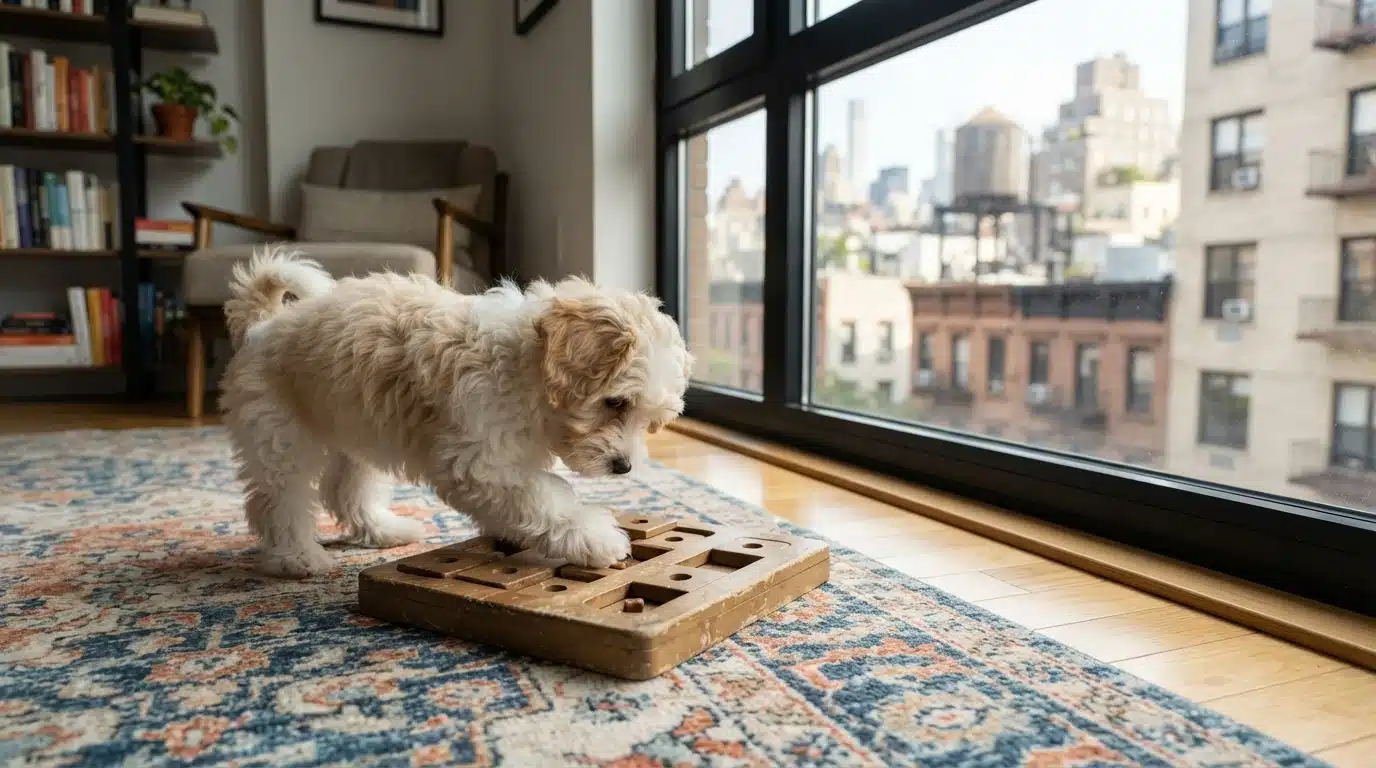
Square footage matters far less than what fills your puppy’s day. A toy breed like the Havanese can thrive in 600 square feet because it mostly wants to be near you, not roaming acres. What the breed does demand is engagement: short training sessions, puzzle feeders, sniffing walks, and play that burns real energy.
Think of your apartment as a series of purpose zones. A crate or pen for rest, a pad or grass tile area for potty breaks, and a clear spot for meals. Rotate a few toys weekly so old ones feel new again. Two or three 15-minute activity blocks often beat one long outing. If you want to see which small breeds fit tight floor plans best, our guide to small breed puppies for small homes breaks down the options.
Managing Indoor Noise and Activity
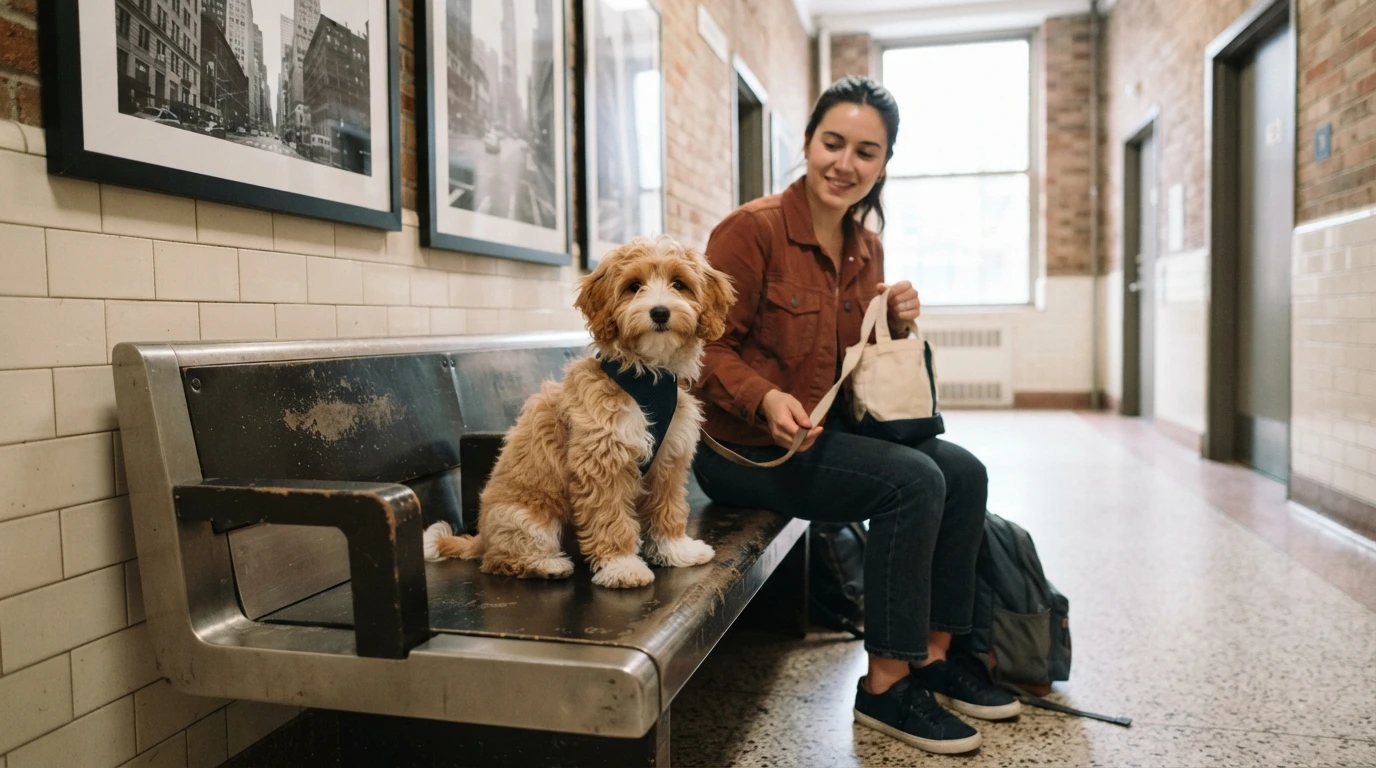
Apartment sounds start early in a puppy’s life: elevator dings, hallway footsteps, sirens, and neighbors coming and going. Puppies raised with gentle, gradual exposure to these noises usually settle fast. Start with recordings at low volume, then pair each sound with a treat. Over a few weeks, your puppy learns that city noise predicts good things, not danger.
Barking is the bigger apartment risk, because one carry-on about a hallway sound can strain neighbor relations quickly. Teach a “quiet” cue from the first week, and interrupt alert barking calmly rather than scolding after the fact. Keep activity polite indoors too. Soft toys, no fetch down long hallways, and a settled evening routine help everyone. Breeds bred as companions, like the Cavapoo and Havapoo, tend to take to this rhythm well. With steady habits, NYC puppy living becomes peaceful for both of you, and our puppy preparation guide covers the first-week setup in more depth.
Selecting the Right Breed for City Living
New York apartments reward small, calm, adaptable dogs, and three breeds fit that description better than most: the Havanese, Havapoo, and Cavapoo. Each one brings a slightly different mix of energy, size, and temperament, so the right choice depends on your building, your schedule, and how much grooming you want to take on.
The Havanese Advantage in Apartments
The Havanese is often called the ideal city dog, and the label holds up. Adults usually weigh 7 to 13 pounds, so they meet most building size rules without a fight. They were bred as companion dogs in Havana, which means their whole job is staying close to their people and staying quiet while doing it.
Noise is the big apartment test. A Havanese will alert you to a knock, but it is not a chronic barker if you meet its needs. Add moderate exercise requirements and a natural love of indoor play, and you get a dog that thrives in 700 square feet.
One trade-off: that silky coat needs regular brushing, or you can keep it in a short trim that cuts grooming time in half.
Considering Havapoo and Cavapoo Traits
Havapoos and Cavapoos blend the traits above with Poodle genetics, which usually adds trainability and a curlier, lower-shedding coat. A Havapoo pairs the Havanese temperament with Poodle smarts, so it tends to pick up apartment routines like elevator manners and potty schedules quickly. A Cavapoo leans toward the Cavalier side: soft, gentle, and happy with a shorter walk and a long nap.
If allergies are a concern, the wavier coats often shed less, though no dog is truly hypoallergenic, so spend time with the puppy first. Both mixes stay small and adaptable, which makes them strong contenders for high-rise life.
Want to see which puppies are ready now? Browse our current litters to compare temperaments.
Navigating Potty Training in an Urban Landscape
Potty training in New York City works, but the elevator changes everything. Your puppy can’t stroll out a back door, so every trip becomes a planned event. The good news: small breeds like Havanese, Havapoos, and Cavapoos learn fast when the routine is steady.
Developing a Consistent Schedule
Start with timing, not the destination. Puppies need to go out when they wake up, after meals, after play, and right before bed. That can mean eight or more trips a day at first, so plan your hallway route and keep a leash by the door.
Use the same door, the same spot, and a simple cue word each time. Consistency tells your puppy what “outside” means, even when outside is a busy sidewalk.
Watch for the signals too. Sniffing, circling, or wandering off usually means go now. Carry small treats and reward your puppy within seconds of finishing outdoors, not back upstairs.
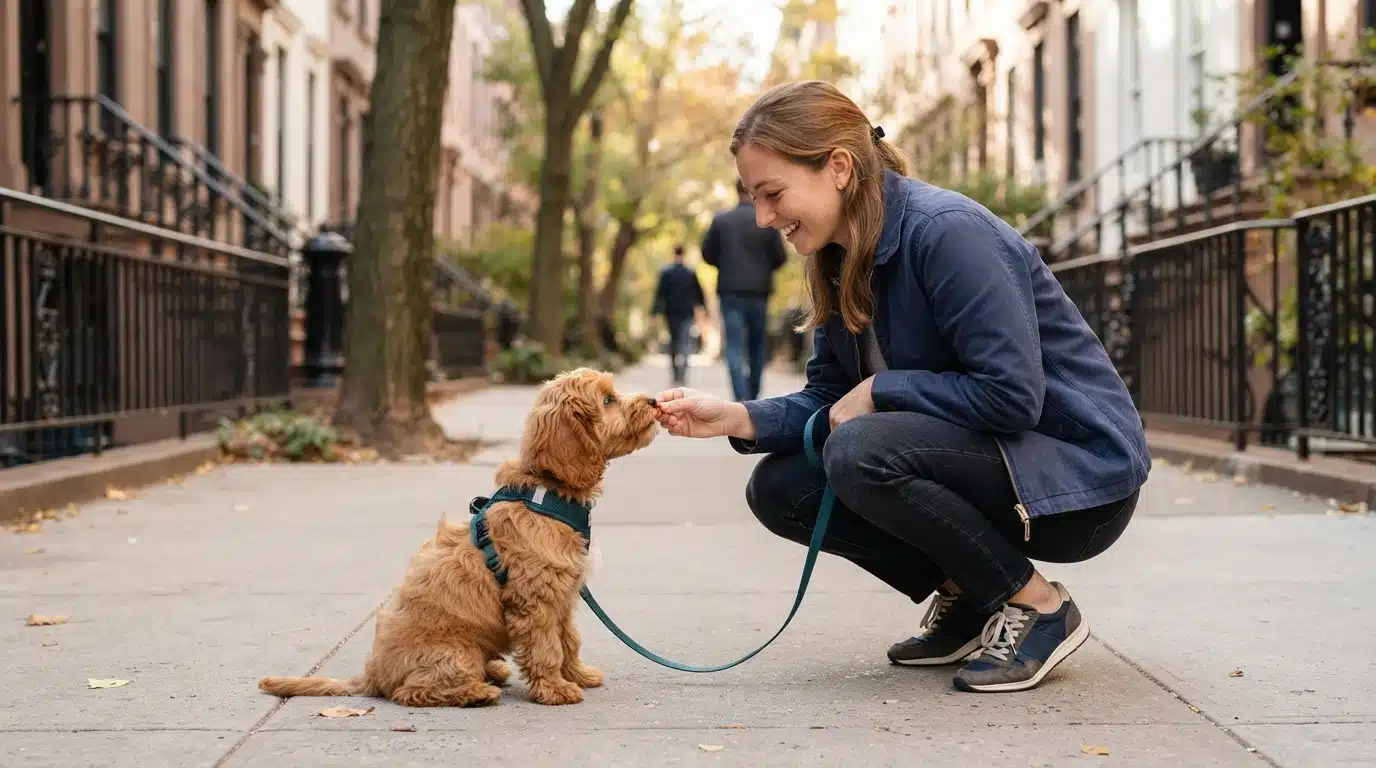
For apartment pups, teach an elevator routine early: sit and wait calmly before the doors open. It keeps trips safe and predictable.
Tip: A two-month-old puppy can hold it roughly two hours. Add one hour per month of age, and never expect longer than that between breaks.
Using Indoor Training Tools Responsibly
Indoor options fill the gaps between walks. A grass patch on a balcony, a tray by the door, or a padded pad in a bathroom corner can save you during storms, late nights, or a puppy who just isn’t ready for a full trip.
Use them as a bridge, not a permanent answer. Puppies trained only on pads often struggle to learn that grass is the real bathroom. If your building has a courtyard or dog run, keep outdoor trips in the mix from day one.
Place the pad far from the food and sleeping area, and swap it out daily. If your puppy misses the pad more than hitting it, move it closer to the door, then gradually toward the hallway.
Accidents happen, so clean with an enzyme cleaner, never ammonia. Ammonia smells like urine and invites repeat visits to the same rug.
If you’re still choosing a breed, our puppy preparation guide walks through what each of our small breeds needs at home. When you’re ready to reserve, start your application.
Socialization and Safety in a Dense City
City puppies meet more strangers, sounds and surfaces in one week than a suburban puppy meets in a month. That intensity is a gift if you pace it right.
Gradual Urban Exposure
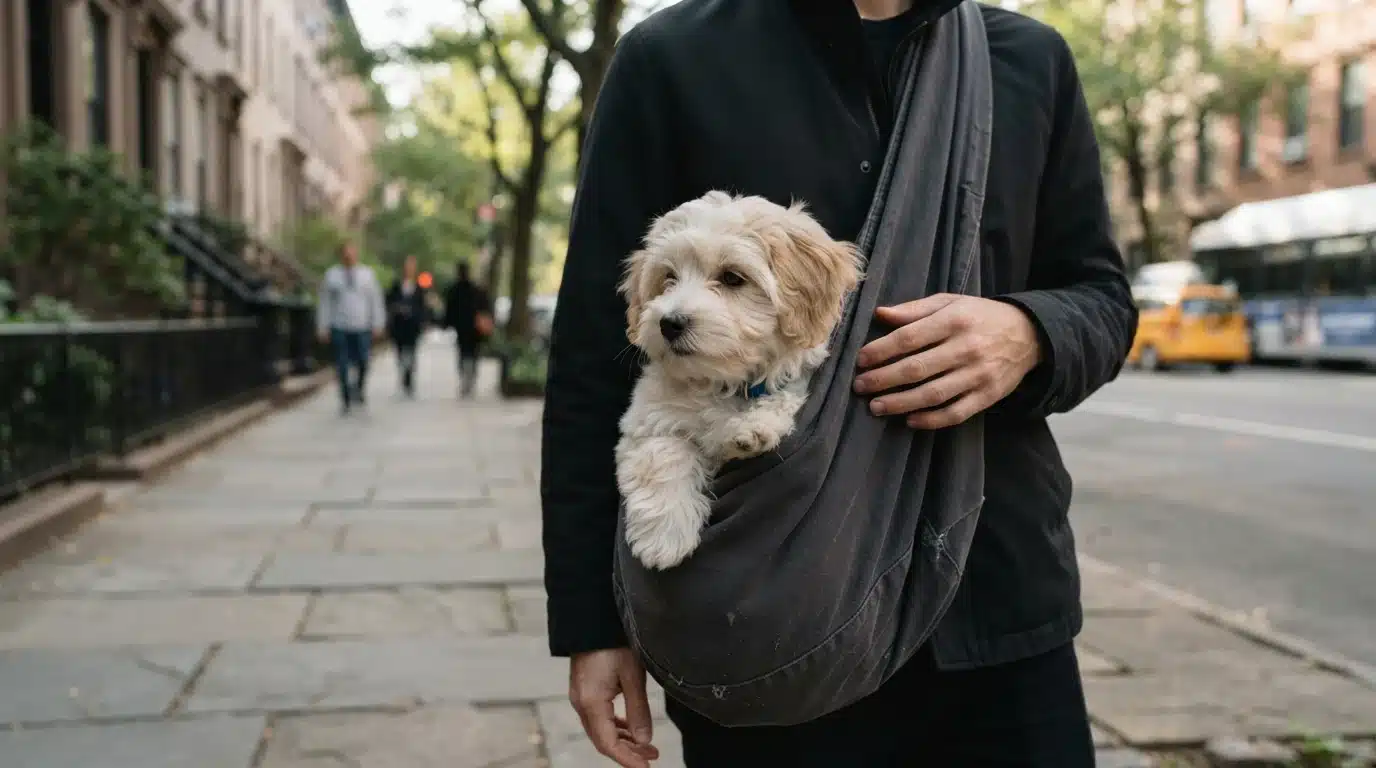
Start small. Carry your puppy in a sling or your arms for the first outings, since full vaccination usually comes around 16 weeks and vets advise keeping young puppies off the ground until then. Watch the AVMA’s guidance on early socialization for timing details.
Pick quiet times first. An early Sunday morning sidewalk teaches more than a rush-hour crowd, because your puppy can notice one thing at a time. Then add layers: a bus rolling past, a stroller, a cyclist, an elevator ride.
Keep every first encounter short and paired with treats. If your puppy hides or freezes, step back and let her watch from a distance. Success looks calm, not brave.
Leash Etiquette for Sidewalks
A six-foot leash is your safety line. Extendable leads let a puppy dart into traffic, so save them for parks.
Teach two cues early: a heel position at your left side and a “leave it” for dropped food, gum and chicken bones. City sidewalks are full of both.
Let people ask before they pet. Not every neighbor wants a greeting, and not every greeting helps your puppy. A simple “she’s in training” buys you space.
Watch for grates, icy patches and puddles near curbs. Salted pavement can irritate small paws, so rinse them after winter walks.
When you’re ready to bring a puppy home, our application walks you through matching the right temperament to your routine.
Building a Support Network and Routine
A puppy settles fastest when the days around its arrival follow a plan. In a small NYC apartment, that plan matters even more, because your neighbors share the hallway and your schedule is often public by default. Start before your puppy comes home: book a vet within walking distance, pick a groomer who knows small coats like the Havanese, and line up one or two backup walkers for late meetings.
Then build the routine. Feed at the same times, take the same potty route, and keep naps in one quiet corner. Small breeds thrive on predictability, and a steady rhythm speeds up house training while cutting down whining that thin apartment walls won’t hide.
Your support network fills the gaps a routine can’t. Swap numbers with a nearby dog-owning neighbor so you have an emergency handler. Join a local small-breed group walk, and ask your breeder questions as they come up; families who work with Sage Puppies get that line straight to Cassie, which is worth more than any forum thread.
Keep a simple shared note with feeding amounts, vet info, and your walker’s contact. If you travel for work or plan a weekend away, update it before you go.
Tip: A calm puppy in a predictable home is the best neighbor you can be in a New York building.
Common Mistakes to Avoid in Urban Puppy Care
City puppies fail for predictable reasons, and most come down to rushing. New owners skip the basics that a quiet suburb forgives. A small breed like a Havanese or Cavapoo can adapt beautifully to an apartment, but only if you build the routine before problems start.
Skipping the potty plan
The biggest mistake is assuming a tiny puppy can “hold it” the way an adult dog does. A young puppy needs a trip out every two hours, plus after meals, naps, and play. In a walk-up, that means planning the elevator delay into your schedule. Pick one spot outside, use the same cue word, and reward immediately. Pee pads inside are fine as a bridge, but keep them near the door so the habit transfers outdoors.
Overexercising on hard pavement
Small joints grow fast, and concrete is unforgiving. Short, frequent walks beat one long march. Watch for lagging, sitting mid-walk, or soreness the next morning. For structured activity ideas that fit a young puppy, our new puppy preparation guide covers safe routines by age.
Ignoring noise and socialization windows
Sirens, subway grates, and crowds overwhelm a puppy who meets them late. Introduce city sounds early and pair each with treats. Carry your puppy past traffic until vaccinations are complete, so the world arrives in small doses.
If your puppy freezes, hides, or refuses treats in public, the outing went too far. End on a win and try somewhere quieter tomorrow.
Slow, consistent exposure is what turns a well-bred puppy into a confident city dog.
Conclusion
The right breed for New York City fits your apartment, your schedule and your energy level. The Havanese adapts easily and loves people. The Cavapoo stays gentle and eager to please. The Havapoo blends both, with a low-shedding coat and a cheerful, flexible nature. All three stay small enough to feel at home in a walk-up or a studio.
Size is only part of the answer, though. Grooming time, daily walks, elevator access and building rules matter just as much. Pick the temperament that matches your routine, not just the coat you like best.
If a well-bred companion is your goal, start with the available puppies at Sage Puppies, then review pricing and reservation details. Ready to take the next step? Complete an application and let us help you find the right fit.

City life suits a well-bred small dog, and the right match starts with an honest conversation. Tell Sage Puppies about your apartment, routine, and family, and Cassie will help you decide whether a Havanese, Havapoo, or Cavapoo fits best. Wisely Bred. Beautifully Loved. Start your application today.
Frequently Asked Questions
Q1: What are the best puppy breeds for small apartments in NYC?
Havanese, Havapoos, and Cavapoos top the list. They stay small, bark less than most breeds, and adapt easily to elevators, sidewalks, and busy hallways.
Q2: How do I potty train a puppy in a city with limited green space?
Use a consistent balcony pad or turf patch, carry your puppy out on a schedule, and reward immediately. Short, frequent trips beat long walks early on.
Q3: Are Havanese puppies good for apartment living in New York?
Yes. Havanese are quiet, affectionate, and happy with indoor play plus two short daily walks. They rarely disturb neighbors.
Q4: How much exercise do small breeds need in the city?
Two or three 15-minute walks plus indoor play keeps Havanese, Havapoos, and Cavapoos content and calm.
Q5: Can I raise a puppy in an NYC high-rise safely?
Yes. Use leashed potty breaks, block balcony gaps, wipe paws after sidewalks, and socialize your puppy gradually to elevator sounds and crowds.
Conclusion
The right breed for NYC life is small, adaptable, and happy without a yard. Havanese, Havapoos, and Cavapoos all fit that profile, but they differ in coat care, energy, and companionship needs, so match the dog to your routine rather than the trendiest name. Prioritize a well-bred puppy from a breeder who health-tests, socializes early, and supports you after pickup, because urban dogs face noise, traffic, and crowded sidewalks that honest breeding helps them handle. Budget for grooming, training, and vet care on top of the purchase price, and plan your apartment setup before your puppy arrives. Choose thoughtfully now, and you gain a calm, confident companion built for city living.