Quick Summary: The phrase “health tested” on a breeder’s website can mean almost anything, so buyers should require verifiable OFA and CHIC records for both parents before paying. For Havanese, Havapoo, and Cavapoo dogs, core screenings include patellar luxation checks, cardiac exams, CAER eye exams, and breed-specific DNA panels for chondrodysplasia, curly coat syndrome, degenerative myelopathy, and progressive retinal atrophy. Buyers can look up parent dogs at ofa.org in about 15 minutes, and a breeder who stalls on sharing results or OFA numbers is a clear red flag. Sage Puppies builds its program around that same standard, sharing each parent’s OFA documentation through its application process so families can verify before any deposit changes hands.
Two breeders can both write “health tested” on a website and mean completely different things. One shares OFA and CHIC numbers you can verify online. The other hands over a single DNA swab sheet and calls it done. That gap is the whole problem for puppy buyers, because the phrase responsible breeder health tests has no shared definition.
This guide fixes that. You’ll learn which tests actually matter for Havanese, Havapoo, and Cavapoo puppies, what ethical breeder testing protocols look like test by test, and how to check a breeder’s records yourself in minutes. We walk through responsible puppy breeding standards the way we apply them in our own program at Sage Puppies, where every parent’s results are shared openly with families before they commit. By the end, you’ll know exactly what to ask for and what a vague answer means.
Real health testing has a shape. When a responsible breeder health tests properly, the claim comes with breed names, test names, and results you can check yourself. When a site just says “parents are health tested,” that phrase can mean almost anything, so it’s worth knowing what it should mean.
The Two Pillars: Parent-Club-Recommended Screening and Genetic Panels
Genuine health testing rests on two parts. First, each breed’s parent club, working with the Orthopedic Foundation for Animals (OFA), lists the screenings recommended for that breed, such as eye exams, patellas, hips, and cardiac checks. A dog that completes every required test, with results released publicly, earns a CHIC number through the OFA’s CHIC program. Second, genetic panels use DNA to screen for inherited conditions a physical exam can’t catch, like the heart and skeletal diseases relevant to Havanese, Cavapoos, and Havapoos. A breeder who does both is covering structure and genes. A breeder who does only one is telling you half the story.

Public Results vs. Private Paperwork: Why Transparency Matters
Here’s the simplest test of a breeder’s claim: can you verify it? The OFA keeps a searchable database of results for millions of dogs, and the OFA itself recommends releasing all results publicly because it protects the breed (OFA policies). So a responsible breeder health tests and then posts the registration numbers so you can look the parents up yourself. “I have paperwork I’ll show you later” is a weaker claim than a CHIC number you can confirm in five minutes. Our guide to questions about health-tested puppy parents walks through exactly what to ask before you commit.
OFA and CHIC: The Database Buyers Should Know
When a breeder says their dogs are “health tested,” ask one follow-up question: tested where? Serious breeders register results with the Orthopedic Foundation for Animals (OFA), a nonprofit that keeps public records of hip, eye, heart, and genetic screenings. If results live only in a PDF the breeder wrote, you have no way to confirm them.
The good news is that checking is free and takes minutes.
How OFA Records Work and What the Grades Mean
Search a dog’s registered name or number at ofa.org and you’ll see each completed test with a result. Hip evaluations get grades: Excellent, Good, or Fair are passing; Borderline, Mild, Moderate, or Severe are not what you want in a breeding dog. Eye exams by a board-certified ophthalmologist come back normal or list a finding, and heart exams work the same way. DNA tests report clear, carrier, or affected for specific gene variants.
Results can also be marked “no results,” which usually means the owner chose not to publish abnormal findings. That’s worth noting, because the dog was tested but the result stayed private.
What a CHIC Number Tells You (and What It Does Not)
The Canine Health Information Center (CHIC) is a companion database. Each breed’s parent club sets a list of required tests, and a dog earns a CHIC number when results for all of them are entered and the owner agrees to make them public. For Havanese, that typically covers hips, eyes, hearing, knees, and cardiac screening.
Here’s the part many buyers miss: a CHIC number does not mean every result passed. It means the tests were done and shared. A dog with fair hips and a clear cardiac exam can hold a CHIC number just like a top-scoring dog can. So read the individual results, not just the number. If a breeder claims CHIC status, look the dog up yourself and check each line. Breed-specific requirements are listed in OFA’s browse by breed section, so you can compare what was done against what your breed actually requires.
Core Health Tests for Small Companion Breeds
Small companion breeds have their own set of health risks, and good breeders screen for them before breeding a single litter. For Havanese, Havapoo, and Cavapoo parents, three screening groups matter most: knees, heart and eyes, and DNA panels.
Patellar Luxation and Hip/Eval Screening
Patellar luxation means a kneecap that slips out of its groove. It runs in small breeds, so it is the first test to look for. The OFA patellar luxation exam is a simple physical check by a licensed veterinarian, and OFA certification is based on that hands-on exam. Official results are recorded for dogs 12 months and older, so puppies themselves won’t carry this certificate.
Hips matter less here than in large breeds, but Havanese are still evaluated. A basic hip exam or a PennHIP reading gives the breeder a baseline. Ask whether both parents have results on file, not just one.
Cardiac and Eye Clearance (CAER/OFA Eye)
Hearts and eyes are the other two pillars. A cardiac exam by a board-certified cardiologist uses a stethoscope first, then an echocardiogram if anything sounds off. The OFA cardiac database records the result, which rules out inherited murmurs and heart defects.
Eyes are checked through the CAER exam, run by a board-certified veterinary ophthalmologist. CAER stands for Companion Animal Eye Registry, and it screens for inherited conditions like cataracts and retinal problems. Because some eye diseases appear later in life, ask how recently the parents were re-examined. Current CAER numbers within the past year are the standard.
Breed-Specific DNA Panels for Havanese, Havapoo, and Cavapoo
DNA testing catches what a physical exam never will. A breeder sends a cheek swab to a lab, and the report shows whether each parent carries specific gene variants.
For Havanese, look for testing for chondrodysplasia (short-limbed dwarfism), curly coat syndrome, and juvenile cataracts. Cavapoos should be screened for degenerative myelopathy and progressive retinal atrophy, which Cavalier King Charles Spaniels and Poodles both carry. Because Havapoos and Cavapoos are crosses, both sides of the pedigree need to be covered.
A responsible breeder can show you the actual lab report, not just say “parents are DNA tested.” Results are recorded as clear, carrier, or affected. Two carrier parents are the pairing to walk away from. Clear-to-carrier pairings produce no affected puppies.
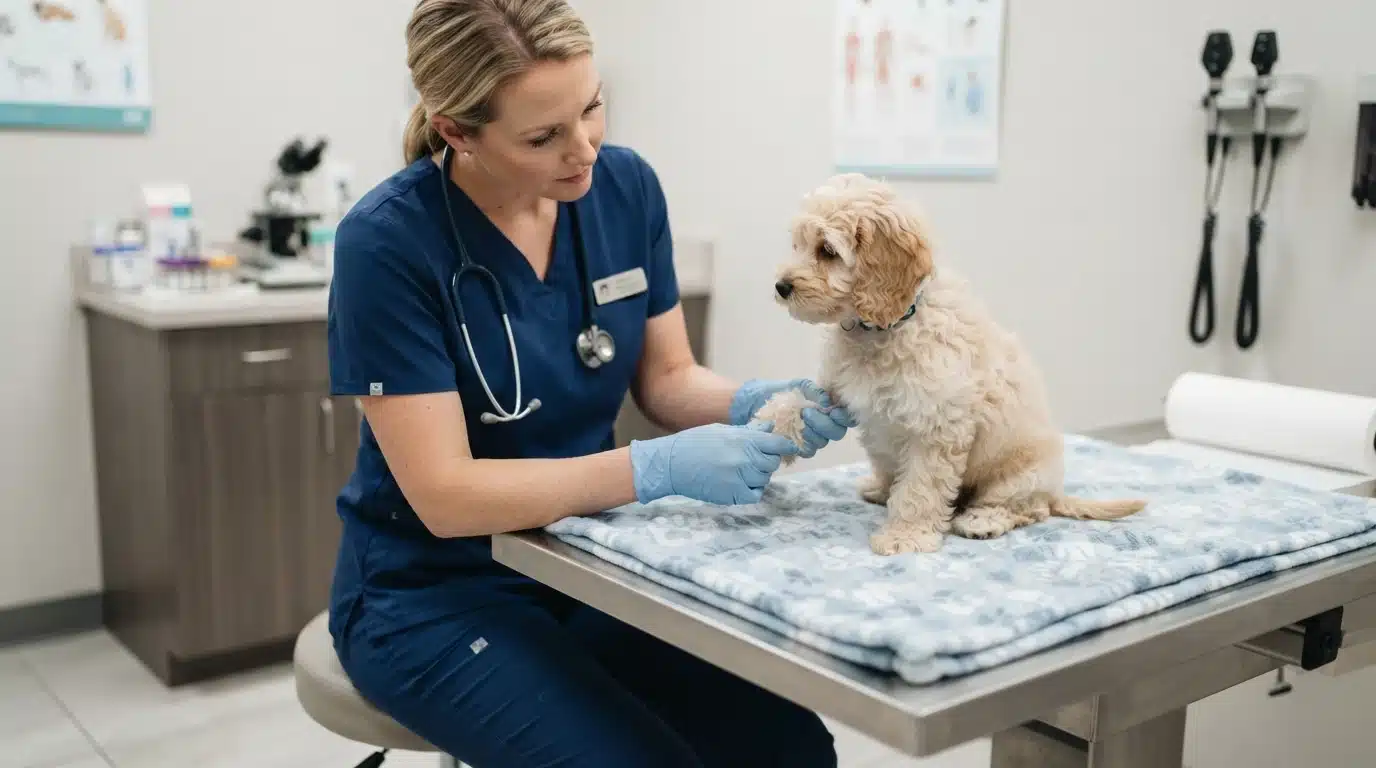
The shortest version of this section: knees, heart, eyes, and DNA. If a breeder skips any one of these for the breed in question, keep looking.
Puppy-Side Care: What Should Happen Before the Puppy Comes Home
A responsible breeder does more than raise a puppy. That puppy leaves with a paper trail and a head start on health habits you can verify in minutes.
Vet Exam, Vaccinations, and Deworming Records Buyers Should Receive
Ask for a health record folder before you pay anything. It should list a veterinary exam date, the vet’s clinic, and any findings. Puppies should have age-appropriate distemper and parvo vaccinations, usually starting around six to eight weeks, plus a routine deworming schedule documented by date and product.
You should also receive the vaccine manufacturer labels or lot numbers, so your own vet knows exactly which series to continue. A written health guarantee is normal too. If a breeder hands you a photocopy with missing dates, keep walking.

Early Socialization and Environmental Health Practices
The first eight weeks shape a puppy for life. Good breeders raise litters in the home, not in outdoor runs, so puppies hear dishwashers, doorbells, and children long before they meet yours. Ask which socialization steps happen daily: handling, novel surfaces, gentle sounds, and short car rides.
Environmental care matters just as much. Look for clean whelping areas, regular sanitation, and a breeder who starts crate familiarity and early house-training routines. These habits make the first weeks at home far easier, and our new puppy care guides pick up where the breeder leaves off.
Ask to see the litter’s living space, in person or on video. A confident, curious puppy in a clean, busy home tells you more than any certificate.
How to Verify a Breeder’s Health Claims in About 15 Minutes
You don’t need a veterinary background to check a breeder’s claims. You need the parents’ registered names and a few minutes on the OFA website. Here’s the workflow.
Pulling OFA Records by Name or Registration Number
The Orthopedic Foundation for Animals keeps a free, public database of test results. Go to the OFA search page and type the parent dog’s registered name or registration number into the search box. Spelling matters, so ask the breeder for the exact name, including the kennel prefix.
Once you find the dog, open its page and read the results list. Look for patella ratings, cardiac exams, eye clearances and any DNA tests for the breed. Mixed breeds like Havapoos and Cavapoos can earn OFA numbers too, so a “we can’t test a mix” answer doesn’t hold up.

For a fuller picture, check whether the dog holds a CHIC number, which means it met each breed’s required tests. If a search comes up empty, ask why. Every breeder here keeps health records visible on each puppy’s page, so you can cross-check before you even apply.
Questions Worth Asking Every Breeder About Health Testing
A few direct questions sort careful breeders from casual ones fast. Ask these before you send a deposit:
- Which tests did both parents pass? Get breed-specific answers, not “they’re healthy.”
- Can you send the OFA numbers? Real breeders share them on the spot.
- Do results cover both parents, or just one? Both lines matter.
- What did the eye exam find, and when? Annual CAER exams are the standard.
- What happens if a puppy develops a problem? Hear the contract terms.
Vague or defensive answers are a signal to walk away.
Ready to see transparent records in one place? Start your application today.
Red Flags and Green Flags When Comparing Two Breeders
When you have two breeders side by side, the differences show up fast if you know where to look. Health testing paperwork separates careful programs from careless ones more clearly than anything else.
Common Red Flags Buyers Should Not Overlook
Watch for vague answers about parent health. If a breeder says the parents are “healthy” but cannot produce OFA or CHIC records, walk away. Other warnings: no vet exam records for puppies, litters always available, no questions asked about your home, refusal to let you meet the mother, and pressure to pay a deposit same-day. A breeder who dismisses your requests for documentation is telling you how they will handle problems later.
What a Transparent Health Guarantee Looks Like
A transparent guarantee is written, specific, and easy to read before you commit. It should list the conditions covered, the time window, what the breeder pays for, and what happens if a serious genetic issue appears. Strong programs pair the guarantee with health records you can review early. On our Sage Puppies pricing and reservation page, you can see exactly what each puppy’s price includes, then confirm health details during your application before any money changes hands. That order matters.
Putting It Together: A Buyer’s Health-Testing Checklist
Use the Checklist Before You Place a Deposit
Print this list and work through it on the phone or in person:
- OFA/CHIC numbers for both parents, searchable on ofa.org
- Patellar luxation exams for sire and dam
- Eye clearance (CAER exam) within the past year
- Cardiac evaluation by a cardiologist when offered
- Hip results for Havanese and Cavapoo lines
- Genetic panel results, especially for parents of mixed breeds
- Written health record for the puppy’s exam, deworming and first vaccines
If a breeder stalls on any item, treat that as your answer. Honest programs share records without prompting.
Ask one closing question: “What health problems have appeared in your lines, and how did you respond?” Good breeders answer directly.
When a program’s records hold up, you can move forward with confidence. At Sage Puppies, every family sees each puppy’s health documentation through our application process before any decision is final.

You now know which tests to ask about. At Sage Puppies, we share clear health records for every Havanese, Havapoo and Cavapoo puppy, so you can verify before you commit. Ready to meet a wisely bred puppy? Start your application today.
Frequently Asked Questions
Q1: What health tests should responsible breeders run on puppies?
Parents, not puppies, get most tests. Expect OFA eye exams, patella checks, cardiac clearance, and hip evaluations on both parents, plus DNA panels for breed-specific conditions before breeding.
Q2: What does CHIC certification mean for puppy buyers?
CHIC shows a dog completed the required health tests for its breed. It does not mean results passed; always read the individual scores listed on the OFA database.
Q3: What questions should I ask a breeder about health testing?
Ask which tests each parent had, request OFA or CHIC numbers, and ask how results shaped their breeding choices. Good breeders answer openly and show documentation.
Q4: How do I verify a breeder’s OFA results?
Search each parent’s registered name at ofa.org. Results appear publicly, including any failures.
Q5: Do Havapoos and Cavapoos need the same tests as purebreds?
Not exactly. Responsible breeders test both parent breeds, covering conditions from each line.
Q6: What if a breeder refuses to share health records?
Walk away. Transparency is standard, and at Sage Puppies every family reviews health documentation before reserving a puppy through the application process.
Conclusion
Responsible breeders prove their care with paperwork, not promises. Look for OFA results covering hearts, hearing, kneecaps, hips, and eyes, a CHIC number when the breed qualifies, and clear records for both parents. Verify everything yourself on the OFA site; it takes minutes and it matters. Havanese, Havapoo, and Cavapoo families should pay special attention to cardiac, patellar, and eye screenings, since those concerns show up most often in these small breeds. A breeder who shares results openly, explains normal findings, and answers your questions without defensiveness is telling you something important. That kind of transparency is exactly what we built into every health record and pairing at Sage Puppies.