Quick Summary: No dog is truly hypoallergenic, since all dogs produce the Can f 1 allergen in saliva and dander. Poodles usually test lowest for Can f 1 and shed the least, but Havanese are a close second and often win on temperament, especially for families wanting a gentle, affectionate companion under 13 pounds. Both breeds need serious grooming, with Poodles requiring professional cuts every 4 to 6 weeks (around $800-$1,300 per year) and Havanese needing daily brushing to prevent mats. The article recommends spending time with a specific puppy before committing, since individual reactions vary more than breed averages.
If fewer sneezes are the goal, the Poodle usually wins on paper. But the Havanese is closer than the label suggests, and for many families the real deciding factors are grooming, size and temperament, not shedding alone.
That is the problem with the Havanese vs Poodle question. Allergy sufferers and first-time dog owners want to know which puppy will actually trigger fewer reactions at home, and what each coat demands between groomer visits.
This comparison starts with what the AKC and current allergen research say about Can f 1, the main dog allergen. Then the Poodle vs Havanese matchup gets practical: Havanese shedding, dander, coat care, size and daily routines, side by side. Browse current litters on our available puppies page, or see pricing and reservation details before you decide.
Havanese vs Poodle: Side-by-Side at a Glance
| Havanese | Poodle (Toy and Miniature) | |
|---|---|---|
| Coat type | Long, wavy double coat, per AKC standard | Curly, dense, single-textured coat that grows continuously |
| Shedding | Low, but not zero; loose hair often catches in the coat | Very low; shed hairs tend to stay trapped in the curls |
| Allergy profile | Better tolerated by many mild allergy households; still produces dander and saliva allergens | Often recommended for allergies, though AKC notes studies still found meaningful Can f 1 levels in Poodle coats |
| Grooming commitment | Frequent brushing, occasional trims, regular baths to prevent matting | Professional grooming every 4 to 6 weeks plus regular at-home brushing |
| Adult size | 8.5 to 11.5 inches, 7 to 13 pounds | toy: under 10 inches, 4 to 6 pounds; Miniature: 10 to 15 inches, 10 to 15 pounds |
| Best fit | Families wanting a small, affectionate companion comfortable with routine brushing | Allergy-focused households ready to budget for routine professional grooming |
How Havanese and Poodle (Toy and Miniature) Compare
Havanese
The Havanese is a small Cuban companion breed with a long, wavy double coat. It suits families wanting an affectionate lap dog who tolerate routine brushing. Its angle here: low shedding, but loose hair often stays trapped in the coat.

Key strengths
- Low shedding, mild dander profile
- Small size: 7 to 13 pounds
- Warm, people-focused temperament
Poodle (Toy and Miniature)
The Poodle is a bright sporting breed with a curly, continuously growing coat, bred down into Toy and Miniature companions. It fits allergy-focused households ready to budget for professional grooming. Its angle here: very low shedding, though allergens still linger in the curls.

Key strengths
- Very low, curl-trapped shedding
- Two companion sizes under 15 inches
- Exceptional intelligence and trainability
What Hypoallergenic Really Means for Both Breeds
Why the AKC Says No Dog Is Truly Hypoallergenic
The word “hypoallergenic” gets thrown around loosely in puppy ads, so it helps to start with the facts. The dog allergen people react to most is a protein called Can f 1, found in saliva, dander and urine – not in fur itself. That’s why a shedding coat isn’t the whole story.
The AKC is clear that no dog is truly hypoallergenic, and researchers have even found Can f 1 in homes with “hypoallergenic” breeds at levels similar to other dogs. Allergy specialists at the AAAAI note the same: some low-shedding breeds carry equal or higher allergen levels in their hair and dander.
So what can these breeds actually offer? Less loose hair in your home, which means less dander spread around. That can reduce exposure – but it’s not a guarantee, and honest breeders won’t promise one.
Where the Havanese and Poodle Actually Land on Allergens
Both breeds sit at the gentler end of the allergen spectrum, for similar reasons. Each has a hair-like coat that traps loose hair and dander instead of dropping it around the house. Neither breed sheds much, so weekly grooming removes most allergens before they build up on furniture and floors.
The practical differences show up in coat care, not allergen output. A Poodle’s dense curls need professional clipping every four to six weeks. The Havanese coat is silkier and grows longer, so it tangles without regular brushing. Both options demand a grooming commitment.
For a closer look at daily care, see this complete Havanese care guide. And if you live with allergies, spend time with the breed before you commit. Individual dogs vary, and your own reaction is the only test that counts.
Coat Type, Shedding and Dander Compared
Both breeds shed very little, but they get there in different ways. The Havanese carries a soft double coat of long hair. The Poodle grows a dense, curly single coat. That difference shapes how much dander each dog spreads around your home, and how much grooming work lands on you.
The Havanese Double Coat in Allergy Homes
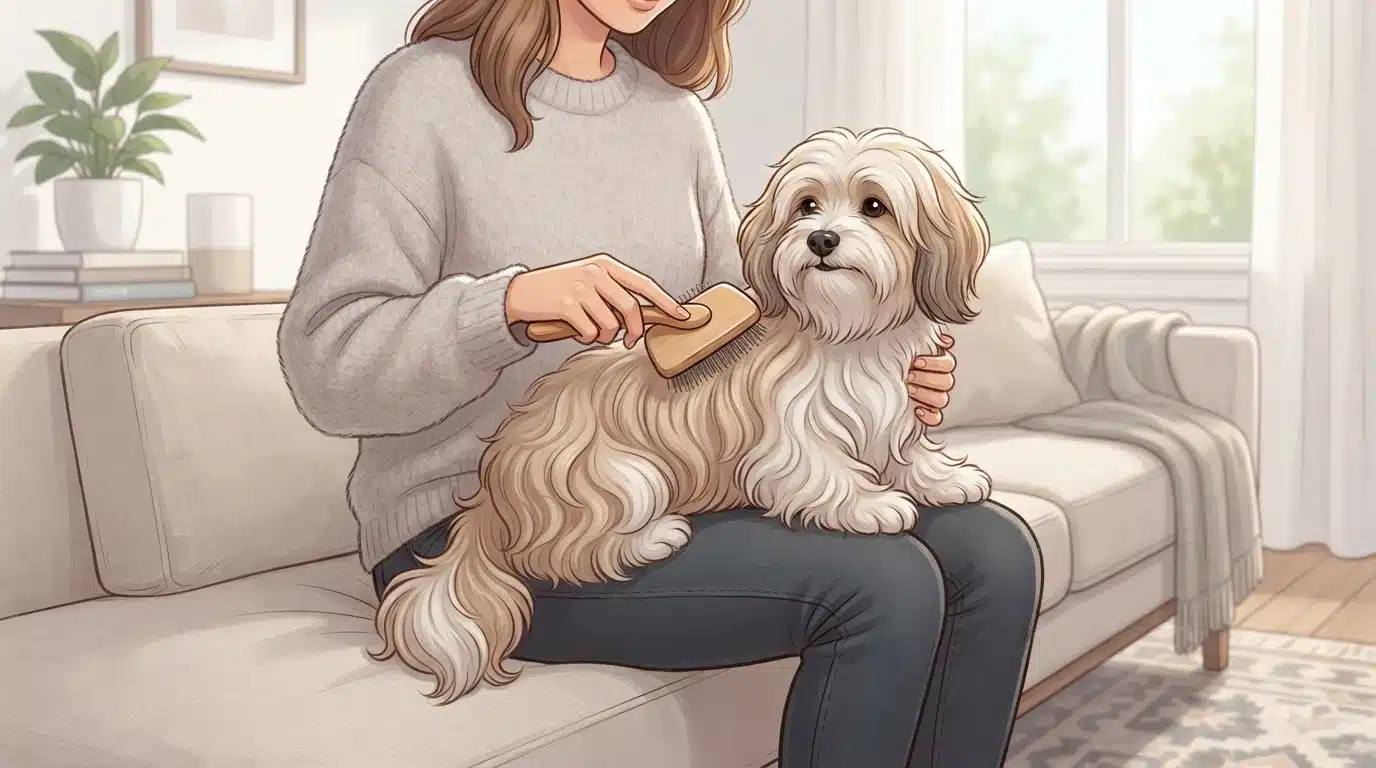
The Havanese coat feels like silk. It has a soft undercoat beneath a longer outer layer, which is unusual for a low-shedding breed. Hair tends to stay in the coat rather than fall out, so you will not find much on your sofa. The catch is that trapped hair and dander release when you brush, so regular combing matters more than it might with a curlier breed.
The AKC breed standard describes the Havanese coat as abundant but light and silky, never coarse or wiry. That texture holds less dander than a heavy shedding coat releases. For many mild allergy sufferers, daily contact stays comfortable with a consistent brushing routine a few times a week.
The Poodle Curl and What It Traps
The Poodle’s curly coat works like a filter. Loose hair and dander catch in the curls instead of dropping to the floor, which is why Poodles rank among the lowest-shedding breeds. Nothing escapes until a brush pulls it out.
That filter needs regular service. Mats form fast where curls tighten, especially behind the ears and under the legs. Most Poodle owners book professional grooming every four to six weeks and brush at home several times a week.
For allergy households, the Poodle usually traps slightly more dander than the Havanese. The trade-off is a firmer grooming commitment. If you skip it, trapped dander builds up near the skin and releases all at once during the next brushing session.
Grooming, Cleaning and Daily Upkeep
Neither breed sheds much, so the hair stays on the dog. That means brushing, bathing and trimming become part of your week. Here is what each routine actually looks like.
At-Home Brushing and Bathing Routines
Both coats mat fast, so plan on brushing every other day at minimum. A Havanese has a silky double coat that tangles at the collar, behind the ears and in the armpits. A Poodle’s curly coat traps loose hair tighter, so mats form deeper in the coat and hide until they pull.
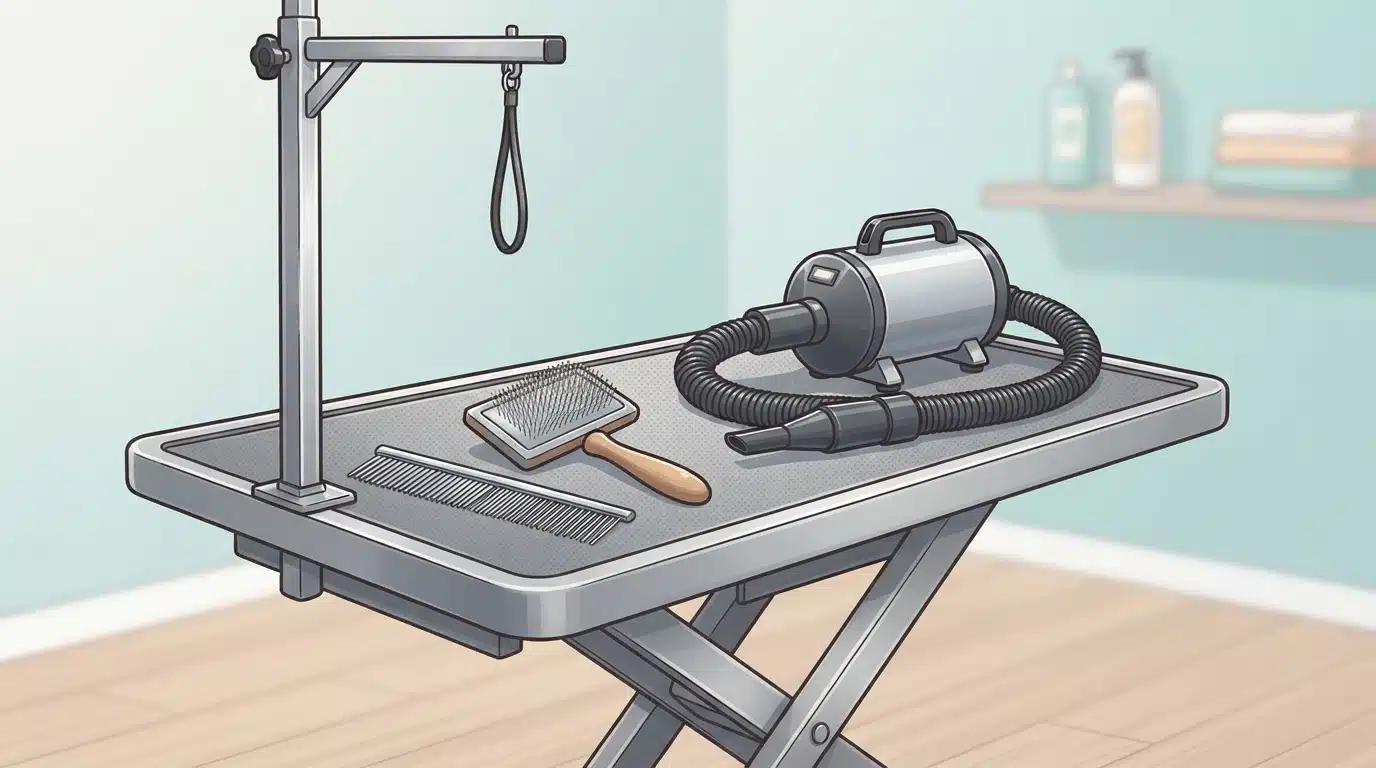
Use a slicker brush plus a metal comb to check your work. Mist the coat with a leave-in conditioner first, because brushing dry hair snaps it. Work in sections from the skin outward.
Bathe every two to three weeks. Blow the coat fully dry afterward, since damp hair mats twice as quickly. Our grooming guides for beginners walk through the tools step by step.
Professional Grooming and Cleaning Budget
Most families book a full groom every four to six weeks. Expect $60-$100 per visit for either breed, depending on your area and the dog’s size. A short “puppy cut” costs less and stretches the interval; a longer show-style coat costs more and needs daily brushing.
Between visits, add trims at home. You will clip around the eyes, sanitize the groin area and shorten paw pads. A small trimmer kit runs about $40 once.
Your house also stays cleaner than with a shedding breed, so you can skip daily vacuuming. A weekly pass and monthly deep clean usually handle it.
| Task | Havanese | Poodle |
|---|---|---|
| Brushing | Every 1-2 days | Daily |
| Bathing | Every 2-3 weeks | Every 2-3 weeks |
| Full groom | Every 4-6 weeks | Every 4-6 weeks |
Budget roughly $800-$1,300 per year for professional grooming, either way.
Size, Temperament and Allergy-Sensitive Household Fit
Coat type decides how much dander a dog sheds. Size and temperament decide whether the dog fits your daily life. You need both answers before you commit.
Choosing Between Toy, Miniature and Standard Poodle Sizes
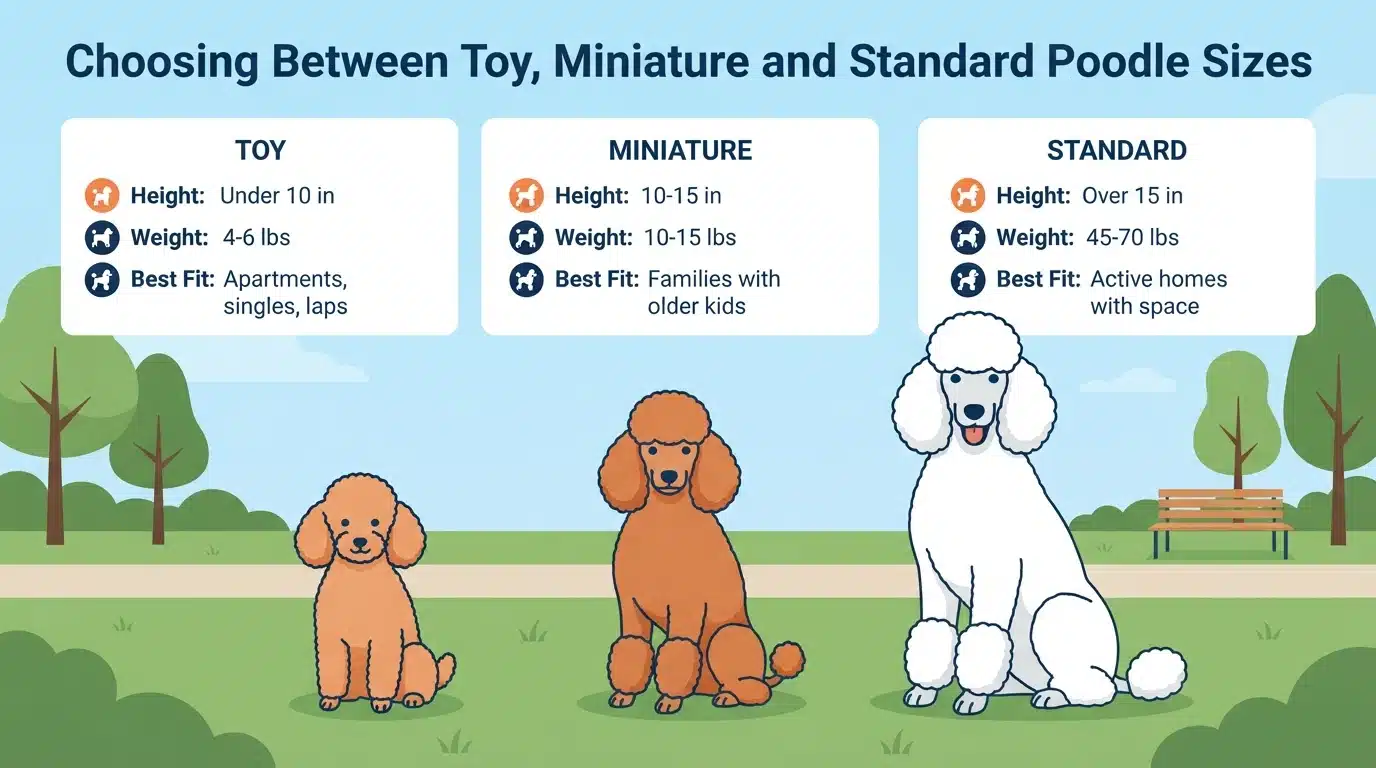
Poodles come in three sizes, and all three share the same curly, low-shedding coat. The Toy stands about 10 inches tall and weighs 4 to 6 pounds. The Miniature reaches 10 to 15 inches and 10 to 15 pounds, while the Standard tops 15 inches and can weigh 45 to 70 pounds.
For an allergy household, size matters less than coat care, but it still shapes the decision. A Toy suits apartments and laps. A Miniature handles stairs, short hikes and play with older children. A Standard needs more room and more exercise.
| Size | Height | Weight | Best Fit |
|---|---|---|---|
| Toy | Under 10 in | 4-6 lbs | Apartments, singles, laps |
| Miniature | 10-15 in | 10-15 lbs | Families with older kids |
| Standard | Over 15 in | 45-70 lbs | Active homes with space |
Smaller Poodles can be more sensitive to rough handling, so families with toddlers often do better with a Miniature.
Havanese Personality in Allergy Houses
The Havanese brings a different energy. This breed weighs 7 to 13 pounds and was bred to be a companion, so it thrives on people. Its silky coat sheds little, but it mats fast without brushing a few times a week.
Havanese dogs are gentle with children and rarely nippy. They follow family members from room to room and dislike long hours alone. If someone in your home has allergies, that constant closeness means more dander contact, so keep the bedroom off limits and wash hands after long cuddle sessions.
Both breeds suit allergy households when paired with consistent grooming. The better fit comes down to size, time and how much coat work you will actually do.
Looking for a well-bred companion? Learn more about our Havanese puppies or see pricing and reservation details. When you’re ready, submit an application to start the matching process.
Practical Allergy Management With Either Breed
No dog is truly hypoallergenic. The Havanese and the Poodle both shed less dander-spreading hair than most breeds, but how you manage your home decides how comfortable you actually feel. Good habits matter more than the label on the breed.
Home Habits That Lower Allergen Load
Start with the bedroom. Keep the dog out of it, and wash your bedding weekly in hot water. Most people get their worst symptoms where they sleep, so this single rule does heavy lifting.
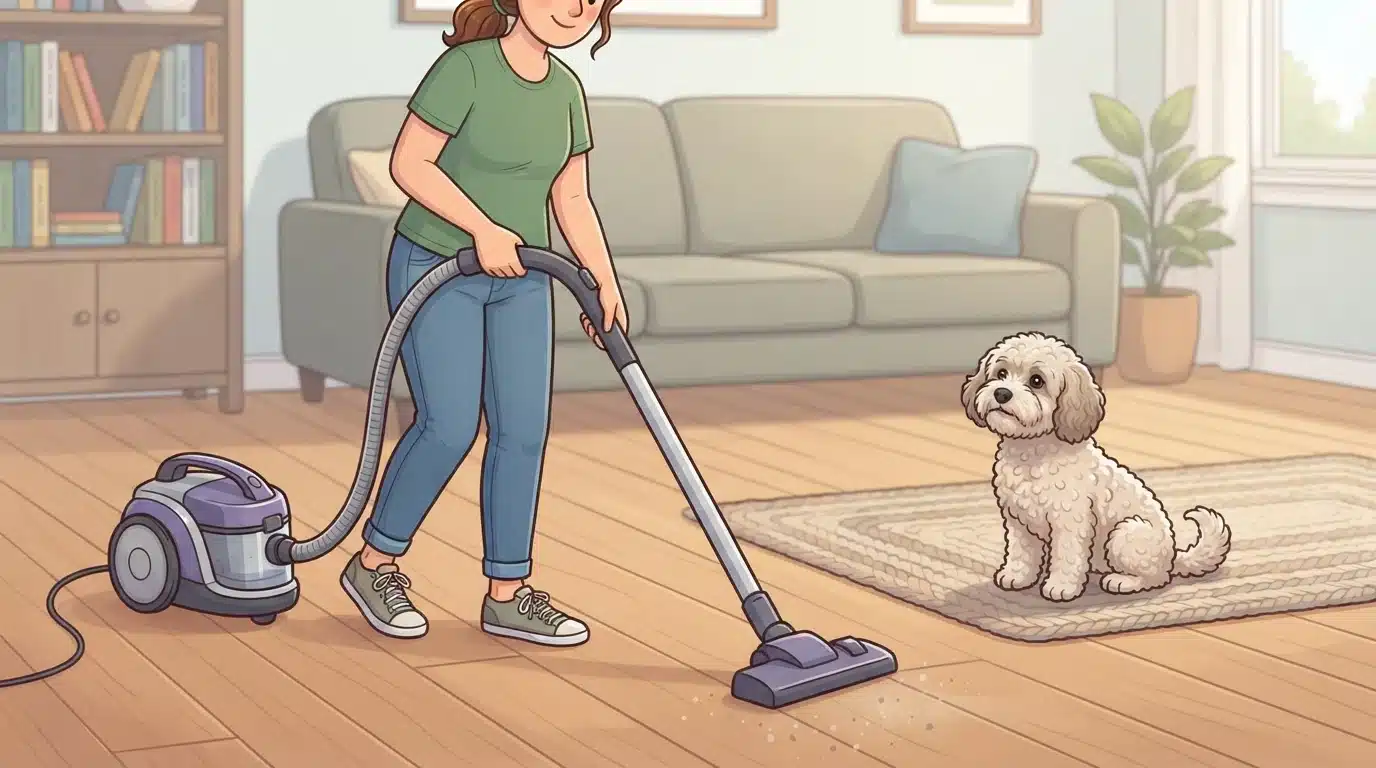
Next, control the air and the floors. A HEPA filter traps airborne dander, and vacuuming twice a week with a HEPA machine keeps it from recycling through the room. Hard floors beat carpet. If you keep rugs, wash them monthly.
Grooming belongs outside the bedroom too. Brushing either breed in a garage, bathroom or porch keeps loose hair and dried saliva from settling into your sofa. Bathing your dog every one to two weeks also reduces the allergen load on the coat.
Testing a Dog Before You Commit
Spend real time with the exact dog you hope to bring home. A five-minute meet at a park tells you little. Arrange at least two visits of an hour or more, and handle the puppy, press your face near its coat, and notice how you feel that evening and the next morning.
Ask the breeder for a blanket or toy the puppy has slept with, then keep it by your pillow for a few nights. Symptoms often show up on a delay, so watch for 24 to 48 hours.
Allergy sufferers react to individual dogs, not just breeds. Some people tolerate one Havanese and not another. That is why a trial matters more than any breed chart, and why we encourage every family to meet their puppy before reserving. If you are comparing available litters, start with our available puppies and review pricing and reservation details before you visit.
Ready to take the next step? Complete our puppy application and tell us about your household.
Which Should You Choose: Havanese or Poodle?
Both breeds shed very little. The right pick comes down to how you live, not how each dog looks.
When a Poodle Is the Better Fit
Choose a Toy or Miniature Poodle if you want the lowest-allergen coat science can measure. Poodles carry the lowest Can f 1 levels among common breeds, so sensitive households often do best here. Poodles also need structured training and real mental work. They thrive with owners who enjoy teaching tricks, going to class, or doing dog sports. Expect professional grooming every four to six weeks.
When a Havanese Is the Better Fit
Pick a Havanese if your priority is temperament over coat stats. The breed standard describes a lively, affectionate companion that bonds deeply with its family and handles apartment life with ease. Havanese are sturdier than they look, patient with gentle kids, and happy with shorter play sessions instead of hard exercise. First-time owners often find them more forgiving to raise. Their coat needs daily brushing to prevent mats, so brush time matters more than allergy claims. If that daily ritual sounds pleasant rather than burdensome, this is your breed.
At Sage Puppies, we raise Havanese and Havanese mixes because that companion temperament fits so many families. Compare pricing, then apply when you’re ready.

Neither breed is truly allergy-proof, but both shed far less than most dogs, and the right match depends on your grooming time and household. If a Havanese feels like your fit, Sage Puppies raises them in Utah with owner-managed care. Start your application today and tell Cassie about your allergy needs.
Frequently Asked Questions
Q1: Are Havanese or Poodles better for allergy sufferers?
Both work well for many allergy households because both shed little dander-binding hair. Poodles typically carry lower Can f 1 levels, but individual dogs vary, so spend time with a litter before committing.
Q2: Do Havanese shed less than Poodles?
They shed about the same: very little. Both breeds lose loose hair into the coat instead of onto your couch, which is why both need regular brushing to prevent mats.
Q3: Which is more hypoallergenic, Havanese or Toy Poodle?
No dog is truly hypoallergenic. Toy Poodles usually test lower for the Can f 1 allergen, though genetics vary per dog. Your own exposure test matters more than breed averages.
Q4: Does grooming frequency affect allergies?
Yes. Bathing and brushing every one to two weeks removes dander at the source. A freshly groomed dog triggers fewer reactions, so build grooming costs into your decision.
Q5: Are Havapoos a good option for allergy-prone families?
Often, yes. A Havapoo blends the Havanese’s easygoing nature with Poodle-type coat traits, though coats vary by litter. Meet the puppy first, especially with asthma in the home.
Q6: Should I test my family’s reaction before buying?
Absolutely. Visit the breeder, handle a puppy, and rub your face afterward. Reactions usually show within hours, giving you real evidence instead of breed-label promises. When you’re ready, start your application at Sage Puppies.
Choosing With Confidence
Neither breed is truly hypoallergenic. Both shed very little, and both produce the Can f 1 protein that triggers most dog allergies. The Poodle’s tight curls usually release less dander, while the Havanese silk coat still needs steady grooming to keep allergens down.
Spend time with each breed before you commit. Visit a breeder, handle the coat, and watch your symptoms over a few days. Your reaction matters more than any chart.
Pick the Havanese for a cheerful, people-focused companion with a lower-energy routine. Pick the Poodle for sharper trainability and a sportier build. Both fit apartments, both suit first-time owners, and both reward consistent care. Match the dog to your household, your schedule, and your allergies.