Quick Summary: Puppies overheat or chill faster than adult dogs, so check pavement, wind, and storm alerts, not just the thermometer, and keep outings brief. Watch for heavy panting, shivering, or weakness, and act early with room-temperature cooling or gentle drying, never ice baths or direct heat. Never leave a puppy in a parked car, and prep a storm-safe indoor space with ID, food, and records before severe weather hits. If a puppy collapses, struggles to breathe, or seems confused, get emergency vet care right away.
A small puppy can leave a cool South Jordan home and overheat on sun-warmed pavement within minutes. In winter, wind, wet fur, and frozen ground can turn a quick potty break into a real risk.
Puppy heat stroke can develop fast, especially in small companion breeds. Cold weather puppies also lose body heat quickly, while storm anxiety dogs may panic during thunder, high winds, or power outages.
This guide gives families clear, year-round steps for safe walks, potty trips, travel, and emergency plans. You will learn early signs of puppy heat stroke, cold exposure, and storm stress, plus when to call a vet. Thoughtful, home-raised puppy care starts with knowing how fast weather can change.
Why Puppies Need Extra Protection in Extreme Weather
What Makes Puppies More Vulnerable
Puppies can lose or gain body heat faster than adult dogs. Their small bodies, developing systems, and limited experience also make it harder for them to cope with heat, cold, wind, or sudden noise.
Small companion puppies may cool down quickly when wet or low to the ground. In heat, a playful pup may keep going long after they need a break. The American Veterinary Medical Association notes that very young and small dogs can struggle more in cold weather.
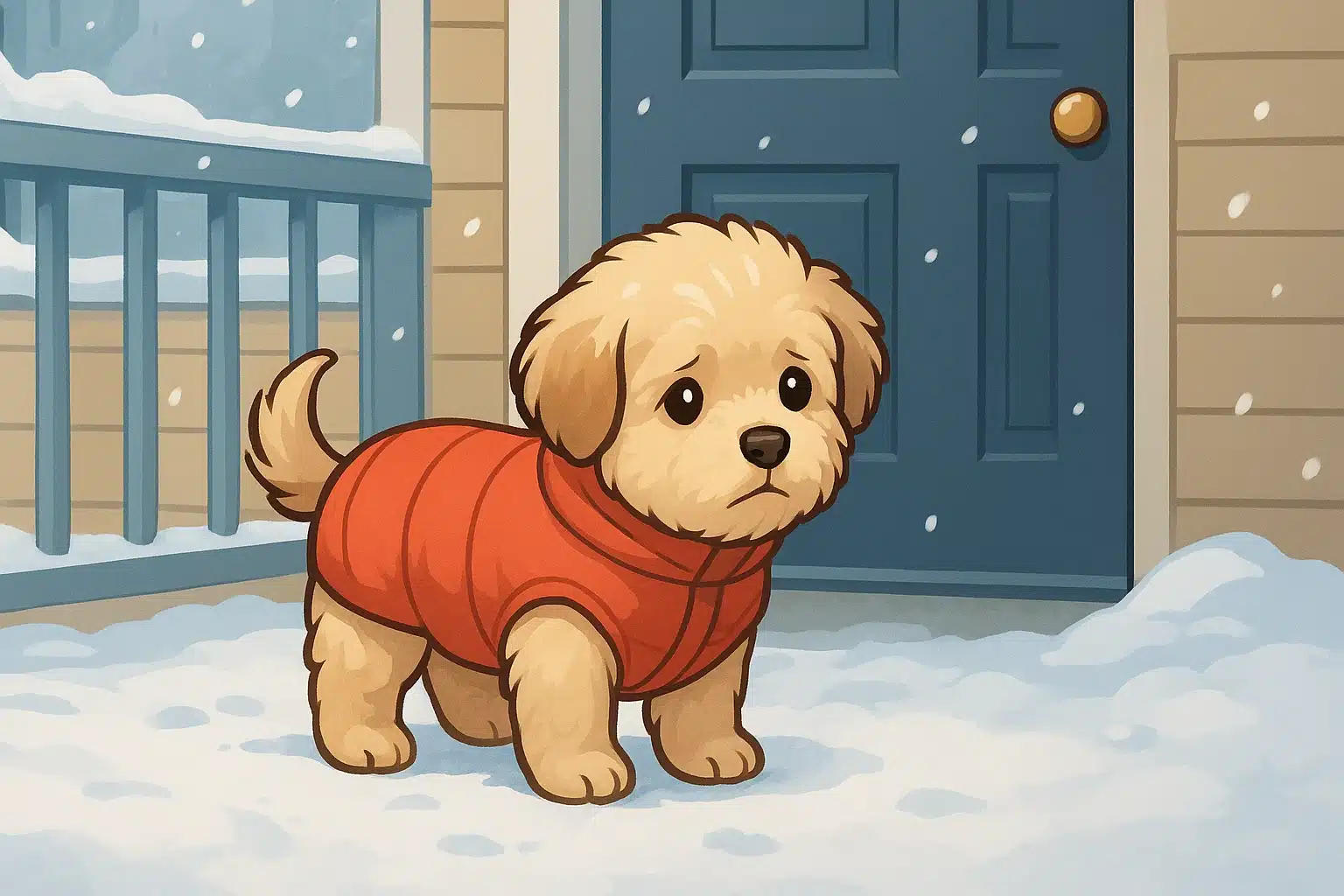
Watch your puppy, not just the forecast. Shivering, heavy panting, weakness, or reluctance to walk means it is time to get indoors.
Read the Whole Weather Picture
Temperature alone does not tell you whether an outing is safe. Check sun, pavement heat, humidity, wind, wet fur, air quality, and storm alerts before heading out.
Use this quick check:
| Condition | Puppy risk | Safer choice |
|---|---|---|
| Hot sun or warm pavement | Overheating and paw burns | Go out early or stay indoors |
| Wind, snow, or rain | Fast heat loss | Keep potty trips brief |
| Thunder or high winds | Fear and escape risk | Settle indoors before the storm |
The AVMA advises fresh water, shade, and cooler walk times in warm weather, and warns that hot surfaces can burn paws. Review its heat safety guidance before summer outings.
Also Read: Havanese, Havapoo & Cavapoo Puppy Care Blog
Protect Your Puppy From Heat and Puppy Heat Stroke
Plan Safer Summer Outings
Small puppies can overheat fast, even during a short family outing. Plan walks and play for early morning or late evening, then keep sessions brief and easy.
Bring water, a travel bowl, and a shaded place to rest. In Utah’s dry summer heat, a puppy may keep playing long after they need a break.
- Choose grass or shaded paths.
- Stop often for water and calm time.
- Skip hikes, festivals, and long patio visits on hot days.
- Head home if your puppy pants hard or slows down.
If you feel hot standing still, your puppy needs a cooler plan.
Prevent Hot Pavement and Vehicle Emergencies
Pavement can burn tender paw pads, so check it with the back of your hand for several seconds before you head out. Choose grass, dirt trails, or indoor play if it feels too hot.
Never leave a puppy in a parked car. The American Veterinary Medical Association warns that a vehicle can rise about 20°F in 10 minutes, even on a mild day.
| Risk | Safer choice |
|---|---|
| Hot sidewalk | Walk on grass or stay indoors |
| Quick store stop | Leave puppy home in cool indoor space |
| Car travel | Use air conditioning and a secured carrier |
Recognize Heat Stress and Heatstroke
Heavy panting, drooling, restlessness, weakness, or gums that look dry or oddly colored can signal heat stress. Staggering, vomiting, confusion, or collapse are urgent signs of heatstroke.
Act at once:
- Move your puppy into shade or air conditioning.
- Start cooling with room-temperature water and a fan.
- Call the nearest emergency veterinarian and leave right away.
Do not use an ice bath. The AVMA first-aid guidance advises prompt cooling and veterinary care, while warning that cold-water immersion can worsen the problem.
Heatstroke is an emergency, not a wait-and-see moment.
Also Read: How to Keep Puppies Safe During Extreme Weather and Temperature Changes
Keep Puppies Safe in Cold Weather
How Cold Is Too Cold for a Puppy to Be Outside?
There is no single safe temperature for every puppy. Small, young puppies lose body heat faster, and wind, wet fur, snow, and shade can make a mild day feel much colder.
For Havanese, Havapoo, and Cavapoo puppies, use outdoor time for brief potty trips and supervised play, then head back inside. The AVMA advises that very young dogs are more prone to cold stress and should not stay outdoors long in below-freezing weather.
Watch your puppy, not just the forecast:
- Shivering or lifting paws means it is time to go in.
- Keep outings shorter during wind, sleet, or deep snow.
- Avoid frozen ponds, icy steps, and unplowed paths.
- Never leave a puppy outside alone in winter.
If you feel unsure, choose a quick potty break and indoor play instead.
Protect Paws, Coat, and Skin
Cold ground, road salt, and de-icing chemicals can hurt a puppy’s paws and skin. A fitted coat can help small, short-coated, or cold-sensitive puppies, but remove it once they are indoors and dry.
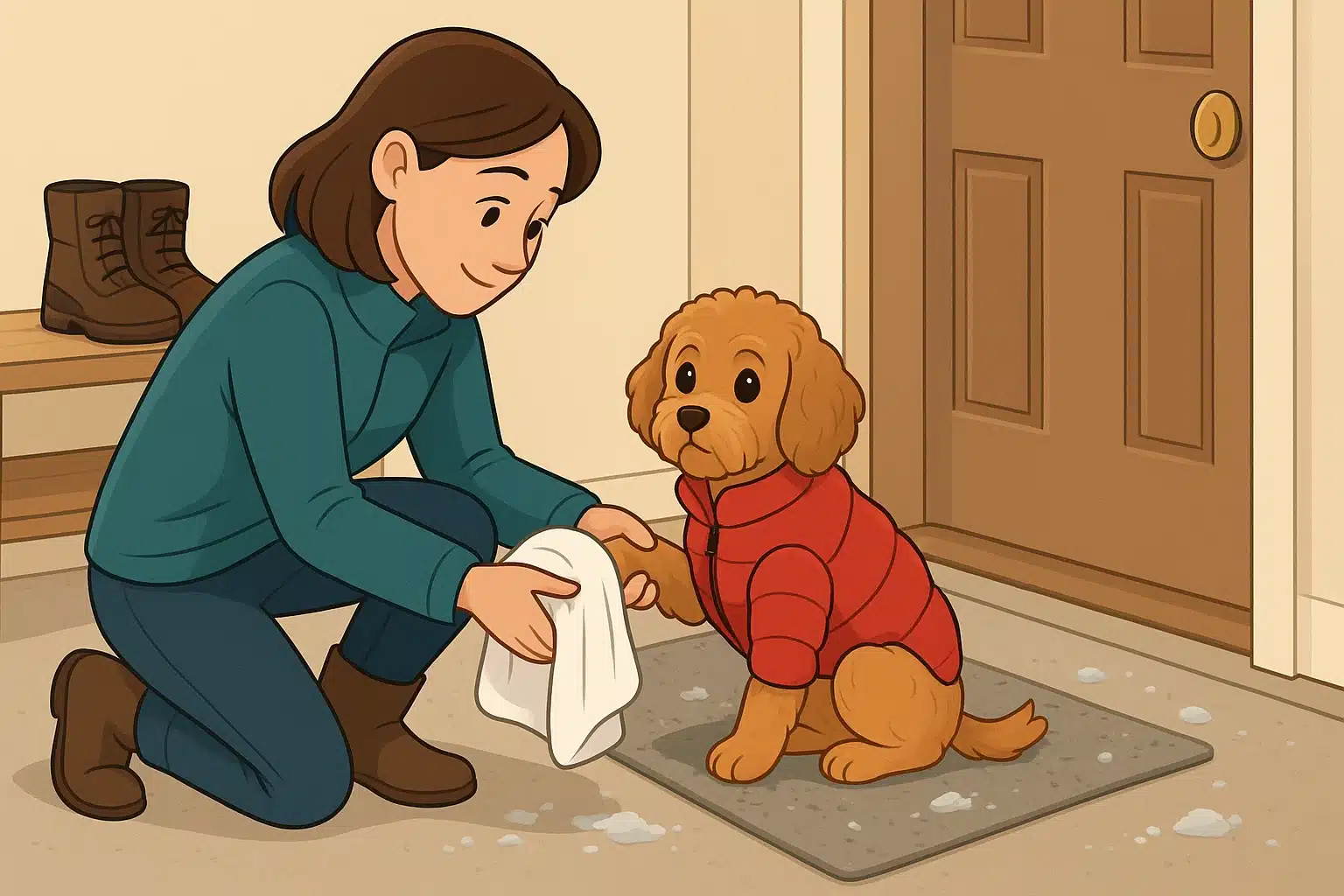
Use this simple after-walk routine:
- Check between toes for packed snow or ice balls.
- Wipe paws, legs, and belly with a warm damp cloth.
- Dry thoroughly, especially around the feet and chest.
- Check pads for cracks, redness, or bleeding.
The AVMA recommends well-fitted boots during frigid or icy conditions to protect small feet.
Recognize Hypothermia and Frostbite
Hypothermia needs prompt veterinary care. Early signs include shivering, weakness, and less alert behavior. Severe signs can include muscle stiffness, slow shallow breathing, or collapse.
Frostbite may affect ears, tail tips, and paws. Skin can look pale, gray, or bluish, then become swollen or painful as it warms.
| Sign | What to do now |
|---|---|
| Shivering or tucked posture | Bring puppy inside and dry them |
| Weakness or unusual sleepiness | Warm gently and call your veterinarian |
| Stiffness, slow breathing, or collapse | Seek emergency veterinary care immediately |
Warm your puppy gradually with dry towels and a warm room. Do not rub frozen skin or use direct high heat.
Prepare for Thunderstorms and Severe Weather
Create a Safe Storm Space Before the Forecast Changes
Set up your puppy’s safe space long before the first rumble. Choose an interior room or covered crate away from windows, then add familiar bedding, a chew, water, and a favorite toy.
Keep a leash, carrier, ID tags, food, and medical records near the exit. The AVMA disaster guide advises bringing pets indoors at the first sign of severe weather.
- Close blinds to cut lightning flashes.
- Use a fan or white noise for steady sound.
- Practice short, happy crate rests on calm days.
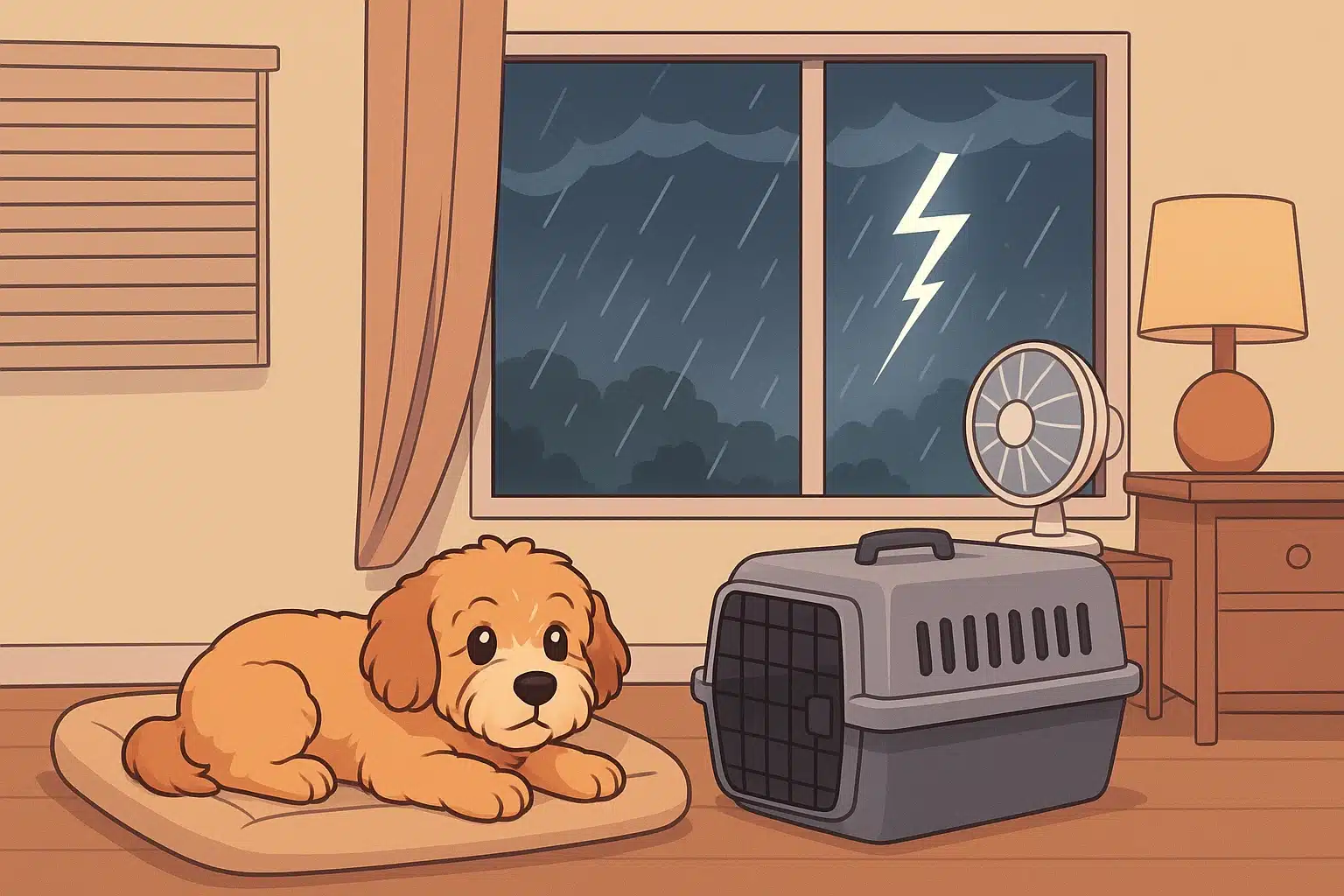
Do not leave a small puppy outside, in a garage, or loose in the yard during a storm.
Respond Calmly During Thunder and Wind
Your calm behavior helps, but it will not erase fear by itself. Bring your puppy inside, secure doors, and let them choose whether to stay near you or settle in their safe space.
- Speak softly and move normally.
- Offer a food toy only if your puppy will eat.
- Avoid forced cuddles, scolding, or dragging them from hiding.
- Keep potty trips brief and on leash once conditions are safe.
Panting, pacing, trembling, hiding, and escape attempts can signal noise fear, notes the American Veterinary Medical Association.
Know When Storm Fear Needs Professional Help
Call your vet if fear is intense, worsens with each storm, lasts long after it ends, or leads to injury or escape attempts. A vet can rule out health concerns and discuss a plan.
Keep a simple storm log:
- What your puppy noticed first
- Signs you saw
- How long recovery took
Never give human anxiety medicine or a sedative unless your veterinarian prescribes it.
Also Read: Minnesota Puppies for Sale: Winter Paw Care for New Owners
Handle Rain, Snow, Wind, and Seasonal Outdoor Hazards
Keep Wet Puppies Clean and Dry
Wet fur chills a small puppy fast, especially in wind. Keep potty trips short, then towel-dry the paws, legs, belly, and coat right away. Replace any damp sweater with a dry one.
Stop the outing if your puppy shivers, seems weak, or wants to turn back.
Avoid Hidden Outdoor Dangers
Snow can hide sharp ice, deep puddles, and lawn chemicals. Avoid frozen ponds and slushy road edges. After every walk, rinse or wipe paws and belly. The American Veterinary Medical Association advises this helps remove salt, de-icers, and other harmful residue before a puppy licks it off.
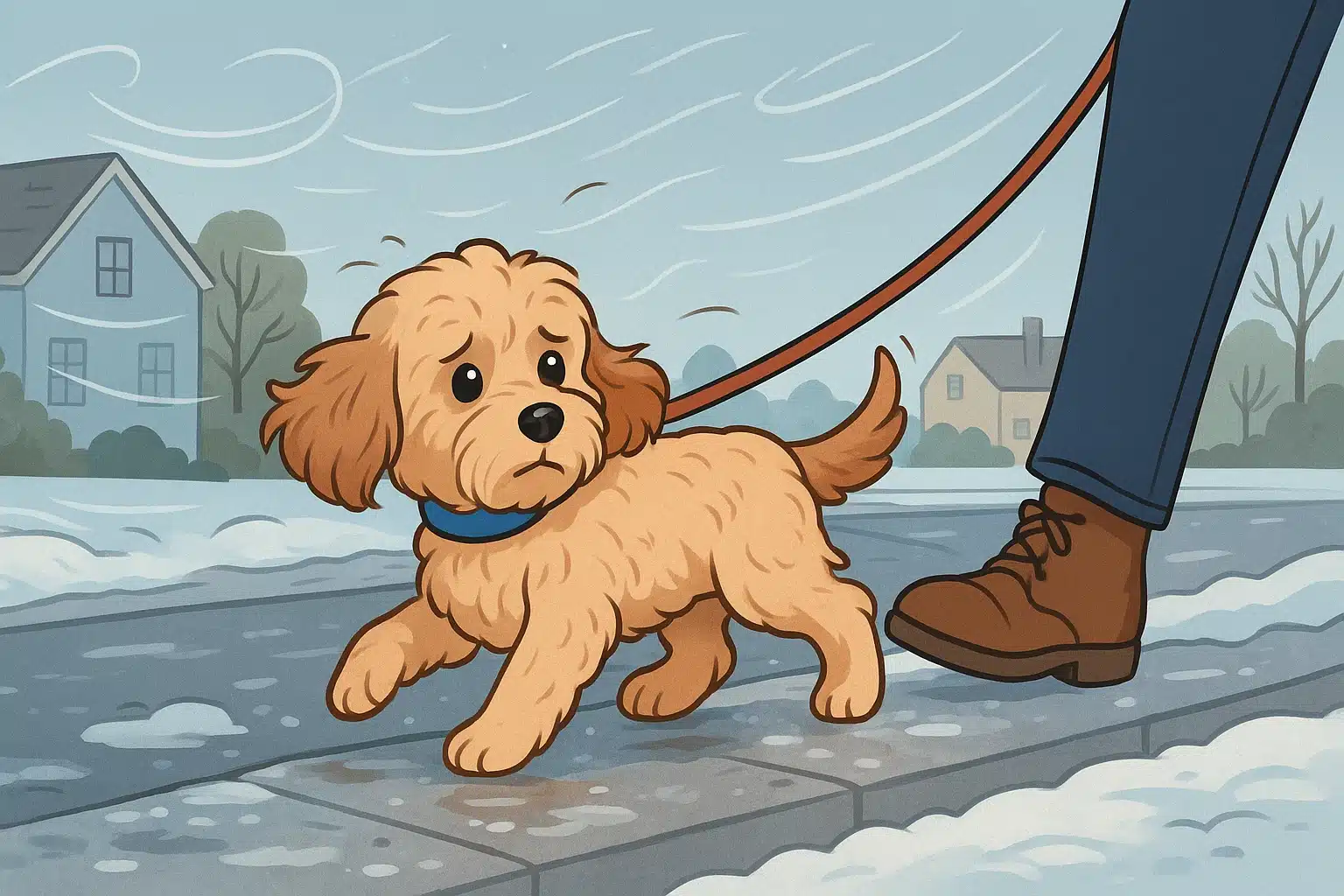
Use a close-fitting harness and leash when gusts pick up. Small puppies can be startled by blowing bins, branches, or sudden noise.
- Choose cleared paths with firm footing.
- Skip walks during heavy wind, lightning, or poor road visibility.
- Check paws for ice balls, cuts, or limping.
Adjust Visibility and Identification
Dark mornings and snow can make it easy to lose sight of a tiny puppy. Use a reflective leash or light, and keep ID tags current. Snow can also hide familiar scents, so the AVMA recommends a well-fitted collar and updated identification.
- Walk close to home in bad weather.
- Keep your phone charged.
- Confirm microchip details before winter.
Also Read: Puppy Care Blog & Resources | Sage Puppies
Build a Weather-Safe Home and Travel Routine
Keep an Emergency Kit Ready
A ready-to-grab kit saves time when weather shifts fast. Ready.gov recommends food, water, medicine, ID, records, a leash, and a carrier.
- Pack several days of food and water.
- Add a puppy-safe first-aid kit and waste bags.
- Keep a current photo and contact details inside.
Tip: Refresh food, medicine, and records every few months.
Make the Home Comfortable in Every Season
Give your puppy a dry, draft-free resting spot away from windows and vents. In heat, use air conditioning or a cool indoor room. In winter, bring small puppies inside and keep their bedding off cold floors.
| Season | Simple home check |
|---|---|
| Hot weather | Fresh water, shade, cool indoor space |
| Cold weather | Warm bed, dry paws, short potty trips |
| Storms | Quiet safe room, charged phone, closed windows |
Never use ovens, grills, or generators indoors for warmth.
Plan Safe Puppy Travel
Use a secured crate or carrier with a familiar blanket, water, and ID. Practice short rides first so travel feels normal. Never leave a puppy in a parked car, even briefly. Extreme heat can quickly make a closed vehicle dangerous.
- Check weather and road alerts before leaving.
- Plan indoor rest stops.
- Delay nonessential trips during severe storms.
Know What to Do When Weather Exposure Goes Wrong
Use the Stop, Stabilize, Call Framework
Act fast if your puppy seems affected by heat, cold, or a storm injury.
- Stop the walk, play, or travel. Move them indoors, into shade, or away from wind and wet ground.
- Stabilize gently. For heat, use room-temperature wet towels and a fan. For cold, dry them, wrap them in a warm blanket, and keep the room comfortably warm.
- Call your veterinarian or the nearest emergency clinic while you travel.
Do not use ice water, force water, or wait to see if a weak puppy “sleeps it off.”
Emergency Signs That Should Not Wait
Get emergency veterinary care for collapse, trouble breathing, seizures, confusion, or gums that look pale, blue, gray, or very dark. Heavy panting, drooling, vomiting, staggering, and weakness can signal heat stress, notes the American Veterinary Medical Association.
Cold exposure also needs urgent care when you see muscle stiffness, slow or shallow breaths, or collapse. Small and young dogs can struggle in low temperatures more quickly, according to the AVMA cold-weather guidance.
Document the Event for the Veterinarian
Note the weather, exposure time, symptoms, and first aid given. Bring details on any water, food, or chemicals involved. This helps the veterinary team act faster.
Also Read: 10 Signs a California Puppy Listing Is a Scam – Sage Puppies
Common Mistakes to Avoid With Puppy Weather Safety
Mistaking Fur for Full Protection
A fluffy coat does not make a small puppy weatherproof. Young dogs lose heat quickly, especially when wet or close to snow-covered ground. Keep outdoor trips brief and bring your puppy inside to warm up and dry off.
Waiting for Severe Symptoms
Do not wait for collapse before acting. Heavy panting, drooling, weakness, stumbling, or odd gum color can signal heat stress, according to the American Veterinary Medical Association. Move your puppy to a cool space and call a vet promptly.
Early action is safer than “waiting to see.” Puppies can worsen fast.
Using Unsafe Cooling or Warming Methods
Skip ice baths, heating pads, and direct space-heater heat. Use room-temperature damp towels and airflow for overheating. For cold puppies, dry them, wrap them in a light blanket, and warm the room gradually. Cold water can make heatstroke worse.
Forgetting the Environment Around the Puppy
Check pavement, wind, ice, salt, and parked cars, not just the forecast. Hot asphalt can burn paws, while de-icers and antifreeze can harm a puppy if licked. Wipe paws, legs, and belly after winter walks.
Also Read: How to Prepare a New Puppy for Florida’s Heat and Humidity

Give your puppy a confident start, plus guidance for every season ahead. Sage Puppies raises Havanese, Havapoo, and Cavapoo companions in a home setting, with thoughtful family support from South Jordan pickup to nationwide delivery. View available puppies and begin your application today.
Frequently Asked Questions
Q1: How cold is too cold for a puppy to be outside?
Small puppies can get cold fast below 45°F. Limit potty trips, dry paws, and watch for shivering or lifting paws.
Q2: What are the signs of heatstroke in puppies?
Heavy panting, drooling, weakness, vomiting, red gums, or collapse need urgent care. Move your puppy to a cool spot and call a vet.
Q3: How can I keep my puppy safe during a thunderstorm?
Bring them indoors, close curtains, use calm background sound, and offer a crate. Never force contact if they want space.
Q4: Can puppies walk on hot pavement?
Test pavement with your hand for seven seconds. If it feels too hot, choose grass, shade, or a later walk.
Q5: Should I walk my puppy during severe weather?
Skip walks during lightning, high winds, poor air, or extreme temperatures. A few indoor games and short training sessions meet their needs.
Conclusion
Weather safety comes down to planning ahead, watching your puppy closely, and acting early. Keep heat outings short, protect paws from hot or icy ground, and never leave a puppy in a parked car. Small, young dogs can lose body heat fast, so shorten cold-weather potty trips and dry them well afterward.
Storms need a family plan too: bring your puppy inside, keep ID current, and pack records, food, water, and medicine. The AVMA advises preparing an evacuation kit and a pet plan before disasters. If your puppy shows weakness, breathing trouble, collapse, or confusion, seek urgent veterinary care.