Quick Summary: Puppies, especially small breeds like Havanese, Havapoo, and Cavapoo, are highly vulnerable to extreme temperatures and need short, supervised outdoor time. Watch for warning signs like shivering, heavy panting, or weakness, and never leave them in parked cars. Use room-temperature water for heat emergencies and dry towels for cold ones, but always seek veterinary care for serious symptoms. Plan ahead with weather checks, protective gear, and safe indoor zones to keep puppies comfortable year-round.
A small puppy can leave an air-conditioned South Jordan home and overheat on a sunny July sidewalk within minutes. That same puppy may struggle with wind, wet paws, and frozen pavement during a winter potty break.
Small companion breeds do not handle heat, cold, or sudden shifts like adult dogs do. Puppy cold weather can lead to fast heat loss, while hot pavement and cars create serious summer risks. Knowing the safe temperature puppies can handle helps families prevent trouble before it starts.
This guide covers puppy temperature safety at home, outside, during travel, and in emergencies. You will learn warning signs, simple daily routines, and when to call a vet. Families raising Havanese, Havapoo, and Cavapoo puppies should plan for puppy cold weather as carefully as summer heat.
Understand Why Puppies Are More Vulnerable to Temperature Extremes
Puppies can become too cold or too hot faster than adult dogs. Small companion breeds need close, calm supervision outside.
Why Small Puppies Lose or Gain Heat Quickly
A young puppy has a small body, little body fat, and a coat that may not offer much protection yet. Havanese, Havapoos, and Cavapoos can look fluffy, but fluff is not a safety plan.
Very young and small dogs often struggle more in puppy cold weather, especially when snow, wet grass, or wind reaches their belly and paws. The American Veterinary Medical Association notes that small breeds and very young dogs are more likely to have trouble in cold conditions.
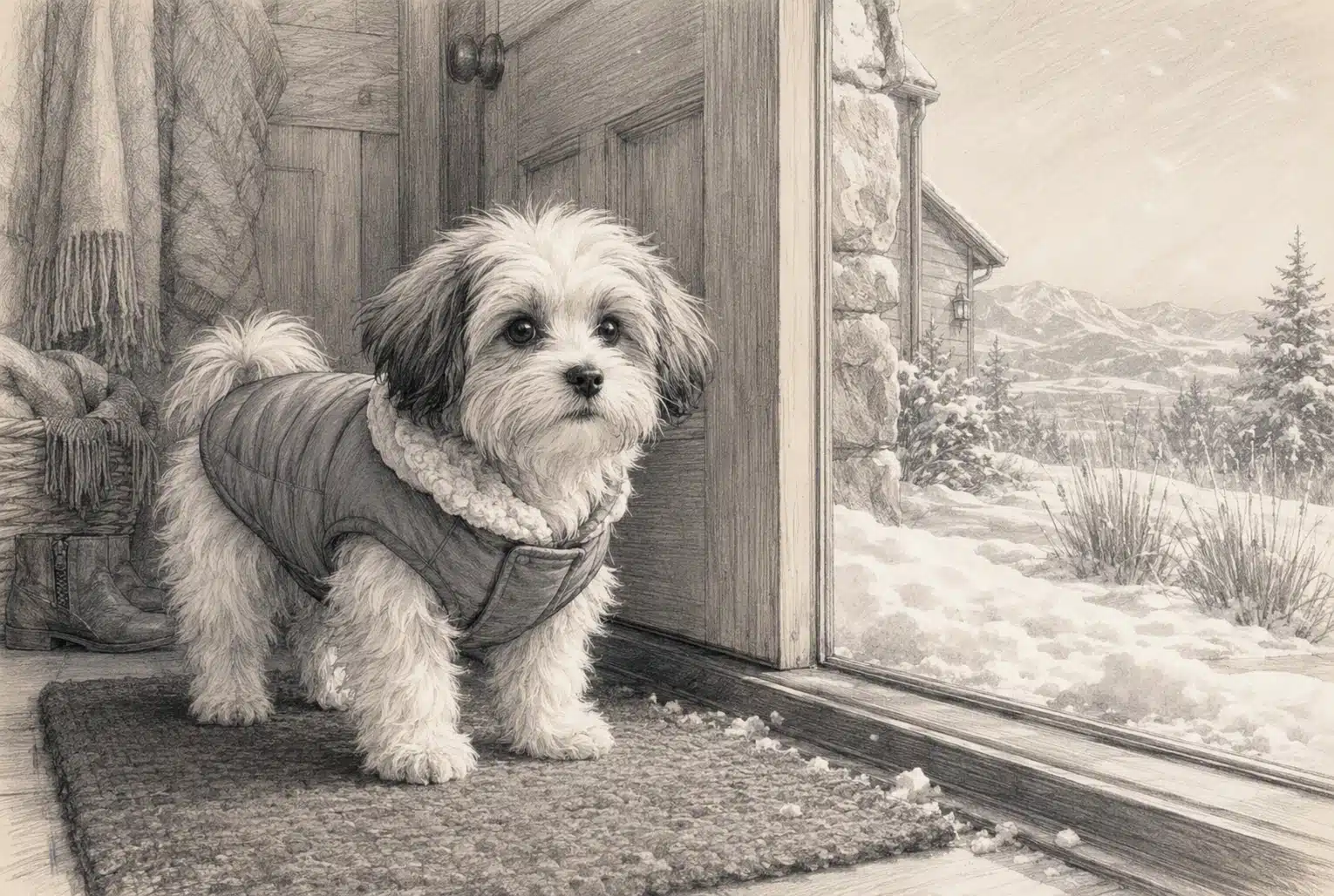
Watch for:
- Shivering or lifting paws
- Slowing down or refusing to walk
- Heavy panting or drooling
- Weakness, wobbling, or unusual quietness
Bring your puppy indoors at the first sign of discomfort. Do not wait for them to “get used to it.”
Use the Whole Weather Picture, Not One Number
Check more than the forecast temperature. Wind strips warmth, wet fur chills fast, and sun-heated pavement can burn small paws. Humidity also makes panting less effective.
Before each outing, consider:
- Your puppy’s age, size, coat, and health
- Wind, rain, snow, direct sun, and ground temperature
- How long you will be outside and where shelter is available
Hot cars are dangerous even on mild days. The AVMA warns that vehicle interiors can rise about 20°F in 10 minutes.
For puppy cold weather or heat, short potty trips are safer than long outdoor play sessions.
Also Read: 7 Seasonal Puppy Safety Rules for Hot Summer Days
Protect Your Puppy From Extreme Heat
Small puppies can overheat fast, especially during dry Utah summers. Keep outdoor time short, calm, and planned around cooler parts of the day.
Plan Walks and Play Around the Heat
Walk early in the morning or later in the evening, then save training games for an air-conditioned room. Puppies do not need long hikes to burn energy.
- Choose shaded grass over open pavement.
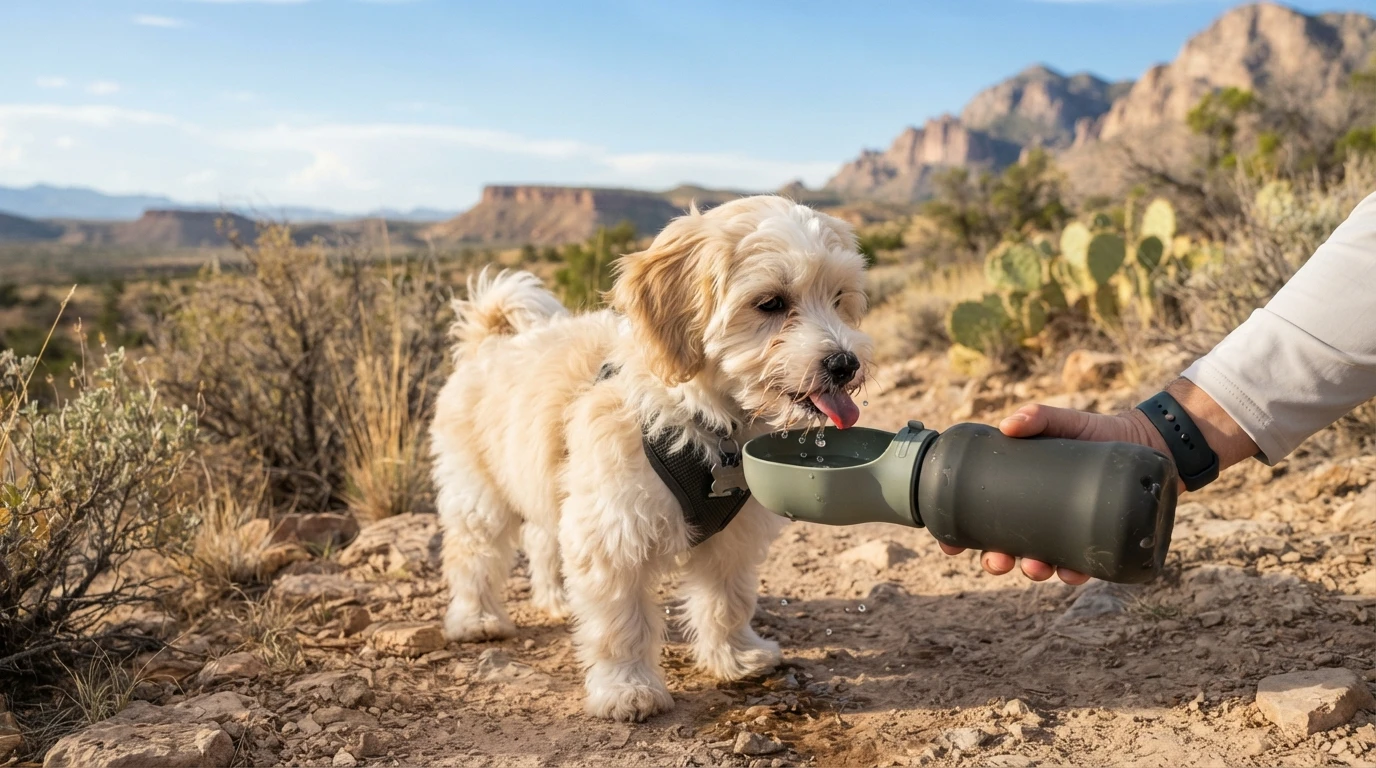
- Bring water on every outing.
- Take frequent rest breaks.
- Skip fetch, rough play, and busy events on very hot days.
- Never leave your puppy in a parked car, even briefly.
The AVMA advises avoiding the hottest hours and taking frequent breaks. A short sniff walk is plenty when the temperature climbs.
If you feel hot standing still, your small puppy is likely hotter.
Check Water, Shade, and Ground Temperature
Give your puppy constant access to clean, cool water indoors and outdoors. Refresh the bowl often, and set up a shaded spot where they can rest away from direct sun.
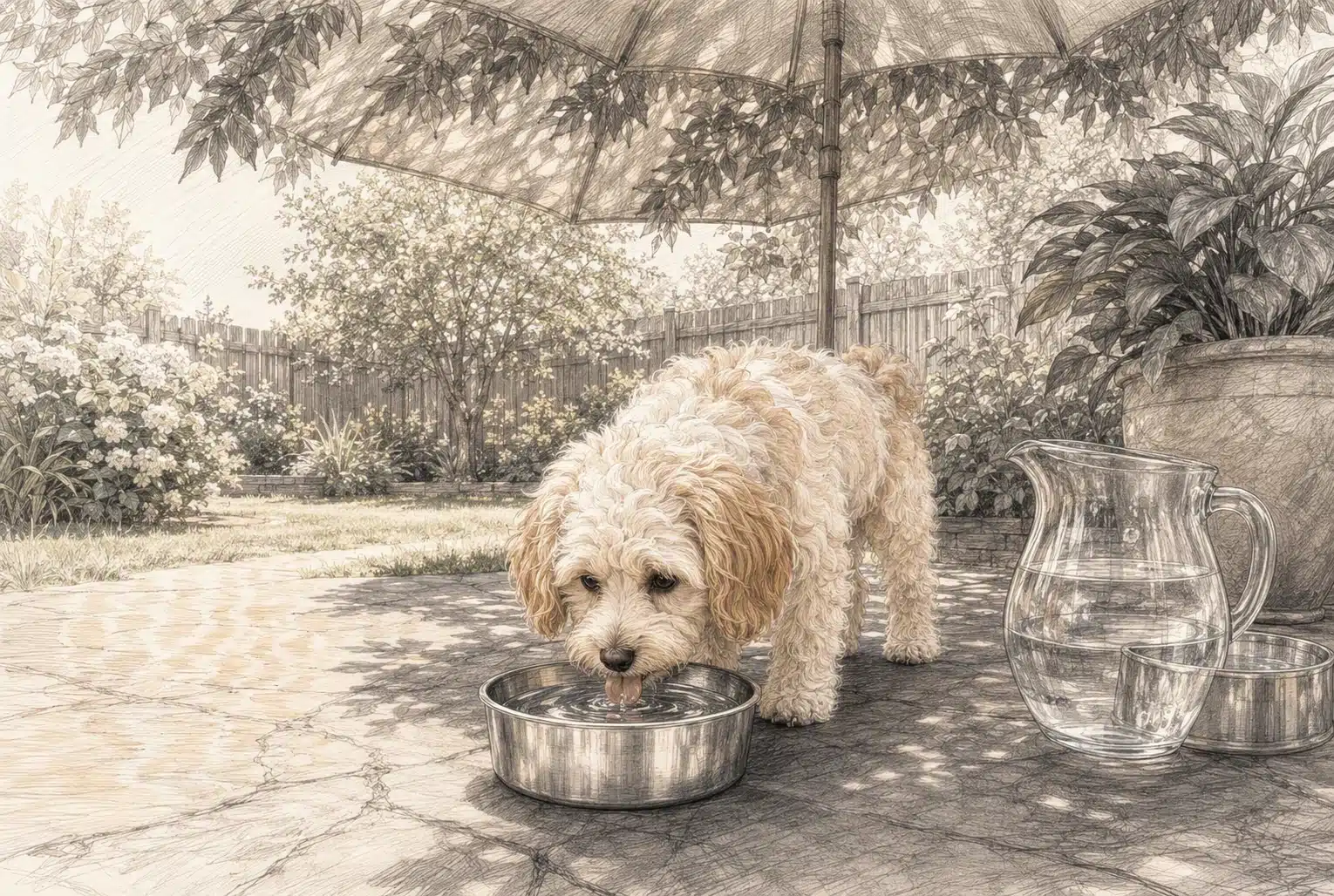
Before a walk, press the back of your hand to pavement for several seconds. If it feels too hot for your skin, move to grass or stay home. Hot asphalt and sidewalks can burn paw pads.
| Heat safety check | Safer choice |
|---|---|
| Walk route | Grass, shade, and short loops |
| Outdoor water | Fresh bowl in a tipped-proof stand |
| Playtime | Indoor puzzle toys and brief training |
| Car trips | Bring puppy inside with you |
Recognize Heat Stress and Heatstroke
Heavy panting, thick drool, weakness, wobbling, vomiting, unusual gum color, or collapse are urgent warning signs. The AVMA lists these as signs that need emergency veterinary care.
- Move your puppy into shade or a cool indoor space.
- Start gentle cooling with room-temperature wet towels and a fan.
- Call your veterinarian or nearest emergency clinic while heading there.
Do not use an ice bath. Cooling care supports your puppy, but it does not replace urgent veterinary treatment.
Also Read: 8 Seasonal Hazards Every New Puppy Owner Should Prepare For
Keep Your Puppy Safe in Freezing, Wet, and Windy Weather
Know When Cold Exposure Needs to Be Shortened
Small puppies lose body heat fast, especially when wind or wet fur is involved. Havanese, Havapoo, and Cavapoo puppies need short, supervised potty trips when temperatures drop.
Watch your puppy, not just the forecast. The American Veterinary Medical Association advises shortening walks in very cold weather, since young and small dogs are more at risk.
Bring your puppy inside right away if you see:
- Shivering, lifting paws, or refusing to move
- Weakness, slow responses, or a tucked tail
- Limping, whining, or trying to head home
Call a veterinarian urgently for collapse, stiff muscles, or slow, shallow breathing. These can be signs of serious cold stress.
Protect the Coat, Paws, and Skin
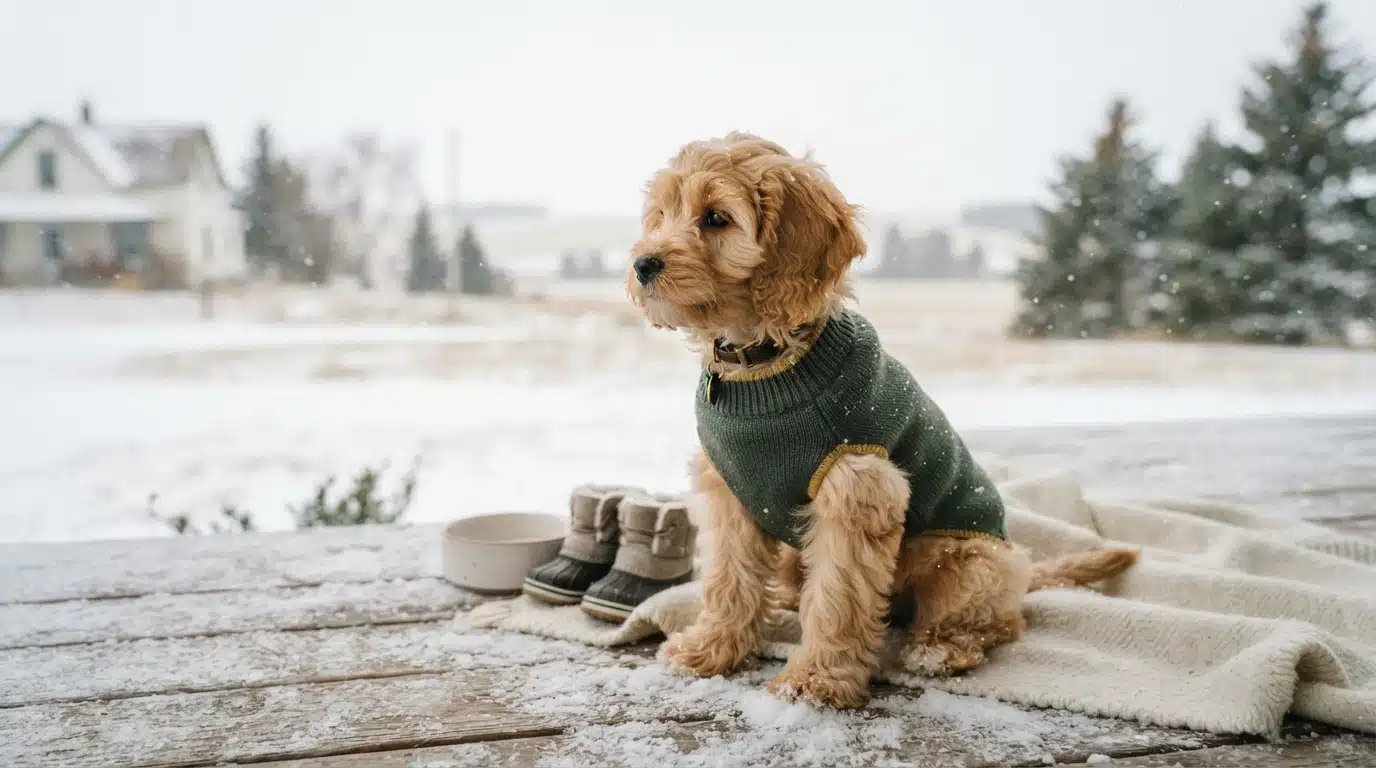
A dry coat and clear paws matter more than a long winter outing. Use a well-fitted waterproof layer if your puppy seems cold, then remove it indoors.
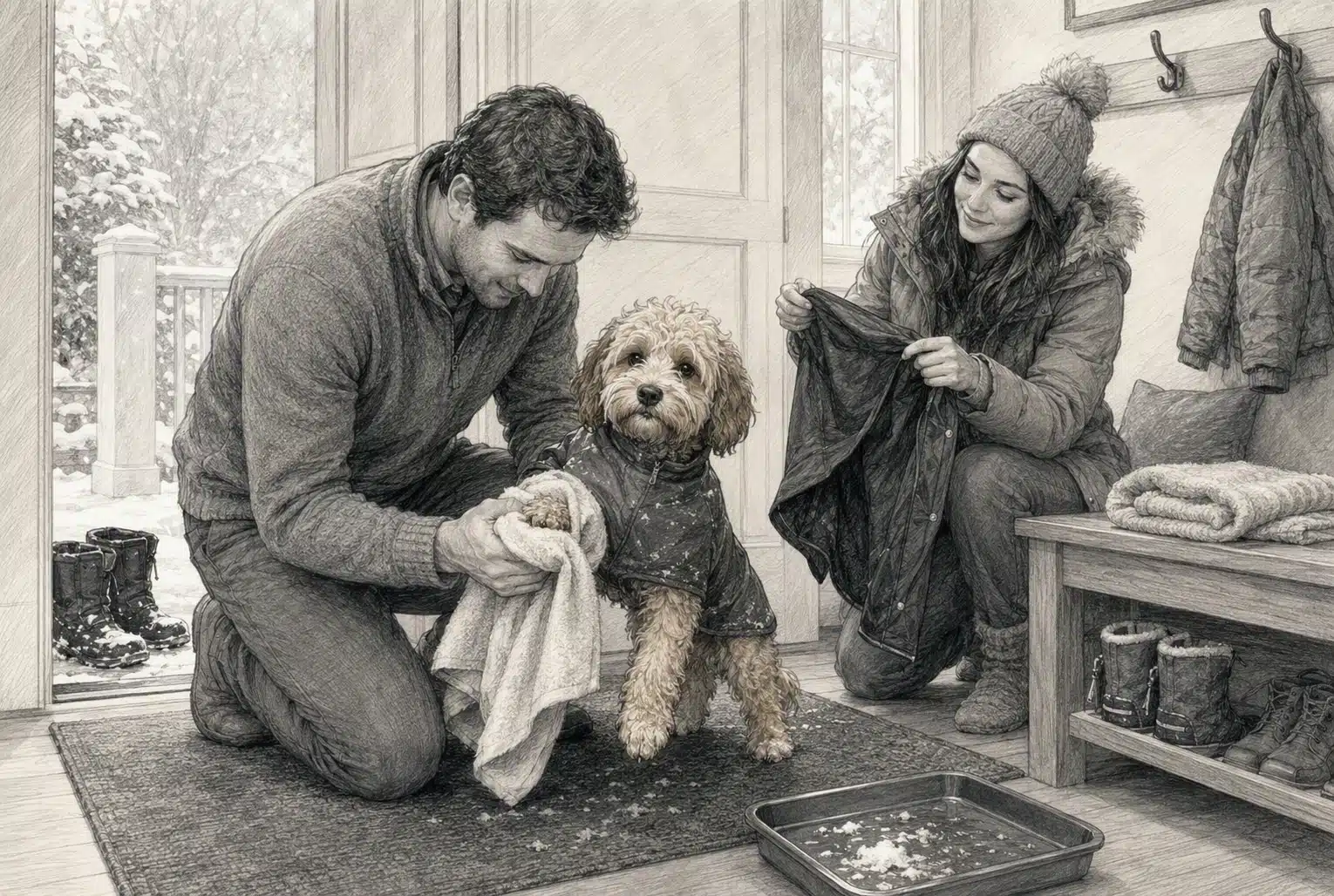
Make this simple routine part of every wet-weather trip:
- Keep outdoor time brief and stay on cleared paths.
- Dry the belly, legs, ears, and paws with a clean towel.
- Check between toes for packed ice, redness, cracks, or cuts.
- Offer a warm, draft-free place to rest.
Boots can help on icy sidewalks if they fit securely. Avoid frozen ponds, streams, and lakes. Thin ice can break without warning.
Prevent Winter Poisoning and Indoor Injuries
Winter chemicals and indoor heat sources create risks that puppies often explore with their mouths. Antifreeze and de-icing products can be dangerous if swallowed.
- Clean antifreeze spills at once and store containers out of reach.
- Choose pet-safe ice melt for your own walkways.
- Wipe paws, legs, and belly after every walk to remove salt and chemicals.
- Block access to space heaters, cords, fireplaces, and hot vents.
The AVMA warns that wet coats can make dogs colder, and space heaters can cause burns or fires. Keep your puppy in a safe room or crate when you cannot supervise.
Also Read: 10 Red Flags to Avoid When Visiting a Local Puppy Breeder
Manage Sudden Temperature Changes at Home and Away
Create Comfortable Temperature Zones Indoors
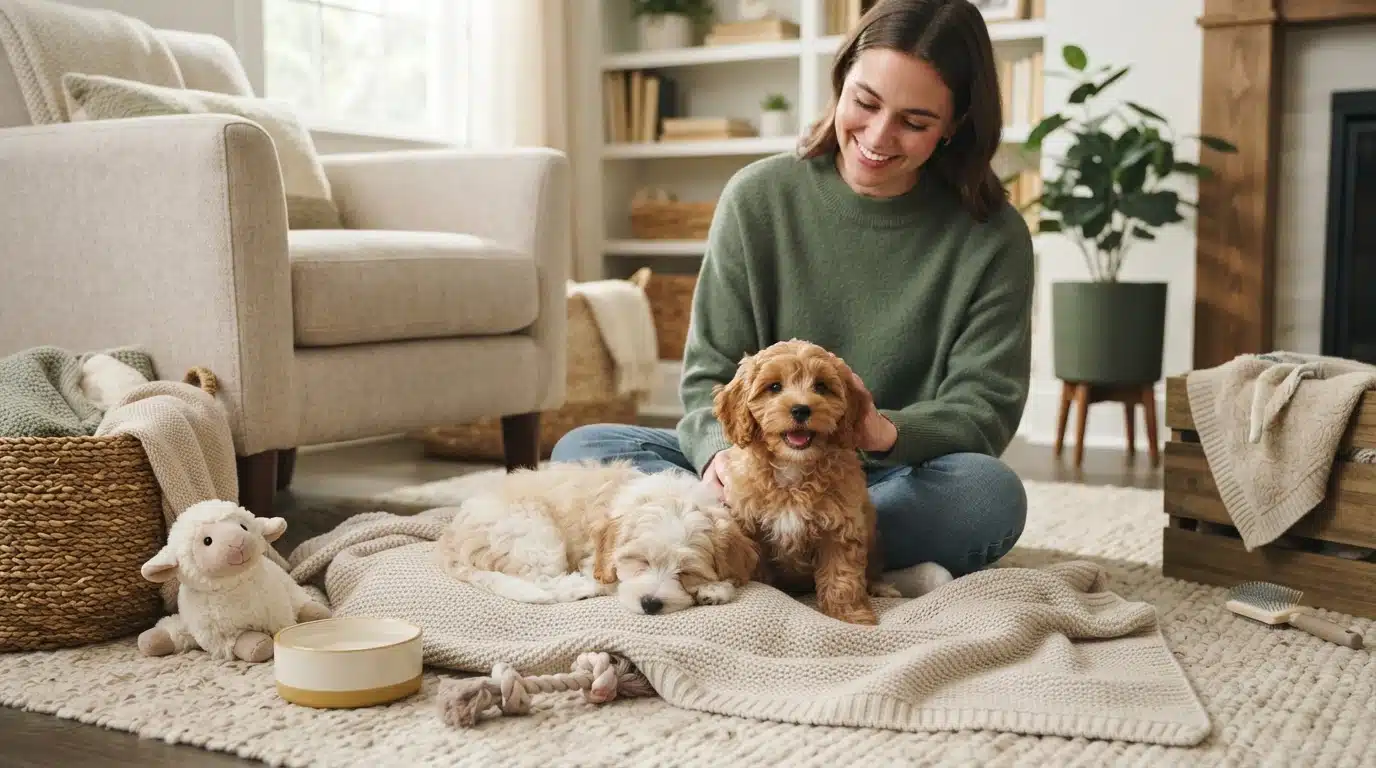
Small puppies need choices, not one fixed spot. Set up a quiet bed away from drafty doors, floor vents, sunny windows, and space heaters.
Offer two safe resting places:
- A soft bed in a calm, room-temperature area
- An open crate with a light blanket nearby, not draped over it
Fresh water should always be close. The AVMA also advises giving pets different indoor temperature zones for comfort during warm weather warm-weather safety guidance.
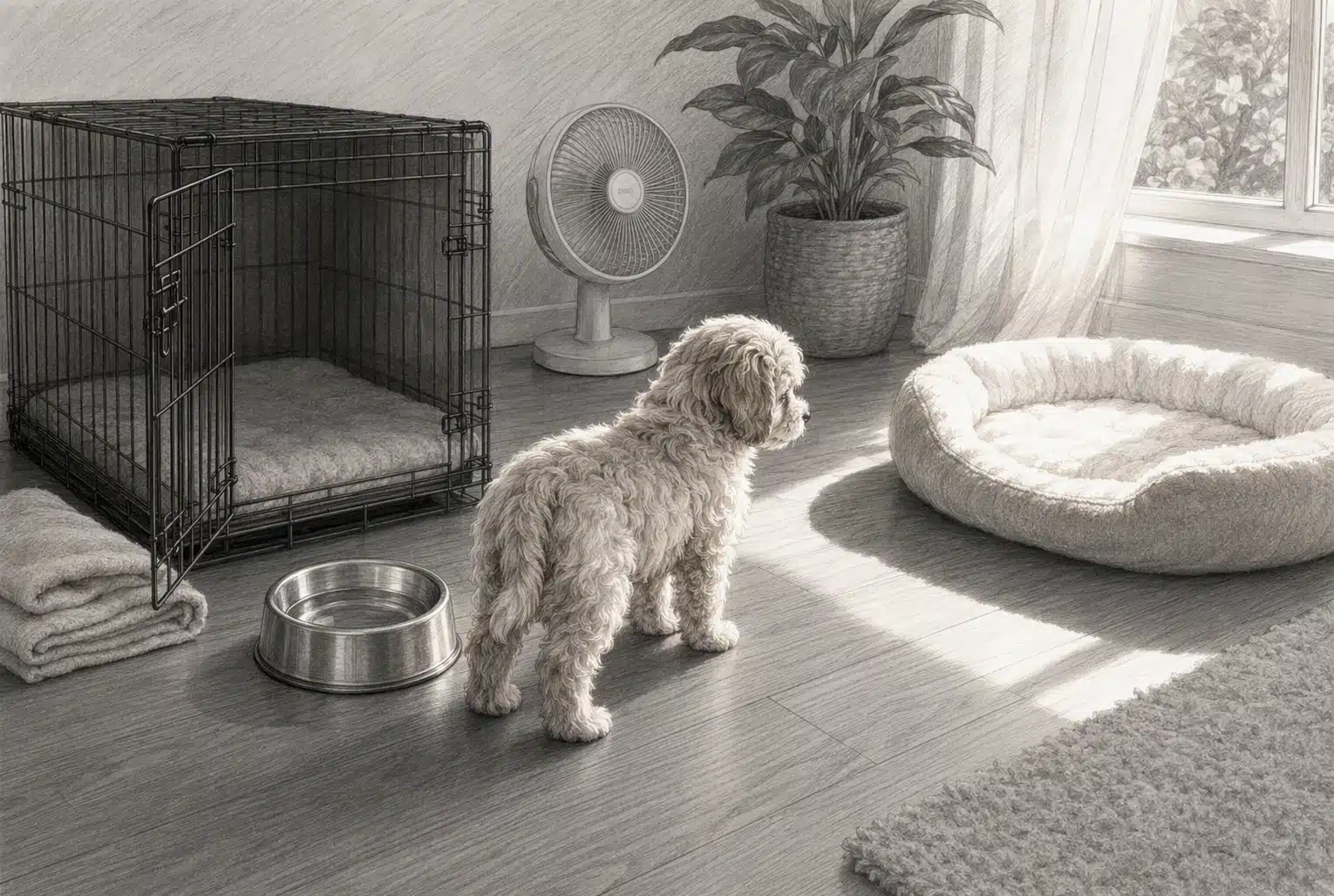
Warning: Never leave a puppy near a portable heater, fireplace, or heating pad without close supervision.
Transition Gradually After Travel or Delivery
Move your puppy through temperature changes in small steps. After arriving from a chilly Utah pickup, a warm car, or a flight, bring them into a calm indoor space first. Let them settle before heading outdoors.
Use this simple arrival routine:
- Carry your puppy from the vehicle to avoid a long wait outside.
- Offer water and a quiet potty break once they seem settled.
- Keep the first outdoor trips short, then increase time based on comfort.
- Watch for shivering, weakness, heavy panting, drooling, or unusual tiredness.
A parked car can become unsafe fast in both heat and cold. The AVMA says never leave pets alone in a vehicle, regardless of outdoor temperature vehicle safety advice.
If your puppy seems weak, unsteady, or struggles to breathe, seek emergency veterinary care right away.
Make Cars, Walks, and Outdoor Spaces Safer
Never Leave a Puppy Alone in a Parked Vehicle
A parked car can become unsafe far faster than most families expect. Never leave your puppy inside, even for a quick errand, with cracked windows or shade.
The American Veterinary Medical Association warns that vehicle temperatures can rise about 20°F in 10 minutes. Cold cars also put young, small puppies at risk.
- Bring your puppy with you only if they can stay supervised.
- Keep the cabin at a safe, steady temperature.
- Skip drive-throughs and stops that require you to leave the car.
If you see heavy panting, drooling, weakness, or collapse, move your puppy to a cooler area and seek urgent veterinary help.
Use a Secure Carrier and Inspect Outdoor Areas
Secure travel starts before the engine does. Put your puppy in a well-ventilated carrier that lets them stand, turn, and lie down, then fasten it so it cannot slide.
Before a walk or yard break, check the space with your puppy’s size in mind:
- Test pavement with the back of your hand. Choose grass or a cooler time if it feels hot.
- Remove sharp debris, fallen fruit, lawn chemicals, and standing water.
- Check gates, fence gaps, and shade. Bring fresh water for longer outings.
The AVMA also advises cooler-hour walks, shade, water, and avoiding hot asphalt that can burn paws.
Small Havanese, Havapoo, and Cavapoo puppies tire quickly. Keep early outings short, calm, and close to home.
Also Read: Havanese, Havapoo & Cavapoo Puppy Care Blog
Recognize an Emergency and Act Without Delay
Heat Emergency: Cool Safely While Calling the Veterinarian
Heavy panting, thick drool, weakness, vomiting, red or pale gums, stumbling, or collapse can signal heatstroke. Small puppies can worsen fast, so call your veterinarian or the nearest emergency hospital as you begin first aid.
- Move your puppy into air conditioning or shade.
- Wet the neck, armpits, and groin with room-temperature water.
- Run a fan nearby if available.
- Leave for veterinary care without waiting to see if they perk up.
The AVMA lists collapse, unsteadiness, abnormal gum color, and heavy panting as emergency heat-stress signs. Do not use ice water or force water into your puppy’s mouth.
Call while you cool. First aid buys time, but it does not replace veterinary treatment.
Cold Emergency: Warm Gradually and Seek Veterinary Care
Shivering, weakness, confusion, slow or shallow breathing, stiff muscles, and collapse may mean dangerous cold stress or hypothermia. Bring your puppy indoors right away and call a veterinarian, especially after exposure to snow, cold rain, or a chilled car.
- Wrap your puppy in dry towels or a blanket.
- Keep them close to gentle room warmth.
- Remove wet clothing, harnesses, or blankets.
- Carry them carefully to avoid falls or strain.
Do not place a cold puppy against a heating pad, heater, or hot water bottle. Fast, direct heat can burn delicate skin or cause a sudden temperature swing. The AVMA advises immediate veterinary care for severe hypothermia signs.
Know When Observation Is Not Enough
Call an emergency veterinarian now if your puppy collapses, struggles to breathe, cannot stand, has a seizure, seems confused, or has blue, gray, very pale, or deep red gums.
Also act if vomiting or diarrhea follows heat exposure, or shivering does not stop after warming indoors. Keep your puppy quiet during transport and call ahead so the clinic can prepare.
Trust a sudden change in behavior. A puppy who is unusually sleepy, wobbly, or unresponsive needs prompt care.
Also Read: 10 Small Breed Puppies That Stay Friendly & Easygoing
Build a Simple Year-Round Puppy Weather Routine
A short weather check before every outing helps you prevent problems instead of reacting to them. Small puppies can lose body heat fast and tire quickly in heat.
Before Going Outside
Check the temperature, wind, ground, and forecast. Pick a brief potty break or gentle play session that fits the conditions.
- Bring water on warm days.
- Choose grass over hot pavement.
- Use a dry, well-fitting coat in cold or wet weather.
- Keep your puppy on a secure harness and leash.
Never leave a puppy in a parked car. Temperatures can become dangerous quickly, even on mild days, according to the American Veterinary Medical Association.
During and After Outdoor Time
Watch your puppy, not the clock. Turn back if they slow down, shiver, pant hard, lift a paw, or seem unsure.
- Give frequent shade and water breaks in heat.
- Avoid icy paths, standing water, and salted walkways.
- Keep outdoor sessions short during weather swings.
- Wipe paws, legs, and belly after each walk.
The AVMA advises washing off salt and de-icing chemicals so puppies do not lick them from their fur.
Prepare for Seasonal Changes
Set out weather gear before the season shifts. Keep a towel, paw wipes, water bowl, and spare leash near the door.
| Season | Routine adjustment | Main concern |
|---|---|---|
| Summer | Walk early or late | Heat and hot pavement |
| Winter | Shorten outings | Cold, ice, and salt |
| Spring/Fall | Check forecasts | Fast temperature shifts |
Call a veterinarian promptly for collapse, weakness, abnormal gums, or severe panting. These can be signs of heat stress, as noted in the AVMA warm-weather guidance.

Give your puppy a thoughtful start, whatever the forecast brings. Sage Puppies raises Havanese, Havapoo, and Cavapoo puppies in a home setting with health-tested parents and early socialization. View available puppies, then choose local South Jordan pickup or nationwide delivery with a clear family-first process.
Frequently Asked Questions
Q1: What is the best way to protect my puppy from extreme heat?
Keep your puppy indoors during peak heat, offer cool water, and use short potty breaks on grass. Never leave a puppy in a parked car. Check pavement with your hand before walks.
Q2: How can I keep my puppy safe in freezing weather?
Limit outdoor time, use a warm coat if needed, and dry paws after every trip outside. Small puppies lose body heat quickly, especially in wind, snow, or wet conditions.
Q3: What are the signs of heatstroke in puppies?
Watch for heavy panting, drooling, weakness, vomiting, bright red gums, or collapse. Move your puppy to a cool space and call a vet right away. Heatstroke is an emergency.
Q4: Can rapid temperature changes make a puppy sick?
Sudden changes can cause stress and discomfort. Keep indoor temperatures steady, avoid long outdoor exposure, and dry your puppy promptly after rain or snow.
Q5: Is it safe to walk my puppy after a storm?
Check for hot pavement, ice melt, fallen debris, standing water, and sharp branches first. Choose a clean, dry route and keep the walk brief.
Conclusion
Weather safety comes down to planning ahead and watching your puppy closely. Keep small companion puppies indoors during temperature extremes, shorten outdoor time, protect paws, carry water, and never leave them in a parked car.
Rapid weather shifts deserve the same care. Set up a calm indoor space, use secure travel crates, and keep an emergency kit ready for power outages or road delays.
Know the warning signs. Heavy panting, drooling, weakness, shivering, pale gums, or poor balance call for fast action and veterinary guidance. The AVMA lists collapse and abnormal gum color as emergency heat-stress signs.
A short outing is always safer than pushing a young puppy past their comfort level.