Quick Summary: Pick a Cavapoo by the parents, not the puppy photo. Verify health clearances on both sides (Cavaliers need cardiologist heart screens, Poodles need eye and joint tests), confirm whether the litter is F1, F1b, or multigen, and match coat type, size, and energy to your home routine rather than your wishlist. Sage Puppies in South Jordan, Utah uses an owner-managed matching process that walks families through these questions before any deposit, which cuts down on the usual mix-ups between a 14-pound wavy-coated dog and a 22-pound curly one.
Two Cavapoo pairings can hand you very different dogs. One family brings home a 14-pound wavy-coated companion; the next gets a 22-pound curly-coated cuddler. Both are adorable. Both fit someone’s life well. Choosing by cuteness alone is the costliest mistake a buyer can make, because size, coat type and temperament trace straight back to the parents.
This guide walks through what actually shapes a Cavapoo puppy: the generation behind the pairing, how Cavalier King Charles Spaniel and Poodle traits show up in adult dogs, and the health screening that separates careful breeders from careless ones. You will also learn how to read a litter’s temperament and match a puppy to your home before you commit.
The advice here favors research over rankings, because no pairing is best for everyone. Sage Puppies has paired Cavapoo litters for families since 2025 from South Jordan, Utah, and the same evidence-first questions apply wherever you buy.
Start With Both Parents, Not Just the Puppy
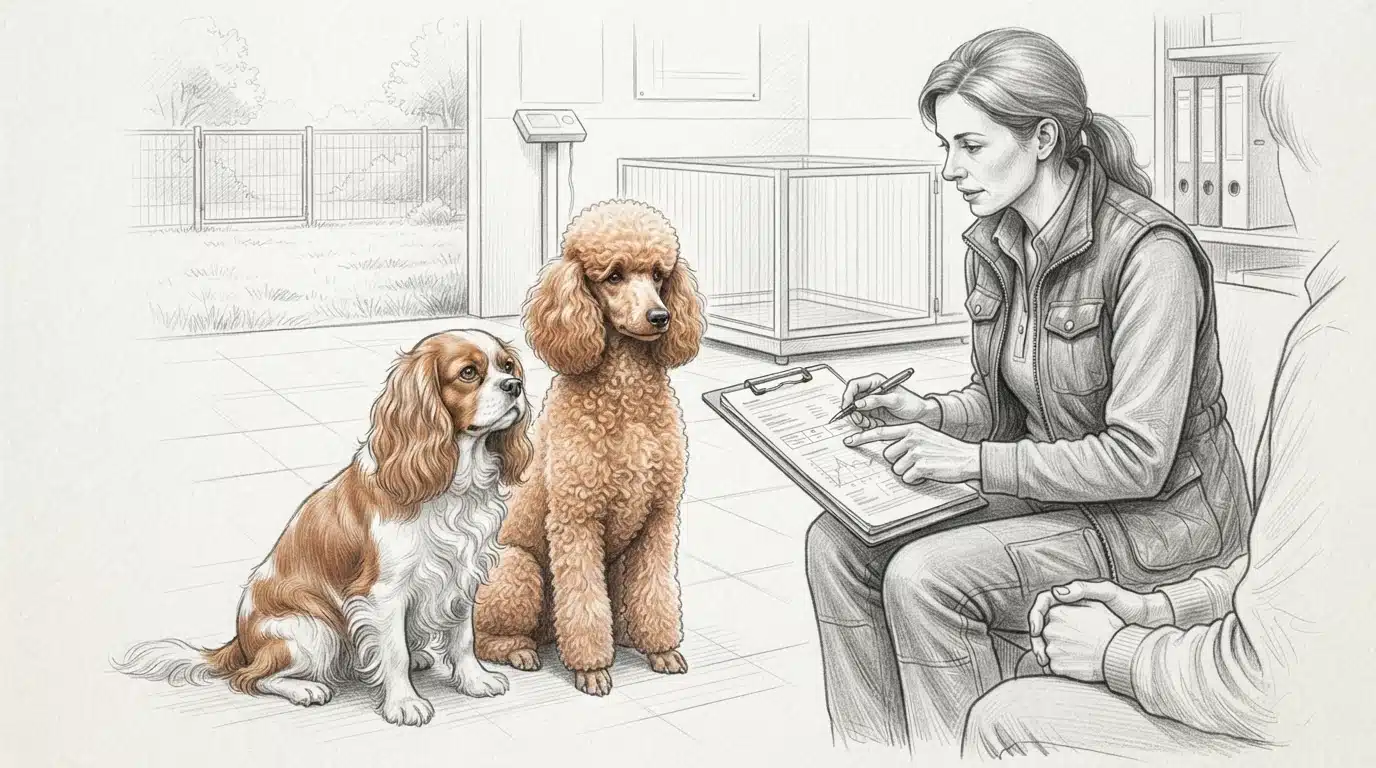
A Cavapoo puppy inherits half its health from each side, so the fastest way to judge the pairing is to meet the parents behind it. Ask about each breed’s known risks before you fall for a face. The same logic applies whether you are comparing breeders locally or browsing Cavapoo puppies for sale nationwide.
Cavalier-Side Health Priorities
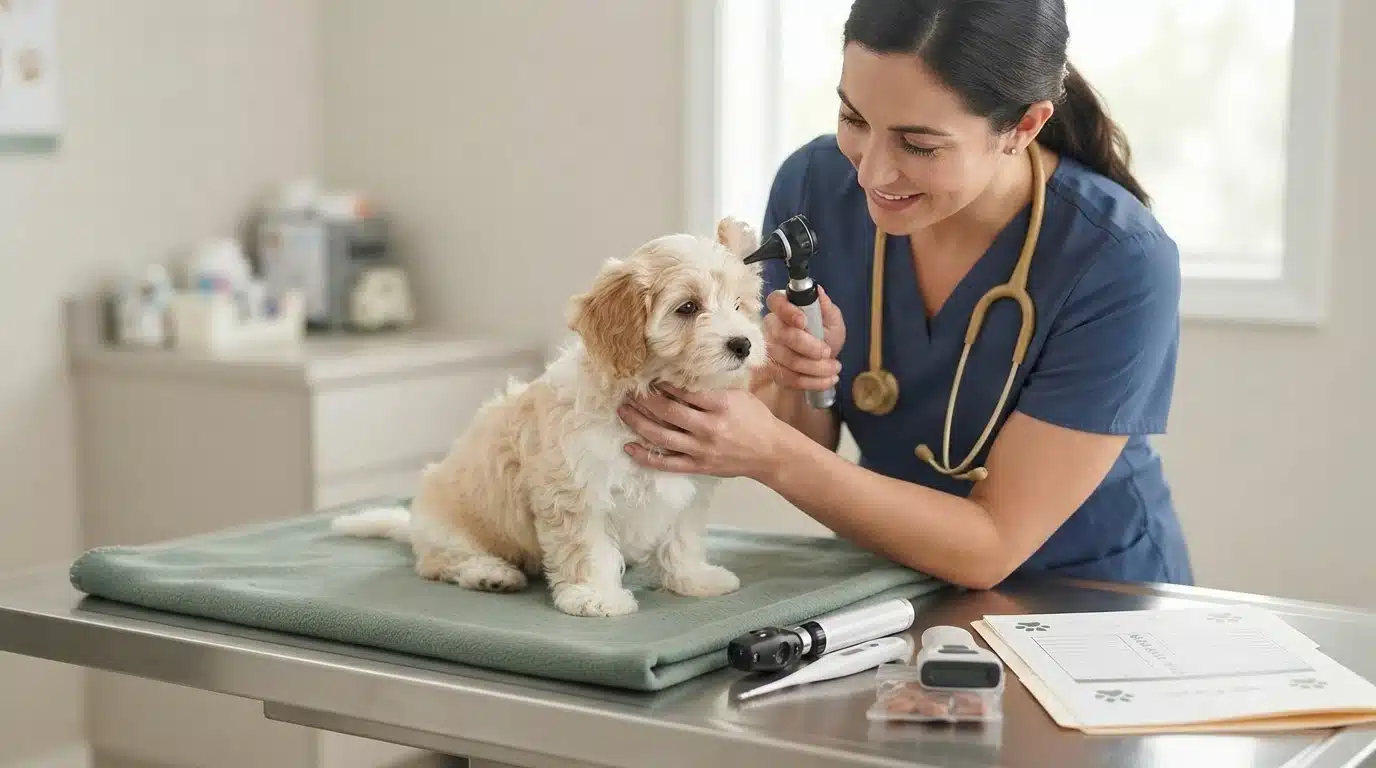
Cavaliers carry two well-known risks. The first is mitral valve disease, a heart condition that Cavaliers tend to develop earlier and more severely than other breeds, sometimes progressing to heart failure according to Virginia Tech’s veterinary college. The second is syringomyelia, a painful condition linked to the breed’s skull shape. Responsible breeders screen breeding dogs’ hearts yearly with a cardiologist and watch for neurological signs. Ask for the mother’s latest heart clearance, not just a one-time check from years ago.
Poodle-Side Health Priorities
Poodles bring their own list. Progressive retinal atrophy, a condition that slowly causes blindness, can be screened with a DNA test, so a breeder should show clear results for both parents. Hip and patellar evaluations help rule out joint problems, and annual eye exams catch issues DNA tests miss. Smaller poodles can also pass on luxating patellas, where the kneecap slips out of place. None of these tests guarantee a problem-free dog, but skipping them leaves you guessing.
How to Read Parent Health Records Together
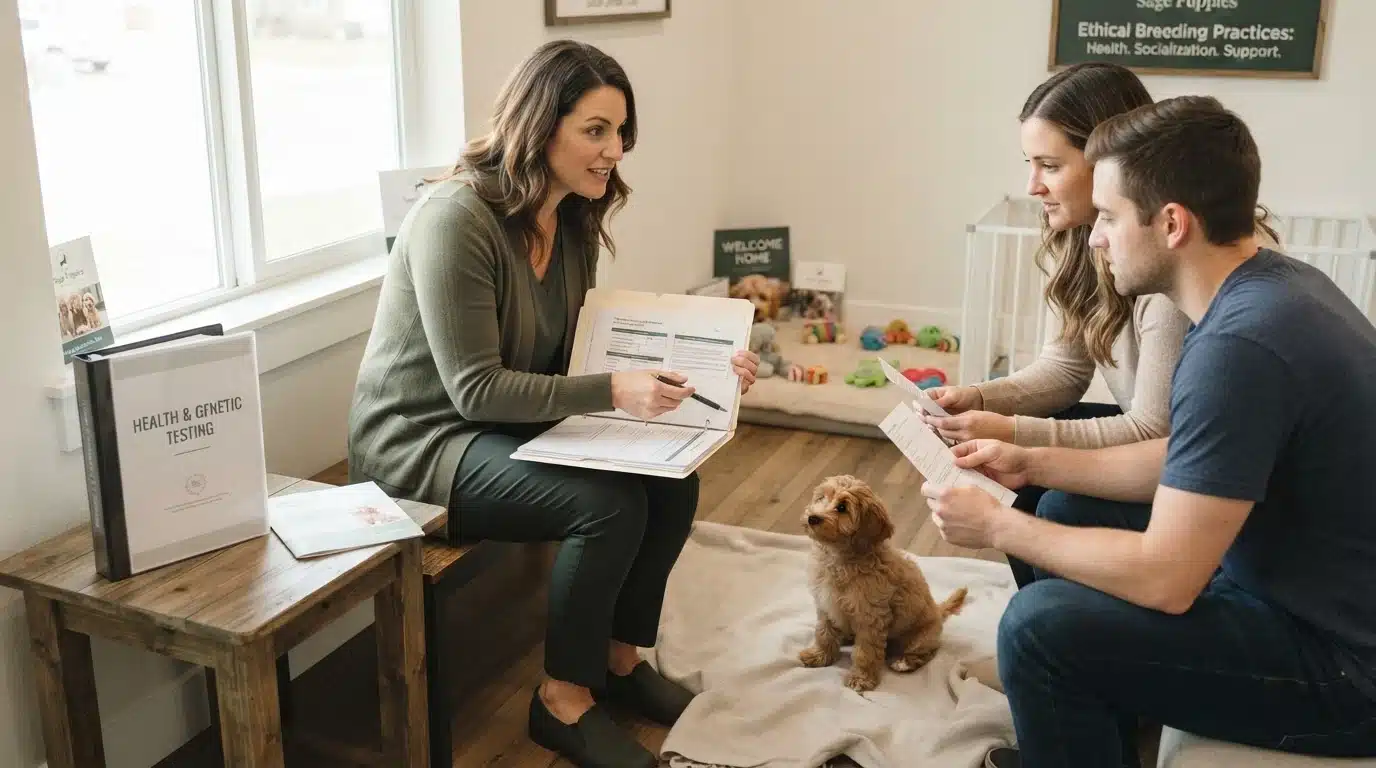
Ask for records that name each parent, list test dates, and show results from a specialist, not just a regular vet visit. Match each certificate to the dog you meet. Cross-referencing both sides is exactly what separates health testing from coat testing. A serious breeder welcomes the questions.
Understand the Generation: F1, F1b, F2, and Multigen
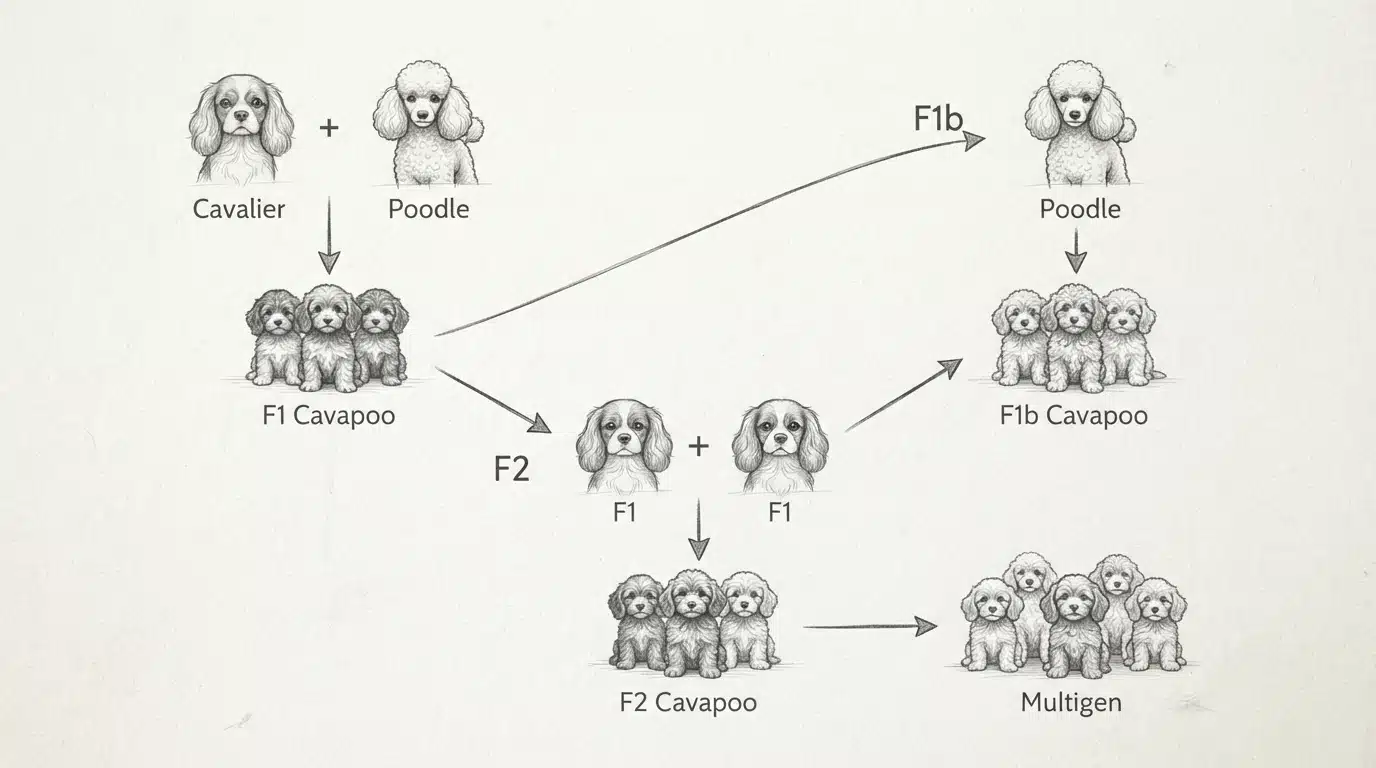
Generation labels tell you how much of each parent breed a Cavapoo puppy carries, and that mix shapes coat, size, and shedding. An F1 Cavapoo is a first cross: one purebred Cavalier King Charles Spaniel paired with one purebred Poodle. Breeders use these labels to keep pairings clear, so always ask which generation a litter actually is.
F1 Cavapoo Pairing (50/50 First Cross)
An F1 puppy is exactly half Cavalier and half Poodle. Many families like this pairing because it blends the Cavalier’s soft, easygoing nature with the Poodle’s smarter, lower-shedding coat. The tradeoff is variety: F1 litters can produce straight, wavy, or curly coats, and some puppies shed more than others. If you want a specific coat type, an F1 pairing asks you to stay flexible.
F1b Cavapoo Pairing (Backcross to Poodle)
An F1b puppy comes from an F1 Cavapoo bred back to a Poodle, which makes the litter about 75 percent Poodle. Coats lean curlier and lower-shedding, which is a common reason allergy-sensitive families choose this generation. The giveback is stronger Poodle traits: more coat upkeep, tighter curls, and sometimes a busier, more athletic energy than a Cavalier-heavy line.
F2 and Multigen Cavapoo Pairings
An F2 pairs two F1 Cavapoos, and multigen pairings go beyond that, often bred to keep both the Cavalier sweetness and the low-shedding coat. These pairings can be lovely, but coat and shedding vary more without careful testing. For Cavapoo puppies, ask how the breeder selects the pair, not just what the label says.
Trait results depend on each parent’s health and temperament, not the generation name alone, so meet the parents when you can.
Match Size and Coat to Your Home Setup
Your space, schedule, and grooming budget should shape the pairing you choose. Size and coat are the two traits that affect daily life most, and both vary by generation and by the parents behind the litter.
Toy, Mini, and Standard: What Each Pairing Tends to Produce
The Poodle parent sets most of the size range. A toy Poodle pairing tends to produce smaller adults, a mini pairing produces mid-size dogs, and a standard pairing produces the largest Cavapoos. But genetics deal in ranges, not promises, so ask the breeder about the parents’ actual weights and the litter’s expected spread. Treat any single-number prediction as a guess, not a fact.
Coat Types and What They Mean Day to Day
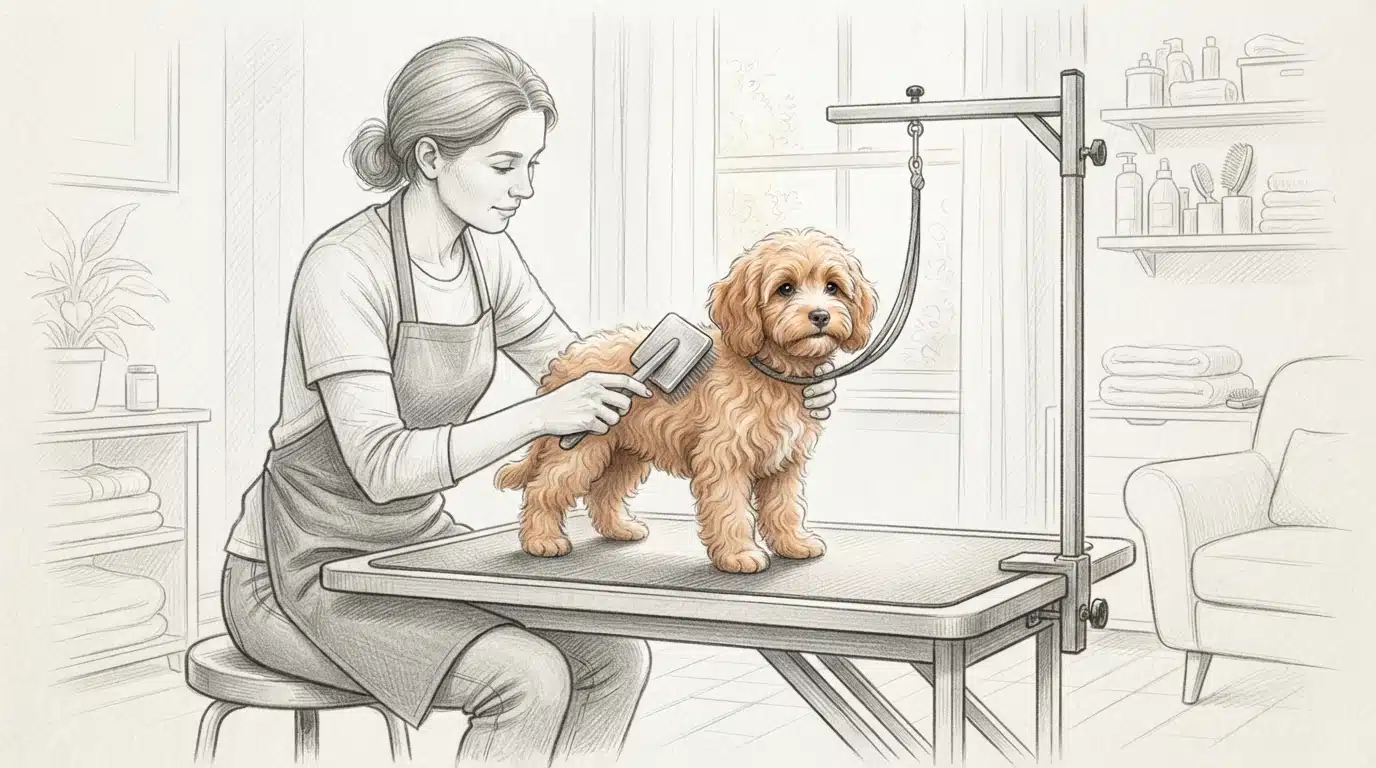
Expect three broad coat types. Straight coats sit closest to the Cavalier side and usually need the least brushing. Wavy coats are the common middle ground and need brushing a few times a week. Curly coats lean toward the Poodle side and need brushing most days plus regular trims, because loose hair gets trapped instead of falling out. Every coat type mats if you skip grooming, so pick the routine you can actually keep.
Shedding and Allergy Fit, Without False Promises
No dog is fully hypoallergenic, including Cavapoos. Curlier coats usually shed less, and F1b litters often shed less than F1 litters, but shedding varies puppy by puppy. If allergies matter in your home, spend time with the litter or with adult dogs of similar coats before you commit. Ask breeders directly what they observe about their lines rather than trusting a blanket guarantee, because honest answers protect you better than promises.
Read Temperament Signals in the First 8 to 12 Weeks
Weeks 8 to 12 tell you more about a puppy’s future temperament than any pedigree chart can. Research on the canine socialization period, roughly 3 to 12 weeks, shows this window shapes later behavior more than any other stage of a puppy’s life, according to a peer-reviewed review.
What Socialization During the Litter Period Looks Like
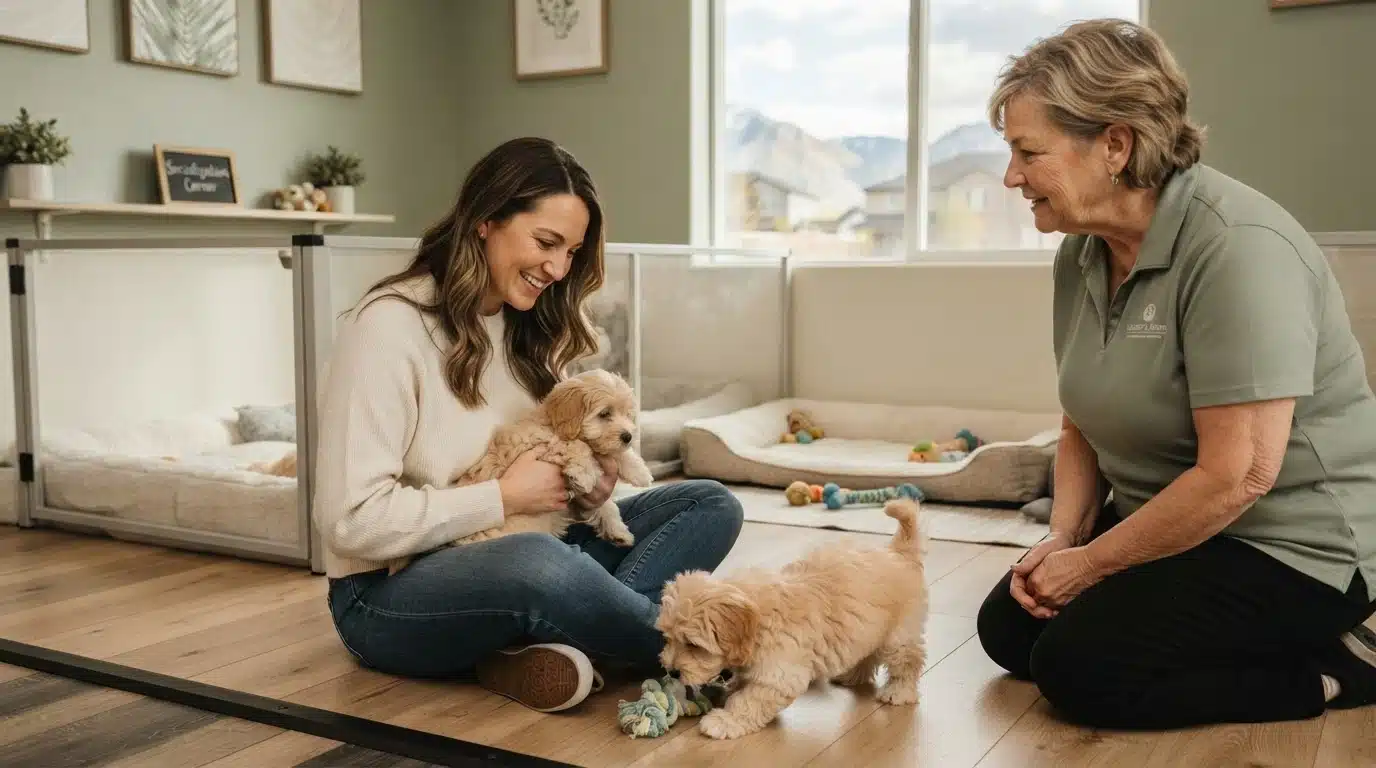
A well-socialized litter has handled daily life, not just existed in a whelping box. Ask breeders what puppies have experienced: different floor surfaces, household sounds, gentle handling by varied people, short car rides, and time apart from littermates. Good programs start this before pickup day, and a detailed puppy socialization checklist shows what a strong first-12-weeks plan covers.
Temperament Traits to Watch, and How Cautiously to Read Them
During a visit, watch how each puppy responds to a new person, a dropped object, and being held. Recovery speed matters more than the first reaction. A puppy that startles, then returns to play within seconds, is showing resilience.
Read these signals cautiously, though. One nap, a skipped meal, or a loud morning can skew a puppy’s behavior that day. Treat what you see as a snapshot, not a verdict.
Matching the Pairing to Your Home Energy
Finally, match the puppy to your actual routine. An outgoing puppy suits busy households; a mellower one fits quieter homes. If possible, meet both parents, since their calm confidence often shows up in the litter.
Vet Your Breeder Before You Vet the Puppy
The puppy in the photo matters less than the program behind it. Health testing, honest paperwork, and clear terms tell you more about a Cavapoo’s future than any coat picture. Start with what a breeder can show you.
Documents a Responsible Breeder Should Produce
Ask for proof, not promises. A good program shares both parents’ health test results, such as OFA heart, patella, and eye clearances, plus a vet exam record and the puppy’s vaccine and deworming history. Because Cavaliers and Poodles carry different risks, both sides of the pairing should be tested. The AKC lists open health records among its core signs of a responsible breeder, and you can verify OFA results yourself in a public database.

Green Flags and Red Flags in Communications
Good breeders interview you. Expect questions about your home, work schedule, and experience with dogs, because a careful program wants its puppies placed well. They answer fast, admit flaws, and never pressure you to pay same-day.
Watch for the opposite: always-available litters, no waitlist, refusal to video call, or vague answers about health testing. Multiple experts flag missing test proof and round-the-clock availability as top red flags.
Reading Contracts, Deposits, and Delivery Terms
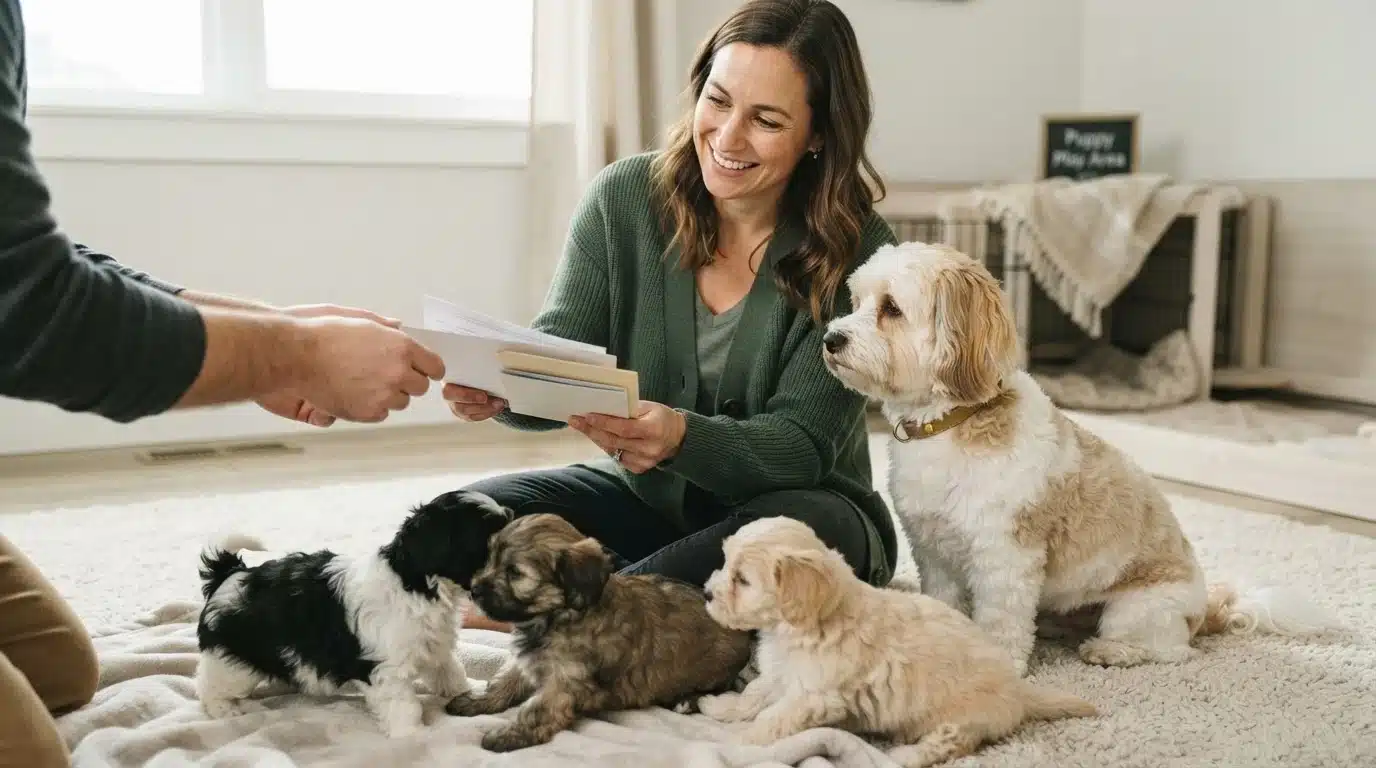
Read the contract before you pay anything, not after. Look for a written health record, a return clause that keeps the puppy out of a shelter, and terms that state what happens if a serious condition appears. A deposit should be receipted and its refund policy spelled out in writing.
On delivery, beware anyone who wants to meet you in a parking lot or ship a puppy with no questions asked. If you are comparing Utah programs, note that Sage Puppies uses a written application and owner-managed matching instead of a simple checkout button.
What to Look For on a Virtual or In-Person Visit
Ask to see where the puppies live, not just the puppy. Look for clean space, lively puppies at healthy weight, and a mother who is calm and well kept. Request a live video walk-through if you cannot visit, and watch how the puppies respond to new people and handling.
Line Up Your Home, Schedule, and Budget Before You Apply
A puppy fits your life better when the plan comes first. Work through three things before you fill out any application: what the first year will cost, what your home needs, and how the puppy will reach you.
First-Year Cost Building Blocks
The purchase price is only the start. Most families should also budget for a first vet visit and vaccines, spay or neuter surgery, food, a crate, and a puppy training class. Add pet insurance if you want help with surprise bills. Label these as example categories rather than exact prices, since costs vary a lot by region and vet clinic.
| Cost | Typical Range* | Notes |
|---|---|---|
| Purchase price | $3,500-$4,500 | Sage Puppies range for a well-bred Cavapoo |
| First-year vet care | $300-$700 | Exam, vaccines, prevention |
| Spay or neuter | $200-$500 | Varies by size and clinic |
| Training class | $100-$300 | Six-week group sessions |
*Example figures, not quotes. Call local providers for real totals.
Supplies and Setup for a Small Cavapoo Pairing
Small breeds need small gear. A crate sized for an adult dog under 25 pounds, a lightweight harness, a soft brush for a wavy or curly coat, and non-slip bowls cover the basics. Puppy-proof one room first. Block cords, stash shoes, and pick a potty spot before the puppy arrives, so day one runs on routine instead of scrambling.
Pickup in Utah Versus Nationwide Delivery
If you live near South Jordan, pickup lets you meet the breeder and see where your puppy was raised. Families elsewhere usually choose flight nanny transport or ground delivery, which adds cost but keeps the puppy with a person the whole trip. Ask any program how it screens transport options before you commit, and confirm exactly who holds the puppy at every leg.
Ask about transport details before you pay a deposit. A good program answers clearly and puts the plan in writing.
Avoid Common Pairing and Buying Mistakes
Most Cavapoo regrets come from rushing. A pairing looks perfect on paper, then the coat, size, or temperament surprises you, or a “breeder” disappears after you pay. Both problems are avoidable with a little patience.
Mistakes Breeders See Repeatedly
The most common error is choosing a generation before a lifestyle. Families pick an F1 for price, then find the coat sheds more than they hoped. Others skip health screening on the parents, or judge a puppy from one photo instead of watching how it handles people. Some commit to a litter before measuring how much time the dog will spend alone each day. A thoughtful program, like the matching process at Sage Puppies, walks you through these questions before a deposit is due, so the pairing fits your home rather than a wishlist.
Scam Patterns and Payment Safety
Puppy scams follow a script. Red flags include prices far below the $3,500-$4,500 range, stock photos, and sellers who refuse a video call. The biggest warning sign is payment: the BBB urges buyers to avoid wire transfers, cash apps, and gift cards, because they offer no way to get money back after fraud. Scammers also add late charges for crates, shots, or shipping. Pay by credit card when possible, and see the puppy in person or on live video before any money changes hands.

Ready to meet a Cavapoo raised with care? Sage Puppies runs an owner-managed matching process in South Jordan, Utah, so you can ask pairing questions before you commit. Start the application, share your home and goals, and get matched with a litter that fits.
Frequently Asked Questions
Q1: How do I choose the right Cavapoo puppy?
Start with the parents, not the puppy. Check health clearances on both sides, confirm the generation, then match coat, size, and temperament to your actual home routine.
Q2: Which generation sheds least?
F1b litters, at about 75 percent Poodle, usually shed least with curlier coats. Still, shedding varies puppy by puppy, so no breeder can promise a non-shedding dog.
Q3: Are Cavapoos hypoallergenic?
No dog is fully hypoallergenic, including Cavapoos. Curlier coats tend to shed less, but allergy-sensitive families should spend time with similar-coated dogs before committing.
Q4: How big will a Cavapoo get?
The Poodle parent sets most of the size range. Ask for both parents’ actual weights and the expected litter spread, never a single promised number.
Q5: What health tests should the parents have?
Cavalier-side parents need yearly cardiologist heart clearances; Poodle-side parents need DNA eye testing plus patella and hip evaluations. Ask for dated results matching the dogs you meet.
Q6: How can I avoid a puppy scam?
Refuse wire transfers, cash apps, and gift cards. Pay by credit card only after a live video call or in-person visit, and get all terms in writing.
Conclusion
The right Cavapoo pairing starts with the parents, not the puppy in the photo. Verify health clearances on both sides, since Cavaliers and Poodles carry different risks. Confirm the generation, because F1, F1b, and multigen litters differ in coat, size, and shedding. Then match those traits to your home, schedule, and grooming budget rather than to a picture. Watch how a puppy recovers from surprises during weeks 8 to 12, and read that behavior as a snapshot, not a verdict. Finally, vet the breeder before you vet the puppy: dated test records, honest paperwork, and a video call matter more than availability. No pairing is best for everyone, so let evidence, not rankings, make the call.