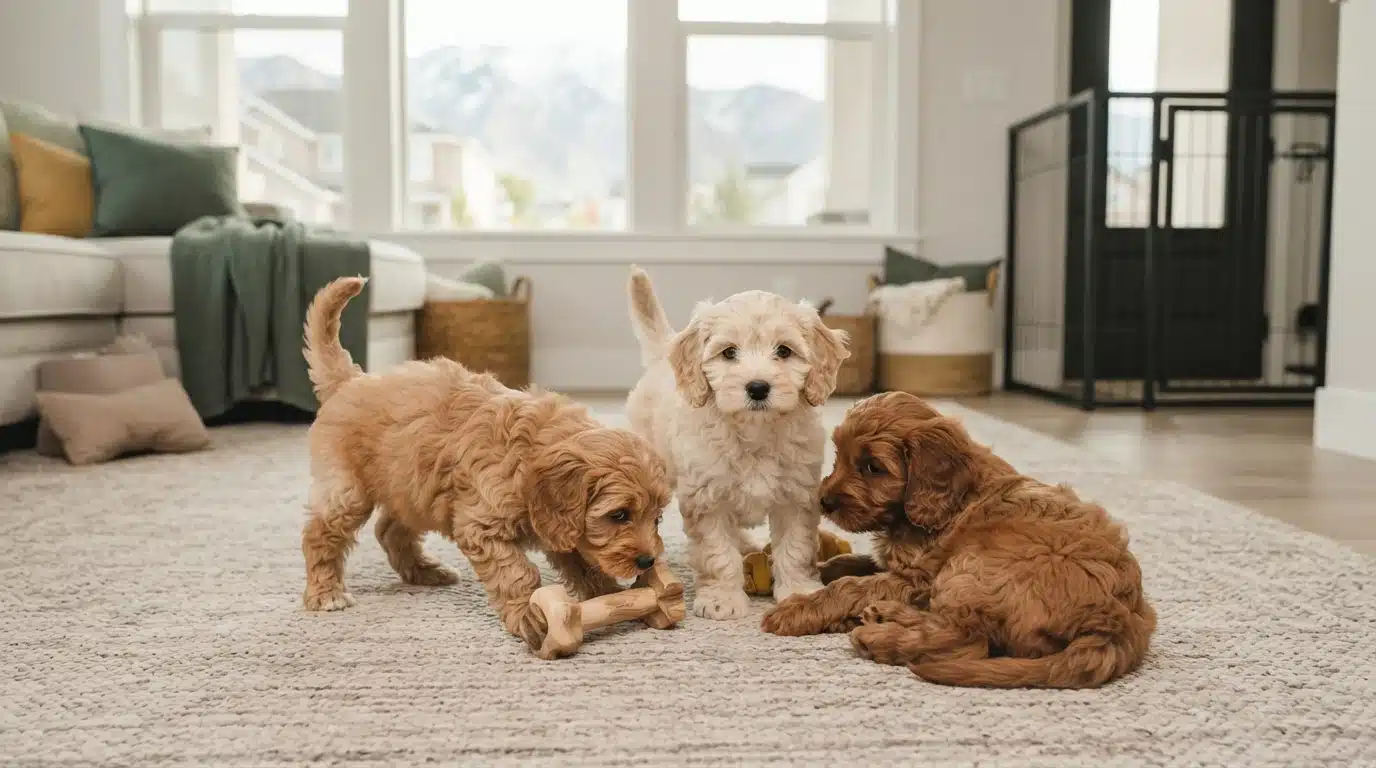
Quick Summary: Confirm the pickup and puppy-specific care plan before you travel. Use an appropriately fitted restraint or carrier installed exactly as its manufacturer directs; do not let the puppy ride loose or on a lap. Keep food and water decisions with the puppy’s veterinarian and breeder, plan controlled stops and check current Utah road conditions. Distance, timing and travel readiness vary by family and puppy.
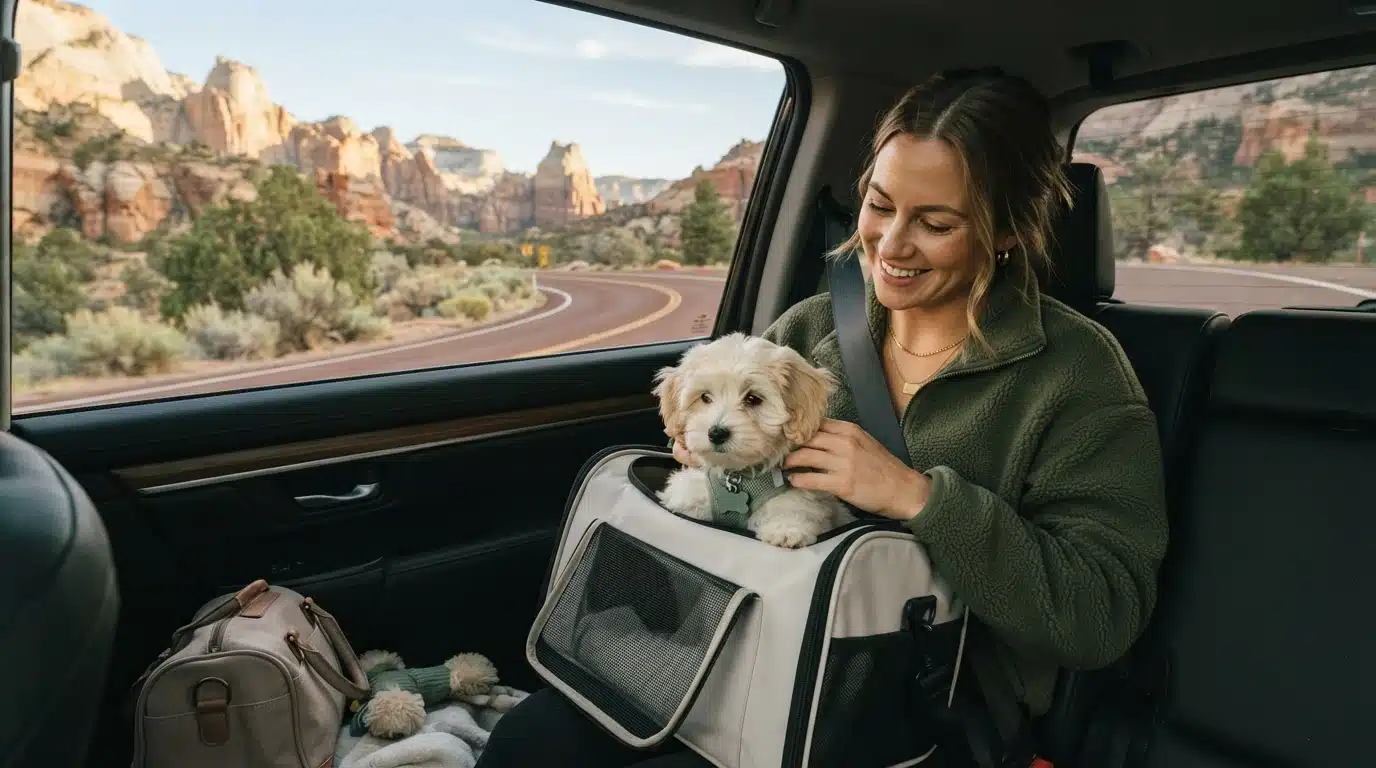
The drive home may be across the Salt Lake Valley or much farther. There is no standard 30-mile route, one-hour limit or pickup time that fits every family. The useful goal is a safe, unhurried handoff followed by a trip that meets this puppy’s needs.
Confirm the handoff before choosing the route
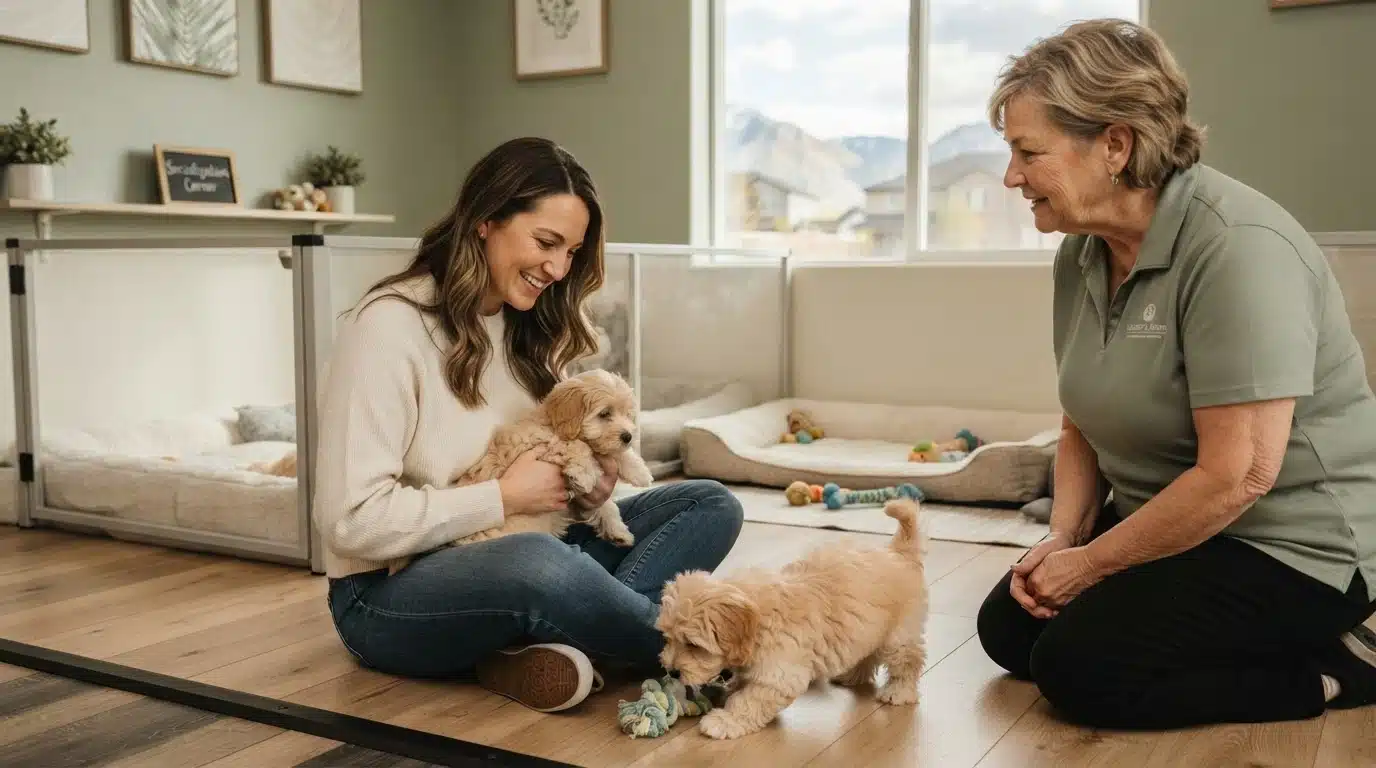
Ask for the agreed location, date, permitted visitors and expected handoff length. Confirm the puppy’s age, readiness, last meal and current care instructions. Do not assume children may attend, that a particular blanket is included, or that every puppy leaves at the same age.
For Sage, check the current delivery and pickup information and confirm the actual arrangements with Cassie. Sage is based in South Jordan, Utah; that does not make every family’s drive local.
Write down the purchase-agreement requirements and ask your veterinarian when the first examination should occur. An article’s generic 72-hour suggestion is not a substitute for the actual agreement or the puppy’s medical needs.
Choose and install the restraint before pickup
Fit the product to the puppy’s current size and the manufacturer’s stated limits. A hard shell alone does not establish crash protection, and a hand-push test does not certify a carrier. Review independent testing and the exact instructions for the product and vehicle.
The Center for Pet Safety cautions that cargo anchors may not be crash-rated. Use the specified connection points and strength-rated hardware; do not improvise by threading a belt through an arbitrary handle or tethering a collar.
Keep the puppy secured whenever the vehicle moves. An adult passenger may monitor it without opening the carrier. Pull over safely before any handling. Keep ventilation clear, maintain a comfortable cabin and never leave the puppy alone in a parked vehicle.
Pack food, water, cleanup supplies and records
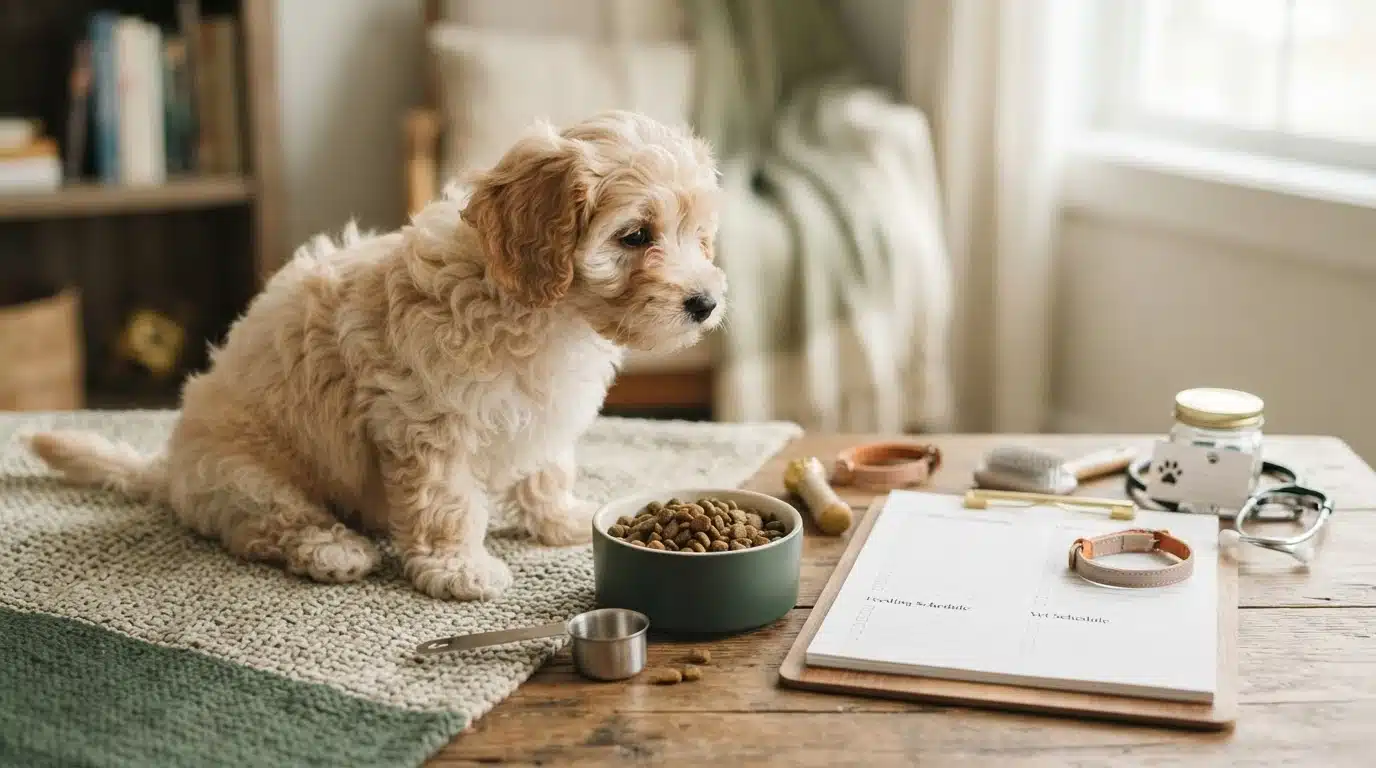
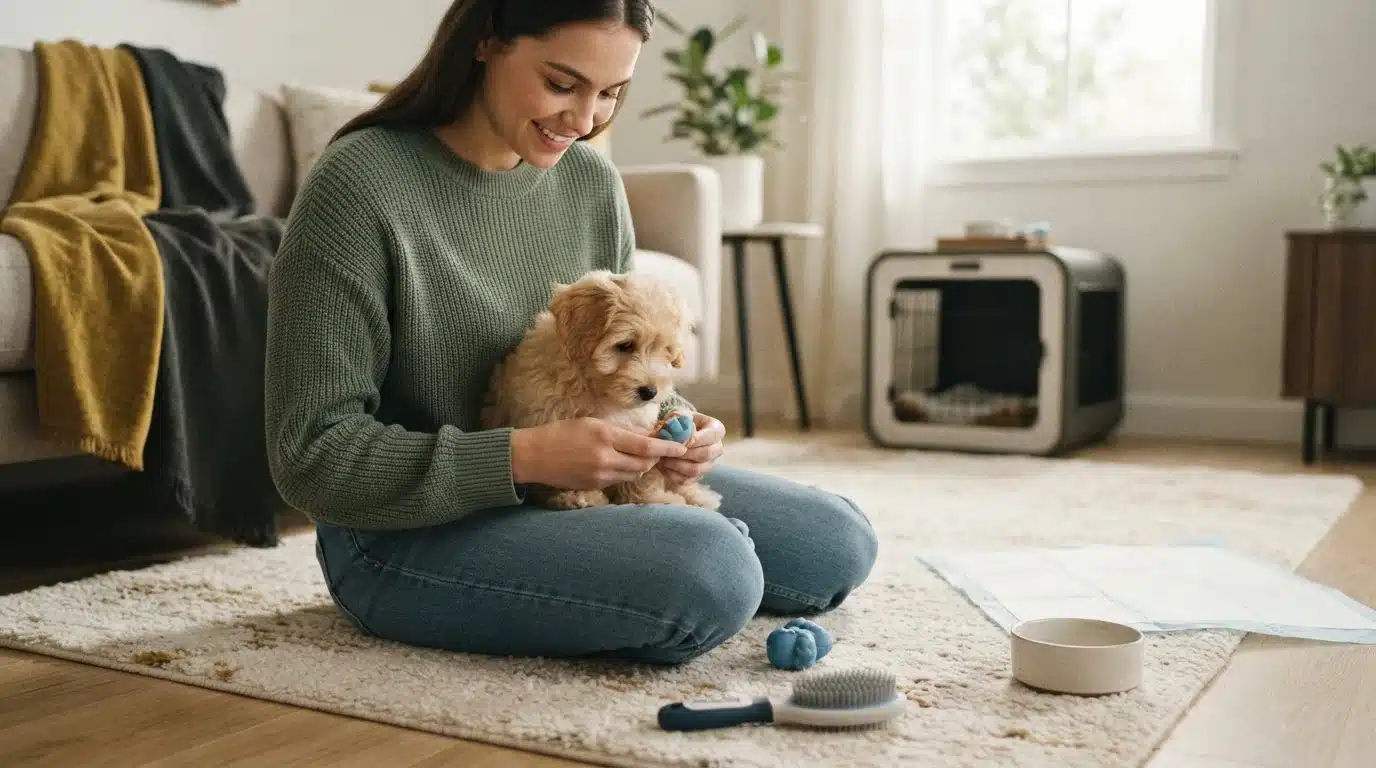
Bring the puppy’s current food, water, bowls, absorbent pads, waste bags, towels, a spare liner and a correctly fitted walking harness and leash. Pack only safe comfort items and keep small objects away from the puppy.
Ask the veterinarian and breeder for an individual feeding and water plan for the journey. Do not withhold meals or restrict water to prevent accidents, and do not apply a blanket fasting interval to a young small-breed puppy. Discuss motion sickness before travel rather than using human medicines or unapproved sedatives.
Collect the records actually available for this puppy: examination and treatment history, vaccine dates, feeding instructions, identification details if applicable, and your agreement. Ask about anything missing instead of assuming every packet contains a health certificate or microchip document.
Plan safer stops and current Utah road checks
Use UDOT Traffic and the current forecast before departure and again when conditions change. Check any canyon or mountain segment on your actual route. Do not rely on a promised time saving, a seasonal rule or a route copied from another family.
Ask your veterinarian about local infectious-disease risk while vaccination is incomplete. Avoid dog-heavy relief areas and contact with unfamiliar dogs. A disposable pad on shared ground does not make the surroundings disease-free.
Park away from traffic and secure the leash before opening the vehicle. Use a controlled, low-contact potty option agreed with the veterinarian, offer water as advised and keep the break calm. Do not open a carrier or transfer a puppy beside moving traffic.
Arrive quietly and know when to call the veterinarian
Prepare a puppy-safe rest area before leaving home. On arrival, offer a suitable potty opportunity, follow the feeding plan and allow sleep. Keep introductions short and supervise children without forcing contact.
Crying can reflect fear, discomfort, illness or a practical need. Do not assume it will stop once the car moves. Persistent vomiting, marked weakness, breathing difficulty or other concerning changes warrant prompt veterinary advice; plan access to veterinary care along a long route.
If you are still choosing a puppy, use current availability and the application to begin the owner-managed discussion. Confirm travel only after the actual puppy and arrangements are agreed.
Frequently asked questions
Can the puppy ride on my lap?
Keep the puppy in the correctly fitted and installed restraint whenever the vehicle moves. Stop safely before handling it.
Should I skip food or water before the drive?
Do not use a blanket restriction to avoid cleanup. Obtain puppy-specific veterinary and breeder instructions.
Is any hard-sided crate safe in a crash?
No. Fit, independent testing, installation, connection points and vehicle compatibility all matter.
How long may the drive be?
Plan around the actual puppy, route and veterinary advice. There is no universal one-hour maximum or guaranteed settling time.
Does a puppy pad make public grass safe?
No. Ask the veterinarian for a lower-risk stop plan and avoid dog-heavy shared areas.
May children attend pickup?
Confirm with the breeder beforehand and follow the agreed visitor and handling rules.