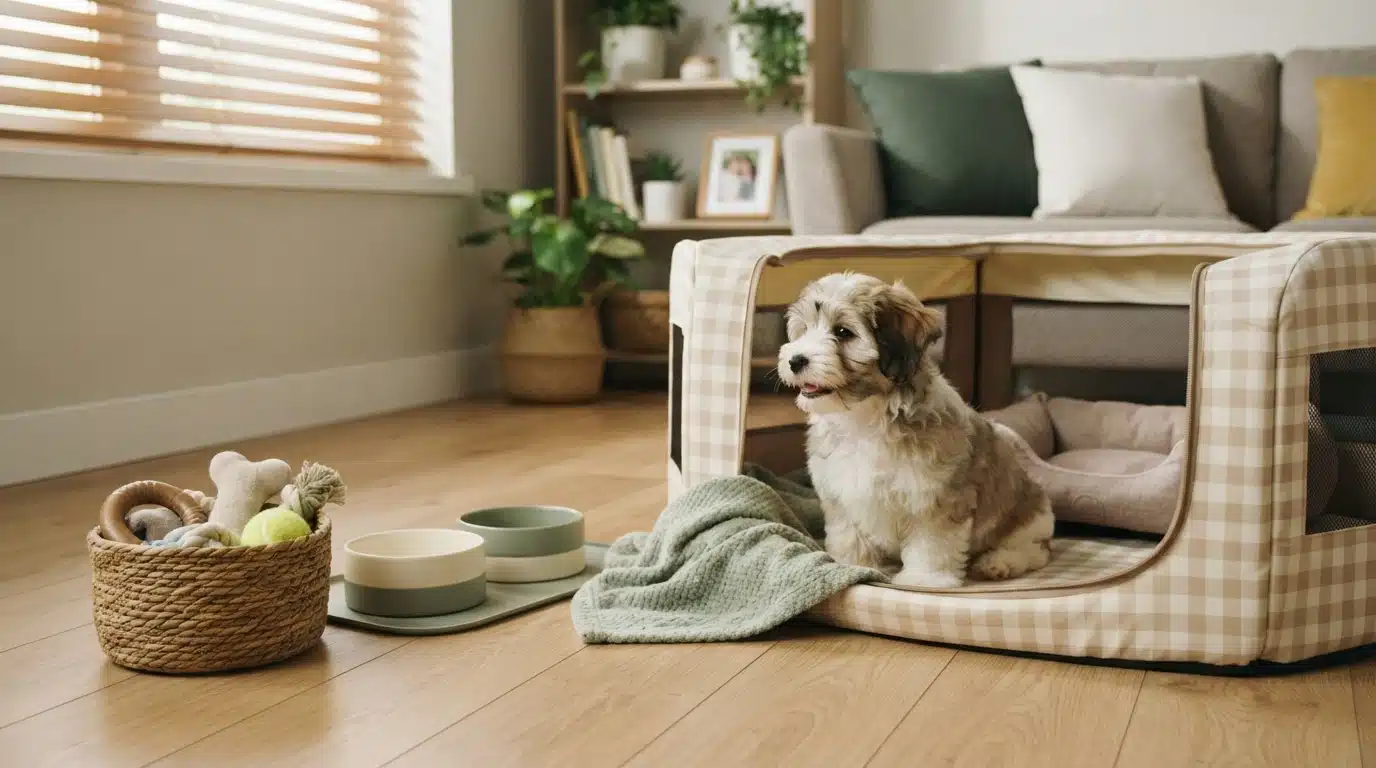
Quick Summary: Begin gentle, positive social learning early and keep it going beyond 16 weeks. Let your puppy observe at a comfortable distance and stop when it needs space. Work with your veterinarian to balance infectious-disease risk and safe exposure, and choose a well-managed reward-based class. There is no required weekly quota, guaranteed confidence outcome or deadline after which learning stops.
A small puppy can learn from a quiet household sound, a visitor sitting at a distance or a short carried outing. The aim is comfortable experience, not checking off the most people and places. Adjust the plan to the individual puppy’s health, behavior and need for rest.
Understand the early period without treating it as a deadline
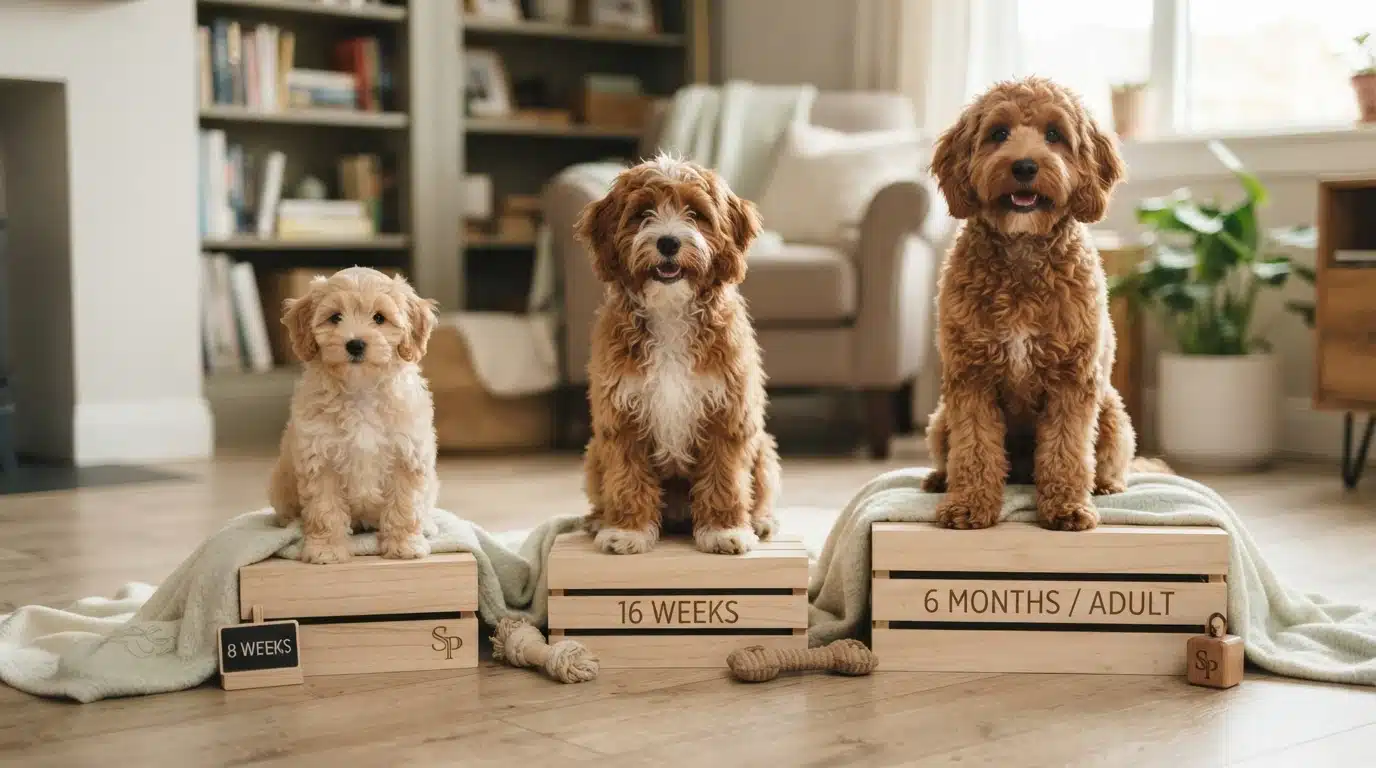
The AVSAB socialization statement emphasizes the first three months and continued positive experiences later. Missing an outing does not permanently determine a dog’s behavior.
Breed and body size do not tell you exactly how a puppy will react. Some puppies watch calmly; others need more distance or a simpler introduction. Avoid comparing progress with another dog or forcing a frightened puppy to “get used to it.”
Ask your veterinarian about safe exposure
Agree on the puppy’s vaccination, parasite-control and local disease-risk plan. Being carried reduces some ground contact but cannot remove every infection risk. Avoid sick dogs, uncontrolled play and heavily used dog areas.
Home practice and carefully selected outings can happen before the entire vaccine course is finished when appropriately planned. Do not treat one vaccine dose as permission for any venue, or postpone every positive experience until a calendar date.
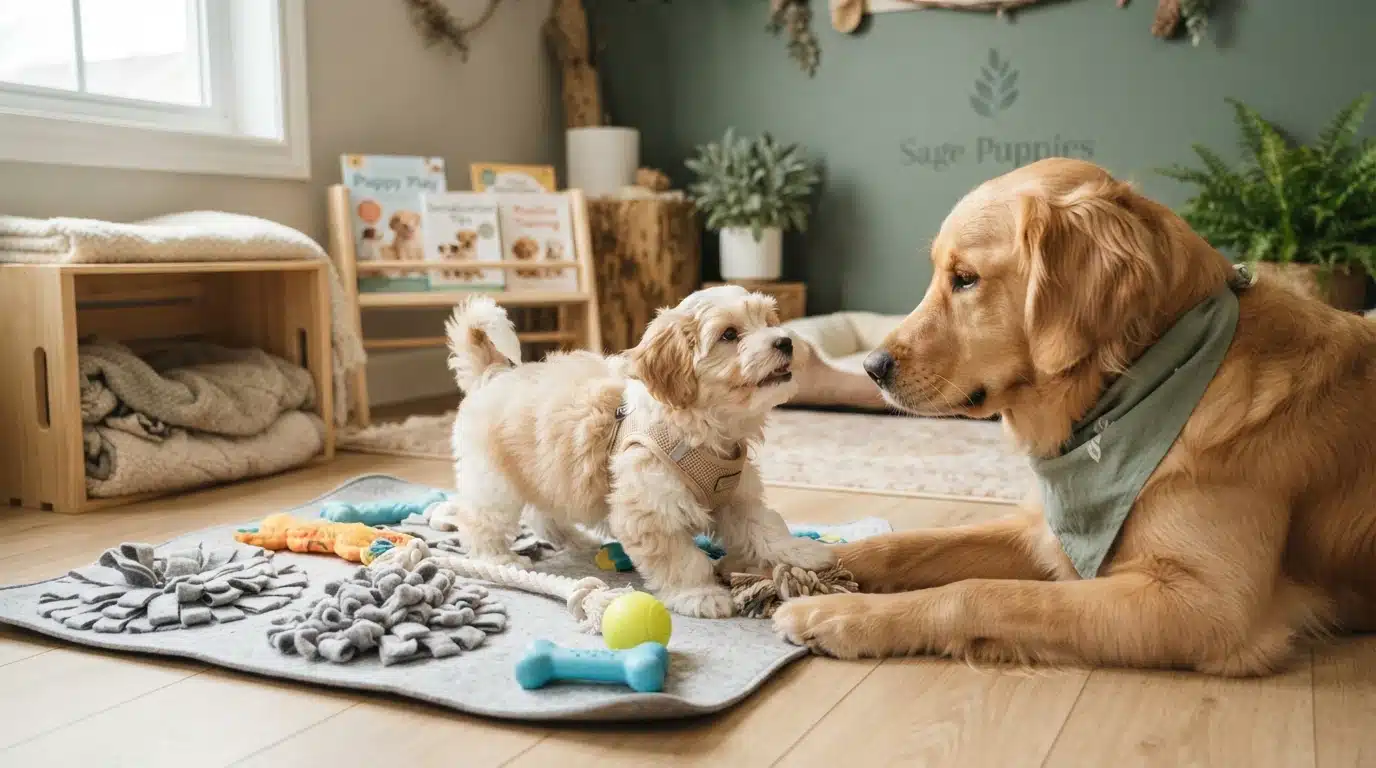
Choose contact with other dogs carefully: known health, suitable size and gentle behavior matter. Supervise and interrupt uncomfortable interactions. Do not rely on an adult dog to “correct” a small puppy or teach manners through intimidation.
Start with easy experiences at home
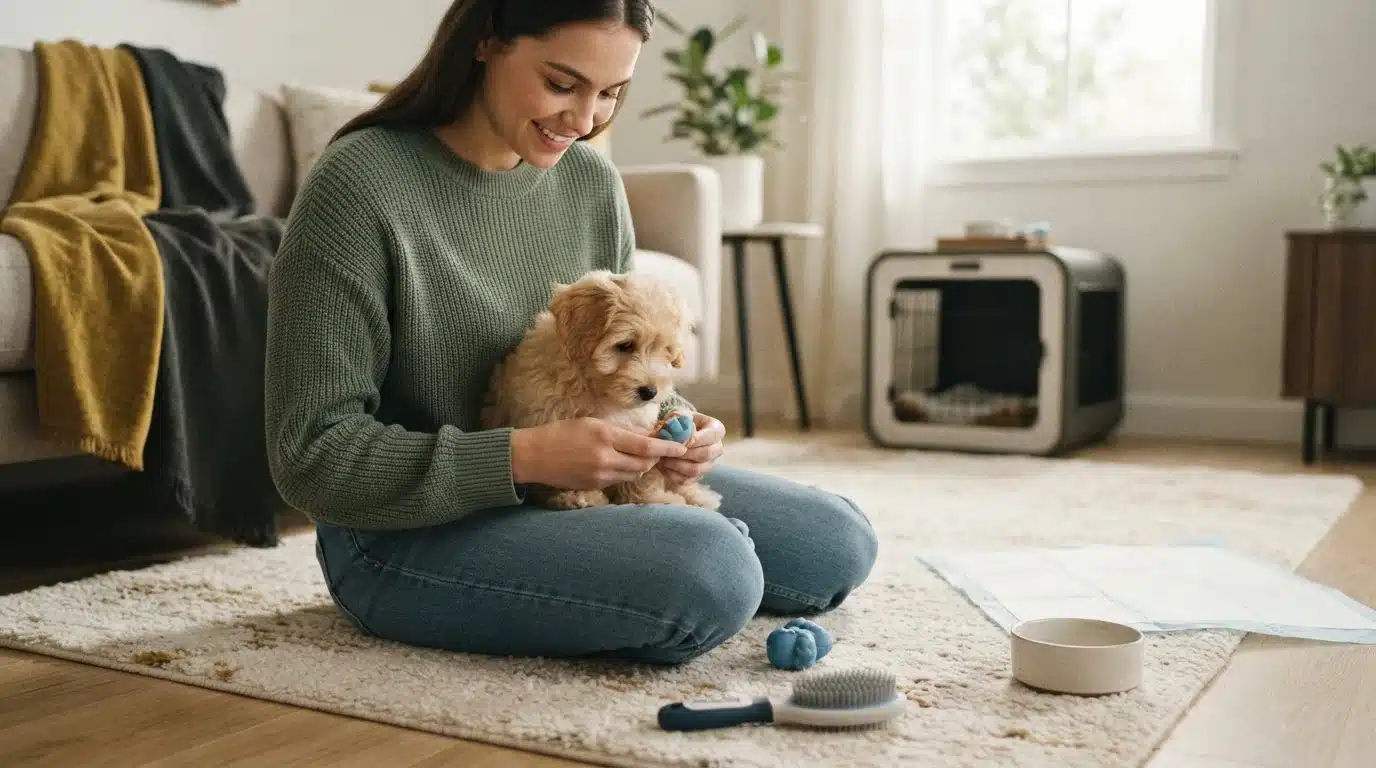
Introduce one mild sound, surface or object at a time. Place it far enough away that the puppy can notice without freezing or trying to escape. Pair the experience with a suitable reward and let the puppy move away.
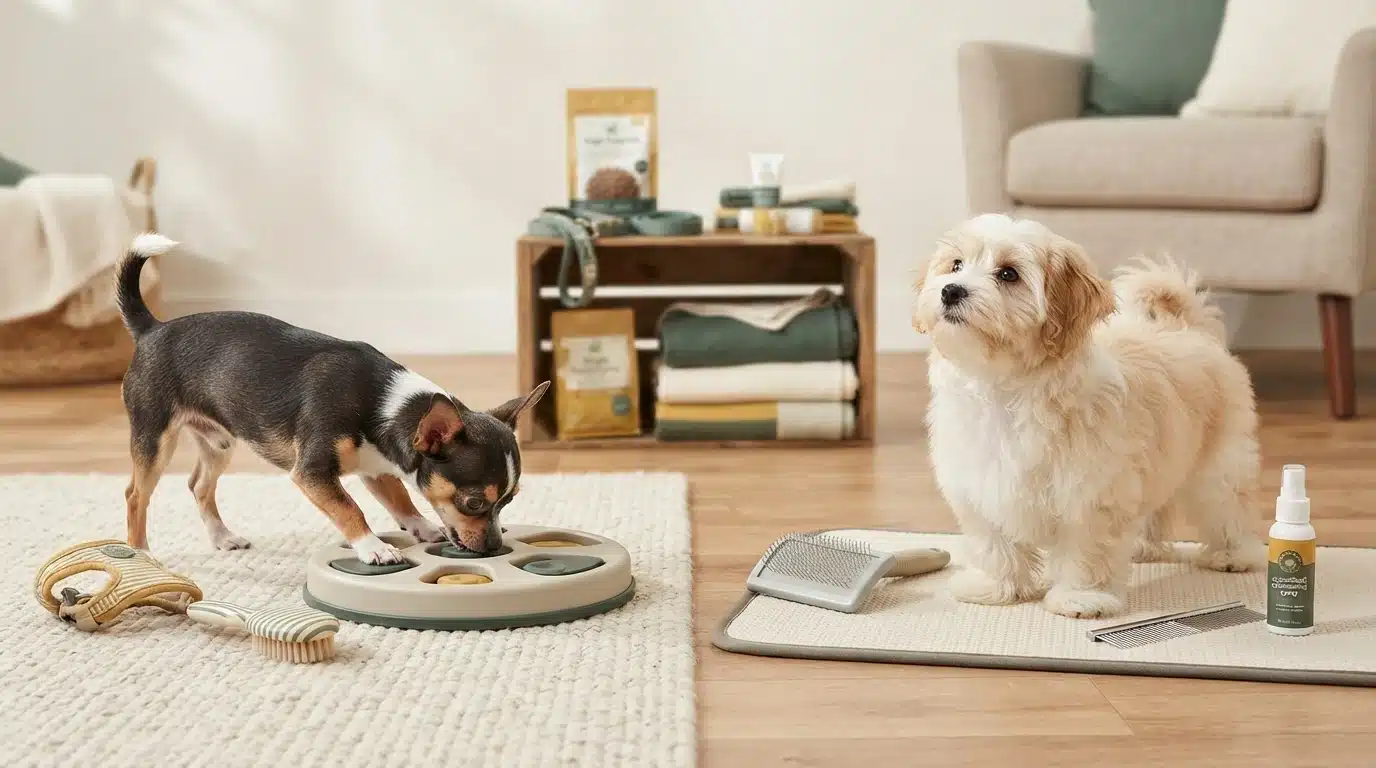
Try a visitor sitting quietly, a towel on the floor, grooming equipment at a distance or a low-volume everyday sound. Avoid unstable surfaces, forced balancing and slippery footing. Safe handling should support the puppy’s body.
Use several brief opportunities when the puppy is rested rather than one long session. Familiar experiences repeated comfortably can be more useful than constant novelty. There is no mandatory five-to-seven-exposures target.
Make outings and classes fit the puppy
Observe ordinary activity from a quiet, safe distance and leave before the puppy becomes overwhelmed. Do not let strangers crowd, reach over or pick it up. Watching without approaching is a valid experience.
Ask a class about cleaning, health screening, trainer methods and protected breaks. AVSAB describes early classes from about 7–8 weeks with a vaccine set at least seven days beforehand, first deworming and continued vaccination. Your veterinarian and the class must assess suitability.
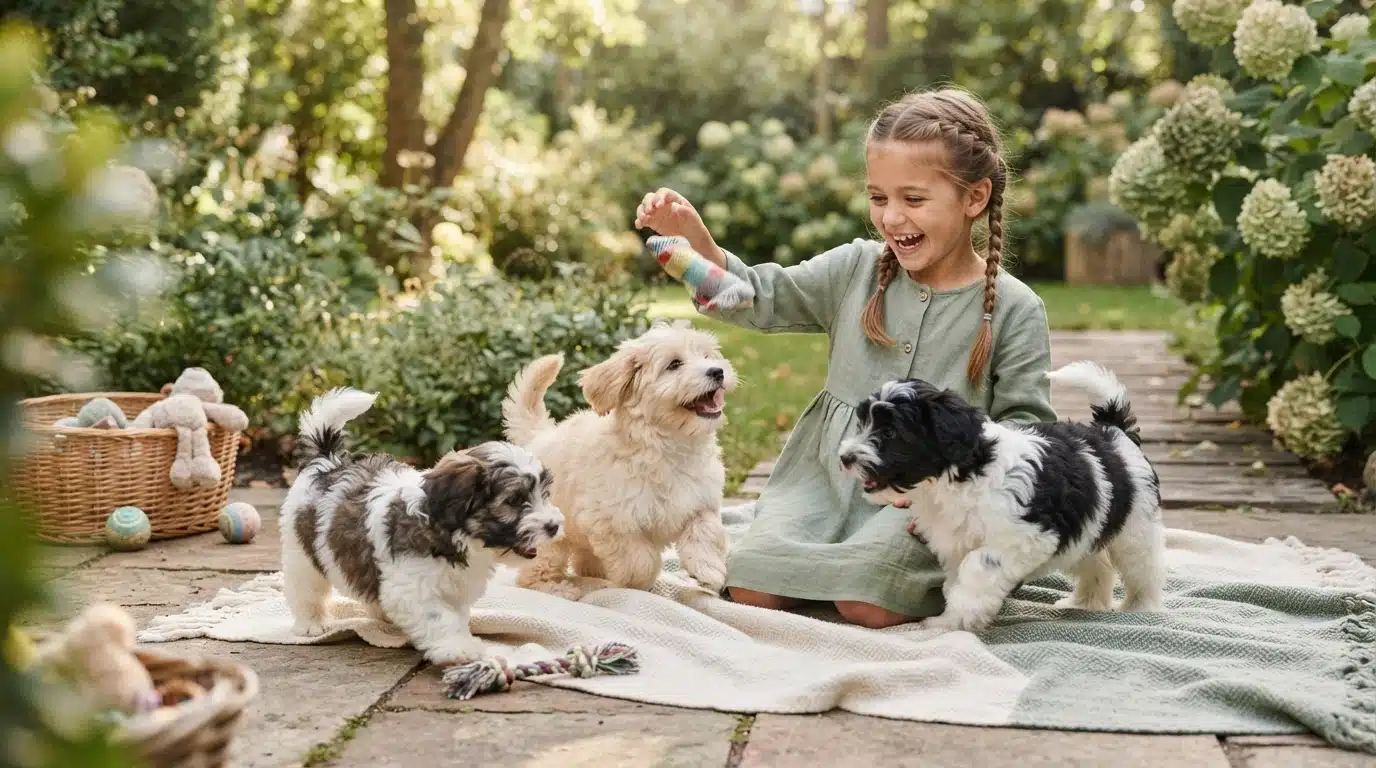
Play is optional. Match partners thoughtfully, allow pauses and end an interaction if either puppy hides, freezes, is repeatedly chased or cannot disengage. A small class alone does not establish safety.
Read the whole puppy and adjust
Watch posture, movement, approach and recovery in context. Turning away, freezing, hiding or refusing engagement may mean the situation is too much; do not wait for two warning signs before offering space.
Taking food is useful information but not proof that an experience is comfortable. Likewise, a yawn can have several meanings. Reduce the challenge, provide rest and ask a veterinarian or qualified reward-based behavior professional about persistent fear.
Continue gentle learning through adolescence and adulthood. If you missed part of the early period, restart at a comfortable level rather than trying to catch up with a crowded outing. Training supports progress but cannot guarantee a fear-free adult dog.
Ask Sage what the specific puppy has experienced and what handoff materials are actually included. Do not assume a scented blanket or individual training plan is automatic. Review available puppies and describe your household in the application when you are ready.
Frequently asked questions
Does socialization stop working at 16 weeks?
No. Early experience matters, and positive learning should continue later.
Can my puppy go out before all vaccinations are complete?
Agree on appropriate venues and precautions with your veterinarian. Carrying is not a guarantee against infection.
Must the puppy greet every person or dog?
No. Comfortable observation at a distance is useful; forced contact can be overwhelming.
How many experiences should we complete each week?
There is no required quota. Let health, comfort and rest guide the pace.
Does one vaccine make a puppy class safe?
No single condition establishes safety. Veterinary suitability, timing, parasite control and the class’s management all matter.
What if the puppy seems afraid?
Create distance and stop the pressure. Seek veterinary or qualified behavior help when fear persists.