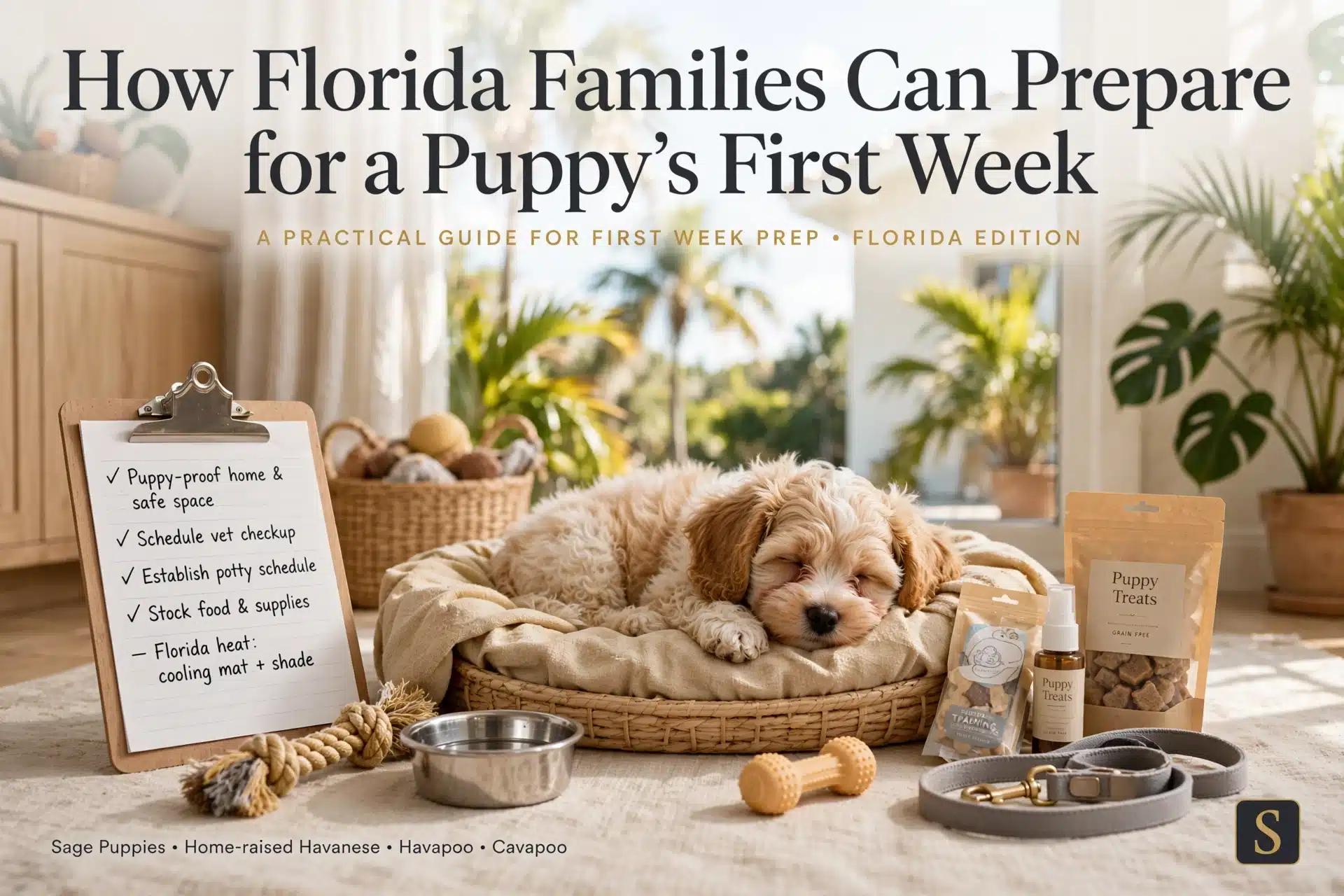
Quick Summary: Florida families should keep a new puppy’s first week calm, quiet, and heat-aware, focusing on short shaded potty trips during cooler hours and a consistent daily routine. Set up a small safe home base with a crate, puppy-proof key rooms, and book a vet visit within the first few days. Introduce family members and other pets gradually, and watch for heat stress signs like heavy panting or wobbly gait. The guide from Sage Puppies emphasizes that rest and predictability beat over-scheduled fun for settling Havanese, Havapoo, or Cavapoo puppies.
Your puppy just rode in a car through Florida heat. The best first move is simple: a shaded, brief potty break after the drive, then a quiet, air-conditioned spot to rest. Not a long outdoor welcome, and not a parade of visitors.
That mindset shapes the whole puppy first week. Most first-time owners over-plan the fun and under-plan the calm, then wonder why their puppy seems stressed or has accidents indoors. The fix is a short, Florida-aware routine that fits the climate and your family’s schedule.
In this guide, you’ll find practical new puppy tips for a seven-day settling-in plan: arrival setup, heat-aware potty trips, safe early experiences, and clear moments when a vet visit makes sense. Good puppy preparation keeps the week calm, and we’ll walk through it day by day from there.
Prepare a Calm, Florida-Ready Home Before Arrival
Your puppy’s first week starts before pickup day. A quiet, prepared home keeps those first days calm, and it matters even more in Florida, where heat and humidity shape how you’ll handle potty trips and playtime. The ASPCA recommends setting up a safe space and removing hazards before your puppy ever walks through the door.
Set Up One Safe Home Base
Pick one small room, like a laundry room or a corner of the kitchen, and make it your puppy’s home base. Add a crate with a soft bed, food and water bowls, and a few chew toys. Small breeds like Havanese, Havapoo, and Cavapoo puppies settle faster in a cozy, contained space than in a whole house. Keep the area away from direct sun and cold AC vents. Put pee pads or a potty spot plan in place for middle-of-the-night breaks. When we raise puppies at Sage Puppies, this kind of quiet setup mirrors what they already know from our home.
Puppy-Proof the Areas You Will Use First
You don’t need to secure the whole house. Focus on the two or three rooms you’ll actually use during the puppy first week. Get down on the floor and look around. The AKC’s puppy-proofing checklist covers the common trouble spots. Do these things:
- Tape down or hide electrical cords.
- Move shoes, plants, and small objects off low surfaces.
- Store cleaning supplies and trash behind closed doors.
- Secure pool access with a fence or gate.
- Block gaps behind furniture where tiny paws can wedge in.
Make a Family Plan for the First Few Days
Agree on the rules before your puppy arrives. Decide who handles feeding, who does potty trips, and when the crate door closes for the night. Set a simple schedule and write it on the fridge. Limit visitors for the first few days, and ask everyone to use the same cue words, like “potty” and “crate.” Consistency from every family member is what turns a nervous puppy into a settled one.
Also Read: How to Prepare a New Puppy for Florida’s Heat and Humidity
Make Arrival Day Quiet, Safe, and Predictable
The first hours set the tone for your puppy’s first week. Keep everything calm, small, and boring. A low-key arrival helps a small breed like a Havanese or Cavapoo settle fast and sleep well that first night.
Use a Gentle Arrival Sequence
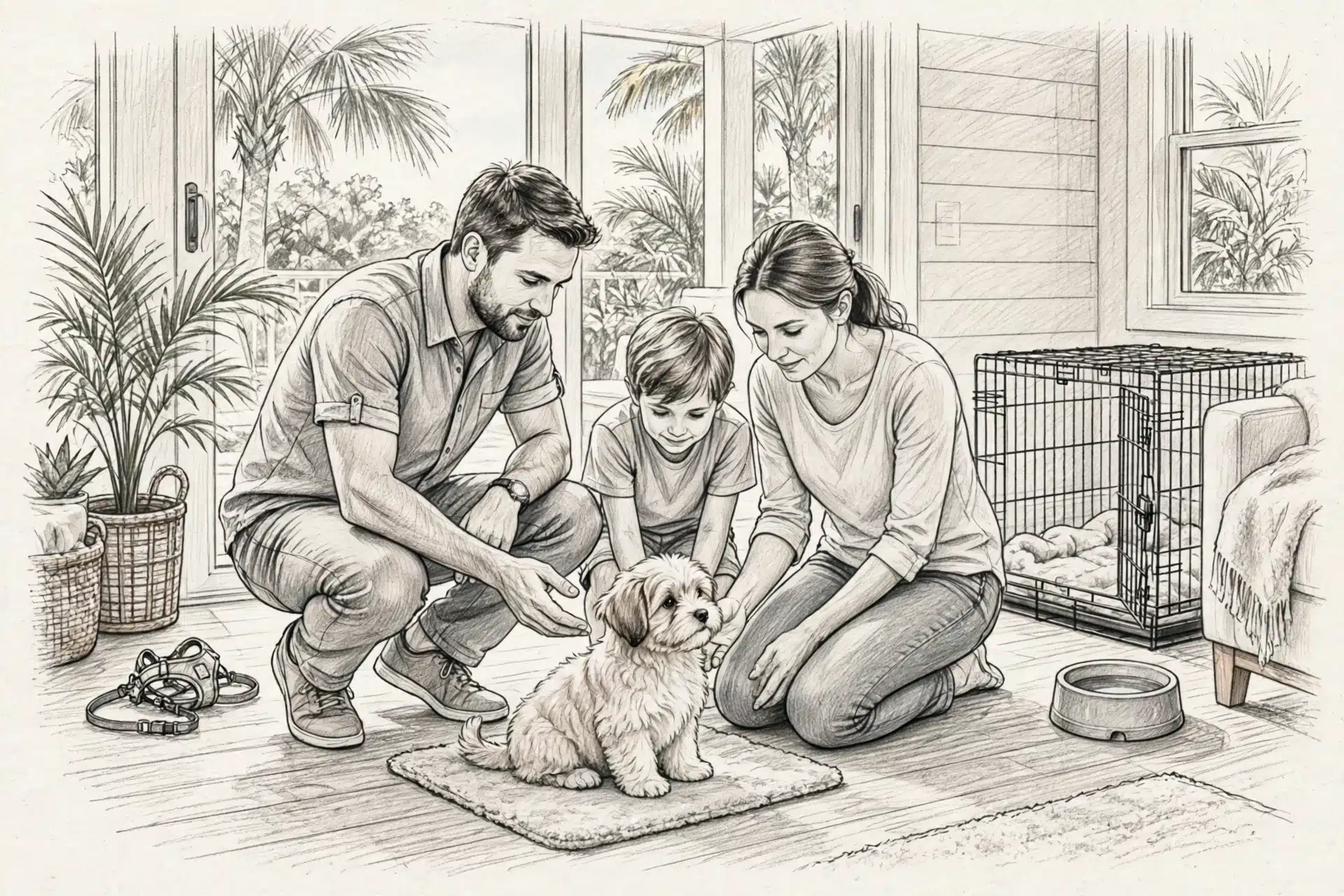
When you get home, carry the puppy straight to the designated potty spot outside. Let them sniff and go before anything else. Then offer a short drink of water and bring them inside. Let one or two calm family members say hello. The AKC advises keeping the first meeting quiet and low-key so your puppy can start taking in the new home without stress.
- Potty break first, always.
- Water, then a few calm minutes.
- Show them the crate, then let them rest.
Keep the First Day Small and Restful
Skip visitors, baths, and long play sessions. Puppies sleep up to 18 hours a day, and the transition is tiring even for a confident, well-started pup. Offer short cuddles, a soft bed, and food at the scheduled time. If kids want to hold the puppy, set a rule: sitting on the floor only, for a few minutes at a time. Rest now means a smoother rest of the puppy first week.
Let the puppy sleep. A tired, overtired puppy cries more and nips more. Calm hours today prevent hard nights later.
Confirm Travel and Handoff Details Ahead of Time
Decide how your puppy arrives before arrival day. With Sage Puppies, you can choose local pickup in South Jordan, Utah or nationwide delivery, so your handoff plan is set early. Confirm the meeting time and location a day ahead.
- Pack water, a towel, and a leash for travel.
- Bring a chew or toy for the car ride.
- Ask the breeder what food the puppy eats so you can match it.
Have questions the moment you meet? Ask about feeding, sleep setup, and the first vet visit while the breeder is right there.
Also Read: How to Keep a New Puppy Cool During Florida Car Travel
Build a Repeatable Daily Routine for Days One Through Seven
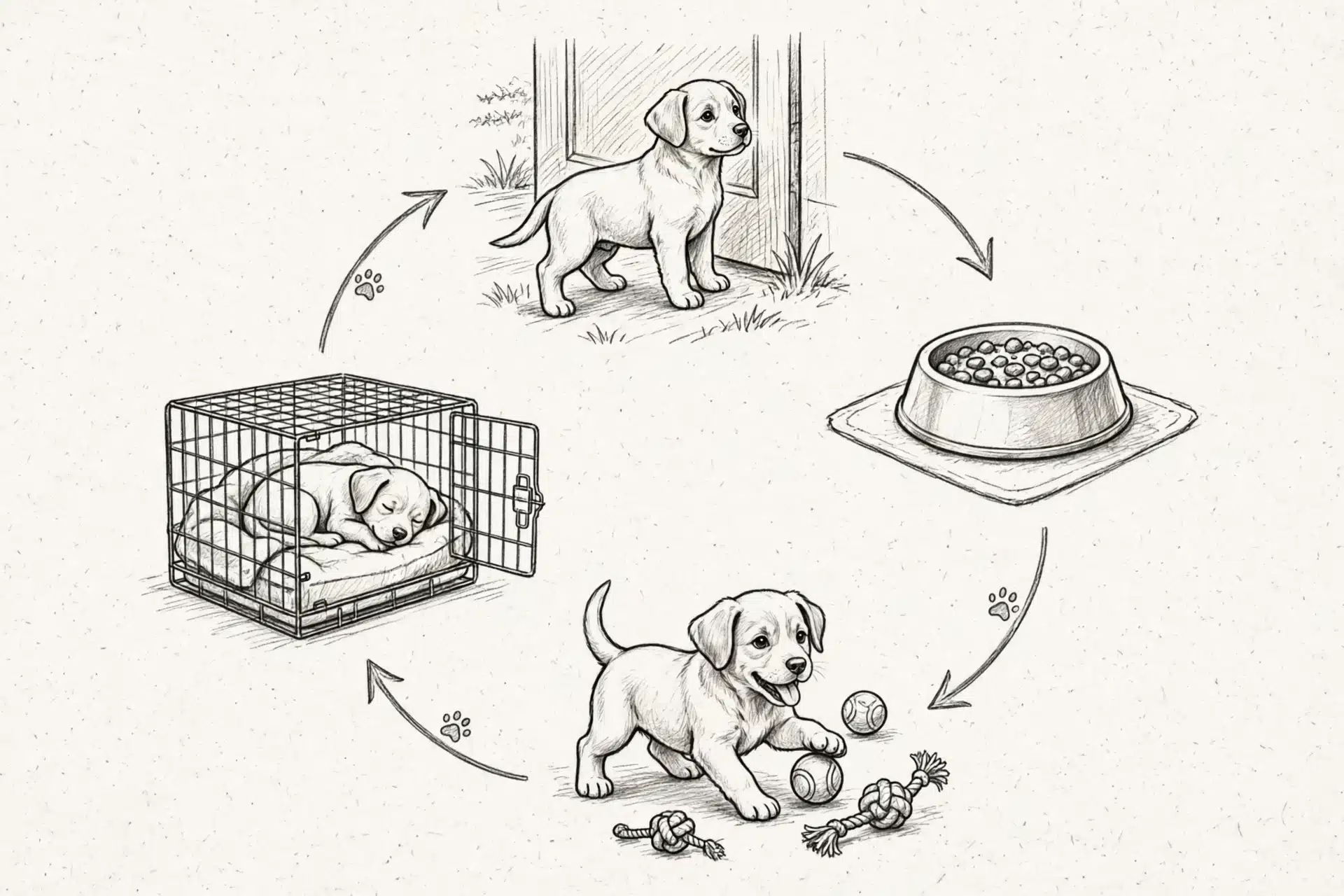
Puppies thrive on rhythm, not rigidity. A loose pattern of potty, play, meals, and naps tells your puppy what comes next, and that predictability cuts down on accidents and whining within days.
Use Events, Not a Rigid Clock, to Cue Potty Breaks
Watch for the triggers instead of staring at the clock. Carry your puppy outside on a regular schedule, especially in Florida heat where early morning and evening trips are safest.
Take your puppy out:
- Right after waking, from naps or overnight
- Within 10 minutes after every meal
- After short play sessions
- Right before bedtime
Young puppies need a trip out roughly every hour while awake. Once outside, stand still and give it a few quiet minutes. Praise calmly the moment they go. If nothing happens after five minutes, go back inside and try again soon.
Keep Meals, Play, and Naps Predictable
Feed the same food at the same times each day – usually three small meals for an 8 to 12 week old puppy. Measuring the same portions and keeping the same bowl in the same spot helps digestion and makes potty timing easier to predict.
Follow each short play session with a nap. Puppies this age sleep 18 to 20 hours a day, so a wake cycle of 30 to 60 minutes is plenty. Use a crate or a small penned area for naps. Keep the same spot for meals, the same door for potty trips, and the same bed for sleeping. Repetition is the whole point.
| Time Block | Activity | Notes |
|---|---|---|
| Early morning | Potty, then breakfast | Beat the Florida heat |
| Mid-morning | Short play, potty, nap | 30-60 minute wake window |
| Midday | Lunch, potty, calm time | Keep it low-key |
| Late afternoon | Play, potty, nap | Light activity only |
| Evening | Dinner, gentle play, potty | After the worst heat passes |
| Bedtime | Last potty, then crate | Keep it quiet |
Make Nights Calm and Manageable
The first few nights are the hardest. Keep the crate near your bed so your puppy can hear you. Take one trip outside if they wake and fuss, then back to the crate with no play and no talking. Most puppies stretch longer nights within a week. Skip late-evening water if your vet agrees, and never respond to whining with attention beyond a potty trip.
Tip: Write the routine on the fridge and let kids take turns. A family who follows the same steps gets a house-trained puppy much faster.
Also Read: Havanese, Havapoo & Cavapoo Puppy Care Blog
Keep First-Week Outdoor Time Brief and Heat-Aware
Florida heat changes how your puppy spends her first week outside. Small companion breeds like Havanese, Havapoo, and Cavapoo puppies tire fast and warm up faster than adult dogs. Keep every outdoor session short, shaded, and scheduled around the coolest parts of the day.
Choose Short, Shaded Potty Trips
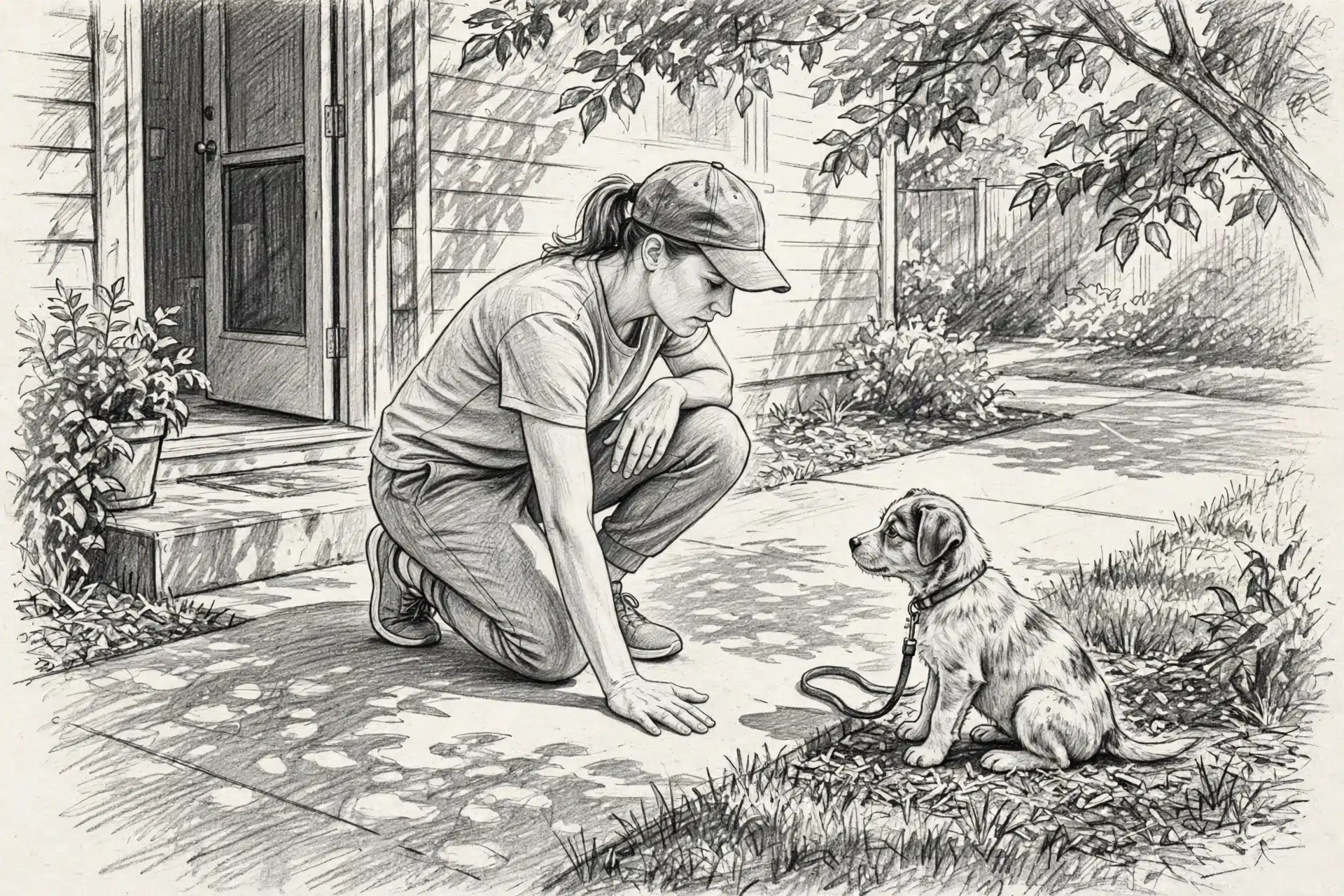
Plan potty breaks for early morning and evening, when pavement and grass have cooled. A five-minute trip to a shaded patch of yard does the job. Stay close to the door during week one so your puppy learns the spot without long walks.
Test the ground before she steps out. Press the back of your hand on the pavement for seven seconds. If it stings your hand, it will burn her pads. Stick to grass or mulch when surfaces feel hot.
Rule of thumb: if the pavement is too hot for your hand, it is too hot for her paws.
Watch the Puppy and the Conditions
Puppies show heat stress before it becomes dangerous. Check for these signs and head back inside if you notice any of them:
- Heavy panting that does not settle after a minute in the shade
- Thick drool, bright red gums, or a wobbly, tired gait
- Flat refusal to move or a frantic search for shade
Humidity matters as much as temperature. In muggy Florida air, dogs cool themselves less effectively, so keep trips shorter than the thermometer alone would suggest. Always carry water, and let your puppy rest indoors between outings.
Balance Outdoor Safety With Gentle New Experiences
Heat limits do not mean skipping socialization. Let your puppy hear neighborhood sounds, feel different textures underfoot, and watch children or cars from a quiet, shaded porch. Short, positive moments build confidence without overheating. A few minutes of calm exposure beats an hour of rough play in the sun, and your puppy will settle into her new home faster for it.
Introduce Family Members, Visitors, and Other Pets Gradually
A new puppy meets a lot of new faces in week one. Too much at once can overwhelm a small breed puppy, so pace every introduction and keep each one short and positive.
Set Child and Visitor Expectations
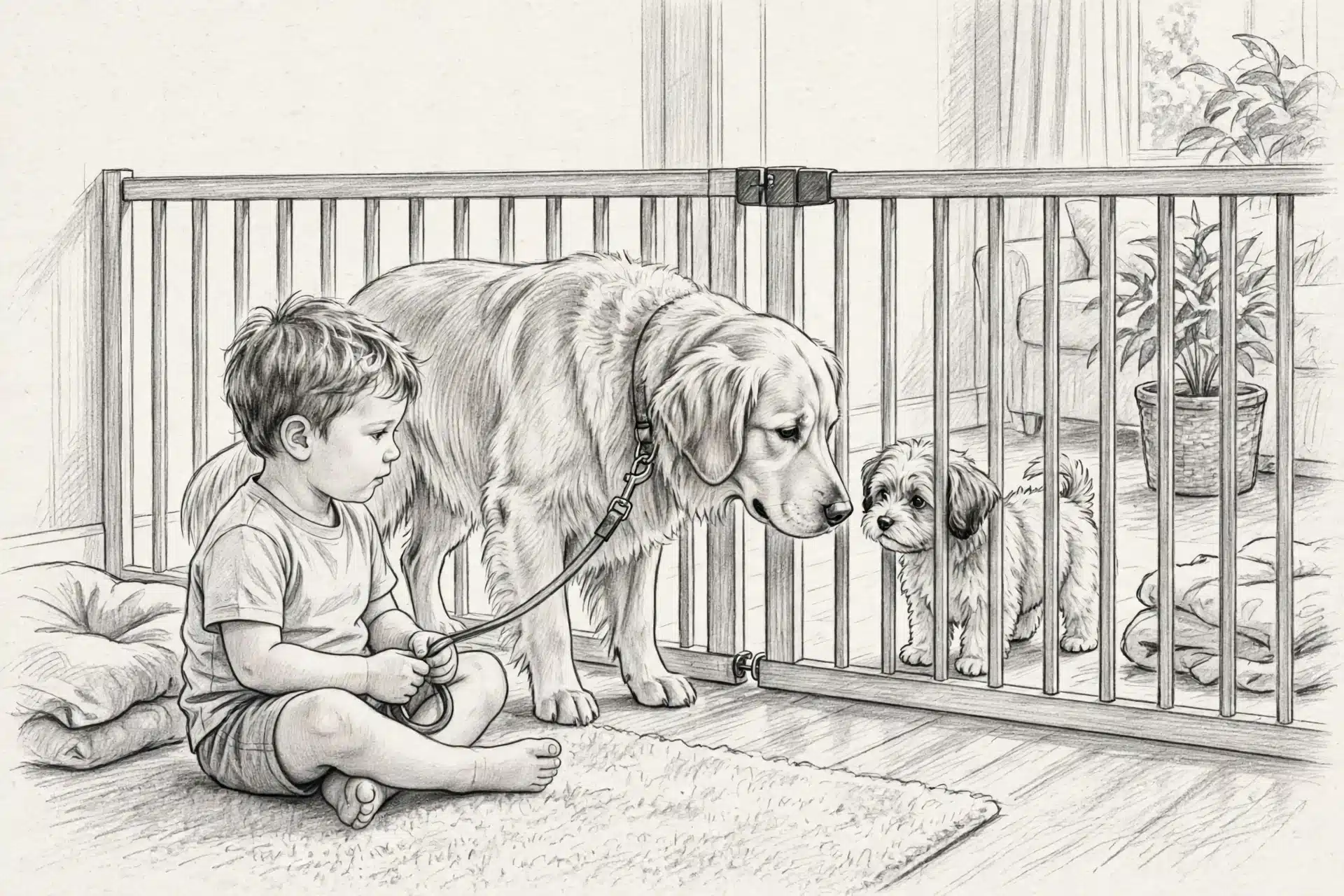
Sit everyone down before the puppy arrives and agree on the rules. Children sit on the floor and let the puppy come to them. No chasing, no picking up, no loud voices. Visitors wait until the puppy has eaten and pottied, then greet calmly for a few minutes only. Keep the first few days quiet, even if friends are eager to meet her. A calm start builds a confident adult dog.
Make Handling Gentle and Optional
Never force a hold. Let the puppy approach, sniff, and settle on her own terms. Teach kids to support her chest and hindquarters if an adult approves a pick-up, and to release her the moment she wiggles. Short, gentle touches paired with treats teach your Havanese, Havapoo, or Cavapoo that hands mean good things.
Introduce Existing Pets With Management
Keep resident pets separate for the first few days. Swap bedding so they learn each other’s scent first. Then allow brief, leashed or gated meetings in neutral space.
- Feed pets in separate rooms.
- Reward calm behavior from both animals.
- End each meeting before tension appears.
- Supervise until you trust the pairing fully.
Also Read: Guides – Sage Puppies
Wrapping Up: Your Puppy’s First Week in Florida
Your puppy’s first week sets the tone for everything that follows. Most vets recommend a checkup within the first week home, so book that visit before pickup day. Keep the routine simple: short potty trips during cooler hours, a quiet sleep space, gentle handling, and plenty of rest.
Quick checklist for the week:
- Prep before arrival – crate, food, bowls, and a potty plan.
- Book the vet – schedule an exam within the first seven days.
- Watch the heat – plan outdoor time for early morning or evening.
- Go slow with socializing – short, positive moments beat big outings.
- Rest often – puppies sleep most of the day, and that is normal.
Also Read
- How Florida Families Can Prepare for a Puppy’s First Week – the full seven-day plan, from arrival day to vet visit.
- Available Havanese, Havapoo, and Cavapoo Puppies – see who is ready to join your family now.
- How It Works at Sage Puppies – application, reservation, and pickup or delivery steps.
If you are still deciding which breed fits your home, our Havanese, Havapoo, and Cavapoo pages break down temperament, size, and grooming needs. We raise every puppy in our South Jordan home with health-tested parents, and we deliver to families across the country. Have questions before you apply? We are happy to walk you through it.
How Florida Families Can Prepare for a Puppy’s First Week
Bringing a puppy home in Florida is a little different from bringing one home anywhere else. The heat, the humidity, the afternoon storms, and the mosquitoes all shape how your puppy’s first seven days should go. This guide walks you through a day-by-day settling-in plan built for Florida families, with heat-aware potty trips, safe early socializing, and clear vet checkpoints.
At Sage Puppies, our Havanese, Havapoo, and Cavapoo puppies are raised in our home in South Jordan, Utah, and we deliver to families across the country, including Florida. The first week matters just as much as the months of care before pickup. Here is how to get it right.
Before Your Puppy Arrives: The Florida Supply List
Set everything up before your puppy steps through the door. A puppy arriving in a new climate, in a new home, with no routine, is stressed. Every item you prepare in advance removes one stressor.
Your first-week supply list:
- A crate sized for a small breed, with a soft bed and a safe chew toy
- Food and water bowls (stainless steel or ceramic, not plastic)
- The same food the puppy has been eating, so you can transition slowly
- A flat collar, an ID tag, and a lightweight 6-foot leash
- Puppy pads for the first few days
- Enzyme cleaner for accidents
- Baby gates to block stairs and off-limit rooms
- A cool room or area with tile flooring, which is a gift in Florida
Tip: In Florida, tile and vinyl floors stay cool and give your puppy a natural place to rest. If your puppy’s crate sits on carpet, place it near an air vent but not directly under it.
Puppy-Proofing for a Florida Home
Puppies explore with their mouths, so get down on your hands and knees and look at your home the way a puppy would.
- Move cords, chargers, and curtain blinds out of reach
- Store medications, cleaning products, and human snacks in closed cabinets
- Secure screen doors and pool fences. Pool safety starts on day one in Florida
- Check your yard for toxic plants common to the region, like sago palm and oleander
- Put away small toys, shoes, and anything else at puppy height
If you have a pool, block access before your puppy ever sees it. Even strong swimmers can struggle to find pool steps. A fenced barrier or a pool cover with a locked edge is worth the cost.
Days 1 and 2: Arrival and Quiet Settling
The first 48 hours set the tone. Keep everything calm and boring. Your puppy just left its mother, littermates, and everything familiar.
Arrival day checklist:
- Take your puppy out to a designated potty spot the moment you arrive home
- Let your puppy explore one or two rooms only, not the whole house
- Show your puppy the crate, the water bowl, and the potty area
- Offer food and water, then a short calm play session
- Settle your puppy into the crate for its first nap
Expect your puppy to sleep a lot. Puppies this age can sleep 18 to 20 hours a day, and that is normal and healthy.
Warning: If your puppy arrives by flight or a long car ride in Florida’s heat, keep the air conditioning running and offer water right away. Watch for heavy panting, drooling, or wobbliness, and call your vet if you see any of these signs.
Days 3 to 5: Building the Routine
By the middle of the week, start the rhythm you want for the next several months. Small breeds like Havanese, Havapoo, and Cavapoo puppies thrive on predictability.
A workable daily frame looks like this:
| Time | Activity | Florida Note |
|---|---|---|
| Early morning | Potty, breakfast, potty again | Go out before 8 a.m. while surfaces are cool |
| Mid-morning | Short play, crate nap | Keep play indoors or shaded |
| Midday | Potty, light training, lunch for young puppies | Avoid 11 a.m. to 4 p.m. outdoors |
| Afternoon | Crate nap, quiet time | Storm season often starts here |
| Late afternoon | Potty, gentle play, handled socializing | Still hot on pavement |
| Evening | Dinner, potty, calm family time | Good window for brief outdoor time |
| Bedtime | Final potty, crate | Fan or AC on for comfort |
Heat-Aware Potty Trips
This is where Florida families need a different playbook. Hot pavement can burn paw pads, and the ground stays warm long after the air cools.
- Do the 7-second test: press the back of your hand on the pavement for seven seconds. If you cannot hold it, it is too hot for paws
- Aim for grass or dirt, not asphalt or concrete, whenever you can
- Walk before 8 a.m. and after sunset when possible
- Skip the walk entirely for the first week. Yard potty trips are enough
- Keep every trip short. Five minutes out, potty, five minutes back
Tip: Early morning is your best friend in a Florida summer. A puppy that learns to potty right after waking makes your hottest hours easier to manage from indoors.
Day 6 and 7: Gentle Socializing and New Experiences
Socializing a puppy does not mean meeting strangers. Before vaccinations are complete, keep your puppy in your home and yard. The goal is exposure, not contact.
Safe early experiences for week one:
- Different floor surfaces: tile, carpet, grass, a bath mat
- Household sounds: dishwasher, vacuum from a distance, TV
- Being held and touched by calm family members, including children
- Gentle handling of paws, ears, and mouth, which helps future vet visits and grooming
- Short car rides with the AC on
- A taste of rain. Florida storms are coming whether you like it or not
Watch your puppy’s body language. A wagging tail and loose body mean the experience is fine. Tucked tail, hiding, or freezing mean you went too fast. Back up a step and try again later.
Surviving the First Florida Thunderstorm
Afternoon thunderstorms are part of life here, and week one is when you can set your puppy up to handle them.
- Stay calm and casual. Do not coddle or make a fuss
- Distract with a stuffed chew toy or a quick game
- Give your puppy a safe retreat, like the crate covered with a light blanket
- Consider a white noise app or fan to soften thunder
A puppy that has one calm storm experience in week one is far less likely to develop storm anxiety later.
Food, Water, and the Florida Climate
Feed the food your breeder sent home with your puppy, then transition to your choice over 7 to 10 days by mixing old and new food in shifting ratios. Sudden food changes cause diarrhea, and diarrhea plus Florida heat is a dehydration risk.
Water matters more here than in cooler states. Fresh, cool water should be available at all times, indoors and during any outdoor time. In summer, a puppy playing hard for even 15 minutes can overheat fast.
Small companion breeds have small stomachs. Three meals a day works well until about six months old, then you can move to two.
Your Puppy’s First Vet Visit: Timing and What to Expect
Book a vet visit within the first few days of arrival, even if your puppy came with a health record from the breeder. This establishes a baseline and starts the vaccine series on schedule.
Bring these to the appointment:
- Any health records or vaccine paperwork from the breeder
- A note of what food and how much the puppy eats
- A fresh stool sample if possible
- Your list of questions
Questions worth asking a Florida vet:
- What heartworm prevention do you recommend, and when should it start?
- What flea and tick protection is safe for a puppy this age and size?
- What is the full vaccine schedule, and when can we safely go on walks?
- What signs of heat stress should worry me?
- What should I do about leash walks in summer heat?
Warning: Heartworm disease is a serious risk across Florida because mosquitoes are active nearly year-round. Most vets in the state recommend starting prevention early. Ask about it at the first visit rather than waiting.
Potty Training Basics for Week One
Keep it simple. Take your puppy out at the right moments, praise the success, and clean up accidents without drama.
Take your puppy out at these times:
- First thing after waking, every single time
- After every meal, usually 5 to 15 minutes later
- After every play session
- After a nap in the crate
- Right before bedtime
Pick one phrase, like “go potty,” and say it each time. Praise quietly and happily the moment your puppy finishes. Choose one spot in the yard and stay consistent.
If an accident happens, do not punish. Your puppy will not connect the scolding to the act. Clean with an enzyme cleaner so the scent does not call the puppy back to the same spot.
| Week One Stage | Potty Trips Per Day | Overnight |
|---|---|---|
| Days 1 to 2 | 8 to 10 | One middle-of-night trip |
| Days 3 to 5 | 8 to 10 | One trip, shortening |
| Days 6 to 7 | 6 to 8 | Often sleeping through |
Sleep, Crates, and Night One
Crate training is the fastest route to good sleep and easier potty training. Puppies naturally avoid soiling where they sleep, so the crate becomes a helpful tool, not a punishment.
- Put the crate in your bedroom for the first few weeks
- A lightweight blanket over part of the crate creates a den feel
- Take the puppy out for a final potty right before you sleep
- Expect one middle-of-the-night potty trip for the first week or two
- Ignore whining that is just fussing. Respond to whining that signals a real need
Most small breed puppies sleep through the night by 12 to 16 weeks.
Family Rules: Getting Everyone on the Same Page
If you have children, agree on the rules before day one. Inconsistent rules confuse a puppy and slow training.
- Puppies are handled gently, with two hands, sitting down
- No picking up while the puppy is sleeping or eating
- Children feed and do potty trips with an adult, never alone
- The crate is the puppy’s retreat. No one bothers the puppy inside it
- Everyone uses the same cue words for potty and crate
A family that agrees on the routine in week one trains a puppy twice as fast as a family that argues about it for a month.
Signs You Should Call the Vet
Some things can wait for a scheduled visit. These cannot:
- Repeated vomiting or diarrhea lasting more than a day
- No appetite for more than a day, or any refusal of water
- Heavy panting, thick drool, or weakness in warm weather
- Lethargy that seems out of character
- Coughing, nasal discharge, or an eye that looks swollen or cloudy
- A limp or a paw your puppy will not put weight on
In Florida heat, trust your gut on anything that looks like overheating. Move your puppy to shade or air conditioning, offer cool (not ice-cold) water, and call your vet if the signs do not fade within minutes.
The Week One Checklist at a Glance
- Puppy-proof the house and secure pool and yard access
- Set up the crate, food, water, and potty area before arrival
- Keep days 1 and 2 calm, quiet, and boring
- Start the routine on day 3, with heat-aware potty trips
- Introduce gentle, safe sounds and surfaces on days 6 and 7
- Book the vet visit within the first few days
- Agree on family rules and stick to them
A Final Word for Florida Families
The first week is not about perfect training. It is about a puppy that feels safe, a family with one shared routine, and a vet you trust. Small companion breeds like Havanese, Havapoo, and Cavapoo puppies settle quickly when the plan is this simple.
If you are still choosing a puppy, our available puppies page shows what is currently ready, and our team is glad to talk through delivery to Florida, timing, and which breed fits your family best. The first week goes smoother when the weeks before it were handled well.
Also Read
- Bringing Home a Havapoo: A Complete Checklist
- Cavapoo Temperament: What First-Time Families Should Know
- Havanese Grooming Basics for New Owners
- Puppy Vaccine Schedules Explained
- Crate Training a Small Breed Puppy in Seven Days

Your puppy’s first week goes smoother when she arrives well-started, and that’s exactly what we raise at Sage Puppies. Browse our available Havanese, Havapoo, and Cavapoo puppies, then submit an application to reserve yours with pickup or delivery.
Q1: What should I prepare before bringing a puppy home in Florida?
Food, bowls, a crate, potty pads, and a shaded outdoor potty spot. Schedule your first vet visit early and ask about Florida-specific concerns like heartworm prevention.
Q2: How do I puppy-proof my home for the first week?
Block cords, secure trash, remove small items, and gate off stairs. Keep the puppy’s space small and quiet so settling in feels easy.
Q3: What is the best schedule for a new puppy’s first week?
Keep meals, naps, and potty trips consistent. Go out after eating, sleeping, and play. Plan quiet mornings and short evening training.
Q4: When can my puppy go outside in Florida heat?
Walk only during early morning or evening, and keep trips brief until vaccinations are complete.
Q5: Do Florida families receive puppies from Sage Puppies safely?
Yes. Sage Puppies offers pickup in South Jordan, Utah or nationwide delivery, so your Havapoo, Cavapoo, or Havanese arrives well-started and calm.
How Florida Families Can Prepare for a Puppy’s First Week
Your puppy’s first week sets the tone for the next ten years. The good news: a few days of planning cover most of it. This guide walks you through a seven-day settling-in plan built for Florida homes, with heat-aware potty routines, safe early socializing, and clear points where you call the vet instead of guessing.
Small companion breeds like Havanese, Havapoo, and Cavapoo puppies settle in quickly when the routine is calm and predictable. A boutique, home-raised puppy such as those from Sage Puppies leaves familiar sounds and handling behind, so your job in week one is simple: keep everything low-key, consistent, and comfortable.
Before Pickup Day: The Prep Checklist
Get the house ready before your puppy arrives. A puppy that lands in a calm, prepared space adjusts in days. One that lands in chaos takes weeks.
Supplies to have on hand:
- A crate sized for an adult small breed, with a soft divider panel
- Two bowls: one for water, one for food
- The same food the breeder sent home (switch foods slowly, never on day one)
- A flat collar, a light leash, and an ID tag with your phone number
- Puppy-safe chew toys and a plush comfort toy
- Enzyme cleaner for accidents
- Baby gates for one or two “puppy zones”
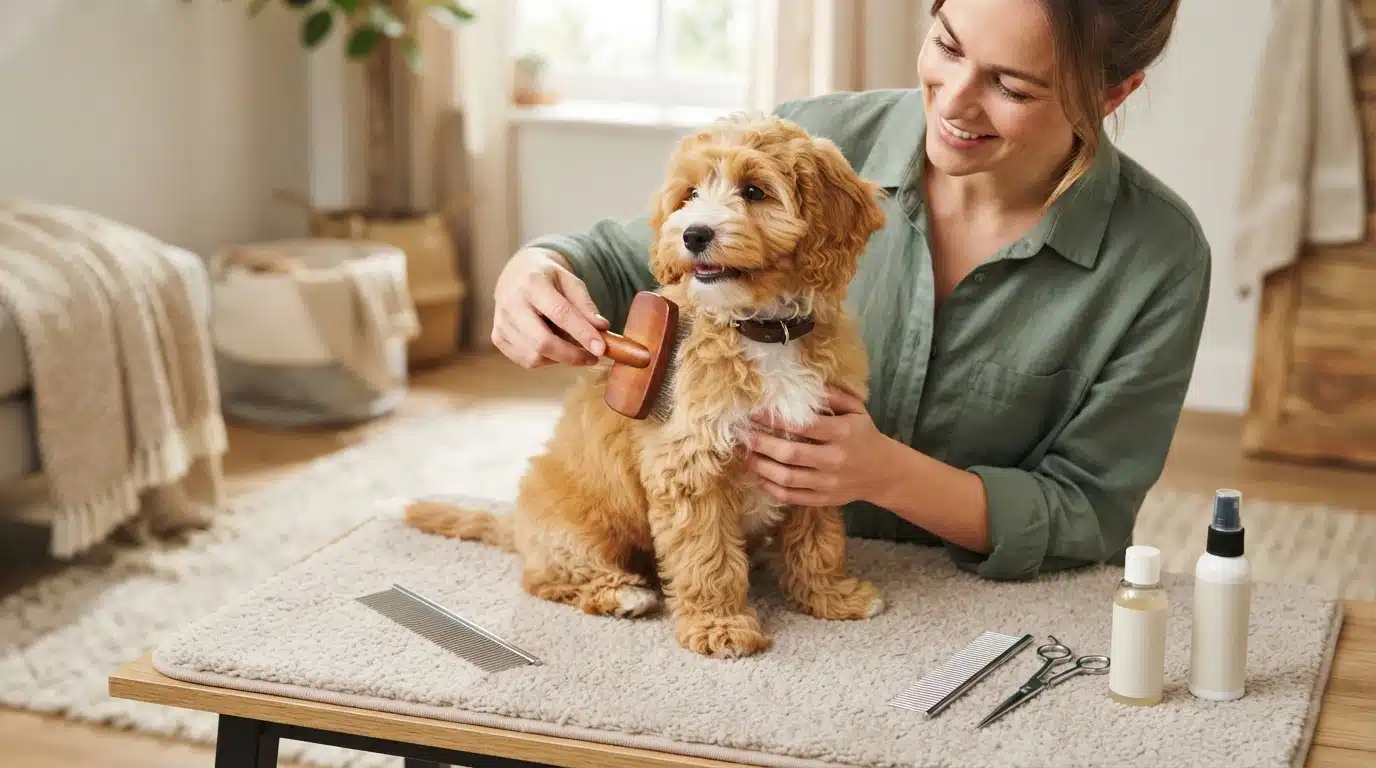
- Grooming basics: a soft brush, puppy shampoo, nail clippers
Set up three zones:
- Sleep zone. A crate in a quiet room, not the garage. Puppies sleep 18 to 20 hours a day, and the crate becomes their den.
- Play zone. A gated area with toys, water, and easy-to-clean floors.
- Potty zone. Pick one outdoor spot now. Same door, same spot, every time.
Tip: Freeze a few treats and soft chew items the night before. A cold chew toy soothes teething gums and buys you quiet time during the first evening, which is often the hardest one.
Pickup Day and Travel in Florida Heat
If you’re picking up locally in Utah from Sage Puppies, your puppy rides home in a crate in a cool car. If your puppy is being delivered to Florida, plan the handoff around the weather.
Travel rules for warm days:
- Run the AC before the puppy gets in the car.
- Never leave the puppy alone in a parked vehicle, even for two minutes.
- Keep the crate out of direct sunlight through the windows.
- Offer small amounts of water at rest stops, not a big bowl at once.
- Cover the crate loosely with a light sheet to reduce visual stress.
Asphalt in Florida can hit 130°F or more on a summer afternoon. Test it with the back of your hand for seven seconds. If you can’t hold it there, your puppy can’t walk on it.
Day 1: Keep It Boring
The first 24 hours should feel calm and uneventful. That’s not a mistake in the plan. It is the plan.
- Let the puppy explore one room at a time on a leash.
- Show the potty spot within the first hour, then again after every meal, nap, and play session.
- Hold the crate schedule: potty, then crate, then quiet.
- Limit visitors. Everyone wants to meet the puppy. Everyone can wait a week.
- Put the puppy down for naps in the crate, even if it whines for a few minutes.
Warning: A puppy that plays all day with visiting kids will crash hard by evening and often cries through the night. Keep day one short on excitement and long on sleep.
Expect one or two rough nights. A ticking clock, a warm plush toy, and a crate next to your bed usually settle things within three nights.
Days 2 and 3: Routine Locks In
By day two, start the pattern you want to keep for the next year. Puppies learn rhythm fast.
A workable daily schedule for a small breed puppy:
| Time | Activity |
|---|---|
| 6:30 a.m. | Potty trip outside |
| 7:00 a.m. | Breakfast, then potty again |
| 7:30 a.m. | Short play and handling session |
| 8:00 a.m. | Crate nap |
| 10:30 a.m. | Potty, play, training minutes |
| 12:00 p.m. | Lunch (if breeder fed three meals), potty, nap |
| 3:00 p.m. | Potty, short play |
| 5:30 p.m. | Dinner, potty |
| 6:30 p.m. | Calm family time, gentle handling |
| 8:00 p.m. | Last water, potty |
| 9:00 p.m. | Crate for the night |
| Overnight | One potty trip around 2 a.m. for young puppies |
Adjust the times to your household. The pattern matters more than the clock.
Potty training in a Florida week:
- Take the puppy out after every transition: wake, eat, play, drink.
- Praise and treat within three seconds of finishing outside.
- Go out during the cooler windows: early morning and after sunset in warm months.
- Watch for midday signs of heat stress in your puppy: heavy panting, slowing down, or seeking shade. Cut the trip short and go inside.
- Clean accidents with enzyme cleaner, never with ammonia-based products.
Days 4 and 5: First Vet Visit and Health Checks
Book a vet appointment for days 4 through 7. This visit confirms the breeder’s health record, starts the vaccine series if not already begun, and sets a baseline weight.
Bring to the appointment:
- The health record and vaccine schedule from your breeder
- A fresh stool sample (parasites are common in puppies)
- Your list of questions, written down
Questions worth asking:
- Which vaccines does this puppy have, and which are due next?
- When do we start heartworm prevention? Florida’s mosquito season makes this a year-round need.
- What flea and tick product do you recommend for a puppy this size?
- What should the puppy weigh each week to stay on track?
Tip: Florida heartworm risk is high. Ask your vet about starting prevention early and staying on it every month of the year, even for an indoor companion breed.
Call the vet right away – do not wait – if you see vomiting that lasts more than a few hours, diarrhea with blood, refusal to eat for more than a day, extreme tiredness, or a temperature above 103°F. Young puppies go downhill fast, so early calls save lives.
Days 5 and 6: Safe Early Socializing
Socializing does not mean dog parks. It means calm, positive exposure to the world while your puppy stays safe before full vaccinations.
Safe first experiences:
- Car rides with a happy ending (a treat at home)
- Different floor surfaces: tile, grass, carpet, and concrete in the cool morning
- Household sounds: vacuum from another room, dishwasher, TV
- Being handled: ears, paws, and mouth touched gently for two seconds at a time
- Meeting one calm, vaccinated adult dog that you know well
- Watching people at a distance, like from your porch or car window
Keep each session short and end on a win. If your puppy hides or freezes, back up and make it easier. Small companion breeds like Havanese, Havapoos, and Cavapoos tend to be people-focused, which makes this stage easier. They read your tone, so stay upbeat even when something startles them.
Day 7: Review and Adjust
End the week with a short review. Write down what worked and what didn’t.
- Is the potty routine producing fewer accidents each day?
- Is the puppy settling in the crate within five minutes?
- Is eating and drinking normal?
- Did the vet visit go smoothly, and is the next appointment booked?
- Are house rules clear to every family member?
If one family member lets the puppy on the couch while another says no, the puppy learns nothing stays consistent. Pick your rules in week one and hold them for at least a month.
Florida-Specific Week-One Notes
Living in Florida changes a few details of a standard first-week plan.
- Heat windows. Do potty and play trips before 9 a.m. and after 6 p.m. in warm months. Midday trips should be 60 seconds or less.
- Hydration. Fresh water indoors at all times, but pick it up in the early evening so the overnight crate stay stays dry.
- Pool safety. If you have a pool, gate it now. Even strong-swimming breeds can drown, and an 8-week-old puppy has no swimming skill at all.
- Storms. Florida thunderstorms start early in the season. Let your puppy hear a storm at a distance while you stay calm and casual. Do not comfort-coddle or punish. Both teach the wrong lesson.
- Pests. Fleas, ticks, and mosquitoes are active nearly year-round. Confirm your vet’s prevention plan at the first visit.
A Sample First-Week Progress Table
| Day | Main Focus | Biggest Risk to Avoid |
|---|---|---|
| Day 1 | Rest, crate, potty spot | Too many visitors |
| Day 2 | Routine and meal times | Free feeding (leaving food out) |
| Day 3 | Handling and gentle brushing | Long play sessions |
| Day 4 | Vet visit | Missing the stool sample |
| Day 5 | First car ride, new surfaces | Overwhelming the puppy |
| Day 6 | Calm dog meet, sound exposure | Dog parks or pet stores |
| Day 7 | Review and adjust | Dropping the schedule early |
Key Takeaways
The first week works best when it stays simple. Here is the whole plan in one place:
- Prep before pickup. Crate, zones, food, and enzyme cleaner ready before the puppy walks in.
- Keep day one boring. Rest, crate naps, and potty trips build security faster than excitement does.
- Lock in a routine by day two. Same doors, same spots, same times. Small breed puppies thrive on rhythm.
- Plan around Florida heat. Potty trips in the cool morning and evening, shaded travel, gated pools, and year-round heartworm and flea prevention.
- See the vet by day seven. Bring the breeder’s health record and a stool sample, and ask about the vaccine and prevention schedule.
- Socialize safely, not broadly. Calm handling, new surfaces, and household sounds beat crowded places before vaccines finish.
- Hold the rules. Consistency from every family member in week one prevents behavior confusion for months.
A puppy raised in a calm, prepared home adjusts in days. Take the week slowly, keep the routine steady, and your Havanese, Havapoo, or Cavapoo will settle into your Florida family like it was always meant to be there. When you’re ready to bring one home, the team at Sage Puppies walks you through every step from reservation to pickup or delivery.
Frequently Asked Questions
How long does it take a puppy to adjust to a new home?
Most puppies settle into a routine within 3 to 7 days and feel fully at home within 2 to 3 weeks. Sleep, food, and a steady schedule speed it up.
Should my puppy sleep in the crate the first night?
Yes. A crate near your bed gives the puppy a den and shortens the crying period to a few nights.
When can my puppy meet other dogs?
Meet only dogs you know are vaccinated and calm, until your puppy finishes its vaccine series. Skip dog parks and pet stores for now.
How often does a young puppy need to potty?
Take an 8-week-old out every 1 to 2 hours while awake, plus after every meal, nap, and play session.
Is Florida heat dangerous for small breed puppies?
It can be. Puppies overheat faster than adult dogs, so keep outings short, use the cool parts of the day, and never walk on hot pavement.