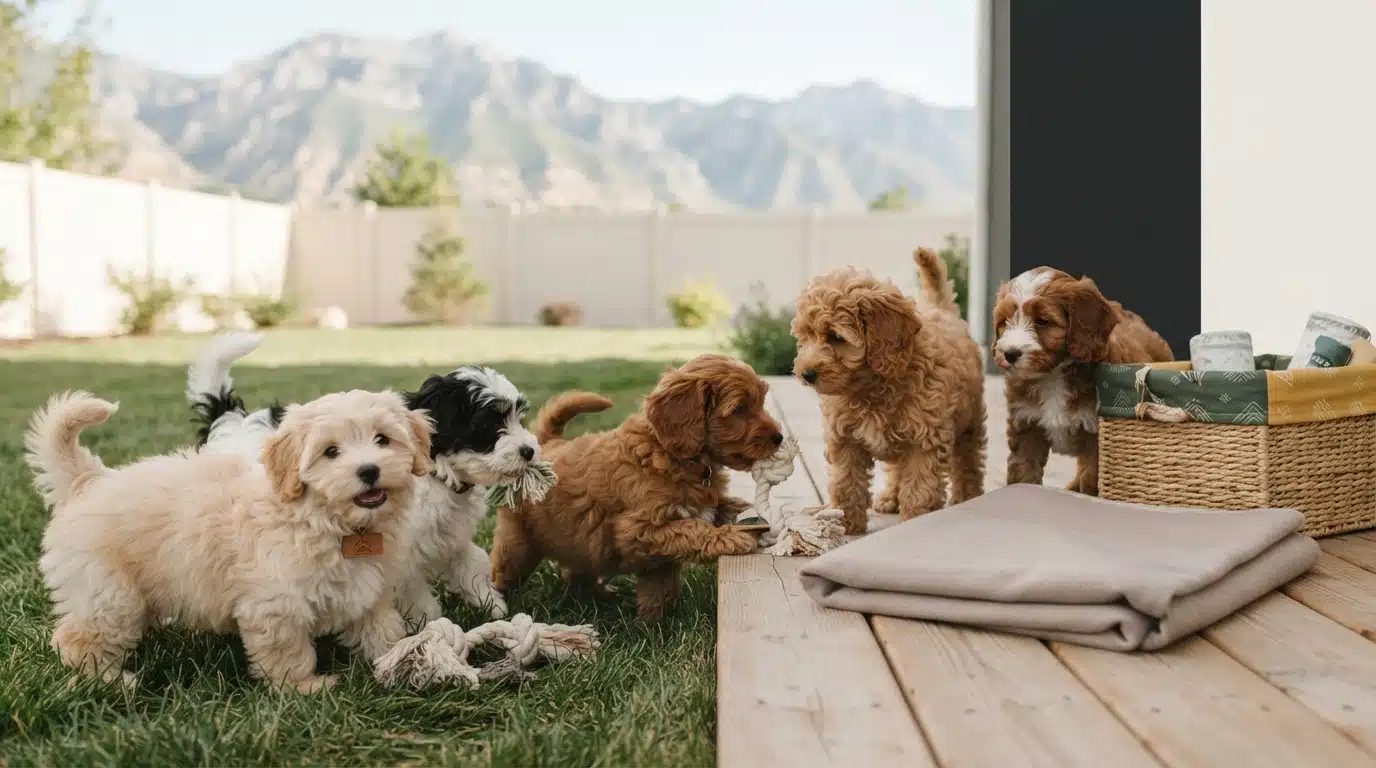
Quick Summary: This guide from Sage Puppies in South Jordan breaks down five ways to get a puppy home: local pickup, meeting partway, flying in-cabin, ground courier, and breeder-arranged delivery. It weighs each option on distance, cost, supervision, and paperwork, and recommends choosing based on the puppy first, then the distance. Key rules include waiting until the puppy is at least 8 weeks old, securing a vet health certificate within 10 days of travel, checking destination state import rules, and avoiding extreme weather routes. The piece argues that breeder-arranged delivery offers the most hand-holding, since the same person who knows the puppy manages the entire trip.
A four-pound Havapoo and a 2,000-mile drive from South Jordan to Maine have one thing in common: they both need a calm, planned handoff, not a rushed one. Yet most families focus so hard on choosing a puppy that transport becomes an afterthought. That’s how stressful pickups, missed flights and shaky carriers happen.
This guide walks through every puppy shipping option we see work well, from curbside pickup in Utah to breeder-arranged delivery and in-cabin flights. You’ll learn what each path costs in time, money and puppy stress, plus the paperwork and eight-week timing rules that shape them.
I’m Cassie Milar, and I run Sage Puppies in South Jordan, where we place Havanese, Havapoo and Cavapoo puppies with families in Utah and across the country. Whether your puppy transport Utah plan means a short drive or a long flight, start by browsing our available puppies and pricing and reservation pages. Every pet transport Utah family arranges should match the puppy first, the distance second.
Map Your Transport Options Side by Side
Most families planning puppy transport Utah weigh five routes. Each one changes your cost, your puppy’s stress level, and how much paperwork you handle. Here is the full picture so you can pick with confidence.
The Five Paths Most Utah Families Consider
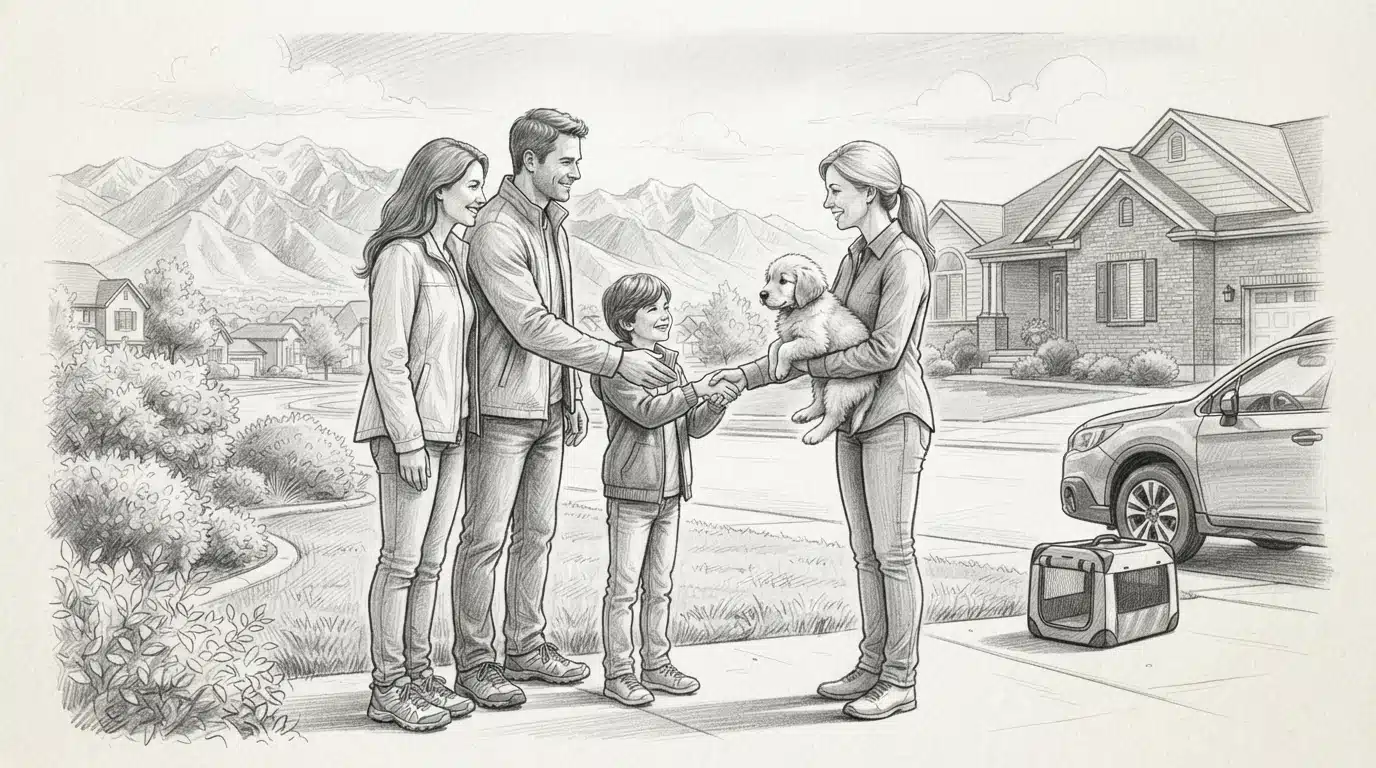
Local pickup is the simplest choice. You drive to the breeder’s home, meet the mother, and bring your puppy back the same day. It works best for families within a few hours of South Jordan.
Driving partway splits the trip. Some breeders offer a meeting point, so you drive half the distance instead of the whole way.
Flying in to pick up means you carry the puppy home in the cabin as your carry-on. The puppy stays with you the entire flight.
Ground transport uses a professional driver who takes your puppy by car from the breeder to your door, usually with stops for potty breaks.
Breeder-arranged delivery leaves the details to the breeder, who books and supervises the trip for you. This is the puppy shipping option we handle most often, because a trusted hand stays on the whole route.
Quick Comparison: Distance, Supervision, and Paperwork
| Option | Best Distance | Who Supervises | Paperwork You Handle |
|---|---|---|---|
| Local pickup | Under 4 hours | You, the whole way | Health record from breeder |
| Partial drive | 4 to 8 hours | You plus breeder | Health record, meeting plan |
| Fly and carry on | Any distance | You, in cabin | Airline pet fee, health certificate |
| Ground transport | 500 to 1,500 miles | Professional driver | Health certificate, transport contract |
| Breeder-arranged delivery | Any distance | Breeder end to end | Minimal, breeder manages it |
Before you choose, weigh three things: how young your puppy will be at travel time, the weather along the route, and which paperwork your state or airline requires. Most puppies fly or ride safely at eight weeks old with a clean bill of health, but summer heat and winter cold can rule out certain routes.
If you are still comparing breeders, start with our guide to puppies for sale in Utah for safe local options, then revisit this list once you know where your puppy will come from.
Utah Local Pickup From South Jordan
If you live along the Wasatch Front, driving to pick up your puppy is often the easiest puppy transport Utah families can choose. No carriers, no layovers, no waiting on a third party. You meet the breeder, ask questions face to face, and your puppy rides home in your lap within the hour.
When Utah Pickup Is the Simplest Choice
Pickup makes the most sense when you are close enough for a same-day round trip and your schedule allows a planned visit around the puppy’s eight-week go-home date. It also works well for first-time owners who want to see where their puppy was raised, meet the mother, and get feeding and grooming advice in person. For families across the Wasatch Front, pickup is usually the calmest of all the puppy shipping options, because your puppy skips airport noise entirely and settles into your car instead. Small breeds like a Havanese, Havapoo, or Cavapoo handle a short drive home beautifully when you plan it right.
Planning the Drive Home on I-15 and I-80
Most Utah families reach South Jordan from the north or south on I-15, and it is worth timing your trip outside rush hour. Traffic through Salt Lake City runs heaviest between 7 and 9 a.m. and again from 4 to 6 p.m. If you are coming from Wyoming or Nevada, I-80 brings you in from the west.
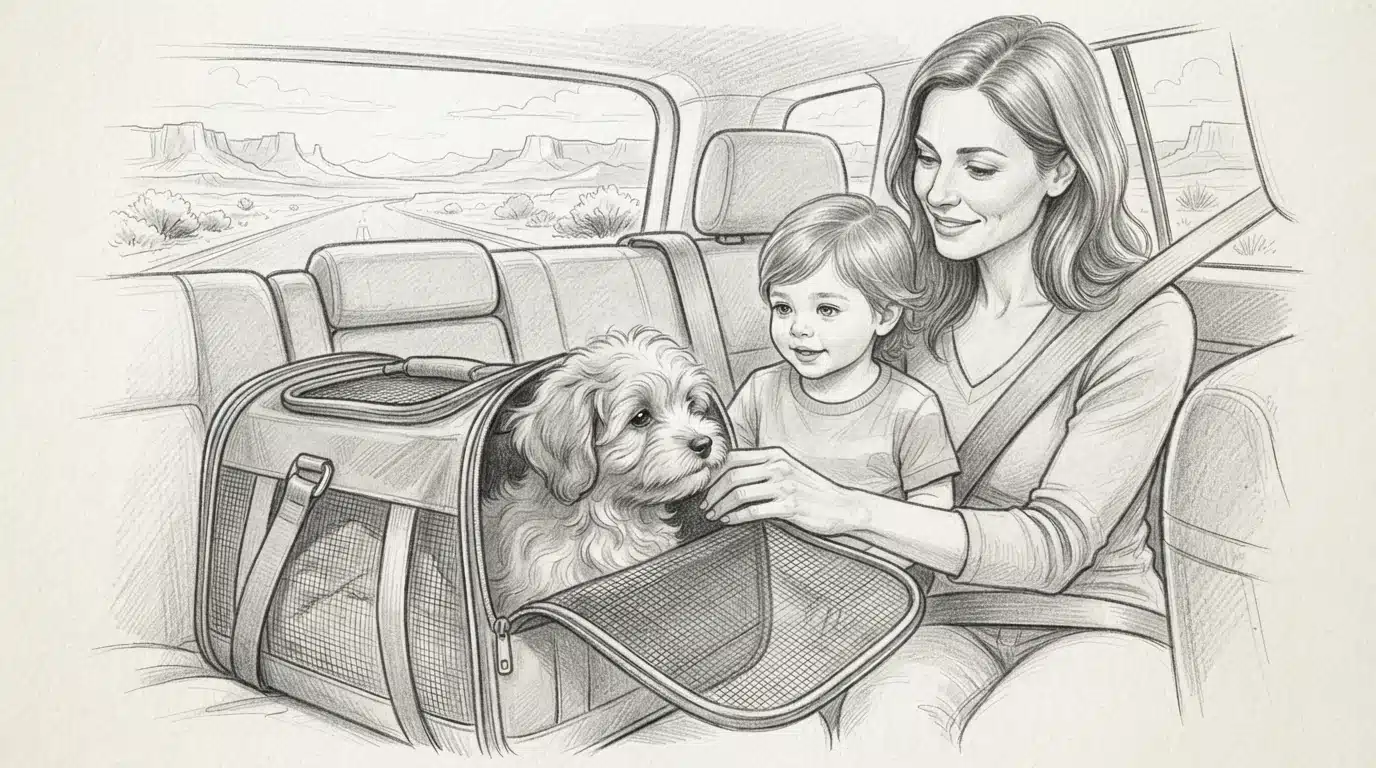
A few simple prep steps make the ride home easier:
- Bring a soft-sided carrier lined with a towel that smells like home.
- Pack water, a small bowl, and paper towels for accidents.
- Plan a stop or two on longer drives, but keep your puppy in the carrier.
- Ask your vet to schedule the first checkup within a few days of arrival.
Keep the car warm in winter and cool in summer, and let someone hold the puppy for part of the trip. For more on evaluating local breeders before you make the drive, see our guide to puppies for sale in Utah.
Flying With a Small Puppy From Salt Lake City
Flying is often the fastest way to bring a Havanese, Havapoo or Cavapoo home, and Salt Lake City International makes it workable for most families. The catch is age. Federal rules require puppies to be at least 8 weeks old and weaned at least five days before they fly, according to the AVMA. Some carriers set higher minimums, so check before you book a ticket around an 8-week pickup date.
In-Cabin vs Cargo: Which Fits a Small Puppy
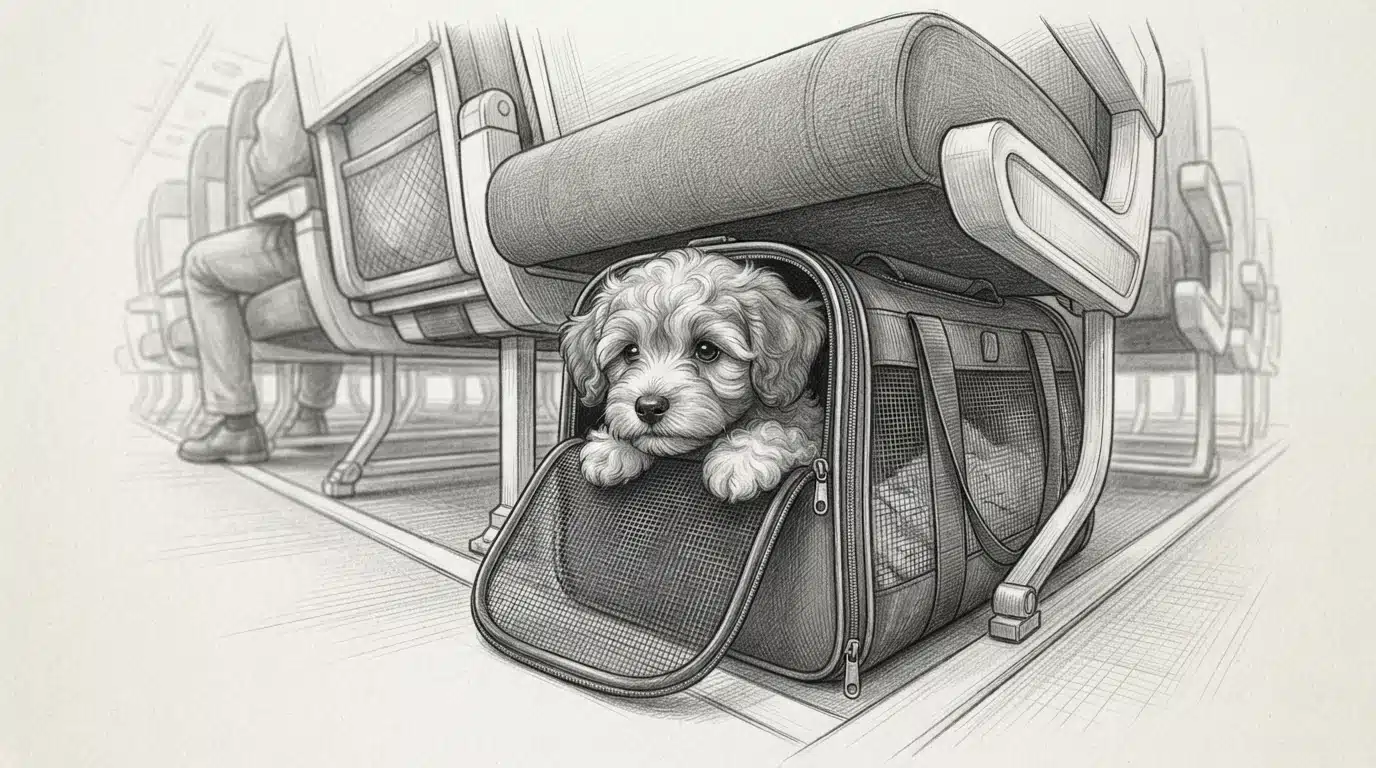
For a small breed puppy, in-cabin is the clear choice. Your puppy rides in a soft carrier under the seat in front of you, stays warm, and lands ready to meet you. United, for example, allows puppies at least 2 months old in the cabin on domestic flights per its pet policy.
Checked cargo is a different world. It means temperature limits, crate rules, and hours without you. Reputable small-breed breeders rarely recommend it for a young puppy, and many airlines restrict it in summer heat or winter cold. If a breeder pushes cargo to cut costs, ask why.
Tip: Confirm your airline’s in-cabin pet fee and carrier size limits when you book, because cabin pet spots are capped per flight.
Booking, Paperwork, and SLC Airport Logistics
Book early and call the airline to add your pet to the reservation. Cabin pet slots go first. Expect a fee, usually around $125 each way, plus carrier size rules.
Paperwork matters too. Most airlines require a health certificate from a licensed vet issued within 10 days of travel, as American Airlines outlines. Ask your breeder to schedule the vet visit the week before pickup, and keep the paperwork in your carry-on.
At SLC, arrive a bit early. Check in at the counter, not the kiosk, so staff can verify documents. Then head through security with the puppy in the carrier and your hands free.
Ground Transport and Pet Nanny Services
Ground delivery is the most common way a Utah puppy reaches an out-of-state family. Someone drives your puppy to you, either in a van with several litters on board or door to door. Both options work well for tiny breeds like a Havanese or Cavapoo, since there are no airport rules, cargo holds, or layovers to worry about.
How Ground Couriers and Nannies Actually Travel
There are two setups you will see. A commercial courier runs fixed routes, often weekly, and carries multiple puppies at once in a climate-controlled van. It costs less, usually $200 to $450 depending on distance, but your puppy shares the ride with other dogs and makes stops along the way.
A pet nanny travels with one or two puppies only, often flying in-cabin with the puppy under the seat or driving directly to your door. It costs more, often $600 to $1,200, but your puppy gets nearly constant attention, shorter travel time, and fewer handoffs. Most Sage families choose a nanny for flights over a courier for shorter ground routes.
Either way, expect the driver to send photo and text updates at each stop, and confirm a pickup window a day or two ahead.
Vetting a Courier Before You Book
Ask five questions before money changes hands:
- Insurance and DOT registration: legitimate transporters carry cargo insurance and USDOT numbers. Ask for proof.
- Vehicle setup: climate control, crates per puppy, and no stacked loose carriers.
- Route details: maximum drive time, rest stops, and overnight plans for long hauls.
- References: recent reviews from puppy buyers, not just breeder testimonials.
- Payment terms: avoid anyone demanding full cash upfront through apps like Zelle with no contract.
Tip: A good transporter will happily answer all five. Hesitation on insurance or vehicle questions is your signal to walk away.
Check the transporter against USDA’s licensed transporter list when possible, and read our Utah buyer tips before booking anyone new.
Breeder-Arranged Delivery and Hand Carry Options
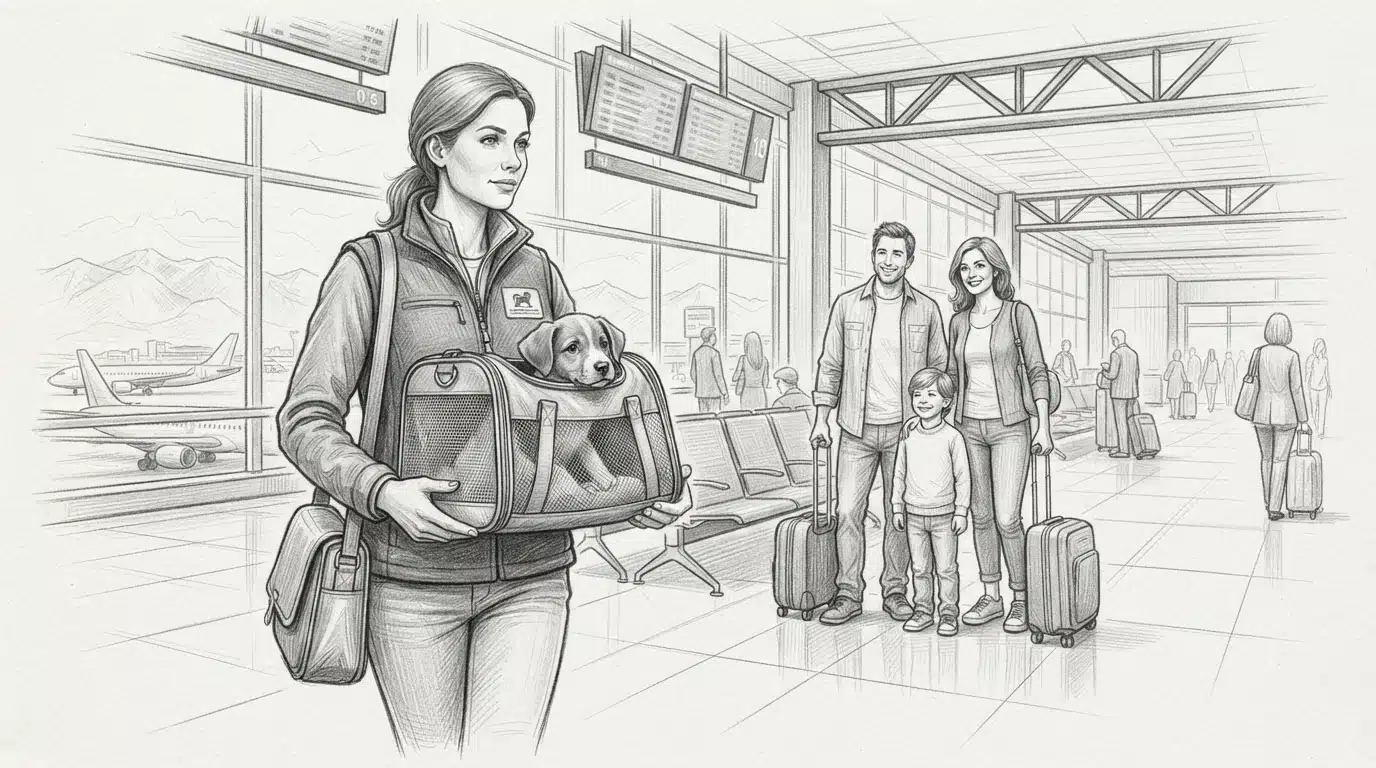
Some breeders arrange delivery themselves instead of handing the puppy to a transport company. The breeder or a trusted helper drives the puppy to your area, or a flight nanny carries the puppy in the cabin and meets you at your airport. Because the person bringing your puppy also knows its history, this route often feels the most personal.
At Sage Puppies, delivery is coordinated directly with Cassie, so you always know who is traveling with your puppy and when. Costs vary by distance and flights, so confirm details on the pricing and reservation page before you plan around a date. Availability depends on current and upcoming litters listed at available puppies.
What to Expect From a Coordinated Delivery
A coordinated delivery usually starts once your puppy is at least eight weeks old, weaned, and cleared by a vet. The breeder confirms a travel window, then books ground driving or a cabin flight with a nanny who keeps the puppy with them the whole time. You receive the schedule, the carrier details, and the paperwork in advance. Puppies this age sleep most of the trip, but a good escort still offers water and quick potty breaks on the ground.
Questions to Ask Before Paying Any Delivery Fee
Ask who physically travels with your puppy and whether that person works for the breeder. Confirm the puppy stays in the cabin, never cargo. Request the health certificate and vaccine record in hand at pickup, and ask what happens if a flight cancels. Get the total fee, refund terms, and backup plan in writing. If any answer feels vague, keep asking until it doesn’t.
Paperwork, Health, and Timing You Must Lock In
Age, Vaccinations, and the 8-Week Rule
Federal law sets a clear floor: puppies cannot be sold or transported across state lines before 8 weeks of age, and a licensed transporter must follow that same rule. Any reputable breeder will hold a puppy with its mother until then, and it protects your puppy’s health rather than delays it.
Before travel, ask for two documents. The first is a vaccination and deworming record listing dates, products used, and what’s still due. The second is a veterinary health certificate, which a licensed vet issues after examining the puppy within about 10 days of travel. Airlines and many ground transporters won’t accept a puppy without one. Utah doesn’t require extra steps for in-state pickup, so paperwork mainly matters when your puppy leaves the state.
Destination-State Checks Before You Drive or Fly
Every state writes its own import rules, and they vary more than most families expect. The USDA’s state-to-state pet travel tool lists each state’s current requirements, so check it before you book anything. Most states ask for a current certificate of veterinary inspection and proof of rabies vaccination where age allows.
Timing matters here. Health certificates are usually valid for a short window, often 10 to 30 days, so schedule the vet visit close to your travel date. If you’re flying, confirm the airline’s age, breed, and temperature rules in writing. Ground transporters should supply their own compliance paperwork on request.
Tip: Lock the vet appointment, the certificate, and the transport date together so nothing expires mid-trip.
When your application is approved through Sage Puppies, we help you match these dates to your pickup or delivery plan.
Common Mistakes to Avoid When Transporting a Utah Puppy
Book-Too-Soon and Paperwork Gaps
The biggest scheduling error is booking travel before your puppy is ready. Federal rules require dogs to be at least 8 weeks old and weaned at least five days before flying, so a “ready this weekend” promise should be a red flag (AVMA). Paperwork trips people up too. Some states ask for a health certificate or current vaccinations, so check destination rules before you book (USDA APHIS). Ask your breeder for the certificate early rather than the night before.
Weather, Welfare, and First-Night Risks
Utah winters and summer heat both limit when flights can move small dogs. Airlines impose temperature cutoffs, and some ask for a vet-signed acclimation letter in cold weather (AA Cargo). Confirm your puppy ate and drank before departure, and skip sedatives unless your vet approves them.
The most overlooked mistake is the first night. Don’t plan pickup, a car ride, and a busy welcome party all in one day. Give your puppy a quiet crate, a set potty spot, and a simple schedule. Most transport hiccups fade within a week of calm, consistent care.

Once you know how your puppy will travel, take the next step. Apply through Sage Puppies and Cassie will match you with the right Havanese, Havapoo or Cavapoo, then help plan pickup or delivery that fits your family.
Frequently Asked Questions
Q1: how to safely transport a puppy in utah
Keep your puppy in a secured crate, offer water every couple of hours, avoid extreme heat or cold, and plan potty stops. Breeders often release puppies around eight weeks, so short trips work best.
Q2: What’s the safest option for a long distance?
Breeder-arranged ground transport or flying with the puppy in-cabin is safest. Cargo travel carries more risk for small breeds like Havanese and Cavapoos.
Q3: Can a puppy fly in the cabin?
Yes, if it meets airline age rules, usually at least eight to ten weeks, and fits in an airline-approved carrier under the seat.
Q4: What paperwork do I need to pick up my puppy?
Bring photo ID and your reservation confirmation. Your breeder should provide health records and a current vet check.
Q5: Does weather affect puppy transport in Utah?
Yes. Summer heat and winter storms can delay travel. Reputable breeders reschedule rather than risk a puppy’s safety.
Q6: Should I bring anything on pickup day?
Pack a crate, water, towels, and a harness. Skip crowded rest stops until your puppy finishes its vaccination series.
Conclusion
Getting a Havanese, Havapoo or Cavapoo puppy home comes down to three things: the puppy’s age, the weather, and the paperwork. Pickup works best for Utah families. Ground transport suits longer drives in mild months, and flying is safest with a puppy old enough to travel, usually at least 8 weeks. Breeder-arranged delivery can remove the guesswork, but ask exactly who drives, how the puppy rides, and what happens in a delay.
Whatever path you choose, plan around temperature rules, keep vaccination and health records handy, and watch for a scammed or rushed handoff. A calm, well-planned trip matters more than a fast one. The right transport choice is the one that keeps your puppy safe, warm and settled.