Quick Summary: Before picking up a puppy, ask the breeder for written records covering vaccinations, deworming dates, a vet exam note, parent health test results, and the puppy’s food, sleep, and potty routine. Get every promise into the contract, since terms that only exist in a text message won’t protect you. Watch for red flags like missing parent health testing or a breeder who won’t show you where the puppies live. Utah-based Sage Puppies, which raises Havanese, Havapoo, and Cavapoo puppies, is cited as an example of a program that keeps those records ready and also offers nationwide delivery for New Hampshire families who can’t drive twice.
A New Hampshire family driving hundreds of miles for a puppy needs more than a carrier and a camera. Before you leave the driveway, you should know exactly which veterinary records, feeding details, and written terms will travel home with your puppy. That is where smart puppy pickup questions come in. Ask the right ones, and you leave with a healthy puppy and a paper trail. Ask the wrong ones, or none at all, and you may get home unsure about shots, worming, food, or support. This guide walks you through what to ask, what to check, and how to plan a safe long drive. Whether you are arranging a Cavapoo puppy pickup or comparing Havanese puppies NH families often travel for, Sage Puppies raises Havanese, Havapoo, and Cavapoo puppies in Utah with health-tested parents and nationwide delivery, so we built this checklist from the questions families actually ask.
Confirm Who Raised the Puppy and What You Can Observe
Where a puppy spent its first eight weeks shapes nearly everything you will see at pickup: how it handles noise, strangers, and being handled. So these puppy pickup questions deserve more than a yes or no answer. Ask for detail, and compare what you hear with what you see in front of you.
Ask Who Bred and Cared for the Puppy
Start with the basics. Who owns the mother, and where does she live? A breeder who keeps the dam at home can usually describe her daily routine in concrete terms: where she whelped, how often the litter was handled, and which family members helped socialize the puppies. Vague answers, or a breeder who cannot produce the mother on request, are worth pausing over.
Ask whether the puppies were raised in a home or a kennel building, and how much they saw of ordinary life. Doorbells, vacuums, children, and car rides during the first weeks build the confidence you want at pickup. Some programs, like Sage Puppies, pair health-tested parents with early socialization in a family setting, so the puppies arrive already used to household sounds. Wherever you buy, expect the breeder to describe this without prompting.
Also confirm who performed the health checks. The breeder should know which vaccinations and dewormings the puppy received, and the dates should match the paperwork in your records.
Ask What the Puppy Is Like as an Individual
Records tell you what happened to the litter. Only the breeder can tell you about your puppy. Ask which puppy in the litter is boldest, which one takes longer to warm up, and how yours handles being held. Then ask to watch the puppy move around a room with you present.
Compare the description with the behavior you see. A well-started puppy may be cautious for a moment, but it should recover, approach, and show curiosity. If the breeder’s words and the puppy’s behavior line up, you have learned something important about both.
See Sage Puppies’ available puppies to start the conversation early.
Request the Health History and Records You’ll Take Home
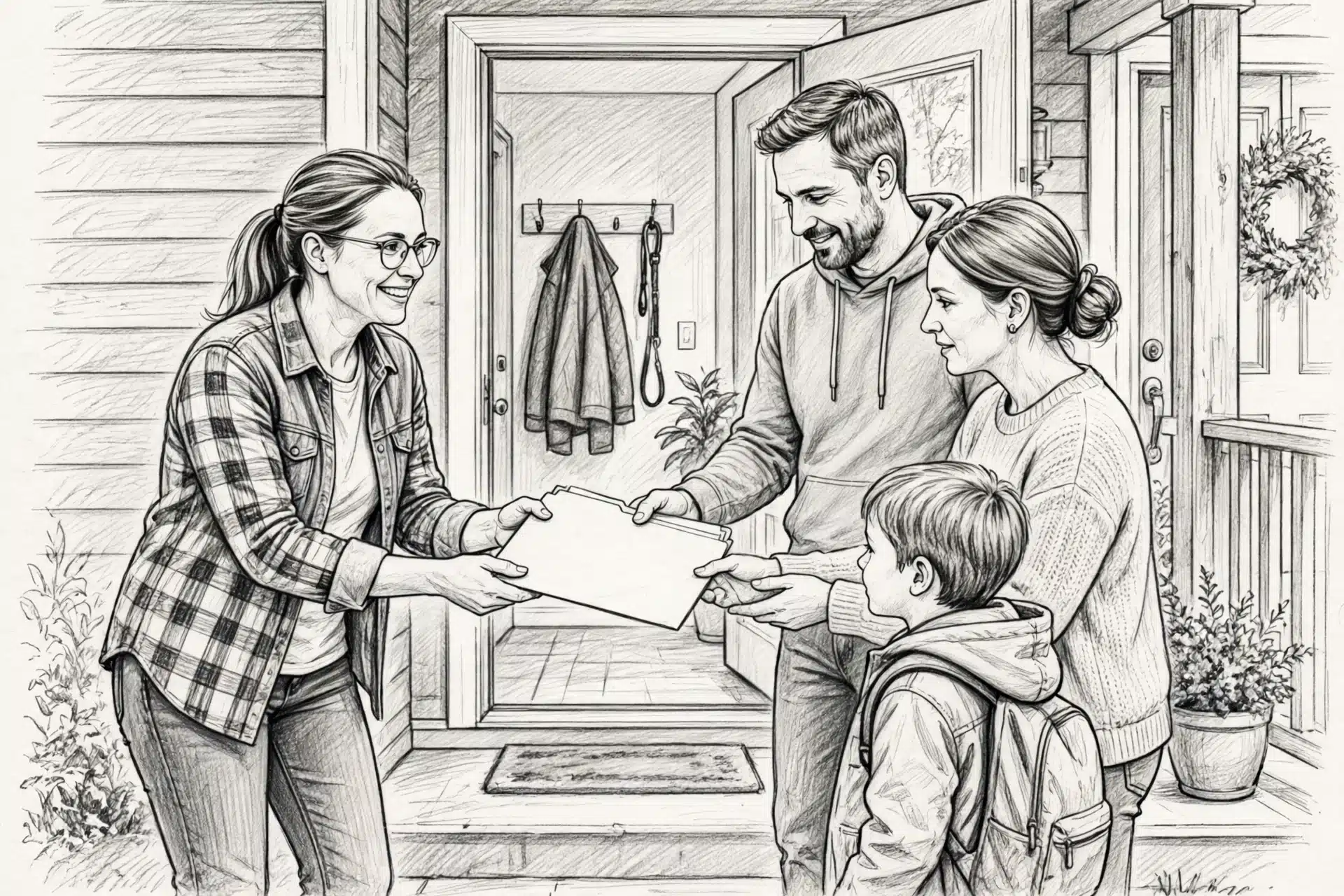
Good breeders hand over paperwork without being asked twice. One of the most useful puppy pickup questions you can raise is simple: what records come home with my puppy, and can I see them before pickup day? Ask early so there is time to gather everything. At pickup, you should leave with a written health record, vaccination dates, deworming history, and any vet notes from the puppy’s first weeks. If you are driving home to another state, keep those papers in the cab with you, not buried in a trunk. A health-tested breeding program will also share parent information on request, so ask what is available.
Ask About the Puppy’s Veterinary Visits and Preventive Care
Start with the puppy’s own timeline. Ask which visits happened, at what ages, and what was done at each one. You want dates, not vague summaries, because your own veterinarian will build the next vaccine schedule from them.
Confirm these details before you leave:
- Vaccinations given, including which vaccine and the exact date of each dose
- Deworming dates and the product used, since most puppies need several rounds
- A physical exam note from a licensed veterinarian, not just a breeder’s observation
- Microchip number, if the puppy is chipped, plus registration instructions
- Any health concerns observed, even small ones, so your vet knows where to look
Write your puppy pickup questions down in advance and bring the list. Ask what comes next, too. Your puppy will likely need follow-up shots within a few weeks of coming home, so you can book that first appointment before you even arrive in New Hampshire. A breeder who tracks this cleanly usually hands you a folder or a printed summary; if the answer is a shrug, keep asking until you have dates in writing.
Ask Which Parent Health Tests Apply and See the Results
The puppy’s record covers its first weeks. The parents’ testing covers the next twelve years, so this matters just as much. Ask which health tests were done on each parent and why those tests apply to the breed. Havanese, for example, have known risks that responsible screening addresses, and doodle lines should be tested on both sides of the pedigree.
Then ask to see results, not just hear that testing happened. Legitimate programs keep certificates or registry listings on hand and share them gladly. If you are picking up in person, ask to view them during your visit and note the parents’ registration details. You can also read up on questions to ask about health-tested parents before you go.
Clarify the Puppy’s Routine and Transition Needs
A puppy’s first week at home goes smoother when the routine travels with them. Breeders who raise puppies in their own house can tell you exactly what each pup eats, when they nap, and how they handle grooming. Ask before pickup day so you can copy that routine from day one.
Ask About Food, Sleep, Potty Breaks, and Grooming Practice
Start with food. Ask which brand the puppy eats now and how much per meal. Switching food suddenly causes stomach upset, so plan a slow change over a week if you want a different brand. A good breeder will often send a small bag home with you.
Next, cover sleep. Puppies this age sleep 18 to 20 hours a day in short stretches. Ask where the puppy naps now and whether it uses a crate. If crate training has already started, keep the same setup and schedule.
Potty habits matter most. Ask how often the puppy goes out, what signal it gives, and whether it is paper trained or has only known outdoor breaks. Write down the times the breeder follows and repeat them at home for the first two weeks.
Grooming is a big one for Havanese, Havapoo, and Cavapoo families. Ask whether the puppy is used to brushing, nail trims, and handling of the face and paws. Early practice at the breeder’s home makes grooming far easier later.
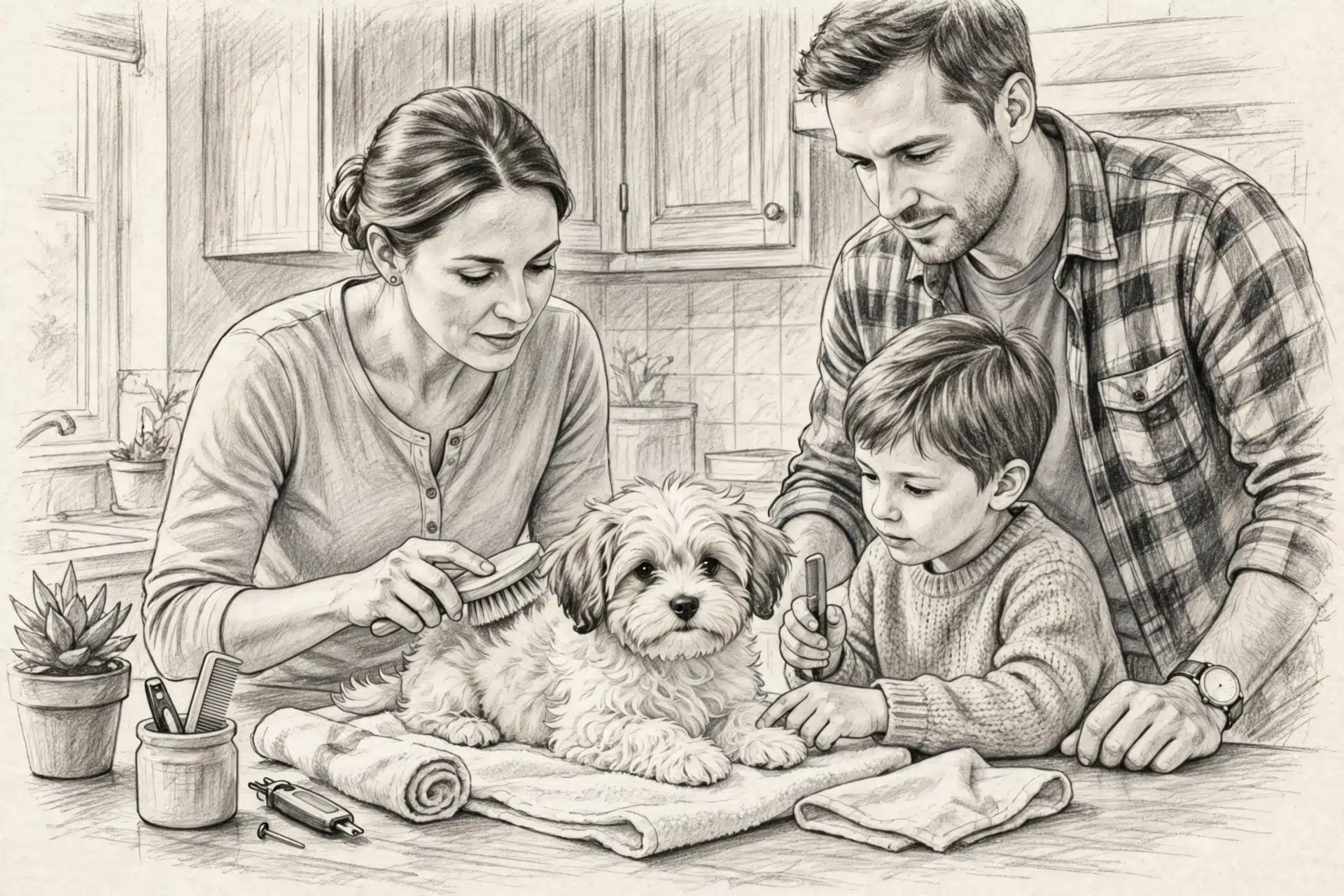
Finally, ask how the puppy handles new places, car rides, and being alone for short periods. Sage Puppies’ home-raised start means pups already meet everyday sounds and handling, and the team will walk you through each pup’s routine before pickup. Bring your list, take notes, and keep the first week boring and predictable. That calm start is what builds a confident adult dog.
Learn more about how it works if you want the full pickup timeline.
Read the Written Terms Before Pickup Day
A handshake means little when you’re hours from home. Before pickup day, get the breeder’s terms in writing and read every line. A written agreement protects both sides and shows you how a breeder handles problems, not just happy moments.
Check That the Agreement Matches the Puppy and the Conversation
Go through the contract line by line and confirm the details match what you were told. Look for the puppy’s date of birth, microchip number, and current vaccines listed by date. The breed should match too, whether you’re picking up a Havanese, a Havapoo, or a Cavapoo.
Then check the promises you heard on the phone or in emails. Did the breeder describe a health guarantee with a set exam window? Is the spay or neuter requirement spelled out, or does a registration application apply? If a term only exists in a text message, ask for it in the written agreement before you drive.

Ask How to Reach the Breeder and Verify State Information
Ask how to reach the breeder after you get home. A good program wants updates and answers questions during the first weeks, so confirm whether they prefer calls, texts, or email. Save a direct number, not just a social media account.
If you’re driving to New Hampshire from out of state, confirm the pickup address, the town, and any sales tax details in writing. New Hampshire has no general sales tax, which can simplify the total, but ask the breeder to state the final amount anyway. Add the contact details and pickup address to the same document as the rest of the terms.
Responsible breeders expect these questions. At Sage Puppies, our team walks families through each step of pickup or delivery, so nothing about the paperwork surprises you on the big day.
Plan the Drive Home Before You Leave
A long drive is the first big thing you do together, so it deserves the same care as the health paperwork. Whether you are picking up in Utah or meeting a transport further out, plan the trip around one small puppy who has never ridden in a car.
Ask What the Puppy Needs During the Trip
Before you go, ask the breeder a few direct questions. Has this puppy eaten today, and when? Is it used to a crate, or will this be its first time inside one? What food is it on, and how much should you offer during a stop?
The answers shape your schedule. A puppy that has eaten needs a potty break within an hour, so build in stops every two to three hours. Small breeds like a Havanese or Cavapoo also handle heat and cold less easily than adult dogs, so keep the cabin comfortable and never leave the puppy alone in the vehicle.
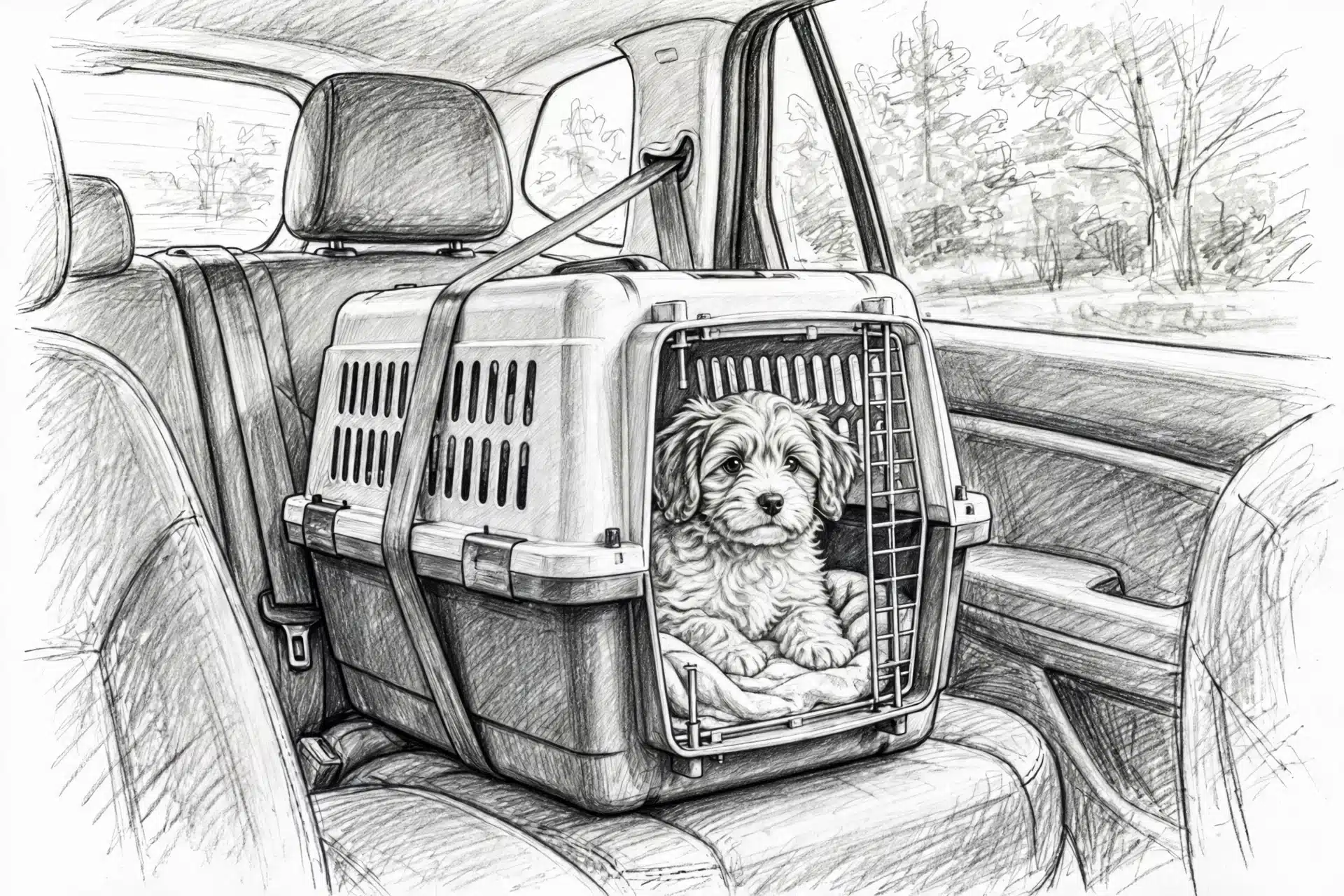
Ask how the puppy has traveled before. At Sage Puppies, puppies are raised in a home, so many already have early exposure to handling and new experiences, but every puppy is different. The breeder can tell you what soothes this one: a soft blanket that smells like its litter, or a quiet voice through the first miles.
Pack for Secure Transport and a Calm Arrival
Bring the right gear so nothing is improvised on the road:
- A crash-tested crate or a harness-and-seatbelt clip for the ride home
- Bowls, bottled water, and the food the breeder recommends
- Paper towels and enzyme cleaner for accidents
- A leash and collar, fitted loosely before you leave
- The puppy’s records folder, stored where you can reach it
Plan your first stop about 30 minutes out, then every two to three hours after that. Offer water, walk briefly on a leash, and give the puppy a chance to settle before you drive on. Keep music soft and resist passing the puppy around.
Arrival matters as much as the drive. Set up a quiet space with the crate, a bed, and water before you walk in. Let the puppy explore at its own pace, then start your routine the same evening. If your pickup involves longer travel, review the delivery and pickup process so you know exactly what to expect on the day.
Know Which Answers Call for a Pause
Most answers you collect on pickup day will simply inform your plans. A few should stop you in your tracks. Knowing the difference keeps the visit friendly while protecting your family from a decision you will regret.
Separate a Clarifiable Gap From a Reason to Reconsider
Start by sorting what you hear into two buckets. A clarifiable gap is missing detail the breeder can fix on the spot: a vaccination date you want written down, a feeding schedule that was not mentioned, or a clarification about which parent carries which health test. These are normal. Any organized program, including ours at Sage Puppies, keeps records ready and answers them without hesitation.
A reason to reconsider looks different. Watch for these:
- No proof of health testing on the parents, or paperwork that cannot be verified
- Reluctance to let you see where the puppies live and sleep
- Pressure to decide or pay before you have asked your questions
- Puppies that seem fearful, lethargic, or unwell
- Vague answers about the puppy’s age or weaning
The test is simple. Ask once, clearly. A transparent breeder appreciates the question and hands you the record. A defensive answer, or a second vague reply after a fair chance to respond, tells you what you need to know.
If two or more red flags appear in one visit, pause the pickup. A puppy waits far better than a mismatched adoption heals.
Trust your notes over the moment’s excitement. The right breeder will still be there tomorrow.

Ready to ask the right questions? Browse Sage Puppies to meet our home-raised Havanese, Havapoo, and Cavapoo puppies, review health records, and choose pickup in Utah or nationwide delivery. Start with our Available Puppies page today.
Frequently Asked Questions
Q1: What should I ask a New Hampshire breeder before picking up a puppy?
Ask about the parents’ health testing, how the puppy was socialized, what food it eats, and which vaccines and dewormings are done. Request records in writing before pickup day.
Q2: What health records and vet checks should a puppy have before pickup?
Expect a vet exam, age-appropriate vaccinations, and deworming history. A good breeder hands over these records and shares any vet notes so your own vet can continue care smoothly.
Q3: What supplies should I bring for a long drive home with a new puppy?
Bring a crate or secured carrier, harness and leash, water, towels, pee pads, and a small blanket that smells like home. Plan stops every two to three hours.
Q4: Can the breeder ship or deliver if I can’t drive twice?
Yes. Many programs, including Sage Puppies, offer nationwide delivery, so New Hampshire families can meet a flight nanny or courier instead of making the trip to Utah.
Q5: What paperwork proves the puppy is health tested lineage?
Ask for the parents’ health testing results, a written health record for your puppy, and a receipt or contract. Reputable breeders provide these without being asked twice.
Q6: Should I feed my puppy during the drive home?
Skip a big meal right before driving. Offer small amounts of water at stops, then feed once you arrive so an upset stomach doesn’t make the car ride miserable.
A Thoughtful Pickup Starts With Clear Answers
Good questions protect your family and your puppy. Ask about health records, parent testing, vaccinations, and what the breeder expects from you before the handoff. Confirm pickup details, plan rest stops, and keep the first drive home calm and short.
An ethical breeder answers every question easily and hands over clean paperwork without being asked. Hesitation or missing records are reasons to pause, not excuses to settle.
If you want to see how a transparent handoff works, our pickup scheduling and handoff process shows what to expect. Whether you choose a Havanese, Havapoo, or Cavapoo, clear answers at pickup set the tone for a healthy, happy start.