Quick Summary: Iowa requires any puppy entering from another state to have a Certificate of Veterinary Inspection signed by a licensed vet, valid for only 30 days from the exam date, plus a current rabies shot once the dog is over four months old. The article walks through five steps: confirm Iowa’s entry rules, get the breeder and vet to prepare the CVI with your name as consignee, pick a transport method based on the puppy’s actual travel hours rather than the label, get an itemized written quote before paying a deposit, and run a calm handoff with a vet visit booked within the first few days. Sage Puppies, a Utah breeder of Havanese, Havapoo, and Cavapoo puppies, says it builds the vet exam and written travel plans into its standard go-home process.
Your puppy’s arrival in Iowa depends on more than a pickup date. The health certificate, the puppy’s age, and the transporter’s plan all need to line up before the trip begins. Miss one detail, and a happy homecoming turns into a delay at the airport or a denied handoff.
Puppy delivery Iowa families book usually falls apart over paperwork, not distance. Iowa requires a current Certificate of Veterinary Inspection, airlines and ground transporters add their own rules, and each has different timing.
This guide walks you through exactly how to prepare. You’ll learn what Iowa expects, what puppy shipping Iowa transporters require, and how to vet both the paperwork and the breeder behind it.
We raise and place Havanese, Havapoo, and Cavapoo puppies from our home in South Jordan, Utah, and we’ve coordinated safe puppy shipping for families across the country. Here’s how to make your puppy’s trip to Iowa calm, documented, and done right.
Step 1: Confirm Iowa’s Entry Requirements for the Puppy
Before anyone books a flight or a ground transporter, Iowa’s own rules come first. Any dog entering the state from another state needs a Certificate of Veterinary Inspection (CVI), and dogs over four months old need a current rabies vaccination. The Iowa Department of Agriculture and Land Stewardship spells out both rules clearly.
What Iowa Says a CVI Must Cover
A CVI is a health certificate signed by a licensed, accredited veterinarian in the state the puppy is coming from. It is valid for only 30 days from the exam date, so timing matters. If a breeder issues it three weeks before travel, that leaves a thin window if plans shift. A careful breeder will time the exam close to your actual puppy delivery Iowa date, not the deposit date.
Iowa’s import rule, Chapter 65 of the Iowa Administrative Code, lists exactly what the certificate must include:
- Name and address of the consignor (the sender, usually the breeder)
- Name and address of the consignee (you, the receiving family)
- Point of origin and point of destination
- Date of the veterinary exam
- Number of animals examined
- Official individual ID for each animal (often a microchip)
- Sex, age, and breed of each animal
- A statement that the animals show no signs of infectious or contagious disease
Ask for a copy before travel day. Check that your full name and address appear as the consignee and that the exam date falls inside the 30-day window. A missing consignee address is one of the most common paperwork problems, and it is easy to fix before the puppy leaves. Breeders who ship nationwide, including programs like ours in Utah, issue these certificates routinely, so request yours early.
How Age Affects the Rabies Requirement
Rabies rules hinge on age. Iowa requires that all dogs over four months of age entering the state be vaccinated for rabies with a USDA-approved vaccine, and the shot must be current. Most breeders deliver puppies at eight to twelve weeks, well before that threshold, so a typical Havanese or Cavapoo puppy can travel legally without a rabies shot.
Once your puppy hits four months, though, Iowa law expects the vaccine. Iowa Code Section 351.33 goes further: owning a dog six months or older without a rabies vaccination is unlawful. Plan your first vet visit within days of arrival, and schedule the rabies shot on the timeline your veterinarian recommends. If you are comparing options, our puppies for sale in Iowa guide walks through the full process.
Step 2: Have the Breeder and Veterinarian Prepare the Paperwork
Before your puppy ever leaves the breeder’s home, Iowa expects paperwork to travel with it. The state’s main document is the Certificate of Veterinary Inspection (CVI), and getting it right falls to two people: the breeder who books the vet visit and the licensed veterinarian who signs the form.
Request the Document Before the Puppy Travels
Ask for the CVI early, ideally when you set your go-home date. A licensed, accredited veterinarian in the breeder’s state examines the puppy and issues this certificate on an official form. Iowa’s animal welfare FAQ states that all dogs entering Iowa must have a CVI showing the animal appears free from disease or exposure to infectious disease.
Timing matters. Iowa gives a CVI a 30-day validity window from the date of inspection, so the exam needs to fall close to your puppy delivery Iowa date. Book too early and the certificate can expire before arrival.
Most reputable breeders of small companion breeds build this vet visit into their standard process. A boutique program like Sage Puppies schedules the exam as part of go-home prep rather than waiting for a family to ask. Still, confirm it in writing. A responsible breeder will send you a copy of the CVI, the vaccine record, and a health summary before travel day, not after.
Tip: Put the vet exam date on your calendar when you confirm the delivery date. If the exam happens more than 30 days out, the certificate will not be valid on arrival in Iowa.
Check Names, Destination, Identification, and Records
When the CVI arrives, read every line before your puppy ships. Small errors cause big delays at handoff. Iowa’s import rules also spell out what the form must include, per the Iowa Administrative Code.
Verify these details:
- Your name and address as the consignee, plus the breeder’s information as consignor
- The destination address in Iowa, matching where the puppy will actually land
- Sex, age, and breed of the puppy, matching the records you were given
- A veterinarian’s statement that the animal shows no signs of infectious or communicable disease
- Vaccination records, including distemper and parvo
Rabies deserves special attention. Iowa requires all dogs over four months old to have a current rabies vaccination with a USDA-approved vaccine. Most puppies go home at eight to twelve weeks, before that deadline. That is fine: the requirement applies to dogs four months and older, so note the date and plan the shot with your own Iowa vet.
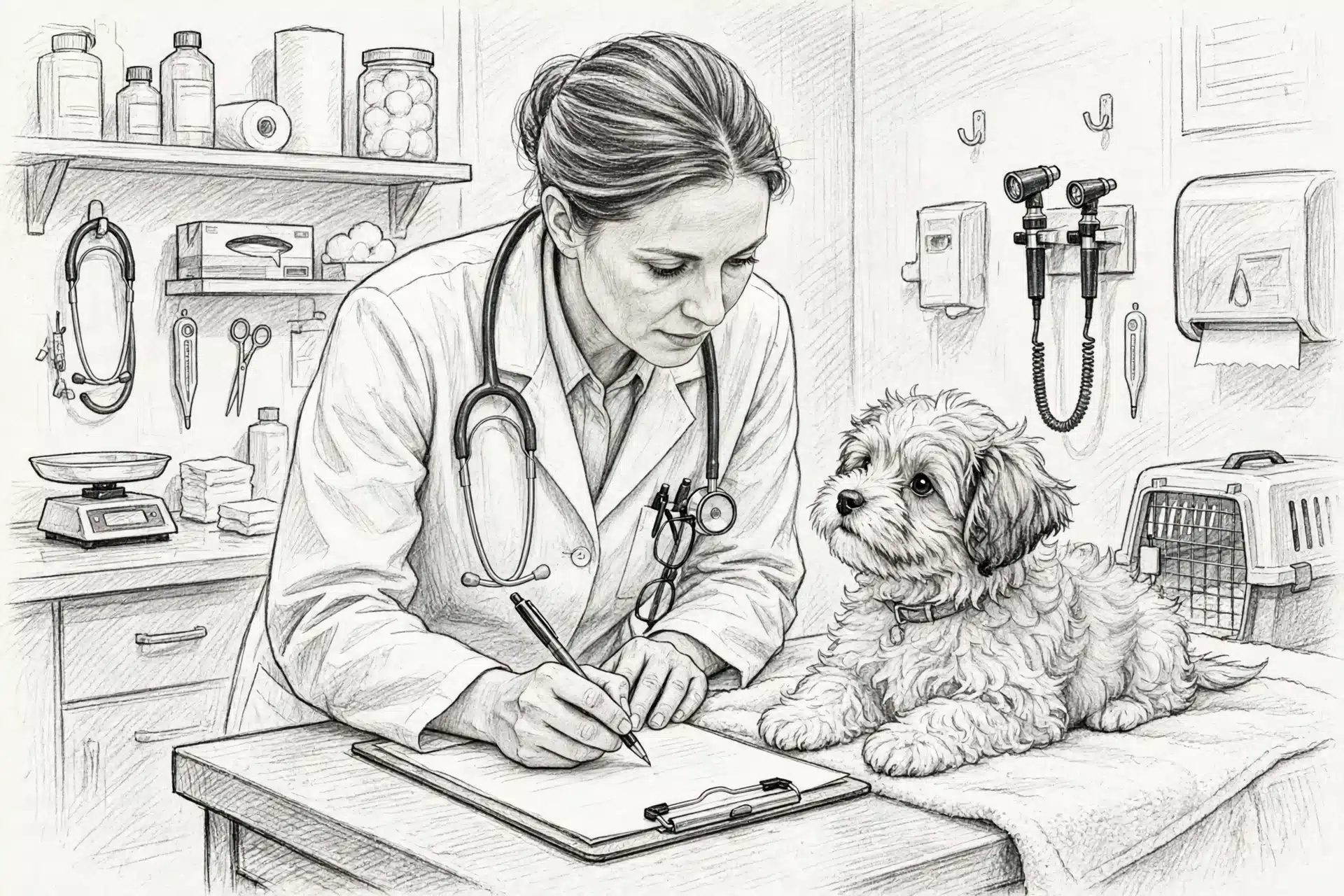
Keep both a printed and digital copy of everything. Ask your driver or flight courier to carry the CVI with the puppy, since the certificate must accompany the animal to its final destination in Iowa. Then file your set with the vaccine record for your puppy’s first visit to your local clinic.
Step 3: Choose a Transport Plan That Fits the Puppy
A puppy can get to Iowa in three ways: you fly or drive to pick her up, a flight nanny flies with her in the cabin, or a ground transporter drives her to your door. Each is safe when done well. The difference is how long the trip takes and who stays with your puppy along the way.
Compare the Real Journey, Not Just the Transport Label
The label on the service matters less than the day your puppy actually has. Ask these questions before you pick an option:
- How many hours door to door? A short trip is easier on a nine-week-old puppy than a long one, no matter the method.
- Who is with her? A flight nanny or a driver in a two-person van keeps her with a person the whole time.
- Is she in cargo or cabin? Most small breeds like Havanese, Havapoos, and Cavapoos fit in an airline-approved carrier under a seat, which is why in-cabin travel is the common choice for them.
- Where are the stops? Ground routes should include regular breaks for water, potty, and rest.
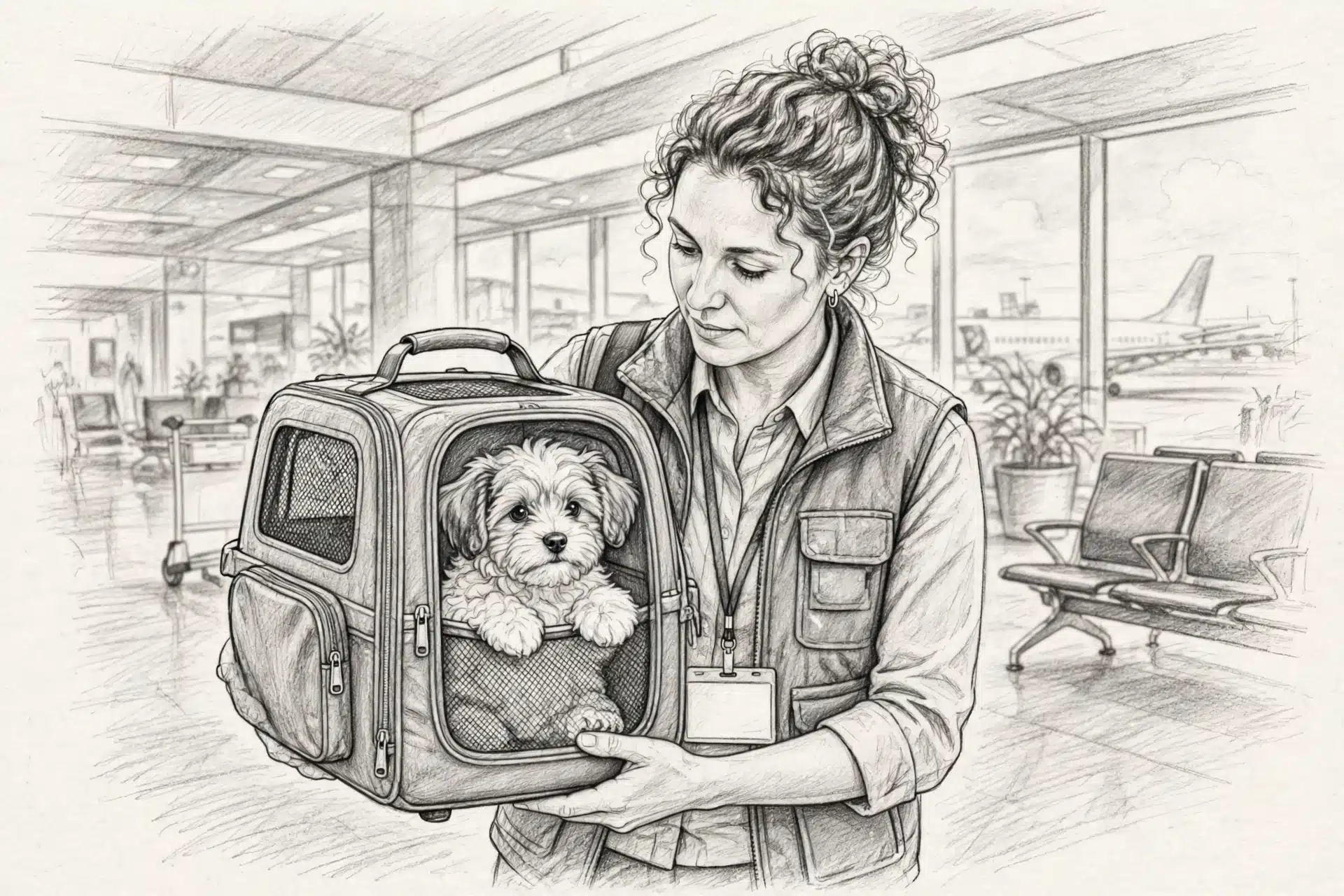
Rank your options by the puppy’s experience, not the price tag or the name of the service. A slightly pricier flight nanny that cuts ten hours off the trip is often the kinder choice for a young puppy.
Ask for a Written Safety and Communication Plan
A good breeder and transporter will put the plan in writing. Before you pay anything, ask for:
- A pickup time and location for the puppy, plus the name of the person traveling with her.
- Check-in times, such as a photo or text at each leg of the trip.
- The crate size and carrier type she will travel in.
- A backup plan if a flight is delayed or the route changes.
Then confirm the breeder sends food, water instructions, and a familiar-smelling blanket with her. Those small comforts matter more than people expect.
Tip: We use written travel plans with every puppy delivery we arrange, and we encourage you to ask any breeder you consider for the same. If someone resists putting details in writing, treat that as useful information.
Keep the plan, the transporter’s contact info, and the puppy’s health papers together in one folder so handoff day runs smoothly.
Step 4: Confirm the Total Cost and Responsibilities in Writing
Request an Itemized Quote Before You Reserve
Verbal promises fade. Written quotes hold up. Before you send any deposit, ask the breeder for a full, itemized breakdown of every cost tied to your puppy’s arrival in Iowa.
A clear quote protects both sides. It shows you exactly what you are paying for, and it prevents surprise fees when delivery day gets close.
Ask the breeder to list, in writing, each of these items:
- Puppy price, including any charge for breeding rights, color, or size
- Deposit amount and whether it is refundable or applied to the price
- Delivery or flight nanny fee to your Iowa airport or address
- Health certificate (CVI) cost and who pays for it
- Crate, carrier, and travel supplies, if the puppy flies
- Sales tax, if any applies to your state
Then confirm the responsibilities in writing too. Who books the flight? Who holds the puppy if a flight cancels? What happens if the puppy fails its vet check before travel? Get answers to each question before money changes hands.

Pay attention to timing as well. Ask when each payment is due and what payment methods the breeder accepts. Many ethical breeders take a deposit to hold your puppy and collect the balance before travel. A few weeks of clarity here can save you hundreds of dollars and real stress later.
Good breeders welcome this conversation. They answer in plain language and put details in an email or contract you can reread. If a breeder dodges written pricing or changes numbers mid-process, treat that as a warning sign and keep looking.
Our reservation and delivery FAQ spells out pricing, deposit, and delivery steps in detail, so families know the full picture before reserving a puppy.
Once every number and duty is in writing, you are ready for the final step: planning the actual handoff day.
Step 5: Prepare for Handoff and the First Day at Home
The handoff is where good planning pays off. Your puppy is tired from travel, and you want the first hour to feel calm and predictable, not rushed or improvised.
Use a Handoff Checklist
Meet the transporter or flight nanny in a quiet spot, away from crowds and noise. Before you accept the puppy, take five minutes to check the basics:
- Compare the puppy against the photos and videos you received earlier.
- Confirm the paperwork: the CVI health certificate, vaccination record, and any vet notes. Keep copies on your phone.
- Check the puppy over gently. Eyes should be clear, breathing relaxed, and the coat free of soiling.
- Ask what the puppy ate and when. The last feeding time matters for the first night.
- Pack the right car setup: a small crate or a lap helper, water, a towel, and paper towels.
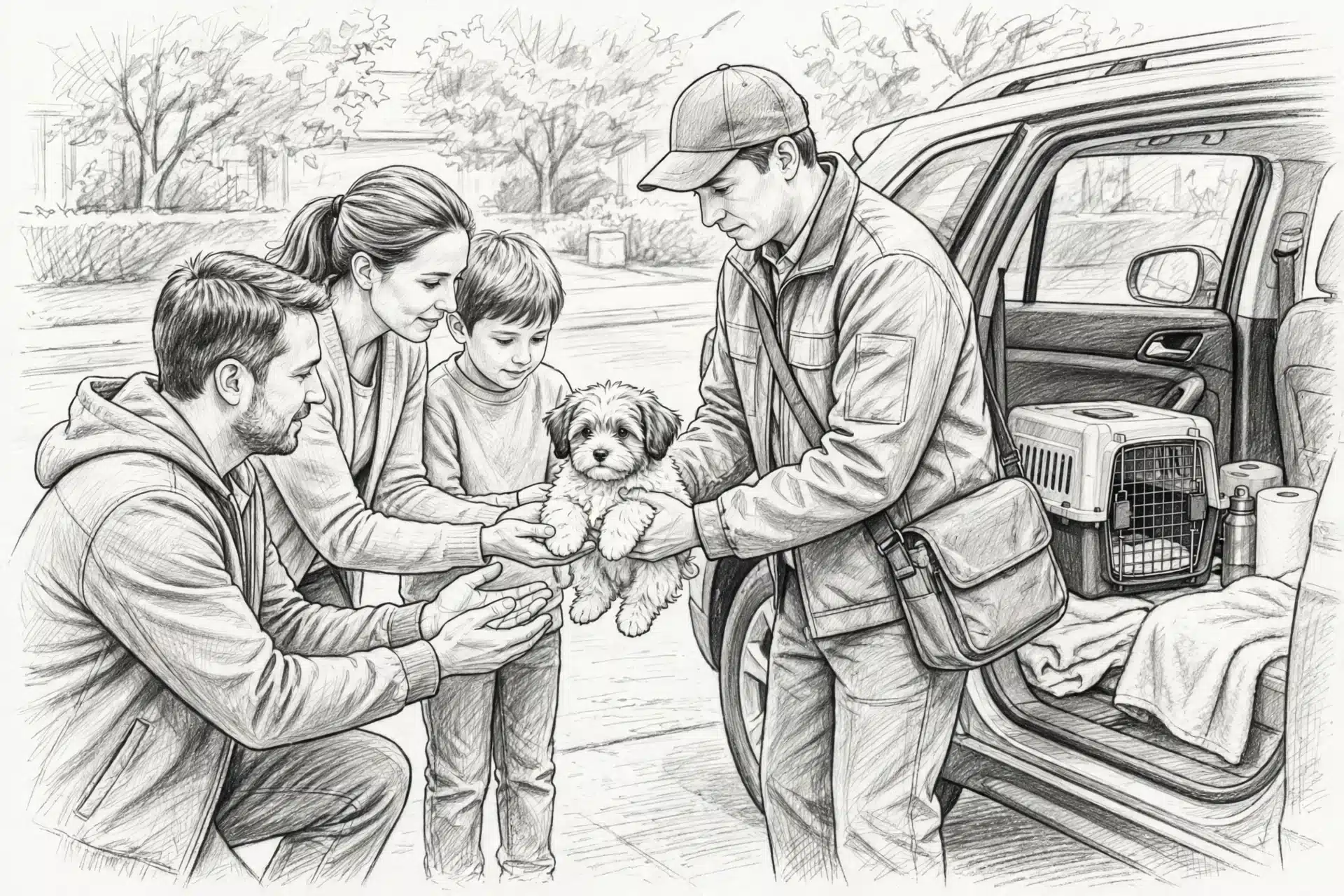
Keep the trip home short and quiet. Skip the pet store stop for supplies; everything should already be at your house.
Tip: Resist the urge to invite neighbors over on day one. A quiet first day helps a small breed puppy settle faster.
Plan the First Veterinary and Home-Care Steps
Most breeders, including Sage Puppies, ask you to schedule a vet visit within the first few days. Book it before delivery day so you are not scrambling. Bring the health records you received at handoff.
For the home itself, think small:
- Set up one puppy-proofed room, not the whole house.
- Stick to the food the breeder sent home for at least a week.
- Plan potty breaks every one to two hours during the day.
- Keep handling gentle and short for the first 48 hours.
Families who want a preview of this stage can read our full guide to puppy delivery and pickup. If your puppy seems off – not eating, loose stools, low energy – call your vet the same day rather than waiting it out.

Ready to bring a well-started puppy home to Iowa without the guesswork? At Sage Puppies, we handle health paperwork, safe transport planning, and clear handoff steps so your Havanese, Havapoo, or Cavapoo arrives happy and healthy. Browse our available puppies or start an application today. Your family’s newest companion is closer than you think.
Frequently Asked Questions
Q1: What paperwork do I need to deliver a puppy to Iowa from another state?
Iowa requires a current Certificate of Veterinary Inspection (CVI) issued by a licensed vet, proof of rabies vaccination for puppies old enough, and vaccination records. Keep copies handy during travel.
Q2: Does Iowa require a health certificate for a puppy coming from out of state?
Yes. A CVI, sometimes called a health certificate, must be issued within 30 days of arrival. Any reputable breeder, including Sage Puppies, arranges this before your puppy travels.
Q3: How much does it cost to have a puppy delivered to Iowa?
Costs vary by method and distance. Ground transport, flight nanny service, and airline cargo each price differently, so ask your breeder for a written quote before reserving.
Q4: How old must a puppy be before delivery?
Most states and airlines require puppies to be at least 8 weeks old. Many good breeders wait 9 to 10 weeks.
Q5: Can I pick up my puppy at the airport myself?
Yes. Meeting a flight nanny at your Iowa airport is often the safest, simplest option and lets you check the puppy right away.
Plan a Clear, Puppy-First Arrival
Safe delivery to Iowa comes down to three things: paperwork, transport, and the puppy’s condition on arrival. Confirm the health certificate is issued within 10 days of travel, ask which rabies rules apply to your puppy’s age, and match the delivery method to the season and the puppy’s size.
Ask the breeder direct questions before you pay. A good breeder answers them without hesitation and sends photos, weight records, and vet details along the way.
When your puppy lands in Iowa, keep the first day calm. One quiet room, a short potty break, food and water, and sleep. Watch appetite and energy for the first week, and schedule a welcome visit with your own vet.
Do that, and the paperwork becomes a checklist instead of a worry. Your puppy simply comes home.