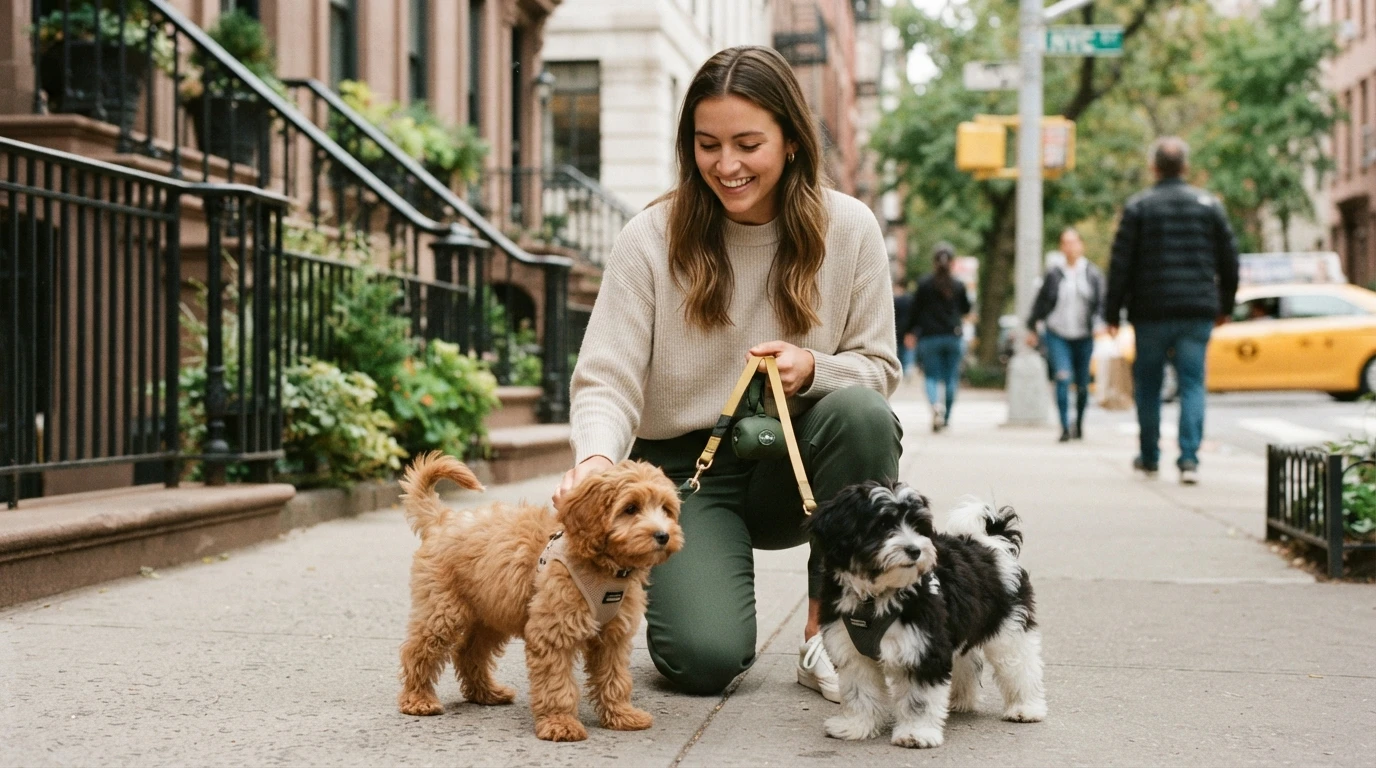
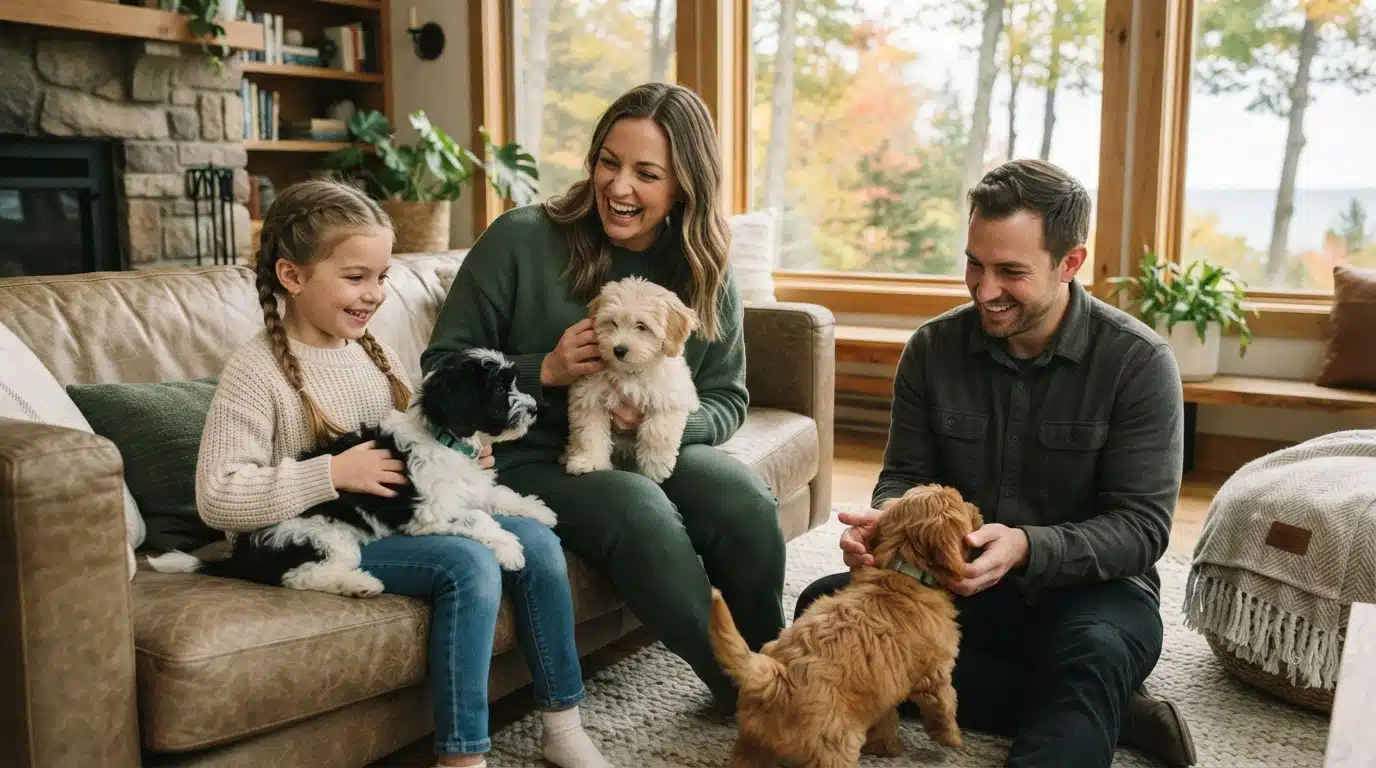
Quick Summary: Choosing a farm dog requires prioritizing temperament and health over traditional working-dog stereotypes. Small, companion-focused breeds like the Havanese, Havapoo, and Cavapoo thrive on Iowa acreage when they are well-socialized and raised in a family environment. Sage Puppies emphasizes this approach by focusing on early bonding and rigorous health testing to ensure a smooth transition to rural life.
When the sun rises over an Iowa cornfield, the best companions are the ones just as happy lounging on the porch as they are exploring the golden acreage with you. But many of the breeds marketed as the best farm dogs were built for livestock work, not family life. Choosing farm puppy breeds on instinct alone often leads to a mismatch: a dog too big, too restless, or too independent for the household you actually live in.
This guide walks you through rural dog breeds that fit Iowa acreage and family routines alike. You’ll learn how to weigh temperament, size, health testing, and socialization before you commit. We draw on years of boutique breeding experience with companion breeds like the Havanese, Havapoo, and Cavapoo, where health and temperament come before anything else, so you can pick a puppy that thrives on your property.
The Real Meaning of Farm Life for Your New Puppy
Beyond the Working Dog Archetype
Picture a farm dog and you probably see a Border Collie moving sheep or a Great Pyrenees guarding the barn. That image is useful, but it is incomplete. On most rural Iowa properties, the dog’s real job is companionship first and utility second. The best farm dogs for your family may never herd a single animal.
Farm life, in practice, looks different from the working-dog myth. Your puppy will spend hours lounging on the porch, follow kids on short walks to the creek, and nap through the afternoon. The livestock might be a few chickens or none at all. What the property actually demands is a dog that tolerates weather, handles bursts of activity, and settles calmly indoors afterward.
This is where temperament matters more than breed labels. A well-socialized companion breed can thrive in a rural setting. Havanese, Havapoo, and Cavapoo puppies, raised in a home with children and everyday noise, adapt to acreage life surprisingly well. They want to be where the family is, whether that’s the garden or the living room couch.
Sound carries, fences vary, and neighbors live far apart, so recall and early training matter in the country. But prey drive and relentless energy, the traits people assume rural dogs need, can actually make life harder. A dog that chases livestock or roams creates real problems.
So flip the usual question. Instead of asking which breeds work hardest, ask which temperament fits your daily rhythm. If you’re weighing options, our puppies for sale in Iowa buyer’s guide walks through that match in detail.
Understanding Temperament for Spacious Environments
Confidence in Wide Open Spaces
Temperament matters more on acreage than almost anywhere else. A rural property gives a puppy wildlife sounds, gravel driveways, tractors, and wide horizons. The right dog treats all of it as normal. The wrong one spends its first year anxious about every movement at the fence line.
Start by thinking about resilience rather than bravery. A confident puppy recovers quickly from a startle. A semi-truck rattles past, and within seconds it is back to playing. You can watch for this quality even at eight weeks old. Breeds and individual puppies differ, so ask breeders which pups bounced back fastest after new experiences.
Sociability is the second trait to weigh. Rural life often means neighbors stop by, kids roam the yard, and other animals live on the property. A puppy that genuinely enjoys people and tolerates chaos will settle in faster. Guarding breeds can work here, but many families find that a friendly, alert companion does the same job. It barks at visitors, then greets them warmly. That balance suits most Iowa homesteads better than a true working guardian.
The best farm dogs share one more quality: they stay near their people without constant leashing. This comes from breeding and early bonding, not luck. Home-raised puppies that grow up around family routines learn to check in, follow your lead, and come back when called. That is exactly how our Havanese, Havapoo, and Cavapoo puppies are started before they ever leave South Jordan, Utah.
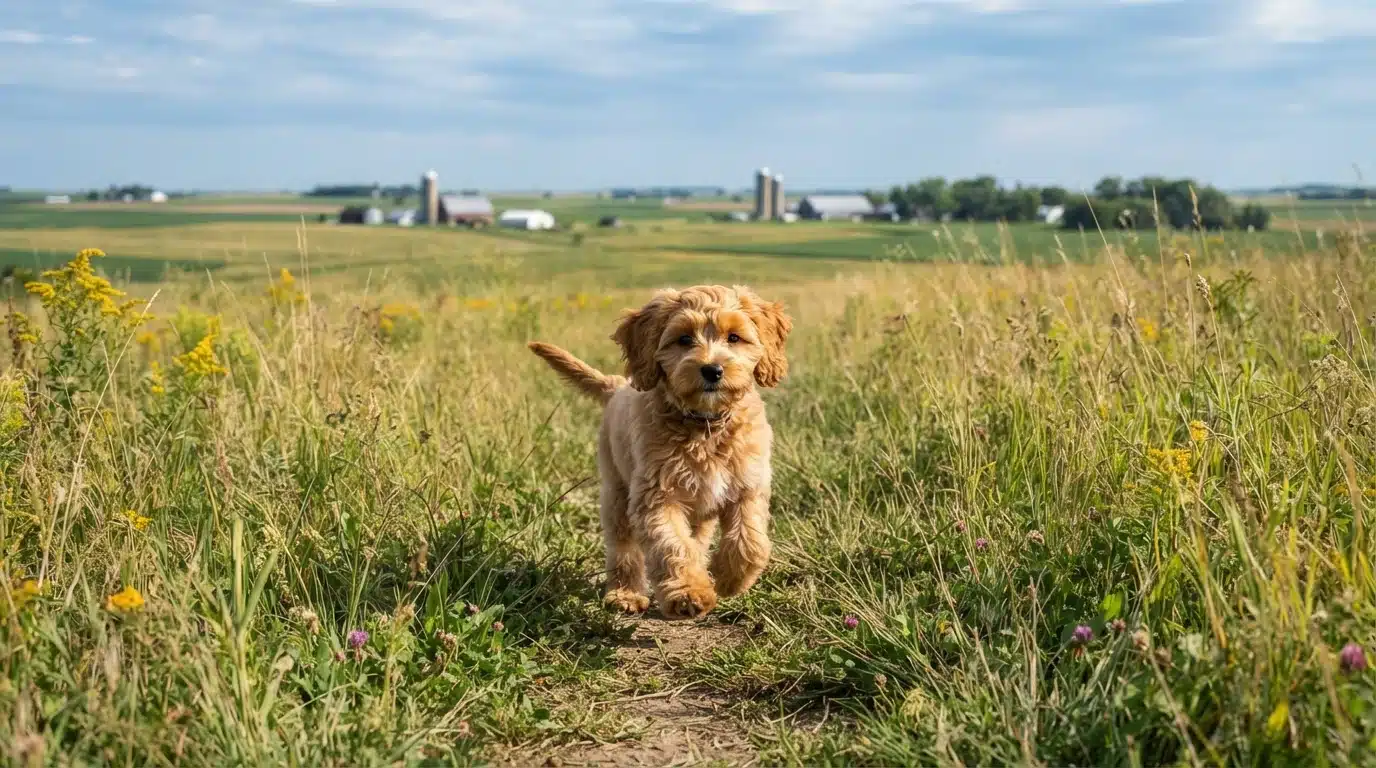
Finally, match energy to your actual routine. Herding breeds thrive on work most pet homes cannot provide, and an underworked herder invents its own jobs, like chasing cars or nipping kids. A laid-back companion with moderate exercise needs fits a family property far better.
When you evaluate any litter, watch how puppies respond to noise, strangers, and open ground. Temperament shows early, and choosing for it now saves years of frustration later.
See how we match puppies to families and bring home the right fit the first time.
Why Havanese, Havapoos, and Cavapoos Fit Rural Iowa Homes
Rural life gives a dog room to roam, but it also means gravel roads, wildlife, long stretches alone, and long car rides to town. Small companion breeds handle all of it surprisingly well, as long as you pick for temperament and health rather than raw size. Three breeds check those boxes: the Havanese, the Havapoo, and the Cavapoo. Each is sturdy, people-focused, and adaptable enough to thrive on an acreage just as happily as in a townhouse.
The Havanese Advantage
The Havanese is Cuba’s national dog, and it was bred for one job: companionship. That history shows up on an Iowa property as a dog that shadows you to the barn, rides shotgun to feed the chickens, and greets every visitor like an old friend. They stand 8 to 11 inches tall, yet they are far tougher than their silky coats suggest, with a springy gait that handles uneven ground well. Havanese are also famously trainable, which matters when your yard has no fence line between it and a hayfield. Early recall training pays off fast with this breed. If you want a deeper look at how they compare, our guide to Havanese vs Cavapoo temperament and care breaks down both.
The Versatile Havapoo
A Havapoo mixes the Havanese with a Miniature or Toy Poodle, and the result is a bright, bouncy dog that suits a busy rural household. Poodles contribute quick learning and a low-shedding coat, so less mud-season fur ends up in the truck. Havapoos typically weigh 15 to 30 pounds, big enough to keep up on a hike and small enough for a lap by the wood stove. They read household energy well: playful outside, calm inside. That flexibility makes them a strong match for families juggling school runs, chores, and livestock. Just remember they crave company, so plan for a companion or regular check-ins during long workdays.
The Charming Cavapoo
The Cavapoo blends the Cavalier King Charles Spaniel with a Poodle, and it may be the gentlest of the three. Cavaliers were built to be soft, affectionate companions, so Cavapoos tolerate sticky toddler hands and wandering barn cats with equal grace. They adapt to whatever pace your farm runs at, and their eagerness to please makes training almost effortless. Their sweet nature does mean they want to be with you, not guarding the far corner of the property.
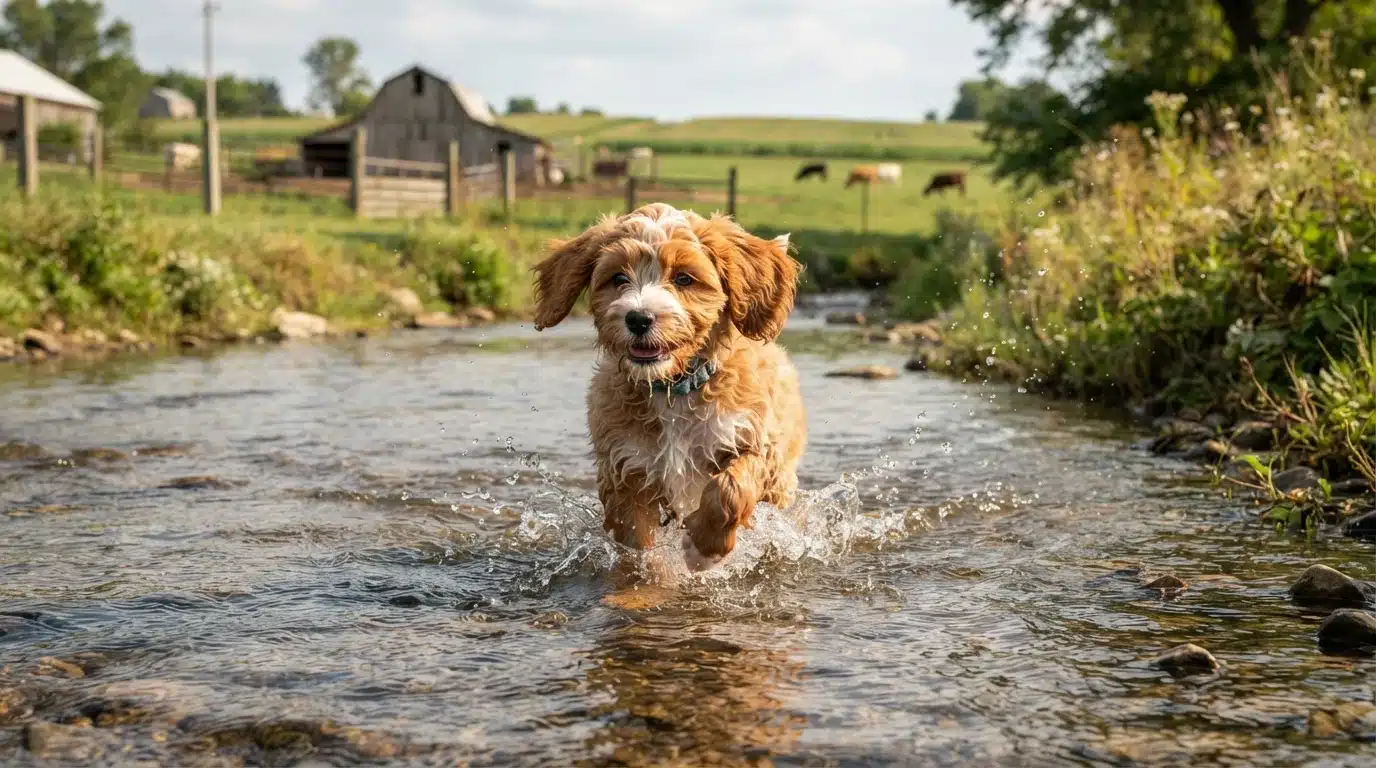
All three breeds share one trait that matters most for rural families: they bond deeply. Choose based on the temperament that fits your daily rhythm, and the breed will fit the property. Families planning ahead often start with our Iowa buyer’s guide, already linked above, to map out timing and delivery.
Prioritizing Health and Longevity for Active Dogs
A country dog works hard. Long walks, rough play, and uneven ground all put stress on joints, hearts, and eyes. So health is not a nice extra when you choose a breed for rural Iowa. It decides how many good years you get together.
The Importance of Ethical Breeding
The single biggest predictor of a puppy’s long-term health is how its parents were bred. Responsible breeders test their breeding dogs for inherited problems before any litter is planned. For small companion breeds like the Havanese, that usually means X-rays scored for hip dysplasia through the Orthopedic Foundation for Animals, along with eye and cardiac exams and patellar luxation checks. The OFA maintains public records of these results, so you can look up a breeder’s dogs yourself instead of taking anyone’s word for it.
Ask to see those records. A confident breeder will share them happily and explain what each test screens for. Vague answers like “our vet checked them” are a warning sign. Guesswork at the kennel shows up years later as arthritis, a heart murmur, or an early goodbye.
Ethical breeding covers temperament too. Puppies raised in a home, handled daily, and introduced to ordinary household noise grow into steadier adults. That early work matters on a farm, where your dog will meet machinery, livestock, visitors, and wildlife without falling apart.
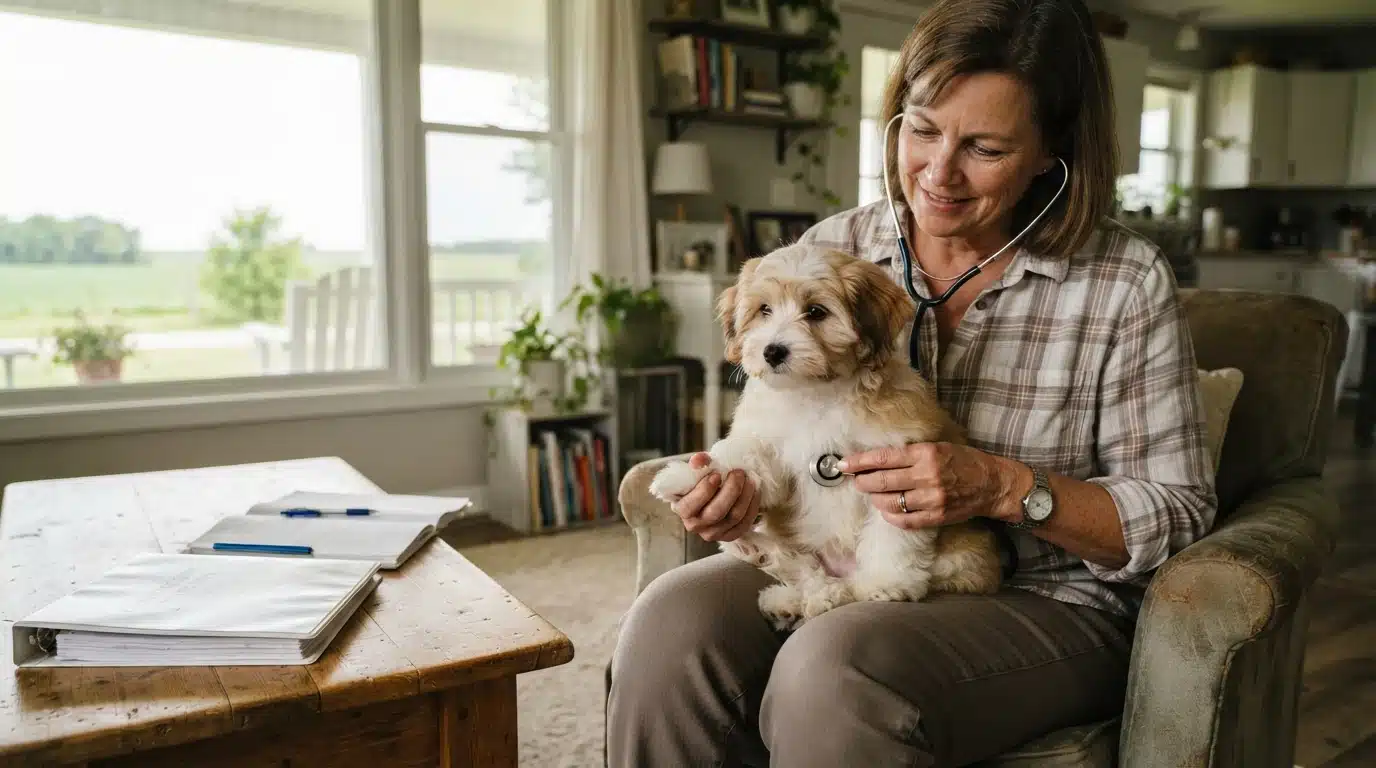
This is the approach behind Sage Puppies in South Jordan, Utah. Parents are health tested, litters are raised in the family home, and you can review health testing details before you apply. Small breeds bred this way often enjoy long lifespans, which means more seasons beside you on the porch, the trail, and the tractor seat.
Tips for Welcoming Your Puppy to the Farm
Safety and Setting Boundaries
The first week sets the pattern for everything that follows. A farm is full of new sights, smells, and sounds, so your job is to make it feel safe rather than overwhelming.
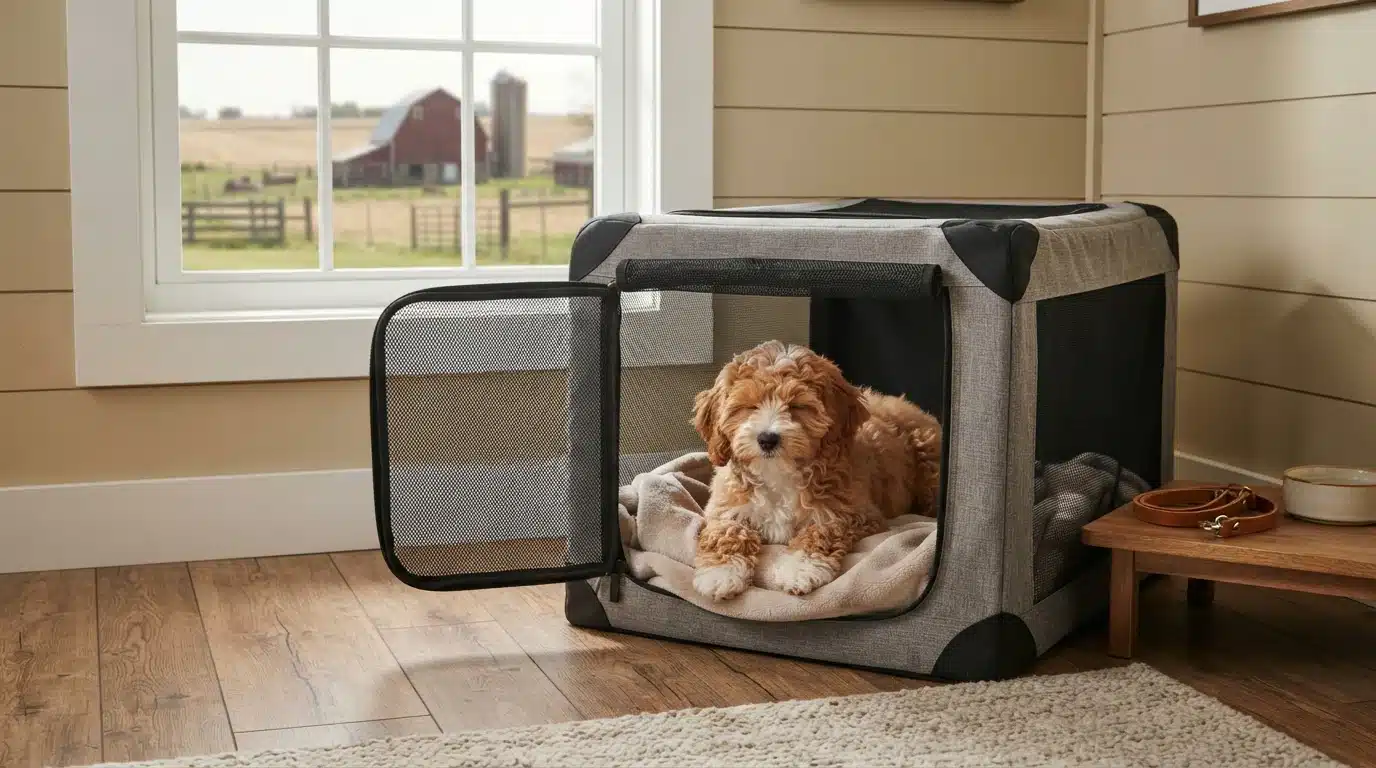
Start small. Give your puppy one quiet space, a crate or penned corner in the house, where nothing new can reach it. Let the rest of the property come in stages: a short leash walk to the barn, then the yard, then the wider acreage. A small breed like a Havanese, Havapoo, or Cavapoo settles faster when the world grows one step at a time.
Walk the property before the puppy does. Look for low spots where water pools, gaps under fences, exposed machine parts, and stored chemicals. Farm dogs face risks city dogs never see, so a simple puppy-proofing routine done a few days early pays off.
Then set clear boundaries and hold them. Decide now which areas are off limits: the shop, the machinery yard, the road edge. Use a consistent word like “leave it” and reward your puppy every time it responds. Puppies learn rules fast, but only when the rules never change.
Keep livestock introductions slow and leashed. Even a gentle puppy can startle a chicken or a barn cat, and a chase that begins as play can become a habit. Short, calm meetings work best. Watch your puppy’s body language, and end each session before it gets wound up.
Supervise everything for the first few weeks. This is not the season for unsupervised barn roaming. Stay close, praise often, and let your puppy check in with you. A well-started puppy from a home-raised program arrives already used to household sounds and gentle handling, so it usually settles within days. Your calm presence finishes the job.
Next Steps with Sage Puppies
You have a shortlist of breeds and a clear picture of your property, your family, and your routine. Now make it real. Browse the puppy application to start the conversation, and tell us about your acreage, your kids, and how you plan to spend your days. That context helps us match you with the right litter.
Havanese, Havapoo, and Cavapoo puppies fit rural Iowa life well. They are small enough for the house, sturdy enough for the yard, and eager to be part of everything. Every parent is health tested, and every puppy is raised in our South Jordan home with early socialization, so your pup arrives confident and well started.
Pickup is simple if you are near Utah. If not, ask about our nationwide delivery options and we will walk you through timing, cost, and what travel day looks like for a young puppy.
Ask about temperament before you ask about coat color. The right personality lasts far longer than a pretty pattern.
A few questions worth bringing to us: Which breed suits your fencing and workload? When is the next litter ready? What does the first week at home need? We answer all three, honestly, before you commit.
Ready when you are. Start your application, and let’s find your Iowa farm dog together.

A puppy raised in a busy family home settles into country life with less fuss. That’s exactly how we raise every Havanese, Havapoo, and Cavapoo at Sage Puppies. Browse our available puppies or start an application, and we’ll help yours find a confident, well-started match.
Frequently Asked Questions
Q1: What are the best puppy breeds for rural farm life in Iowa?
Match the breed to your pace of life. If you want a close companion rather than a working dog, small, social breeds like a Havanese, Havapoo, or Cavapoo fit acreage life beautifully when safely contained.
Q2: Are Havanese, Havapoo, and Cavapoo puppies suitable for rural Iowa homes?
Yes, if your yard is fenced and coyote risks are managed. They thrive on space and family time, and home-raised socialization from programs like Sage Puppies builds confident rural companions.
Q3: How does rural living in Iowa influence my choice of puppy breed?
Rural settings bring wildlife, wells, and equipment, so choose a breed with reliable recall, moderate prey drive, and a coat that handles mud and Midwest winters.
Q4: How much exercise does a companion breed need on acreage?
Plan on 30 to 60 minutes of daily activity. Free range time is not enough; walks and play build recall and bond.
Q5: Can I get a puppy delivered to Iowa from out of state?
Yes. Many boutique breeders offer nationwide delivery or flight nanny options, so review each program’s process before reserving.
Finding Your Perfect Rural Companion
The right country dog comes down to fit, not size. Match a breed’s coat, energy, and temperament to your land, your livestock distance, and your family’s daily rhythm. Put health testing and early socialization at the top of your checklist, because those two things shape a puppy far more than any pedigree title.
Temperament matters most on a rural property. A calm, people-focused companion adapts to wide-open spaces as happily as to a living room. Our Iowa puppy buyer’s guide walks through each step in more detail.
Choose wisely now, and you’ll share the next twelve to fifteen good years with a dog built for your life.