
Quick Summary: Kansas publishes licensed breeder and shelter records through the Department of Agriculture, but the county-by-county directory only shows names and license types, not inspection scores. Inspection reports are not posted online, so you have to request them directly through the Kansas Open Records Act, which logged 153 requests in 2024. A clean record only means the facility met state standards on the day of the visit, so pair it with direct questions about health testing and where the puppies are raised. Sage Puppies, which raises Havanese, Havapoo, and Cavapoo litters at home, is cited as an example of a program that shares health and vet details beyond what the state requires.
You found a Kansas puppy listing. The photos look great, the price feels fair, but before you send a deposit you want proof the breeder actually runs a licensed, inspected facility. That is the problem this guide solves.
Kansas breeder licensing records are public, yet they are easy to miss and harder to interpret. Below you will learn exactly where to search, how to read puppy breeder records, and what to do when a listing does not match the state database. We also cover how puppy mill inspections work in Kansas, so a single passed or failed visit never tells the whole story alone. Every step points you to official sources first, because your puppy’s start in life deserves more than a seller’s word. As breeders ourselves, we know what transparent records should look like.
Step 1: Identify the Facility and County to Search
Before you can look anything up, you need one solid piece of information: the name of the facility you’re researching. Kansas breeder licensing records are searchable, but only if you know what to type in.
Gather the Name, County, and Any Alternate Business Names
Start with what the seller gives you. Ask for the exact name on their license, not just a kennel nickname. Many breeders operate under a business name that differs from their personal or farm name, and records can sit under either one.
Collect three things before you search:
- The legal or licensed facility name
- The county where the dogs are housed
- Any alternate names, including the seller’s last name
Write these down. If your first search comes back empty, try the alternates. A breeder listed as “Sunrise Kennels” might appear under the owner’s surname instead. For context on where Kansas families usually find puppies in the first place, see our guide to finding puppies for sale in Kansas.
Confirm That the State Program Covers the Facility Type
Not every Kansas dog seller needs a state license. Kansas breeder licensing rules apply to commercial breeders and shelters or pounds that sell animals, but small hobby breeders may fall outside the program entirely.
Check which category fits your seller:
| Facility Type | State Program? |
|---|---|
| Commercial breeder with 5+ breeding females | Yes |
| Animal shelter or pound | Yes |
| One-time litter from a family dog | Usually no |
If the seller doesn’t appear in state records, ask whether they hold a USDA federal license instead. Large operations that ship puppies often fall under federal oversight, and you can search those records separately.

Step 2: Search the Kansas Licensed Animal Facilities Directory
Once you know a breeder’s details, the next step is the official source. The Kansas Department of Agriculture publishes a list of licensed animal facilities statewide. This is where most Kansas breeders and shelters appear.
Open the State Directory and Choose the County
Start on the Department of Agriculture’s Licensed Animal Facilities page. You will not find a single master search box there. Instead, the page lists every Kansas county as a separate link, arranged in alphabetical order.
Click the county where the breeder operates. The link opens a document listing that county’s licensed facilities, which usually includes a version of the kennel name, the facility type, and the license status.
Tip: Not sure which county a breeder is in? Search the breeder’s address on a map site first, then pick that county. Many sellers advertise in nearby cities, so the kennel address matters more than the website’s contact page.
Keep the definitions handy too. The page links to the Kansas Pet Animal Act, which explains terms like breeder and animal shelter so you know what each entry actually means.

Match the Directory Entry to the Breeder
Now compare the record to the seller. Look for these matches:
- Kennel name: The directory may list a business name instead of the seller’s ad name.
- Address or city: A partial match still helps confirm you found the right facility.
- Facility type: A pet shop, shelter, and breeder appear differently in the record.
If nothing matches, check nearby counties. Some breeders run kennels at a second property. A missing entry is a question, not always a red flag. Ask the seller for their license number and see if it fits what the state shows. That one number settles most mismatches quickly. If a seller refuses to share it, keep looking. Licensed, transparent programs welcome the question, and asking it is a normal part of buying well.
Step 3: Find Out What Inspection Information Is Available
Understand the State’s Performance-Based Inspection Approach
Once you have found a breeder in the Kansas Department of Agriculture’s license listings, the next question is what the state actually tells you about inspections. The answer: less than you might hope, so it helps to know how the system works.
Kansas runs its Animal Facilities Inspection (AFI) Program under the Kansas Pet Animal Act. Licensed dog and cat breeders get regular, performance-based inspections, and each facility must have a licensed veterinarian involved in animal health. Inspectors also respond to complaints about licensees.
“Performance-based” means inspection frequency depends on each facility’s history. A 2018 state audit found Kansas uses a risk-based schedule, so facilities can be inspected anywhere from every six months (high risk) to every two years (low risk) based on past results. Failed inspections trigger a re-inspection to confirm fixes.
This matters for you as a buyer. A clean record does not guarantee frequent check-ins, and the state’s public county lists show names and license types, not inspection scores. So treat the license as a floor, not a ceiling. Breeders who go further, like sharing vet records and inviting visits, offer more assurance than the state requires. At Sage Puppies, health-tested parents and an open, family-first process are the standard, not the exception.
Use the Program Page and FAQ to Ask a Specific Records Question
The state does not publish inspection reports on its website. That does not mean the records are closed. The AFI program keeps licenses, health papers, and correspondence, and its own materials show growing use of KORA, the Kansas Open Records Act, with 153 KORA requests logged in 2024 alone.
Your move is simple: ask directly. The AFI program page lists contact details, including the program email and named inspectors. State clearly what you want, such as confirmation that a facility holds an active license or whether complaints have been filed against it. Specific questions get faster answers than broad ones.
Tip: Before you request state records, ask the breeder the same questions. A transparent program will explain its inspection history and vet care willingly.
Keep notes on who you contacted and when you received a reply. If the answer conflicts with what a seller told you, that gap is your cue for Step 4’s follow-up process.
Step 4: Resolve Missing, Conflicting, or Unclear Listings
Sometimes a breeder’s record is hard to find. Other times, the name on the license does not match the name on the puppy ad. Neither problem means the breeder is dishonest. Both problems deserve a closer look.

Recheck Before Drawing a Conclusion
Before you worry, rule out the simple explanations.
- Check spelling variations. Try “Smiths Kennel,” “Smith Kennel,” and “Smith Kennels.” Records often store names in one exact form.
- Search the city or county instead. A facility may be listed under the owner’s name rather than the kennel name.
- Confirm the seller’s location. Some ads list a nearby town, not the actual facility address.
- Consider timing. A newly licensed breeder may not appear in search results yet, and recent inspections may not be posted right away.
If nothing turns up after these checks, ask the seller directly for their license number and the name it is filed under. A transparent breeder answers without hesitation. If a seller dodges, gets defensive, or changes their story, treat that as a signal and keep looking. Kansas families have plenty of options, and our own Kansas puppy buying guide walks through where to look.
Contact the State or Report a Concern Through the Right Channel
When you cannot resolve the record yourself, go to the source. Kansas licenses commercial dog breeders through its state agriculture department, and staff can confirm whether a facility holds a current license. Call or email with the kennel name, the license number if you have one, and the county.
If you see the opposite problem, a breeder who sells many litters but holds no license, report it through the same office. Questions are always welcome; concerns get routed to inspectors.
A short call often settles things in one conversation.
Step 5: Interpret the Record Alongside Direct Breeder Questions
A state record is a fact-check, not a full picture. Use it to confirm the basics, then let your conversation with the breeder fill in the rest.
Ask What the State Record Cannot Tell You
Kansas inspection records show whether a facility was licensed and whether inspectors found violations. They do not show how puppies are raised day to day. A clean report tells you nothing about socialization, temperament, or how a litter spends its first eight weeks.
So pair the record with direct questions. Ask to see the mother and where the puppies live. Ask which health tests the parents have had and request proof. Ask how the breeder handles early socialization and what a typical day looks like for the litter.
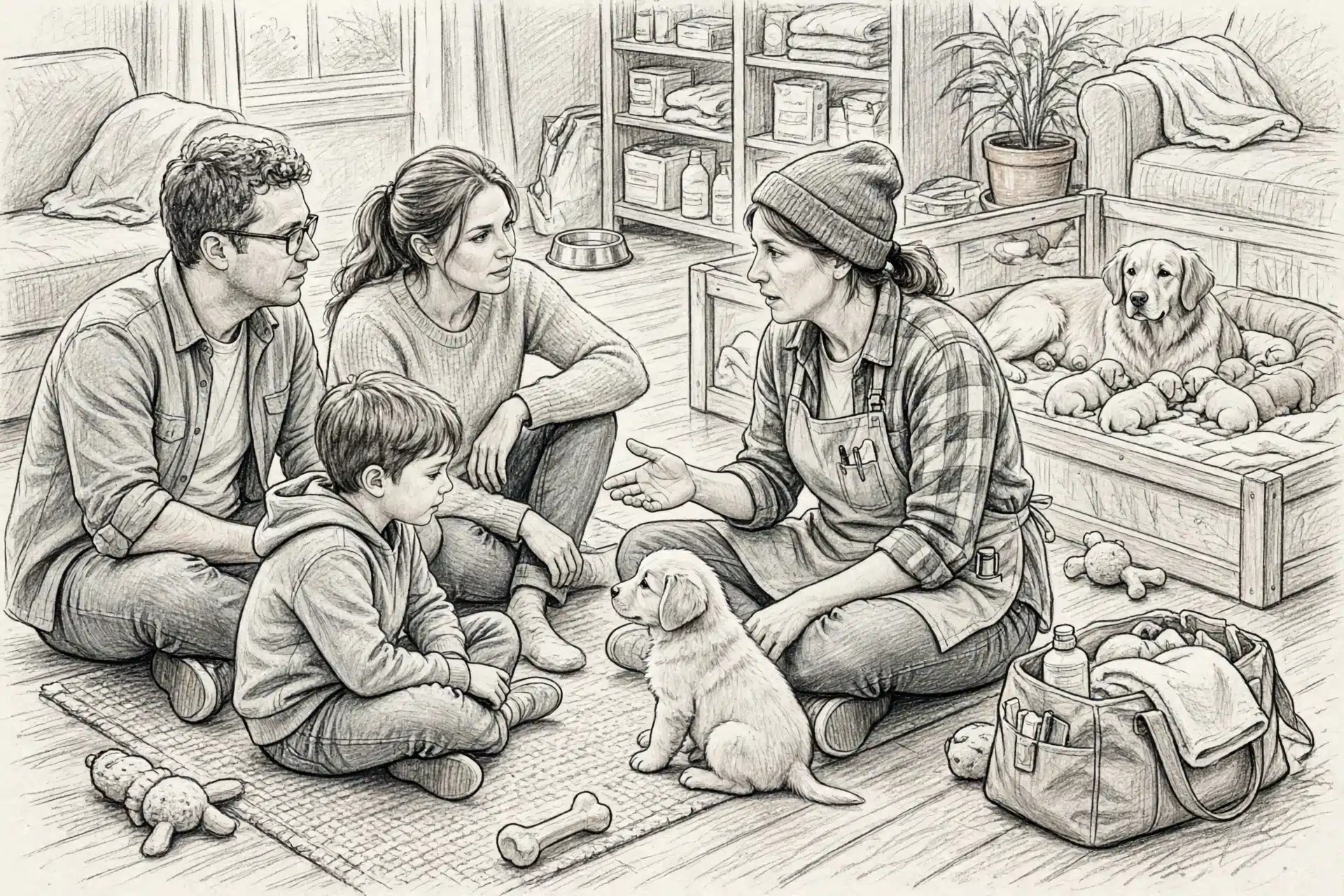
A responsible breeder welcomes these questions. Vague or evasive answers matter more than a spotless inspection history. When a seller also cannot match the name on the state record, treat that as a serious red flag and walk away.
Make a Decision Without Treating a Record as a Guarantee
A passing inspection is a floor, not a promise. It means the breeder met state standards on the day an inspector visited. It does not guarantee a healthy, well-adjusted puppy.
Weigh the record alongside everything else: health testing results, references from past families, and how the breeder communicates. Programs that raise puppies at home, like ours at Sage Puppies, go beyond the minimum because licensing alone was never the goal. Trust builds from transparency, not paperwork.
Use the record to rule out problems. Use your questions to find the right breeder.
Common Mistakes to Avoid When Checking Kansas Records
Even careful buyers slip up here. Watch for these:
- Assuming no listing means a bad breeder. Very small hobby breeders can fall below licensing thresholds, so they legally have no public record.
- Stopping at the first database. A facility may appear on one state or federal list and not another. Check both before judging.
- Reading old inspections as current ones. A 2021 report says nothing about how the kennel operates today. Look at the most recent entry.
- Treating a violation as a verdict. Many citations are minor paperwork issues. Read what the inspector actually wrote and whether it was corrected.
- Trusting the name on the website. Sellers sometimes use a business name that differs from their licensed kennel name. Match the address and owner instead.
- Skipping follow-up. If a record is missing or unclear, call the Kansas Department of Agriculture and ask. A legitimate breeder will also answer your questions directly.
Keep the caution in perspective. Records confirm a breeder is legal, not loving. Ask to see where puppies live, meet the mother when you can, and review health testing.
If you want a shortcut to reputable sources, our guide to finding puppies in Kansas pairs well with these record checks. Ethical programs like ours share health, socialization, and vet details openly, so the paperwork simply backs up what you already see.
Next Steps for a Careful Puppy Search
You now know how to find a Kansas breeder’s license and inspection records. Here’s how to use them.
- Look up the facility on the state licensing search and confirm the seller’s name matches.
- Read the inspection history with a careful eye. Note violations, repeat findings, and how quickly they were resolved.
- Ask direct questions about health testing, parent dogs, and where puppies spend their first weeks.
- Visit or request a video tour so you can see the living conditions yourself.
- Compare your notes across a few breeders before you commit.
Records are one piece of the puzzle. How a breeder communicates matters just as much. Our own adoption process shows what transparency looks like at every step, from application to go-home day.
Take your time. The right puppy is worth it.

Doing this research takes time. If you’d rather skip the digging, Sage Puppies puts everything in the open for you: health-tested parents, home-raised litters, and a transparent adoption process. Browse our Havanese, Havapoo, and Cavapoo puppies today, with pickup in South Jordan, Utah or delivery nationwide.
Frequently Asked Questions
Q1: How do I look up a Kansas dog breeder’s license and inspection records?
Search the Kansas Department of Agriculture’s animal facilities database online. Enter the kennel name, city, or license number. Records show license status, inspection dates, and any violations noted during visits.
Q2: What is the Kansas Department of Agriculture animal facilities inspection program?
It’s the state office that licenses and inspects commercial dog breeders, shelters, and pounds. Inspectors check housing, sanitation, food, water, and veterinary care to enforce the Kansas Pet Animal Act.
Q3: How often does Kansas inspect licensed dog breeding facilities?
Most licensed facilities get at least one inspection per year. Breeders with past violations may receive extra visits, while clean operations may see an inspector annually or as complaints come in.
Q4: What should I do if a Kansas breeder refuses to share a license number?
Walk away. A licensed, responsible breeder shares records freely. No license number usually means no state oversight, which puts puppy health and parents’ welfare at risk.
Q5: Does a clean inspection record guarantee a healthy puppy?
No. It confirms legal care standards were met at that visit. Still ask for health testing results, vet records, and puppy vaccination history before you commit.
Q6: Can I get Kansas inspection records if they aren’t posted online?
Yes. Contact the Kansas Department of Agriculture directly and request information about a specific facility. Many records are public, so a phone call or email often fills in the gaps.
Conclusion
Kansas gives you real records, so use them. Start on official sites, search the facility listing, and read inspections with care. A clean report is good news, but one violation does not always mean a bad breeder. Look at the pattern, the dates, and the follow-up visit. When records are missing or do not match the seller, ask direct questions or walk away.
Buying from a small, family-run program with health-tested parents avoids much of this guesswork, which is why we raise every Havanese puppy at home with that same transparency. Whatever route you choose, an hour with public records is the cheapest insurance you will ever buy for a dog that may share your life for 15 years.



