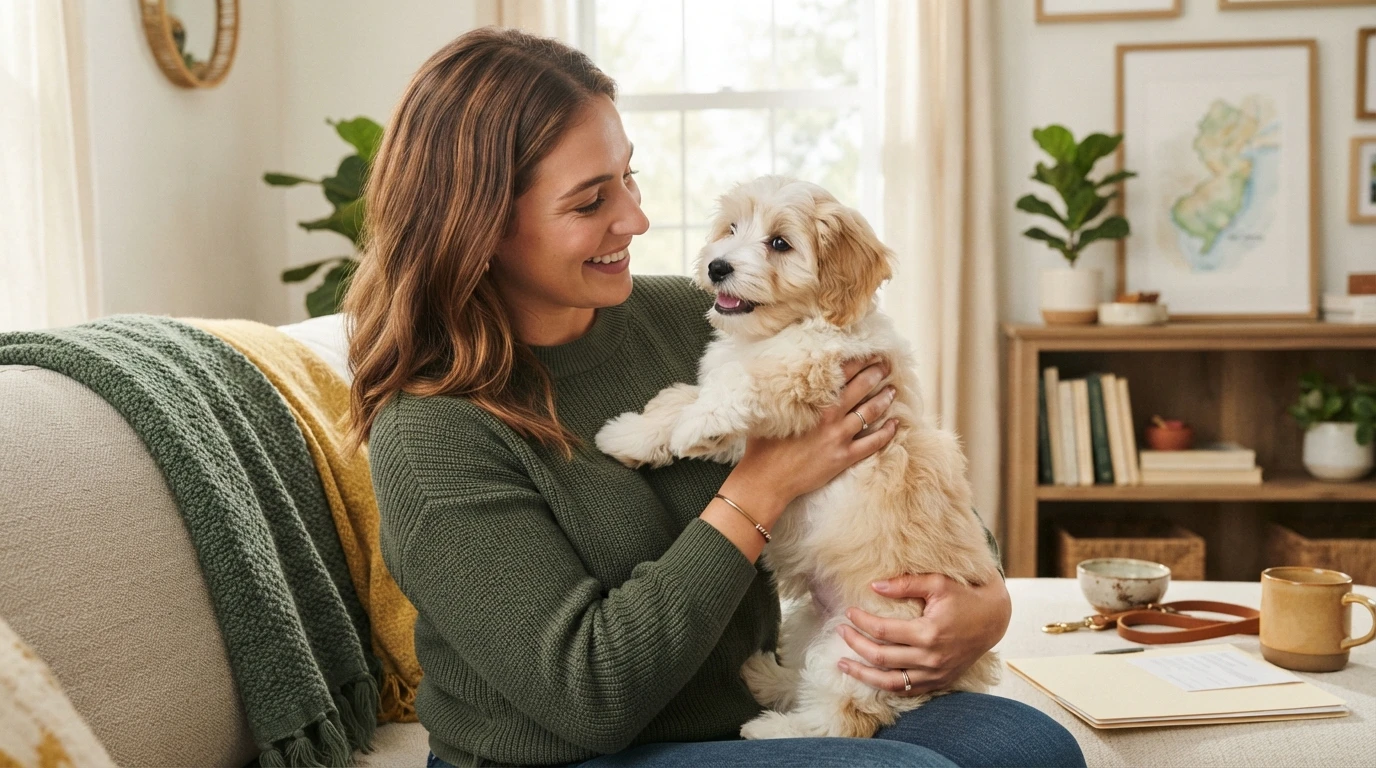
Quick Summary: Ethical dog breeders prioritize health testing for parents and raise puppies within a home environment to ensure proper socialization. You should always request documented health records, ask about the daily living conditions of the litter, and avoid sellers who pressure you into a quick sale. Sage Puppies exemplifies these standards by focusing on Havanese, Havapoo, and Cavapoo breeds with transparent, family-raised care.
Welcoming a puppy home means more than picking a breed or a color. It is the start of a bond that deserves the healthiest possible beginning, built on humane dog breeders who put each puppy’s care first.
The hard part is knowing who to trust. Flashy websites can hide cramped kennels, skipped health tests, and pups raised without gentle handling. Many families in California only spot the warning signs after they have fallen in love.
This guide shows you what to look for. You will learn how responsible dog breeding works, which questions reveal a breeder’s true standards, and how reputable breeders California families recommend raise well-socialized, health-tested companion dogs like Havanese, Havapoo, and Cavapoo puppies.
We draw on our own experience running a boutique, family-raised puppy program. Our home-based standards have become the benchmark we encourage every family to expect, wherever they search.
Understanding the Foundation of Humane Dog Breeders
Humane dog breeders share one core trait: they treat every litter as a responsibility, not a product line. That shows up in two places first. How they test the parents’ health, and how they raise the puppies before they ever leave home.
Prioritizing Health and Genetic Testing
Ethical breeding starts with the parents. A humane breeder screens both dam and sire for breed-specific conditions before a single puppy is planned. For Havanese and Cavapoo lines, that usually means eye exams, patella checks, cardiac evaluations, and DNA tests for inherited disorders.
Ask to see the paperwork. Reputable programs keep official results from the OFA or a licensed veterinarian and share them without hesitation. If a breeder says the parents “look healthy” but offers no records, walk away. Health testing cannot promise a puppy will never get sick, but it meaningfully lowers the risk of painful, costly genetic conditions later.
At Sage Puppies, every parent dog is health tested before breeding, and we walk you through what each result means. You can learn more in our questions to ask about health-tested puppy parents.
The Role of Early Socialization in Home Environments
Where puppies spend their first eight weeks shapes who they become. Puppies raised in a home hear normal household sounds, meet children, and handle everyday surprises like a doorbell or a vacuum. Kennel-raised puppies often miss that exposure, and it can show up later as fear or reactivity.
Humane dog breeders build socialization into daily life. They handle puppies from birth, introduce new textures and gentle visitors, and begin early house training. That head start is why a well-bred Havanese or Havapoo settles into a new family with confidence instead of anxiety.
Signs of a Reputable Breeder You Can Trust
A trustworthy breeder proves it through openness, not polish. Look for someone who answers hard questions, shows you the parents’ health records, and lets you see exactly where puppies are raised.
Transparency in Breeding Practices
Good breeders have nothing to hide. They happily share proof of health testing on the parent dogs, explain their breeding goals, and welcome your questions before you ever talk money. If a seller dodges questions about vet care, refuses a video call, or offers to ship a puppy without meeting you first, walk away.
Ask to see where the puppies live. A home-based program, like the one we run in South Jordan, Utah, raises puppies inside the family rather than in kennels or outdoor runs. That setting shapes temperament from day one. You should also expect a clear, written process covering pricing, what comes home with your puppy, and how pickup or delivery works.
One internal detail worth noting: how our adoption process works should be easy to find and easy to understand. Clarity early is a strong signal of honesty later.

Commitment to Lifetime Support
A responsible breeder stays in your corner long after pickup day. This is the habit that separates true programs from volume sellers.
Before you commit, ask three things:
- Will you take the puppy back if my family cannot keep it, at any age?
- Can I contact you with questions during the first year and beyond?
- What health guidance do you provide, and is it in writing?
Honest breeders answer yes, yes, and yes without hesitation. They want updates, photos, and stories, because each puppy is part of their extended family. They will also quiz you. Expect questions about your schedule, children, and experience. That screening protects the puppy, and it tells you the breeder cares about fit, not just the sale.
When a breeder invests this much before and after the handoff, you can trust the care that came before it.
Questions to Ask Before You Commit
A good breeder welcomes your questions. A rushed one dodges them. Before you send a deposit for a Havanese, Havapoo, or Cavapoo, walk in with a short list and pay attention to how the answers feel, not just what they say.
Inquiring About Health Protocols
Start with the parents. Ask which health tests each parent has completed and request proof, not just a verbal yes. For small breeds like the Havanese, that usually means screening for knee, eye, and heart conditions. A confident breeder will show you results from organizations such as OFA without hesitation.
Then ask about the puppies themselves. Who examines them, when, and what does that visit cover? You want a first vet check, deworming on schedule, and age-appropriate vaccines documented in writing.
Finally, ask what happens if a health issue appears later. An honest program explains its support process clearly instead of promising the moon.
At Sage Puppies, every parent is health tested before breeding, and we share those records with families early. It is a standard worth expecting anywhere you look.
Understanding the Daily Environment
Where a puppy spends its first eight weeks shapes who it becomes. Ask exactly where the puppies live. Are they raised in the home, around normal household sounds, or out in a kennel or barn away from family life?
Then ask who handles them, and how often. Puppies meeting different people, hearing vacuums and doorbells, and learning gentle touch grow into easier companions. Early socialization is not a bonus. It is the foundation.
Ask to see photos or video of the actual whelping area, not staged shots. A boutique, family-raised program like ours in South Jordan, Utah, keeps puppies in the middle of daily life because that is how confident, well-started dogs are made. Programs that raise litters in isolation rarely produce the same steady temperament.

Evaluating Small Breed Breeders Specifically
Small breed breeders deserve a closer look than large breed programs. Tiny puppies are fragile early in life, so the first eight weeks shape far more of their future. Use the checks below to judge whether a breeder is protecting that window.
Temperament and Breed-Specific Traits
Temperament is the trait you will live with longest, so evaluate it first. Ask how puppies are raised, not just where. Puppies that grow up in a home, around daily noise, children, and gentle handling, settle into family life faster than puppies raised in kennels or barns. A good breeder can describe each puppy’s personality in detail: which one is bold, which one watches before joining in, and which one follows people everywhere.
Then match the breeder to the breed. Havanese are social velcro dogs that want to be near their people all day. Cavapoos blend the Cavalier’s soft nature with the Poodle’s quick mind, so they need light training and steady company. Havapoos tend to be playful and adaptable, which suits first-time owners well. A breeder who specializes in these breeds can explain the differences and help you pick honestly, even when that means steering you to a calmer puppy instead of the cutest face.

Watch for these green flags:
- Health testing on both parents, with results you can see
- Puppies raised indoors and handled daily
- Willingness to video call or visit before you commit
- Clear answers about pickup and delivery plans
- A waitlist or application process rather than instant availability
And these red flags: always-available litters, no parent photos, and reluctance to answer questions about temperament or health.
Programs like Sage Puppies focus only on these small breeds, so breed-specific advice comes built in. You can browse the breed guides for Havanese, Havapoo and Cavapoo to see which temperament fits your household before you apply.
The Importance of Location and Delivery Transparency
Where a puppy is raised, and how it travels to you, tells you almost everything about a breeder. A transparent program will tell you its exact location, invite you to see where puppies spend their first weeks, and explain every step of delivery before you pay a deposit. Vague answers about “shipping” or a breeder who refuses to share where the puppies live are warning signs worth taking seriously.
Safe and Compassionate Transport Standards
Good transport starts long before travel day. Puppies should stay with their mother and littermates until at least eight weeks old, then move in a way that protects their health and confidence. Ask these questions of any breeder you consider:
- Age at travel. A puppy sent home too young misses critical socialization with its litter.
- Method. Options range from car pickup to ground courier to flights with a pet-safe airline program. Each has trade-offs in cost, stress, and timing.
- Distance and duration. Long trips need planned breaks, water, and a calm, temperature-controlled space.
- Paperwork. You should receive a health certificate from a licensed veterinarian shortly before travel, along with vaccination records.
- Support on arrival. A thoughtful breeder prepares you for the first night and stays reachable as your puppy settles in.

Location matters too. When you know where a breeder operates, you can visit, meet the mother, and see how puppies are raised. That is why Sage Puppies shares its South Jordan, Utah home base openly and offers local pickup for Utah families alongside careful nationwide delivery for families further afield.
Before you commit, ask the breeder to walk you through the full journey, from reservation to arrival day.
Ready to plan yours? Explore our delivery and pickup options to see how a puppy comes home to you.
Avoiding Common Pitfalls in Puppy Adoption
Recognizing High-Volume Red Flags
Most puppy problems trace back to one mistake: buying from a breeder who raises too many litters to care for them well. Spot the warning signs before you pay a deposit, not after.
A few red flags deserve your full attention. A breeder who always has puppies available, offers multiple breeds year-round, or ships a puppy the same week you ask is likely running a volume operation. Puppies raised in kennels or barns, away from family life, often miss the daily handling that builds a calm temperament.
Watch for these signals during your first conversation:
- No health testing shown. Ask for proof that both parents were tested for the conditions common in their breed. A vague “the vet checked them” is not the same as documented results.
- No questions back. A caring breeder interviews you. If nobody asks about your home, schedule, or experience, the puppies are merchandise.
- Pressure to decide fast. Urgency, limited-time discounts, and “one puppy left” scripts push you past careful thinking.
- Refusal to video call or visit. You should be able to see where the puppies live and meet the mother.
- Puppies sent home too young. Small breeds like Havanese, Havapoos, and Cavapoos benefit from staying with their litter until at least eight weeks.
- Thin or missing paperwork. Vaccination records, a health history, and a written agreement should come standard.
Tip: Ask the breeder how many litters they raise per year and where the puppies sleep. A confident, ethical breeder answers easily and in detail.
A transparent program makes this simple. You can see each step of our process, from application to go-home day, on how it works, so you always know what to expect.

Ready to meet a puppy raised the right way? At Sage Puppies, health-tested parents and daily family care set the standard you just read about. Browse our available Havanese, Havapoo, and Cavapoo puppies, or start a short application. We offer local pickup in South Jordan and nationwide delivery.
Frequently Asked Questions
Q1: What are the signs of a responsible dog breeder in California?
Look for health-tested parents, puppies raised inside the home, transparent visits, and a breeder who asks about your lifestyle. Programs like Sage Puppies pair testing with early socialization, so puppies arrive confident and well-started.
Q2: How can I verify if a dog breeder in California is ethical?
Ask to see health testing results, meet the mother dog, and request references from past families. Ethical breeders answer openly, share photos of the home environment, and never rush your decision.
Q3: What questions should I ask a California dog breeder before buying?
Ask how puppies are socialized, what health screenings parents have, when puppies go home, and what support comes after adoption. Also confirm pickup or delivery options and any waiting-list process.
Q4: How much should I expect to pay for a well-bred Havanese or Cavapoo in California?
Expect roughly $2,000 to $4,500, depending on breed and pedigree. Higher prices usually reflect health testing and socialization, not marketing.
Q5: Do reputable breeders deliver puppies to California?
Many do. Sage Puppies offers nationwide delivery plus local pickup in South Jordan, Utah, so California families can meet the program that fits them best.
A Trusted Partnership for Your New Beginning
Finding an ethical breeder comes down to a few clear signs: health-tested parents, puppies raised inside the home, open answers to every question, and a breeder who cares where their dogs end up. Use the red flags in this guide to rule out kennels and puppy-flippers quickly.
If you want a small, well-socialized Havanese, Havapoo, or Cavapoo raised with that standard, Sage Puppies in South Jordan, Utah, breeds these three breeds exclusively, with early socialization and family-first care behind every litter. Their available puppies reflect the same benchmarks this guide asks you to expect from any breeder you interview.