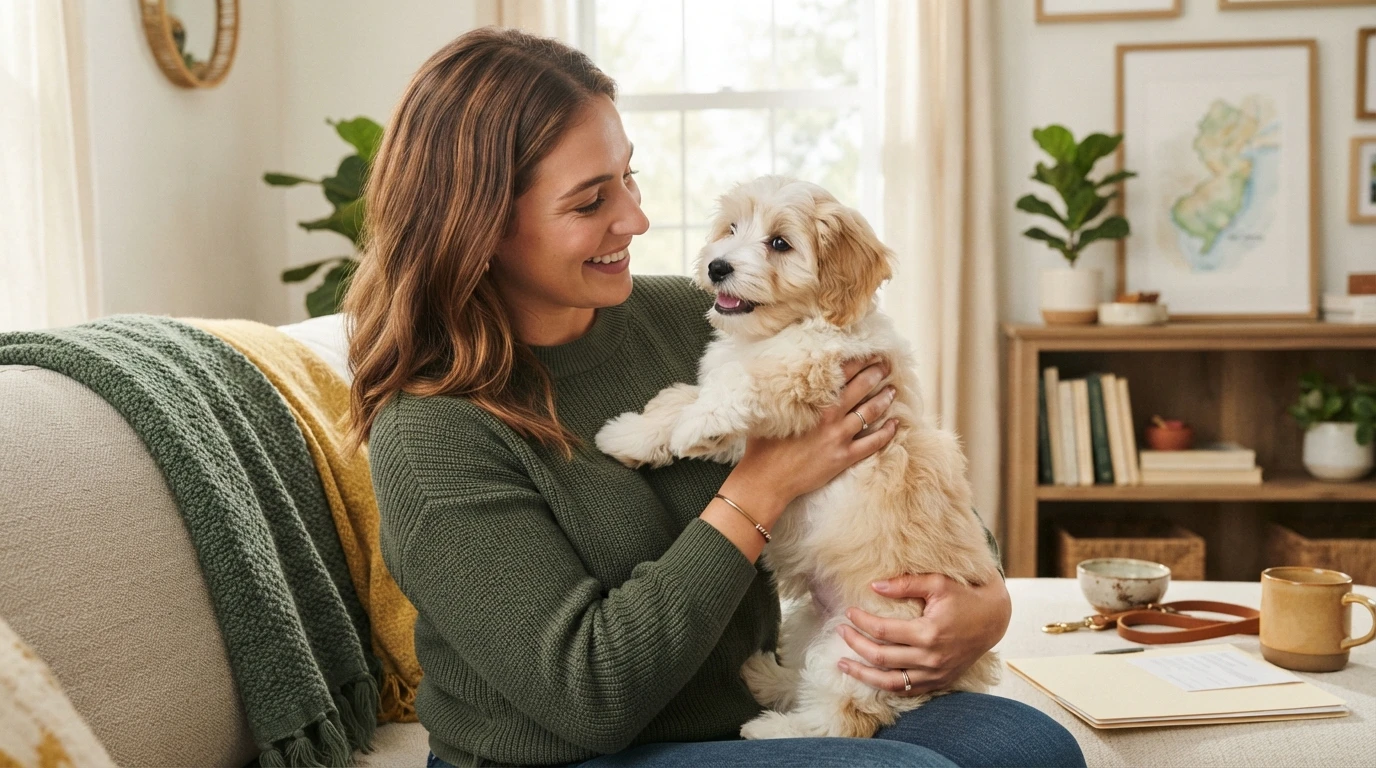
Quick Summary: Finding a healthy puppy in New Hampshire requires looking beyond proximity to prioritize ethical breeding practices. Programs like Sage Puppies emphasize health testing and early socialization to ensure a stable temperament for breeds like Havanese and Cavapoos. Always choose a breeder who asks about your lifestyle and provides transparent documentation rather than one focused on a quick sale.
When you search “puppies New Hampshire near me,” a short drive can feel like the whole decision. It is not. The closest listing often says nothing about how a puppy was bred, raised, or screened, and those details shape the next fifteen years of your family’s life.
This guide helps you look past proximity. You will learn what ethical small-breed breeders actually do, which questions separate careful programs from puppy-mill resellers, and how to evaluate Havanese, Havapoo, and Cavapoo puppies for temperament and health.
The advice here comes from a breeder’s daily work with these exact breeds. Plenty of New Hampshire families end up choosing a quality program and arranging safe delivery rather than settling for whatever is nearby. If you want to see what a well-run program looks like, browse the available puppies and review the pricing and reservation process before you visit anyone.
[Reserve your puppy through our application today.]
Understanding the Value of Intentional Breeding
When families search for puppies New Hampshire near me, the listings all look similar at first. Healthy faces, sweet photos, ready-to-go dates. What separates a puppy that thrives from one that struggles is usually invisible in the listing: the breeding decisions made two years before the litter was born.
Prioritizing Health and Temperament
Intentional breeding starts with the parent dogs. A responsible breeder health-tests breeding pairs for the conditions common to their breed, tracks temperaments across generations, and plans each pairing with a specific purpose. That planning shows up later as steadier nerves, easier house training, and fewer inherited health problems.
Breeders who skip these steps often produce puppies that look fine at eight weeks but cost families real money and heartache later. Hip problems, heart issues, and anxious temperaments rarely appear in a cute photo. They appear in your vet bills and your evenings.
Temperament matters just as much as health, especially for small companion breeds. A Havanese or Cavapoo bred with calm, well-socialized parents is far more likely to settle into family life, handle children, and adapt to apartment living. Puppies raised in busy homes, handled daily from birth, learn confidence before they ever meet you.
This is why the breeder matters more than the location. A program like Sage Puppies builds its reputation on planned pairings, owner-managed care, and honest matching rather than on volume. Fewer litters means more attention on each puppy.

Ask any breeder you contact for proof of health testing on both parents. A confident, ethical breeder shares results without hesitation.
If you want to see how a small, planned program works, browse the available puppies and review each pairing’s background before you apply.
Red Flags to Watch for in Your Search
Searching “puppies new hampshire near me” will bring up dozens of listings, and not all of them deserve your deposit. Most problems show up early, in how a breeder talks with you before you ever meet a puppy. Learn to read those signals and you can rule out weak options in a single phone call.
Evaluating Breeder Communication
Good breeders ask questions. Expect a real conversation about your home, your schedule, your experience with dogs, and who lives with you. If someone is ready to hand over a puppy to the first person who pays, pause. That is a seller, not a breeder, and it is the single clearest warning sign.
Watch how they answer the basics. A responsible program can tell you about the parents’ health testing, the puppy’s vet visits, and the socialization work done so far, without hesitation. Vague answers like “they’re healthy” or “mom is around somewhere” should end the conversation.
Speed matters too. Pressure to pay today, “two other families are waiting,” or discounts for cash are classic scam moves. So is refusing a video call. Any ethical breeder will show you the puppies live, even if pickup is weeks away.
Tip: Ask one specific question, like “What health testing have the parents had?” Then sit back. The answer, and how long it takes to arrive, tells you most of what you need.
For a fuller checklist, this guide to puppy breeder red flags covers the warning signs first-time owners miss most.

Comparing Breeds for Your Lifestyle
The right puppy is less about looks and more about fit. Size, coat, energy, and time at home all shape which breed will settle into your family best.
The Havanese Advantage
The Havanese is the national dog of Cuba, and its personality explains why. These dogs were bred to be companions, so they follow their people from room to room and greet guests warmly. Most adults weigh 7 to 13 pounds, which makes them easy to travel with and well suited to apartments.
Their silky coat sheds very little, but it does need regular brushing to stay tangle free. Plan on grooming every few days and a trim every six to eight weeks. Havanese are quick learners who respond well to gentle, consistent training, and they tend to do nicely with respectful children. If you want a devoted, people-focused dog with a truly companion-level temperament, this breed is a strong first choice.
Hybrid Companions: Havapoos and Cavapoos
Hybrids blend two beloved parent breeds. A Havapoo crosses the Havanese with a Poodle, often producing a soft, low-shedding coat and a playful, bright outlook. A Cavapoo pairs the Cavalier King Charles Spaniel with a Poodle, and those puppies are usually gentle, affectionate, and eager to please.
Both mixes typically fall in the 8 to 18 pound range and thrive on daily company, so they suit families with someone home most of the day. First-generation litters can vary in coat type, so ask to see the parents and discuss grooming needs before you commit.
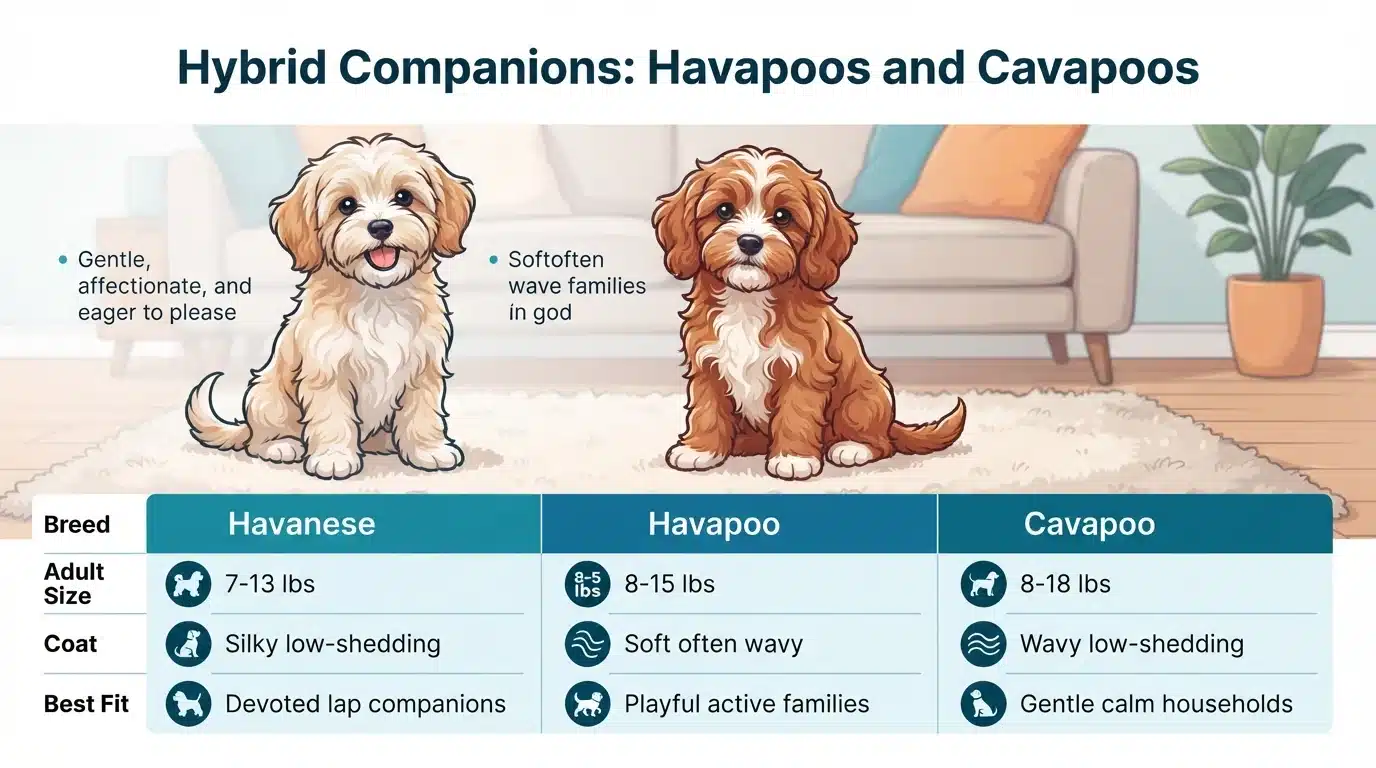
A quick way to compare:
| Breed | Adult Size | Coat | Best Fit |
|---|---|---|---|
| Havanese | 7-13 lbs | Silky, low-shedding | Devoted lap companions |
| Havapoo | 8-15 lbs | Soft, often wavy | Playful, active families |
| Cavapoo | 8-18 lbs | Wavy, low-shedding | Gentle, calm households |
Whichever breed fits your home, browse the available puppies and review the pricing and reservation details to plan your next step.
Navigating Out-of-State Puppy Adoption
Falling for a puppy who lives two states away is common now. Good breeders often have waiting lists that reach past state lines, and the right Havanese or Cavapoo may not be down the road. The key is knowing how the puppy will travel, what it should cost, and how to protect yourself before money changes hands.
Safety and Logistics of Puppy Travel
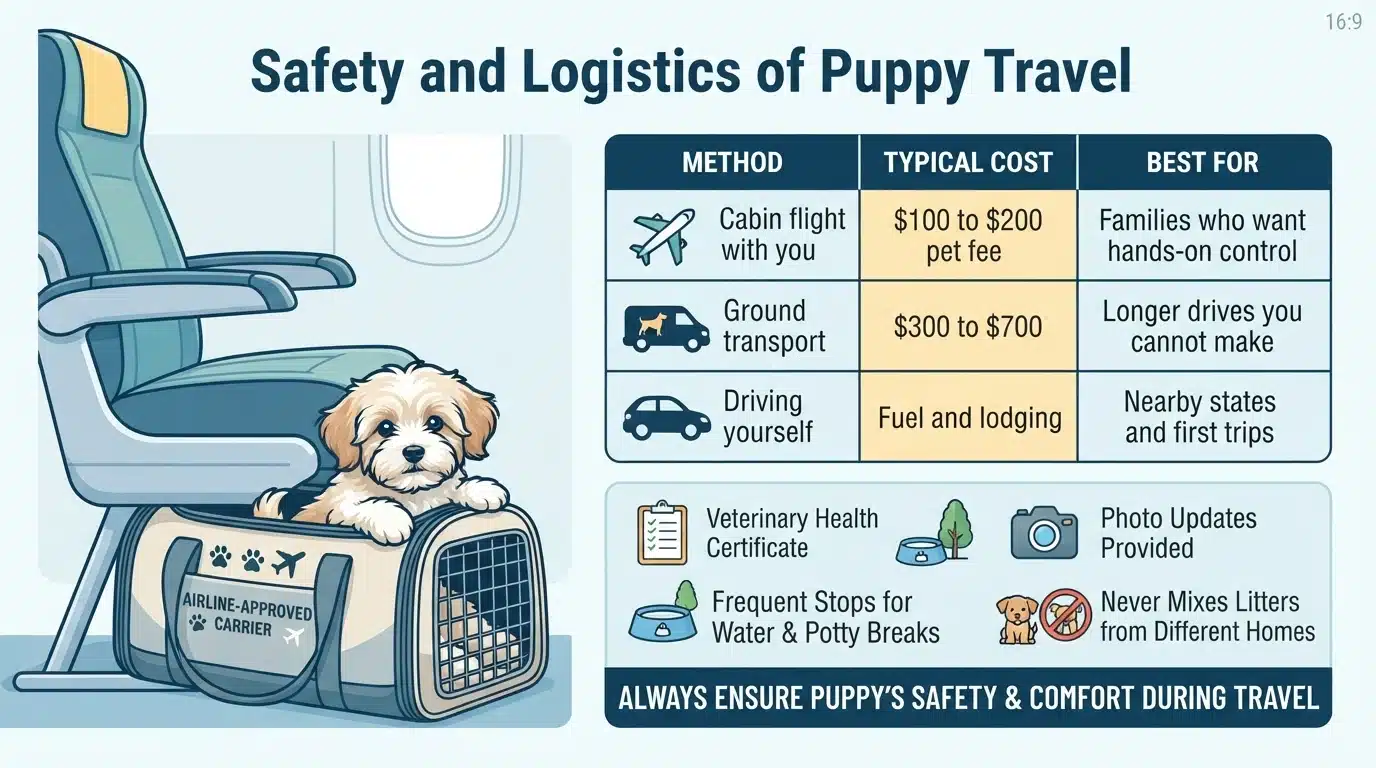
Puppies travel three main ways: you fly in and carry the puppy home in the cabin, a ground transport driver brings the puppy to you, or you drive to pick the puppy up yourself. Each option suits different families.
| Method | Typical Cost | Best For |
|---|---|---|
| Cabin flight with you | $100 to $200 pet fee | Families who want hands-on control |
| Ground transport | $300 to $700 | Longer drives you cannot make |
| Driving yourself | Fuel and lodging | Nearby states and first trips |
Cabin travel is the gentlest option for a small breed. Most US airlines allow dogs that fit in an airline-approved carrier under the seat, and fees usually run $95 to $150 each way. Check the airline’s pet policy before booking, because rules on age, breed, and carrier size vary. According to the USDA’s travel guidance, puppies must be at least 8 weeks old before crossing state lines in commerce, and your breeder should provide a recent health certificate from a licensed veterinarian.
Ground transport works well when a flight is impractical. Ask how many puppies ride at once, how often the driver stops for water and potty breaks, and whether you get photo updates. A careful driver never mixes litters from different homes.
Before you commit, ask your breeder these questions:
- Who books the travel, and who holds the health certificate?
- What happens if a flight is delayed or cancelled?
- Does the price include travel, or is it billed separately?
A breeder who answers clearly and puts terms in writing is showing you how they work. At Sage Puppies, out-of-state families get the same matching process as local ones, with delivery arranged case by case. Ready to start? Submit your application.
Preparing for Your New Family Member
The best puppy days start weeks before your puppy comes home. A small breed like a Havanese or Cavapoo has simple needs, but getting the details right early keeps those first days calm for everyone.
Start with your vet. Book a wellness visit within a few days of bringing your puppy home, and ask which local clinics have puppy availability now. New Hampshire families often face short waitlists for new patients, so calling ahead matters. Your vet will also set a vaccine schedule, since New Hampshire requires rabies vaccination for dogs by 4 months of age.
Next, set up your home. Puppy-proof one main room rather than the whole house. Tuck cords, move plants up high, and block gaps behind furniture where a tiny puppy can squeeze through. Set up a crate or playpen, a soft bed, and one quiet corner for naps. Small breeds nap a lot, and a predictable rest spot helps with house training from day one.
Then gather the basics before pickup day:
- A properly sized crate, ideally with a divider panel
- Stainless steel food and water bowls
- The food your breeder already feeds, so you can transition slowly
- A flat collar, an ID tag, and a 4 to 6 foot leash
- Puppy-safe chew toys and a few puzzle feeders
- Enzymatic cleaner for the inevitable accidents
Plan the first week, too. Pick a consistent potty spot outside, agree as a family on your cue words, and decide who handles morning and evening feeds. Keep visitors limited the first few days so your puppy can settle. If you want a fuller room-by-room walkthrough, our new puppy guide covers puppy proofing and early grooming in more depth.
One last tip: schedule your pickup for a morning or early afternoon. A puppy arriving home with daylight left has time to explore, eat, and go potty before that first big sleep.
If you’re still choosing your puppy, browse our available puppies and reserve with confidence.
Investment in a Healthy Future
The Real Cost of Quality Breeding
A well-bred Havanese or Cavapoo costs more than a backyard-bred one, and the price gap confuses a lot of families. Here is where the money actually goes.
Responsible breeders start with health testing. That means screening breeding dogs for heart, eye, hip, and patella conditions through board-certified veterinarians, plus DNA panels for inherited diseases common to each breed. One tested parent pair can represent $1,000 or more in veterinary work before a single puppy exists.
Then there is time. A quality breeder plans litters carefully, spaces them out, and keeps mother dogs as beloved pets, not production machines. Puppies stay with their mother for eight weeks or more. During those weeks, someone is doing early socialization daily: new sounds, new surfaces, gentle handling, exposure to household life. That labor is invisible at pickup, but you will see the results in how your puppy handles a busy household.
Daily care adds up too. Premium food, vaccines, deworming, microchips, and wellness exams happen before a puppy ever goes home. Whelping supplies, cleaning, and the sheer hours of round-the-clock attention during a litter’s first weeks all carry real cost.
Compare that to a cheap puppy from an unplanned litter or a puppy mill broker. The upfront price looks friendly. The later bills often do not: treating patella problems, allergies, or behavior issues rooted in poor early care can run into thousands of dollars, not to mention the heartache.
When you look at the cost of a Sage puppy, you are paying for tested parents, hands-on socialization, and honest guidance about whether a puppy is a good fit for your family. That is not a markup. It is prevention.
The cheapest puppy rarely stays the cheapest dog. Budget for quality once, and you will likely spend less over your puppy’s lifetime.
Ready to meet responsibly bred puppies? Submit your puppy application today.

Ready to meet your puppy? Start with the Sage Puppies application, where Cassie reviews every family personally and matches you with a well-bred Havanese, Havapoo or Cavapoo. You will get honest guidance on timing, pricing and preparation, so the puppy you bring home fits your life. Apply today and take the first step with confidence.
Frequently Asked Questions
Q1: where to buy puppies in New Hampshire
Start with small, ethical breeders who raise puppies at home, whether in New Hampshire or nearby states. Programs like Sage Puppies serve New Hampshire families through delivery, pairing health-focused breeding with careful, owner-run matching.
Q2: How much should I expect to pay for a Havanese or Cavapoo?
Quality-bred small companions typically cost $3,500 to $4,500. That price reflects health testing, early socialization and breeder support, so be wary of listings far below that range.
Q3: Is it safe to have a puppy delivered to New Hampshire?
Yes, when handled properly. Look for ground transport or flight nanny services where a person accompanies the puppy, and ask for updates and photos throughout the trip.
Q4: What questions should I ask a breeder before reserving?
Ask about parent health testing, how puppies are socialized, vaccination records and what happens if the match isn’t right. Good breeders will also interview you.
Q5: Which small breed suits a busy New Hampshire family best?
Havapoos and Cavapoos adapt well to active households, while Havanese suit families wanting a lighter-shedding lap companion. Match energy level and grooming time to your routine.
Ready to meet your puppy? Start your application.
Conclusion
Choosing a New Hampshire puppy comes down to standards, not distance. Focus on the breeder’s health testing, early socialization, and honest answers about the parents. Ask how puppies are raised in the home, and expect a thoughtful application process rather than a quick handoff.
For small companion breeds like the Havanese, Havapoo, and Cavapoo, temperament and careful breeding matter more than a nearby kennel. A well-bred puppy from a program that screens families carefully will settle in faster and stay healthier than one bought on impulse.
Take your time, compare programs side by side, and trust the breeder who asks you as many questions as you ask them. That mutual care is the surest sign you have found the right puppy.