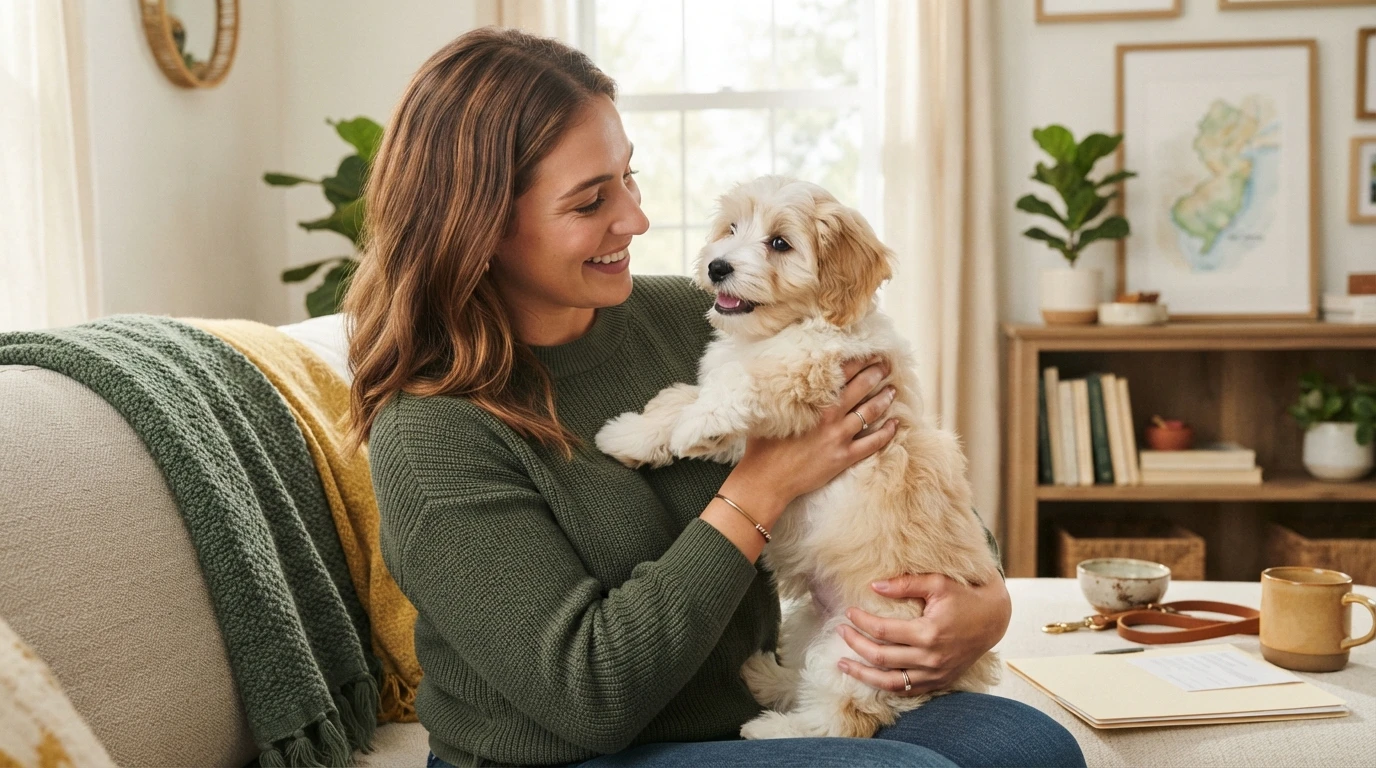
Quick Summary: Finding an ethical breeder requires looking past polished websites to verify health testing, home-raised puppies, and transparent communication. Avoid breeders who pressure you for quick deposits or lack verifiable records for the parent dogs. Sage Puppies exemplifies these standards by using an owner-managed application process to ensure each puppy is matched with the right family.
Your Nebraska dog search deserves more patience than a quick scroll through listings. A puppy’s health and temperament take shape during the first eight weeks, shaped by the mother’s care, the breeder’s handling, and the home those weeks happen in. Rush that step, and you may spend twelve years managing problems that careful screening would have prevented.
This guide walks you through finding puppy breeders you can actually trust. You’ll learn which health tests to ask about, how to read a visit or video call, and how to spot bad breeders before a deposit leaves your account. We also cover red flags in contracts, pricing, and communication, so you know what fair terms look like.
We write this from a breeder’s side of the fence. At Sage Puppies, our small-breed program in South Jordan, Utah runs on health-tested parents, early socialization, and honest matching with each family. If you’d like to see how we work, browse our available puppies or review our pricing and reservation details. Then bring the same standards to any breeder you meet in Nebraska.
Step 1: Look Beyond the Surface of Online Listings
Most puppy searches start online, and that is exactly where problems start too. A polished website tells you nothing about how a dog was actually bred or raised. If you are in the middle of a Nebraska dog search, your first job is to read listings with a skeptic’s eye.
The Importance of Transparency
A trustworthy breeder shows you everything, even the parts that are less cute. Transparency is the fastest filter you have, because serious programs have nothing to hide.
Look for these basics on any site you visit:
- Real names and locations. You should know who breeds the dogs and where they live. Vague “we ship anywhere” language is a warning sign.
- Photos and videos of the mother. Meeting or at least seeing the dam tells you a great deal about temperament and care.
- Health testing records. Ask which tests the parents had and request proof, not just a claim.
- Litters raised inside the home. Puppies that live with people from day one handle family life better.
- Clear pricing and process. Hesitant answers about cost, waitlists or paperwork deserve follow-up questions.
Then go one layer deeper. Search the breeder’s name plus “review” or “complaint.” Ask for a video call so you can watch the puppies move and interact. A breeder who hesitates at a simple live call is telling you something.
This is also why programs like Sage Puppies use an owner-managed application process: you talk directly to the person who raised the litter, not a broker. That same standard applies anywhere in the country.
The screenshot below shows what a red-flag listing often looks like: stock photos, no dam, no testing records.

Apply this filter to every option in your Nebraska dog search before you fall in love with a face. Structure first, then cuddles. When you are ready to see what transparent breeding looks like in practice, browse the current available puppies to compare what a clear listing includes.
Step 2: Identifying the Signs of a Dedicated Breeder
Prioritizing Health Over Convenience
A dedicated breeder puts the puppy’s wellbeing ahead of a fast sale. That shows up in small, consistent habits. Health testing comes first: the parents should have documented screenings for breed-specific conditions, and a good breeder hands you the results without being asked. For Havanese, that includes eye and knee evaluations. Ask to see the paperwork, not just hear about it.
You will also notice how the puppies are raised. Puppies kept in the home, around normal family noise and handling, tend to adjust faster in a new house. A kennel-only setup or a breeder who will not let you visit in person (or hop on a video call if you live far away) is a warning sign.
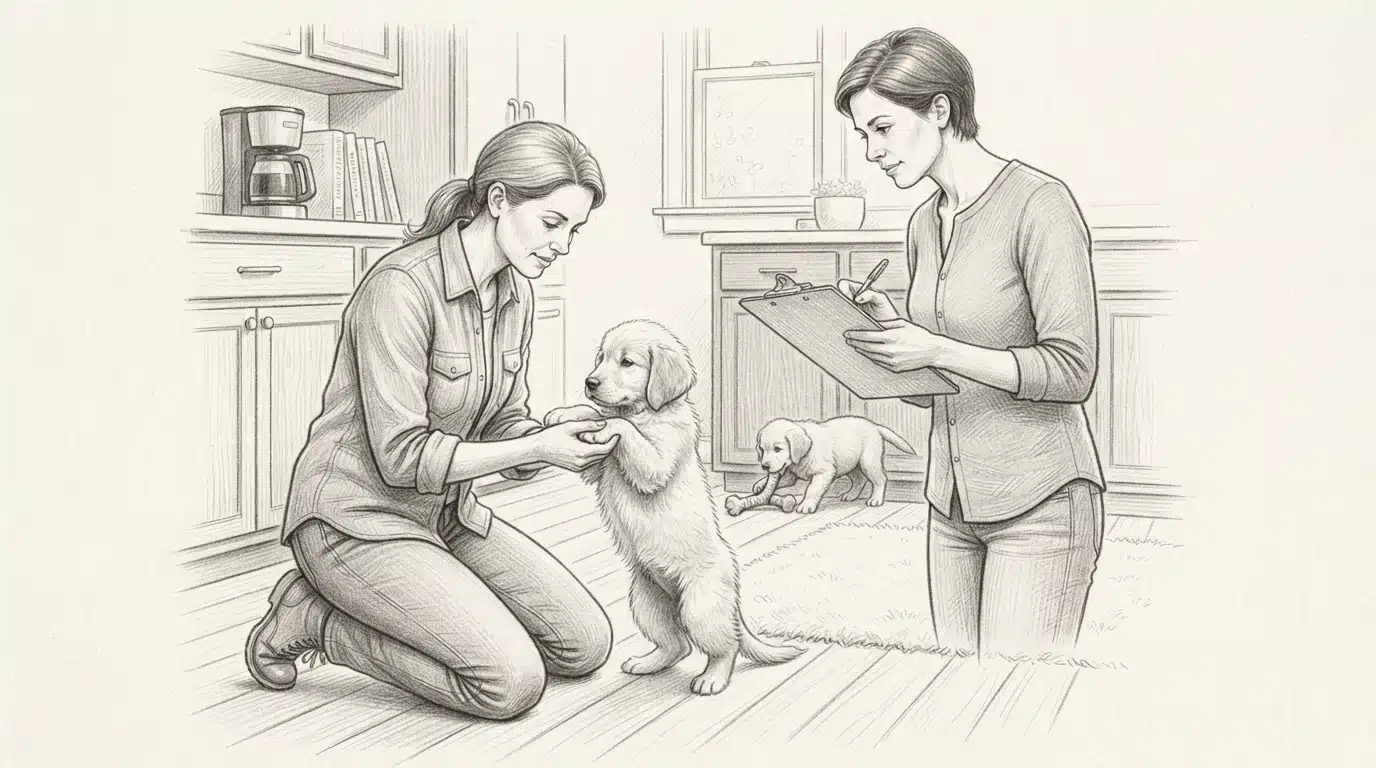
Watch for these marks of a serious program:
- Written health records with dates, tests and vet contact information
- A waitlist and application process, because careful breeders screen buyers rather than selling first-come, first-served
- Honest answers about flaws, like a slight underbite or a shy littermate
- Follow-up support after you take the puppy home
One visit to a breeder’s home tells you more than ten website photos. Look for clean, safe spaces where puppies have room to play. Ask how many litters the mother has had; responsible programs rest their girls between litters.
This is the standard we built Sage Puppies around. Every pairing is planned, tested and raised in our South Jordan home, with an application process that matches puppies to the right families. Convenience never outranks health. If a breeder pressures you to decide today, decide to walk away instead. Browse current Havanese and doodle puppies to see what a well-planned litter looks like.
Step 3: Essential Health Testing and Genetic Screening
A breeder’s words are free. Health testing costs money, so it is one of the clearest signals you can check. Ethical breeders test the parent dogs before breeding, not just the puppies afterward.
Start with the Orthopedic Foundation for Animals (OFA), which keeps public records of test results, and its CHIC program, which lists the tests required for each breed. You can search a parent’s registered name and see the results yourself in minutes.
Navigating Breed-Specific Requirements
Each breed carries its own risks, so the tests vary. For Havanese parents, look for eye exams, patellar luxation screening and cardiac checks. The Havanese Club of America’s testing guide explains what responsible breeders screen for and why.
| Test | What It Screens For | Ask to See |
|---|---|---|
| OFA Eye (CAER) | Inherited eye disease | Annual exam certificate |
| Patellar luxation | Slipping kneecaps, common in small breeds | OFA rating |
| Cardiac exam | Heart murmurs and defects | OFA cardiac result |
| Genetic panel | Carrier status for breed-specific conditions | Lab report |
For a Cavapoo, ask about tests on both the Cavalier and the Poodle sides, since each parent breed adds its own list. Doodle mixes need testing from both lineages, not just one.
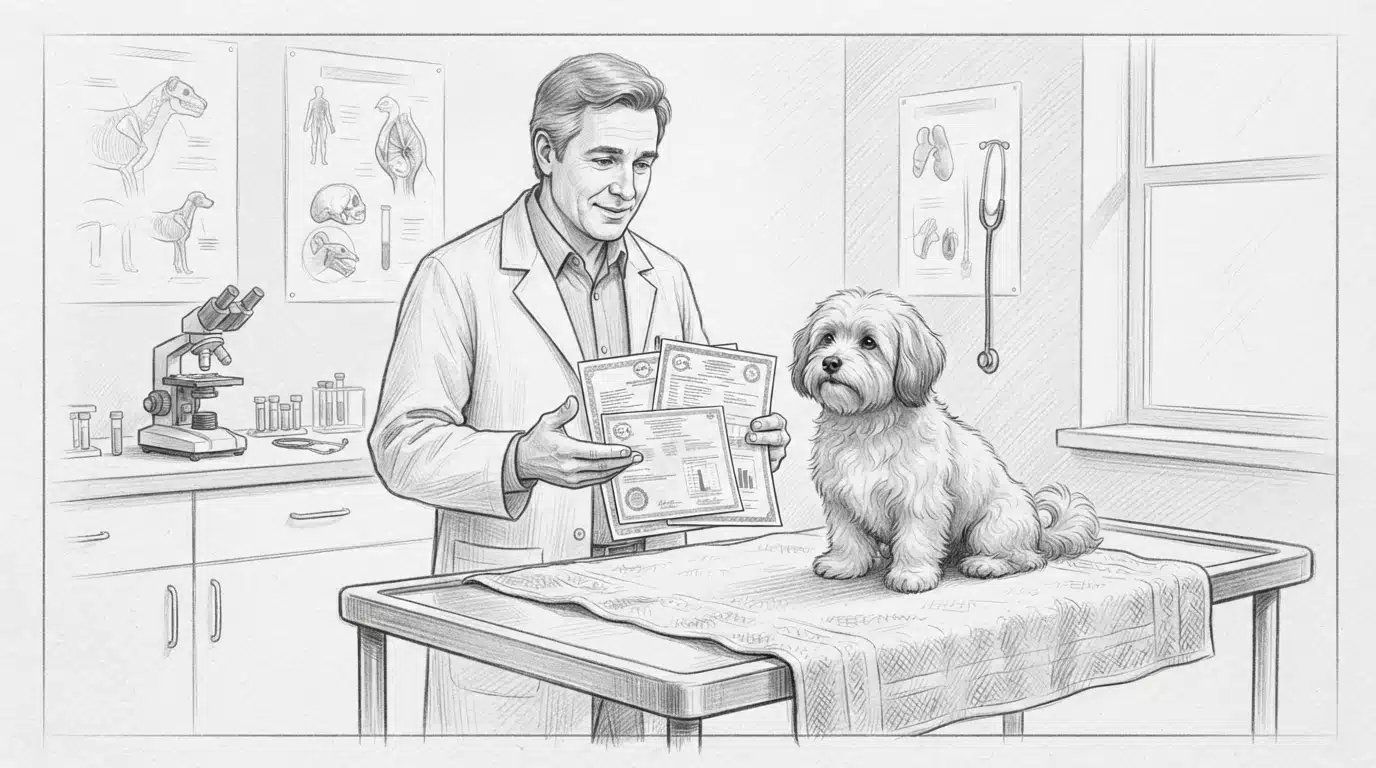
When a breeder shares results, compare the parent’s name on the paper to the OFA database. Matching records build trust.
If you are unsure what to request, these questions to ask about health-tested puppy parents give you a simple script. A good breeder will answer every one without hesitation.
A clean, calm kennel tells you more than any website ever will. When you visit, look past the puppies themselves and study where they live, sleep, and play. The environment shapes a puppy’s temperament long before you bring it home.
Start with cleanliness. Floors, bedding, and water bowls should look freshly maintained, not just tidy for your visit. A mild dog smell is normal in a home with several dogs. A sharp ammonia smell is not.
Next, watch how the puppies respond to you. Well-socialized puppies show curiosity over fear. They may approach, sniff, and tumble at your feet. A puppy that shrinks into a corner for every visit, or every litter, may need more handling than the breeder provides.
The Role of Early Enrichment
Good breeders raise puppies in busy, varied spaces. Ask where litters spend their days. Puppies raised only in a quiet garage or outdoor kennel miss the sounds and surfaces of family life. Those raised near kitchens, televisions, and children adjust faster to your home.
Enrichment means more than toys. Look for different textures underfoot, climbing ramps, puzzle feeders, and supervised play with calm adult dogs. These experiences build confidence during the critical socialization window, which closes around 14 to 16 weeks of age, according to the American Veterinary Society of Animal Behavior.
Ask specific questions and expect specific answers:
- How many people handle the puppies each day?
- Have they heard household sounds like vacuums and doorbells?
- Do they meet children or other pets safely?
- Are they crate or potty training started?
Small companion breeds like Havanese, Havapoos, and Cavapoos thrive on human contact, so heavy daily handling matters even more. At Sage Puppies, puppies are raised inside the home as family members, not kennel stock, because early household life is the best predictor of an easy transition. To see how this early start carries into your first weeks together, our puppy preparation guide walks you through it.
Step 5: Questions to Verify Ethical Standards
Asking the Right Questions
By now you’ve seen the puppy in person or on video and reviewed health paperwork. This step is about conversation. A breeder’s answers, and how quickly they give them, tell you more than any website.
Ask these questions before you place a deposit:
- Where do the puppies live? Ethical breeders raise pups in the home, not in kennel runs or outdoor sheds.
- How many litters do you have per year? One or two suggests focus. Five or more across several breeds suggests volume.
- Who are the parents, and can I meet the mother? You should be able to see at least the dam, in person or live on video.
- What health tests did the parents pass? Look for breed-specific testing, such as OFA or CERF clearances, with results you can verify online.
- At what age do puppies go home? The answer should be eight weeks or later.
- What vaccinations and deworming have the puppies had? A good breeder keeps written records and shares them at pickup.
- Will you take the dog back if I can’t keep it? Responsible breeders always say yes, for the dog’s whole life.
- Can I talk to families who bought your puppies? References are a normal request, not an imposition.
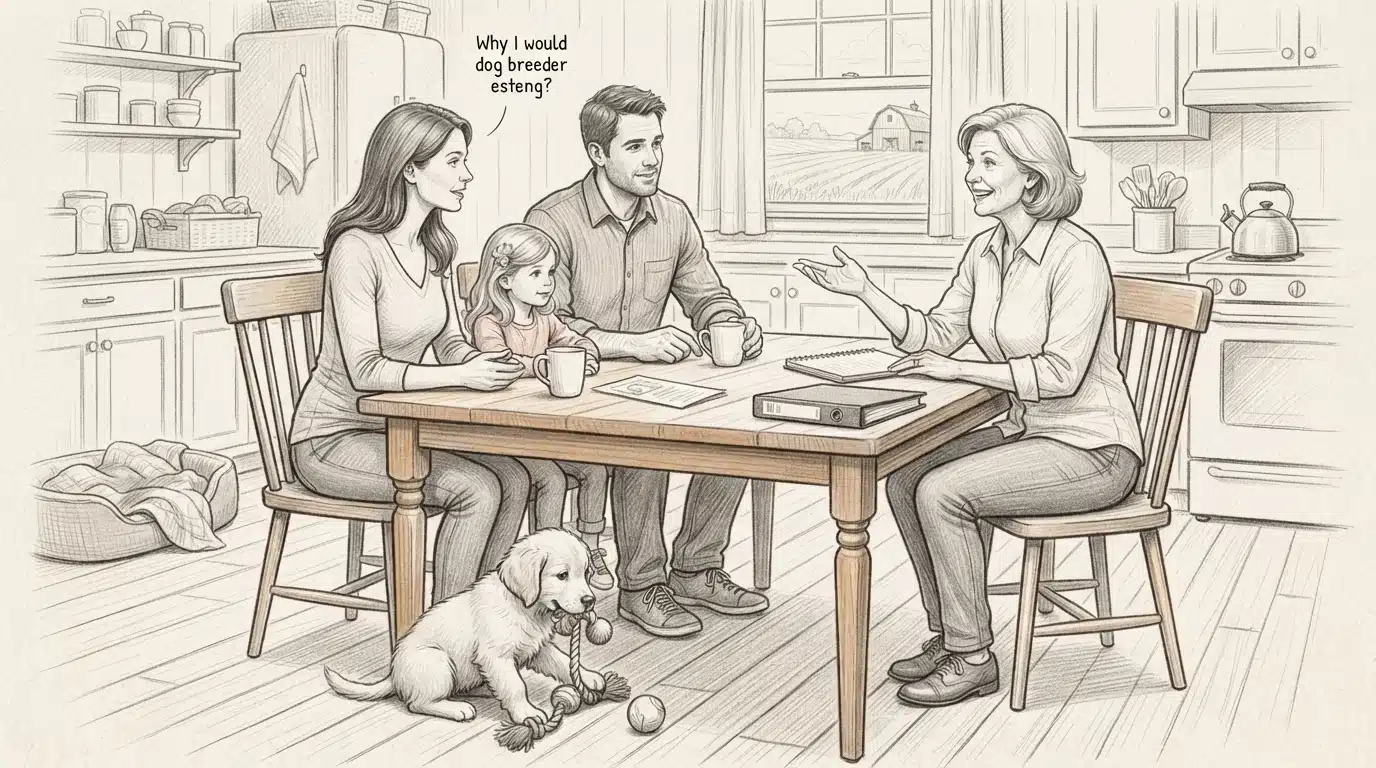
Pay attention to how the breeder responds. Good breeders ask you questions too: about your schedule, your home, your experience with dogs and young children. That back-and-forth is a sign they care where their puppies end up. At Sage Puppies, every family starts with an application before a puppy is ever matched, because the fit matters as much as the paperwork. If a breeder answers every question with “yes, sure, when can you pay?”, treat the speed itself as a warning.
Vague or defensive answers are red flags. Walk away and keep looking. The right breeder will welcome your questions and match your caution with their own. When you’re ready to move forward with a program that screens families as carefully as you screen breeders, start with the puppy application.
Step 6: Understanding the Red Flags
The Myth of Instant Availability
Puppies ready “right now” deserve your suspicion, not your relief. Ethical breeders plan litters months ahead, and quality families usually wait. That waitlist is not an inconvenience. It is proof the breeder screens homes instead of selling to whoever calls first.
Watch for these warning signs when a breeder promises immediate availability:
- Always having puppies in stock. Responsible programs breed only a few litters a year. If every breed, every size and every color is somehow available today, you are likely talking to a broker or a puppy mill front, not a breeder.
- No questions about your home. A good breeder interviews you. If nobody asks about your yard, your work schedule or your experience with dogs, the puppy matters less than the payment.
- Pressure to pay fast. “Three other families are interested, so decide tonight” is a sales tactic, not scarcity. Walk away.
- No parent dogs on site. Ask to see the mother. If she is “elsewhere,” the litter may come from an out-of-state facility, which is common with shipped-puppy sellers.
- Refusing video calls. A legit breeder will happily show you the puppies, the mother and the whelping area live.
Small breed programs like Sage Puppies work the opposite way. Cassie runs an owner-managed matching process, keeps litters small, and places puppies only after an application is approved, so families often wait for the right fit rather than grab what is on the shelf. You can see how that works in her reservation process.
Trust the wait. It protects you, and it protects the puppy.

You now know what to look for: health testing, honest answers, and breeders who ask about you, too. If Nebraska litters feel thin on that standard, consider Sage Puppies, a boutique program breeding Havanese, Havapoo and Cavapoo with owner-managed matching. Start with the Sage Puppies application, and review current available puppies to see whether our approach fits your family.
Frequently Asked Questions
Q1: What specific health tests should I ask for when buying a puppy in Nebraska?
Ask for the parents’ OFA or PennHIP results for hips and patellas, plus cardiac exams by a cardiologist and CERF or OFA eye clearances. Small breeds like Havanese and Cavapoos should also show genetic panel results for inherited conditions.
Q2: How can I tell if a Nebraska puppy breeder is actually a puppy mill?
Watch for multiple litters always available, no health testing records, refusal to let you visit or see the mother, and sales pressure. Ethical breeders interview you and welcome questions about their dogs’ daily lives.
Q3: What questions should I ask to verify a breeder’s ethics before buying a puppy?
Ask how many litters they raise yearly, where puppies sleep, when they leave their mother, and what socialization they get. Also request vet references and a written health guarantee with return terms.
Q4: Should I get my puppy from Nebraska or out of state?
Distance matters less than standards. Many families choose a careful boutique program like Sage Puppies and use safe delivery, since ethical matching outweighs a short drive.
Q5: Is a breeder’s license enough proof they are ethical?
No. Licensing shows legal compliance only. Health testing, transparency and how the breeder screens homes matter far more, so treat paperwork as a starting point, not proof.
Q6: When should I start the breeder application process?
Start three to six months before you want a puppy. Good breeders often have waiting lists, and a thoughtful application helps match you with the right temperament. If you are ready, you can start your application today.
Conclusion
Spotting an ethical breeder in Nebraska comes down to a few consistent signs. Health testing you can verify, clean and open home visits, puppies raised inside the house, and a breeder who interviews you as carefully as you interview them. Red flags push the other way: multiple litters always available, no questions asked, and pressure to pay a deposit on the spot.
Trust your gut when something feels rushed. A good breeder will gladly wait, answer the same question twice, and stay in touch after your puppy goes home. That ongoing relationship matters more than any website or review.
The same standards apply no matter where you shop, including programs like ours in Utah. If you want a picture of what careful breeding looks like day to day, browse our available Havanese, Havapoo and Cavapoo puppies and see how a breeder who does it right actually operates.