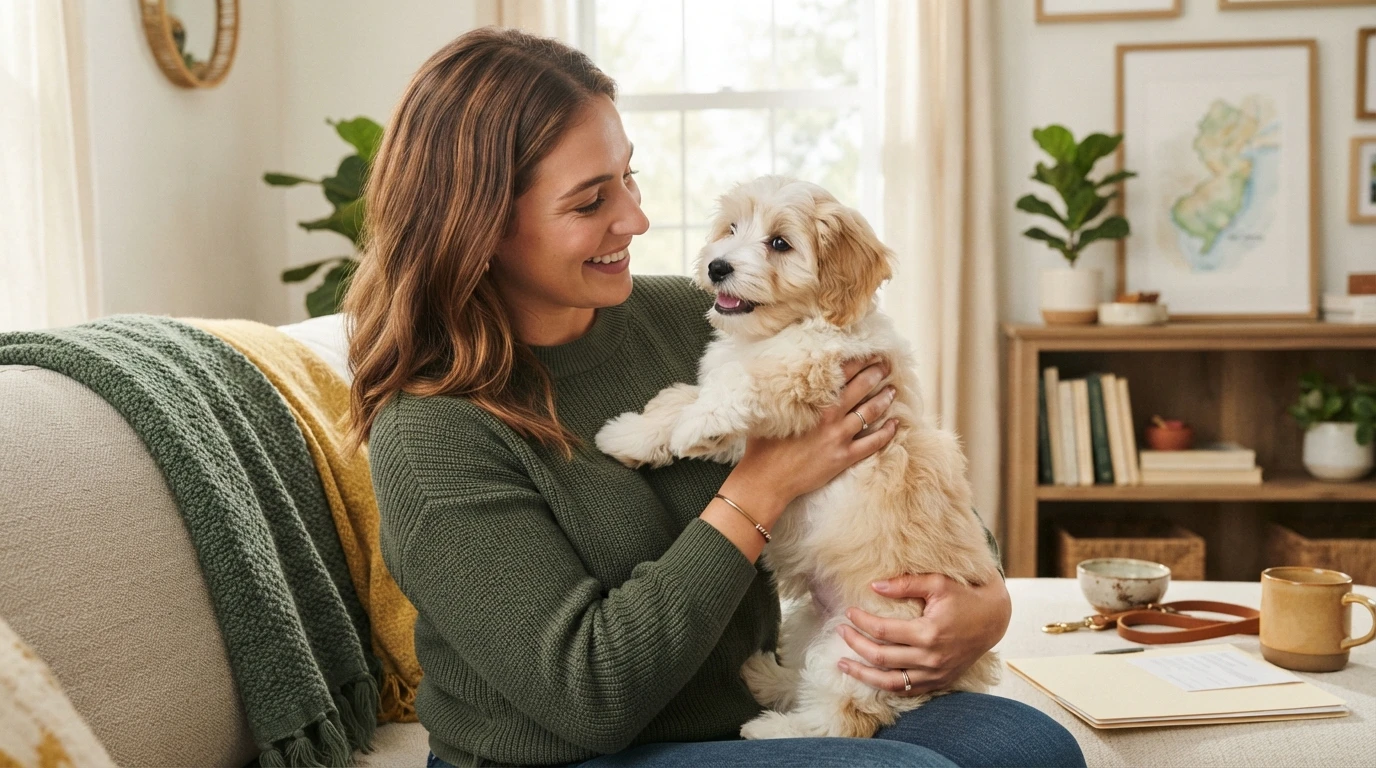
Quick Summary: Vet Georgia dog breeders by demanding proof of genetic health testing and verifying that puppies are raised in a home environment rather than a kennel. Avoid sellers who pressure you for deposits, refuse to let you see the mother, or meet only in public parking lots. Programs like Sage Puppies prioritize transparency and early socialization to ensure long-term health and temperament for your new companion.
When you welcome a new puppy home, you are not just getting a pet. You are choosing a family member who will share the next decade or more with you. For anyone searching Georgia dog breeders, that decision starts well before a puppy ever reaches your door.
The hard part is that websites all look convincing. Glossy photos and sweet descriptions hide the questions that matter: health testing, how puppies are raised, and whether temperament gets real attention.
This guide gives you a practical path forward. You will find a reputable breeder checklist, clear dog breeder standards to compare against, and the exact questions to ask before you commit. We draw on years of experience in a boutique, home-raised breeding program, so you can judge every Georgia dog breeders option with confidence and choose a companion raised for long-term health and temperament.
Defining the Standard of Ethical Breeding
An ethical breeder does more than produce puppies. They plan litters around health, raise puppies inside their own home, and stay accountable to every family they place a dog with. That standard is easy to promise and hard to verify, so it helps to know what it looks like in practice before you visit anyone’s kennel, website, or living room.
The clearest divide in the puppy world sits between dogs raised in kennels or barns and dogs raised in a family home. Kennel-raised puppies often spend their first eight weeks seeing little more than concrete runs, other dogs, and the same few caretakers. They may be healthy on paper yet arrive anxious about doorbells, vacuums, children, and car rides.
Home-raised puppies grow up inside that noise from day one. They learn human voices, handling by different family members, and the small daily rhythms of a household. That early socialization window closes fast, and what a puppy absorbs in those first weeks shapes temperament for life. This is the philosophy behind boutique programs like Sage Puppies in South Jordan, Utah, where Havanese, Havapoo, and Cavapoo litters are whelped and raised in the family’s own space with health-tested parents. If you want a deeper local comparison, our rundown of puppies for sale in Georgia breaks down your options there.
When you vet a breeder, ask where the puppies actually sleep, who handles them daily, and how many litters the home raises each year. Honest answers come easily. Vague ones tell you what you need to know.
Navigating Health Documentation and Genetic Testing
Paperwork tells you more about a breeder than any sales page. A reputable program hands over test results before you ask, explains what each one means, and never branches when you want to see originals. If a breeder says “the parents are healthy” but cannot show proof, keep looking.
Understanding Essential Genetic Panels
Small breeds like the Havanese carry a few well-known inherited risks, so ethical breeders test both parents before pairing them. The results matter more than the number of tests performed.
| Test | What It Screens For | Passing Result |
|---|---|---|
| prcd-PRA | Progressive retinal atrophy, an inherited disease that leads to blindness | Clear or carrier |
| Patellar luxation exam | Slipping kneecaps, common in toy breeds | OFA normal rating |
| Cardiac auscultation | Congenital heart murmurs and defects | Clear, vet or cardiologist |
| Chondrodysplasia | Skeletal dwarfism and bowed legs | Clear |
| Hip X-rays | Hip dysplasia and Legg-Calve-Perthes | Excellent, good, or fair |
Because Havanese, Havapoo, and Cavapoo lines share these risks, ask each breeder how they pair tested parents. A breeder who mentions health-tested puppy parents openly, and can show the actual results, is doing the work the Havanese Club of America’s health testing guide recommends.
Reading Veterinary Records
Ask for four documents before you commit: a vet wellness exam record, a vaccination log with dates and products used, deworming history, and a microchip record. Each should name the clinic and date.
Scan the exam notes for red flags. A heart murmur, an open fontanel (the soft spot on a young puppy’s skull), or repeated ear and skin issues deserve questions. One note is normal; a pattern is not.
Vaccinations should start around six to eight weeks, with boosters every three to four weeks after that. A puppy sent home early with “one shot done” is a warning sign, not a deal.

Quick tip: Legitimate test results live in public databases like OFA. Ask for the parents’ registered names and look them up yourself.
Red Flags to Avoid in Georgia Dog Breeders
Most problem breeders hide in plain sight. They sound warm on the phone, post cute photos, and answer quickly right up until you ask a hard question. The good news: a few simple tests separate careful, ethical breeders from puppy sellers, and the biggest one is transparency.
The Transparency Test
Ask to see where the puppies live. An ethical breeder says yes, whether that means a video call, a visit, or both. If someone refuses every option and offers to “meet you in a parking lot,” walk away. That is how puppy brokers operate, not family programs.
Next, ask about the parents. You should be able to see the mother and learn her age, health history, and temperament. Health testing matters here. Reputable programs screen breeding dogs for the conditions common to their breed and share the results openly. If a breeder waves this off with “the vet checked them,” that is not the same thing. Ask for documentation.
Then watch how they talk about you. A careful breeder interviews buyers. They ask about your home, your schedule, and your experience with dogs, because they care where their puppies end up. A seller who takes any deposit from anyone, any day, is running a transaction, not a breeding program.
Other warning signs worth noting:
- Puppies always available, multiple litters year-round, every breed on demand
- No questions asked about your household or lifestyle
- Pressure tactics, like “three other families want this pup today”
- Vague delivery plans with no clear pickup or shipping details
- No contract, health record, or starter guidance for the puppy
If a breeder gets defensive when you ask about health testing or meeting the mother, that reaction is your answer.
Here is a quick comparison of what each response tells you:
| Question | Good Breeder | Red Flag |
|---|---|---|
| Can I see the home? | Yes, video or visit | Parking lot only |
| Parent health testing? | Shares records | “Vet checked” only |
| Will you screen us? | Asks questions | Cash first |
Transparency is exactly why many Georgia families choose to work with a boutique program like Sage Puppies in Utah, where you can meet the family raising your puppy, review parent health testing, and choose pickup or nationwide delivery with clear next steps. If you want a fuller map of your local options first, our guide to the best places to find puppies for sale in Georgia walks through them one by one.

A good breeder relationship does not end at deposit day. The best breeders act as a resource for the life of the dog, and the way they behave before pickup tells you almost everything about how they will behave after.
Start by noticing how the conversation feels. An ethical breeder asks you questions: Who lives in the home? Do you have a yard? Have you raised a puppy before? That back-and-forth is not an interrogation. It is how a careful program matches a puppy to a family, and it signals that the breeder cares where their dog lands. At Sage Puppies, for example, every family goes through an application and conversation before a reservation is confirmed, because fit matters more than speed.

Ask what support looks like after go-home day. Good answers sound like this: a written feeding plan, records you can hand to your vet, and a breeder who answers a text about crate training three weeks in. Vague answers, or none at all, are worth noting.
You have responsibilities in this relationship too.
- Respond to updates and questions promptly.
- Follow the care instructions the breeder provides.
- Send photos and milestones; breeders genuinely want them.
- Raise concerns early instead of letting them build.
A breeder who invests in you will also want to hear from you. Many reputable programs stay in touch for years, celebrating birthdays and, when needed, stepping in to help if a placement does not work out. That long view is rare among volume sellers and large listings sites, where a sale closes and the connection ends.
Treat the relationship as a two-way vetting process that continues past pickup. When both sides show up, you gain a knowledgeable partner for your puppy’s whole life, not just the drive home. That is the standard worth holding any breeder to.
The Sage Puppies Approach to Ethical Breeding
Our Commitment to Every Puppy
Ethical breeding starts long before a litter is born. At Sage Puppies, it begins with the parents. Every Havanese, Havapoo, and Cavapoo in our program is health tested before breeding, so families know their puppy comes from sound, well-cared-for lines rather than a kennel run built for volume.
We keep our program small on purpose. That is what boutique means in practice. Our dogs live in our home in South Jordan, Utah, not in outdoor runs or crowded facilities. Puppies are born and raised among everyday family life: kitchen sounds, children, carpet, doorbells, car rides. This early socialization shapes a calm, confident temperament that shows up for years, long after go-home day.

Because we raise few litters, we can tell you about each puppy as an individual. We watch how they play, how they handle new sounds, and how they settle. When it is time to match puppies with families, we use what we know to help you find the right fit for your household, not just the next available puppy.
Transparency runs through the whole process. You can ask about the parents, the health testing, and how your puppy is being raised. We answer plainly, and we never pressure a family into a decision. A well-matched home matters more to us than a fast sale, and we would rather wait for the right family than place a puppy in the wrong one.
Families near Utah can visit and pick up their puppy in person. If you are farther away, we offer careful nationwide delivery so your puppy arrives well-started and stress kept to a minimum. Either way, you get the same home-raised puppy and the same honest answers.
If that approach sounds like the fit you have been looking for, browse our available puppies and take the next step.
Final Considerations for Your Search
Trust your patience more than your excitement. A well-bred puppy is worth waiting for, and the breeders worth your money will never rush you toward a deposit.
Keep a short checklist in front of you as you compare programs. Ask to meet the mother, request proof of health testing, and notice whether the puppies are raised in the home or in a kennel run. A breeder who answers slowly, vaguely, or defensively on any of these points is telling you something.
Two things matter most long-term:
- Temperament. Early socialization in a family setting shapes how your puppy handles children, guests, and new places for the next 15 years.
- Health history. Tested parents dramatically lower your risk of inherited conditions and surprise vet bills.
Also think practically about logistics. If you live outside Utah, confirm how delivery works and how the puppy will be prepared for the trip. A boutique program like Sage Puppies offers local pickup in South Jordan and nationwide delivery, so distance does not have to limit your options. You can see how a handoff works in practice in our guide to puppy pickup scheduling.
Finally, walk away from any breeder who pressures you, hides the parents, or has multiple litters always available. The right match feels calm, transparent, and unhurried, and that is exactly what your family deserves.

Vetting breeders takes time, and you deserve a program that already meets the standard. At Sage Puppies, health-tested parents and home-raised socialization come first, with pickup in South Jordan or delivery nationwide. See our available Havanese, Havapoo, and Cavapoo puppies and start your application today.
Frequently Asked Questions
Q1: How can I verify if a Georgia puppy breeder is legitimate and avoids puppy mill practices?
Visit the home where the puppies are raised. Ask to meet the mother, request vet references, and confirm the breeder performs health testing on parents. Ethical programs, including home-raised ones like Sage Puppies, welcome these visits openly.
Q2: What health documentation and genetic test results should I demand from a reputable puppy breeder?
Ask for parent health clearances for breed-specific conditions, OFA or equivalent eye and joint screenings, vaccination records, and a recent vet exam for the puppy. Get everything in writing before you pay a deposit.
Q3: What red flags indicate that a Georgia dog breeder may be an unethical puppy mill?
Multiple litters always available, refusal to meet the mother, no health testing, meeting only in parking lots, and pressure to pay quickly all signal trouble. Walk away from any breeder who resists your questions.
Q4: Should I buy from an out-of-state breeder if the right program is not in Georgia?
Yes, if the breeder offers transparent delivery and stays in contact. A health-tested, well-socialized puppy shipped responsibly from Utah often beats a convenient local option with weak practices.
Q5: How early should I get on a reputable breeder’s waitlist?
Plan ahead by two to six months. Quality breeders with health-tested parents often have waiting lists, so complete an application early to secure a well-matched puppy.
Conclusion
Vetting a breeder comes down to a few consistent habits. Ask for proof of health testing on both parents, visit the home or request a live video tour, and watch how the puppies are raised in the first weeks of life. Trustworthy breeders welcome questions, share references, and care as much about where their puppies land as about the litter itself.
Convenience and low prices often signal shortcuts, while a thoughtful, home-raised program protects temperament and long-term health. Whether you choose a Georgia breeder or work with a boutique program like Sage Puppies, take your time and compare every candidate against the framework above. The right match is worth the wait.