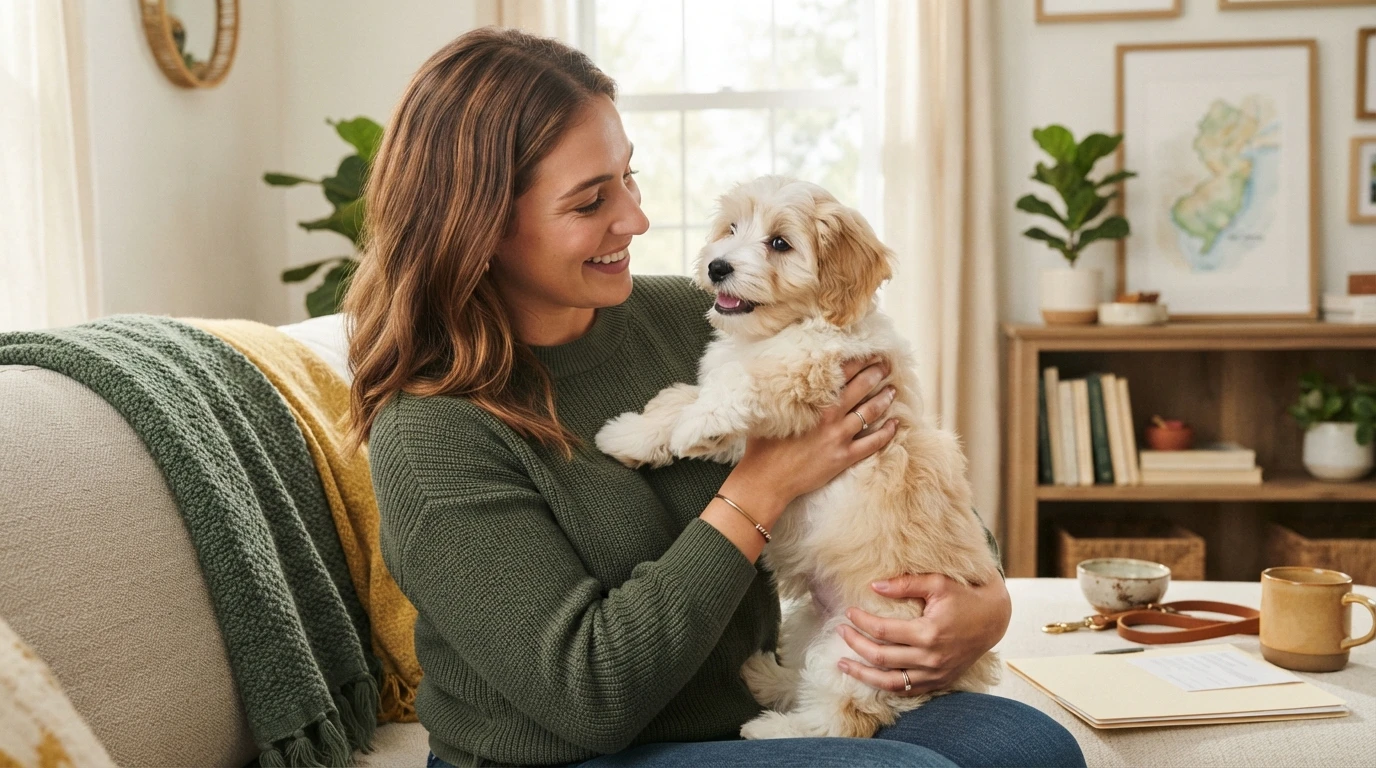
Quick Summary: Finding a reputable breeder requires verifying parent health testing, observing the puppy’s home environment, and ensuring the breeder asks questions about your home. Avoid sellers who pressure you or refuse to show where puppies are raised. Sage Puppies follows these standards by raising Havanese, Havapoo, and Cavapoo litters in a home setting with full health documentation.
Bringing home a puppy is a big milestone, and for Connecticut families, the search often starts with a flood of online listings that all promise the same thing. Some breeders mean it. Many do not. The real challenge is telling the difference before you pay a deposit.
This guide gives you a practical dog breeder checklist you can trust: how to read a website, which questions reveal a program’s true standards, and the health and socialization signs that separate ethical programs from puppy mills. Vetting puppy breeders becomes much simpler when you know exactly what to look for.
We also walk you through Connecticut breeder standards, from licensing to contracts to safe delivery. You will learn how boutique, home-raised programs compare with large kennels, and why health-tested parents matter for your puppy’s next fifteen years.
Use the checklist below as you evaluate each breeder, and choose the program whose daily care matches its promises.
The Dog Breeder Checklist: Setting Your Standards
Before you fall in love with a photo, decide what you will and will not accept from a breeder. A good dog breeder checklist does that for you. It turns a warm feeling into clear standards you can hold every kennel to, so you compare breeders on facts instead of charm.
Start with the basics: health testing on both parents, a clean home environment, and puppies raised with people from day one. Then go deeper. The best breeders will happily show you more than you thought to ask for. The weak ones dodge, delay, or rush you toward a deposit.
Prioritizing Transparency and Communication
Transparency is the fastest filter you have. A reputable breeder answers questions directly, on the first try, without getting defensive. Ask to see where the puppies live, meet the mother, and review the parents’ health clearances. If any of those requests gets a soft no, keep looking.
Notice how the conversation feels, too. Good breeders interview you as much as you interview them. They want to know about your home, your schedule, and your experience because a puppy’s whole life depends on the match. That back-and-forth is a feature, not a hurdle.
Strong communication looks like this:
- Quick, complete replies to questions about health, temperament, and timing
- Open access to the puppy’s environment, ideally through video calls if you cannot visit
- Written clarity on pricing, pickup, delivery, and what happens if plans change
- Ongoing interest in your puppy after it comes home, not silence once payment clears
Evasive answers deserve equal attention. Watch for breeders who will not name the vet they use, refuse to let you meet the dam, or push you to decide before you are ready. Pressure is a warning sign, and so is a price that only makes sense if corners are being cut.

This is the standard we hold ourselves to at Sage Puppies. Families who ask about our health testing, socialization, or puppy pickup and delivery options get straight answers, every time. Put every breeder on your list through the same test.
Understanding Connecticut Breeder Standards
Connecticut sets a legal floor for breeders, but that floor is lower than most families realize. Anyone who breeds more than two litters a year must apply for a town kennel license, and the state Department of Agriculture can inspect kennels at any time to confirm dogs are kept in sanitary, humane conditions. Breeding more than two litters without applying is a criminal offense under state law, and towns may also license anyone keeping ten or more unaltered dogs capable of breeding.
Beyond licensing, Connecticut regulates how dogs cross its borders. Imported dogs and cats need a certificate of health, and sellers must provide a certificate of origin identifying the breeder by name and address. Pet shops face stricter rules still, including vet exams before sale and refunds for certain illnesses or congenital defects found within set windows.
Evaluating Local versus National Reputable Standards
These rules tell you what is required, not what is excellent. A license confirms a breeder filed paperwork. It says nothing about health testing parents, raising puppies in a home, or socializing litters during the critical early weeks.
| Standard | Connecticut Legal Minimum | Ethical Breeder Practice |
|---|---|---|
| Licensing | Town kennel license over two litters | Openly shared, with records |
| Health | Rabies certificate for licensing | Genetic and joint testing of parents |
| Environment | Sanitary, inspectable kennel | Puppies raised inside a family home |
| Transparency | Certificate of origin | Photos, video calls, references |
| Support | Pet shop refund rules | Breeder guidance for the dog’s life |
So when you evaluate breeders, whether local or out of state, hold them to the right-hand column. Reputable programs meet the law easily and then go further: they test, they socialize, and they stay in touch.
That is exactly how we work at Sage Puppies. Families in Connecticut often choose a boutique, home-raised program and arrange nationwide puppy delivery rather than settle for whoever is nearby. The breeder’s standards matter more than the breeder’s zip code.

Essential Health Screenings to Demand
A puppy’s long-term health starts with its parents, so the health testing a breeder does before breeding matters more than anything that happens after birth. For the small breeds most Connecticut families want, including Havanese, Havapoo, and Cavapoo puppies, a clear set of screenings separates careful breeders from careless ones. Ask for proof, not promises.
The Orthopedic Foundation for Animals (OFA) keeps the databases most breeders use to record results. A serious breeder can show you each parent’s results there, and the OFA encourages breeders to publish results openly so families can check them.
Genetic Testing and Physical Examinations
Two kinds of screening work together. DNA tests check the parents’ genes for inherited disease markers. Physical exams check how the dog’s body actually developed. A reputable breeder does both, on both parents, before planning a litter.
For Havanese and the doodle crosses, these are the tests to ask about:
- Patellar luxation – the kneecap slips out of place, a common issue in toy breeds. A vet checks the knees and files results with OFA. Dogs can be tested at 12 months or older.
- Eye exam – an annual ophthalmologist exam catches inherited problems like cataracts and progressive retinal atrophy, which can lead to blindness.
- Cardiac evaluation – a vet listens to the heart to detect congenital defects. Results can be registered starting at one year of age.
- Hip evaluation – X-rays, usually taken after age two, screen for hip dysplasia and related conditions like Legg-Calve-Perthes disease.
- DNA panels – breed-specific tests for conditions such as progressive retinal atrophy and chondrodysplasia.
The Havanese Club of America’s health testing guide confirms that reputable breeders test both parents and only breed dogs that pass. The breed’s CHIC number requires OFA hip, patella, and annual eye exams, and results are published in the OFA database so you can verify them yourself.
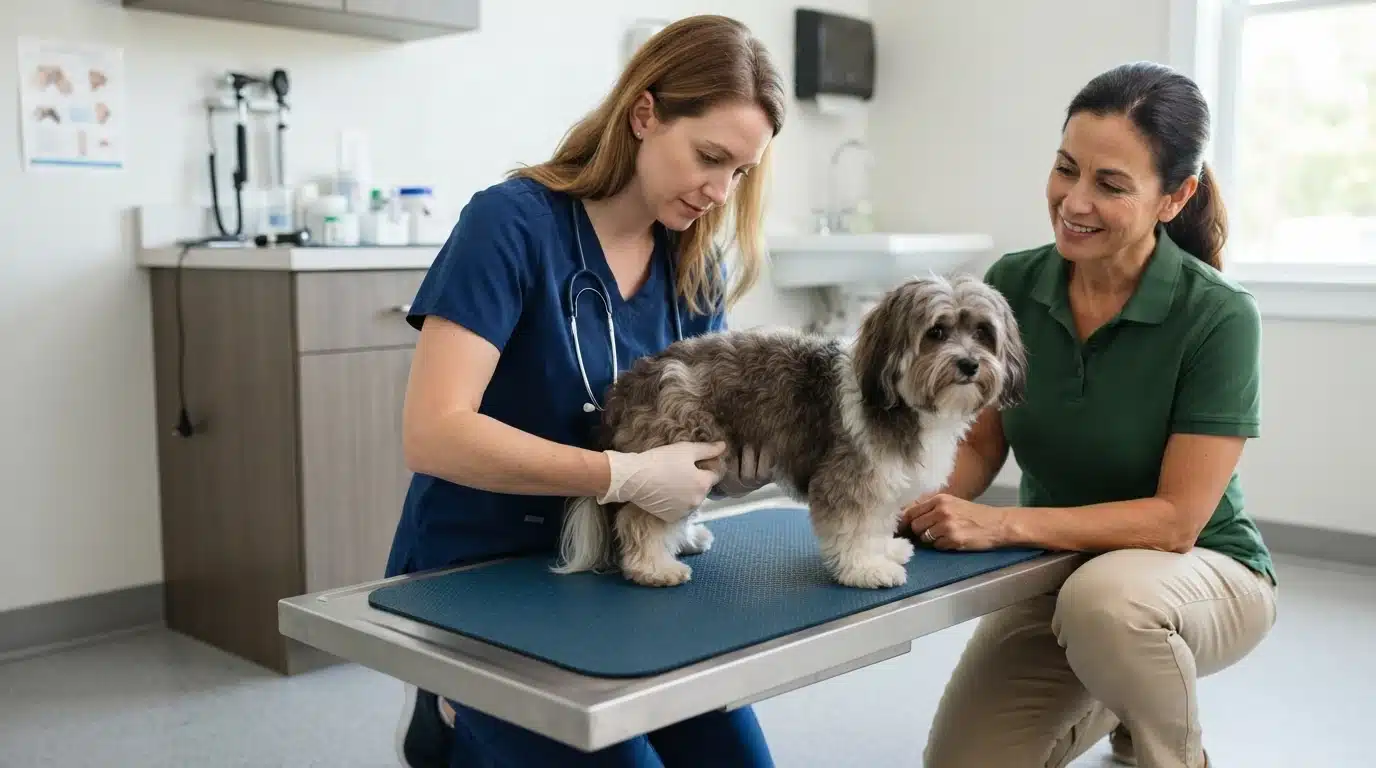
A red flag: any breeder who says testing “isn’t needed” for a crossbreed. Hybrid vigor is not a substitute for screening. Both parent breeds carry inherited risks, so both parents need results on file.
Ask for the parent’s registered name or OFA number, then look it up yourself. It takes five minutes and tells you more than any puppy photo. At Sage Puppies, health-tested parents are the starting point for every litter, and families can review testing details before reserving a puppy.
Assessing the Puppy’s Early Environment
Why Home-Raised Matters for Temperament
A puppy’s first eight weeks shape its personality for life. The brain develops fastest during this window, so every sound, surface, and gentle handling session leaves a mark. Puppies raised in a quiet kennel or outdoor run often meet the world later, and that delay shows up as fearfulness, barking, or house-training struggles once they join a family.
A home-raised puppy lives differently. It hears dishwashers, doorbells, vacuum cleaners, and children. It walks on tile, carpet, and grass. It is handled daily, so it learns that human touch feels safe. By the time you bring that puppy home, the hardest part of adjustment is already done.
You can see the difference during a visit or video call. Ask the breeder to show you where the puppies sleep and play. Watch how they respond to a new person: curious approach is a good sign, while cowering or frozen stillness suggests limited socialization. Ask which everyday experiences the puppies have already had, such as car rides, nail trims, or time with kids.
Tip: A confident puppy recovers quickly from a startle. Drop a soft key ring a few feet away. A well-socialized puppy may flinch, then return to investigate within seconds.
This is where boutique programs stand apart. At Sage Puppies in South Jordan, Utah, every Havanese, Havapoo, and Cavapoo litter is raised inside the home, with daily handling and early exposure to household life. That start produces the calm, people-focused temperament these breeds are known for. You can meet current litters on the family-raised puppies page.
When you compare breeders, put the puppy’s environment at the top of your list. Health testing matters, but temperament starts at home.

Identifying Red Flags and Puppy Mill Warning Signs
A reputable breeder welcomes your questions. A puppy mill hides behind them. Learning the difference protects your family from heartbreak, and it protects your puppy from a rough start in life.
Common Tactics of Unscrupulous Sellers
Watch for these patterns before you send a deposit.
Always-available puppies. Ethical programs plan litters around their dogs’ health. If a seller somehow has multiple breeds ready to ship “this week,” ask how many mother dogs they keep. Large, rotating inventories usually mean kennel-scale breeding.
Refusing a video call or visit. A breeder who raises puppies at home will happily show you the space, the mother, and the litter. Requests to “meet in a parking lot” or ship the puppy sight-unseen are serious warnings.
Missing health testing. Ask for proof of health screenings on both parents. Vague answers like “the vet checked them” are not the same as documented testing for breed-specific conditions.
No questions back. Good breeders interview you. They want to know about your home, schedule, and experience. A seller who takes cash from anyone will say yes to anyone.
Payment pressure. Beware of “the puppy won’t hold” tactics, gift-card payments, or prices that drop when you hesitate. Legitimate programs use written agreements and clear deposit terms.
Puppies separated too young. Puppies need their mother and littermates until at least eight weeks. Sellers pushing early handoff are skipping socialization that shapes a calm, confident adult dog.
Here is the encouraging part. Breeders who raise puppies in their own homes have nothing to hide. That is the standard behind every litter at Sage Puppies, and you can see exactly how our adoption process works before you ever apply.
Transitioning Your Puppy: From Breeder to Your Home
Ongoing Breeder Support and Guidance
The first week home sets the tone. Keep your puppy’s food, crate, and routine as close to the breeder’s setup as possible, and ask what schedule the litter followed before pickup or delivery day. Consistency lowers stress, and a calm puppy settles faster.
A good breeder does not disappear after handoff. Expect a few check-ins during those early weeks, plus clear notes on feeding amounts, crate training, and the vaccine timeline your vet will follow. Before you bring your puppy home, ask exactly what support looks like: Will they answer questions at night? Do they want photos and weight updates? The answers tell you a lot about how the puppy was raised.
At Sage Puppies, that relationship is part of the adoption, not an add-on. Families get guidance on the first-night routine, potty training, and socialization milestones, whether they pick up in South Jordan, Utah or welcome a puppy through nationwide delivery. Seeing how a program stays in touch after the puppy leaves is one of the clearest signals of real breeder support.
Tip: Keep a simple log for the first two weeks. Meals, potty times, naps, and any upset stomach. It makes vet visits easier and helps your breeder spot patterns fast.
Plan your first vet visit within a few days of arrival. Bring the health records your breeder provided, and ask your vet to confirm the vaccine schedule rather than restarting it. If something feels off, call your breeder before you panic. Most issues in week one are routine, and an experienced breeder has heard them all. Trust the process, ask early, and lean on the people who raised your puppy for the first eight weeks of its life.

Finding a breeder you can trust takes time, and the right one is worth the wait. At Sage Puppies, our health-tested Havanese, Havapoo, and Cavapoo puppies are raised in our home and delivered to Connecticut families. Browse our Available Puppies or start your application today.
Frequently Asked Questions
Q1: How can I verify if a puppy breeder in Connecticut is reputable?
Ask to see health testing results for both parents, visit the home where puppies are raised, and request vet references. Ethical breeders answer openly and let you meet the mother dog.
Q2: What are the warning signs of a puppy mill in Connecticut?
Watch for multiple litters always available, no parent viewing, refusal of home visits, and sellers who ship on demand without questions about your family. Clean paperwork alone proves nothing.
Q3: What health screenings should I ask for before buying a puppy?
Request proof of parent testing for breed-specific issues, like patellas and eyes for Havanese and Cavapoos. Ask for a written vet exam record and the puppy’s vaccination and deworming dates.
Q4: How much should a well-bred puppy cost in Connecticut?
Expect roughly $2,000 to $4,000 depending on breed. Prices reflect health testing, socialization, and vet care, not a premium markup.
Q5: Is a breeder contract really necessary?
Yes. A written contract should cover health terms, return policy, and spay or neuter expectations. Boutique programs like Sage Puppies use clear, family-first agreements for every adoption.
Conclusion
Finding a reputable breeder in Connecticut comes down to a few habits: verify health testing, visit where puppies are raised, ask about early socialization, and walk away from anyone who rushes you. Quality breeders welcome every question.
Keep your standards high even if it means waiting. A puppy from health-tested parents and a family home pays you back for years in fewer vet bills and steadier temperament.
The same standards guide everything we do at Sage Puppies, from health-tested Havanese, Havapoo, and Cavapoo lines to the everyday handling our puppies get from birth. If you are weighing a breeder against rescue, our Connecticut breeder vs. rescue guide walks through that choice in detail.