Quick Summary: Driving a new puppy home through Montana takes three things: a secured crate or crash-tested harness on the back seat, a potty and cleanup plan with stops every two to three hours, and winter gear like blankets, towels, and extra food for road delays. Feed the puppy only a light meal two to three hours before leaving, since a full stomach plus mountain roads causes carsickness. Expect the trip to run 25 to 50 percent longer than GPS estimates, and stop for the night if a storm closes a pass rather than pushing through.
Montana weather changes fast. Dry pavement can turn to blowing snow within an hour, and a puppy you just picked up may need a potty stop long before the next town appears. That first ride home asks a lot of a young dog, and more of you.
The challenge is simple: most families pack for the drive or for the puppy, not both. This puppy travel checklist covers the gap. You will find the new puppy essentials for the cab, a cleanup kit for accidents, and winter-road items Montana conditions demand. Together they turn a stressful puppy road trip into a calm one.
We breed and raise Havanese, Havapoo, and Cavapoo puppies in our home in South Jordan, Utah, and we help families nationwide plan safe pickup and delivery days. The advice below comes from years of sending puppies home with careful families, and it keeps the focus narrow: one car ride, done well.
Step 1: Secure the Puppy Before You Pack the Car
An unsecured puppy in a moving car is a real risk. A hard brake sends a loose dog forward, and a scared eight-week-old puppy will try to climb into your lap. Fix this first. It sits at the top of your puppy travel checklist for a reason.
Here is how Sage Puppies helps with pickup and delivery plans, so you know what to expect before the drive even starts.
Choose a travel crate or vehicle restraint
You have two safe options, and both work well.
A hard-sided crate is the best choice for most new puppies. Pick one that lets your pup stand, turn around, and lie down, but not much bigger. A crate that is too roomy lets the puppy slide around on turns. Line the bottom with an old towel and a pee pad underneath.
A crash-tested harness and seatbelt strap works for slightly older puppies who ride calmly. It clips into the regular seatbelt buckle and keeps the pup on one seat.
Here is a quick comparison:
| Option | Pros | Cons |
|---|---|---|
| Hard-sided crate | Contains messes, blocks cold drafts, feels den-like | Takes up cargo space |
| Harness restraint | Saves space, easy set up | No mess control, some puppies chew the strap |
Skip the loose pet bed option entirely. It looks cozy, but it does nothing in a sudden stop.
Make the setup calm and stable
Where you put the crate matters as much as the crate itself.
- Back seat, always. Airbags can injure a small dog riding up front.
- Anchor the crate. Use the seatbelt through the crate’s straps or slide it snug against the seat backs so it cannot shift.
- Block the windows partially. A towel on each side window cuts glare, wind, and the flashing winter scenery that can wind a puppy up.
- Keep one familiar thing inside. A blanket from the breeder’s home carries the litter’s scent and settles a nervous pup fast.
Start the crate a day early if you can. Let your puppy nap in it at home before the drive. By the time you load up, the crate already feels like a safe spot instead of a trap.
Step 2: Pack the Puppy’s Core Travel Essentials
Your puppy travel checklist should cover two zones: things you grab often, and things you hope you never need. Pack both the night before, and keep them where a passenger can reach them without digging through the trunk.
Keep feeding, water, and records within reach
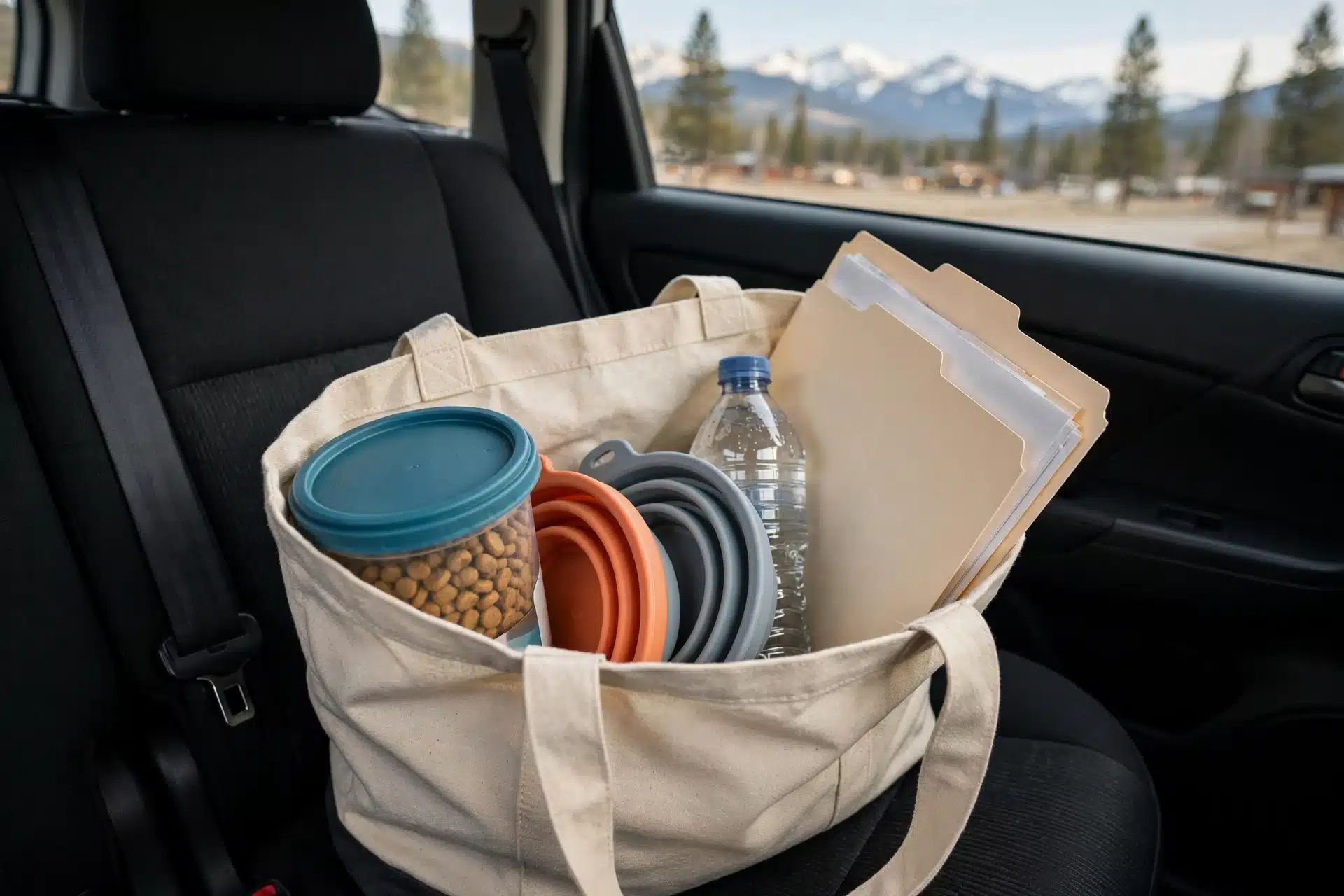
Puppies do better with small, planned stops than with skipped meals on the road. Bring these in one tote bag that lives on the back seat:
- Food in a sealed container, portioned into a zip-top bag for each stop
- Collapsible bowls, one for food and one for water
- Bottled water from home, since sudden water changes can upset a puppy’s stomach
- Treats for calm behavior after each potty break
- A spill-proof travel water bottle for quick sips at rest areas
Feed lightly. A full meal plus highway motion is a reliable recipe for carsickness, especially on curvy two-lane roads. A few bites at a stop is plenty until you’re home.
Paperwork matters just as much. Keep the health record, vaccination details, and breeder paperwork in a folder in the glove box, not buried in a suitcase. If a rest-stop vet visit ever happens, you won’t want to search for it. When you pick up a Sage Puppies puppy, you leave with these documents in hand, so the folder takes about two minutes to build.
Tip: Ask your breeder what food the puppy eats now. Switching brands mid-drive makes stomach trouble far more likely. If you plan to change foods later, blend them slowly over a week at home.
Bring handling, comfort, and identification items
The second group covers comfort and safety. A puppy who feels secure cries less, and a car that’s ready for surprises stays cleaner. Pack:
- A soft crate pad or blanket that smells like the litter
- Puppy pads and paper towels for accidents
- Enzyme cleaner in a small spray bottle, since regular soap won’t remove odor
- Trash bags and disposable gloves for cleanup
- A leash, flat collar, and ID tag with your phone number
- One quiet chew toy to settle a fussy puppy
Skip squeaky toys on the drive. They excite a puppy at the exact moment you need calm, and they will drive your passengers slightly mad by hour two.
See how our pickup process works for what arrives home with your puppy, then check the bag twice before you load the car.
Step 3: Prepare for Potty Breaks and Cleanup
Plan a flexible stop schedule
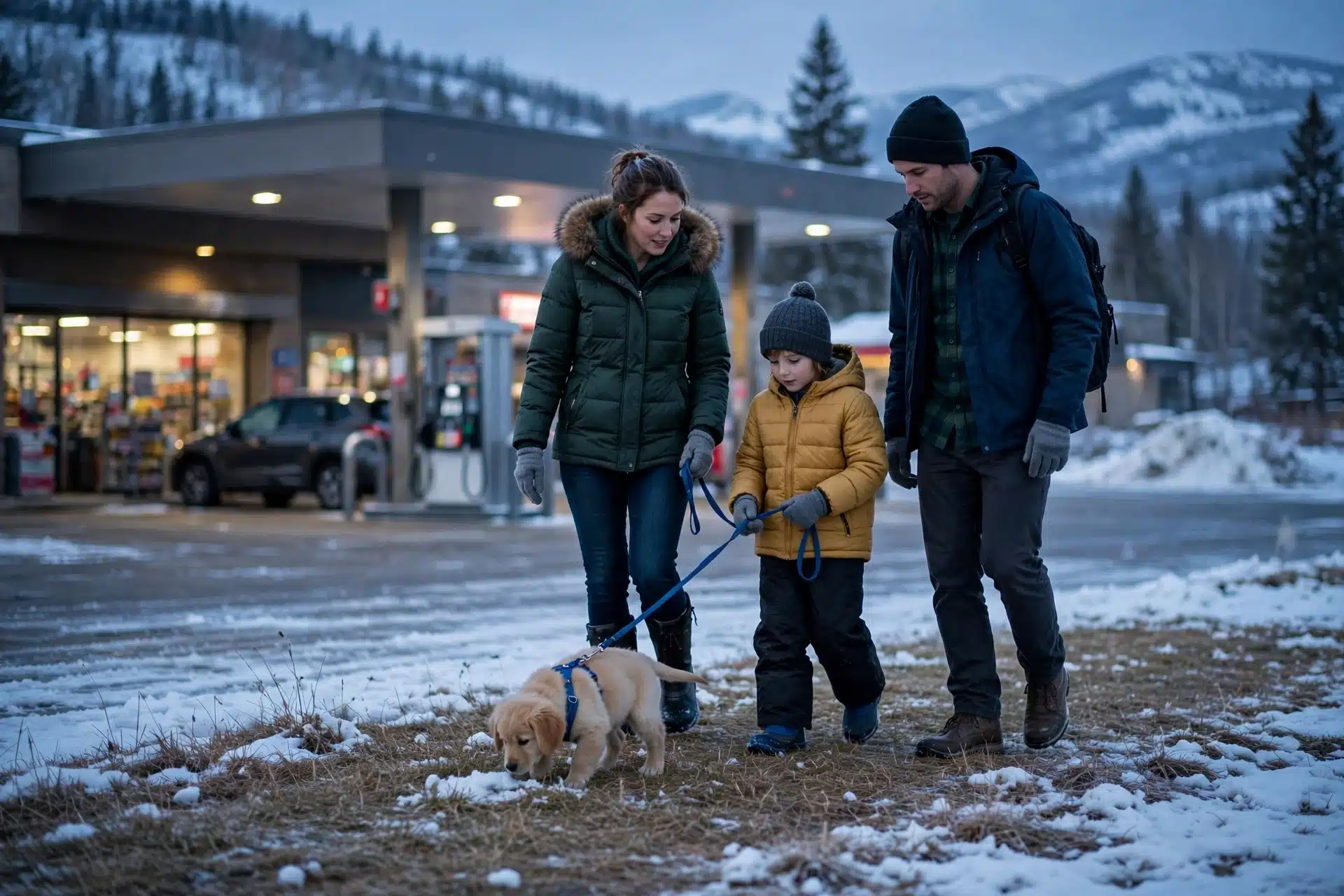
Puppies have small bladders and even smaller patience. A good rule is a potty stop every two to three hours, plus a break right after your puppy eats or drinks. On a Montana winter drive, that often means more stops than the map suggests.
Build your route around towns, not rest area signs. Places like Bozeman, Butte, Missoula, and Billings have gas stations and grassy spots that stay reachable in bad weather. Rural stretches between them can run 60 miles or more with nothing in between. Check road conditions on the Montana Department of Transportation road report before you leave, then again each morning.
Pick stops with a plan:
- Look for grass or snow edges away from the parking lot, so your puppy has a clear scent spot.
- Use a leash every time. A loose puppy in a snowy parking lot is a real risk.
- Bring a light for dark stops. Winter daylight in Montana fades by late afternoon, and many breaks will happen in the dark.
- Keep water handy but offer it in small amounts, then stop about 30 minutes before you get back in the car.
Cold changes the math too. Puppies squat fast in freezing air, so give each break a few minutes even if nothing happens. Expect your drive to run 25 to 50 percent longer than the GPS estimate. That is normal, not a setback.
Pack a cleanup kit and choose stops carefully
Accidents happen, even with a well-started puppy. What matters is how fast you can handle one. Keep a dedicated cleanup kit within arm’s reach of the driver, not buried in the trunk.
Your kit should include:
- Absorbent puppy pads, plus a waterproof liner under the crate or carrier
- Paper towels and enzymatic cleaner in a leak-proof bottle
- Two plastic bags for soiled pads, gloves, and a spare towel
- A spare blanket in case bedding gets wet
If you plan to pick up your puppy in person, ask the breeder which potty cue words your puppy already knows. A puppy raised with a consistent cue will usually go within a minute or two at each stop, which keeps breaks short and warm for everyone.
Step 4: Add Montana Winter-Drive Supplies
A Montana winter drive adds one more layer to your plan. Cold, snow, and long gaps between towns mean you pack for the car, not just the puppy. Get this part right and the ride stays calm even if the weather turns.
Pack for warmth, delays, and a wet puppy
Your puppy rides warm in the cabin with you, but the car needs time to heat up. Cold starts, fuel stops, and any delay can leave you sitting still with a small dog who just woke up. Pack a few extra items so a slow trip never becomes a cold one.
Bring these winter extras on top of your basic puppy kit:
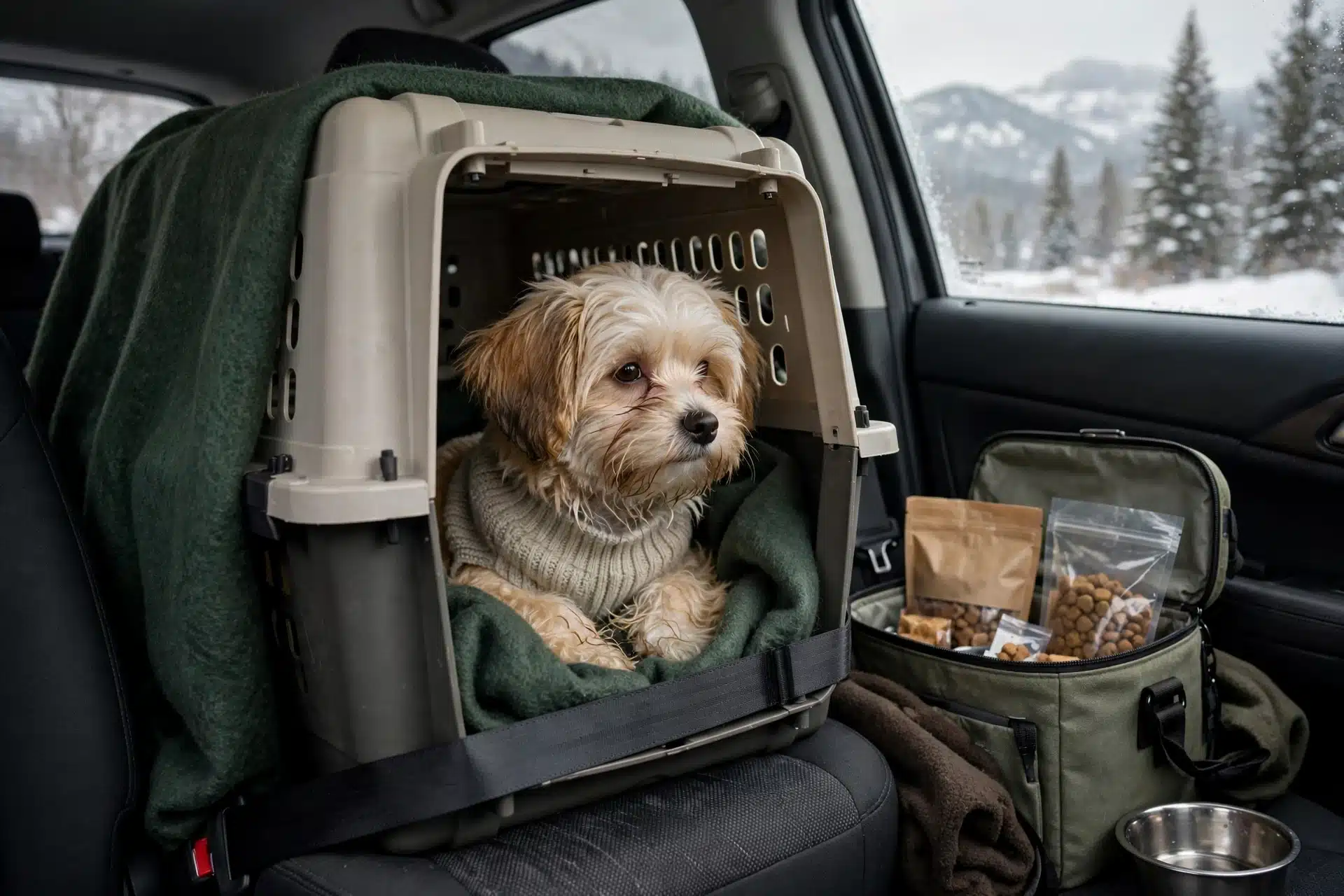
- Blankets: one to line the crate and one spare for wet or soiled bedding
- A puppy coat or sweater: helpful for quick potty stops, especially for fine-coated breeds like a Havanese
- Extra towels: snow, slush, and accidents mean you will use every one
- Hand warmer packs: tuck them near, not against, the puppy in a true emergency
- A thermos of warm water: frozen bottles are useless at a rest stop
- Extra food: winter delays can stretch a trip by hours
Keep the crate away from direct heater vents. Warm air blowing on a puppy all ride dries them out and can upset their stomach. A blanket over one side of the crate blocks drafts and helps them settle.
Check road conditions and prepare the vehicle
The puppy gear only matters if the car makes it home. Montana winter roads change fast, so check them before you leave and again each morning.
- Check Montana road conditions and cameras on MDT’s 511 site before departure and at every stop
- Look up the national weather forecast for your route so you know where snow is likely
- Share your route and arrival time with someone at home
- Keep your gas tank above half to protect against long delays
- Carry a scraper, small shovel, flashlight, and phone charger
- Pack snacks and water for the humans, not just the puppy
If a storm closes a pass, stop early rather than pushing through. A hotel night with a puppy beats white-knuckle driving in the dark. Families who work with us at Sage Puppies often drive home to Montana from Utah, and we would always rather hear you arrived a day late than hear you pushed bad weather.
Warm the car before you load the puppy. Then do a final check: crate secured, kit within reach, heat on low, and the route open ahead.
Step 5: Do a Final Check Before Leaving and During the Ride
Run the departure checklist
Before the puppy climbs in, walk around the car once with this list. It takes five minutes and prevents most first-ride problems.
- Crate or harness is secure. Push on it. It should not slide or tip.
- Pee pad or towel is in place under and around the crate.
- Water is within reach, plus a small bowl your puppy already knows.
- Food portion is packed if the drive runs longer than four hours.
- Collar and ID tag fit snugly. You should fit two fingers under the collar.
- Heat packs or blankets are ready for a cold car cabin.
- Paper towels, trash bags, and enzyme cleaner sit by the door of the cargo area, not the trunk.
- Your phone is charged and the vet’s number is saved.
- Windows are clear of ice and the defroster works before the puppy boards.
Then do a quick puppy check. Has your puppy pottied in the last 30 minutes? Is the belly full but not stuffed? A puppy who eats a big meal right before a drive often gets carsick.
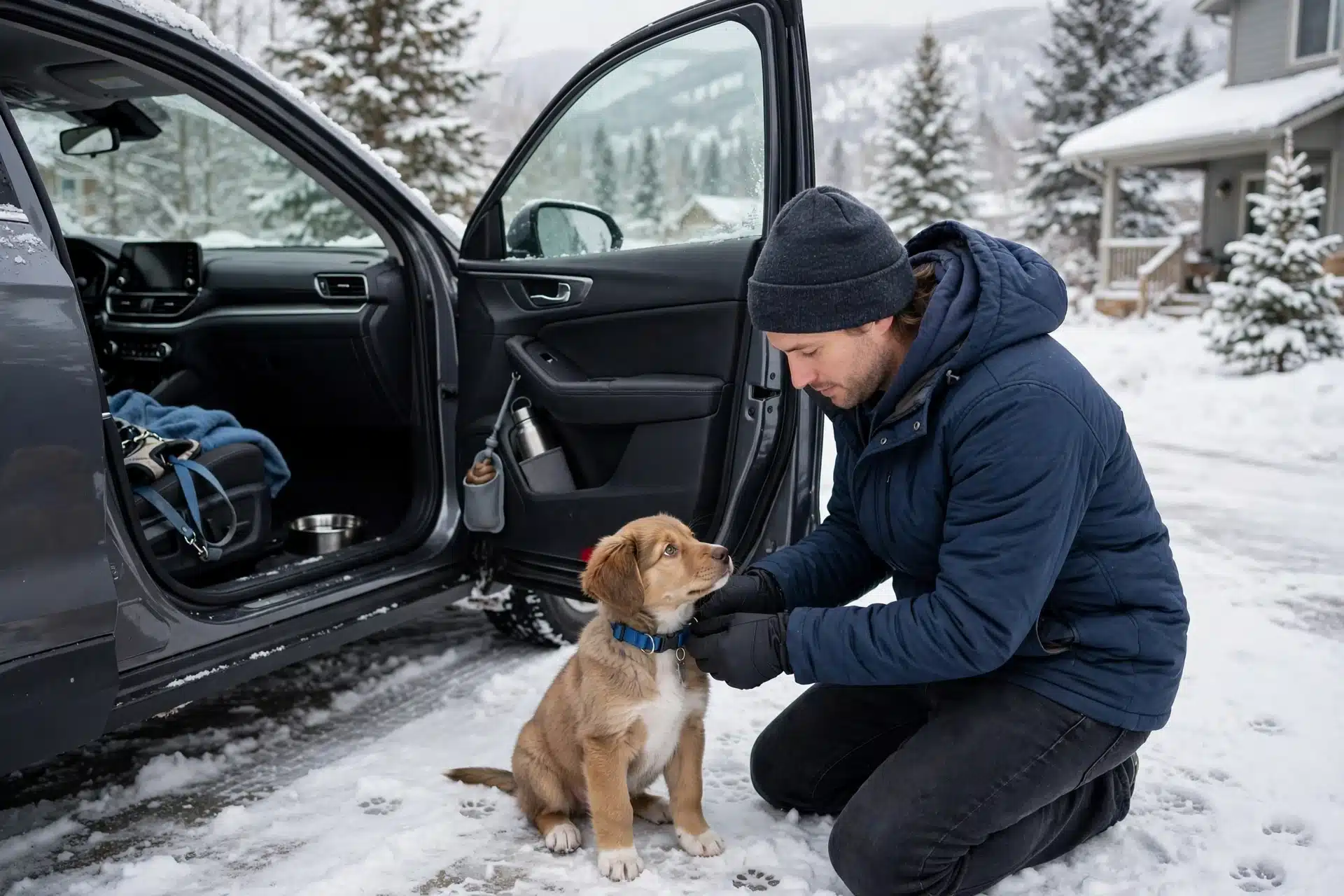
Keep the ride calm and supervised
Once you start driving, the goal is simple: quiet, warm, and boring. A bored puppy sleeps. An overstimulated puppy whines.
- Keep the cabin warm but not hot. Aim for a steady temperature and point vents away from the crate.
- Talk in a low, steady voice for the first few minutes, then let quiet settle in.
- Skip the front-seat passenger role. A second adult should ride next to the crate, but avoid letting kids pass the puppy around.
- Stop every two to three hours for a short potty break on a leash, even if the puppy sleeps through it.
- Never leave the puppy alone in a parked car. In Montana cold, a cabin can drop fast, and idling engines stall.
Expect one or two fussing spells. Wait five quiet minutes before you pull over. Most puppies settle on their own.
Families who pick up a Havanese, Havapoo, or Cavapoo from our South Jordan home get a puppy already used to short car rides and being handled, which makes this first leg home noticeably calmer.

Packed and ready? Now make sure the puppy waiting at the end of that drive is just as well-prepared. At Sage Puppies, our home-raised Havanese, Havapoo, and Cavapoo puppies arrive well-socialized and confident, with pickup in South Jordan or nationwide delivery. Browse available puppies today and start planning a smooth, safe ride home.
Frequently Asked Questions
Q1: How do I set up a crate or seatbelt harness for a puppy’s first ride home?
Secure the crate on the back seat or floor, facing forward, and line it with towels. For a harness, clip it to a seatbelt attachment, never the collar. Let your puppy sniff and explore it before you drive.
Q2: How often should I stop for potty breaks when driving a new puppy home?
Plan a stop every one to two hours. Young puppies have small bladders, so take them out after eating, drinking, or waking. Keep the leash on until they finish in a safe spot away from traffic.
Q3: What supplies do I need for a long winter drive home with a puppy in Montana?
Pack blankets, an insulated crate pad, towels, water, food, a collapsible bowl, cleanup bags, paper towels, and an emergency kit with flares and a charger. Keep your puppy warm and never leave it alone in a cold car.
Q4: Should my puppy eat before a long drive?
Feed a light meal two to three hours before leaving. A full stomach plus motion often causes carsickness, especially on mountain roads.
Q5: What if my puppy cries the whole drive?
Expect some fussing. A calm voice and brief reassurance help, but stop only when safe. Most puppies settle within the first hour or two.
Q6: When should I take my puppy to a Montana vet after arriving home?
Schedule a wellness visit within the first few days. Bring the health records you received from your breeder so your vet can plan vaccines and deworming.
Conclusion
A short winter drive goes smoothly when you cover three things: a safe restraint, a potty and cleanup plan, and gear for Montana roads. A crash-tested crate or harness keeps your puppy secure. Frequent stops, towels, and paper towels handle the messes. Blankets, water, and a charged phone prepare you for ice and delays.
Keep the first ride calm and short. Feed lightly beforehand, skip loose-roaming in the cabin, and let your puppy settle on a warm lap or in the crate. Most families find the trip home is easier than they feared once the bag is packed and the schedule is set.
If you are still choosing your puppy, our available Havanese, Havapoo, and Cavapoo puppies page shows who is ready to head home.