
Quick Summary: Picking a Nevada puppy should start with evidence, not photos: ask for OFA hip, patella, and eye test results on both parents, plus a vet record showing vaccination and deworming dates. Watch how a puppy behaves across a whole visit or video call, since a confident pup that recovers fast after a noise suits a busy family better than the boldest or shyest one. Walk away if the breeder won’t show where the puppies live, dodges health testing, or pushes same-day payment without a written contract. Sage Puppies, which raises Havanese, Havapoo, and Cavapoo litters in a South Jordan, Utah home, offers Nevada families pickup or delivery and shares parent health documentation on request.
A listing full of Nevada puppies for sale can show a cheerful face and a handy pickup spot. Neither tells you whether that puppy’s records, upbringing, and temperament actually fit your family.
That’s the real challenge: too many buyers pick based on photos alone, then discover health or behavior surprises later. This guide gives you a simple checklist instead. You’ll learn what paperwork can and cannot prove, which questions reveal how a puppy was raised, and how to judge temperament before you commit.
We’ve spent years raising Havanese, Havapoo, and Cavapoo puppies in a home setting, pairing health-tested parents with early socialization. The same standards we hold ourselves to are the ones we’ll help you apply anywhere, including Sage Puppies families who choose delivery or pickup in Nevada.
Here’s how to choose with confidence.
Define the Puppy and Family Fit You Need
The best puppy for sale is not the cutest one. It is the one that fits how your family already lives. Before you compare litters of puppies for sale in Nevada, write down what your days actually look like.
Turn Your Household Routine Into Selection Criteria
Grab a notebook and answer these questions honestly:
- How many hours will the puppy be alone each day?
- Are there young kids, seniors, or other pets at home?
- Do you live in a Las Vegas condo or a house with a yard?
- Who handles the morning potty break, and who does training?
- How much grooming can you realistically keep up with?
Turn each answer into a filter. Long workdays favor a small companion breed that adjusts well to indoor life. Toddlers in the house call for a sturdy, patient temperament rather than a fragile tiny pup. Allergy concerns point you toward lower-shedding breeds like the Havanese, Havapoo, or Cavapoo.

Compare Breed and Individual Puppy Needs
Each of these breeds suits families differently:
| Breed | Energy | Coat Care | Best Fit |
|---|---|---|---|
| Havanese | Moderate | Regular brushing | Attentive families, apartments |
| Havapoo | Moderate | Low-shedding, trims | First-time owners, allergy homes |
| Cavapoo | Moderate-high | Low-shedding, trims | Active families with kids |
Then compare individual puppies. Watch each pup with littermates: a confident middle-of-the-pack puppy often fits busy homes better than the boldest or the shyest one. Ask the breeder which puppy handled new sounds, people, and handling best.
When you browse puppies for sale in Nevada, match these notes against what each breeder tells you about temperament. Browsing breed-specific litters, like these Havanese puppies, makes the fit comparison much easier.
Evaluate the Breeder and the Puppy’s Early Environment
Anyone can post a cute photo. The real question is what life looked like for that puppy in its first eight weeks. Puppies raised in a home, handled daily, and raised around normal household sounds tend to settle into new families far more easily. Your job is to confirm that story with questions, then verify it with your own eyes.
Ask Questions That Reveal Care and Transparency
Good breeders welcome questions. They answer them directly, and they never rush you. Start with these:
- Where do the puppies live? You want to hear “in our home,” not “in a kennel building out back.”
- Who has handled the puppies, and how often? Daily handling by adults and children builds confidence.
- What health testing have the parents had? Ask for proof you can review, not just a verbal yes.
- What has the puppy experienced so far? Car rides, nail trims, new surfaces, and gentle handling all matter.
- What happens if my family cannot keep the dog later? Responsible breeders always take their dogs back.
Watch how each answer lands. A transparent breeder shares details freely and admits limits. A vague or evasive answer is a signal to slow down, no matter how sweet the puppy looks.
Tip: Ask the same question twice in different words. Consistent answers build trust. Shifting answers should make you pause.
Use a Visit or Live Video Call to Verify What You Can
Paperwork tells part of the story. Seeing the puppy in real time tells you the rest. If you are comparing puppies for sale in Nevada from an out-of-state program, a live video call works well. Ask the breeder to walk you through the space where the puppies play and sleep, and to let the puppy interact naturally on camera.
Look for bright eyes, clean coats, steady movement, and a puppy that approaches people with curiosity. At Sage Puppies, families see exactly that: puppies raised inside the home in South Jordan, Utah, with daily family contact before pickup or delivery.

Verify Parent Health Testing and the Puppy’s Veterinary Records
Health claims are easy to make and just as easy to fake. This step is where you slow down and ask for proof. You want two sets of records: testing on the parents and care records for the puppy in front of you.
Request Verifiable Health-Test Information for Both Parents
Ask for the parent’s registered name and test results, not just the phrase “health tested.” A serious breeder shares this without hesitation.
For Havanese parents, the breed club’s core tests are OFA hips, OFA patellas, and an annual eye exam. Patella checks happen after age one, and hip certification after age two. You can confirm results yourself through the OFA’s breed database, and the AKC lists recommended tests by breed, including patella and eye exams for Havanese.
For a Havapoo or Cavapoo, look for those same checks on the applicable parent, plus DNA tests for conditions common in the Poodle or Cavalier lines.
Tip: “My vet says they’re healthy” is not a health test. A vet visit checks a dog today. Screening checks the inherited conditions a puppy could carry for life.
A quick verification checklist:
- Get each parent’s registered name and identification (microchip number).
- Ask which tests were done and at what age.
- Look the dog up in a public database, or ask for copies of the certificates.
- Compare results against what’s recommended for the breed.
Every health-tested parent at Sage Puppies has documentation available on request, and we walk families through what each result means.
Review the Puppy’s Exam, Vaccination, and Treatment Records
Parent testing lowers risk. The puppy’s own records show how it has been cared for since birth.
Ask for a record from a licensed veterinarian, not a handwritten note. It should list the exam date, the puppy’s age and weight, and anything the vet found. Also check:
- Vaccinations. Puppies need a series of shots, typically starting around six to eight weeks. Your puppy should have age-appropriate doses documented, with vaccine type, date, and the vet or clinic listed.
- Deworming. Most breeders deworm puppies several times. The record should show each date and product used.
- Microchip. If the puppy is chipped, ask for the number and confirm it matches the paperwork.
- Any illness or treatment. Good breeders disclose problems in writing. A clean record with no vet visit at all is a bigger red flag than one resolved issue.
Read the records against the puppy’s age. A 12-week-old puppy should show more visits than an 8-week-old. Ask your own vet to review everything before or right after pickup.
Warning: Never accept a puppy with no vet records, even at a lower price. Missing paperwork often means missed care.
Written records protect you and give your vet a clean starting point.
Next step: compare what you’ve gathered against the breeder’s contract and health disclosures. That’s where paperwork turns into protection.
Read the Nevada Sale Documents Before You Commit
Paperwork tells you more about a seller than any website photo. Before you pay a deposit for Nevada puppies, slow down and read every document line by line. Honest breeders expect this and hand everything over without being asked. Vague or missing paperwork is a reason to walk away.
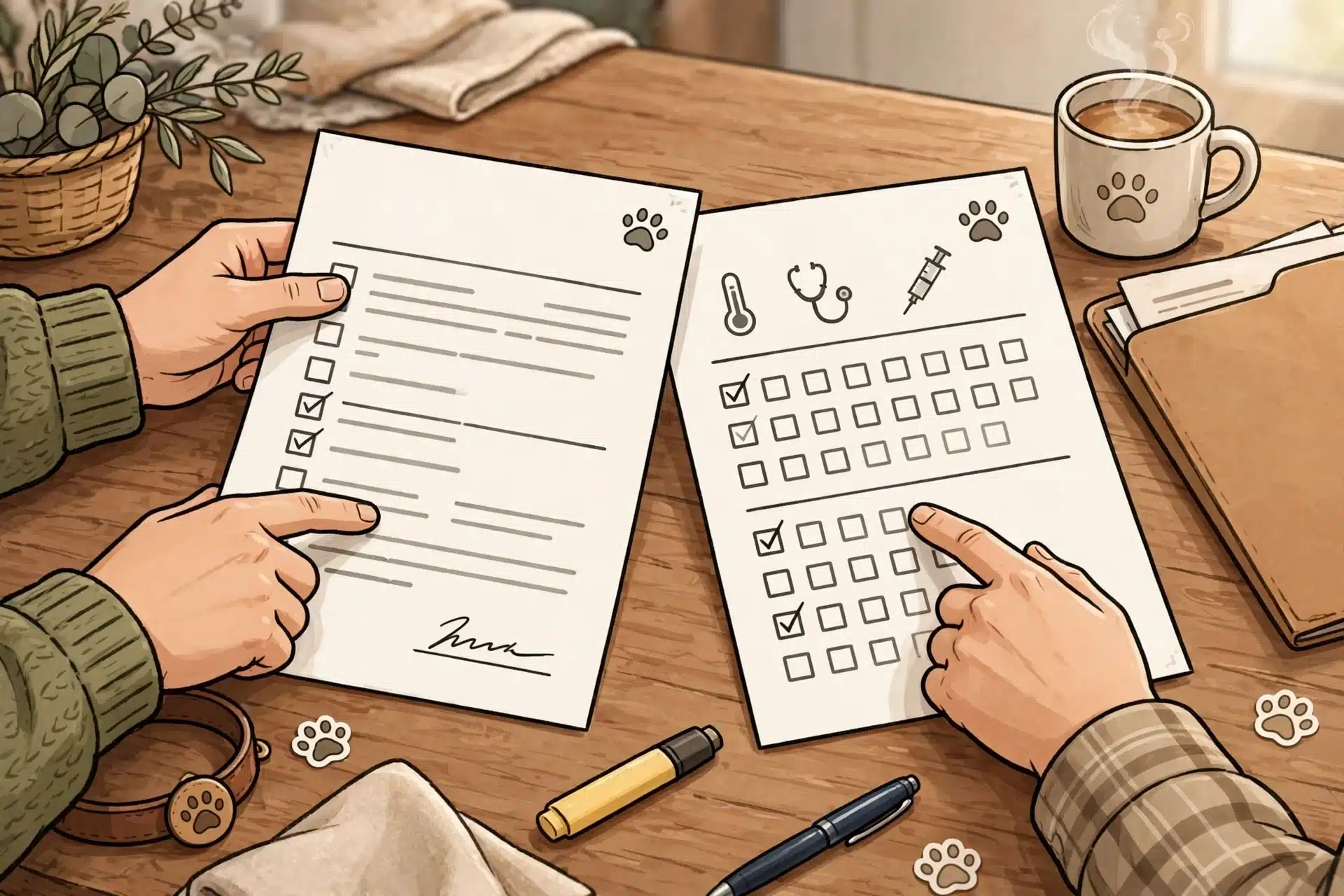
Check the Seller, Puppy Identity, and Medical Disclosure Details
Start with who you are actually buying from. The contract should carry the seller’s full legal name, address, and contact details, not just a kennel name or a text number.
Then match the puppy to the paper:
- Breed and sex stated clearly, including whether the pup is a Havanese, Havapoo, or Cavapoo mix
- Date of birth that fits the pup’s size and teeth
- Microchip number, if one is placed
- Vaccination and deworming dates with the product names
- Vet exam date and anything the vet noted
Nevada law also treats certain seller claims seriously. Under state pet sale rules, a seller must give a written disclosure of any known health problems and cannot misstate a dog’s breed or health status. If the seller promises the pup will stay under ten pounds or never trigger allergies, get that in writing or treat it as talk. For a look at what ethical breeders disclose up front, see how programs like Sage Puppies share health testing on both parents before families commit.
Read the Contract, Health Terms, and Handoff Plan
Next, read the terms that govern what happens after pickup. A solid contract covers the purchase price, deposit rules, and whether the deposit is refundable. It should state any health guarantee window, usually a set number of days for a vet check, and exactly what the seller covers if a serious problem appears.
Look for a spay or neuter clause, a return policy if the match fails, and who pays shipping if you use delivery. For Nevada families, the handoff plan matters most: confirm the pickup location, date, and who signs the transfer. If flying or using delivery, ask who holds risk during travel.
Key tip: Never accept verbal promises. If a term matters to you, ask for it in the written contract before your deposit clears.
Sign only when every blank is filled and every promise is printed.
Observe the Puppy and Match the Individual to Your Home
Two puppies from the same litter can grow into very different adults. Energy level, confidence, and how a pup handles new things matter as much as breed. Here is how to read those signs and match them to your household.
Look for Multiple Clues, Not a Single Moment
A puppy that runs straight at you once tells you very little. Watch for patterns across the whole visit or video call instead. A confident pup recovers quickly after a loud noise and comes back to investigate. A shy one may hang back, then warm up within a few minutes. Both can be wonderful pets; they just need different homes.
Check a few things:
- Does the puppy follow you or explore alone?
- How does it react to being held?
- Does it settle after play, or stay wired?
Match what you see to your life. A busy family with young kids usually does best with an easygoing pup that bounces back fast. A quieter home can suit a more watchful puppy. If you see only one brief moment, ask the breeder what the pup has been like across several weeks.

Use the Breeder’s Matching Process as Part of the Decision
You see a puppy for an hour. The breeder has watched it for eight weeks. That history is one of the biggest reasons to work with an ethical, family-raised program like Sage Puppies, where each Havanese, Havapoo, or Cavapoo puppy is observed daily in a home setting.
Ask direct questions: Which pup is boldest? Which one prefers laps over games? A good breeder will tell you honestly, even if it steers you away from your first pick.
Tip: Trust the breeder’s read, but trust your own too. If a puppy’s energy feels wrong for your home after several observations, say so. A transparent program would rather match you to the right litter than close a sale today.
Use a Final Go, Pause, or Walk-Away Checklist
Before you send a deposit, run one last check. Three outcomes exist: go, pause, or walk away. A written checklist keeps the decision calm, not emotional.
Proceed Only When the Core Details Agree
Say yes when every major detail lines up across the breeder’s listing, your questions, and the paperwork.
- Health testing: Both parents have documented tests for the breed’s known issues, and you have seen or can request the results.
- Written disclosures: The breeder states health history, vaccination and deworming dates, and any known concerns in writing, not just verbally.
- Living conditions: Puppies are raised in the home, and you can see photos or video of where they sleep and play.
- Family fit: Size, energy level, and grooming needs match your household and schedule.
- Logistics clarity: Pickup or delivery details, timing, and costs are spelled out before payment.
- Comfort: The breeder answers questions directly and welcomes yours.
At our adoption process page you can see how each of these steps works in order. When a breeder’s answers stay consistent from first message to final contract, that is your green light.
Pause or Walk Away When You Cannot Verify Key Facts
Pause when answers are vague. Walk away when facts conflict.
Red flags worth leaving over:
- The breeder will not share parent health testing or says “the vet checked them” without records.
- Puppies are always available, any breed, any time.
- You cannot see where the puppies live, even by video.
- The breeder pushes you to pay same day or refuses a written contract.
- Meeting location is a parking lot, not the home or facility.
A trustworthy breeder expects your checklist. If yours makes someone defensive, that reaction is information too. Keep looking until the evidence, not the pressure, makes the choice for you.

Ready to meet your puppy? Browse the health-tested Havanese, Havapoo, and Cavapoo puppies at Sage Puppies. Review photos and health records, then submit an application. Families in Nevada can choose local pickup in South Jordan, Utah or safe nationwide delivery. Your checklist starts here.
Frequently Asked Questions
Q1: How do I select a puppy in Nevada?
Start with evidence. Ask for health testing on the parents, meet the puppy’s temperament, review written disclosures, and confirm the breed fits your household before reserving.
Q2: Can I get a puppy delivered to Nevada?
Yes. Many breeders, including Sage Puppies in Utah, offer pickup or nationwide delivery, so Nevada families can adopt without a long drive.
Q3: What health paperwork should a breeder provide?
Expect parent health testing results, vaccination and deworming records, and a written health disclosure. Paperwork supports your decision but never replaces meeting the puppy.
Q4: Which small breed fits a first-time owner?
Havanese, Havapoos, and Cavapoos are popular picks. They’re small, friendly, and adaptable to homes and apartments alike.
Q5: How early should I reserve a puppy?
Quality programs often have waiting lists. Apply early, ask questions, and confirm pickup or delivery timing before your puppy is ready to come home.
Choose With Confidence, Not Pressure
The right puppy comes from evidence, not a good feeling on its own. Check health testing on both parents, ask for written disclosures, and see how a puppy was raised in its first weeks. Match temperament to your household, not to a photo.
Paperwork helps, but it proves less than breeders claim. Ask what each document covers and what it leaves out.
For Nevada families, a home-raised Havanese, Havapoo, or Cavapoo from a small program often fits better than a kennel listing. Take your time, compare answers side by side, and trust the breeder who welcomes hard questions. A patient decision now saves years of regret later, and our available puppies guide can help you start.





