Quick Summary: A Havapoo starter kit works best when split into two phases: pickup-day basics like a carrier, harness with engraved ID tag, food, bowls, and a small crate with a divider, then settling-week additions like puzzle feeders, training treats, and weather gear after you’ve watched your puppy for a few days. Crates should be sized to the expected adult size (around 22 to 24 inches) using a divider, and grooming tools should match the coat type, with a slicker brush and metal comb for curlier coats or a pin brush for silkier ones. Published by Sage Puppies, a Utah program raising Havanese, Havapoo and Cavapoo puppies, the guide also flags common mistakes like skipping the ID tag or buying a full grooming set before seeing the coat.
Staring at a hundred puppy-product pages the week before pickup usually ends with a cart full of extras a 10-pound Havapoo will never touch, while the real first-day setup sits half done. The problem is simple: most puppy shopping is built for average dogs, not a small, wavy-coated companion who will grow up between 10 and 20 pounds.
That is where a focused Havapoo starter kit comes in. This guide splits what you need on pickup day from what can wait until your puppy settles in, so you buy once and buy right. Every item is sized for the Havapoo coat, frame and temperament.
As the team behind Sage Puppies, a Utah program raising Havanese, Havapoo and Cavapoo puppies for families since 2025, we have helped many first-time owners work through their Havapoo essentials list. Consider this your checklist of Havapoo must haves, ready before you drive home.
Define the Kit in Two Slots: Pickup-Day Essentials and Settling-Week Additions
Why One Long List Usually Overbuys
Most Havapoo starter kit checklists online are one giant list. That approach feels thorough, but it pushes you to buy for a puppy you have not met yet. Every Havapoo grows into its own coat, size, and temperament, so gear you assume you need often sits unused. Splitting the kit into two slots fixes this. The first slot covers the first 24 hours. The second slot waits until you actually know your puppy. You spend less, and everything you buy gets used.
What Belongs in the Pickup-Day Slot
The pickup-day slot is short and non-negotiable. Pack a small crate or carrier lined with a towel, a collapsible water bowl, a soft harness with a ID tag, and a few puppy-safe chews for the ride home. At home, you need food matching what the breeder feeds (Sage Puppies sends families home with feeding guidance), two ceramic or stainless bowls, puppy pads, and one plush toy for the crate. That is genuinely enough for day one. Anything beyond this is a want, not a need, until your puppy settles in.
What Can Wait Until You Know Your Puppy
The settling-week slot fills in over the first seven to ten days. Wait on grooming tools until you see how your puppy’s coat matures, since adult Havapoo coats differ from puppy fluff. Hold off on a full-size crate if a travel crate already works, and delay treats until you confirm which foods agree with your puppy’s stomach. Once your puppy is home and matched through your puppy application, those choices get much easier.
Choose the Crate and Playpen by Measurement, Not by Breed Label
Most Havapoos land somewhere between 8 and 18 pounds as adults, but a “small” crate from one brand can hold a Havapoo comfortably while another brand’s runs snug. So ignore the breed label on the box. Measure your puppy, then buy to those numbers. If you want the full reasoning on which piece to buy first, our guide to the puppy crate vs playpen decision walks through it in detail.
Reading a Small-Breed Crate Size Chart the Right Way
A crate size chart gives you three numbers: length, width, and height. Your Havapoo needs to stand up, turn around, and lie down stretched out, plus about two inches of clearance on every side. At eight weeks, most Havapoo puppies measure 8 to 10 inches tall at the shoulder and weigh 2 to 4 pounds.
Here is the catch. Buy a crate sized for the adult dog and a tiny puppy can treat the far end as a bathroom. Buy for the puppy and you will replace it within a year. The chart answer is an intermediate crate, usually 22 to 24 inches long, listed for dogs up to about 25 pounds. Check the chart’s weight ceiling, not just the “small” label, and confirm the door opening is low enough for a short-legged pup to step through.
Using a Divider So One Crate Grows With the Puppy
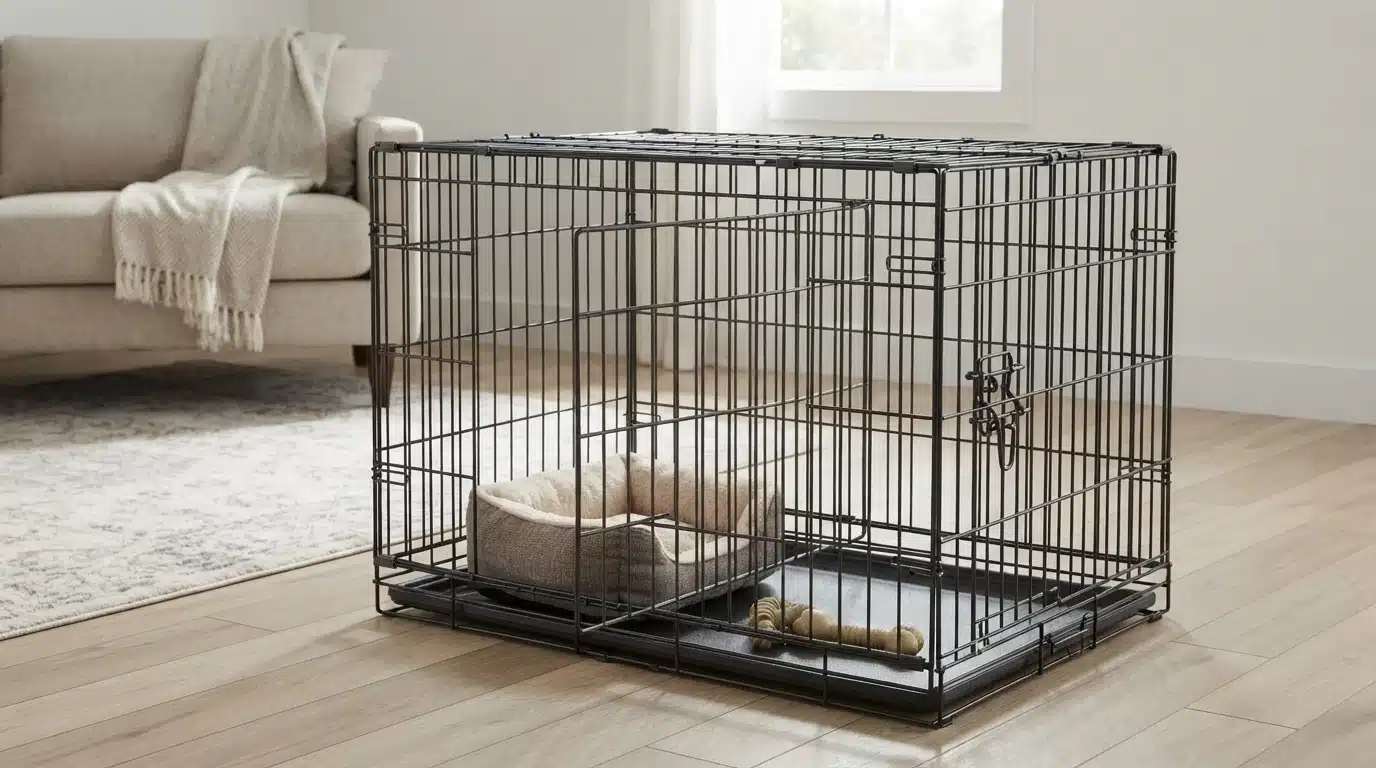
A divider panel solves the size problem for about $15. Slide it in so the puppy’s section stays cozy during house training, then move it back every few weeks as your Havapoo grows. Choose a wire crate with a divider included, because separate panels rarely fit a different brand.
Matching a Playpen to the Home Set-Up, Not the Catalog Photo
Playpens sell on square footage, but your floor plan matters more. Measure the spot first: a corner next to the kitchen usually fits a four-panel setup, while an open living room can take six or eight. Look for a low, wide door you can step through, and confirm the panels connect to the crate if you plan to attach them.
Assemble the Safe Potty Path: Collar, Harness, Leash, and ID
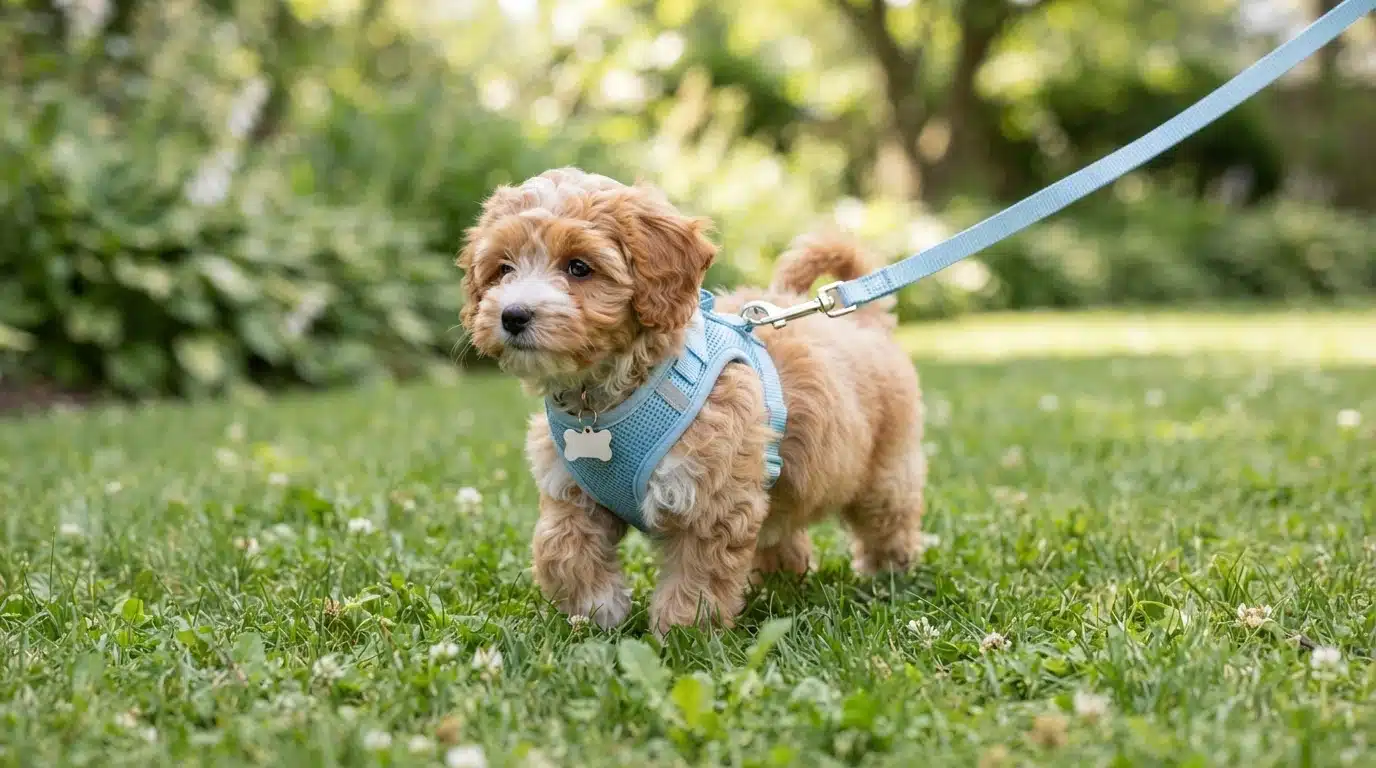
A Havapoo puppy needs a way to walk safely on potty breaks from day one. Get a soft harness, a light leash, and an engraved ID tag before pickup.
Why a Harness Often Beats a Collar for Walks
Havapoos are small, and their necks are delicate. A collar works fine for holding an ID tag, but a leash clipped to one puts pressure right on the throat. A puppy who pulls or panics can strain its neck. A step-in or Y-front harness spreads gentle pressure across the chest instead. Start harness training early, indoors, so the potty routine feels normal by the first week home.
Measuring Chest Girth Without a Squeaky Squirm
Harness sizes run by chest girth, not by weight. Wrap a soft tape measure snugly around the widest part of the chest, just behind the front legs. Measure while the puppy stands, not sits. Squirmer? Do it right after a nap, or while someone offers a spoon of food. Add about an inch of wiggle room to the number you get. Adult Havapoos usually fall in the 10-to-16-pound range, so an adjustable small harness usually covers growth. Check the fit weekly at first: you should slide two flat fingers under every strap.
Engraving the ID Tag Before Pickup Day
Order the tag now so it arrives on time. Engrave the puppy’s name plus two phone numbers, since travel days mean you may be away from home. Skip the full address on a tag a small collar can’t hold much anyway. Attach it to a flat collar with a quick-release buckle, and keep that collar on even when walks use the harness. New puppies slip out of open doors more than anything else, so visible ID is your cheapest insurance.
Ready to meet your puppy? Start your application today.
Build the Grooming Mini-Kit Around Your Puppy’s Coat Type
Havapoo coats land somewhere between the Havanese parent’s silky double coat and the Poodle parent’s curls, so the tools your puppy actually needs depend on which side its coat favors. Ask the breeder which coat texture your puppy shows at pickup, then build your mini-kit to match.
A Silky Havanese-Leaning Coat Needs Different First Tools Than a Curly Poodle-Leaning Coat
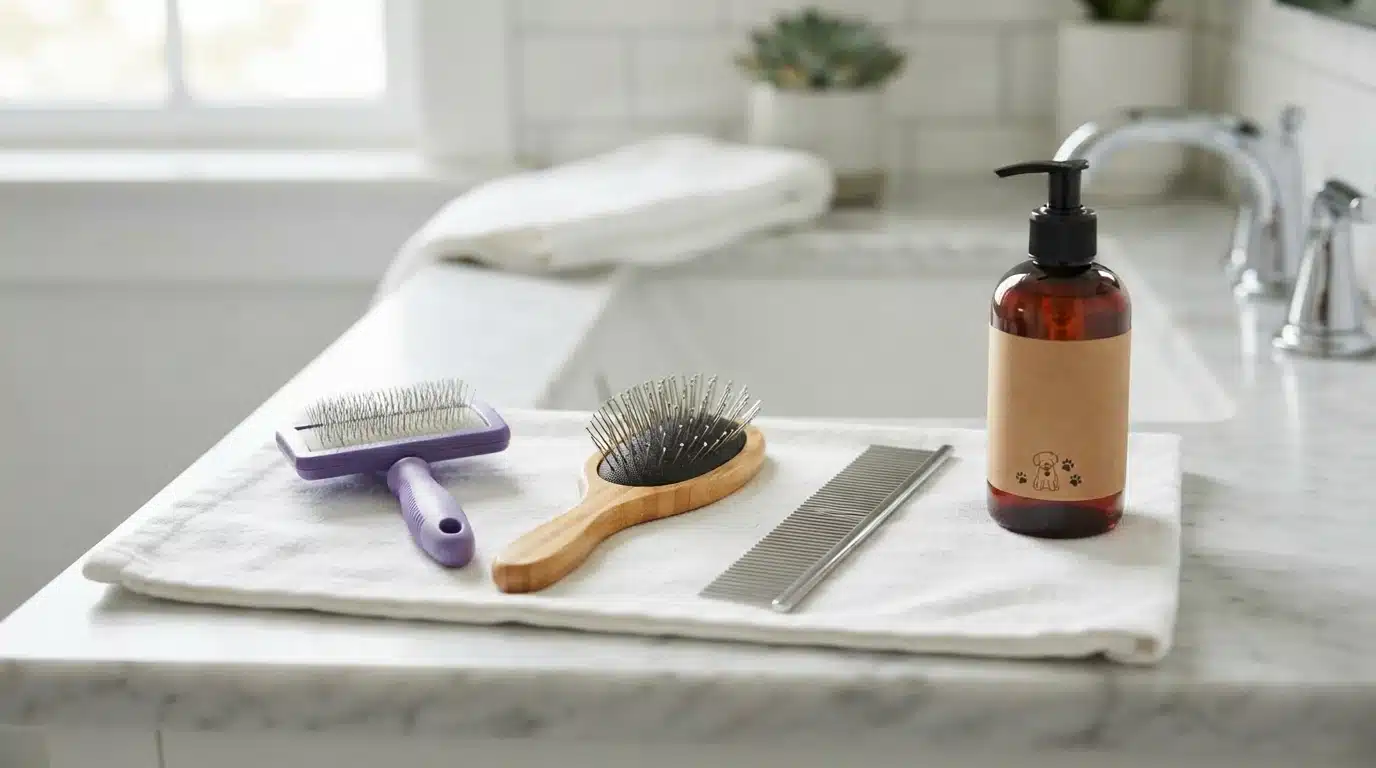
Silkier coats shed a little and mat at the friction points: behind the ears, under the legs, along the harness line. A soft pin brush and a metal comb handle most of it. Start with short daily brushing sessions so your puppy learns to stay calm.
Curlier, Poodle-leaning coats shed less but mat faster and tighter. A slicker brush plus the same metal comb works better here, because you must brush all the way to the skin, not just the top layer. Comb after the slicker to catch mats the brush missed. Either way, a small detangling spray for the behind-the-ear zone saves frustration. For a fuller breakdown, see our Havapoo grooming essentials for beginners.
Puppy-Safe Bathing Basics: Shampoo, Towel, and Water Temperature
Buy a gentle, pH-balanced puppy shampoo, plainly labeled for puppies. Skip human shampoo, since a dog’s skin sits at a different pH and human products dry it out. Add two absorbent microfiber towels; they cut drying time more than you’d expect. Test the water on your wrist so it feels lukewarm, not warm, and never bathe a puppy that’s shivering or fresh from outside in cold weather.
Nail Tools, Ear Care, and Tear-Stain Wipes
Finish the kit with small-breed nail clippers or a grinder, styptic powder for accidental nicks, a vet-approved ear cleaner, and fragrance-free tear-stain wipes. Check nails weekly; tiny puppies need trims more often than you’d think.
Plan the Travel-Ready Half of the Kit for Pickup Day
Pickup day goes smoothly when the car is ready before you leave. Pack the travel half of your kit the night before so the ride home stays calm, clean, and safe for your new Havapoo.
Choosing a Carrier That Fits a Small Puppy and a Larger Crate Later
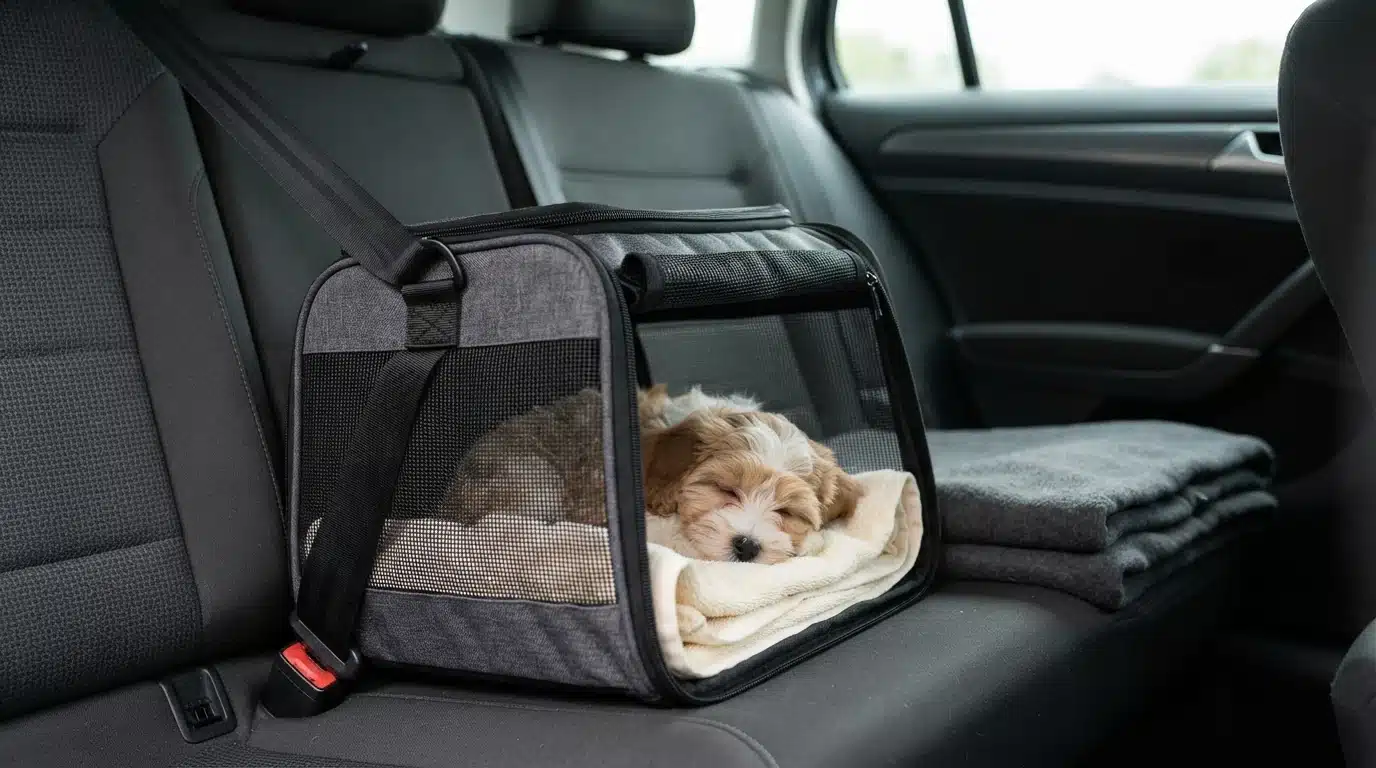
A Havapoo puppy weighs only a few pounds at pickup, so a small soft-sided carrier with mesh panels works well for the drive. Look for a sturdy base, a secure zipper, and a seat-belt strap so the carrier cannot slide. Many families then buy a full-size wire crate for home, which your puppy grows into over the first year. Both serve different jobs, so plan for each.
Car Prep: Seat Cover, Towel, Pad, and a Quiet Comfort Item
Line the back seat before pickup. A seat cover protects the upholstery, and a towel laid over it soaks up surprises. Add a washable pad on top, then tuck in a soft blanket that smells faintly of your home. Keep a chew or comfort item nearby, but skip squeaky toys on the drive. Quiet helps a nervous puppy settle faster.
Water, Cleanup, and the First-Vet Pack
Bring a small water bottle, a collapsible bowl, and paper towels in a zip bag. Add plastic bags, pet-safe wipes, and a spare towel. If your puppy’s first vet visit falls on pickup day, carry the health records and any feeding notes in a folder.
Pack it all the night before. Pickup day should feel calm, not rushed.
Ready to choose your puppy? Start with the Sage Puppies application.
Add the Settling-Week Tools Once You Have Watched Your Puppy for a Few Days
Resist the urge to buy everything before pickup day. Your Havapoo’s chewing style, appetite and coat will show themselves within a week, and that information changes what you actually need.
Brain and Mouth: Puzzle Feeders and Chew Upgrades
Watch how your puppy eats first. A slow eater may ignore a puzzle feeder, while a gulper benefits from one right away. Havapoos are quick learners, so a simple treat-dispensing ball or snuffle mat usually earns its keep by week two. For chewing, start with soft rubber, then upgrade to firmer textures only if soft toys last less than a day. Teething peaks around four to five months, so plan to re-check your chew stash then.
Add Training Treats, Pee-Pad Holders, and Cleaning Supplies
Once training starts, small soft treats become a daily tool. Pick pea-sized pieces so frequent rewards stay gentle on a small stomach. If your puppy has chosen a potty corner, a pad holder keeps things tidy and stops shredding games before they start. Add an enzymatic cleaner for accidents; regular sprays leave a scent that invites repeat mistakes.
Hold Off on Weather and Travel Gear Until the Coat and Routine Are Stable
Weather gear can wait. A Havapoo’s coat changes as the puppy coat gives way to the adult coat, so buy a jacket or sweater only once you know how your puppy handles cold. The same goes for travel accessories: your first vet visits will tell you whether a car harness or a secured carrier suits your puppy. For coat-specific planning, our guide to evaluating Havapoo coat types covers what to expect as the adult coat comes in.
Common Mistakes to Avoid When Building a Havapoo Starter Kit
Most Havapoo kit mistakes come from buying for the dog you’ll have in a year instead of the eight-pound puppy riding home with you. These three cost families the most money and stress.
Mistake 1: Picking the Crate for Adult Weight Without a Divider
An adult-crate-only setup sounds frugal, but a big open crate invites potty accidents and poor sleep. Choose a crate sized for your Havapoo’s expected adult weight, then add a divider panel so the puppy’s space grows with him. The snug interior taps into a dog’s den instinct, which helps crate training move faster. Buy the divider on day one, not after the first accident.
Mistake 2: Skipping the ID Tag or Waiting Until After Pickup
Puppies slip leashes in exactly the first week you think they won’t. Engrave the tag before pickup day with your phone number and, once confirmed, your puppy’s name. A collar should sit snug enough that two fingers fit underneath. Keep the breeder’s contact info handy too, since a found pup often goes back to the last known address.
Mistake 3: Buying a Full Grooming Set Before You Have Seen the Coat
Havapoo coats range from wavy to curly, and texture changes as the puppy coat clears. Wait until you’ve met your puppy, then buy a slicker brush and steel comb that suit that coat. Add clippers later; most pups won’t need a trim for months. If you applied through Sage Puppies, ask for coat notes before you shop.

Your Havapoo is coming home soon, and the right supplies make pickup day calm instead of chaotic. When you’re ready to choose your puppy, Sage Puppies would love to meet you. Start your application today and bring your starter kit home to a puppy who’s Wisely Bred and Beautifully Loved.
Frequently Asked Questions
Q1: preparing for your new havapoo arrival
Set up one quiet room with a crate, playpen, food and water bowls, and a soft blanket before pickup day. Puppy-proof cords and small items, and book your vet visit for the first week.
Q2: What size crate does a Havapoo need?
Choose a crate around 24 inches with a divider panel. Havapoos stay small, so a divider keeps the space snug while your puppy grows, which helps with house training.
Q3: What should I feed my Havapoo puppy?
Keep your puppy on the breeder’s current food at first, then transition slowly over a week if you switch brands. Small-breed puppy formulas suit their size and energy.
Q4: Do Havapoos need grooming supplies right away?
Yes, but keep it simple: a slicker brush, metal comb, and gentle puppy shampoo. Daily brushing starts early, since their soft coats mat easily.
Q5: When can my puppy climb stairs or jump?
Wait until your vet clears joint development, usually around 12 months. Havapoos are small, so carrying them on stairs protects growing knees and hips.
Conclusion
A Havapoo starter kit works best when it is measured, not guessed. Size your crate to your puppy’s adult weight, choose a slicker brush and comb for that soft, low-shedding coat, and keep pickup day simple: food, collar, leash, safe chews, and a warm place to sleep. Everything else, from a full grooming setup to puzzle toys, can wait until your puppy has settled in for a week or two. Work from the checklist, buy in the right order, and adjust as your puppy grows. With the right supplies ready before pickup day, the first night home feels calmer for you and for your new companion.