Quick Summary: The AKC Havanese breed standard spells out specifics like the 8.5 to 11.5 inch height range, silky double coat, dark almond eyes, and springy gait that define a well-bred dog, but it was written for judges rather than families. The article translates each clause into plain English and gives buyers a checklist for asking breeders about height, topline, coat texture, and movement. Sage Puppies in South Jordan, Utah, uses this same standard to plan every Havanese pairing and match puppies to families through a hands-on process.
When a breeder says a puppy is “to standard,” the Havanese breed standard is the document behind the claim. It is shorter and more specific than most buyers expect, and you can read it in ten minutes. The problem is that it is written for judges, not families, so terms like springs of stifle and untrimmed coat rarely translate into what to look for at a visit. This guide walks through the AKC Havanese standard clause by clause in plain English, from body proportions to that signature plumed tail. At Sage Puppies in South Jordan, Utah, we breed Havanese only, and we use this same Havanese breed profile when we match puppies to families. Browse available puppies or review pricing and reservation details before you apply.
What the Havanese Breed Standard Actually Is
The Havanese breed standard is a written blueprint of what a correct Havanese should look like and how it should move. It covers size, coat, expression, gait, and temperament, and it comes straight from the American Kennel Club. Every clause matters, because each one tells you what a well-bred puppy will grow into.
The AKC Standard and the Havanese Club of America
The official AKC standard describes the ideal Havanese in detail, from its 8.5 to 11.5 inch height to its soft, silky double coat. The Havanese Club of America serves as the AKC’s parent club for the breed, and its members pledge to preserve the Havanese as the standard defines it. The two organizations approve the standard together, so when a breeder says “standard,” this is the document they mean.
How the Standard Is Used by Buyers, Breeders, and Judges
Each group reads the standard differently. Judges use it to score dogs in the show ring. Serious breeders use it to plan pairings and improve their lines, because it is the benchmark for every breeding decision. Buyers can use it too, even without a show dog in mind. Knowing what the Havanese breed standard calls for helps you ask a breeder better questions and spot a puppy that fits the breed. To see well-bred Havanese for yourself, browse our Havanese puppies.
General Appearance, Size, and Proportion
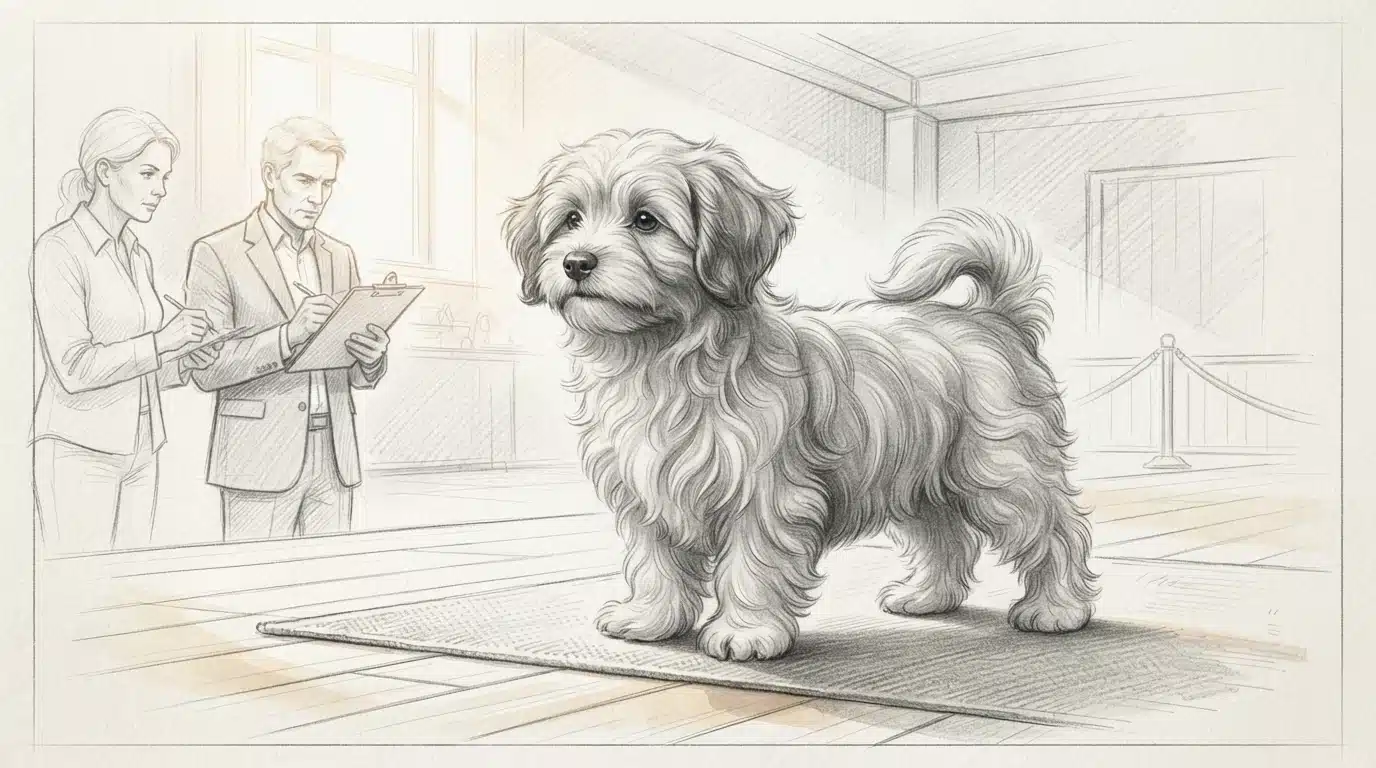
The AKC standard describes a small, sturdy dog, slightly longer than tall, with a springy gait and a soft, plumed coat. It should look neither fragile nor coarse. The Havanese is a toy breed built for movement, not just lap-sitting.
Ideal Height, Acceptable Range, and Disqualifications
The ideal Havanese stands between 9 and 10.5 inches at the withers. The full AKC standard allows 8.5 to 11.5 inches. Anything under 8.5 or over 11.5 is a disqualification, though the minimum does not apply to dogs under twelve months. Weight usually falls between 7 and 13 pounds, but the standard judges balance over the scale number. Havanese growth charts confirm that range as typical for healthy adults.
Body Shape, Bone, and Substance
The body is a little longer than it is tall, with a level topline and a deep chest. Legs are straight with moderate bone, never fine or toy-thin, and paws are tight with arched toes. The tail arcs over the back when the dog is alert. Substance means enough frame to carry that plumed coat and keep up with family life all day.
Why Size Variation Matters When You Are Choosing a Puppy
A healthy litter still holds natural size spread. Ask breeders about parent heights, since most pets land inside the range. For how adults feel day to day, see our Havanese size and care basics.
Head, Expression, Eyes, and Ears
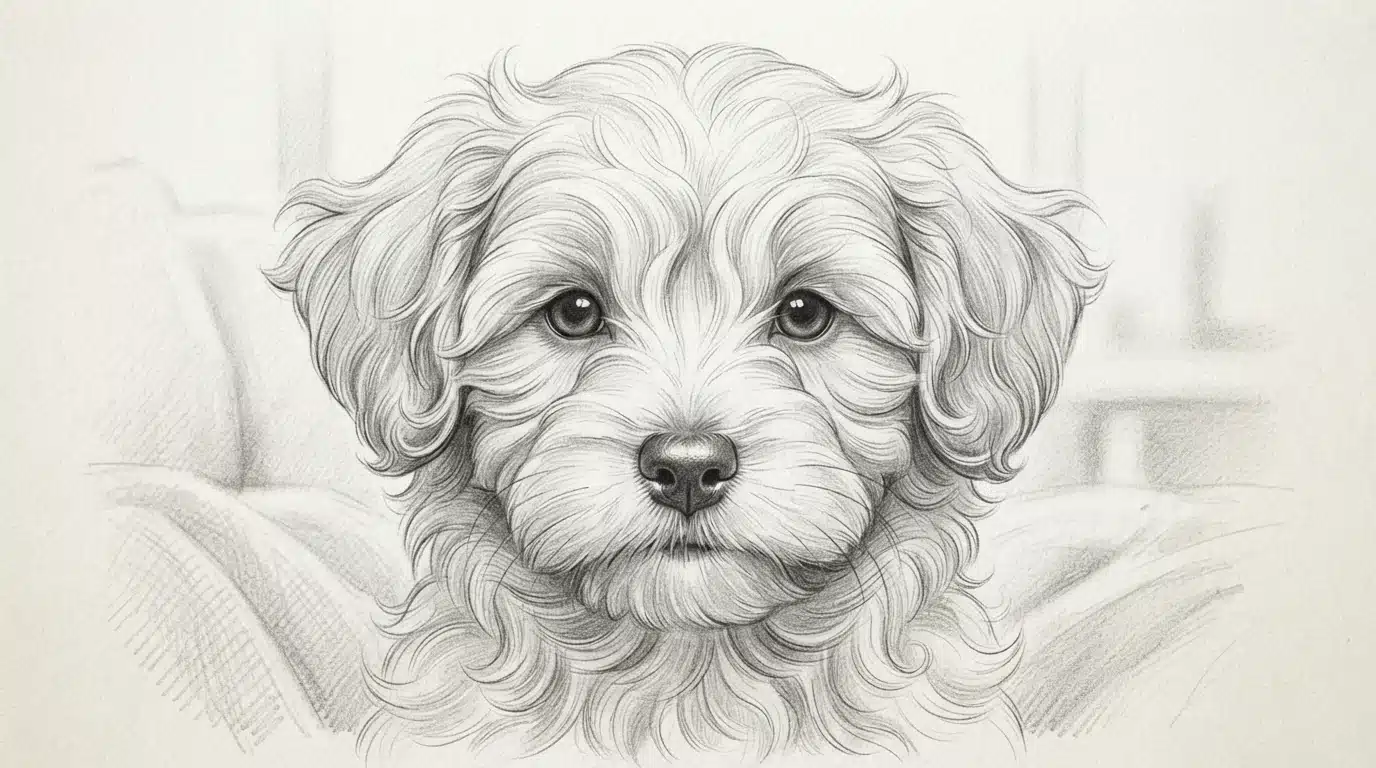
The head tells you a lot about a Havanese puppy. The official standard calls for a soft, intelligent, mischievous expression, and that quality comes from specific structure: broad skull, moderate stop, level planes, full rectangular muzzle, and large dark eyes. Here is what each part requires and how to check it when you meet a puppy in person.
Skull, Stop, and Muzzle
The skull should be broad and slightly rounded, with flat cheeks and a moderate stop. The planes of the head stay level, so the muzzle does not slope up or down. The muzzle is full and rectangular with a broad nose, and its length is slightly less than the length of the skull from stop to occiput. In plain terms: no snippy, narrow muzzles and no short, pushed-in faces. Balance between skull and muzzle matters more than either part alone.
Eyes and the Soft, Mischievous Expression
Eyes are large, dark brown, and almond-shaped, set wide enough to give the breed its gentle, engaging look. On chocolate dogs, somewhat lighter brown eyes are allowed. When you evaluate a puppy, look for bright, rounded almond eyes, not small, round, or bulging ones. Expression is the breed’s calling card, and it comes from the whole picture: dark eyes, dropped ears framing the face, and that famous head tilt. Squinty or pale eyes usually mean poor pigment or a fault worth asking a breeder about.
Ears, Bite, and Pigment Rules
Ears are set high, broad at the base, and dropped with a distinct fold. When alert, they lift slightly at the base but never stand up. Extended ear leather reaches about halfway to the nose. A scissors bite is ideal, with a full set of incisors preferred. Pigment carries the strictest rules in this section: eye rims, nose, and lips must be solid black on all colors except chocolates, which have solid brown. Incomplete pigment is a disqualification, as is any color other than black or brown in these areas. Small pale spots on the lips from rubbing against teeth are fine.
Source: Official AKC Havanese standard.
Body, Tail, and the Signature Springy Gait
The Havanese standard describes a slightly longer than tall dog with a light, springy way of moving. Bones are moderate, not coarse. That balance matters when you compare puppies, because a heavy or leggy puppy often drifts away from the breed’s outline as it matures.
Topline, Chest, and Tail Carriage
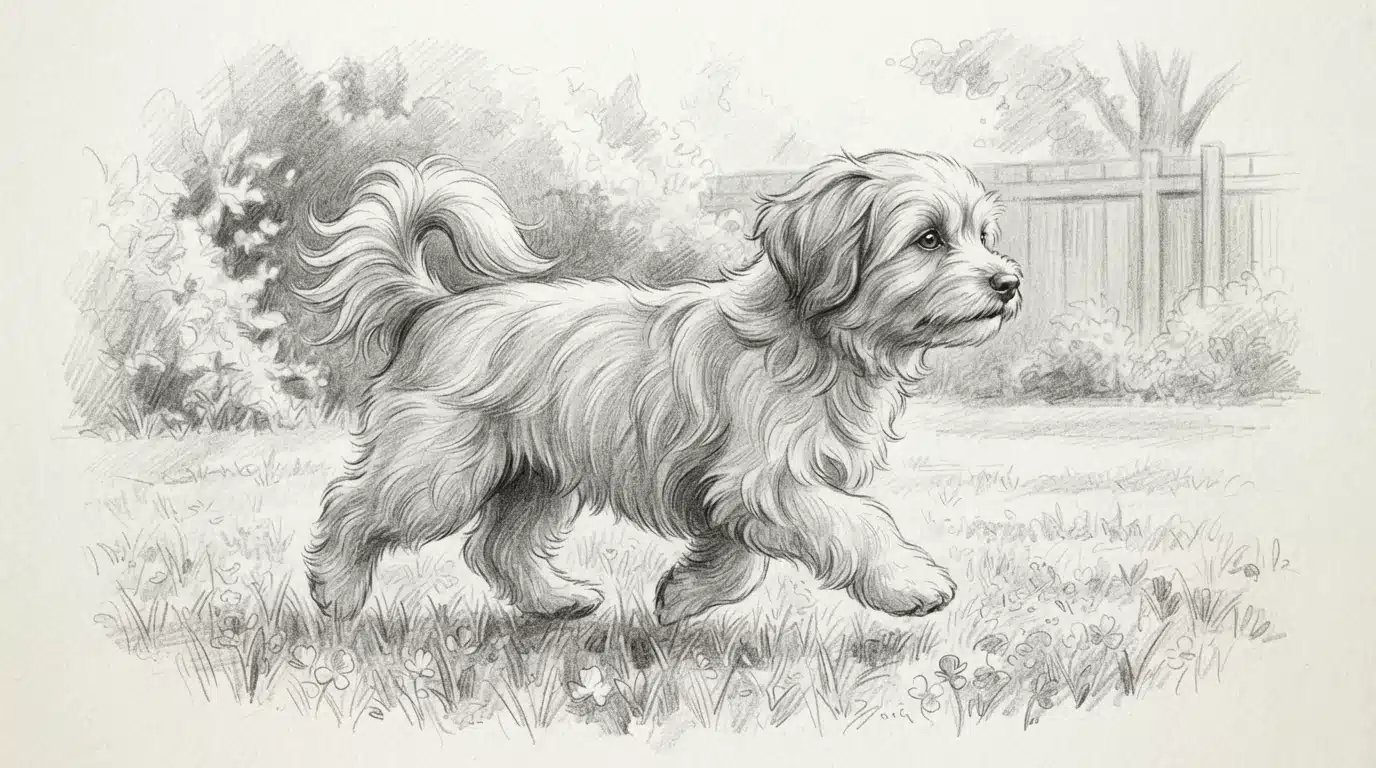
The topline rises slightly from the withers over the loin, so a flat back is actually a fault, not a nicety. The ribs extend well back, giving the chest good depth without bulk. The tail is set high and carried over the back when alert, draped loosely with long, silky plume. A tight curl or a low, flat tail set falls outside the standard. When you watch a puppy stand, look for that gentle topline rise and a tail that reaches toward the back rather than trailing behind.
Forequarters and Hindquarters
Shoulders lie well back, which lets the front legs reach freely. Forelegs are straight, strong, and positioned under the body, with short, tight feet. The hindquarters follow the same moderate build, with good angulation at the stifle and hocks that turn neither in nor out. Dewclaws may stay on the hind legs, though many breeders remove them. Balance is the theme: the rear drive should match the front reach, or the puppy will look stilted once it grows.
Why the Springy Gait Is Essential to Type
The standard calls the gait “springy” and “lively,” moving as briskly and freely as the breed’s animated character suggests. The long, soft coat should bounce with each step rather than drag or restrict movement. Movement is where structure gets proven, since a puppy with poor angles or a flat topline shows it in a stiff, rolling walk. Ask any breeder you interview to let a puppy trot a straight line, then watch the legs track evenly under the body. When you view current Havanese puppies in Utah, request a short movement video before you commit.
The Double Coat, Texture, and How to Recognize It
Run your hands through a well-bred Havanese and you will feel two layers, not one. The AKC standard calls for a profuse double coat, and it is one of the clearest places a puppy’s breeding shows.
Why the Double Coat Matters
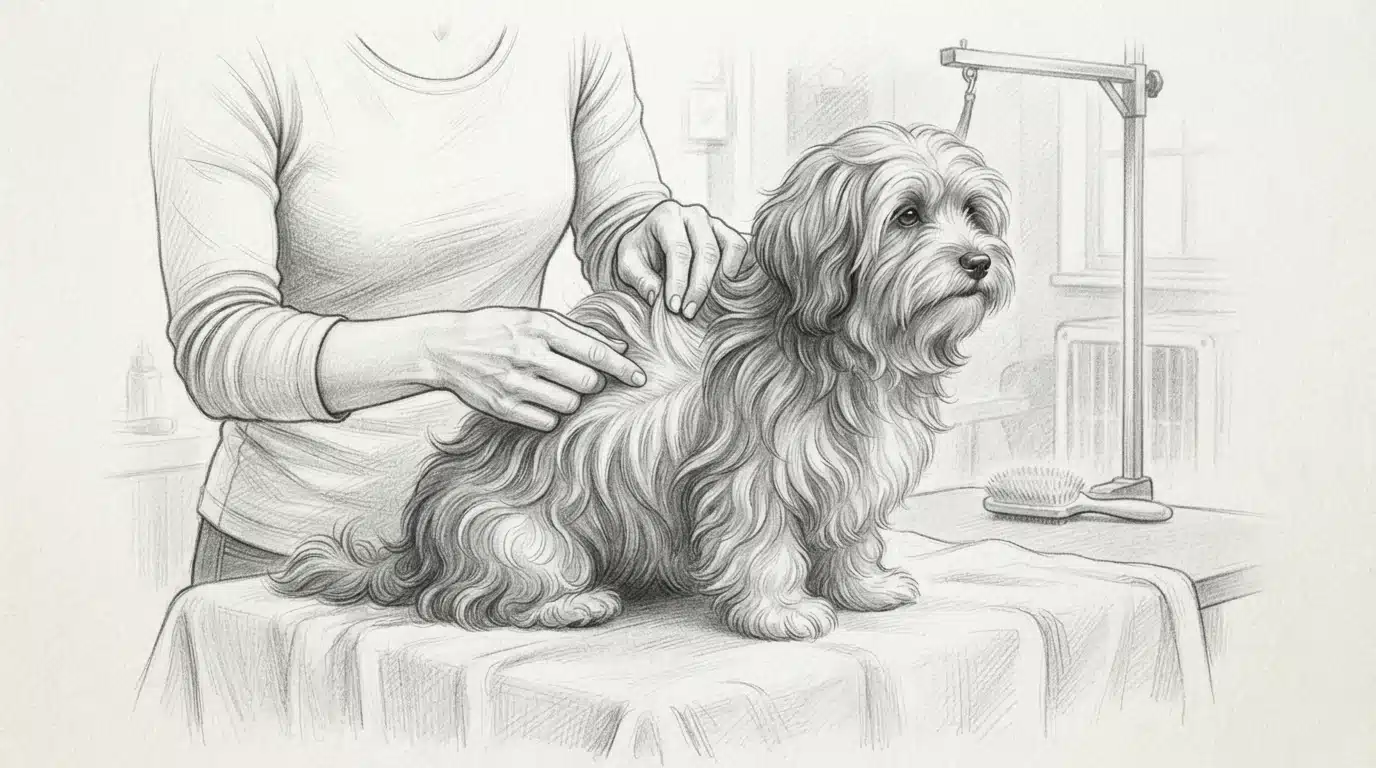
The Havanese carries a soft, light undercoat beneath a slightly heavier outer coat. Together they protect this small dog from sun and heat in its native Cuba, which is why the breed evolved a coat that insulates rather than mats into felt. A true double coat also lifts away from the body and moves as the dog trots. When only one layer is present, the coat lies flat, parts down the middle, and loses that airy silhouette judges look for. Puppies from careful programs tend to hold that double texture into adulthood.
Correct Texture and How It Reads in Person
The standard asks for a coat that is soft, light in texture, and wavy. In person it should feel silky rather than woolly, and it should spring back when you press it. Lift a section and it falls in loose, flowing waves instead of tight curls. The coat may be brushed flat or left corded, but it should never feel coarse or wiry. A single, flat, frizzy or curly coat should be faulted under the same standard.
Coat Faults, Disqualifications, and Corded Coats
Some faults are serious; one is automatic. A coarse or wiry coat is a disqualification in the show ring, and a short, smooth coat is faulted too. Corded coats are fully allowed: the outer coat wraps around the undercoat and separates into cords over time. For a pet buyer, texture matters less than health, but it still signals thoughtful breeding.
What’s Permitted, What’s Not, and Why It Matters
All Colors and Markings Are Permitted
The AKC standard says it plainly: all colors and marking patterns are permissible and of equal merit. Cream, gold, black, chocolate, sable, parti, or any mix – none of it counts for or against a puppy in the ring. The skin may be any color too. That means a breeder selling “rare” colors at a premium is charging for preference, not conformance.
The Merle Question and Pigment Exceptions
The one pattern the standard never mentions is merle, because it does not occur naturally in purebred Havanese. A merle puppy points to recent outcrossing, so treat it as a red flag. Pigment rules are strict, though: nose and lips must be solid black on every color except chocolate dogs, which carry solid brown pigment, per the official AKC standard. Incomplete or missing nose pigment is a fault.
How Color Shows Up at a Breeder Visit
Check the puppy’s nose, lips, and eye rims. Black coat should mean black pigment; a chocolate coat should mean brown. Ask to see the parents, since Havanese coats often lighten or darken as they mature, and ask how pigment is documented in their health records.
Temperament, Character, and What the Standard Leaves to the Breeder
What the Standard Says About Temperament
The official AKC standard keeps it short: the Havanese is friendly, playful, alert and intelligent, with a sweet, non-quarrelsome disposition. Aggression or shyness should be faulted. So a well-bred Havanese should greet people with curiosity, not fear or fuss. If a puppy seems constantly withdrawn or snappy, that is a departure from type, not a quirk to accept.
Where the Standard Stops and Socialization Begins
The standard describes temperament in one sentence. It cannot tell you how any individual puppy turns out, because the rest is upbringing. A breeder’s early handling, noise exposure and household routines shape whether that sweet disposition becomes confident or clingy. Ask your breeder how puppies are raised during weeks three through eight: what they hear, who holds them and where they sleep. At Sage Puppies, that early work matters as much as any pedigree line, because it is what makes the standard’s promise real in your home.
How to Use the Standard When You Talk to a Breeder
A good breeder expects questions about the standard, so bring it up directly. Ask how their dogs measure on height, topline, coat texture, and eye shape, then watch whether the answers come easily. Someone who breeds to the standard can explain why each trait matters without reaching for a sales pitch.
A Buyer’s Checklist Based on the Standard
Bring these questions to any conversation:
- Height and weight: Do adults fall in the 8.5 to 11.5 inch range, and can they show you?
- Topline and legs: Are backs level and legs straight when the dog stands naturally?
- Coat: Is it soft, silky, wavy, and long enough to be brushed rather than clipped short?
- Head and expression: Are eyes large, dark, and almond shaped, with ears set moderately high?
- Movement: Can they describe a springy, straight gait?
A breeder who answers plainly, and admits where a puppy is simply pet quality, is usually the one to trust. When you are ready to meet puppies that fit this picture, browse the current available puppies or review pricing and reservation details first.
Pet Quality, Show Potential, and What Each Means
Pet quality simply means a healthy puppy with one or two small faults, a slightly short tail set, a coat a bit too curly. It changes nothing about temperament or companionship. Show potential means the puppy matches the standard closely enough to compete. Most families want the former, and that is a sensible choice, not a compromise.
Exploring the Sage Puppies Havanese Program
At Sage Puppies, every Havanese pairing is planned around the standard’s health and structure points, then matched to your family through an owner-run process in South Jordan, Utah. If that approach fits what you are looking for, start with the puppy application and we will talk through what you want in your dog.

Now you know what the standard asks for. Meet the Havanese puppies raised to it at Sage Puppies, then start your application so Cassie can match you thoughtfully.
Frequently Asked Questions
Q1: what to expect from a purebred havanese
A purebred Havanese stands 8.5 to 11.5 inches tall, weighs 7 to 13 pounds, and carries a silky double coat that never sheds like fur. Expect a sturdy little body, springy gait, dark expressive eyes, and a cheerful, people-first temperament.
Q2: Do Havanese puppies match the breed standard at 8 weeks old?
Not fully. Structure hints emerge early, but coat texture, ear set and movement mature through the first year. Ask your breeder which standard points parents already demonstrate.
Q3: Is a slightly oversized Havanese a problem?
For a companion, no. Height beyond the standard matters mainly for shows. Health, temperament and sound movement matter far more in a family puppy.
Q4: How much grooming does the standard coat require?
Daily brushing and regular trims keep the silky double coat mat-free. Many pet families choose a shorter puppy cut for easier upkeep.
Q5: Can I meet the Havanese puppy’s parents?
Reputable breeders welcome it. Seeing the dam’s size, coat and temperament gives you the clearest preview of your puppy’s adult look.
Q6: How do I verify my puppy is a purebred Havanese?
Request AKC registration papers and a pedigree. At Sage Puppies, matching includes documentation, so you know exactly what you’re bringing home.
Q7: Ready to find a standard-quality Havanese puppy?
Start with our application. We’ll walk you through availability, matching and next steps.
Conclusion
The Havanese standard rewards balance, not extremes. A sound body, dark expressive eyes, a plumed tail carried over the back, and a silky coat that flows but never drags. Learn those clauses, and you can read any puppy with confidence.
Use the standard as a filter, not a promise. Ask breeders for health testing, meet the parents when you can, and weigh coat upkeep honestly against your routine. A puppy that fits the standard and your life is the goal. That combination, checked early, is what turns a charming breed into a lasting companion.