
A Havanese puppy may come home soft, fluffy, and small, but daily life soon asks more of you. Their coat changes, their bond grows deep, and they need brushing, kind training, play, and steady family time.
This guide helps you judge whether the breed fits your home and how to compare a Havanese breeder USA families can trust. You will learn realistic coat care, adult size, daily needs, health-testing questions, and what to expect with South Jordan pickup or nationwide delivery.
A thoughtful Havanese breeder USA should welcome clear questions. Sage Puppies raises Havanese with family life in mind, giving qualified families practical details before they choose a puppy from a Havanese breeder USA.
Havanese Basics: Personality, History, and Family Fit
What Havanese Puppies Are Like as Companions
Expect a bright, people-focused puppy that wants to join daily life. The Havanese is Cuba’s native dog breed and was developed as a close companion, not an independent yard dog. The AKC describes the breed as cheerful, social, and lively.
They tend to be playful, alert, and very tuned in to their family. Early social time, kind training, and steady routines help that friendly nature grow.
A Havanese needs company. Long, routine hours alone are usually a poor match for this social breed.
Who Usually Thrives With a Havanese
Havanese often suit households that want a small dog with real personality and time for daily connection. They can do well with respectful children, other friendly pets, apartment living, and active retirees.
A good match usually has:
- Time for short walks, play, training, and grooming
- Adults who can guide children around a small puppy
- A plan for workdays, travel, and gradual alone-time practice
- Patience for a sensitive dog that responds best to praise
The breed has Cuban roots and a long history as a household companion, as AKC breed history explains. Families should choose for lifestyle fit, not just a sweet face.
Also Read: 10 Must-Ask Questions Before Buying a Puppy Locally
Havanese Size and Appearance: What to Expect as Your Puppy Grows
Official Height, Proportion, and Build
Expect a small dog with a sturdy, balanced frame, not a delicate toy. The official Havanese standard sets an ideal adult height of 9 to 10.5 inches at the shoulder, with 8.5 to 11.5 inches accepted.
| Trait | What to look for |
|---|---|
| Body shape | Slightly longer than tall |
| Bone | Moderate, never coarse or fragile |
| Tail | Plumed and carried over the back |
| Coat | Soft, light, long, and usually wavy |

A mature Havanese should have a gentle rectangular outline, bright eyes, dropped ears, and a lively, springy step.
A full coat can make a puppy look larger than they are. Feel the body under the hair for a truer sense of build.
How to Think About Puppy Growth
Puppies do not grow at the same pace, and coat changes can be dramatic. A soft, shorter puppy coat often gives way to a fuller adult coat, so do not judge the final look too early.
- Ask to see both parents when possible.
- Discuss the expected adult size with the breeder.
- Track weight and body condition with your vet.
- Focus on steady growth, not reaching a certain number fast.
At Sage Puppies, families can ask about each puppy’s parent sizes and expected adult range before South Jordan pickup or delivery planning.
Also Read: 10 Adorable Havapoo Colors You Need to See (2026)
The Havanese Coat: Texture, Colors, Changes, and Grooming
What the Havanese Coat Feels and Looks Like
Expect a soft, light, silky coat with a loose wave, not a thick, puffy curl. The breed has a long double coat that moves freely and may stand slightly away from the body. The AKC breed standard notes that puppy hair is often shorter and softer than the adult coat.
Coat change is normal. Your puppy may look fluffier, lighter, darker, or more wavy as the adult coat grows in.
A long coat is lovely, but it is not a low-work coat. Plan for regular hands-on care.
A Practical Havanese Grooming Routine
A consistent routine prevents painful mats and makes grooming less stressful for your dog.
- Comb or pin-brush daily, working in small sections down to the skin.
- Check high-friction spots: behind ears, under the collar, armpits, belly, and tail base.
- Wipe eye corners as needed and inspect ears for wax or odor.
- Bathe only when needed, then dry fully before combing.
- Choose a short pet trim if daily long-coat care does not fit your schedule.
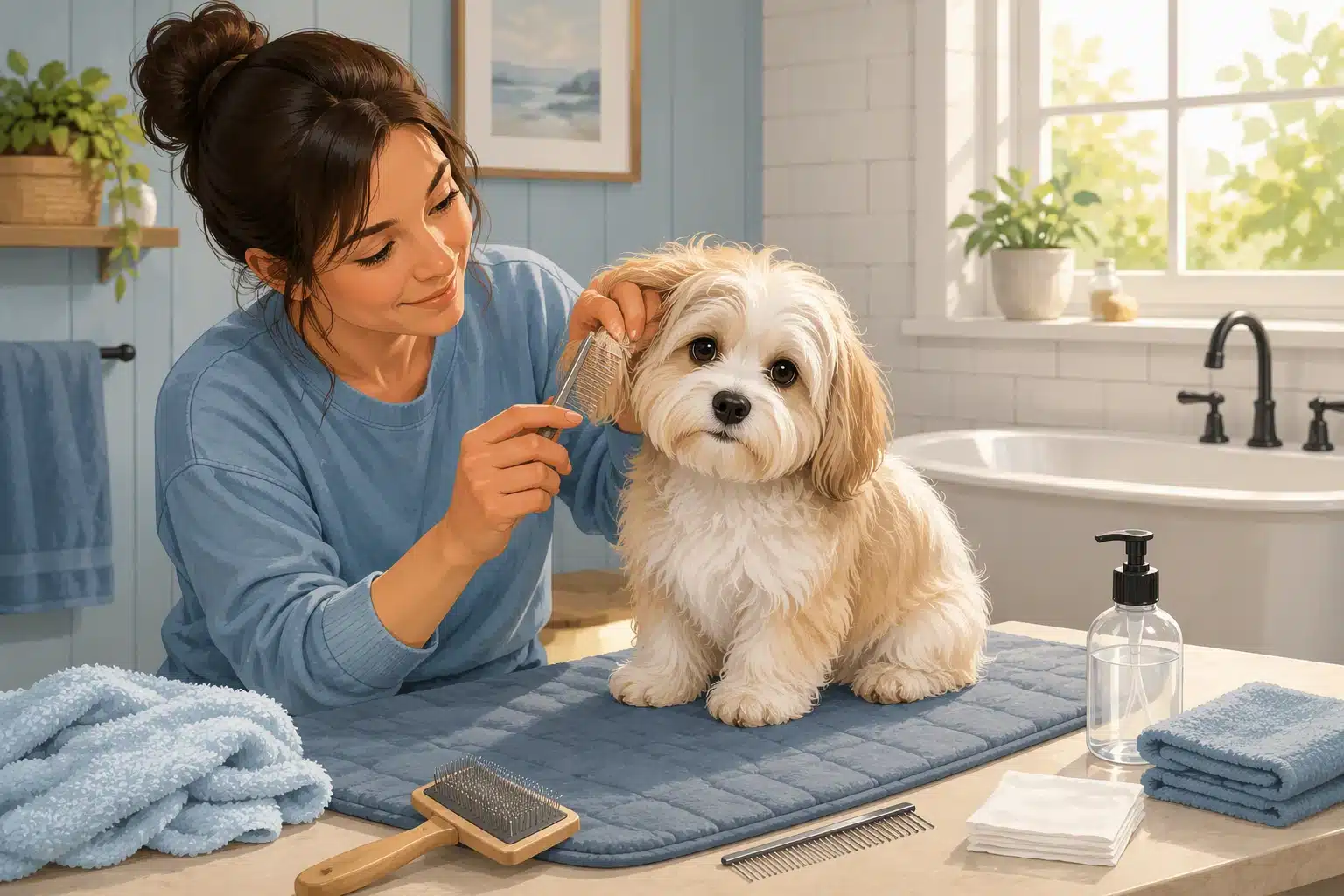
The AKC advises daily brushing to prevent tangles and mats. A clipped coat can cut grooming time, but it still needs routine brushing. Ask your groomer to show you proper line brushing before your puppy comes home.
| Coat choice | Home care | Best fit |
|---|---|---|
| Long and natural | Daily brushing | Families who enjoy grooming |
| Short pet trim | Brushing several times weekly | Busy homes wanting easier upkeep |
Colors, Markings, and Coat Expectations
Havanese come in many colors and patterns. The official standard permits all colors and markings equally, so choose the puppy whose temperament and breeder fit feel right.
- Expect possible color shifts as puppy hair changes.
- Do not pick solely by a predicted adult shade.
- Get the grooming plan in writing before pickup or delivery.
Also Read: Havanese, Havapoo & Cavapoo Puppy Care Blog
Feeding, Exercise, Training, and Socialization for Havanese Puppies
Daily Activity and Mental Enrichment
Short play sessions, gentle walks, and sniff time suit a Havanese puppy well. Avoid forced runs and repeated jumping while joints grow. The AKC suggests short leash sessions and age-appropriate activity rather than hard exercise in its puppy exercise guidance.
- Toss kibble in a snuffle mat
- Play gentle tug or hide-and-seek
- Let your puppy explore safe new sights and sounds
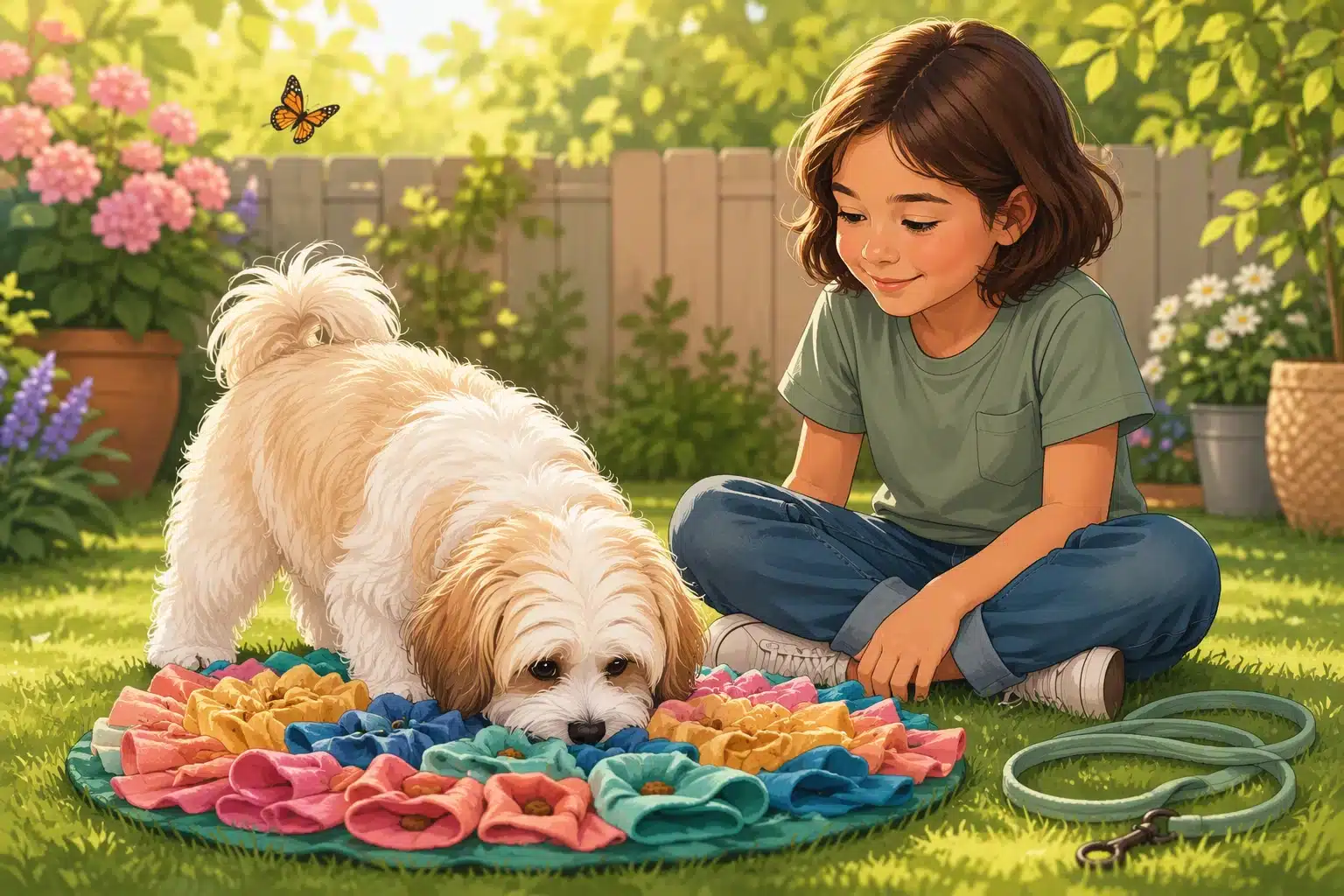
Stop while your puppy is still happy. A nap after play is normal and healthy.
Training, Potty Habits, and Alone-Time Skills
Start rewards-based training on day one. Practice sit, name response, recall, and calm handling in tiny sessions. Take your puppy out after waking, eating, play, and every few hours. Reward outdoor potty trips right away.
- Use the same potty spot and cue.
- Keep crate or pen time brief and positive.
- Build alone time in small steps with a safe chew.
Early, positive exposure matters. Introduce known, vaccinated dogs and new people without forcing contact. Avoid unknown dogs and public dog areas until your vet says it is safe, as AKC socialization guidance explains.
Food, Water, Sleep, and Veterinary Care
Feed the puppy food and schedule your breeder and vet recommend. Keep fresh water available, except when your vet advises otherwise. Young puppies need frequent naps and may sleep much of the day.
| Daily need | Simple routine |
|---|---|
| Meals | Measured puppy food at set times |
| Water | Clean bowl refreshed daily |
| Sleep | Quiet crate or pen naps |
| Vet care | Prompt first visit and vaccine plan |
Ask your veterinarian before changing food, adding supplements, or starting parasite prevention.
Also Read: 10 Signs a California Puppy Listing Is a Scam – Sage Puppies
Havanese Health and What Responsible Breeders Test
Breed-Club Health Testing Recommendations
Healthy parents give a puppy better odds, not a promise of perfect health. The Havanese Club of America lists hips, patellas, and a yearly CAER eye exam for a current CHIC record, with results reported through OFA. Its health guide explains the current testing standard.
| Test | What it checks | Timing |
|---|---|---|
| OFA hips | Hip structure | Adult evaluation |
| OFA patellas | Kneecap stability | After 12 months |
| CAER eyes | Heritable eye concerns | Every year |
Some careful programs also use cardiac, BAER hearing, thyroid, or other tests based on family history.
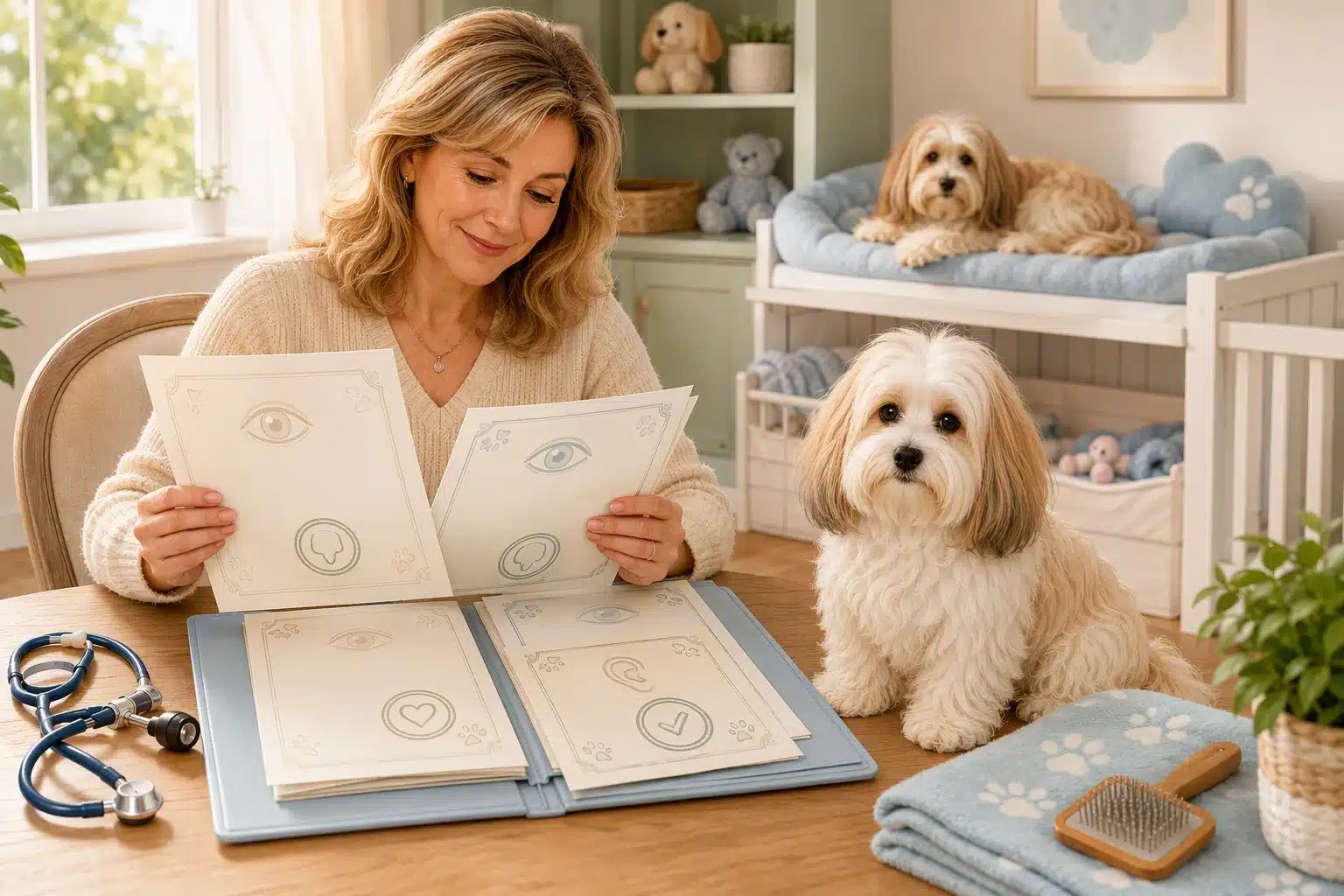
Ask for records for both parents, not a general statement that the litter is “health tested.”
Health Questions to Ask Before Choosing a Puppy
A transparent breeder should welcome direct questions and give clear records before you reserve.
- Can I see each parent’s test results and registered name?
- Are results posted in the public OFA database?
- What health concerns appear in the parents’ lines?
- What vet care, vaccines, and records come home with my puppy?
- Who can I contact after pickup or delivery if I have questions?
Sage Puppies families can ask these questions whether they pick up in South Jordan or arrange nationwide delivery.
What Health Testing Can and Cannot Tell You
Testing helps breeders make wiser pairing choices and spot known risks. It cannot predict every illness, injury, allergy, or change that may occur over a dog’s life.
A CHIC number shows required tests were submitted, but it does not mean every result passed. The Havanese Club of America clarifies this distinction.
Also Read: Havanese Puppies Review: Temperament, Grooming, and Fit
How to Evaluate a Havanese Breeder in the USA
Evidence of Responsible Breeding
Start with proof, not polished puppy photos. A responsible breeder can explain their breeding goals, show current parent health records, and discuss each puppy’s early home routine.
For Havanese, ask for records covering hearing, eyes, patellas, and hips. The Havanese Club of America health statement lists these core screenings for breeding dogs.
- Meet the mother when possible, in person or by live call.
- Look for clean, calm, home-like puppy care.
- Read the contract before placing a reservation.
- Expect the breeder to ask about your home and schedule.
A breeder cannot promise a perfect outcome. They should be open about how they lower known risks.
Questions That Reveal the Quality of the Program
Good questions make the process clearer fast. Ask direct questions, then notice whether answers are specific, patient, and backed by records.
- Which health tests did both parents complete?
- How are puppies handled, introduced to home sounds, and started with routine?
- What care records come home with the puppy?
- When can a puppy leave, and what support follows pickup or delivery?
- What happens if our family cannot keep the dog later?
The AKC’s breeder checklist also advises asking about socialization, vaccinations, contracts, and ongoing contact.
Why Sage Puppies’ Process Should Feel Personal and Clear
Sage Puppies raises Havanese in a home setting in South Jordan, Utah, with health-tested parents and early social contact. Families should receive clear next steps for an application, reservation, local pickup, or nationwide delivery. A thoughtful match matters more than rushing a puppy home.
Also Read: 10 Small Breed Puppies That Stay Friendly & Easygoing
Pickup, Nationwide Delivery, and Bringing Your Havanese Puppy Home
Local Pickup in South Jordan and Utah
Local pickup gives you time to ask final care questions and settle into the handoff. Sage Puppies families in South Jordan can plan a calm pickup window, bring a secure carrier, and head straight home.
Keep the first ride quiet. A familiar blanket, cool car, and one adult focused on the puppy help.
Planning a Nationwide Delivery Conversation
Ask about the travel plan, timing, documents, handoff location, and weather backup before reserving. Interstate travel may require a certificate of veterinary inspection, so confirm your state’s rules early with AVMA travel guidance. Share your best contact number and have a safe carrier ready.
Your First 72 Hours Together
Keep life small: one sleeping area, short potty trips, regular meals, and gentle bonding. Avoid dog-heavy public spaces until your vet guides you, since young puppies face higher disease risk. Schedule a vet visit and watch for poor appetite, vomiting, or diarrhea.
Also Read: Puppy Care Blog & Resources | Sage Puppies
Havanese, Havapoo, or Cavapoo: Choosing the Right Companion
When a Havanese May Be the Best Fit
Choose a Havanese if you want a small, cheerful companion with a playful, people-focused nature. The breed is known for being friendly, alert, and intelligent, with a long, soft coat that needs steady brushing and grooming, according to the AKC breed standard.
A Havanese can suit families who want:
- A sturdy small dog
- A close, social companion
- A predictable purebred look and temperament
Expect daily connection, basic training, and regular coat care.
Questions to Ask When Comparing Havapoo and Cavapoo Puppies
Both mixes can be loving family dogs, but each puppy can inherit different traits from its parents. Ask the breeder:
- Which parent traits show most clearly in this litter?
- What adult size range is likely?
- What coat type and grooming routine should we plan for?
- Which health tests were completed on both parents?
- How have puppies been socialized with people and home sounds?
Cavapoos may reflect the gentle, adaptable Cavalier side, while Havapoos often blend Havanese charm with Poodle brightness. Choose the puppy whose needs fit your home, not just the look you prefer.
Common Havanese Care Mistakes to Avoid
Small does not mean low-maintenance. The biggest mistakes are skipping coat care, treating a Havanese like a lap dog only, and delaying training.
- Waiting to brush: Long coats mat fast. Brush and comb often, especially behind ears, under legs, and around the collar. A shorter pet trim can make home care easier.
- Too much alone time: Havanese are social and can struggle with long, quiet days. Build alone-time skills slowly.
- Skipping daily activity: Short walks, play, and simple training keep this bright breed settled. The AKC notes they need moderate exercise and thrive on companionship.
- Using harsh corrections: Keep lessons calm, brief, and reward-based.
- Ignoring routine checks: Watch eyes, ears, teeth, skin, and paws. Call your veterinarian when habits or symptoms change.
Ask breeders for proof of parent health testing. The Havanese Club of America health statement lists key eye, hearing, hip, and patella screenings.

Ready to find a well-started Havanese? Sage Puppies raises puppies in a home setting with health-tested parents, early socialization, and clear support for coat care, pickup in South Jordan, or nationwide delivery. View available puppies and start your application.
Frequently Asked Questions
Q1: Best Havanese breeders with nationwide shipping?
Look for health-tested parents, home raising, clear records, and honest delivery details. Sage Puppies offers South Jordan pickup and nationwide delivery options for approved families.
Q2: How big will my Havanese puppy get?
Most adults weigh 7 to 13 pounds. Ask about both parents, since size can vary.
Q3: How often do Havanese need grooming?
Brush several times each week. Schedule regular trims if you keep a longer coat.
Q4: Are Havanese good with children?
They can be gentle family dogs. Teach children calm handling and supervise all puppy play.
Q5: What should I ask a Havanese breeder?
Ask about parent health tests, early socialization, vet records, contract terms, pickup, and delivery.
Conclusion
A Havanese is small, bright, people-focused, and best suited to a home ready for daily contact and steady care. Expect a silky coat that needs routine brushing, short daily play or walks, kind training, and early social time. Adult Havanese typically stand 8.5 to 11.5 inches and weigh 7 to 13 pounds, according to the American Kennel Club. Choose a breeder who openly shares parent health testing, home-raising practices, and clear pickup or delivery details. The right match is built on care, honesty, and a realistic plan for puppyhood.

