Quick Summary: Havanese puppies are friendly, people-oriented dogs that thrive with daily companionship and routine. They have a cheerful temperament but require steady grooming to prevent mats and skin issues. Best suited for families who can commit to regular coat care and social training, they may struggle with long periods alone. Overall, they make great, affectionate family pets if you’re prepared for their grooming needs.
If you want a small dog that stays close, loves family rhythm, and still needs steady coat care, Havanese Puppies deserve a real look. The hard part is knowing if the sweet personality matches your home, schedule, and grooming budget.
This review helps you sort that out fast. You will see what Havanese Temperament is really like day to day, how much Havanese Grooming most families can handle, and where Havanese Puppies fit compared with similar small companions.
We work from the questions serious puppy buyers ask most, especially families comparing Havanese Puppies with Havapoos and Cavapoos and looking at trusted options like Sage Puppies in Utah or through nationwide delivery.
What Havanese Temperament Really Feels Like at Home
A Havanese usually feels like a small dog with a big people focus. This breed tends to stay close, read the room fast, and settle into family life well when you give it steady attention and routine. The AKC describes the Havanese as cheerful, bright, social, and happiest with people rather than left alone for long stretches in its breed fit guide.

Affectionate without being overly intense
Most Havanese are loving, but not in a heavy, needy way every minute of the day. They often want to be near you, follow you from room to room, and nap by your feet. That feels warm and easy for many families, not pushy.
The key is that they are usually companion dogs first. The Havanese standard describes them as friendly, playful, alert, intelligent, and sweet in disposition in the official breed standard. In real life, that often means:
- They greet you happily
- They enjoy lap time, but also short bursts of play
- They notice mood changes fast
- They can be sensitive to harsh tones
If you want a dog that acts independent all day, a Havanese may feel too attached.
This trait can be a real plus for first-time owners. You get a dog that wants to connect and usually responds well to kind guidance. It can be harder if your home is empty most of the day.
| What it feels like | Common Havanese response | Best owner move |
|---|---|---|
| You sit down to work | Settles nearby | Offer a bed or chew |
| You leave suddenly | May fuss or bark | Practice short alone-time reps |
| You are calm and consistent | Relaxes faster | Keep the same rhythm daily |
At home, the sweet spot is closeness with structure. You want affection, not overdependence.
Playful, bright, and responsive to routine
A Havanese is usually funny, quick, and easy to engage. This is not the kind of small dog that just decorates the couch. They like interaction. They learn patterns fast. They often know when walks, meals, and bedtime should happen.
That makes daily life smoother if you like a dog that joins in. It also means they can build habits, good or bad, very quickly.
A strong home setup looks like this:
- Keep meal times steady.
- Use short training sessions.
- Rotate toys to prevent boredom.
- Give two or three play breaks each day.
- Reward quiet behavior, not just excited behavior.
You may notice a Havanese has a bit of clown energy. They can bounce, spin, carry toys around, and invent games with you. That charm is part of the appeal.
Routine helps this breed feel secure. Chaos can bring more barking, clinginess, or busy behavior.
For families comparing breeders, this is one place early socialization matters. A well-started puppy from a program like Sage Puppies should have a better base for handling normal home life, new sounds, and daily transitions.
How they fit with children, guests, and active homes
The Havanese usually fits well in homes with respectful children, regular visitors, and moderate activity. They are small, but they are not as fragile in attitude as some toy breeds. Many are social and adapt well if introductions stay calm.
With kids, the biggest issue is not temperament. It is handling. Teach children to sit on the floor, use gentle hands, and not carry the puppy around. That protects trust and prevents fear.
With guests, many Havanese act like little greeters:
- Alert bark at first
- Quick warm-up once they see no threat
- Interest in attention and conversation
- Better manners with early social exposure
Active homes can be a good match if activity has some order. They do well with walks, play, errands, and people moving around. They do less well in homes that are loud, rough, or empty for long periods.
A simple fit check:
- Great fit – home most days, wants a companion, enjoys training
- Okay fit – busy family with a clear routine
- Poor fit – long workdays with little interaction
Also Read: 7 Best Small Breed Puppies for Apartment Living in 2026
Grooming Commitment: The Part Buyers Should Not Underestimate
A Havanese can look easy to keep cute. In real life, the coat asks for steady work. The breed standard describes a long, abundant coat, and that beauty comes with upkeep. If you want the full parent guide first, go back to the main Havanese review after this section.
Brushing, mat prevention, and coat length choices
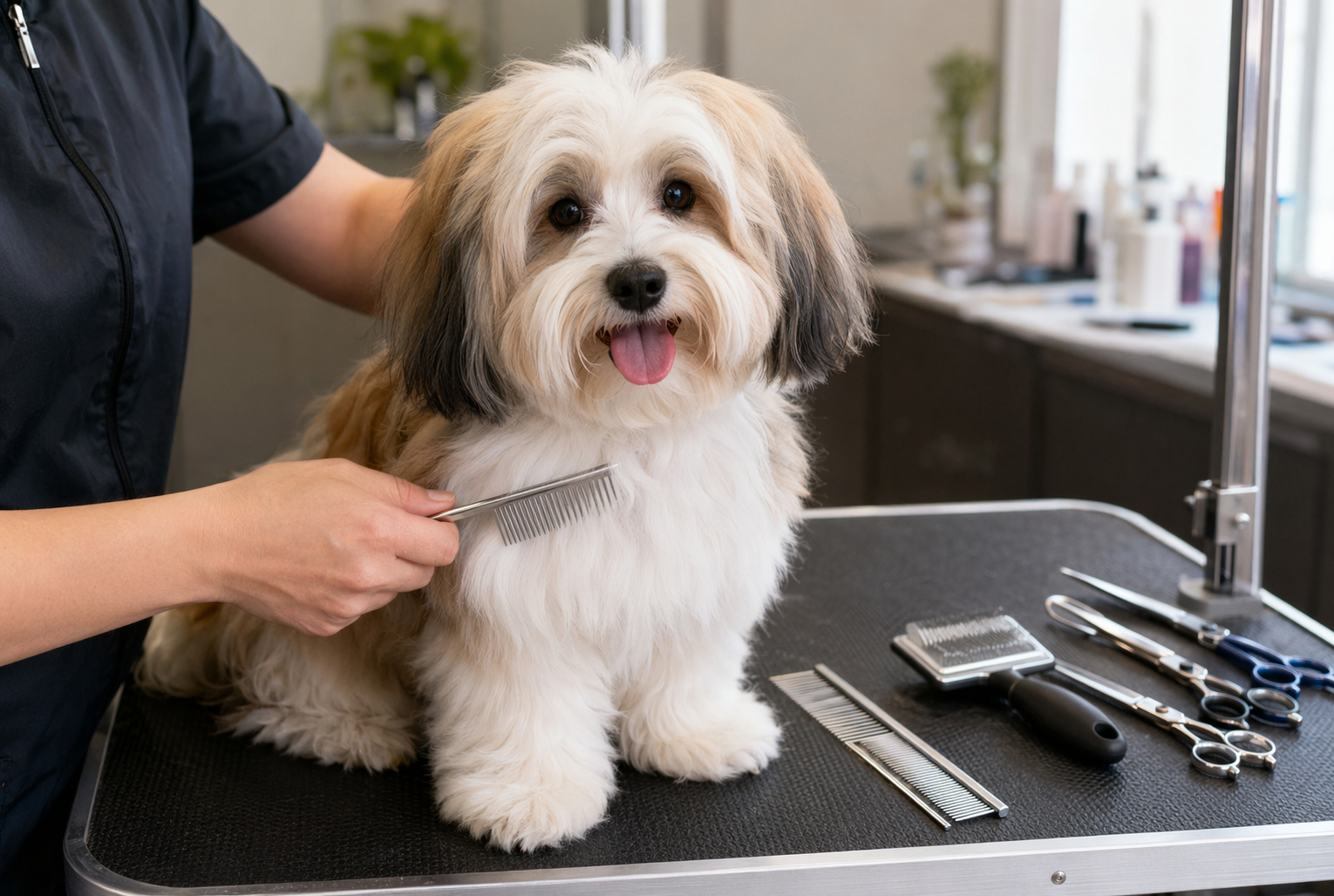
Most Havanese owners do best with a simple rule: check the coat daily and brush it fully several times a week, often daily if kept long. Long, silky coats tangle fast behind the ears, under the collar, in the armpits, and around the legs and feet.
A shorter “puppy cut” lowers the workload, but it does not remove it. You still need to brush enough to catch hidden knots before they turn into mats.
| Coat choice | Home effort | Common trouble spots | Best fit |
|---|---|---|---|
| Full long coat | High | Ears, armpits, collar line, feet | Owners who enjoy grooming |
| Medium trim | Moderate | Legs, chest, behind ears | Families wanting the Havanese look with less work |
| Short puppy cut | Lower but ongoing | Ears, tail, friction spots | Busy first-time owners |
Use a basic routine:
- Mist lightly if needed so hair does not snap.
- Brush in small layers, not just the top.
- Follow with a comb to find hidden tangles.
- Stop at the first small mat and work it out gently.
Matted hair is not just messy. The USDA notes mats can interfere with movement, trap moisture and waste, and hide skin problems in high-friction spots like armpits and behind the ears in its coat care guide.
Bathing, grooming appointments, and handling practice
Baths help, but only when done right. Brush first. A wet tangle tightens. Most pet Havanese do well on a regular bath and trim schedule, often every 4 to 8 weeks depending on coat length, activity, and how polished you want the dog to look.
Plan for three parts of grooming care:
- At home: brushing, face wipes, paw checks, light combing
- Monthly or near monthly: bath, blow dry, sanitary trim, nail trim
- Professional help: full haircut, de-matting when needed, coat shaping
Handling practice matters as much as coat care. Start early with:
- touching feet
- lifting ears
- holding the chin
- standing still on a mat or table
- hearing the dryer and clippers from a safe distance
A puppy who learns this young usually has easier salon visits later. That is one reason early handling from a breeder matters. Sage Puppies families should still keep that work going at home after pickup.
If your puppy screams, flails, or bites during brushing, do not “push through.” Break grooming into 2 to 5 minute reps with treats and calm praise.
Why grooming directly affects comfort and health
Grooming is basic care, not a beauty extra. A 2022 peer-reviewed study in Frontiers in Veterinary Science states that inadequate grooming can lead to pain, skin irritation and infection, ear and eye issues, urine scalding, and even more severe harm in extreme matting cases in its review of grooming-related concerns.
That means grooming affects more than looks:
- Comfort – less pulling, itching, and trapped debris
- Skin health – better airflow and faster spotting of rash or sores
- Mobility – less tight matting near joints and feet
- Stress – easier vet and groomer visits when handling is routine
Watch for these warning signs:
- rubbing at ears or face
- sour smell under the coat
- small knots near the skin
- poop or urine catching in hair
- reluctance to be touched
Buyers who want a wash-and-wear dog may be happier with a different breed or with a Havanese kept on a short, strict grooming schedule.
Also Read: Evaluating Health Risks of Havanese Puppies Versus Other Breeds
How Well a Havanese Puppy Fits Family Life
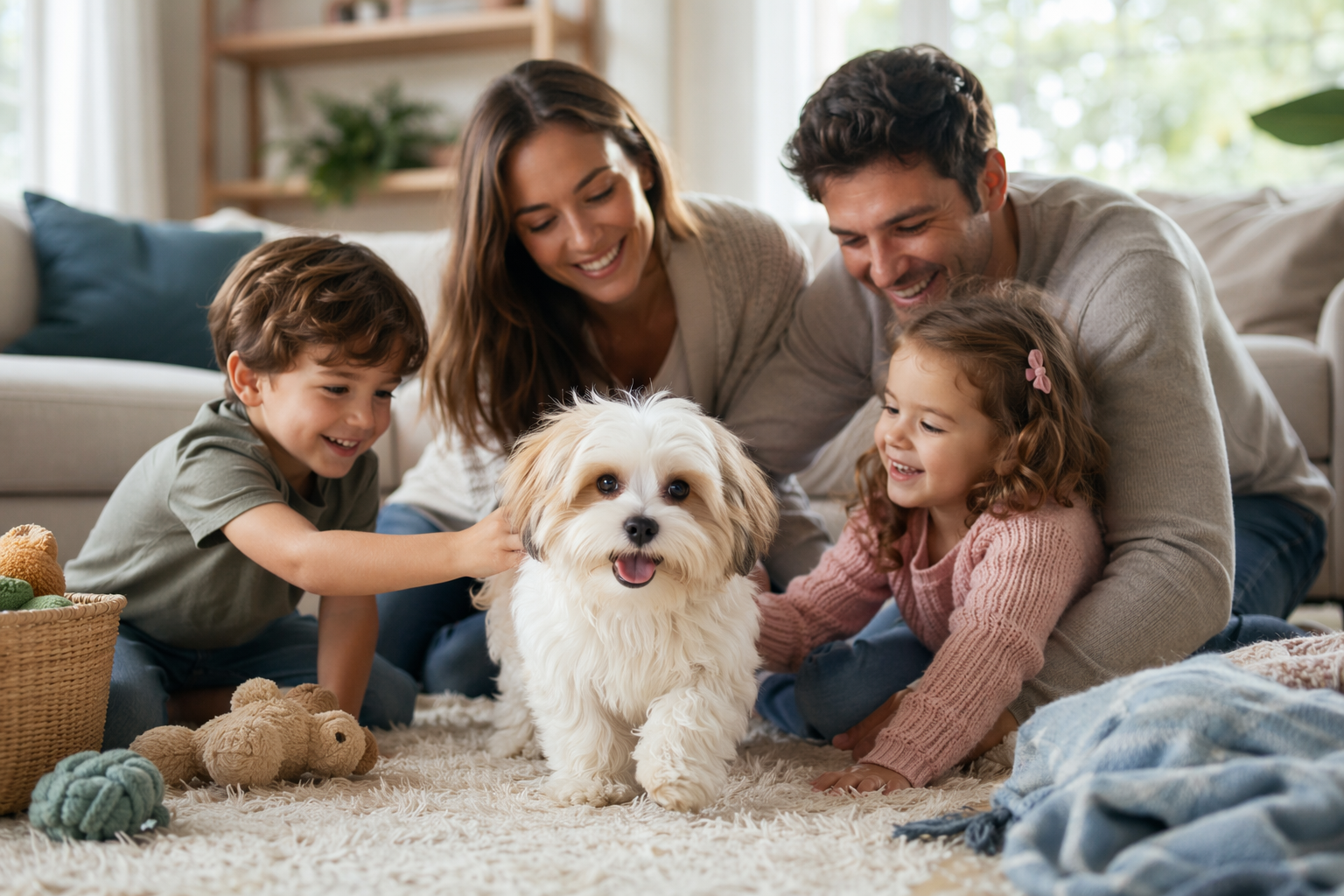
A Havanese usually fits family life very well if your home wants a dog that stays close, learns fast, and expects daily people time. The breed is small, cheerful, and highly social. The AKC describes Havanese as adaptable, good with children, and happiest with families that have time and attention to give AKC’s Havanese lifestyle guide.
Best homes for a Havanese puppy
The best match is a home that wants a true companion, not a low-contact pet.
A Havanese often does well in:
- Families with school-age kids who can handle a small dog gently
- Couples or retirees who want a dog nearby most of the day
- Apartment, condo, or suburban homes with regular walks
- Homes with another kind, non-aggressive pet
- First-time owners who will stick to grooming and training
They are small, but they are not fragile ornaments. The breed standard calls them friendly, playful, alert, and intelligent with a sweet disposition Havanese breed standard. That shows up in real life as a dog that wants to join everything.
A Havanese tends to do best when someone is home often. Long solo workdays can be hard on this breed.
| Home type | Fit level | Why |
|---|---|---|
| Apartment with daily walks | Strong | Small size and moderate exercise needs |
| Busy family with routine | Strong | Social and adaptable with structure |
| Quiet home with lots of alone time | Weak | May struggle with isolation |
| Rough toddler household | Mixed | Good temperament, but small body needs care |
When another breed may be the better match
A Havanese is not the best fit for every family.
Another breed, or even a related mix like a Havapoo or Cavapoo, may suit you better if:
- You want a dog that is more independent.
- You travel often and leave pets with sitters for long stretches.
- You do not want to brush several times a week or keep a regular grooming schedule.
- You have very young kids who may grab, fall on, or handle a toy-size puppy roughly.
- You want a jogging, hiking, or high-drive adventure dog.
A Cavapoo may feel softer and lower-key in some homes. A Havapoo may be a better pick if you want a more athletic, more poodle-like style and trainability. Still, each puppy depends on breeding and early social time, not just the label.
If your family wants a dog that can be left alone all day and needs little coat care, a Havanese is probably not your best match.
What prepared buyers should ask before reserving
Before you reserve a puppy, ask direct questions. Good programs should answer clearly.
Use this checklist:
- Are the parent dogs health tested?
- How are puppies socialized in the home?
- What sounds, people, and routines have they already seen?
- What grooming has started already?
- How does the breeder match puppy energy and temperament to each home?
- What is the pickup or delivery process?
- What support do buyers get after take-home day?
At Sage Puppies, this is where the process matters most. A family-raised puppy with early handling and honest matching usually settles in better than one chosen only by color or photo.
Ask yourself too:
- Who handles midday potty breaks?
- Who brushes the coat?
- Who trains barking, boundaries, and alone-time skills?
- Can we commit for the next 14-plus years?
If you can answer those well, a Havanese can be an excellent family dog.
Pros and Cons of Havanese Puppies
Havanese puppies work well for many families because they are small, social, and usually eager to stay close to their people. The American Kennel Club describes the Havanese as a cheerful companion breed, which fits real life well. They often do best in homes that want a dog involved in daily routines, not one left alone for long stretches.
Pros and cons are easiest to compare side by side:
| Pros | Cons |
|---|---|
| Friendly with families and visitors | Can become clingy if alone too often |
| Small size fits apartments and smaller homes | Coat needs steady brushing and regular trims |
| Usually playful without needing huge exercise loads | House training may take patience |
| Soft, low-shedding coat appeals to allergy-aware buyers | Tear staining and matting can add upkeep |
A few points matter most before you commit:
- Temperament is a big plus. Havanese are known as alert, affectionate companion dogs, according to Encyclopaedia Britannica’s Havanese overview.
- Grooming is the trade-off. That silky coat looks great, but it is not wash-and-go.
- They want company. This breed suits families, remote workers, or retirees better than homes with long empty days.
If you love a cuddly, people-focused small dog and can handle coat care, a Havanese is often a strong fit.
Also Read: Top 10 Tips for Raising Happy Havanese Puppies in the US
Is a Havanese Puppy the Right Choice for Your Home?
A Havanese fits best in a home where someone is around often. The AKC notes they are social, adaptable, and good with many families, but they also do not do well when left alone for long periods according to AKC.
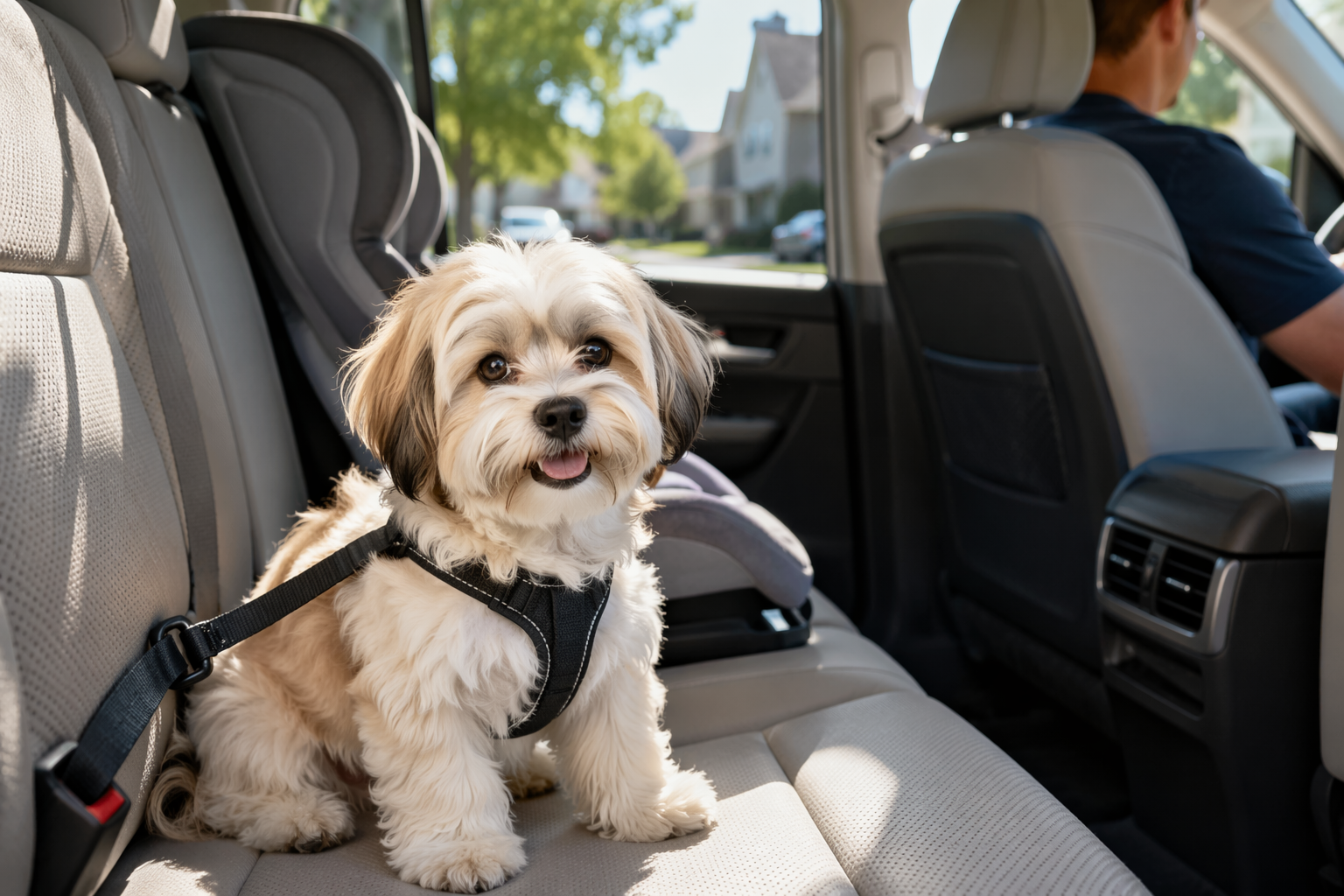
This breed is a strong match for families who want a small dog with daily companionship, light exercise, and regular coat care.
If your home is calm, engaged, and ready for brushing and training, a Havanese can be a great fit. If your schedule keeps the dog alone most of the day, look harder before you commit.

If you want a Havanese with the sweet temperament and family fit described here, start with a breeder that raises for health, social skills, and honesty. Sage Puppies helps qualified families compare Havanese, Havapoo, and Cavapoo options, review next steps, and apply with confidence.
Frequently Asked Questions
Q1: What are the key temperament traits of Havanese puppies and how do they adapt to family life?
Havanese puppies are friendly, people-focused, and easy to bond with. They usually do well with kids, guests, and other pets if you guide them early. They want closeness, so they fit best with families who want a true companion dog.
Q2: How does grooming and coat maintenance influence the health of Havanese puppies in the US?
Regular brushing helps stop mats, skin irritation, trapped moisture, and painful tangles. Ear cleaning, tear care, and routine trims also matter. A neglected coat can hide problems fast, especially in humid or snowy places where debris and dampness build up.
Q3: What are common health issues in Havanese puppies and how can US breeders minimize risks?
Possible concerns include patella issues, eye problems, dental crowding, and heart concerns. Good breeders lower risk with health-tested parents, careful pairing, early observation, and honest records. Sage Puppies also helps by raising puppies in a home setting with steady social care.
Q4: Are Havanese puppies better for first-time owners than Havapoos or Cavapoos?
Often, yes. Havanese tend to be steady, trainable, and very people-oriented. Havapoos and Cavapoos can also be great, but coat type, energy, and mix traits vary more. If you want more predictability, a well-bred Havanese is often the simpler choice.
Q5: How much daily exercise does a Havanese puppy really need?
Most need short play sessions, a few walks, and training games each day. They are not high-endurance dogs, but they still need movement and mental work. Without that, barking, clinginess, or restless habits can show up pretty quickly.
Conclusion
The Havanese fits best with families who want a small, social dog and can keep up with coat care. This breed is cheerful, bright, and people-focused, but grooming is not light work. The AKC describes Havanese as friendly, playful companions with a sweet nature and notes they do not do well when left alone for long periods in its breed overview and fit guide. In short, a Havanese can be an excellent family match if you want closeness, trainability, and a true companion more than a low-maintenance dog.