Quick Summary: A Havanese is a small, affectionate companion that thrives on human company, so it fits best with owners who are home often and can manage its silky coat, alertness, and tendency to bark. Adults typically stand 8.5 to 11.5 inches tall, weigh 7 to 13 pounds, and need regular brushing, two short walks daily, and short, reward-based training. Before buying, ask for both parents’ OFA health results, DNA screening, and the puppy’s vaccination and deworming records, which is a standard Sage Puppies says responsible breeders should provide.
A Havanese puppy’s first big decision is yours, and it is not which color to pick. It is whether this small, silky, people-loving dog fits the shape of your real daily life, from how long you can be home to how much brushing you actually enjoy. Many families fall for the fluffy coat and cheerful face, then get surprised by the grooming, the clinginess, or the energy that comes with them. This guide gives you the full picture: Havanese puppy traits, the breed’s Cuban history, temperament, health testing, and everyday care basics, plus a practical buyer checklist. Every claim here follows the AKC Havanese breed standard, not breeder marketing. At Sage Puppies in South Jordan, Utah, we raise Havanese, Havapoo, and Cavapoo puppies under documented care, so what follows reflects the questions real puppy families ask us every week.
Havanese History: From Tenerife to Cuba to the AKC
The Havanese is a bichon-type companion dog from Cuba, named after Havana and descended from small dogs brought to the island, most likely from Tenerife in the Canary Islands. It became Cuba’s national dog and was refined there over centuries before the American Kennel Club recognized it in 1996.
The breed’s story follows a clear path:
- 1500s: Small bichon dogs travel from the Mediterranean to Tenerife
- Colonial era: Sea captains bring Tenerife dogs to Cuba, where they develop into a distinct breed
- 1800s: The Blanquito de la Habana emerges, then blends into today’s Havanese
- 1959: Cuban families fleeing the revolution carry founding dogs to the United States
- 1996: The AKC grants full recognition
Where the Havanese Came From
Breed historians trace the Havanese to the Tenerife dog, a small bichon carried on trade ships more than five centuries ago, according to the Havanese Club of America. Cuban breeding refined those dogs into a silk-coated lapdog. Wealthy plantation families prized them, and visitors to Havana took the dogs home as gifts, which spread the breed’s reputation.
From Aristocratic Companion to Everyday Family Dog
In Cuba, the Havanese moved from parlor of the wealthy to household favorite. The Cuban revolution nearly ended the breed until 11 exile families rebuilt American lines, as Wikipedia’s breed history documents. The AKC recognized the Havanese in 1996, and it now ranks among the more popular toy breeds in the United States.
What History Means for the Dog You Meet Today
Centuries of purposeful breeding for companionship shaped the modern Havanese. These dogs were never workers, so they bond closely with people and struggle with long hours alone. That heritage explains the velcro-like attachment first-time owners often notice, and why early socialization matters for any puppy you bring home, whether from a breeder program like ours or another source.
Havanese Puppy Traits and Temperament
The most common Havanese puppy traits are:
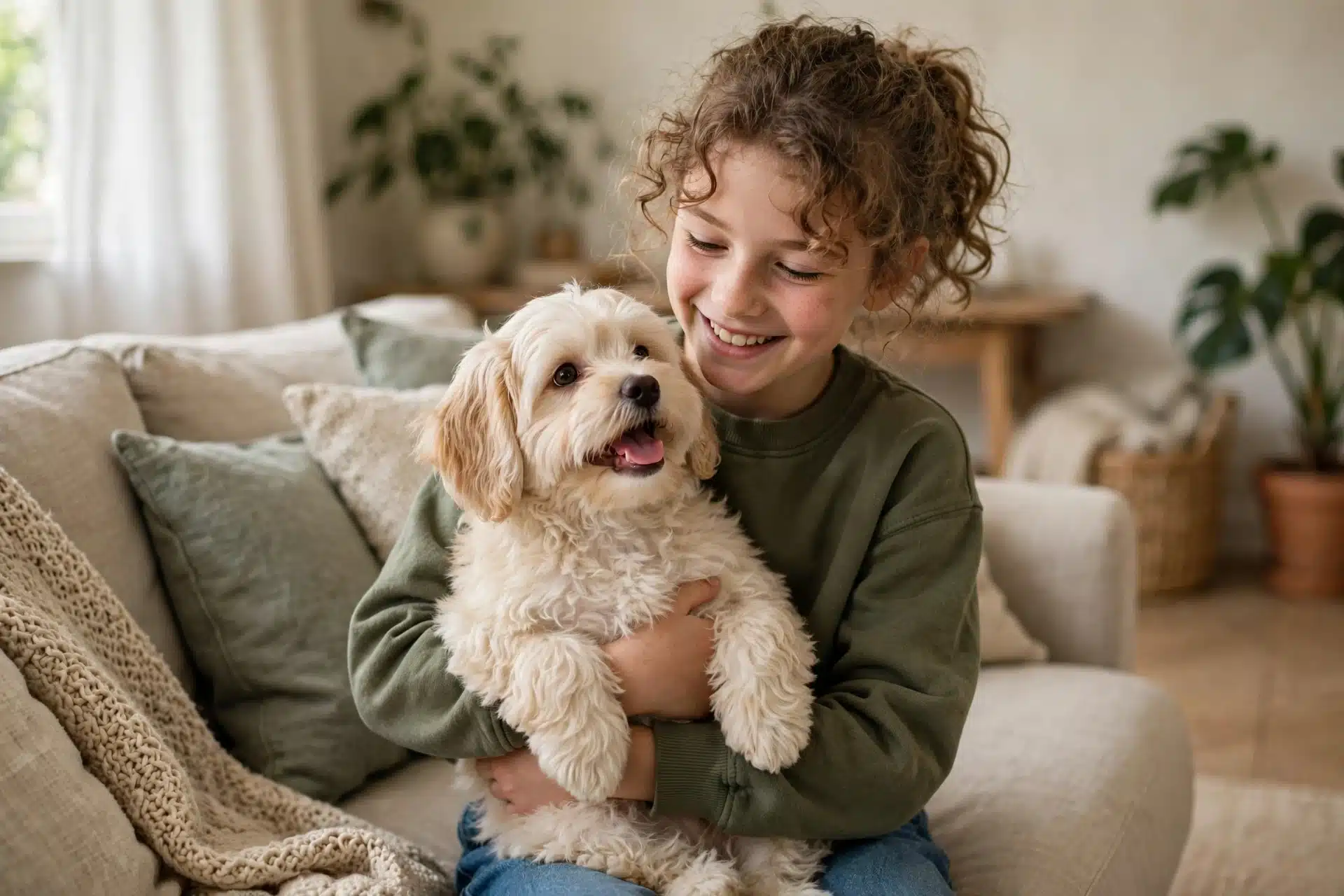
- Affectionate – they bond closely with their people and want to be included
- Playful – lively, funny dogs that stay puppyish well into adulthood
- Intelligent – quick learners that pick up routines and tricks fast
- Sociable – usually friendly with children, strangers, and other dogs
- Alert – watchful little dogs that notice everything, including the doorbell
The Temperament the Breed Standard Describes
The official standard sets a clear bar. The Havanese Club of America’s breed standard describes a dog that is friendly, playful, alert, and intelligent, with a sweet, non-quarrelsome disposition. Aggression and shyness are both faulted, so a well-bred puppy should be curious and outgoing, not fearful or sharp. The AKC breed profile echoes this, calling the breed vivacious and sociable.
Living With a People-Oriented Puppy
These dogs were bred to be companions, and they act like it. A Havanese wants to be in the same room as you, ideally on your lap. That makes them wonderful house dogs and easy travel companions, but it also means long days alone can wear on them. Households where someone is home most of the day, or that can arrange company, fit the breed best.
Training, Alertness, and Barking
Havanese puppies are smart and eager, so they train easily with short, upbeat sessions and gentle correction. They respond badly to harsh methods, so keep it positive. Their alert side has a trade-off: many are quick to bark at sounds and visitors. Early, varied puppy socialization and a “quiet” cue taught from day one keep watchfulness from turning into constant noise.
Size, Coat, and Colors in the Breed Standard
Height, Weight, and Body Shape
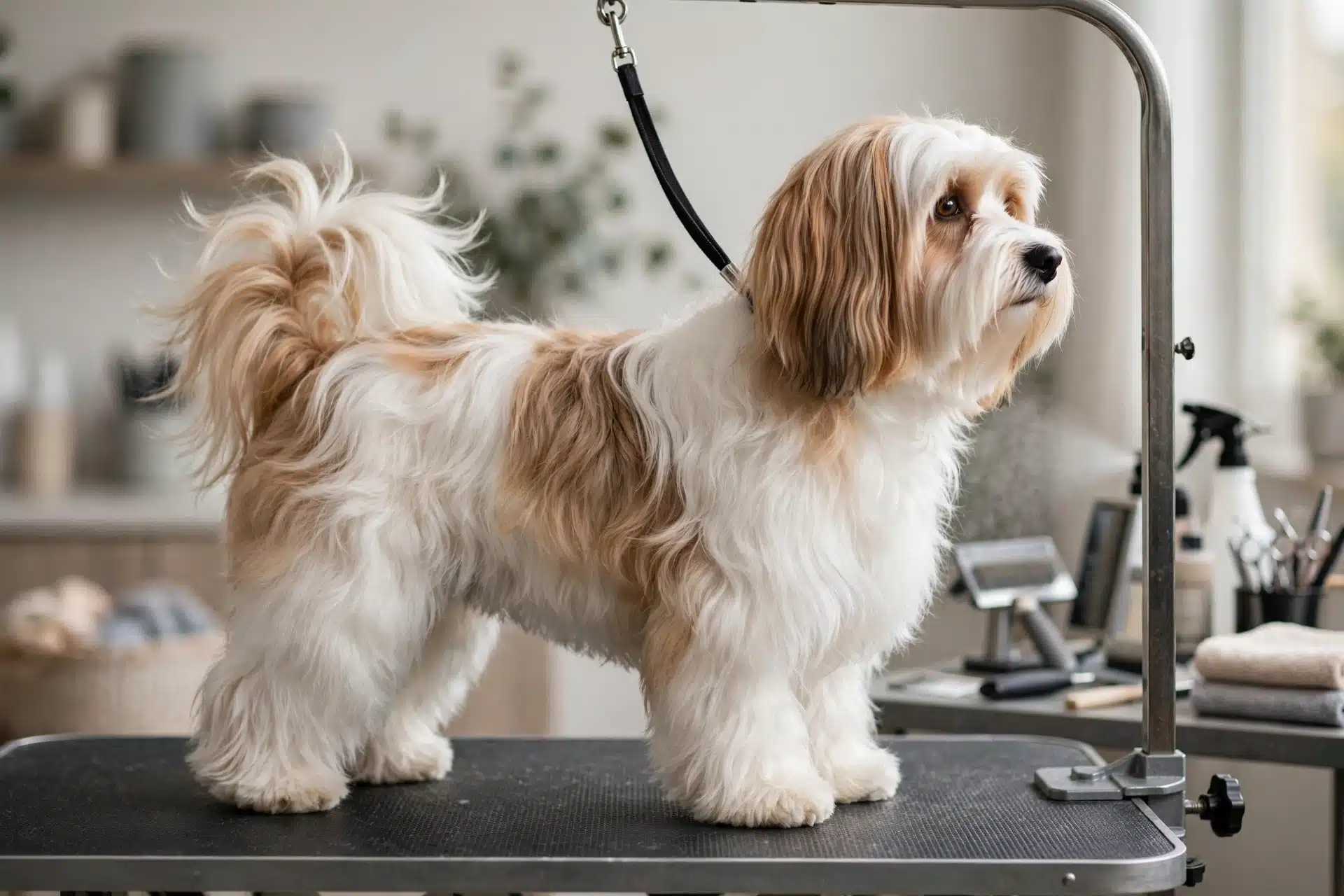
How big does a Havanese puppy grow? Adults stand 8.5 to 11.5 inches tall at the shoulder, with the ideal range between 9 and 10.5 inches, and most weigh 7 to 13 pounds. Puppies grow fast and usually reach adult height by 8 to 10 months, with weight filling in a little later.
The body is slightly longer than tall. The topline rises a bit from the shoulders to the rear, a signature trait of the breed, so a level back is actually a fault in the show ring.
The Double Coat and the Plumed Tail
The coat is the breed’s crown. The standard calls it silky, soft, and light in both the outer coat and undercoat, with long, wavy hair that can reach the ground unclipped. Fur covers the eyes in adults, which is why many owners choose a topknot or a short “puppy cut” instead.
Skip shaving a Havanese coat to the skin. Trimming to 1 or 2 inches protects the double coat’s texture and keeps skin covered from sun.
The tail is carried over the back in a full plume, long-haired and curled forward.
Color and Marking Variety
All colors are acceptable in the standard, and most dogs carry two or more shades. The AKC breed profile lists white, black, chocolate, cream, fawn, gold, red, blue, silver, brindle, and sable, with or without white markings. Coat color can also lighten or deepen as a puppy matures.
Daily Care Basics: Grooming, Exercise, and Training
Coat Handling and Regular Brushing
How much grooming does a Havanese need? A simple routine covers it:
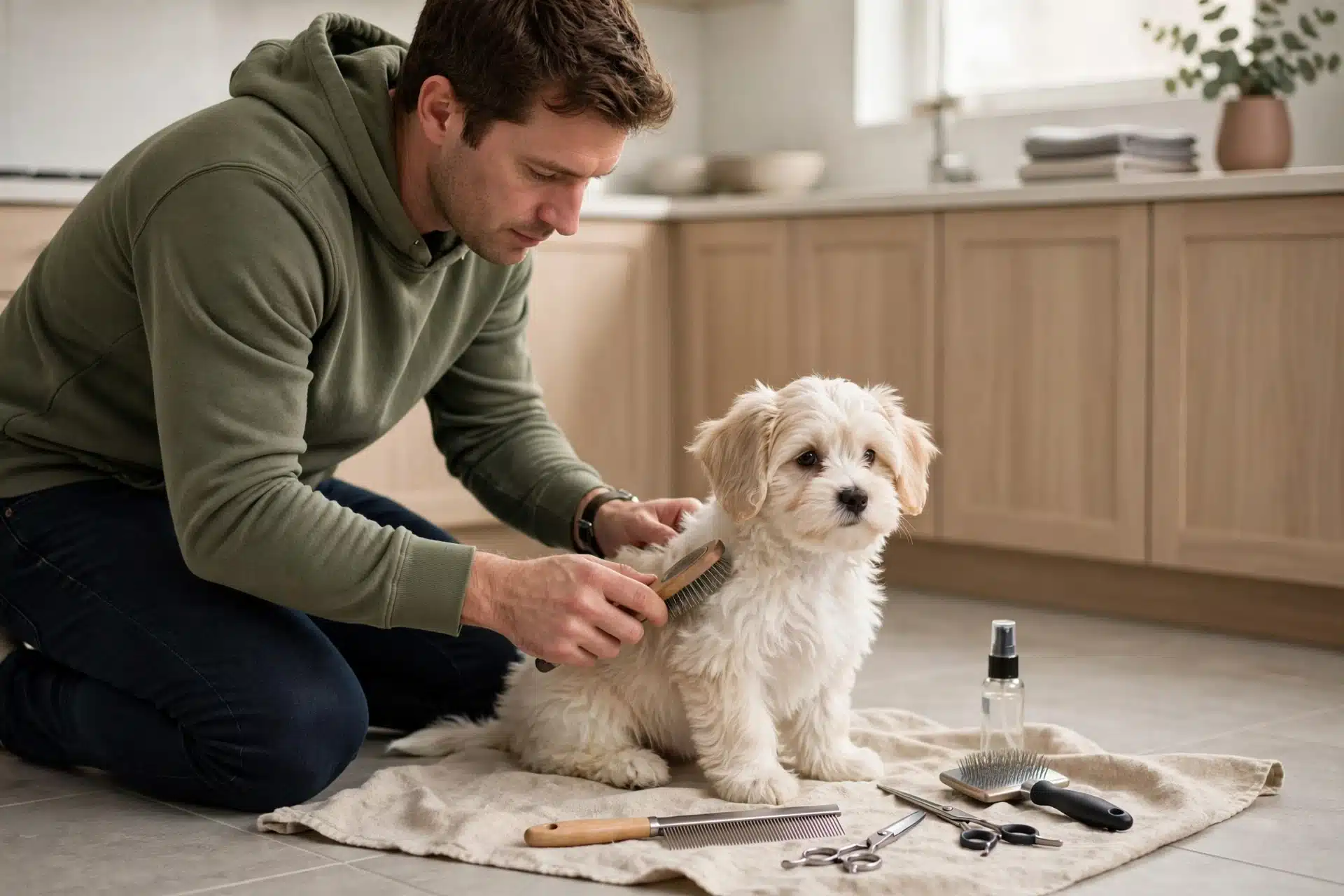
- Brush the coat two to three times per week, or daily in full coat
- Comb down to the skin in small layers to catch hidden tangles
- Clean the eyes and check ears each session
- Trim nails every three to four weeks
- Bathe every one to two weeks, then dry fully
The AKC notes this silky double coat mats fast without care, and the Havanese Club of America recommends brushing two to three times weekly for full coats. Many pet families keep a shorter puppy cut, which cuts brushing time. For a week-by-week plan, this practical Havanese grooming schedule lays out each task by day.
Activity, Walks, and Play
Havanese need moderate exercise: about two short walks a day plus play sessions. At 7 to 13 pounds, they fit apartment life well. Indoors, fetch down a hallway or a puzzle toy works on rainy days. Puppies under a year should stick to gentle play rather than long forced runs, since their growth plates are still open. A tired Havanese is a calm Havanese, and ten minutes of play often prevents an evening of mischief.
A Simple First-Year Training Plan
Havanese are smart and food-motivated, so short sessions work best. Start the first week with name recognition, crate comfort, and a potty routine. By month two, add sit, down, and come. Months three through six are ideal for leash manners and polite greetings, paired with socialization outings. Around six months, begin adolescent refresher drills, because distraction training fades without practice. Keep each session under five minutes and end on a win. Gentle, reward-based methods suit this sensitive breed far better than correction-based training.
Feeding, Growth, and Everyday Wellness
Choosing Food for a Small Breed Puppy
Feed a puppy formula made for small breeds. Small kibble suits tiny mouths, and the calorie density supports quick growth. Most Havanese puppies eat three or four meals a day at first, then settle into two meals after a few months. Keep transitions between foods gradual over a week so upset stomachs stay rare. Our small breed puppy feeding schedule walks through the first week meal by meal.
Weight, Growth, and Body Condition
Havanese adults usually land between 7 and 13 pounds, so extra weight shows up fast. Instead of watching the scale alone, vets use a body condition score, and a 4 or 5 out of 9 is the ideal range according to AAHA’s nutritional guidelines. At that score you can feel the ribs easily and see a clear waist from above.

Routine Wellness Habits
Daily habits catch small problems early. Brush the teeth a few times a week, since small breeds build tartar quickly. Check ears weekly for redness or odor, trim nails monthly, and keep parasite prevention current year round. Annual vet exams handle vaccines and heartworm testing. With those basics in place, most Havanese stay healthy, energetic, and easy to live with for many years.
Health Considerations and Testing to Ask About
Havanese dogs are generally sturdy, but like every purebred, they carry some inherited risks. Responsible breeders screen their breeding dogs for these before producing a litter. Knowing which tests exist helps you separate careful programs from careless ones.
Conditions Breeders Commonly Screen For
The main concerns are patellar luxation (loose kneecaps), inherited eye disease, heart conditions, hearing loss, and a form of dwarfism called chondrodysplasia. The Havanese Club of America’s health guide lists eye exams through OFA’s CAER program, cardiac checks, patella evaluation, BAER hearing tests, and DNA screens for chondrodysplasia among the recommended screenings. Some Havanese also develop dental crowding and allergy-related skin problems as they age. These conditions do not appear in every line, which is exactly why testing matters: breeders who screen can make informed matches and reduce the odds of passing a problem along.
What Testing Does and Does Not Tell You
Testing lowers risk; it removes it. Two normal patella scores in a sire and dam still leave a small chance of luxation in puppies, and some eye diseases surface years after an exam. Think of results as one input, not a promise. A public database from the Orthopedic Foundation for Animals lets you verify a breeder’s claims yourself, so you never have to take a word for it. Combine results with how the breeder answers questions and raises puppies.
Records to Request Before You Pay
Ask for a short, specific set of documents:
- OFA results for both parents: patellas, cardiac, eyes, hearing
- DNA test results for inherited conditions
- The puppy’s vaccination and deworming records
- A recent veterinary exam note
- Registration papers or litter details
Any breeder should hand these over willingly. Hesitation is an answer in itself.
Bringing a Havanese Puppy Home: The First Four Weeks
The first month sets the pattern for everything that follows. A small, social breed like the Havanese settles quickly when the setup, schedule, and vet care are ready before the puppy walks in.
Setting Up the Puppy Area
Pick one small, easy-to-clean space. A playpen with a crate inside, water nearby, and a few toys works better than free run of the house. Use gates to block stairs, since 8-week-old Havanese puppies are tiny and clumsy. Put the crate where the family spends time, because this breed wants company. Ask your breeder what food the puppy is eating and stay with it for the first weeks to avoid stomach upset.
House Training, Sleep, and a Predictable Schedule
Take the puppy out after every nap, meal, and play session, and reward immediately. Puppies this age have small bladders, so expect a few accidents and skip punishment. Keep meals, potty breaks, and naps on the same rhythm each day; predictability speeds learning. Havanese puppies need 18 to 20 hours of sleep a day, so protect nap time even when everyone wants to play.
First Vet Visit and First Month Milestones
Book a vet visit within the first few days. Most puppies continue a vaccine series that starts at 6 to 8 weeks of age, following the AVMA’s vaccination guidance. Bring the breeder’s health records so your vet can plan the rest of the series. By week four, expect steady weight gain, a reliable potty routine taking shape, and growing comfort with handling.

Ready to meet a Havanese of your own? Sage Puppies raises each litter with an owner-run matching process, so your puppy fits your home, not just your wish list. Browse available puppies, ask questions, and start the application today. Local pickup in Utah or nationwide delivery, whichever works for your family.
Frequently Asked Questions
Q1: What is the Havanese breed history and temperament overview?
The Havanese is a bichon-type companion dog from Cuba, named for Havana and refined from small Tenerife dogs. The AKC recognized it in 1996. Its temperament is friendly, playful, alert, and intelligent, with a sweet, people-loving nature.
Q2: How big do Havanese puppies get?
Adults stand 8.5 to 11.5 inches tall and usually weigh 7 to 13 pounds, with adult height reached by 8 to 10 months.
Q3: How much grooming does a Havanese need?
Brush two to three times weekly, or daily in full coat, and bathe every one to two weeks. A shorter puppy cut cuts brushing time.
Q4: Can a Havanese be left alone during the workday?
Not for long hours. The breed was bred for companionship, so homes with someone around most of the day, or with backup company, fit best.
Q5: What health tests should a Havanese breeder provide?
Ask for OFA results on patellas, cardiac, eyes, and hearing, plus DNA screening for chondrodysplasia, along with vaccination and deworming records.
Q6: How much exercise does a Havanese puppy need?
Two short walks plus play sessions daily suit this breed. Puppies under a year should stick to gentle play, not long forced runs.
Conclusion
The Havanese is a small, silky companion dog with a rich Cuban history and a people-first temperament. It stands 8.5 to 11.5 inches tall, weighs 7 to 13 pounds, and thrives in homes where someone is around most of the day. Expect regular brushing, two short walks daily, and short, positive training sessions. Before you buy, ask any breeder for OFA health testing on both parents, DNA results, and full vaccination records. Match the breed’s needs to your real routine, not just the fluffy face, and a Havanese rewards you with years of cheerful, devoted company.