Quick Summary: Quick Summary: Reputable puppy breeders raise puppies in transparent, home-based environments with health testing and early socialization, offering more trust and support than pet stores. Pet stores often source puppies through third parties, making it harder to verify health, origin, and care, which can pose health risks. Families should ask for clear records, meet the parents, and understand early care before buying. Choosing a breeder over a store generally leads to healthier, better-matched puppies and fewer surprises.
If you are looking for a Puppy Breeder near you, a good breeder usually gives your family more peace of mind than a Puppy Store. You can often see the parents, review health details, and get support after pickup. A pet store may feel faster and easier, but you usually get less control over how the puppy was raised before sale.
Most families are weighing the same things: price, timing, convenience, and trust. This Dog Breeder Comparison focuses on the real issue – not just where the puppy is sold, but how that puppy was bred, screened, socialized, and prepared for home life.
We work from the standards careful buyers use when judging a reputable Puppy Breeder. That includes transparent sourcing, early care, and honest answers. If you want a Puppy Breeder you can trust, this guide will help you compare both paths with clear eyes.
Puppy Breeder vs Pet Store: At a Glance
| Reputable puppy breeder | Pet store puppy | |
|---|---|---|
| Sourcing model | Directly raised by the breeder in a home-based program | Retail resale model, often through brokers or third parties |
| Health documentation | Parent health focus, vet-checked puppies, clear records | Varies widely; buyer must verify carefully |
| Early socialization | Home-raised with daily handling and household exposure | Unknown or inconsistent to the buyer |
| Buyer questions | Asks about home, timing, lifestyle, and fit | Usually limited to store transaction details |
| Support after purchase | Guidance from application through go-home day | Often basic retail support only |
| Best fit | Families wanting transparency, match-making, and a small-breed companion | Shoppers prioritizing immediate convenience over program transparency |
How Reputable puppy breeder and Pet store puppy Compare
Reputable puppy breeder
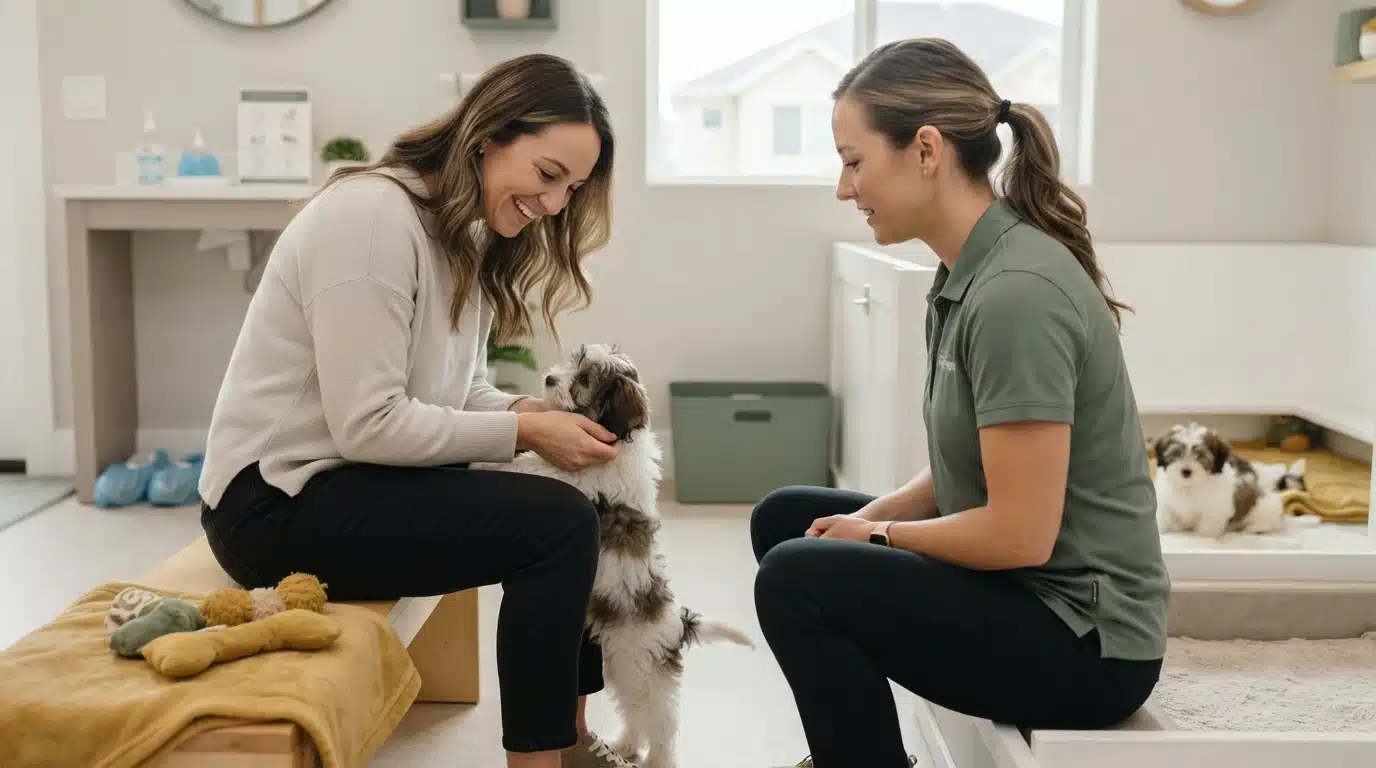
A reputable breeder like Sage Puppies raises puppies directly in a home program and guides families through an application-first process. It fits buyers who want clear records, daily socialization, and help choosing the right small-breed match.

Key strengths
- Direct breeder oversight
- Vet-checked puppies and clear records
- Family fit questions and go-home support
Pet store puppy
A pet store puppy is a retail purchase, often sourced through third parties rather than the person who raised the litter. It fits shoppers focused on speed and convenience, but buyers should verify records and sourcing carefully since the CDC has linked some illnesses to pet store puppies.
Where the Puppies Come From
Why sourcing transparency changes everything
Where a puppy starts life shapes health, stress level, and trust. If a seller cannot clearly show where the puppy was born, raised, and handled, you are buying with a blindfold on.
That matters for more than peace of mind. The CDC reported a multistate outbreak tied to pet store puppies, with 118 people in 18 states affected, and 142 of 149 investigated puppies had received at least one course of antibiotics in store records reviewed by officials CDC outbreak report. A long supply chain can mean more transport, more mixing with other dogs, and fewer clear answers.
Families should look for direct, simple proof of origin:
- Who bred the litter
- Where the puppies were raised
- How early socialization happened
- What health testing was done on the parents
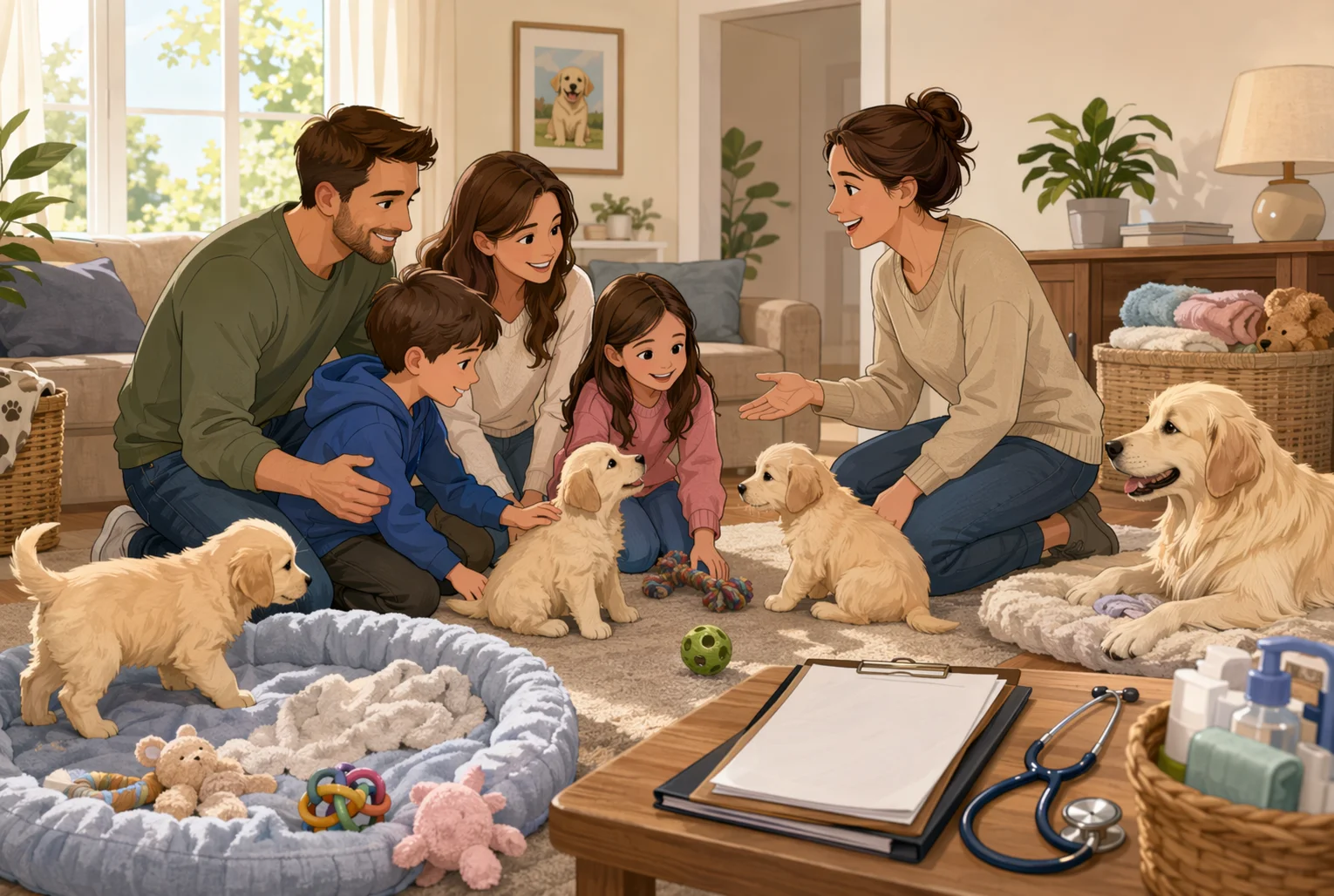
A transparent breeder usually welcomes these questions. A vague seller often redirects them.
If the story changes when you ask about parents, housing, or transport, stop there.
For families comparing boutique programs, this is where Sage Puppies stands apart. A home-raised setup with clear parent info and a family-first process is very different from a puppy that moved through brokers, distributors, or store inventory.
What families can verify before they buy
You do not need to guess. You can verify key facts before you commit.
Use this checklist:
- Ask to see the dam and, if possible, the sire.
- Confirm the puppy’s birth setting was a home or clearly identified breeder location.
- Review parent health testing records.
- Ask for the puppy’s vet record and vaccine dates.
- Ask whether the puppy changed hands through a broker or transporter.
- Confirm who handled early potty, crate, and people exposure.
The CDC also says even healthy-looking dogs can carry germs, and it advises a vet check within a few days of bringing a new puppy home CDC puppy prevention guidance.
| What to verify | Good sign | Red flag |
|---|---|---|
| Breeder origin | Specific address and parent details | “From our network” only |
| Early care | Home-raised routine explained | No clear answer |
| Paper trail | Records match dates and puppy | Missing or inconsistent files |
Also Read: Havapoo Breeder Near Me: How to Find a Reputable Breeder (2026)
Health, Vaccines, and Veterinary Oversight
A good puppy source should show you clear health records, not just make promises. The biggest difference is simple: a responsible breeder tracks health before and after birth, while a pet store often shows you only the puppy in front of you.
What responsible health screening usually includes
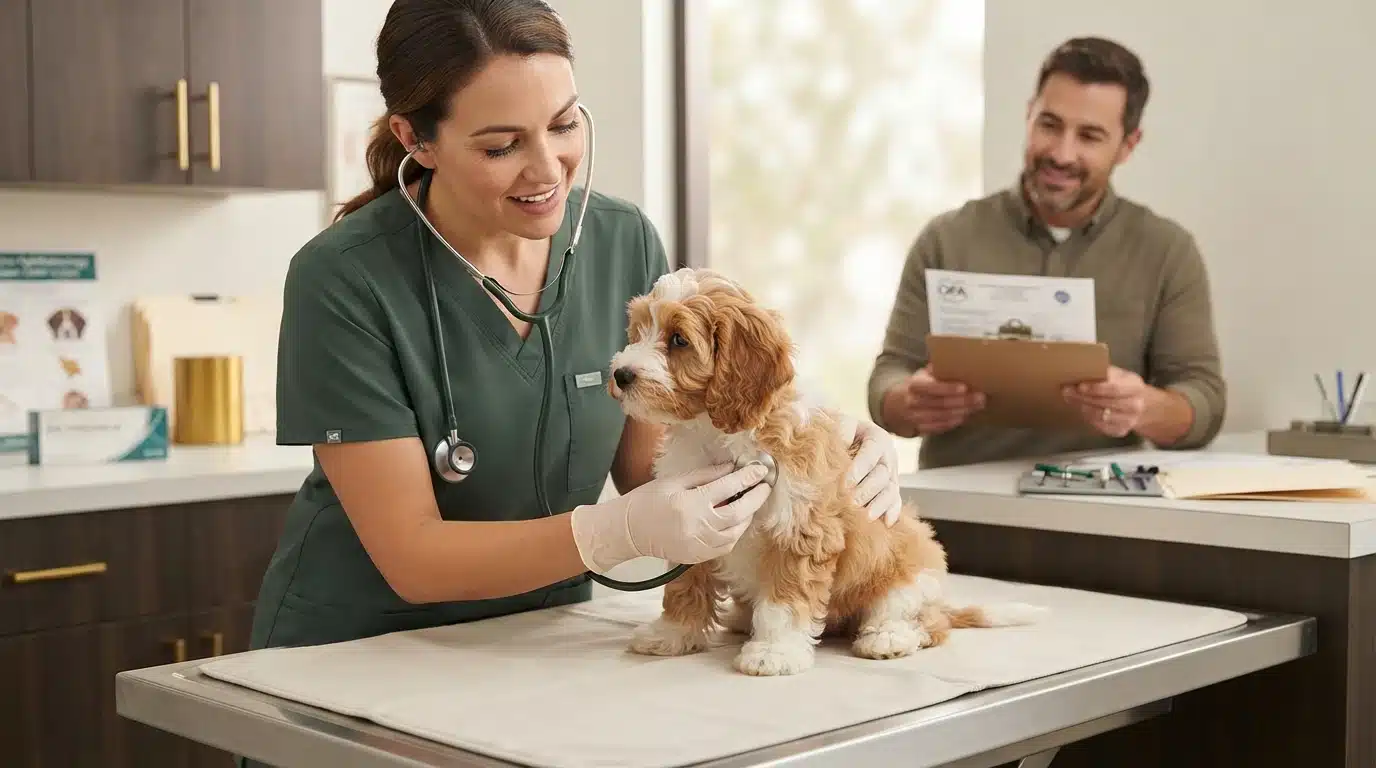
Responsible screening starts with the parents, not the sales page. You should expect proof of age-appropriate vaccines, deworming, a hands-on vet exam, and breed-relevant testing for the mom and dad when that applies.
Ask for:
- A dated vaccination record
- A veterinary exam summary
- Deworming details
- Parent health testing, if offered
- A clear window for your first vet visit after pickup
The CDC also says new owners should take a puppy to a vet within a few days and remember that even healthy-looking dogs can carry germs that spread to people according to CDC guidance.
A “health certificate” is not the same thing as full screening. It shows a recent exam, not lifelong quality.
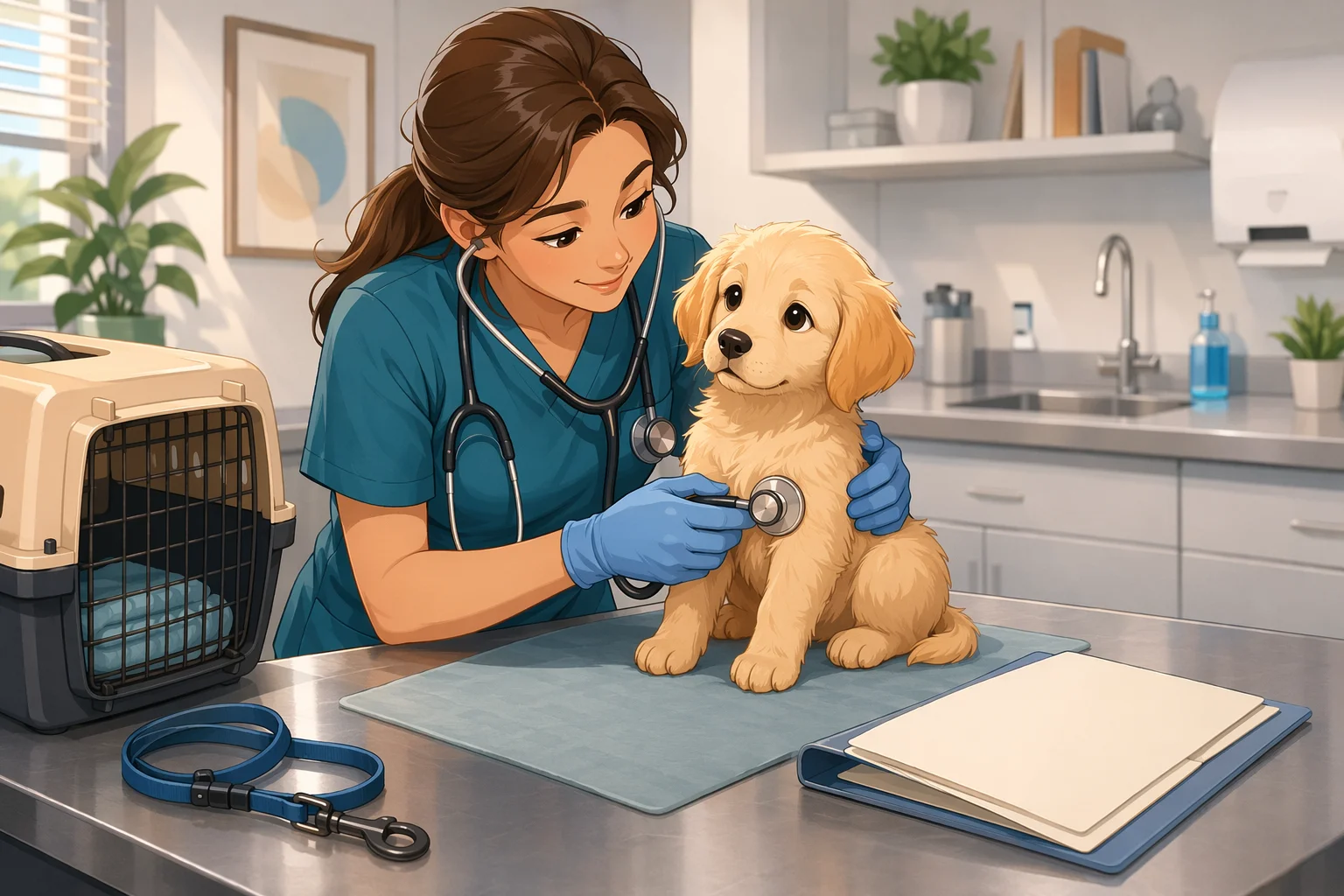
For families comparing breeders, this is where boutique programs like Sage Puppies stand out when they openly share parent testing, early care, and pickup guidance instead of giving you a short checklist at checkout.
Why pet-store puppies deserve extra scrutiny
Pet-store puppies can look fine and still come with more unknowns. The main issue is distance from the source. You may not meet the breeder, see where the litter was raised, or verify how the puppy was handled before arrival.
Check these points before you buy:
- Who bred the puppy?
- Can you see full medical records?
- Who gave each vaccine – a vet or store staff?
- Can you review the puppy’s transport timeline?
That extra caution matters. CDC notes some pet store puppies were tied to multidrug-resistant Campylobacter infections in people, and the linked investigation found heavy antibiotic use in many puppies in this CDC outbreak report.
If a seller avoids source details, parent info, or vet paperwork, treat that as a warning sign.
Also Read: Home
Early Socialization and Home Rearing
How early handling shapes the transition home
Early socialization starts before your puppy ever meets you. Research reviewed by the AVMA says puppies benefit most from positive exposure to people, sounds, surfaces, and normal home life during the sensitive period, starting by or before 3 weeks and continuing after they go home.
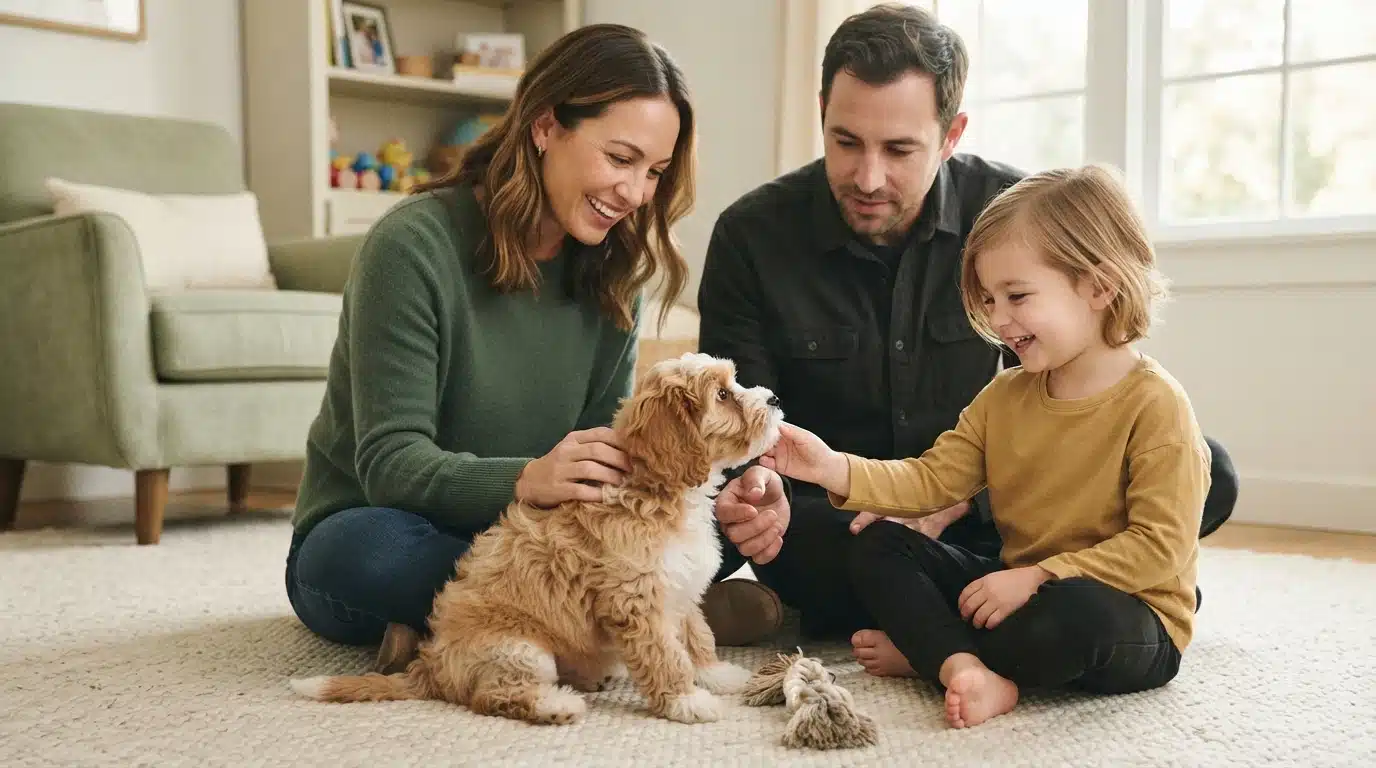
A home-raised puppy often has an easier first week because daily life already feels familiar. Think vacuum noise, kitchen sounds, gentle grooming, short car rides, and calm human handling.
Good early handling usually includes:
- being touched on paws, ears, and mouth
- meeting different adults and safe children
- hearing normal household noise
- short, low-stress time away from littermates
- learning that new things are safe, not scary
A breeder matters here. The AKC notes that puppies should move into the heart of the home during key weeks so they hear voices and everyday sounds. That is a very different start from a puppy raised in a back room or retail setting.
Ask where the litter is raised, what the puppies hear each day, and how handling is done. Vague answers are a red flag.
Why family fit depends on more than breed labels
Breed gives clues. It does not tell the whole story. Temperament also comes from genetics, early care, litter dynamics, and how well the breeder matches each puppy to the home.
Use this simple check before choosing:
- Your home energy level
- Kids’ ages and handling skills
- Work schedule and alone time
- Grooming tolerance
- Noise and visitor traffic
| Factor | Why it matters | Better question to ask |
|---|---|---|
| Breed mix | Sets general tendencies | What traits show up in the parents? |
| Early rearing | Shapes confidence | Was the puppy raised in a home? |
| Individual puppy | Personalities vary | Which puppy fits our pace? |
Sage Puppies leans into this by focusing on family-first matching, not just breed labels.
Also Read: 10 Adorable Havapoo Colors You Need To See 2026 Guide
Price, Value, and What You’re Actually Paying For
Why the cheapest option is rarely the clearest one
A low sticker price can hide real costs. If a puppy looks much cheaper at a pet store, ask what is not included.
Pet store pricing often bundles retail overhead, financing, add-ons, and fast turnover. It does not always give you a clear picture of the puppy’s early care or source history. Public health records also matter here. CDC reported a multistate outbreak tied to pet store puppies, with 118 illnesses across 18 states and 95% of investigated puppies having received antibiotics in one review of store records, which raises fair questions about sourcing and early management CDC outbreak report.
A higher breeder price can still be a better value if it covers things like:
- health testing of parent dogs
- age-appropriate vet care
- early socialization
- clear records
- direct answers about where and how the puppy was raised
Price tells you what you pay today. Value tells you what risks, support, and preparation come with the puppy.
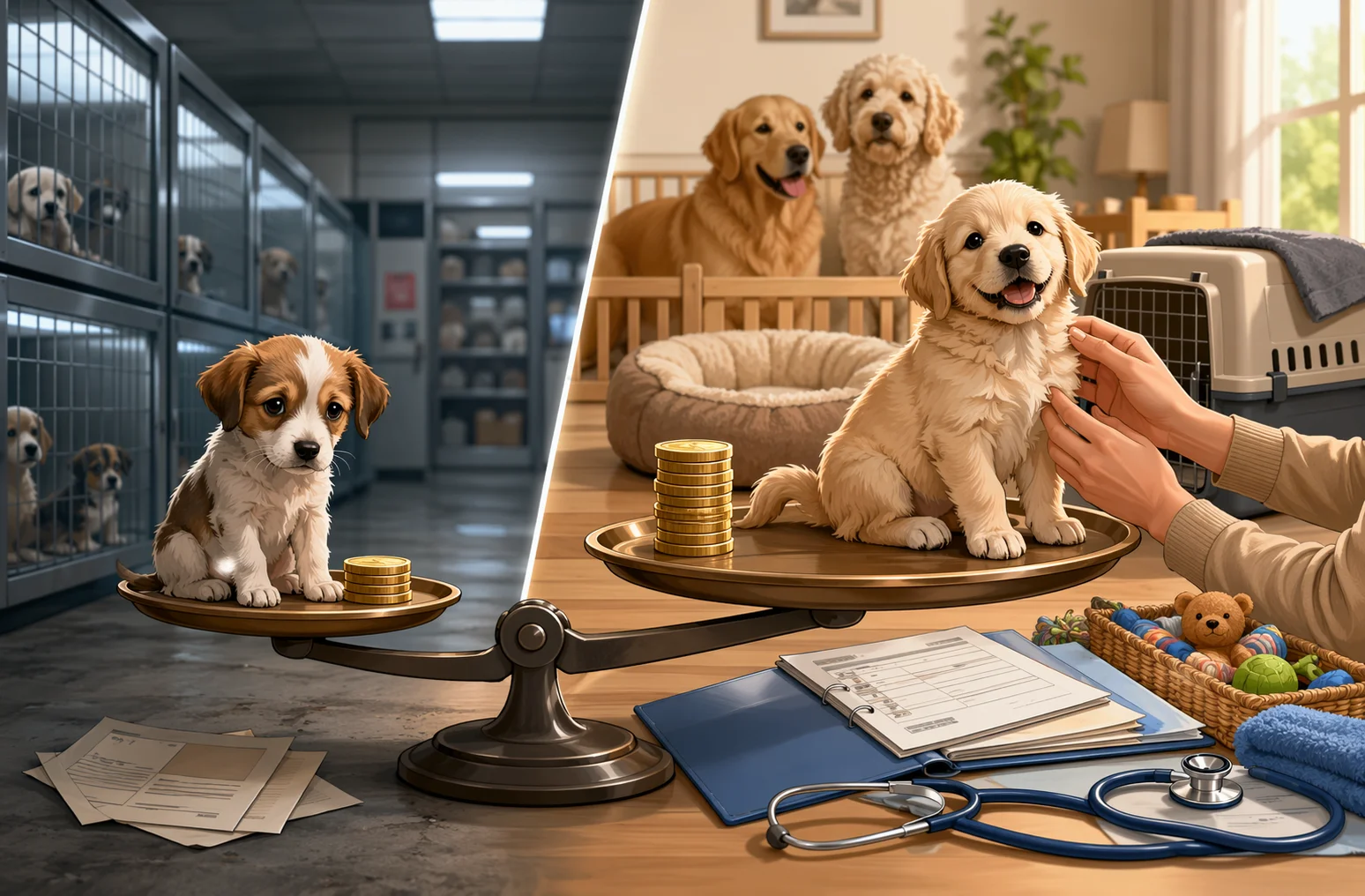
How to compare included value fairly
Use the same checklist for every option. That keeps emotion out of it.
| What to compare | Reputable breeder | Pet store |
|---|---|---|
| Parent health testing | Usually discussed directly | Often limited or indirect |
| Raising environment | Easier to explain and verify | May involve multiple handoffs |
| Medical records | Direct and detailed | Can be basic or sales-led |
| After-purchase support | Often ongoing | Varies by store |
Ask these 3 questions:
- What exact records come home with me?
- Who raised this puppy from birth to now?
- What support do I get after pickup?
CDC also says even healthy-looking puppies can carry germs, so a prompt vet visit after purchase matters CDC puppy prevention guidance. Sage Puppies fits families who want that value to be visible, not guessed.
Also Read: Latest News on Puppies For Sale Near Me in the US
Questions to Ask Before You Commit
The right questions can save you money, stress, and heartbreak. Ask them before you leave a deposit, not after.
The essential breeder questions
Start with health, home life, and paperwork. Ask to see proof, not just promises.
- What health testing did both parents complete?
- Can I meet the mother, and see where the puppy is raised?
- What vaccines, deworming, and vet records will I get in writing?
- How do you handle early socialization, noise exposure, and potty habits?
- What is your take-back policy if my family cannot keep the puppy?
- When can the puppy go home, and what support do you offer after pickup?
The CDC says healthy puppies can still carry germs, and advises buyers to get a vet exam within a few days of bringing a puppy home, according to CDC guidance for new dog owners. That makes written records a must.
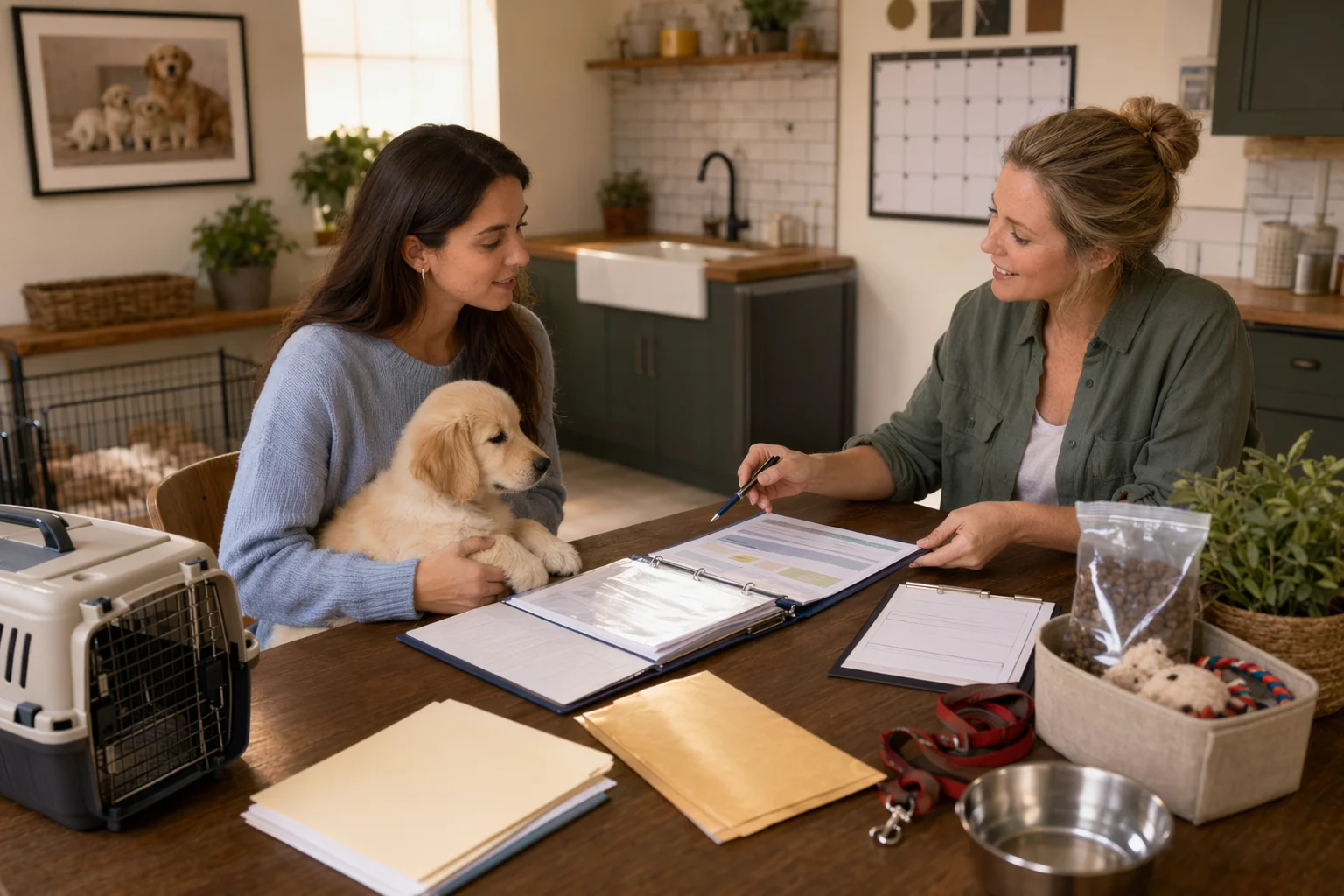
If you are comparing programs, a boutique breeder like Sage Puppies should be able to explain parent testing, home raising, and transition support in plain language.
Red flags that should slow you down
Pause the deal if you hear vague answers or feel rushed.
- The seller will not show parent dogs or the puppy’s living space.
- They push a same-day deposit.
- They offer many breeds at once with little detail.
- They rely on a “health certificate” but no parent testing.
- They avoid questions about returns, illness, or transport.
A clean store or nice website does not prove careful breeding.
CDC documented a multistate outbreak linked to puppies sold through pet stores, with 118 illnesses across 18 states in one investigation, in this CDC outbreak report.
Also Read: Early Development
Which Should You Choose: Puppy Breeder or Pet Store?
Choose a breeder when trust and fit matter most
Choose a breeder if you want to know who raised your puppy, how the parents were tested, and what early care looked like. That matters most for first-time families and small-breed shoppers who want fewer surprises.
A good breeder should show you more than a cute puppy. Cornell notes that responsible breeders test for breed-related health issues, keep the environment clean, and provide early socialization and lifelong support, according to Cornell’s breeder guidance.
Use this short check before you decide:
- Ask for parent health testing and clear records.
- Ask how the puppies are raised, handled, and socialized.
- Ask who you can contact after pickup if problems come up.
- Ask if the breeder is matching puppies by temperament and family fit.
| Best choice if you want… | Breeder usually fits better | Why |
|---|---|---|
| Clear background | Yes | You can trace parents, care, and early routine |
| Better match for family life | Yes | Good breeders screen buyers and guide placement |
| Ongoing support | Yes | Many stay involved after adoption |
If the breeder welcomes hard questions, that is usually a good sign.
Sage Puppies fits this path well because the process is built around home-raised care, transparency, and fit, not quick sales.
Choose caution over convenience when the story is unclear
A pet store may feel easier because the puppy is available now. Still, speed should never beat clarity. If you cannot clearly trace where the puppy came from, who handled health decisions, or how transport worked, pause.
The CDC says puppies can carry germs that make people sick, and some strains have spread through pet store puppies. In one CDC-linked outbreak, 113 cases across 17 states were tied to contact with pet store puppies, as shown in the CDC outbreak summary.
Watch for these red flags:
- Vague answers about the breeder or broker
- Pressure to buy fast
- Limited records or generic paperwork
- No clear plan for support after the sale
| Warning sign | Why it matters |
|---|---|
| Unclear sourcing | You cannot verify care, transport, or breeding quality |
| Convenience-first sales | Fast sales often mean weaker screening and support |
| Minimal history | You know less about health and temperament |
If the story feels incomplete, walk away. A trustworthy puppy source should be easy to verify.

If you want more than a quick sale, start with a breeder who shows you how each puppy is raised. Sage Puppies helps families compare with confidence through health-tested parents, early socialization, and a clear, family-first process. View available puppies, review how it works, and take the next step when the fit feels right.
Frequently Asked Questions
Q1: What are the main differences between puppy breeder and pet store in the US?
A breeder should show parent health testing, living conditions, and early socialization. A pet store often gives less source detail. Breeders usually know each puppy well, while stores may focus more on quick sales and convenience.
Q2: How can I identify a reputable puppy breeder near me in the United States?
Ask to see health records, parent info, and where puppies are raised. Look for clear screening, honest answers, and no pressure. A strong breeder cares about fit, not speed. Sage Puppies follows that more transparent, family-first model.
Q3: What should I ask when visiting a local puppy breeder in my area?
Ask about health testing, vaccines, socialization, feeding, temperament, and pickup timing. Also ask how they match puppies to families and what support comes after adoption. Good breeders answer clearly and welcome careful questions.
Q4: Is it safer to buy from a breeder than a pet store?
Often yes, if the breeder is reputable. The real issue is transparency. You want proof of health practices, clean raising conditions, and breeder involvement from birth onward.
Q5: Why do breeder puppies sometimes cost more?
Price often reflects health testing, better care, early handling, and limited litters. > A lower upfront price can mean higher vet bills and behavior issues later.
Conclusion
A pet store may feel fast and easy, but a reputable breeder usually gives your family more proof, more access, and more trust. The safest choice is the one that lets you verify health testing, meet the people raising the puppy, ask hard questions, and understand exactly where the puppy came from.
This matters for health too. The CDC says healthy dogs can carry germs, and some Campylobacter strains have spread through contact with pet store puppies according to CDC. A CDC outbreak report also linked multidrug-resistant Campylobacter cases to puppy exposure in multiple states in this investigation.
In short, buy slow. Look for transparency, humane care, family raising, and clear records before you bring a puppy home.