Quick Summary: Many Americans searching for puppies encounter a mix of breeder ads, shelters, and scams. It’s safest to verify seller credentials, ask for health records, and consider adopting from shelters or rescues first. Be cautious of fake listings, avoid risky payment methods, and always visit in person or do a video call before buying.
Searches for Puppies For Sale and Puppies Near Me now lead many Americans into a packed mix of breeder ads, adoption sites, pet store listings, and scam posts. The smart first move is simple: verify the seller, compare local shelter and rescue options, and ask for real health records before you send any deposit for Puppies For Sale.
The risk is real. Buyers can lose cash to fake listings or bring home a sick puppy with big vet bills. At the same time, many U.S. shelters and rescues still have young dogs and puppies ready for homes, even while US Puppies Sale listings flood search results.
This guide tracks the latest Puppies For Sale market news, local buying options, seller checks, and buyer protections. It draws on current U.S. marketplace patterns and common consumer warnings so you can compare breeders, pet stores, rescues, and shelters with a clear head.
Where U.S. Buyers Are Actually Finding Puppies Right Now
Search by ZIP Code, Breed, and Distance
Most buyers start with local search filters, not broad browsing. They type a ZIP code, set a radius, and narrow by breed, size, or age. That is why “puppies near me” results now feel more like a map than a directory.
Sites that rank well with buyers usually make three things easy:
- ZIP code search
- distance filters
- breed or age filters
Petfinder is a clear example. Its dog search lets users filter by location and distance, and the main platform says it lists pets from more than 14,500 shelters and rescues across the U.S. Petfinder says those listings come from a large national network, which explains why many buyers check there first even if they plan to buy from a breeder later.

A local result is not always a local breeder. Some listings include transport options, so read the fine print before you message.
Shelters and Rescues Often Have Puppies Too
A lot of first-time buyers miss this. Shelters and rescues do get puppies, especially mixed breeds and surprise litters. On Petfinder, buyers can search dogs and puppies for adoption near you and filter by age, breed, and distance in a few clicks through its adoption search.
Buyers usually compare three paths:
- Breeders for a planned breed match and health background
- Rescues for foster-based notes on behavior
- Shelters for faster local availability
If you want a small companion breed, a breeder like Sage Puppies may offer more detail on parent testing and early social time. If your main goal is to bring home a puppy soon, shelters and rescues still deserve a serious look.
Also Read: 7 Best Small Breed Puppies For Apartment Living In 2026
Adoption Is Still the Fastest Low-Risk Alternative
What Adoption Usually Includes
Adoption is often the quickest way to bring home a puppy or young dog without sorting through breeder claims, waitlists, or transport details. Many shelters and rescues bundle the basics into one fee. According to Animal Humane Society, that usually includes:
- A physical exam
- Age-based vaccines
- Deworming
- Spay or neuter
- A microchip
- Basic behavior review
| Common adoption item | Usually included | Why it matters |
|---|---|---|
| Vet exam | Yes | Spots issues early |
| Vaccines | Yes | Cuts first-month costs |
| Spay or neuter | Yes | Saves time and money |
| Microchip | Often | Helps with recovery if lost |
Ask for the full medical record before you pay. A good shelter hands it over fast.
Why Many Families Start Here First
Families start with adoption because it lowers guesswork and upfront risk. You can often meet the dog in person, ask staff what they have seen, and sometimes adopt the same day. Jacksonville Humane Society says its dogs are adopted first come, first served, with core care done before adoption.
A smart first pass looks like this:
- Check local shelters daily
- Filter for age, size, and energy level
- Read medical notes
- Ask about foster history
- Bring your family to meet the dog
- Adoption also gives you a clear price range
- You may avoid surprise setup costs
- Staff can flag fit issues with kids, cats, or other dogs
If you want a very specific breed or early socialization history, a transparent breeder like Sage Puppies may fit better. If your goal is speed and lower risk, adoption still leads.
Also Read: Early Development
How to Spot a Responsible Breeder Before You Put Down a Deposit
The Documents Worth Asking For
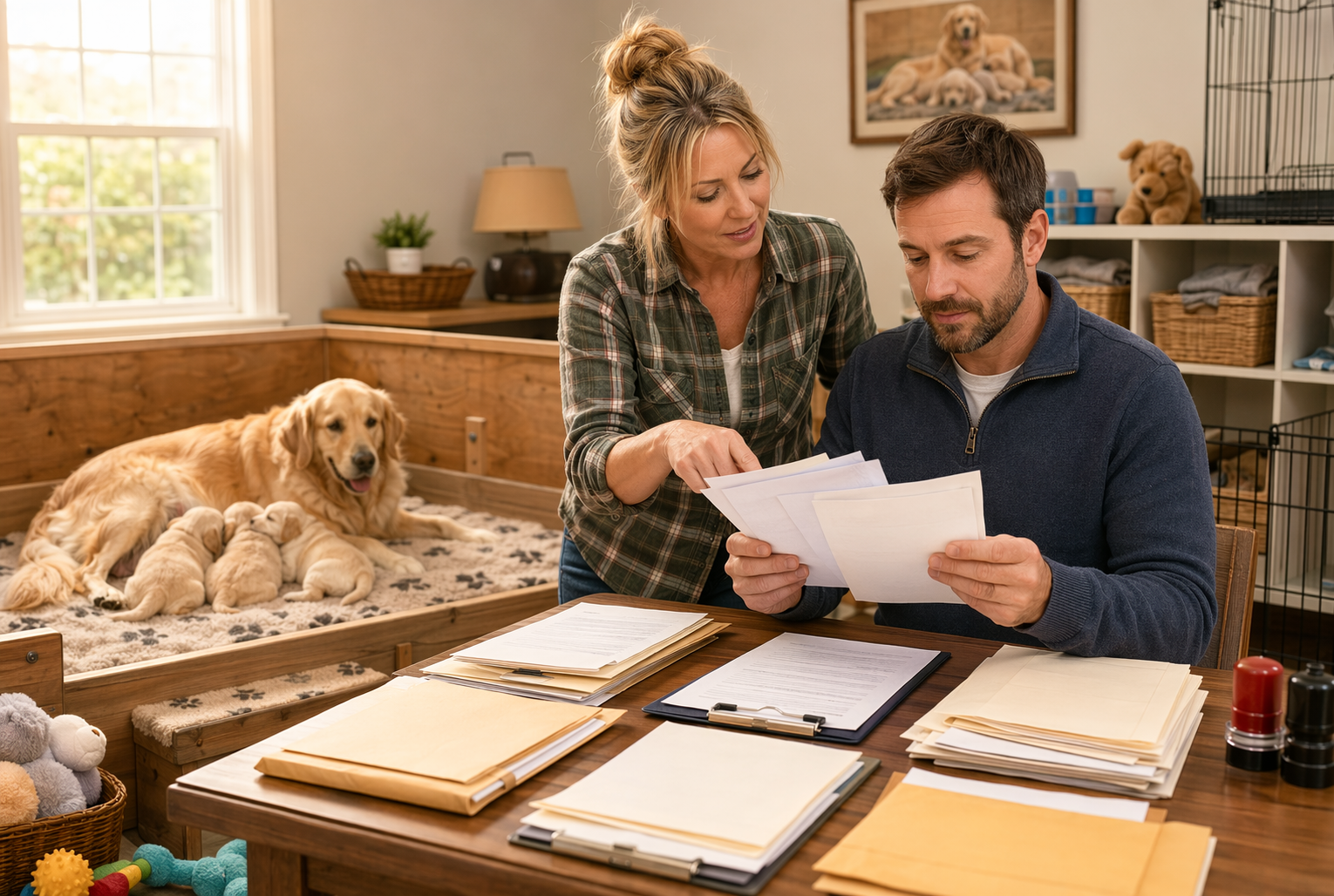
Ask for proof before you send any money. A good breeder should gladly show:
- Vet records for the puppy
- Vaccination and deworming history
- Health testing for the parents, such as OFA or eye clearances
- A written contract with deposit, refund, and return terms
The AKC says responsible breeders should share health screening proof and paperwork before you leave with a puppy, not later by email or mail, according to AKC’s breeder guidance.
| Document | Why it matters |
|---|---|
| Vet record | Confirms basic care started |
| Parent health tests | Lowers risk of inherited issues |
| Contract | Shows clear terms and accountability |
| Registration papers | Helps verify litter details |
Visit the Home, Kennel, or Nursery Area
Always see where the puppies live. That visit tells you more than any polished website.
Look for:
- Clean spaces with fresh water and good airflow
- Bright, alert puppies that seem curious
- At least one parent dog on site when possible
- Signs of early social time, like normal household sounds and gentle handling
AKC advises buyers to visit the breeder’s home or kennel, meet a parent, and check that dogs are clean, lively, and well cared for in its responsible breeder checklist.
If a breeder will only meet in a parking lot or push for shipping before a real visit, slow down.
Red Flags That Should Stop the Sale
Walk away if you see any of these:
- No phone or video call
- Pressure to pay fast
- Gift cards, wire transfers, or crypto only
- Stock photos or copied listings
- No paperwork until “later”
The FTC warns that legit sellers should allow a visit or video meeting and should not demand risky payment methods.
Also Read: Home
Why Puppy Scams Are a Bigger Risk in 2026
The Most Common Scam Patterns
Puppy scams keep working because buyers now shop faster, mostly on phones, and often trust polished listings too quickly. The BBB says over 50% of pet scams start on a website found through search or social media, and fake sellers often copy real breeder photos, reviews, and wording to look legit according to its 2025 update.
Common patterns include:
- Stolen puppy photos used on fake breeder sites
- Low prices on high-demand breeds to push fast deposits
- No live video call or excuses about why pickup is not possible
- Fake shipping companies asking for crate, insurance, or temperature fees
- Pressure tactics like “another family is ready to pay now”
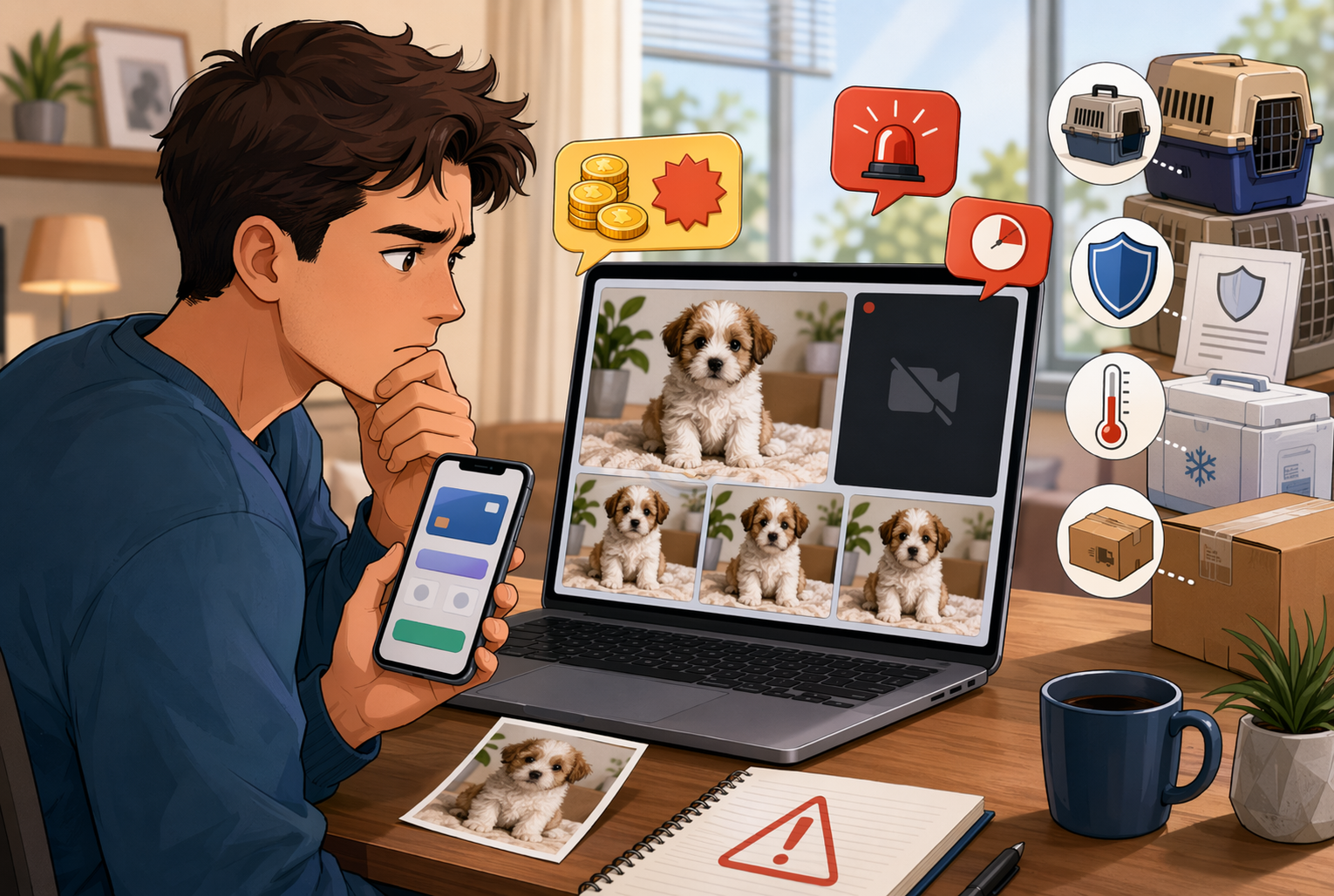
If a seller avoids live video, in-person pickup, or clear health records, slow down.
How to Pay Safely
The FTC warns that scammers often demand gift cards, wire transfers, crypto, or payment apps because getting your money back is hard in its consumer alert. That matters even more in 2026, since many deals now move from ads to DMs in minutes.
Use this payment checklist:
- Pay by credit card when possible.
- Never send extra shipping fees after the first payment.
- Match the payee name to the breeder or business name.
- Refuse rushed deposits before a live video visit.
- Keep screenshots, invoices, and texts in case you need to dispute the charge.
A real breeder welcomes questions. A scammer wants fast money.
Also Read: 7 Best Places to Find Puppies for Sale in California
The Federal and State Rules Buyers Should Know
What Federal Proposals Aim to Change
Federal law already covers many commercial dog sellers through the Animal Welfare Act, which gives USDA power over licensing, care standards, records, and enforcement for regulated dealers under the AWA. In 2026, buyers also saw fresh pressure for tougher rules.
- Congress introduced the Petfax Act of 2026
- It would require covered sellers to give buyers source details, USDA license info, recent AWA violations, and health history before a sale
- USDA also opened a 2026 request for input on stronger standards for breeding females, exercise, and socialization
Key point: these are proposals or enforcement moves, not a full national reset for every puppy sale yet.
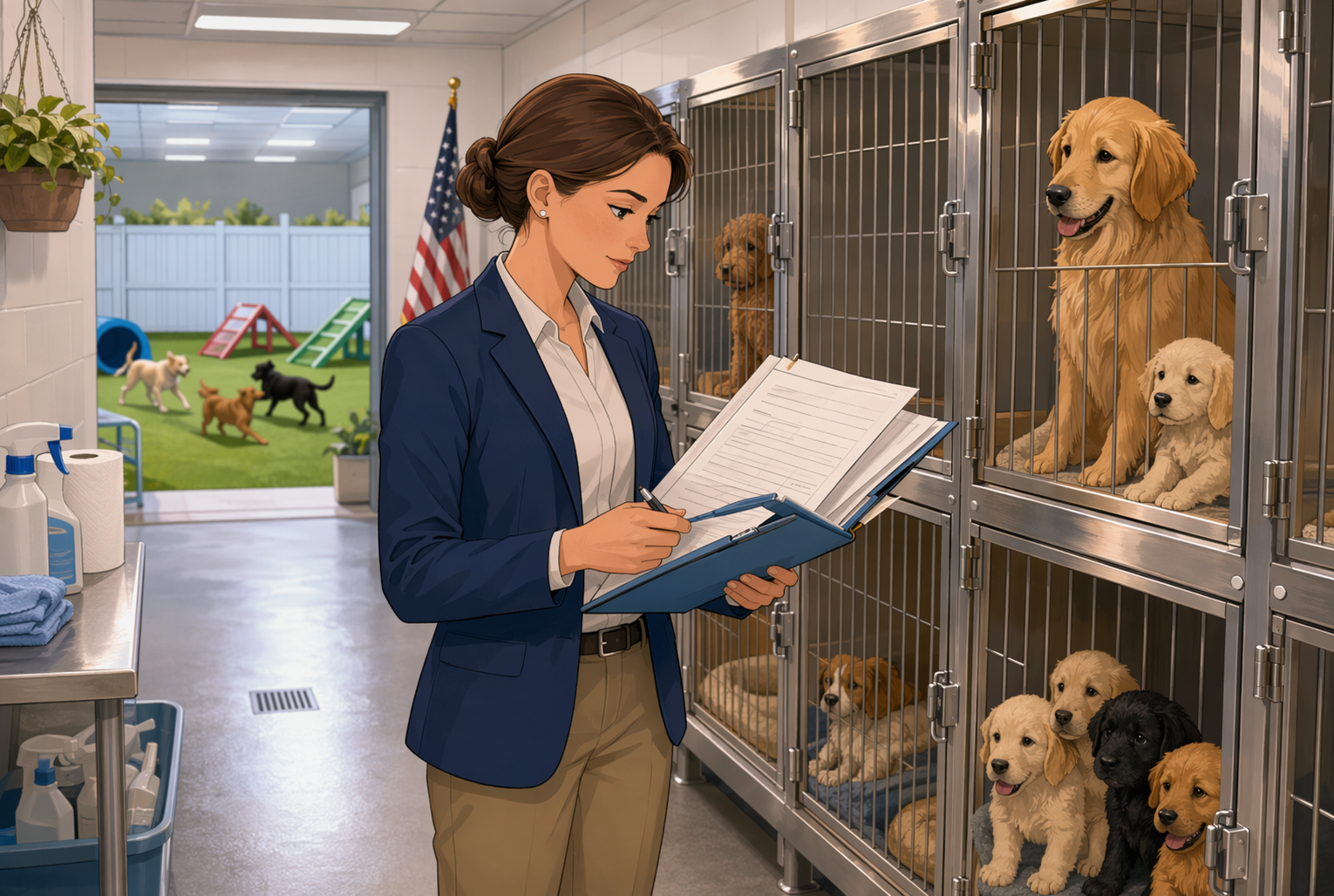
So if you shop online, do not assume a federal proposal already guarantees seller honesty. Ask for:
- USDA license number, if applicable
- Vet exam date
- Vaccine record
- Written health guarantee
Why State Rules Still Matter Most Right Now
State and local rules still shape the real buying experience more than Washington does. Some states or cities restrict pet store puppy sales, while others focus on minimum sale age, health disclosures, or buyer remedies if a puppy gets sick soon after purchase. The Animal Legal and Historical Center notes that about 28 states plus D.C. address minimum sale age, usually 8 weeks in state puppy sale laws.
Use this quick check before you pay:
| Rule area | What buyers should verify | Why it matters |
|---|---|---|
| Minimum age | Puppy is old enough under state law | Early separation can harm health |
| Seller status | Breeder, broker, pet store, or rescue | Rules vary by seller type |
| Health remedy | Refund, replacement, or vet coverage | Buyer rights differ by state |
Also Read: Top 9 Small Breed Puppies for Sale Near You in 2026
How to Choose the Right Puppy for Your Home
Breed, Size, and Energy Level
Start with your real life, not the puppy photo. The best match fits your space, schedule, and noise tolerance. The AKC says buyers should look closely at energy level, friendliness with kids or other pets, grooming, and time away from home when picking a dog based on lifestyle questions.
Use this quick check:
| Factor | Low-fit sign | Better-fit sign |
|---|---|---|
| Size | You want a large breed in a tight space with little exercise time | You can match size with room and daily activity |
| Energy | You work long hours and want a high-drive puppy | You can give walks, play, and training every day |
| Grooming | You want low upkeep but choose a heavy coat | You are okay with brushing or grooming costs |
Ask yourself:
- Do I want a lap dog, family playmate, or walking buddy?
- How many hours will the puppy be alone?
- Can I handle barking, shedding, and training work?
A calm breed in an active home can adapt. A very high-energy breed in a low-energy home usually struggles.
Costs Beyond the Purchase Price
The price you pay upfront is only part of the bill. AKC notes first-year and ongoing costs often include food, vaccines, spay or neuter care, crate, training, grooming, flea and heartworm prevention, and emergency vet visits beyond the puppy’s purchase price.
| Cost area | What to expect |
|---|---|
| One-time setup | Crate, bed, leash, bowls, first vet visit |
| Monthly basics | Food, treats, preventives |
| Variable costs | Grooming, training classes, pet sitting |
| Surprise costs | Illness, injury, urgent care |
- Small dogs may eat less.
- Larger dogs often cost more to feed, board, and groom.
- Curly or long coats usually need more care.
If a breeder like Sage Puppies is transparent about health testing and early care, that helps you budget with fewer surprises.
Also Read: Havapoo Breeder Near Me: How to Find a Reputable Breeder (2026)
What to Do Before You Bring a Puppy Home
Your Final Pre-Purchase Checklist
Do the setup before pickup day. That lowers stress for you and the puppy. Cornell says a good breeder should provide health testing, early socialization, deworming, and a vet exam before the puppy goes home, so ask for records and read the contract closely Cornell guidance.
Use this checklist:
- Confirm vaccines, deworming, and exam records
- Get the puppy’s food brand and feeding schedule
- Buy a crate, bowls, leash, collar, bed, cleaner, and chew toys
- Puppy-proof cords, shoes, meds, trash, and small objects
- Set house rules for kids and adults
- Plan the first 3 nights, potty trips, and work coverage
If a seller avoids paperwork, rushes payment, or will not answer health questions, walk away.
| Item | Why it matters | Ready? |
|---|---|---|
| Medical records | Helps your vet avoid guesswork | Yes or no |
| Safe crate area | Gives the puppy a calm spot | Yes or no |
| Starter food | Prevents sudden stomach upset | Yes or no |
The First Vet Visit Matters
Book the vet visit before your puppy gets home. AKC notes many breeders require an exam within about three days, and the first visit helps start an ongoing care relationship first puppy vet visit.
Bring these items:
- Vaccine and deworming records
- A fresh stool sample if your clinic asks
- Notes on eating, poop, sleep, and behavior
- Questions about shots, parasites, microchip, and training
At the visit, expect a full exam, weight check, stool testing, and a vaccine plan.
Ask what is normal this week, what is urgent, and when your next visit should be.
Also Read: 10 Adorable Havapoo Colors You Need To See 2026 Guide
Ready to skip the guesswork and find a puppy from a program that puts health, socialization, and clear communication first? Sage Puppies helps families cut through the noise with home-raised Havanese, Havapoo, and Cavapoo puppies, health-tested parents, and a simple family-first process. You can view available puppies, ask questions, and choose local pickup or nationwide delivery with more confidence.
Frequently Asked Questions
Q1: What are the best places to find puppies for sale near me in the US?
Start with local shelters, breed rescues, and verified breeders. Good options include county shelters, humane societies, and small home-raised programs. Check health records, parent testing, reviews, and pickup terms. Avoid sellers who rush payment, hide details, or refuse video calls.
Q2: How does Sage Puppies ensure healthy, well-socialized puppies for US families?
Sage Puppies says it uses health-tested parents, home raising, and early socialization. That matters because puppies get used to people, sounds, and routines before going home. Ask for vet records, vaccine details, temperament notes, and clear delivery or pickup steps.
Q3: What should I know before buying a puppy from nearby breeders in the US?
Ask about health testing, age at go-home, vaccines, deworming, and return policies. Meet the breeder if possible. Confirm the puppy was raised indoors or in clean housing. A fair breeder asks you questions too, because placement matters as much as price.
Q4: How can I tell if a puppy listing near me is a scam?
Watch for low prices, stock photos, pressure to pay fast, and no live video. Real sellers share recent photos, records, and their location. Use a checklist:
- video call
- vet paperwork
- contract
- pickup details
- traceable payment method
Q5: Is adoption better than buying a puppy?
It depends on your home, budget, and timing. Adoption can cost less and helps a dog in need. Buying from a careful breeder may give you more history on size, coat, and temperament. Compare both before deciding, especially if you have kids.
Conclusion
Finding puppies for sale near you in the U.S. is still possible, but the smart move is to slow down and verify everything. Local searches can lead to good breeders, shelters, and rescues, but they also pull in fake listings, copied photos, and pressure tactics.
The big takeaways are simple:
- Start local when you can
- Meet the puppy and seller
- Ask for vet records and health details
- Check licensing, reviews, and complaint history
- Avoid wire transfers, gift cards, and rush payments
- Compare breeders with shelters and rescues before you decide
According to the FTC’s pet scam warning, scammers often use fake puppy ads, low prices, and upfront payment demands to take buyers’ money. The BBB’s 2025 puppy buying guidance also stresses treating a puppy purchase like any major purchase, with research, budgeting, and in-person checks.
A cute listing is not proof. Real trust comes from records, transparency, and a seller who lets you verify the puppy before you pay.