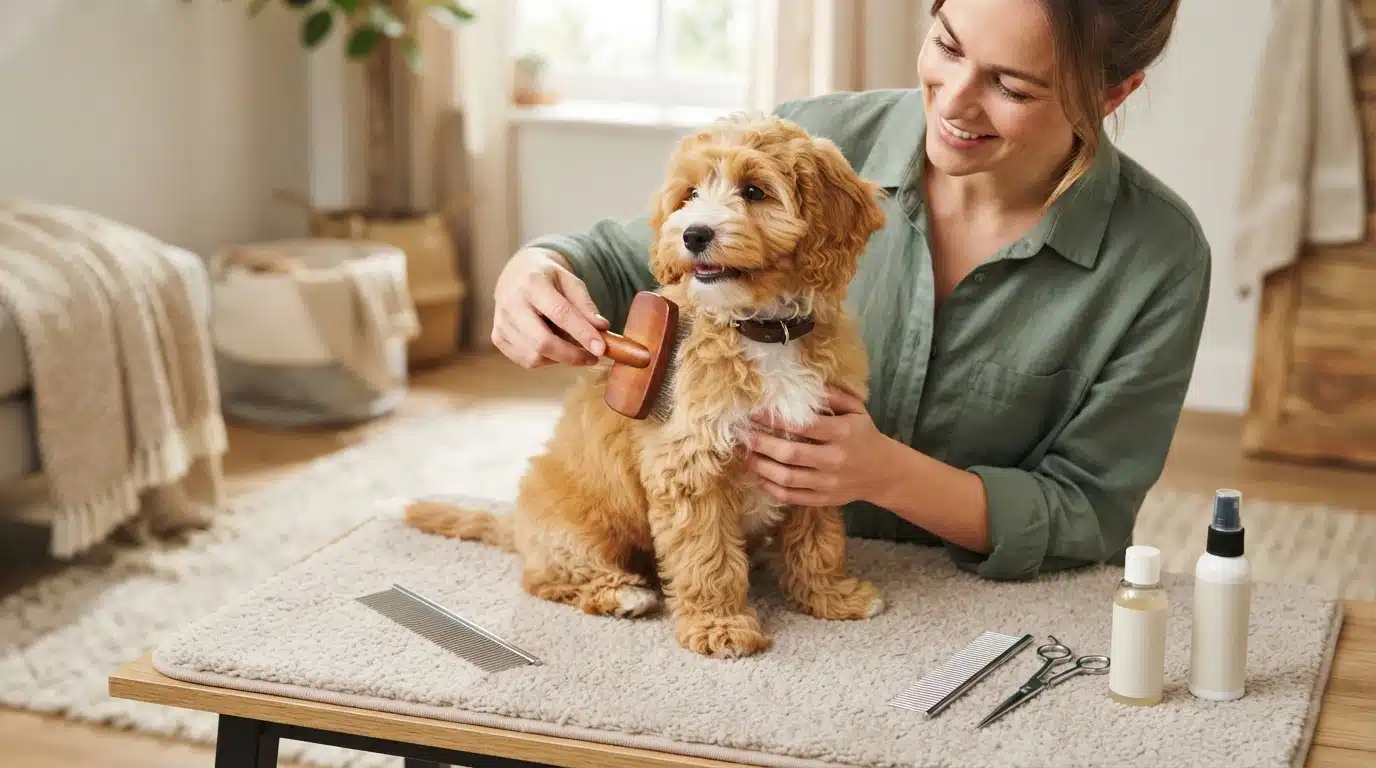
If a breeder says they offer health-tested Havapoo Puppies but refuses to share the parents’ full names, OFA records, or a written contract before you pay, stop there. That is your first real screen. Many first-time buyers struggle to tell solid Havapoo Breeders from polished sellers with nice photos and weak proof.
This guide fixes that problem. You will learn how to Find Havapoo Breeder options near you, what documents to ask for, which answers matter, and which red flags should end the deal fast. I will also show you how to check claims from local and remote Havapoo Breeders the same way.
The goal is simple: help families compare Havapoo Breeders using evidence, not promises, so you can bring home a healthy, well-socialized puppy with more confidence.
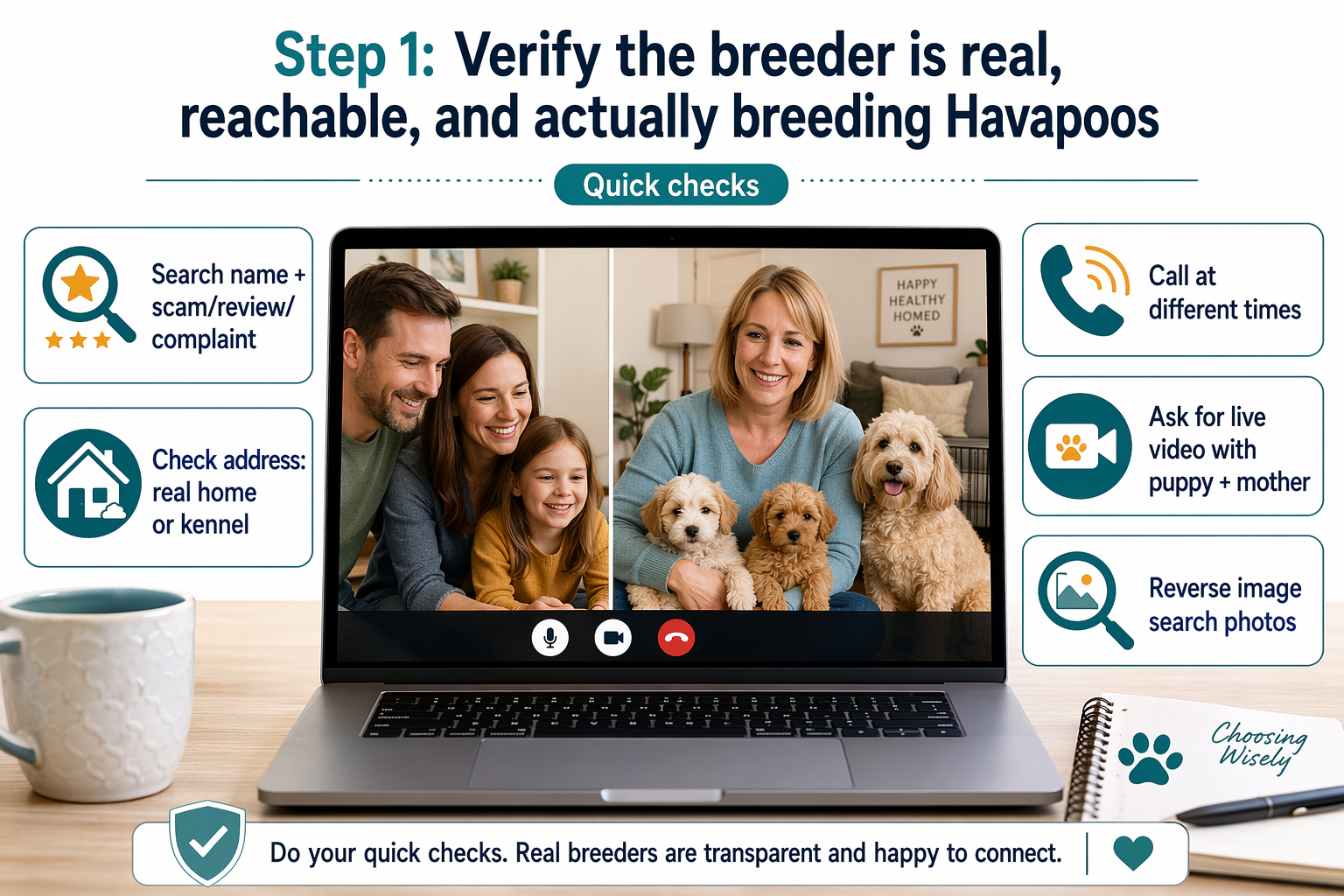
Step 1: Verify the breeder is real, reachable, and actually breeding Havapoos
Start with proof the breeder exists in real life. You want a full name, working phone number, real street address, and a website or social page that matches all three. The FTC says legit sellers should allow an in-person or video visit, and refusing both is a red flag according to FTC pet scam guidance.
Use this quick check:
- Search the breeder’s name plus “scam,” “review,” and “complaint”
- Confirm the address shows a real home or kennel, not an empty lot
- Call the number at different times
- Ask for a live video call with the puppy and the mother
- Reverse image search puppy photos if anything feels off
If the seller only texts, avoids phone calls, or pushes gift cards, wire transfers, crypto, or payment apps first, walk away.
Next, ask if the breeder personally owns or closely knows both parents and raised this litter themselves. A real Havapoo breeder should answer simple questions fast:
- Who are the sire and dam?
- What are their breeds, ages, and temperaments?
- Where do they live?
- Was this litter born in your home?
- Can I see the puppies with the mother on video?
The AKC notes that good breeders welcome questions and share proof about parent dogs, health records, and how the puppy is raised in their puppy scam warning signs. If answers stay vague, you are likely not talking to the actual breeder.
Step 2: Request proof of health testing, not just a vet visit
For a Havapoo, ask about the Havanese parent and the Poodle parent separately. Good breeders test the actual parents before breeding, not just the puppies after birth. The AKC says breed health testing should follow parent club recommendations, not a breeder’s personal shortcut of “my vet checked them” AKC breed health testing requirements.
Use this quick checklist:
- Patella evaluation
- Eye exam by a specialist
- Hip screening when relevant
- Cardiac screening if recommended for that line or breed
- DNA tests that fit the parent breeds, not random add-ons
| Record to ask for | What it proves | Red flag |
|---|---|---|
| OFA or equivalent result | A real screening was done | Breeder sends only a text summary |
| Parent dog name and ID | Results match the right dog | Names do not match paperwork |
| Test date and age at testing | Dog was tested at the proper time | Testing done too young |
OFA tells puppy buyers to ask what screenings were done on the parents and to see the results, not just hear about them. OFA also says those certifications should be verifiable in its database OFA breeder interview guide.
Before you leave a deposit:
- Ask for the parent dogs’ registered names.
- Request copies of each result.
- Check that dates, names, and microchip or ID details line up.
- Ask why each test was chosen for that pairing.
If a breeder says “vet checked, all clear,” treat that as routine care, not proof of genetic screening.
A wellness exam, vaccines, and deworming matter. They just do not replace pre-breeding health testing on the sire and dam. That distinction saves buyers from the most common sales pitch.
Step 3: Evaluate how the puppies are raised and socialized
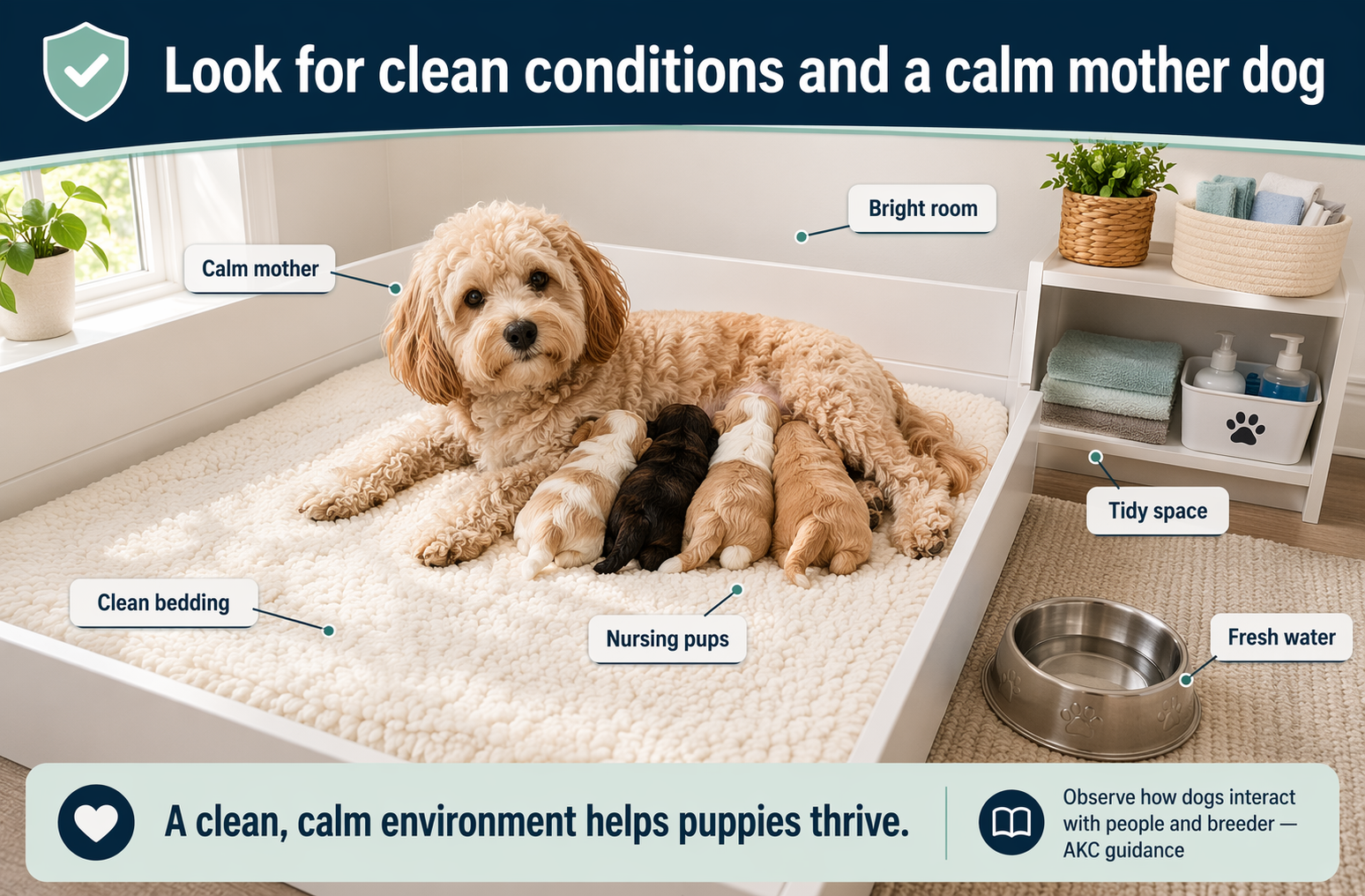
Look for clean conditions and a calm mother dog
Visit in person if you can. If not, ask for a live video walk-through of the puppy area. You want to see:
- Clean bedding and floors
- Fresh water
- Puppies with bright eyes and clean coats
- A mother dog who seems calm, comfortable, and bonded to the litter
The AKC says responsible breeders should let you observe the home or kennel and watch how the dogs interact with people and the breeder in their guidance.
If the breeder avoids showing the mother, rushes the visit, or only shows one tight camera angle, treat that as a warning sign.
Ask what socialization the litter receives before going home
Do not settle for “they’re well socialized.” Ask for the exact routine. Good answers include:
- Daily gentle handling
- Exposure to normal household sounds
- Time on different safe surfaces
- Short crate and car ride practice
- Positive contact with adults and supervised children
According to the AKC, puppies enter a key socialization period at about 3 weeks, and the 6 to 8 week stage is especially important for meeting people and experiencing new sights, sounds, and surfaces before going home.
Use this quick check:
| Ask this | Good sign | Bad sign |
|---|---|---|
| What do puppies hear and see daily? | Specific examples | Vague answer |
| Who handles them? | Adults and supervised kids | “Just me, sometimes” |
| Do you track progress? | Notes, videos, updates | No system |
The best breeders can describe the puppies’ week in plain detail.
Step 4: Read the contract before you reserve a puppy
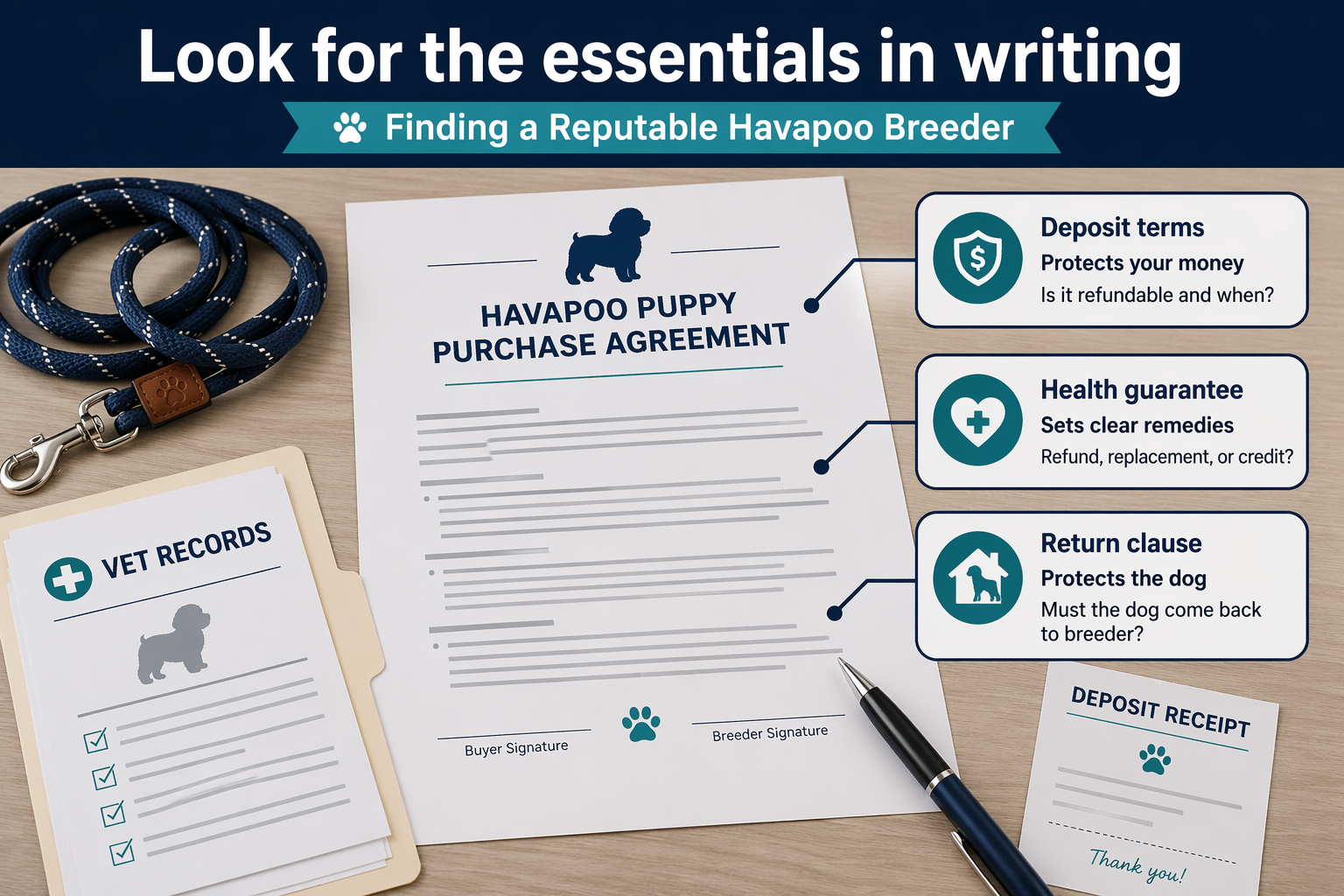
Look for the essentials in writing
Ask for the contract before you send a deposit. The AKC says buyers should be able to review it early, not at the last minute, and that solid contracts usually list the puppy’s ID details, parents, microchip number, and price in writing according to AKC contract guidance.
Check for these basics:
- Puppy details – sex, color, date of birth, litter info
- Parent details – sire and dam names
- Health terms – vet exam window, vaccine and deworming records, health guarantee
- Money terms – total price, deposit amount, refund rules
- Placement terms – pickup date, registration status, return-to-breeder clause
A good contract should match what the breeder told you on the phone.
If a breeder will not send the contract until payment day, slow down.
| Contract item | Why it matters | What to ask |
|---|---|---|
| Deposit terms | Protects your money | Is it refundable and when? |
| Health guarantee | Sets clear remedies | Refund, replacement, or credit? |
| Return clause | Protects the dog | Must the dog come back to breeder? |
Watch for contract terms that signal risk
Some clauses are fair. Some are built to trap rushed buyers. The American Lhasa Apso Club’s contract checklist includes clear buyer and seller info, vet care dates, return policy, and signed copies for both sides in its contract guidelines.
Watch for red flags like:
- No refund language if the breeder cancels or the puppy is unavailable
- Vague health guarantee with no time limit or claim steps
- Only replacement puppy offered with no clear conditions
- Punishment-heavy rules that seem more about control than care
- Blank spaces left unfilled before signing
Never sign a contract with missing details. Ask for every blank to be completed first.
Step 5: Compare price, waitlist, and support so you can choose with confidence
Use price as one signal, not the decision
Price helps, but it should never choose the breeder for you. A very low price can mean weak health testing, poor early care, or no help after pickup. A very high price does not prove quality either. Compare what is included, not just the number.
Use this quick table:
| Compare | Good sign | Red flag |
|---|---|---|
| Price | Clear breakdown of what you get | Vague total with no details |
| Deposit | Written terms and refund rules | Pressure to pay fast |
| Paperwork | Contract, records, proof ready | “We’ll send it later” |
If the breeder cannot explain the price in plain English, move on.
Ask about waitlists, pickup, delivery, and lifetime support
A solid breeder should explain the full process before you send money. Ask how the waitlist works, when deposits become nonrefundable, how puppies are matched, and what happens if the litter is smaller than planned. Good breeders often use waitlists to place puppies with care, not speed.
Use this checklist:
- Waitlist terms – Is your deposit refundable, transferable, or locked in?
- Pickup plan – Can you pick up in person, and when?
- Delivery plan – If shipping is offered, ask who handles transport. The AKC says buyers should verify transporters carefully and prefer safe, trustworthy options in its transport guide.
- Lifetime support – Will the breeder answer training, health, and rehoming questions later?
AKC also notes that responsible breeders stay available as a resource throughout your dog’s life in its breeder guidance. That kind of support adds real value.
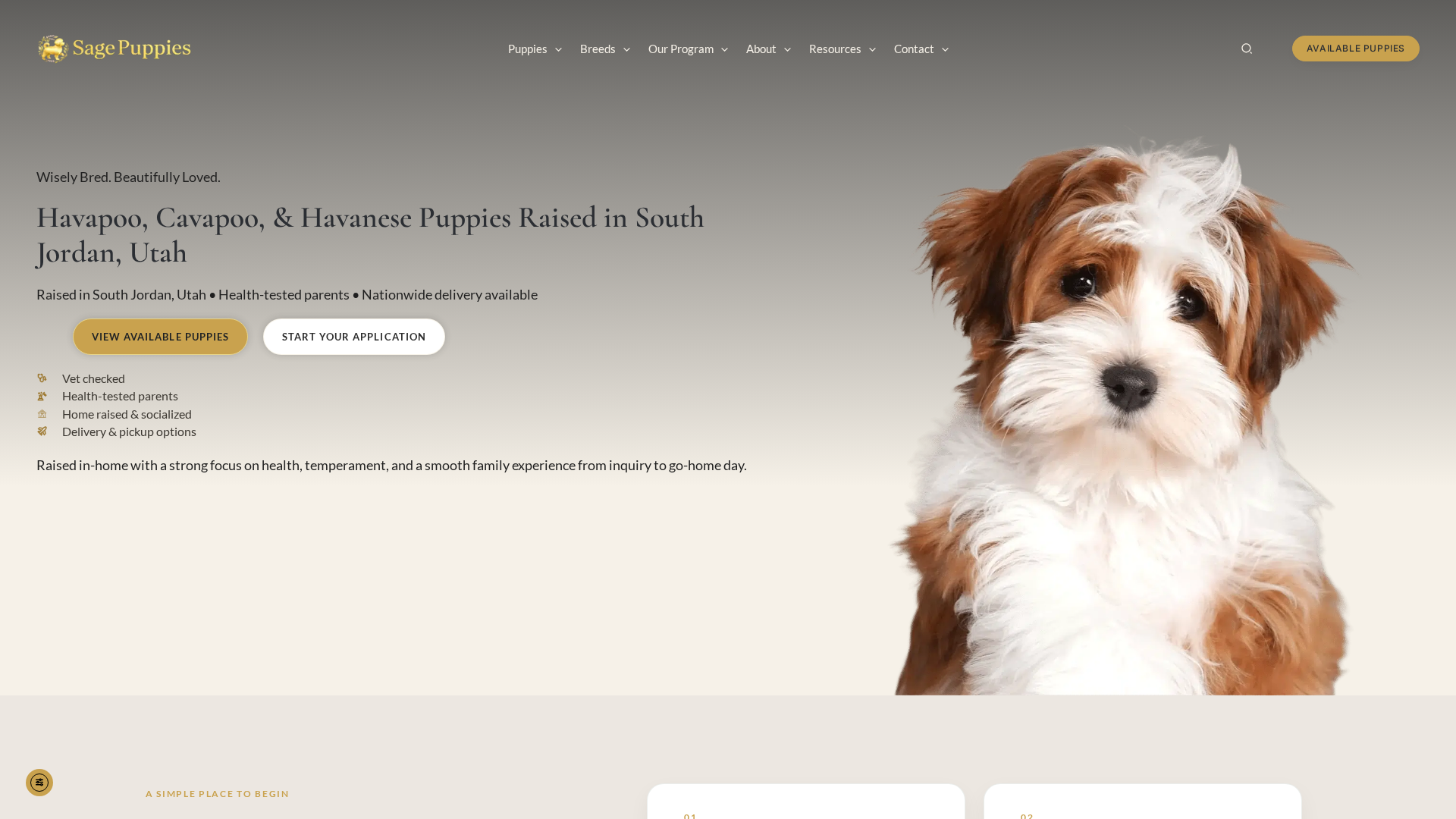
Want a breeder you can verify, not just trust on words? Sage Puppies offers health-tested parents, early socialization, and a clear family-first process. Review available Havapoo puppies, ask for proof, and start with confidence.
Frequently Asked Questions
Q1: How can I verify if a Havapoo breeder is reputable and trustworthy?
Ask for parent health testing, vaccination records, a sales contract, and proof puppies are raised in-home. A good breeder answers hard questions, allows video or in-person visits, and explains both strengths and possible health risks.
Q2: What should I look for when choosing a Havapoo breeder near me?
Look for clean living spaces, calm adult dogs, early socialization, clear pricing, and no pressure to send a deposit fast. Local helps, but breeder quality matters more than distance.
Q3: How much does a Havapoo puppy typically cost from a trusted breeder?
Most well-bred Havapoos cost more because health testing, vet care, food, and socialization add real cost. Very low prices often signal skipped testing, poor care, or puppy broker activity.
Q4: Is it safe to buy from an out-of-state Havapoo breeder?
Yes, if you verify records, speak live, review the contract, and confirm how the puppy travels. Strong breeders, including programs like Sage Puppies, stay transparent whether you pick up locally or use delivery.
Conclusion
A good Havapoo breeder should prove health, care, and honesty with records, not sales talk. Ask for parent testing, review the contract, confirm how puppies are raised, and verify any license or inspection history through the USDA Animal Care Search Tool. Health claims also matter more when parents have results in the OFA database. If a breeder resists basic proof, move on. The right puppy is worth the wait.